
Jerusalem cherry (Solanum pseudocapsicum, )
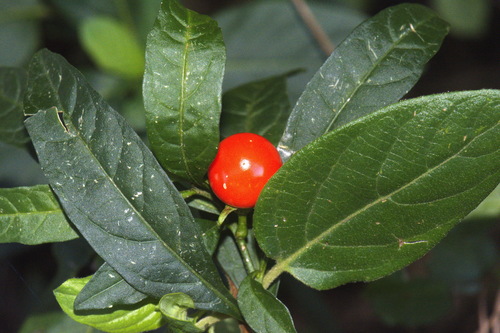
Jerusalem cherry (Solanum pseudocapsicum) is a small shrub in the Solanaceae family, native to Bolivia, Brazil and southern South America. Grown worldwide for round berries that turn from green through yellow to bright red and persist into autumn and winter, it is poisonous if eaten and listed as invasive in several countries outside its native range.
Read moreJerusalem cherry, Madeira winter cherry and Winter cherry
Allow a few hours of direct sun per day, preferably morning or evening.
Full sun to partial shade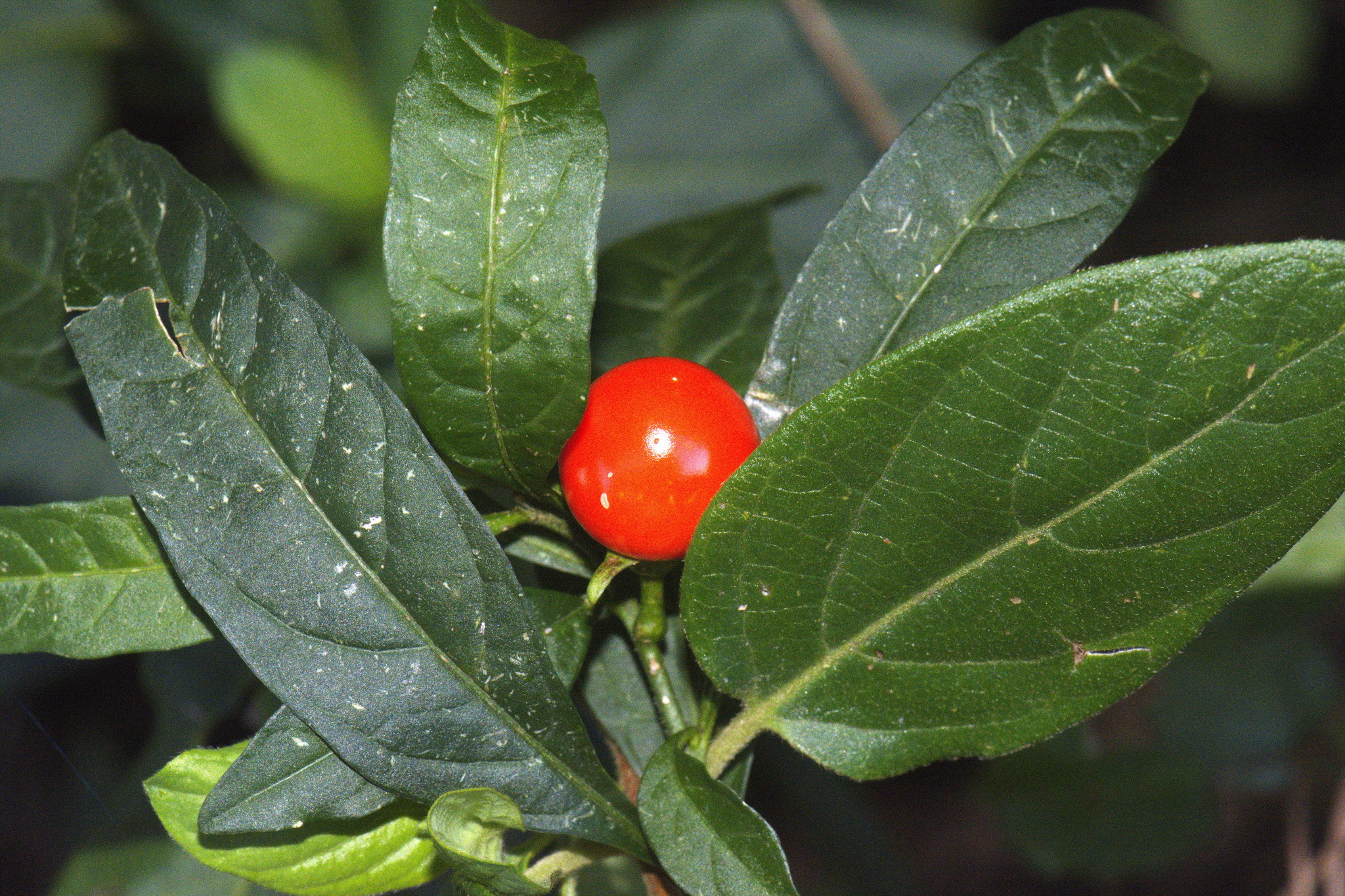
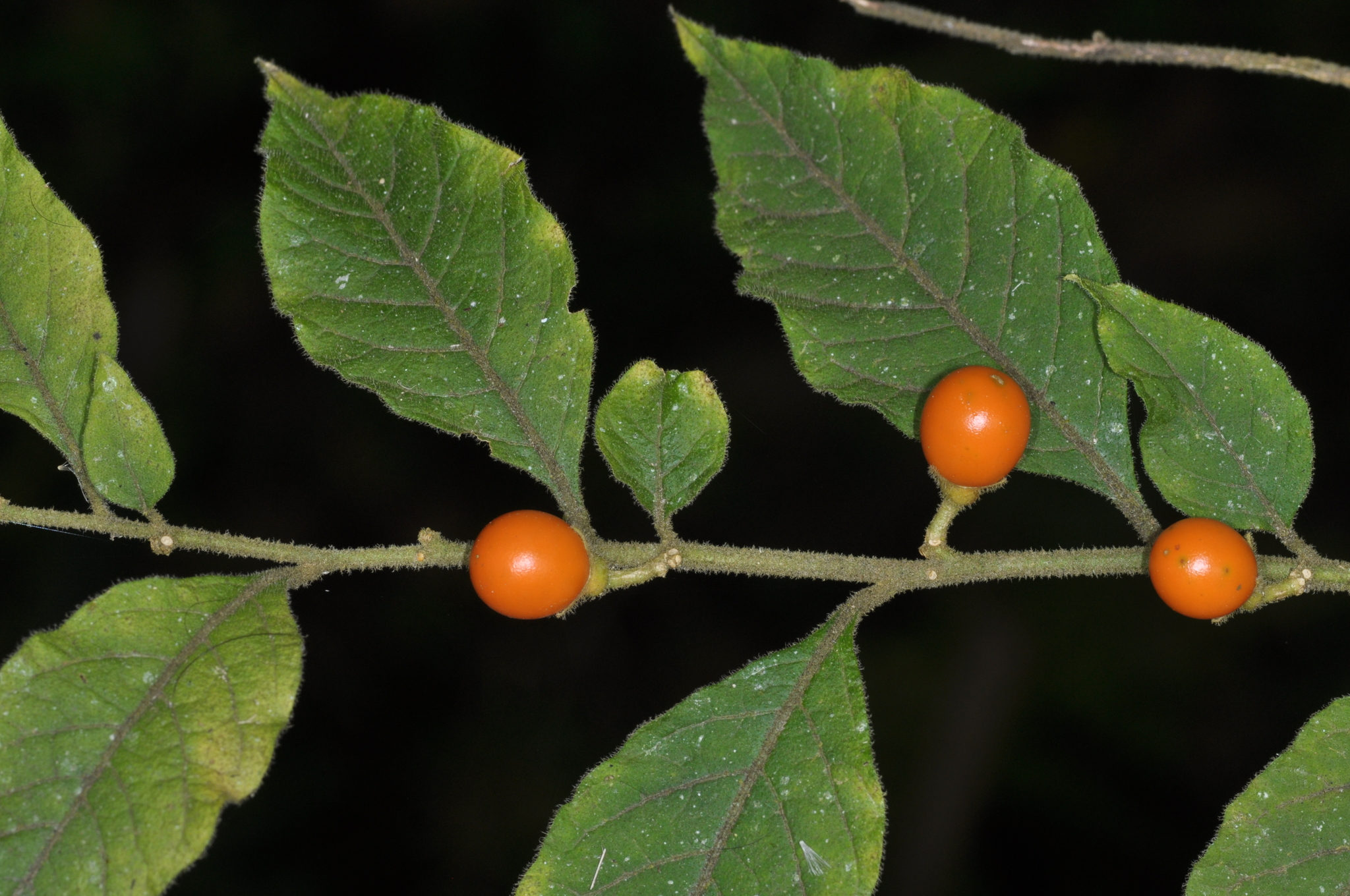
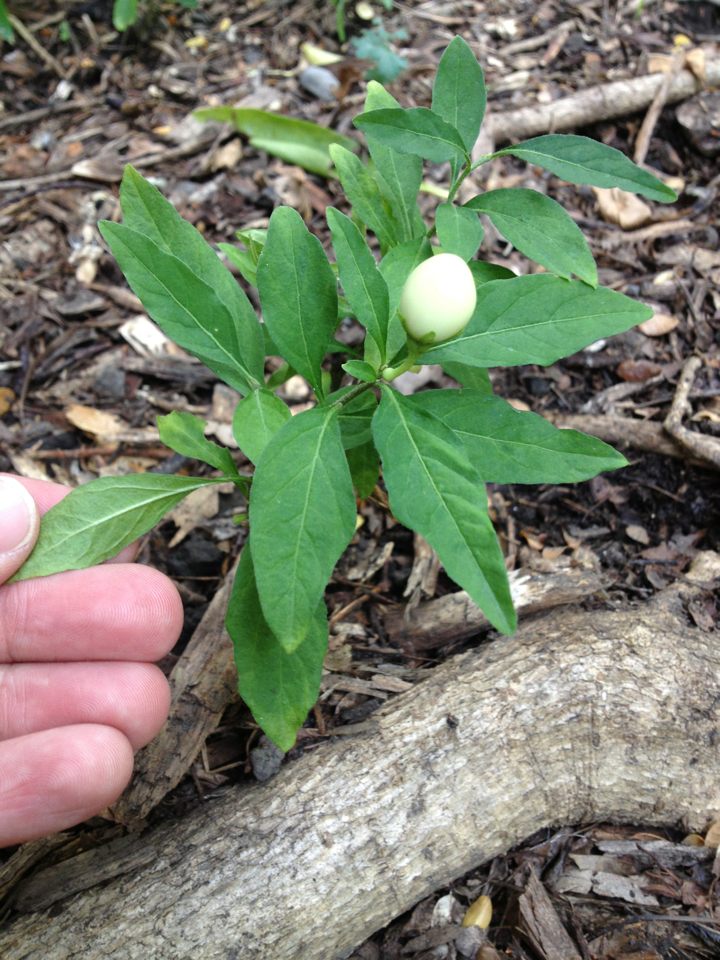


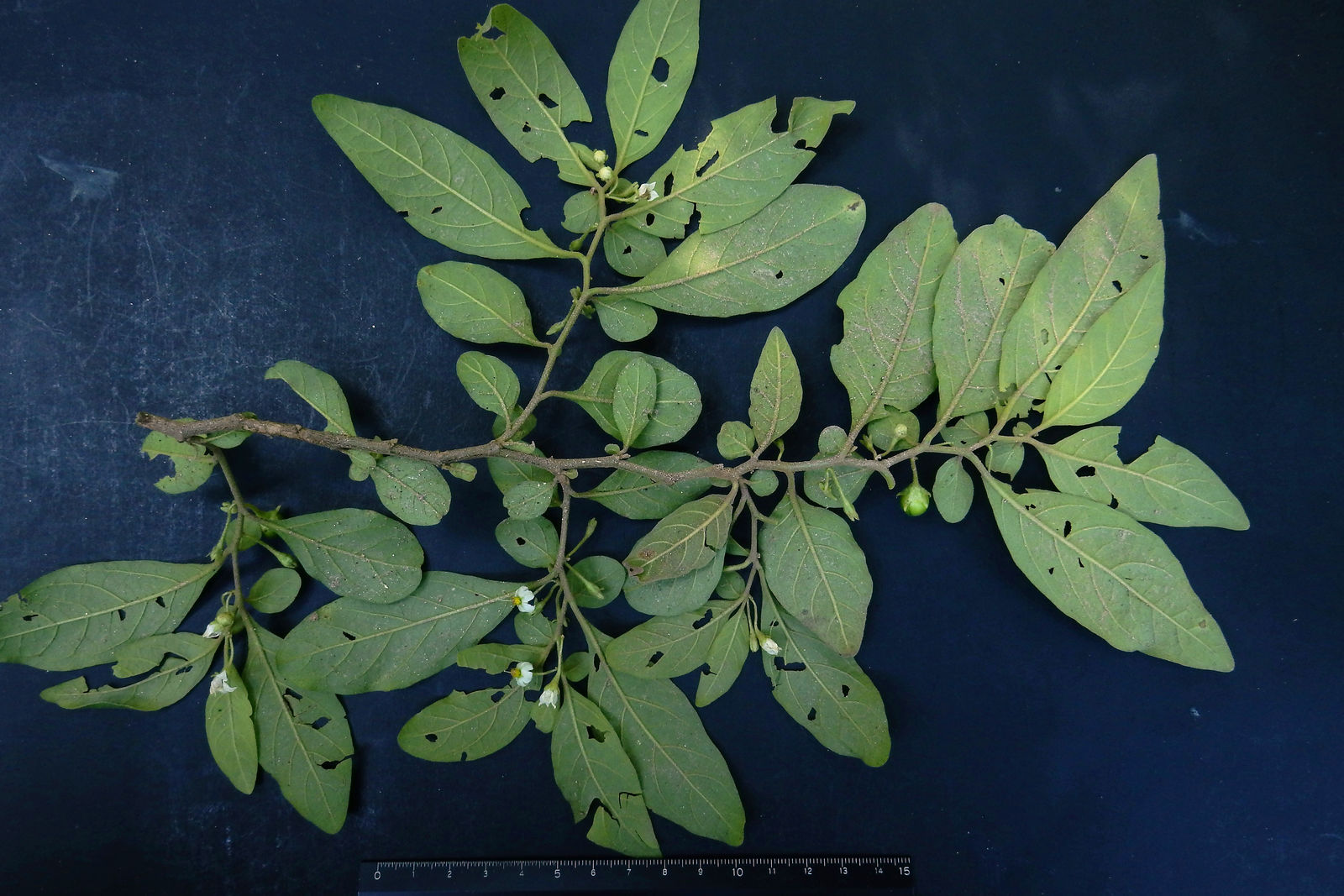

© photo
(c) Pat Enright, some rights reserved (CC BY-NC), uploaded by Pat Enright · cc-by-nc
iNaturalist User · cc-by
Jon Sullivan · cc-by
Taken Nov 3, 2019 by Pierre Sosson (cc-by-sa)
Taken Mar 5, 2020 by Aranda Sebastian (cc-by-sa)
Taken Oct 8, 2021 by Manu_ (cc-by-sa)
Taken Nov 17, 2020 by Simon Spiller (cc-by-sa)
Taken Aug 19, 2015 by Tela Botanica − Stéphanie GARBARINO (cc-by-sa)
© copyright of the Board of Trustees of the Royal Botanic Gardens, Kew.




Global distribution
Native to Bolivia, Brazil and southern South America, Jerusalem cherry became a worldwide ornamental for its winter berries. It has naturalized in several warm regions outside its native range and appears on local invasive-species lists.
- Native3
- Introduced1
- Invasive4
- Bolivia
- Brazil
- Argentina
- United States
- South Africa
- India
- Australia
- New Zealand
Hexagons: regions where the plant occurs. Green dots: native range.1
Identity
Jerusalem cherry (Solanum pseudocapsicum L., 1753) is a small shrub in the Solanaceae family, alongside tomatoes, potatoes and peppers. Its species name, pseudocapsicum, describes a misleading resemblance to Capsicum: the small round berries resemble ornamental peppers, but the plant belongs to a different genus. 1 2
Names such as Madeira winter cherry and winter cherry emphasize the cherry-like fruit and its long persistence in winter. Jerusalem cherry comes from South America, rather than Jerusalem; its English name reflects an old trading tradition, not its native range. French names including morelle faux piment likewise refer to its resemblance to peppers. 8 4
Recognition
A dense, bushy habit and a height of 30–90 cm (12–35 in) are typical of potted specimens, whose size growers restrict for sale. Unpruned plants in the ground in warm climates can grow larger. Simple dark green leaves are oval to lance-shaped, with an entire or slightly wavy margin and no deep divisions. 4 3
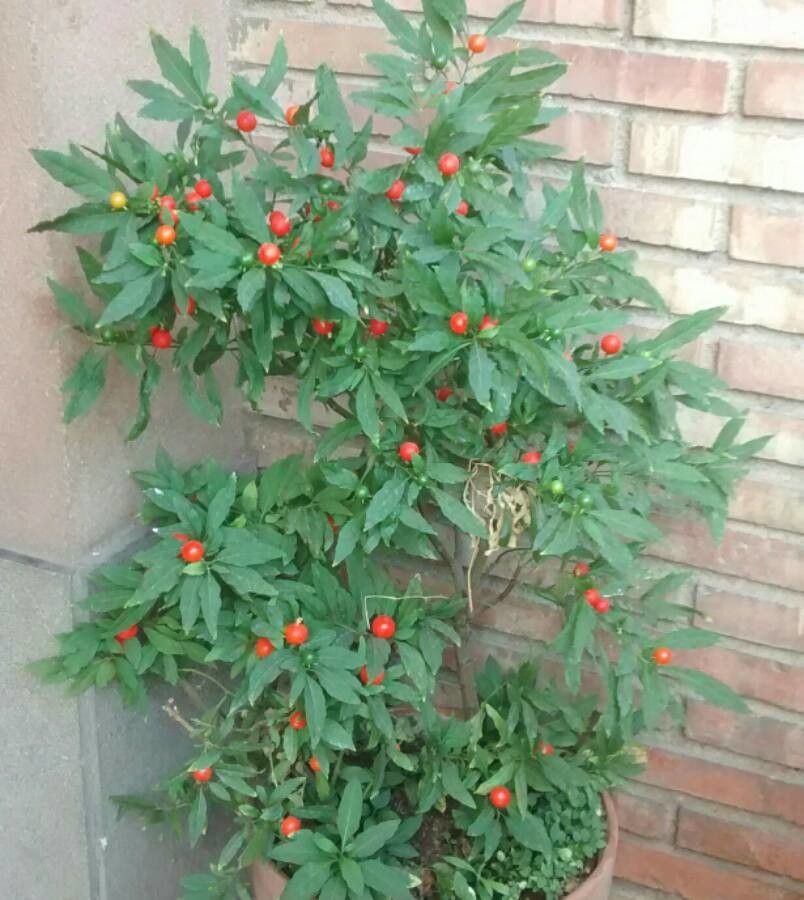
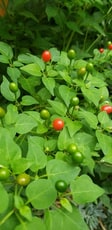
Small clusters of white, five-petaled, star-shaped flowers appear in the leaf axils in late spring and summer. They develop into the most recognizable feature: spherical berries 1.5–2 cm (0.6–0.8 in) across that turn from green through yellow-orange to bright red over several weeks as they ripen. 3 4
Berries often remain for several months, through autumn and well into winter, which explains its popularity as a potted year-end holiday plant. A specimen without visible berries is not necessarily misidentified: inadequate light or a lack of pollinators indoors can prevent fruiting. 3
Useful taxonomy
Carl Linnaeus published Solanum pseudocapsicum L. in 1753; this remains the accepted name in the genus Solanum, family Solanaceae. Because the genus includes both familiar food crops and poisonous species, a scientific name gives a more dependable identity than a common name alone. 1
Nursery labels can confuse Jerusalem cherry with Solanum capsicastrum Link ex Schauer, a close relative sold under the same common names, including Christmas Cherry. Many commercial plants are hybrids between the two, making strict botanical separation difficult for a garden-center purchase. 4 7
Trade labels vary among countries and retailers, while Solanum pseudocapsicum provides a consistent species reference in botanical databases. The scientific name is therefore useful when checking an uncertain label. 1 2
Habitat and range
Bolivia, Brazil and southern South America form the native range, where Jerusalem cherry grows in open woodland and along forest edges. Its winter berries encouraged horticultural distribution around the world, chiefly as an ornamental far beyond that original range. 1
Warm, humid regions outside its native range have supported naturalized populations. Introductions are reported in South Africa, India, Australia and New Zealand, where birds disperse the berries and help the plant colonize forest edges and disturbed ground. 6 7
United States records classify the species as introduced, and some regional organizations, including those in South Carolina, flag it for monitoring. In metropolitan France it remains chiefly a seasonal potted plant rather than an established outdoor planting. 7 8
Life cycle and reproduction
Late spring to summer brings flowering, with insects pollinating outdoor plants. Indoors, transferring pollen with a small brush can improve fruit set when natural pollinators are absent. 4
After fruit set, berries take several weeks to ripen from green through yellow-orange to bright red. Birds eat ripe fruits and disperse their seeds, helping the species naturalize on new sites in regions where it has been introduced. 6
Growers propagate Jerusalem cherry mainly by seed, which can produce flowering and fruiting plants in the first year, or by stem cuttings taken from established plants in late summer. 4
Uses and risks
Potted ornamental displays are the main use of Solanum pseudocapsicum, often sold as Christmas Cherry for its decorative berries. It can also be planted in sunny beds where the climate is mild enough for it to survive several seasons. 3
Every part of the plant is toxic, with the highest concentrations in the berries. It contains solanine and solanocapsine, two steroidal alkaloids. In animals and children, ingestion causes digestive upset, sometimes gastrointestinal ulceration, and in severe cases seizures and respiratory depression. 4 5
The ASPCA lists Jerusalem cherry as toxic to cats, dogs and horses. Its attractive red berries, at a child’s height on a tabletop plant, also pose a risk to young children. Keep it beyond their reach rather than relying on its taste to discourage accidental eating. 5
Varieties, look-alikes and related plants
Only a few stable botanical cultivars are available. The trade mainly distinguishes yellow-fruited and orange-fruited forms from the usual red form, along with compact plants sold as Christmas Cherry without registered cultivar status. 3
Two recurring sources of confusion often appear together in year-end plant displays:
- Solanum capsicastrum Link ex Schauer, a close relative, often hybridized with Jerusalem cherry in commercial plants and sold under the same common names;
- ornamental pepper, Capsicum annuum, with elongated or conical edible fruits, unlike the round toxic berries of Jerusalem cherry.
Berry shape provides a useful distinction when buying: a round fruit resembling a small cherry tomato points to Jerusalem cherry, while an elongated or conical fruit points to a pepper. If a sales label is uncertain, treat the fruit as inedible. 4
Main sources
- Plants of the World Online / Kew, Solanum pseudocapsicum L.
- International Plant Names Index, Solanum pseudocapsicum L.
- Royal Horticultural Society, Solanum pseudocapsicum - Christmas cherry
- North Carolina Extension Gardener Plant Toolbox, Solanum pseudocapsicum
- ASPCA, Jerusalem cherry toxicity entry
- Atlas of Florida Plants, Solanum pseudocapsicum
- EDDMapS, Jerusalem-cherry distribution and status
- Tela Botanica / eFlore BDTFX, Solanum pseudocapsicum L.
Frequently asked questions
Is Jerusalem cherry poisonous?
Yes. Its berries, leaves and stems contain solanine and solanocapsine. The ASPCA lists Solanum pseudocapsicum as toxic to cats, dogs and horses, with digestive upset and potentially seizures after substantial ingestion.
Can you eat Jerusalem cherry berries?
No. Although they resemble small cherry tomatoes, the berries are inedible and must be kept away from children and pets.
How can you distinguish Jerusalem cherry from ornamental peppers?
Both are small shrubs with red fruits sold in the same season. Ornamental peppers (Capsicum annuum) have elongated or conical edible fruits, whereas the round berries of Solanum pseudocapsicum are toxic.
Is Jerusalem cherry invasive?
It is native in South America. Introduced populations have naturalized in South Africa, India, Australia and New Zealand, where the species appears on local invasive-species lists.
Why is it called Jerusalem cherry if it comes from South America?
This old trade name does not describe its actual geographic origin. It spread in Europe alongside the plant, without any connection to the native South American range.
Why do the berries stay on the plant so long?
Long-lasting berries, turning from green through yellow-orange to bright red, provide its main ornamental appeal in autumn and winter, when many other balcony plants lose their seasonal display.
What is the lowest temperature Jerusalem cherry can tolerate?
It tolerates temperatures below 1 °C poorly and does not survive frost. Outdoors in frost-prone climates, bring plants inside before the first frosts.
Similar plants
If you are unsure about a plant’s toxicity, ask a botanist or veterinarian for advice.