
False spirea (Sorbaria sorbifolia, )
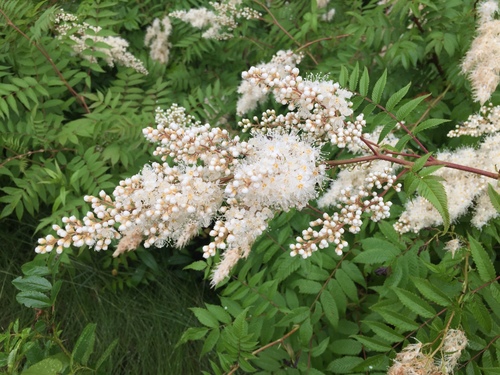
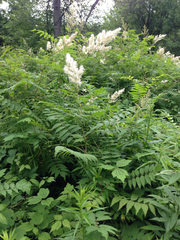
False spirea (Sorbaria sorbifolia) is a deciduous, suckering shrub in the Rosaceae family, native to Siberia, the Russian Far East and Inner Mongolia. It forms dense stands of upright stems topped in summer by long panicles of small, strongly fragrant white flowers. Extremely cold hardy, it withstands winters colder than most hedge shrubs and tolerates poor soil, but its suckers need to be controlled.
Read moreFalse spirea, False spiraea, Ural false spirea and False goat’s beard




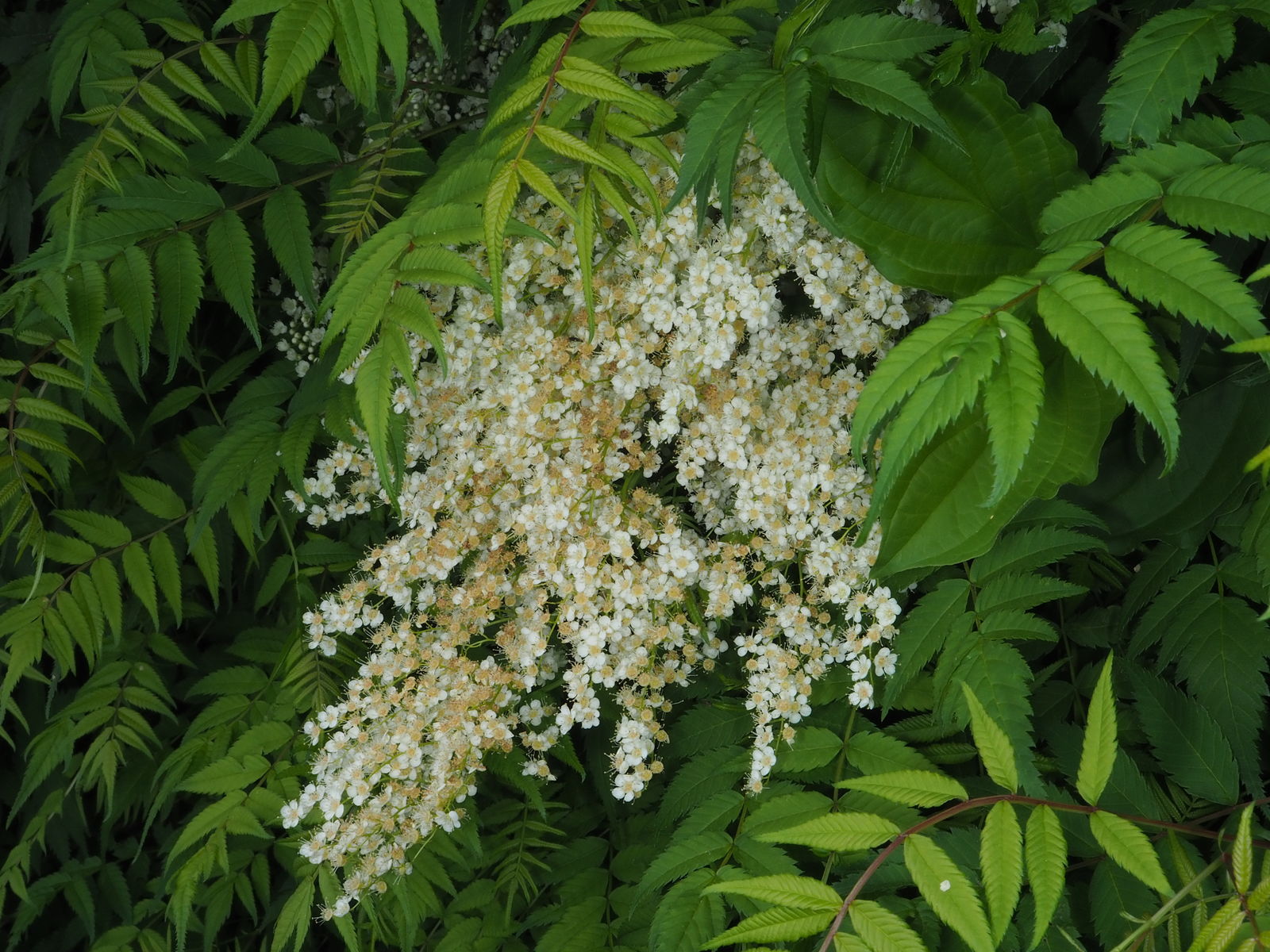
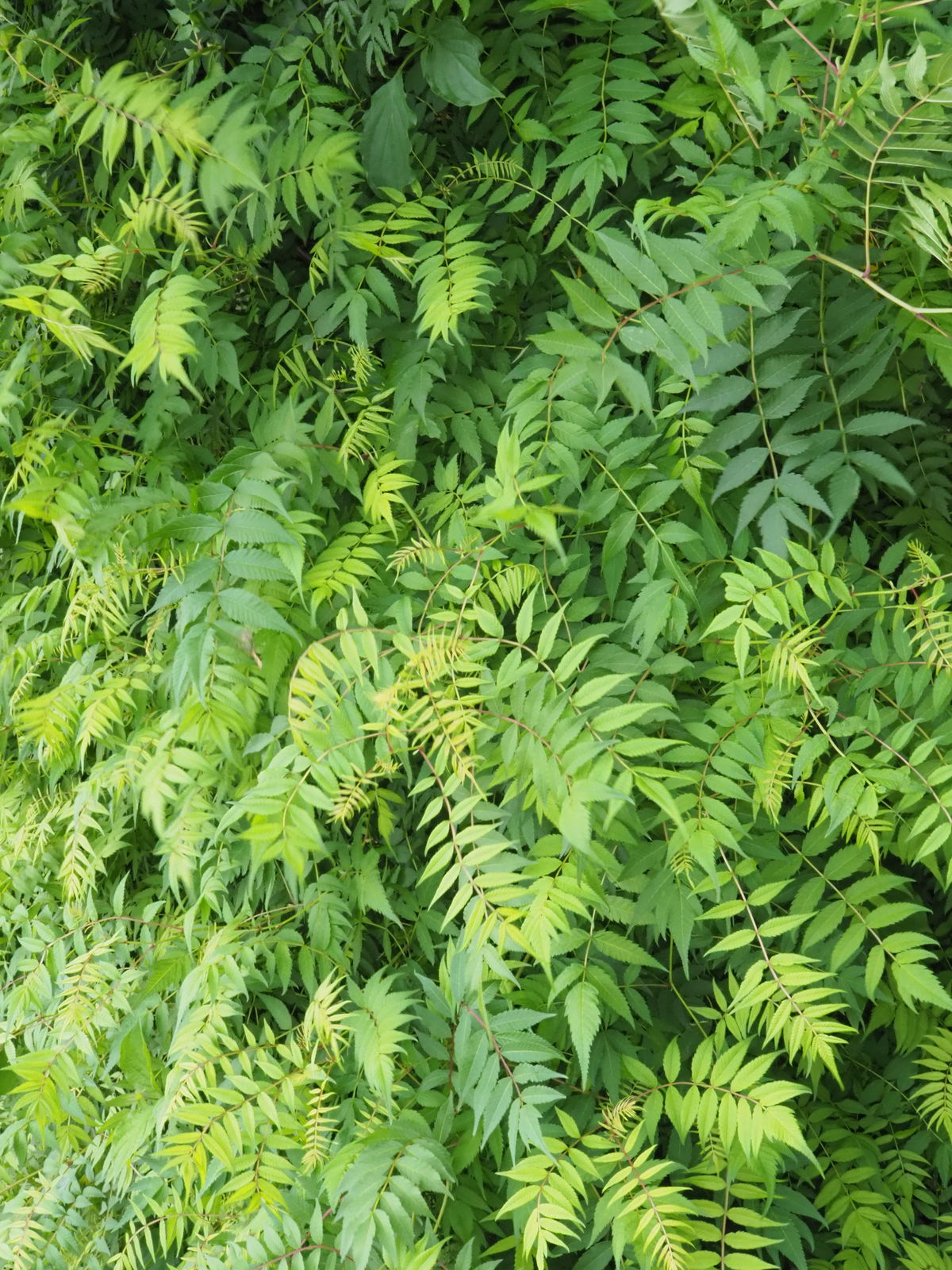
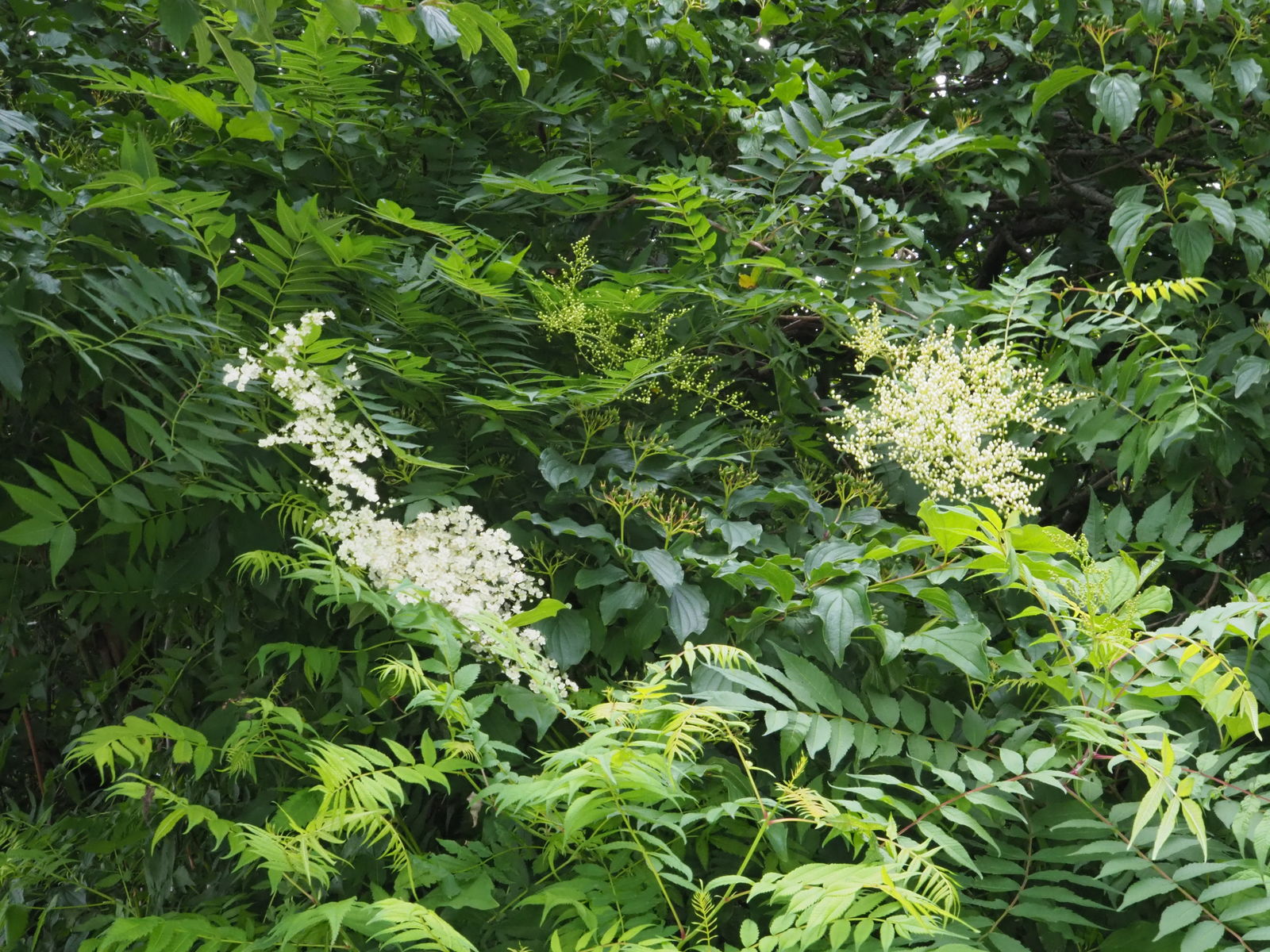
© photo
(c) julies329, some rights reserved (CC BY-NC) · cc-by-nc
naturalist charlie · cc0
iNaturalist User · cc-by-sa
Taken Mar 15, 2021 by Heather Hoaglund-Biron (cc-by-sa)
Taken Sep 10, 2020 by Hendrik Toepper (cc-by-sa)
Taken Jun 4, 2022 by Tristan Jaton-Maria (cc-by-sa)
Taken Jun 19, 2021 by manuseitz (cc-by-sa)
Taken Aug 31, 2022 by Nella (cc-by-sa)
© copyright of the Board of Trustees of the Royal Botanic Gardens, Kew.


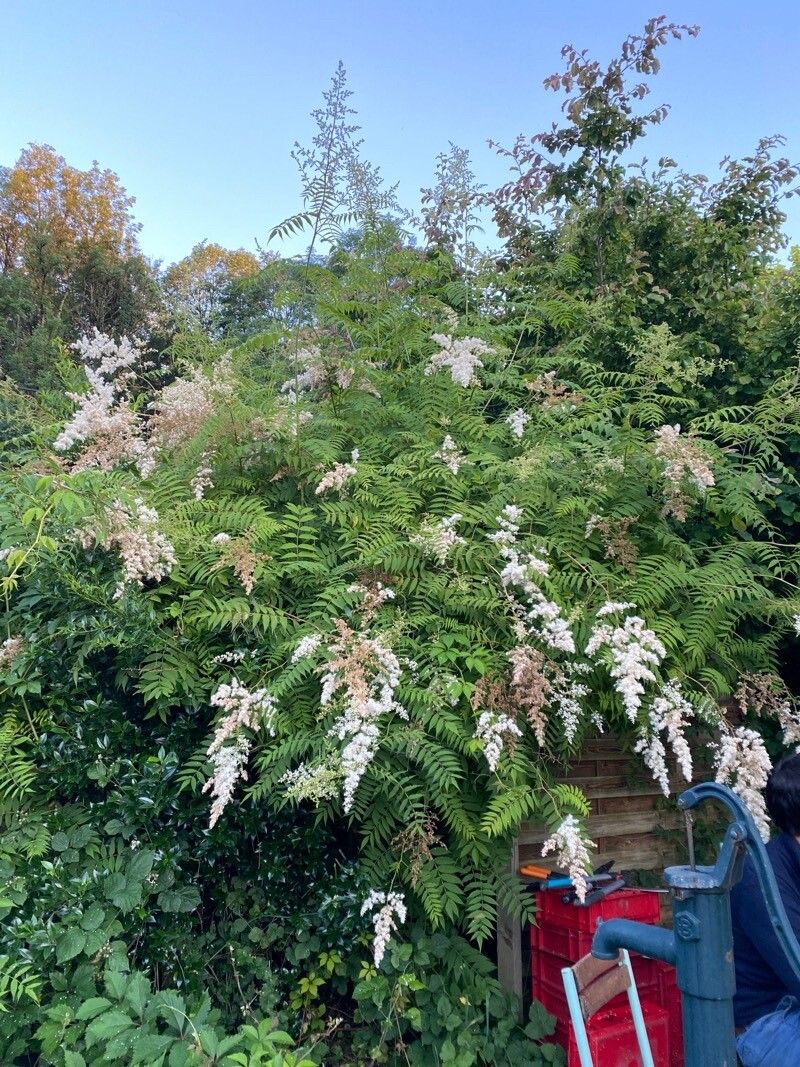


Global distribution
False spirea is native to Siberia, the Russian Far East and Inner Mongolia, with related populations in northeastern China, Korea and Japan depending on the variety. Widely introduced as an ornamental, it sometimes escapes gardens and forms colonies on uncultivated land. Finland classifies it as an invasive alien species; in France it remains mainly cultivated.
- Native4
- Introduced1
- Invasive1
- Russia (Siberia, Far East)
- China (Northeast, Inner Mongolia)
- South Korea
- Japan
- United States
- Finland
Hexagons: regions where the plant occurs. Green dots: native range.1
Identity
False spirea (Sorbaria sorbifolia (L.) A.Braun, 1860), also called Ural false spirea, is a deciduous shrub in the Rosaceae family and the type species of Sorbaria. Linnaeus originally described it as Spiraea sorbifolia in 1753. German botanist Alexander Braun transferred it to Sorbaria in 1860, the placement still accepted today. 1 2
Two resemblances explain its names. The epithet sorbifolia refers to compound leaves like those of rowan (Sorbus), a more distant relative in the same family. False spiraea, an alternative spelling, refers to flower panicles resembling those of true spireas (Spiraea spp.). The leaves readily separate the genera: false spirea has many leaflets, while true spireas have simple, undivided leaves. 7
Recognition
Root suckers produce dense stands of upright stems, reaching 1–3 m (3–10 ft) tall with a similar spread. 4 7
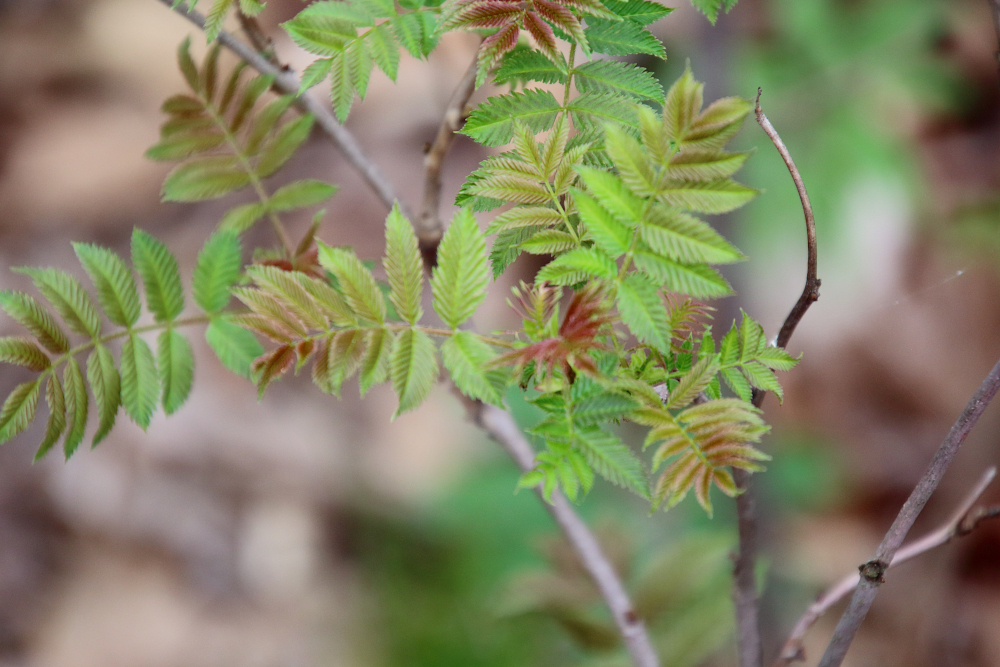
Alternate, pinnately compound leaves contain 13–25 toothed leaflets and measure 20–30 cm (8–12 in) overall. Their appearance recalls a fern or rowan. Separate leaflets immediately rule out true spireas (Spiraea spp.), which have simple leaves. 4
During June and July, hundreds of small white flowers open in upright terminal panicles 10–25 cm (4–10 in) long. Individual flowers measure about 6–8 mm (0.24–0.31 in) across. Their fragrance attracts numerous pollinating insects. 4 3
Clusters of small follicles turn reddish brown as they ripen in September. They often remain on the shrub after leaf fall, extending its ornamental interest into winter. 7
Useful taxonomy
As the type species of Sorbaria, S. sorbifolia represents a genus of related shrubs from temperate Asia. Botanical references often discuss two close relatives alongside it: Sorbaria kirilowii (Regel) Maxim., from China and Korea, and the more southerly Sorbaria tomentosa (Lindl.) Rehder, ranging from Afghanistan to Nepal. 1
The accepted variety Sorbaria sorbifolia var. stellipila Maxim. has star-shaped hairs on its young shoots and a more easterly range, from northeastern China through Korea to Japan. Historical synonyms, including Schizonotus sorbifolius (L.) Lindl. and the basionym Spiraea sorbifolia L., still appear in older horticultural literature. 1 2
Habitat and range
For false spirea, the native range runs from Siberia and the Russian Far East to Inner Mongolia. Related populations extend into northeastern China, Korea and Japan, depending on the variety. 1 6
Open woods, forest margins and riverbanks provide its natural habitat. In northern China it generally grows at 250–1,500 m (820–4,920 ft) elevation. 3
Extreme cold presents little difficulty for this shrub. Hardy to USDA zone 2, it survives in regions too cold for many temperate hedge shrubs. While dormant in winter it tolerates temperatures below −40 °C (−40 °F). 4
Ornamental introductions are widespread in Europe and North America. Garden escapes can establish colonies on uncultivated ground through suckering alone. Finland officially classifies it as an invasive alien species. In metropolitan France no invasive status is documented, and it remains mainly a cultivated shrub. 7
Life cycle and reproduction
Flower buds develop on the current season’s wood. Hard spring pruning therefore allows flowers in the following summer, unlike shrubs that bloom on the previous year’s shoots. 4
After insect pollination, flowers form dry follicles that release seeds in fall. Gardeners seldom use seed propagation in practice. Division of suckers and stem cuttings with a node are faster methods that preserve the original cultivar more reliably. 3
Suckering shapes the shrub’s development from its second or third year onward. New stems arising from roots expand the edge of each stand, allowing the colony to persist without depending on sexual reproduction. 4
Uses and risks
False spirea serves almost entirely as an ornamental shrub, in informal hedges and back-of-border plantings. Its dense, spreading roots also help stabilize riverbanks and slopes. 4 3
Major toxicity has not been established for cats, dogs or horses. Raw young shoots and flowers contain traces of cyanogenic glycosides when eaten in large quantities; cooking first removes this risk. 3
Vigorous suckering is the chief gardening drawback, particularly in light soil. Regular removal of suckers is needed; unchecked, the shrub can spread into neighboring beds within a few seasons. 4
Serious pests and diseases rarely cause lasting damage to its foliage. This relatively undemanding plant is therefore suitable for beginner gardeners who can keep its spread in check. 4
Varieties, look-alikes and related plants
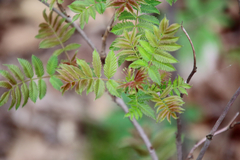
The compact cultivar ‘Sem’ produces colorful spring foliage that passes through yellow, bronze and red before turning green. Its panicles stand more upright than those of the typical species, and it has received the Royal Horticultural Society’s Award of Garden Merit. 7
True spireas (Spiraea spp.) are its main look-alikes because of their similar name and white flower panicles. One readily visible feature separates the genera: spireas have simple, undivided leaves, whereas false spirea has pinnate leaves with numerous leaflets, recalling rowan foliage. 7 8
Main sources
- Plants of the World Online / Kew, Sorbaria sorbifolia (L.) A.Braun
- International Plant Names Index, Sorbaria sorbifolia (L.) A.Braun
- Plants For A Future, Sorbaria sorbifolia
- North Carolina Extension Gardener Plant Toolbox, Sorbaria sorbifolia
- ITIS, Sorbaria sorbifolia (L.) A.Braun
- USDA GRIN Taxonomy, Sorbaria sorbifolia
- Wikipedia EN, Sorbaria sorbifolia
- Wikipedia FR, Sorbaria sorbifolia
Frequently asked questions
Is false spirea invasive?
Its suckers can rapidly expand a planting. Finland officially classifies it as an invasive alien species. In France it remains mainly cultivated, but regular sucker removal is advisable in a small garden.
Is false spirea poisonous to animals?
No major toxicity has been established for cats, dogs or horses. Large quantities of raw young shoots and flowers contain traces of cyanogenic glycosides, which warrant caution for humans.
When does false spirea bloom?
It blooms in June and July on the current season’s shoots. The long white panicles remain decorative for several weeks and attract many pollinating insects.
How can I tell false spirea from true spireas?
Check the leaves. False spirea has compound leaves with many leaflets, like a rowan. True spireas (Spiraea spp.) have simple, undivided leaves.
What light and soil does it need?
Rich, moist but well-drained soil in full sun gives the best flowering. It also tolerates partial shade, poor soil and lime-rich ground, though flowering may be less abundant.
Does false spirea need pruning every year?
No. Cutting it back hard every two or three years is enough to encourage vigorous shoots and plentiful flowers, which develop on the current season’s wood.
What is the cultivar Sem?
‘Sem’ is a compact selection with colorful spring foliage, turning from yellow through bronze and red before becoming green. It holds the Royal Horticultural Society’s Award of Garden Merit.
Similar plants
If you are unsure about a plant’s toxicity, ask a botanist or veterinarian for advice.