
Java plum (Syzygium cumini, )

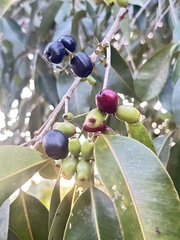

Java plum (Syzygium cumini) is an evergreen fruit tree in the Myrtaceae family, native to the Indian subcontinent and Southeast Asia. Its jamun fruit changes from green to purple-black when ripe and combines sweet, acidic and astringent flavors. Introduced across many tropical regions, the tree is cultivated in some places and considered invasive in others.
Read moreJava plum, Jambolan, Jambul, Black plum, Malabar plum and Jamun

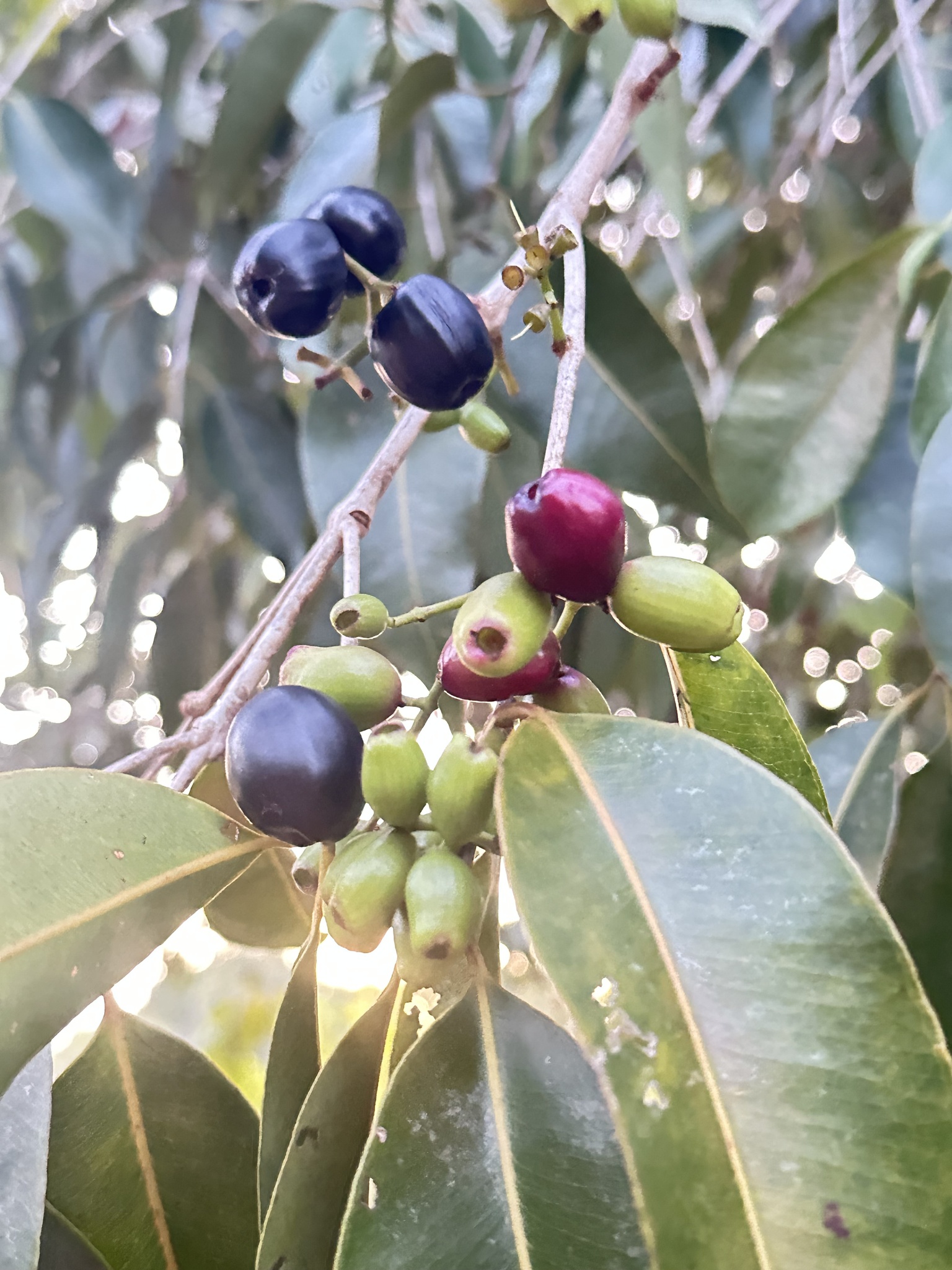
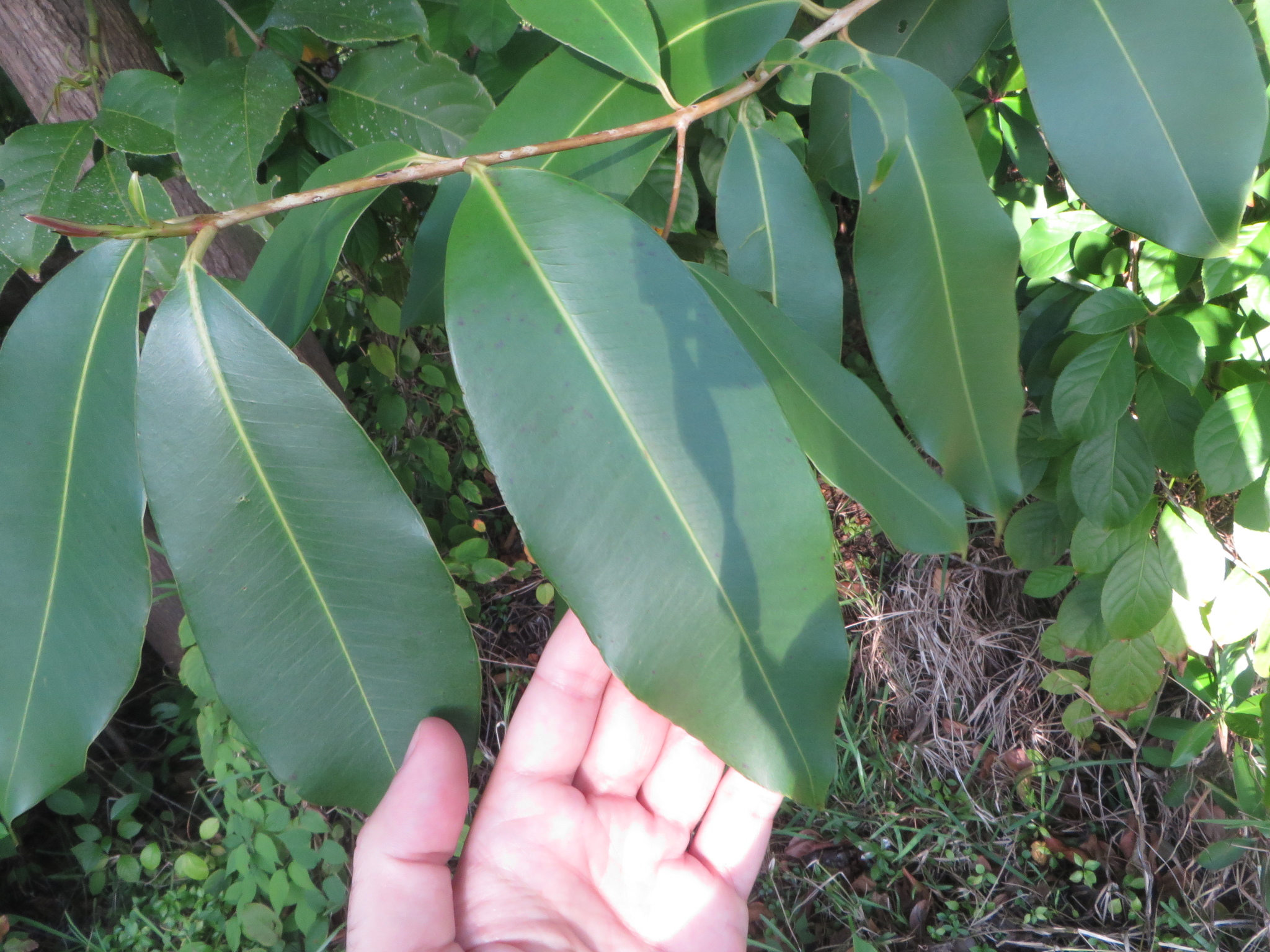


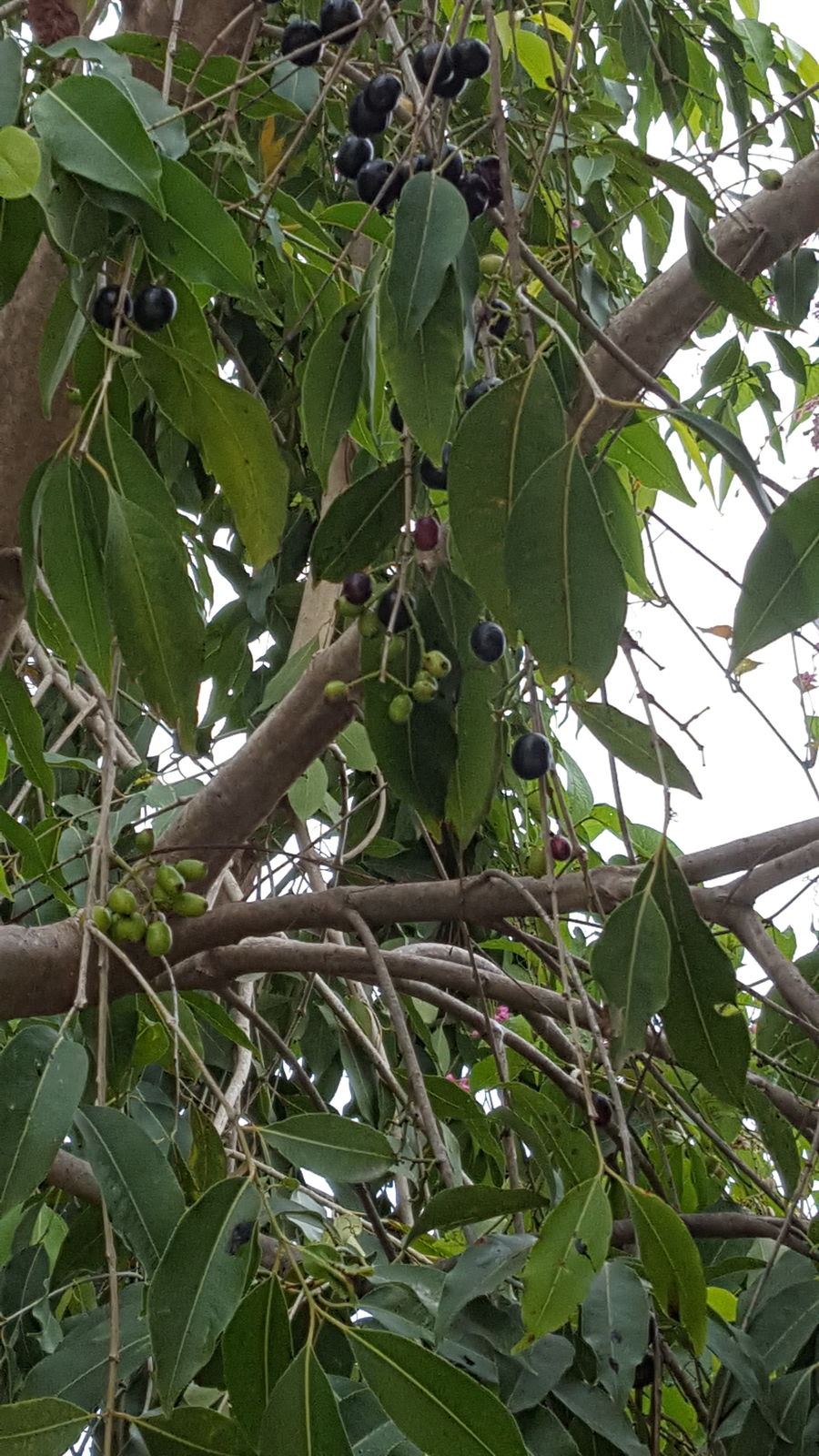
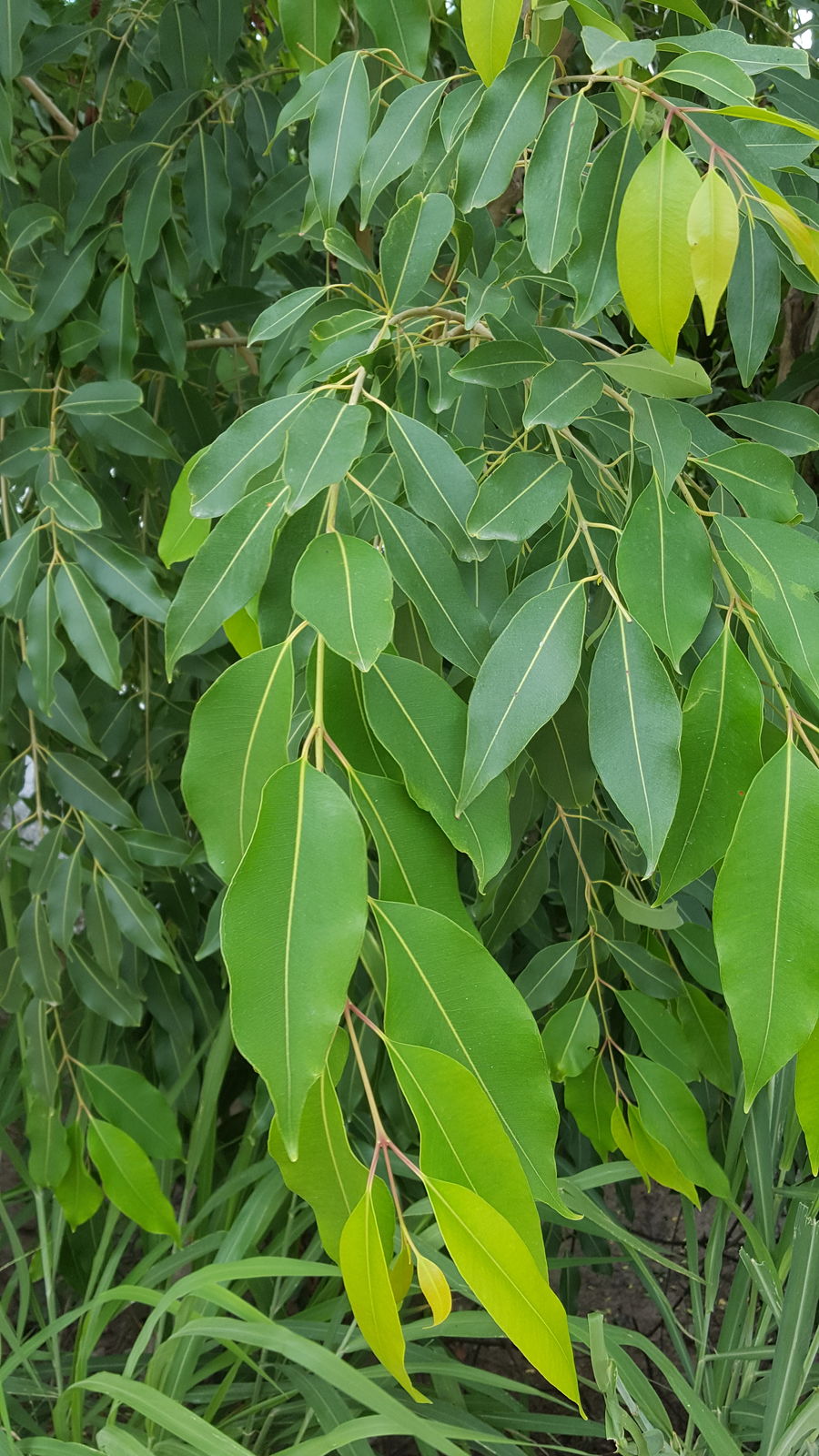
© photo
(c) sea-kangaroo, some rights reserved (CC BY-NC-ND), uploaded by sea-kangaroo · cc-by-nc-nd
tlaloc27 · cc-by
Ben Machado · cc-by-nc
Taken Nov 13, 2021 by Alberto D'São Pedro (cc-by-sa)
Taken Oct 10, 2020 by katia goudkova (cc-by-sa)
© copyright of the Board of Trustees of the Royal Botanic Gardens, Kew.




Global distribution
The native range of Syzygium cumini covers the Indian subcontinent and Southeast Asia, reaching Indonesia and northern Queensland, Australia, according to POWO. Introduced to Hawaii as early as 1870 and to Florida from 1911, it later spread through most tropical and subtropical regions, often far beyond its native range.
- Native4
- Introduced2
- Invasive3
- India
- Sri Lanka
- Indonesia
- Australia (Queensland)
- Florida (United States)
- Brazil
- Hawaii (United States)
- French Polynesia
- New Caledonia
Hexagons: regions where the plant occurs. Green dots: native range.1
Identity
Java plum (Syzygium cumini (L.) Skeels, 1912), also called Jambolan, Jambul, Black plum or Malabar plum, is an evergreen fruit tree in the Myrtaceae family and the genus Syzygium. Linnaeus first described it as Myrtus cumini in 1753; Skeels transferred it to Syzygium in 1912, 159 years later. 1 6
Its fruit, Jamun, gives the species its common name in many South Asian languages. The French name jamelonier comes from Portuguese jambolão, itself borrowed from an Indian vernacular name for this dark, fleshy fruit. 4
Hindu tradition compares Krishna's dark complexion to the color of ripe Java plum fruit. The Indian subcontinent was long called jambudvîpa, “the island of jambu,” referring to the species' former abundance. 8
Recognition
Rapid growth produces a large tree, commonly 10 to 30 m (33 to 98 ft) tall depending on climate, with a trunk often dividing into several secondary trunks near the ground. Rough, dark gray bark at the base becomes smoother and lighter gray higher up. 2 3
Opposite, leathery, glossy leaves measure 5 to 25 cm (2 to 10 in) long according to shoot age. Young leaves are pinkish and smell of turpentine, then become glossy dark green. The fragrant flowers attract insect pollinators despite measuring only 4 to 6 mm (0.16 to 0.24 in). White when they open, they turn pale pink before falling, leaving the numerous stamens. 2
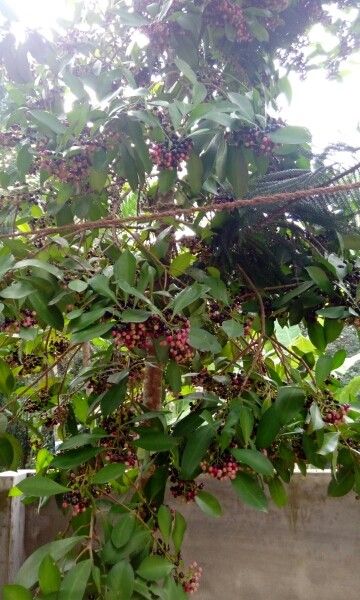
Ripening brings a striking color sequence: green fruit passes through pink and bright red before becoming purple-black when fully ripe. Its sweet, slightly acidic, astringent flesh stains the tongue of anyone eating it. 4 2
Useful taxonomy
The genus name Syzygium comes from Greek syzygos, “joined in pairs.” It describes the opposite leaves found in most species of the genus, including related clove and rose-apple trees. 6
Important botanical synonyms for this species include:
- Eugenia jambolana Lam., an older botanical name
- Eugenia cumini (L.) Druce, a botanical synonym
- Syzygium jambolanum (Lam.) DC., a synonymous name
- Myrtus cumini L., the original name
The name Eugenia jambolana remains common in older medical and pharmacological literature, particularly from India, although the accepted botanical name is Syzygium cumini. Both names refer to the same plant, but overlooking their relationship can distort a literature search. 1
Habitat and range
Java plum's native range covers the Indian subcontinent and Southeast Asia, reaching Indonesia and, according to POWO, northern Queensland in Australia. It grows naturally in humid lowland tropical forests, along riverbanks and in seasonally flooded areas, from sea level to about 1800 m (5900 ft). 1 2
Introductions reached Hawaii as early as 1870 and Florida from 1911 through the USDA. The tree subsequently spread through most tropical and subtropical regions, including Brazil, East Africa, the Caribbean and Pacific islands. 2
In several introduced territories, rapid growth and seed dispersal by birds and other fruit-eating animals have made it invasive. In Hawaii, French Polynesia and New Caledonia in particular, dense stands slow the regeneration of native forest. 5
Life cycle and reproduction
Flowering occurs in the local spring, followed by fruiting from early to late summer according to region and climate. An isolated tree can bear fruit, but bee pollination, notably by Apis dorsata in the Western Ghats, improves fruit set and provides an important share of local honey. 2
Fruit ripens two to three months after flowering, allowing several successive harvests. Usually containing one seed, the fruit supplies seed that quickly loses viability. Sow it fresh for germination in two to four weeks. 2 3
A grafted tree begins bearing in four to seven years, compared with eight to ten years for a seedling. This explains the commercial preference for grafting. Seeds dispersed by birds, bats and monkeys also produce abundant natural regeneration around parent trees, helping the species spread beyond orchards. 2
Uses and risks
Java plum is primarily grown for fruit. Ripe, purple-black jamun is eaten fresh or made into juice, jam, vinegar and, in some regions, wine. Very astringent unripe fruit is poorly suited to eating directly and benefits from soaking in salt water before preparation. 2
Seeds and bark are used in traditional Indian medicine for diabetes and digestive complaints. Compounds such as ellagic acid and various flavonoids have been documented, but effectiveness remains debated in the scientific literature. 7 The tannin-rich bark was also formerly applied to burns. This practice is now discouraged because tannin absorbed through a wound poses a documented risk. No toxicity is recorded for domestic animals. 2
Dense, water-resistant wood traditionally serves for railroad ties, well surrounds and rustic furniture, despite being difficult to work. 2
Varieties, look-alikes and related plants
Indian markets are dominated by two types: Ra Jaman, with large, sweet, purple-fleshed fruit, and Kaatha, with small, acidic fruit mainly used for processing. Named cultivars such as Pharenda and Dabka also circulate in tropical fruit collections and are described as regular producers. 2
Check whether a young tree is grafted before buying it. A grafted tree bears in four to seven years rather than the eight to ten years needed by a seedling, and produces fruit matching the named variety. 2
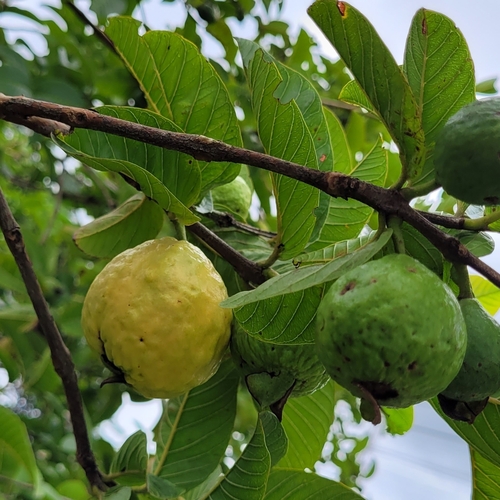
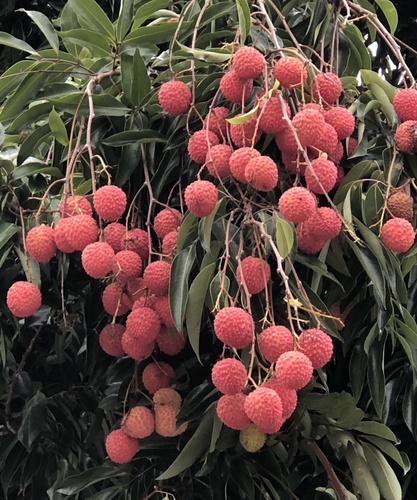
Several hundred species belong to Syzygium, and some have similar dark fruit. The accepted scientific name, Syzygium cumini, is more reliable than fruit color alone, supported by the fruit's characteristic curved shape and tongue-darkening effect when eaten.
Main sources
- Plants of the World Online / Kew, Syzygium cumini (L.) Skeels
- Morton, J., Fruits of Warm Climates, Jambolan, Purdue University NewCROP
- Plants For A Future, Syzygium cumini
- INPN, Syzygium cumini species profile (Java plum, jambolan)
- IUCN Global Invasive Species Database, Syzygium cumini
- Integrated Taxonomic Information System, Syzygium cumini (L.) Skeels
- Ayyanar & Subash-Babu, PMC, phytochemical constituents and traditional uses of Syzygium cumini
- Wikipedia (en), Syzygium cumini, cultural and religious significance in India
Frequently asked questions
Is Java plum toxic?
No toxicity is recorded for domestic animals. However, the bark is rich in tannins. Prolonged medicinal use, particularly on wounds, is now discouraged because absorbed tannin poses a documented risk.
Is Java plum fruit edible?
Yes. Jamun is eaten fresh when purple-black, or made into juice, jam, vinegar or wine depending on the region. Unripe fruit is very astringent and unsuitable for eating directly.
Why is Java plum considered invasive in some regions?
Introduced to Hawaii, French Polynesia and New Caledonia, the tree forms dense stands that hinder native forest regeneration. Rapid growth and seed dispersal by wildlife explain its spread.
How long does Java plum take to bear fruit?
A grafted tree bears fruit in four to seven years, compared with eight to ten years for a seedling. Grafting is therefore preferred in commercial production.
Where does the scientific name Syzygium cumini come from?
Linnaeus described the species as Myrtus cumini in 1753; Skeels transferred it to Syzygium in 1912. The epithet cumini recalls cumin, probably referring to the aromatic scent of some parts of the plant.
What climate does Java plum need?
The tree needs a tropical to warm subtropical climate, USDA zones 10 to 12. It grows from sea level to about 1800 m (5900 ft), but rarely bears fruit above 600 m (1970 ft).
Similar plants
If you are unsure about a plant’s toxicity, ask a botanist or veterinarian for advice.