
Tamarind (Tamarindus indica, )
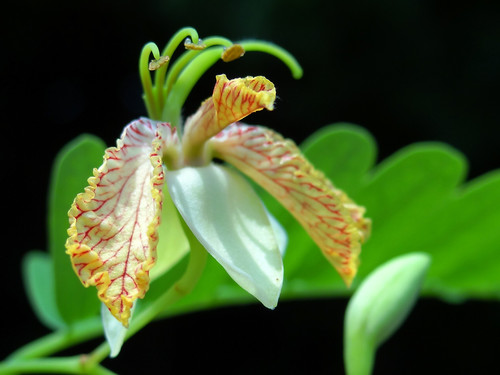
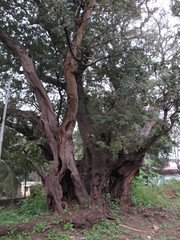
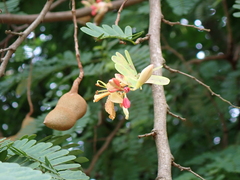
Tamarind (Tamarindus indica) is a fruit tree in the Fabaceae family, originating in tropical Africa despite an epithet that misleadingly suggests India. Its pods contain tangy pulp used in many tropical cuisines. Among the longest-lived fruit trees, it can survive for centuries. No toxicity is identified in humans, cats or dogs, but horse safety remains unknown. Its tropical requirements rule out unprotected outdoor growing in temperate climates.
Read moreTamarind, Tamarind tree, Indian date, Tamarin, Imli and Asam jawa
Place in full sun, with intense direct light all day long.


© photo
no rights reserved, uploaded by 葉子 · cc0
Yoav Daniel Bar-Ness · cc-by
Lynn Harper · cc-by-nc
Taken Feb 17, 2011 by Tela Botanica − Céline PIRAT (cc-by-sa)
Taken Dec 14, 2007 by Tela Botanica − Liliane Roubaudi (cc-by-sa)
Taken Dec 24, 2011 by Tela Botanica − Liliane Roubaudi (cc-by-sa)
Taken Dec 6, 2020 by Ayesha Aman (cc-by-sa)
Taken Jun 9, 2021 by Chittaranjan Padhi (cc-by-sa)
© copyright of the Board of Trustees of the Royal Botanic Gardens, Kew.




Global distribution
Tamarindus indica is native to the Sudanian belt of tropical Africa, from Senegal to East Africa. Introduced to India several thousand years ago, it became so widely cultivated there that it was long considered indigenous to the subcontinent. It later spread throughout the tropics.
- Native3
- Introduced5
- Senegal
- Sudan
- Ethiopia
- India
- Mexico
- Guatemala
- Hawaii
- Australia
Hexagons: regions where the plant occurs. Green dots: native range.1
Identity
Tamarind (Tamarindus indica L., 1753) is the sole species of the monotypic genus Tamarindus, a member of the Fabaceae family. It can crop for 50–60 years and live well beyond a century and a half, but cannot withstand freezing. Its epithet indica gives a misleading origin: the tree comes from tropical Africa, from Senegal’s Sudanian belt to East Africa, and reached India through an introduction several thousand years ago. 1 2
The name tamarind derives from Arabic tamr hindi, literally “Indian date.” The expression describes the brown, sticky appearance of dried pulp rather than the tree’s true native range. Egyptians and Greeks already knew the fruit in the fourth century BCE, long before this name established the association with India. 2 3
Recognition
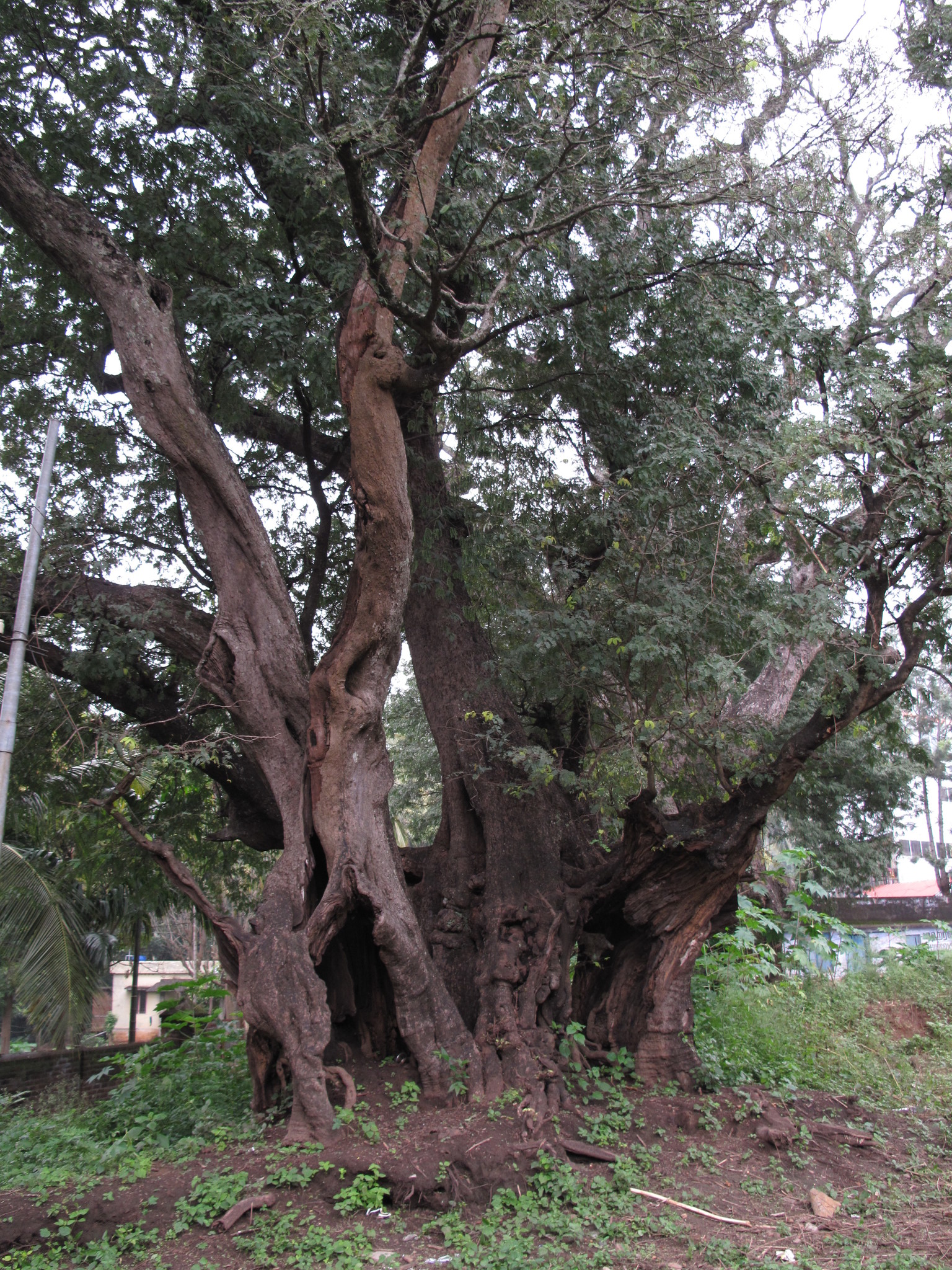
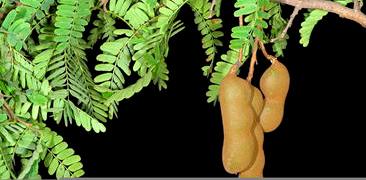
Slow growth eventually produces a dense, rounded crown commonly 12–20 m (39–66 ft) tall and up to 30 m (98 ft) in exceptional specimens. Rough, fissured gray bark covers flexible branches that make the tree remarkably wind-resistant. 2 5
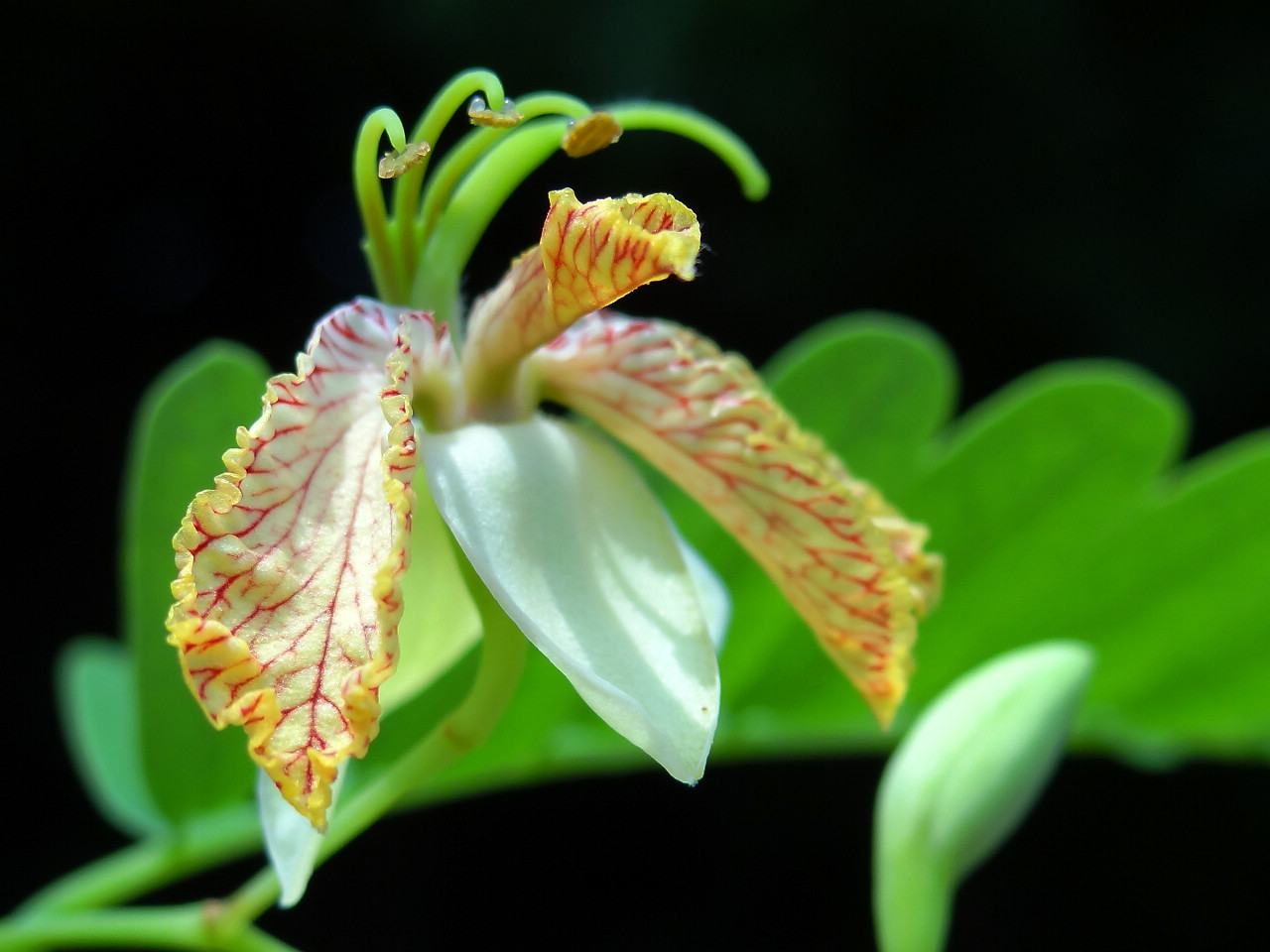
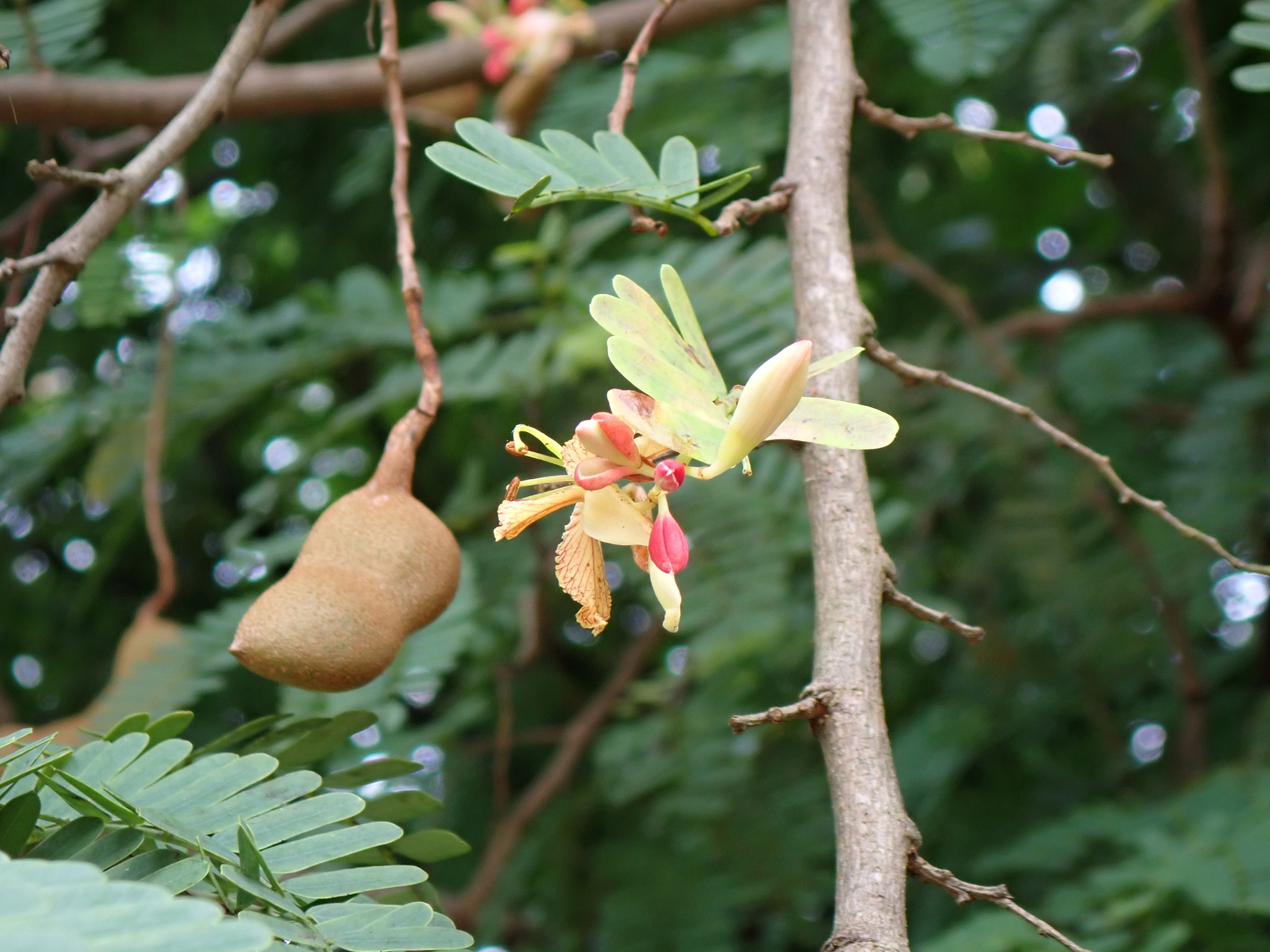
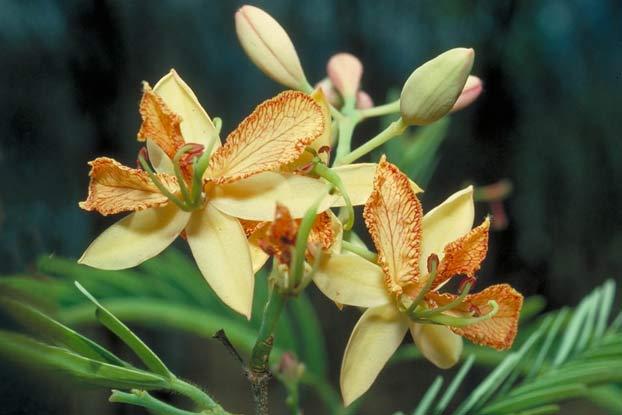
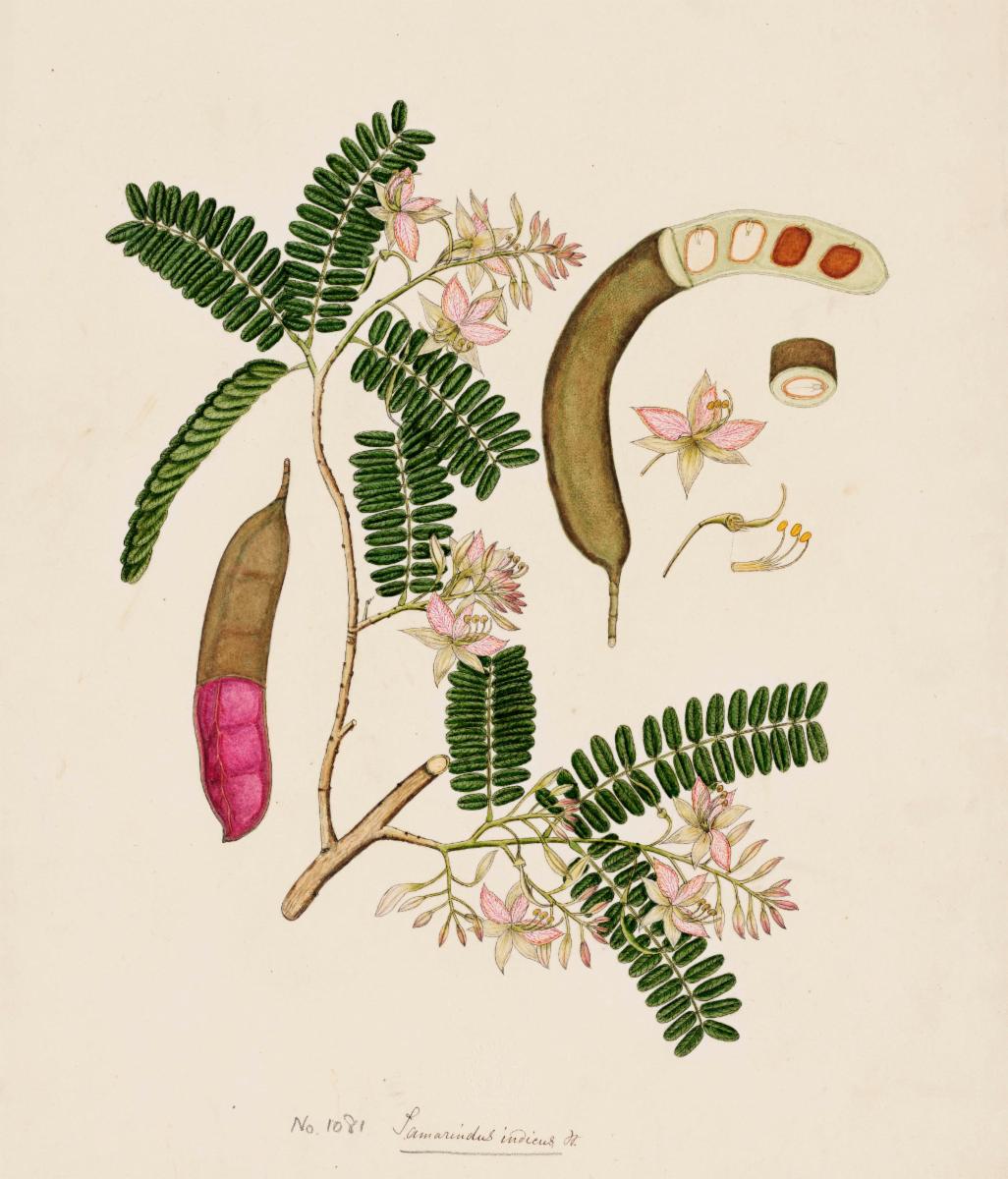
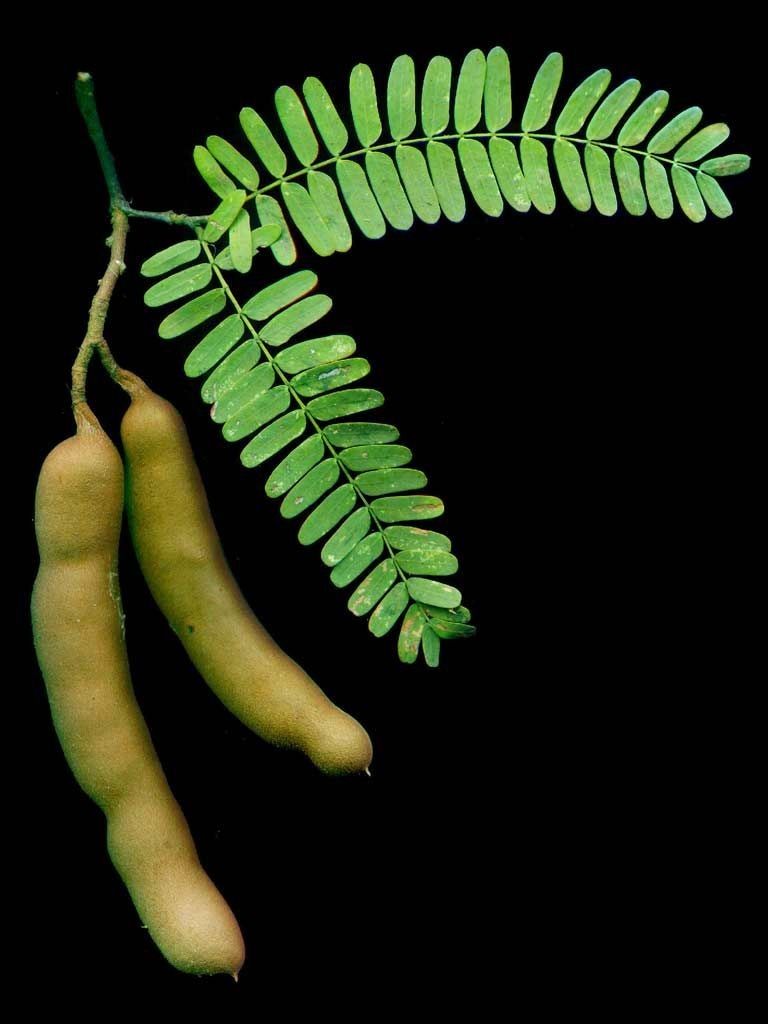
Pinnate leaves have 10–20 pairs of small leaflets that fold each night, a movement called nyctinasty and shared with many legumes. Small flower clusters remain inconspicuous. The flowers are yellow with orange or red streaks, opening from pink buds. 2
Cinnamon-brown pods are flattened, irregularly curved and swollen, measuring 5–18 cm (2–7 in) long. A brittle shell encloses brown, sticky, strongly acidic pulp around hard, glossy seeds. Once the pod is opened, that pulp and the curved pod shape offer the most dependable confirmation of the species. 2 3
Useful taxonomy
Several botanical synonyms from older descriptions now fall under the single accepted species Tamarindus indica:
- Tamarindus occidentalis Gaertn., an older name
- Tamarindus officinalis Hook., a historical synonym
- Tamarindus somalensis Mattei, a former species name
- Tamarindus umbrosa Salisb., another earlier name
- Tamarindus indica var. emarginata Chiov., a former variety name
Only one species belongs to the monotypic genus Tamarindus, making identification simpler than in larger genera. The accepted scientific name therefore provides a consistent reference without having to distinguish another species within the genus. 1 9
Habitat and range
Wooded savannas in tropical Africa’s Sudanian belt, from Senegal to East Africa, form the native range. Tamarind grows on varied soils, from alluvial loam to porous limestone. It also tolerates salt spray and grows close to the coast. 1 2
Several thousand years of cultivation in India led to the widespread belief that tamarind was indigenous to the subcontinent. It later spread throughout the tropical belt, including Southeast Asia, Pacific islands, the Caribbean, Mexico and Central America. Introduction to Hawaii dates to 1797. 2 5
The IUCN assessment places tamarind in Least Concern. Its broad range and cultivation throughout the tropics protect it from a global extinction threat. 6 7
Life cycle and reproduction
Seed remains viable for several months and germinates in roughly a week after sowing. With regular watering, a seedling reaches about 60 cm (24 in) in its first year and 120 cm (47 in) in its second. 2
Climate strongly affects the age at first fruiting: as early as 4 years in Madagascar, around 5 years in Mexico, but sometimes 10–14 years in India. Following summer flowering, pods take about 245 days from fruit set to ripen, gradually losing half their moisture. 2
A distinct dry season during ripening favors fruit production. Rainfall that is too frequent at that stage can prevent fruiting altogether. Mature trees then crop heavily for 50–60 years, before their productivity declines. 2
Even after that decline, a tree may live for nearly another century and a half. This exceptional lifespan places tamarind among the longest-lived fruit trees cultivated by people. 2
Uses and risks
Tangy tamarind pulp is a classic ingredient in Worcestershire sauce and many tropical cuisines, including sauces, chutneys, drinks and confectionery. Young leaves and flowers are also cooked as vegetables in parts of India and southern Africa. 2 3
Hard, dense, purplish-brown heartwood is valued for furniture, tool handles and traditional mortars. Seeds supply an industrial gum used for textile sizing. 2
The ASPCA lists tamarind as non-toxic to cats, dogs and humans; its status in horses remains undetermined. 4
A widespread belief holds that few plants survive beneath a mature tamarind. This effect is attributed to the acidity of fallen leaves rather than actual toxicity of the species. In some African and Burmese traditions, the tree is considered sacred or inhabited by a protective spirit. 2
Varieties, look-alikes and related plants
Sweeter pulp is the main aim of horticultural selection. Makham Waan in Thailand and Manila Sweet, distributed by American agricultural services in Florida, are much sweeter than the wild type. Red-pulp populations are also considered superior in several producing regions, without constituting a distinct botanical variety. 2
Two groups of plants called tamarind do not belong to Tamarindus:
- Manila tamarind, Pithecellobium dulce, is an American legume with sweet pods rather than a close botanical match for true tamarind;
- Australian native tamarinds in the genus Diploglottis belong to an entirely different botanical family.
Use the accepted name Tamarindus indica to distinguish true tamarind. Neither of these common-name look-alikes shares its combination of 5–18 cm (2–7 in) pods, acidic pulp and membership of a one-species genus. 1
Main sources
- Plants of the World Online / Kew, Tamarindus indica L.
- Purdue University NewCrop / Julia Morton, Tamarind (Tamarindus indica), Fruits of Warm Climates 1987
- Useful Tropical Plants Database (Ken Fern), Tamarindus indica
- ASPCA, Tamarindus indica toxicity entry
- USDA NRCS PLANTS Database, Tamarindus indica L. (TAIN2)
- IUCN Red List, Tamarindus indica assessment 2017
- INPN / MNHN, Tamarindus indica L.
- University of Florida IFAS, Tamarindus indica tree fact sheet
- International Plant Names Index, Tamarindus indica L.
Frequently asked questions
Is tamarind poisonous?
No. The ASPCA lists Tamarindus indica as non-toxic to cats, dogs and humans. Horse safety remains undetermined, while the pulp is a common food wherever the tree grows.
Where does tamarind originally come from?
The species is native to tropical Africa, from Senegal through the Sudanian belt to East Africa. Its epithet indica reflects an introduction to India so ancient that the tree was long thought native there.
Does tamarind tolerate cold?
Young trees tolerate cold very poorly and frost kills them. Established mature trees in subtropical climates withstand brief, mild cold, but the species remains fundamentally tropical.
How long does a tamarind tree live?
The tree crops heavily for 50–60 years before productivity declines, yet it can live for almost another century and a half. That makes it one of the longest-lived cultivated fruit trees.
Why is my tamarind tree not fruiting?
First fruiting takes 4–14 years depending on climate. A distinct dry season during fruit ripening is needed; overly frequent rain at that stage often prevents fruiting.
Which plants are confused with tamarind?
Manila tamarind is Pithecellobium dulce, a different genus rather than true tamarind. Australian native tamarinds in the genus Diploglottis belong to a different family.
Can you eat tamarind fruit raw?
Yes, ripe pulp can be eaten fresh. More often it goes into sauces, chutneys, drinks and confectionery across the tropical cuisines where the tree is cultivated.
Similar plants
If you are unsure about a plant’s toxicity, ask a botanist or veterinarian for advice.