
Japanese yew (Taxus cuspidata, )
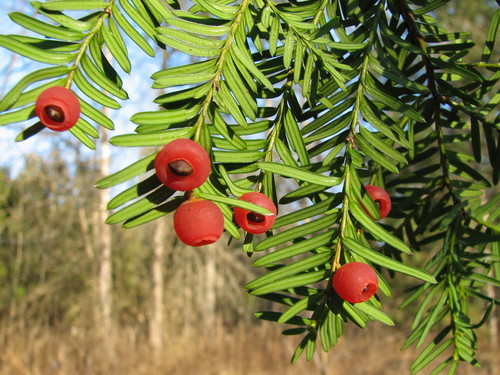
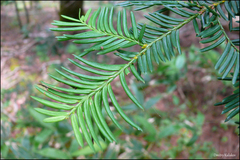

Japanese yew (Taxus cuspidata) is an evergreen conifer in the Taxaceae family, native to mountains in Japan, Korea, northeastern China and the Russian Far East. Needles arranged in a V along the branchlet, their short, sharp tips, and a fleshy red aril enclosing one seed in fall help identify it. Every part is toxic except the aril flesh.
Read moreJapanese yew, Spreading yew and Ichii



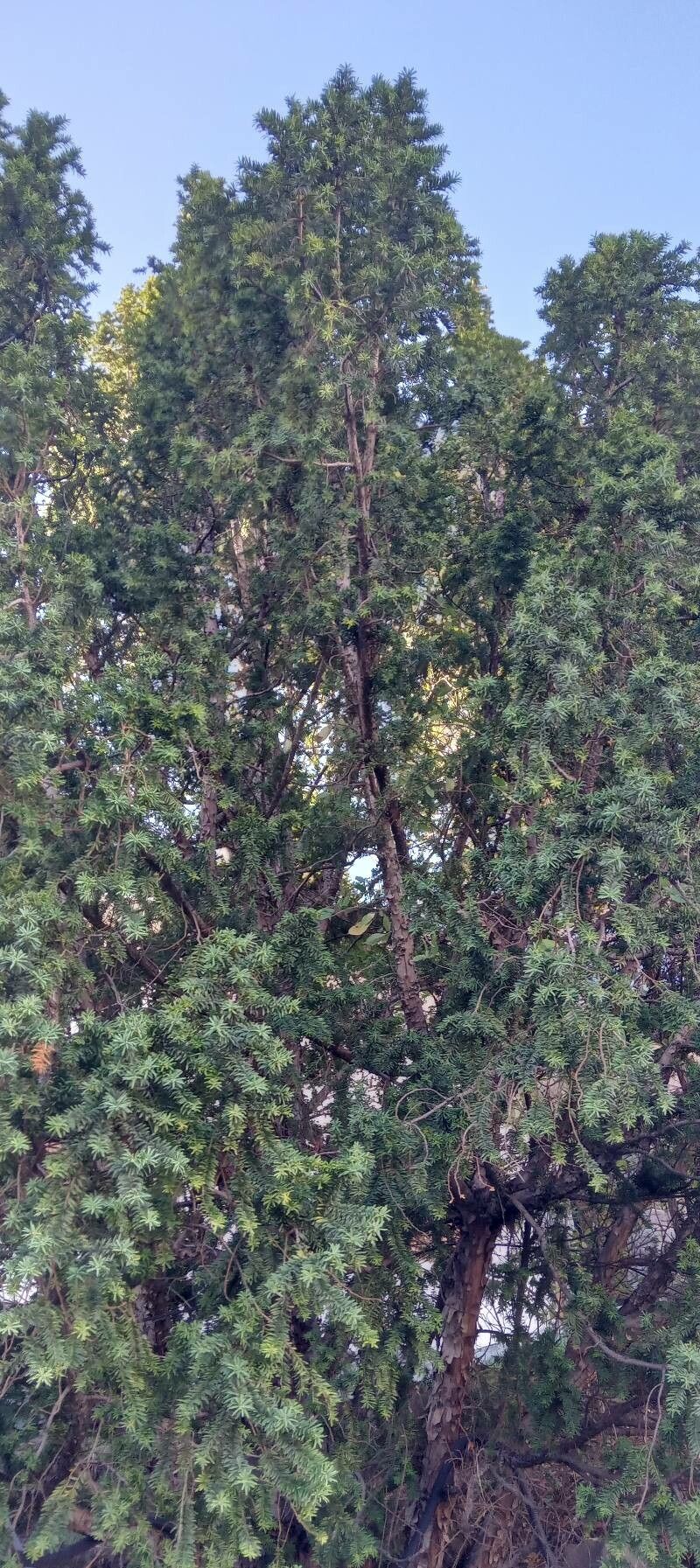
© photo
(c) pinemartyn, some rights reserved (CC BY-NC), uploaded by pinemartyn · cc-by-nc
Dmitry Kulakov · cc-by
Wikimedia Commons · CC BY-SA or Public Domain
Taken Jun 10, 2021 by Zeynep Mutlu (cc-by-sa)
Taken Oct 19, 2021 by Decobert Didier (cc-by-sa)
Taken Sep 21, 2014 by Tela Botanica − Yoan MARTIN (cc-by-sa)
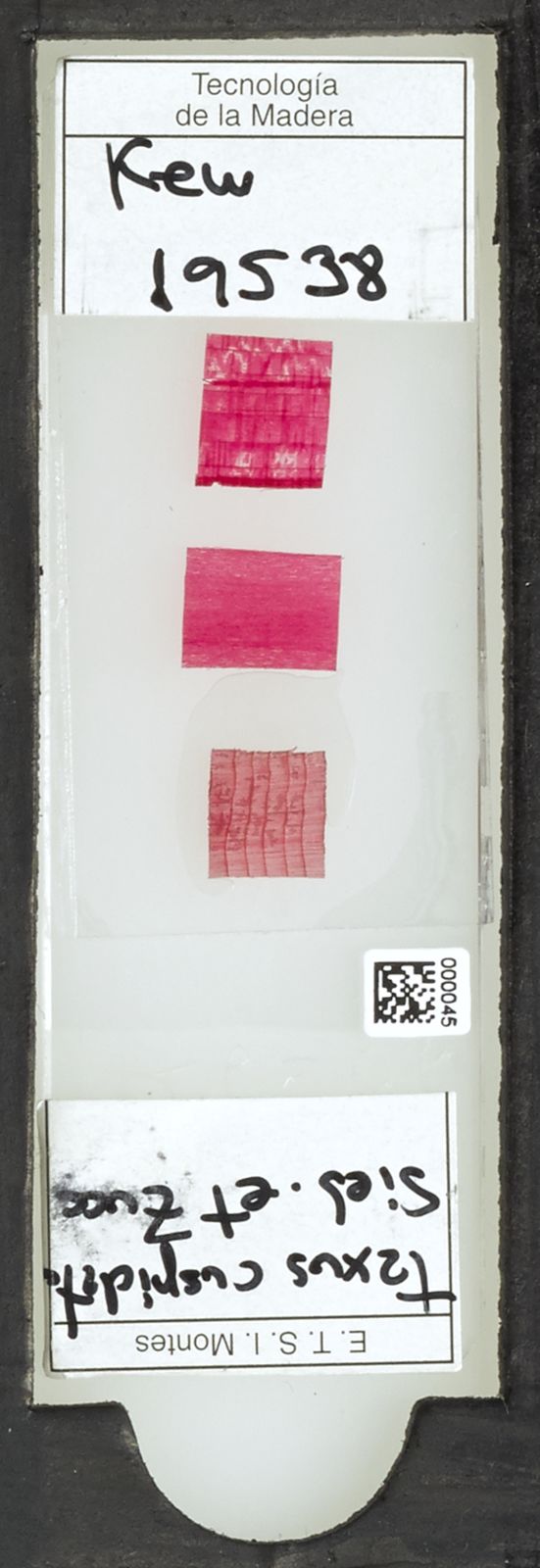
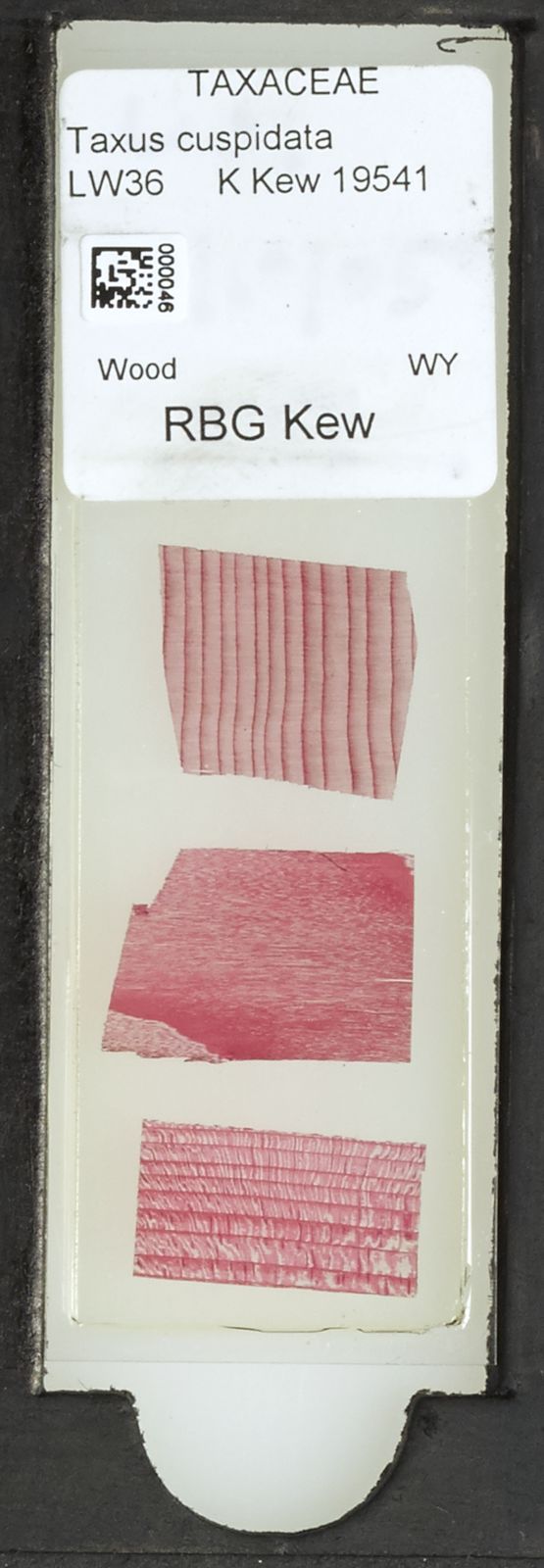
© copyright of the Board of Trustees of the Royal Botanic Gardens, Kew.




Global distribution
The native range of Taxus cuspidata spans mountains in Japan, Korea, northeastern China and the Russian Far East. The species is widely planted outside its native range, especially in North America and Europe for hedges and bonsai, and is not considered invasive.
- Native4
- Japan
- South Korea
- China
- Russia
Hexagons: regions where the plant occurs. Green dots: native range.1
Identity
Japanese yew (Taxus cuspidata Siebold & Zucc., 1846), also called ichii or spreading yew, is an evergreen conifer in the Taxaceae family and genus Taxus. This shrub or small tree grows in the mountains of Japan, Korea, northeastern China and the Russian Far East. 1 8
The epithet cuspidata comes from Latin cuspis, point, describing the abruptly tapered tip of each needle. This feature helps distinguish the species from its European relative, Common yew (Taxus baccata). In Japan it is also called ichii, literally first rank: the fine-grained wood of old trees was once carved into scepters carried by high-ranking courtiers. 2
Recognition
A dense shrub or pyramidal tree, Taxus cuspidata develops a rounded crown with age and has thin, scaly, reddish-brown bark. Wild trees commonly reach 10–18 m (33–59 ft), with trunks that can exceed 60 cm (24 in) in diameter. Garden specimens and clipped hedges usually stay below 4–8 m (13–26 ft), roughly half the height of an unrestricted forest tree. 2 3
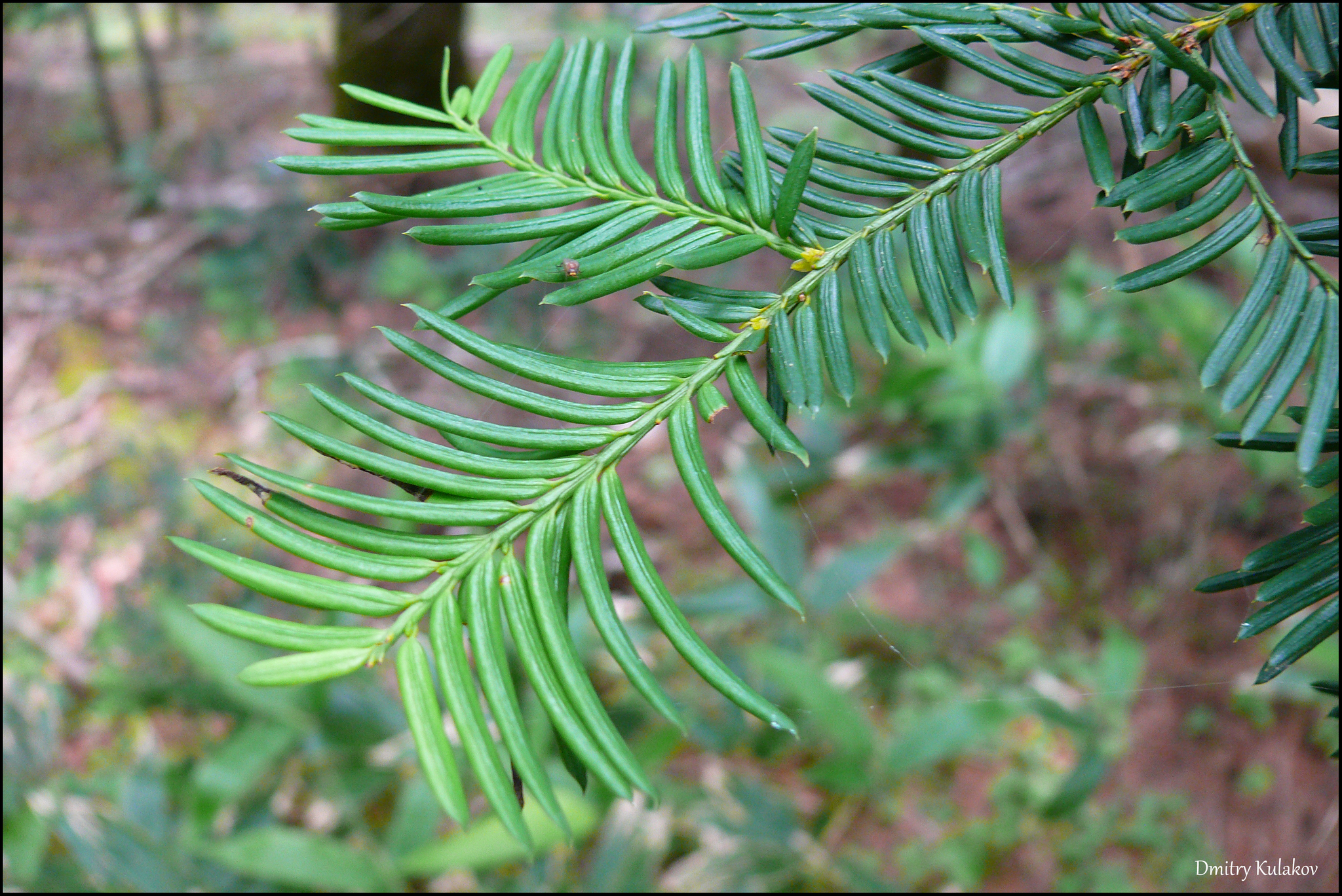
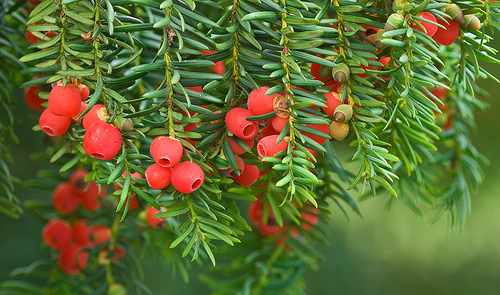
Japanese yew needles are flat and linear, forming a slight V along the branchlet, closer and more upright than the two flat rows of Common yew. Dark green above, they have two broad, yellowish stomatal bands below, more pronounced than those of Taxus baccata. Each needle ends in a short, sharp point, the feature behind the species name. 5 4
Separate Japanese yew trees carry male or female structures: Taxus cuspidata is dioecious. Only females bear the fleshy red aril in fall. Open at the top and measuring about 8–12 mm (0.3–0.5 in), it surrounds one seed. An isolated male will therefore never bear these berry-like structures, whatever its age. 4 2
Useful taxonomy
POWO/WCVP accepts the name Taxus cuspidata Siebold & Zucc., described in 1846. Historical literature and the nursery trade use several other names without separate botanical status:
- Taxus baccata var. cuspidata (Siebold & Zucc.) Carrière, a historical botanical name
- Taxus cuspidata var. umbraculifera (Siebold ex Endl.) Makino, a historical botanical name
- Taxus cuspidata var. latifolia (Pilg.) Nakai, a historical botanical name
- Taxus cuspidata f. thayerae (E.H.Wilson) Rehder, a historical botanical name
Treatment as var. cuspidata illustrates the taxonomic uncertainty: some older classifications placed this Asian plant within Taxus baccata as a variety, but POWO recognizes Taxus cuspidata as a distinct species. The genus also includes the widely planted garden hybrid Taxus x media Rehder, a cross between Taxus cuspidata and Taxus baccata. 1
Habitat and range
Mountain forests across Japan (Hokkaido, Honshu, Kyushu and Shikoku), Korea, northeastern China (Heilongjiang, Jilin, Liaoning and Shaanxi) and the Russian Far East form the native range of Taxus cuspidata. Russian localities include Primorye, Sakhalin and the Kuril Islands. It inhabits cool, moist upland forest on acidic soil, often at 500–1,000 m (1,640–3,280 ft). 8 4
A global Least Concern assessment from the International Union for Conservation of Nature dates to 2013. That status for Taxus cuspidata masks local declines: habitat fragmentation and an unbalanced sex ratio in China concern some botanists despite the species’ overall stability. 7
Beyond Asia, Japanese yew is chiefly ornamental. Widely grown outside its native range, especially in North America and Europe for hedges and bonsai, it is not considered invasive. 5
Life cycle and reproduction
Spring brings pollen release in Taxus cuspidata: wind carries pollen from male structures to the ovules of female trees. There is no woody cone; each fertilized seed stands alone within a red aril that takes six to nine months to ripen before fall. 4
Slow to moderate growth means a young Japanese yew takes decades to attain its mature habit. This pace accompanies unusual longevity: some specimens rank among northeastern Asia’s oldest trees. Individuals in Russia’s Sikhote-Alin Mountains reportedly exceed 1,000 years, while Sentsūzan-no-Ichii in Tottori Prefecture, Japan, is estimated at about 2,000 years. 5
Propagation of the typical species uses seed, with slow germination taking 18 months to more than two years, or cuttings of semi-ripe shoots collected in July and August in its northern temperate growing regions; these often root by late September. 4
Uses and risks
Clipped hedges, topiary, bonsai and specimen planting are the main ornamental uses of Taxus cuspidata. It appears in Japanese-style gardens and Western parks alike; in cold continental climates its hardiness makes it more reliable than Common yew. 5
With the exception of aril flesh, all parts of Japanese yew contain cardiotoxic taxine alkaloids, concentrated especially in seeds and foliage. Ingestion causes tremors, breathing difficulties and then convulsions, and can lead to sudden cardiac arrest in dogs, cats and horses. No specific antidote exists; prolonged medical monitoring is needed to limit the risks. 6
Clipped foliage also supplies raw material for a semi-synthetic precursor of taxanes, anticancer medicines used against certain ovarian cancers. Common yew shares this use. 5
Varieties, look-alikes and related plants
Four established cultivars shape the nursery selection of Taxus cuspidata: Capitata, an upright pyramidal form often used for rootstocks or hedges; Nana, a dwarf spreading form; Densa, a low, dense female selection; and Aurescens, whose golden-yellow new spring shoots turn green later in the season. 2
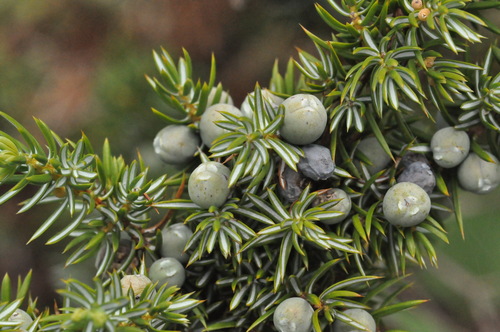
Common yew (Taxus baccata) is the most frequent source of confusion. Its flatter needles lie in two horizontal rows, contrasting with the more upright V of Japanese yew. Identification becomes harder with Taxus x media, their hybrid, now among the yews most widely sold by North American nurseries for its intermediate hardiness. In the field, the V-shaped needle arrangement and abruptly tapered tips remain the most useful clues for separating the three. 4
Main sources
- Plants of the World Online / Kew, Taxus cuspidata Siebold & Zucc.
- Royal Horticultural Society, Taxus cuspidata - Japanese yew
- Missouri Botanical Garden, Taxus cuspidata
- Plants For A Future, Taxus cuspidata
- NC State Extension, Taxus cuspidata (Japanese Yew)
- ASPCA, Japanese Yew toxicity entry
- IUCN Red List of Threatened Species, Taxus cuspidata assessment
- USDA GRIN Global, Taxus cuspidata taxonomy record
Frequently asked questions
Is Japanese yew the same plant as Common yew?
No. Taxus cuspidata and Taxus baccata are separate species according to POWO, although some older classifications treated the Asian species as a variety of Common yew. They cross readily in horticulture to produce Taxus x media.
Is Japanese yew toxic?
Yes. All parts except the flesh of the red aril contain cardiotoxic taxine alkaloids. A pet or child ingesting leaves or seeds needs urgent veterinary or medical attention.
Can you eat the red aril of Japanese yew?
The sweet aril flesh is the only nontoxic part, but the seed inside remains dangerous if chewed or swallowed. It is best to avoid eating it, especially around children.
How does Taxus cuspidata differ from Taxus x media?
Taxus x media is a garden hybrid between Taxus cuspidata and Taxus baccata, selected to combine the Japanese species’ hardiness with the finer habit of Common yew. It is now among the most widely sold yews in North American nurseries.
Why does my Japanese yew never produce red arils?
The species is dioecious, with male and female structures on separate plants. A yew that has grown for years without producing berries is almost always male, releasing pollen in spring.
Does Japanese yew grow quickly?
No. Growth remains slow to moderate, although some well-drained soils speed it up slightly. This slow growth partly explains its great longevity: some trees are estimated to be several centuries or more than a thousand years old.
Where does the name ichii come from?
The Japanese name means first rank, referring to yew-wood scepters given to high-ranking courtiers at the imperial court. The fine-grained wood of old trees was particularly sought for this purpose.
Similar plants
If you are unsure about a plant’s toxicity, ask a botanist or veterinarian for advice.