
Arjun tree (Terminalia arjuna, )
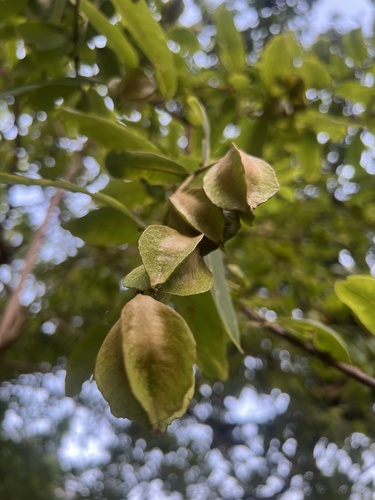
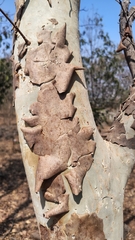

Arjun tree (Terminalia arjuna) is a large tree in the Combretaceae family, native to riverbanks on the Indian subcontinent. Its gray bark peels off in broad plates and has been used for centuries in Ayurvedic medicine as a heart tonic. A frequently buttressed trunk and five-winged fruit make the species distinctive along waterways, where it also plays a major ecological role for local wildlife.
Read moreArjun tree, Arjuna and Kahua



© photo
(c) wild_wild_nature, some rights reserved (CC BY-NC) · cc-by-nc
Aadi Kulkarni · CC BY-NC
Wikimedia Commons · CC BY-SA or Public Domain
Taken Nov 11, 2015 by Tela Botanica − Hugo SANTACREU (cc-by-sa)
© copyright of the Board of Trustees of the Royal Botanic Gardens, Kew.




Global distribution
Terminalia arjuna is native to the Indian subcontinent, from Pakistan to Bangladesh, including Sri Lanka and Myanmar. It is widely planted outside this range, especially in East Africa and Southeast Asia, for shade, agroforestry and riverbank stabilization.
- Native4
- Introduced4
- India
- Sri Lanka
- Myanmar
- Bangladesh
- Pakistan
- Kenya
- Indonesia
- Malaysia
Hexagons: regions where the plant occurs. Green dots: native range.1
Identity
Arjun tree (Terminalia arjuna (Roxb. ex DC.) Wight & Arn., 1834), also known as Arjuna or Kahua, is a large tree in the Combretaceae family and genus Terminalia. The genus name comes from Latin terminus, referring to leaves clustered near the ends of branches. This is a feature shared across the genus rather than unique to this species. 5 1
Centuries of Ayurvedic use have made the bark well known as a heart tonic. Recent clinical trials examined this traditional use at doses of 1–2 g per day, reporting results for left ventricular function in patients with heart failure. 7 8
Recognition
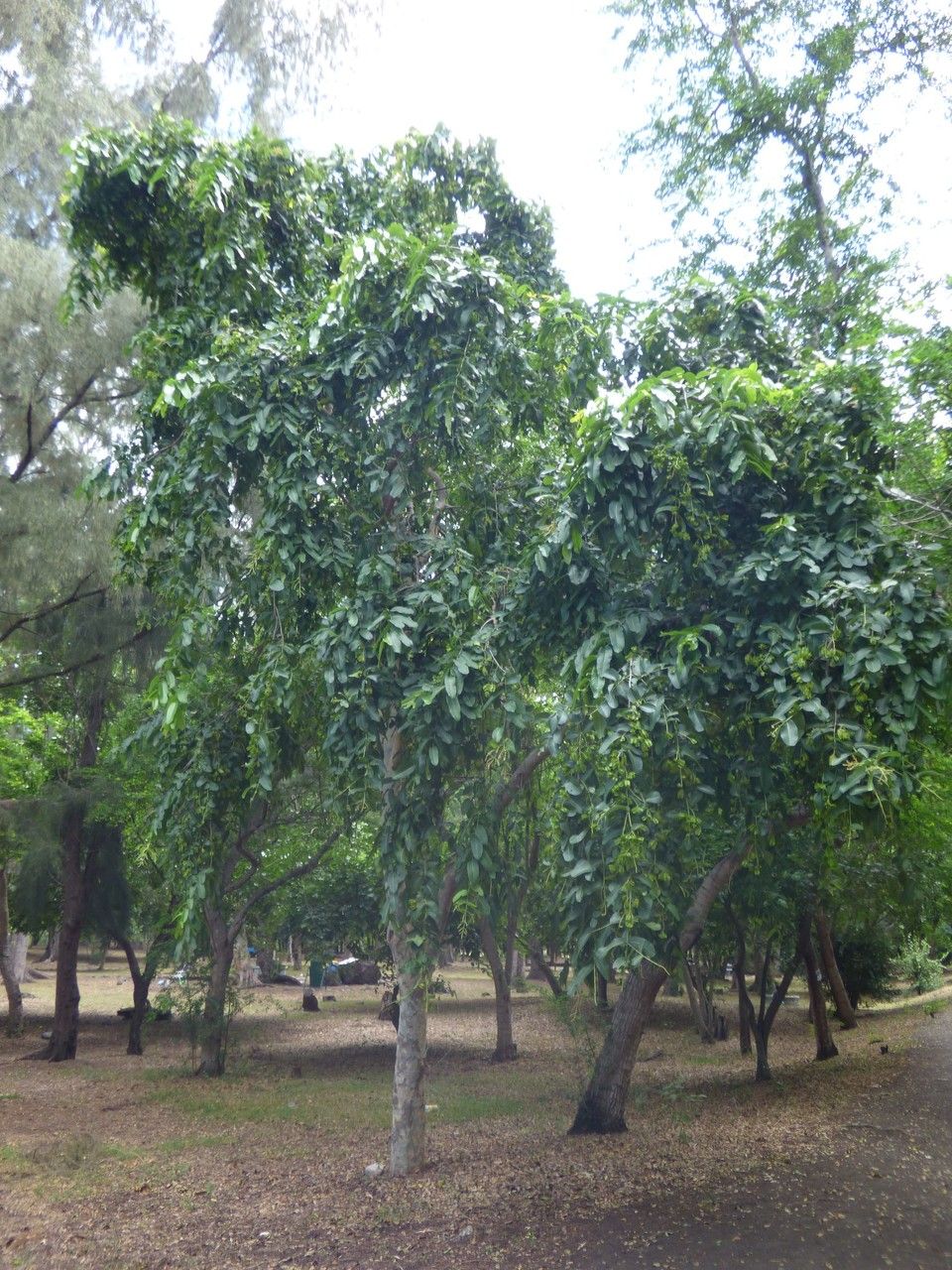
With a usual height of 20–30 m (66–98 ft), Terminalia arjuna is a substantial tree, exceptionally reported to reach 60 m (197 ft). Its trunk may exceed 2 m (6.6 ft) across and develops pronounced buttresses at the base on older trees. 2 3
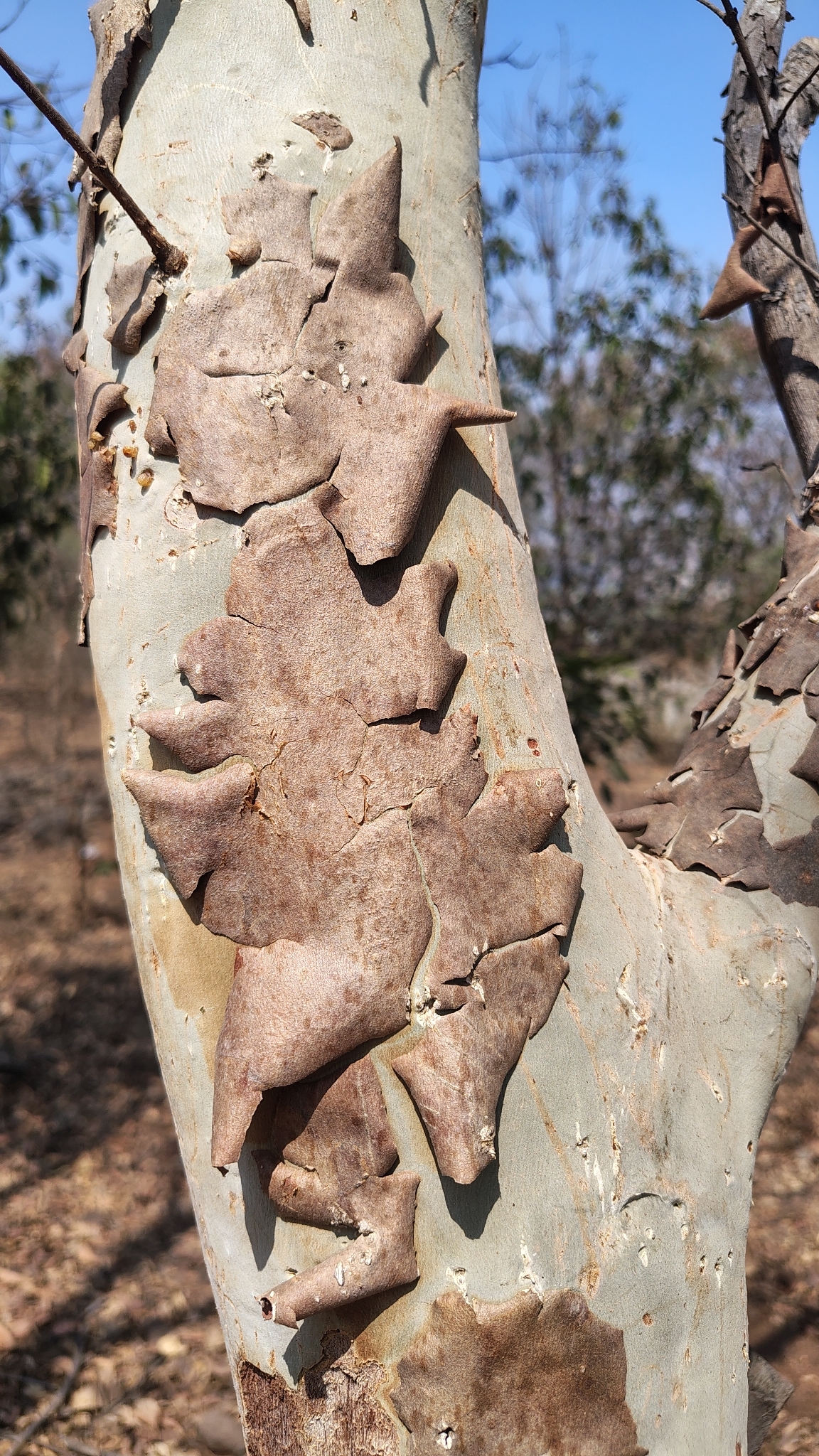
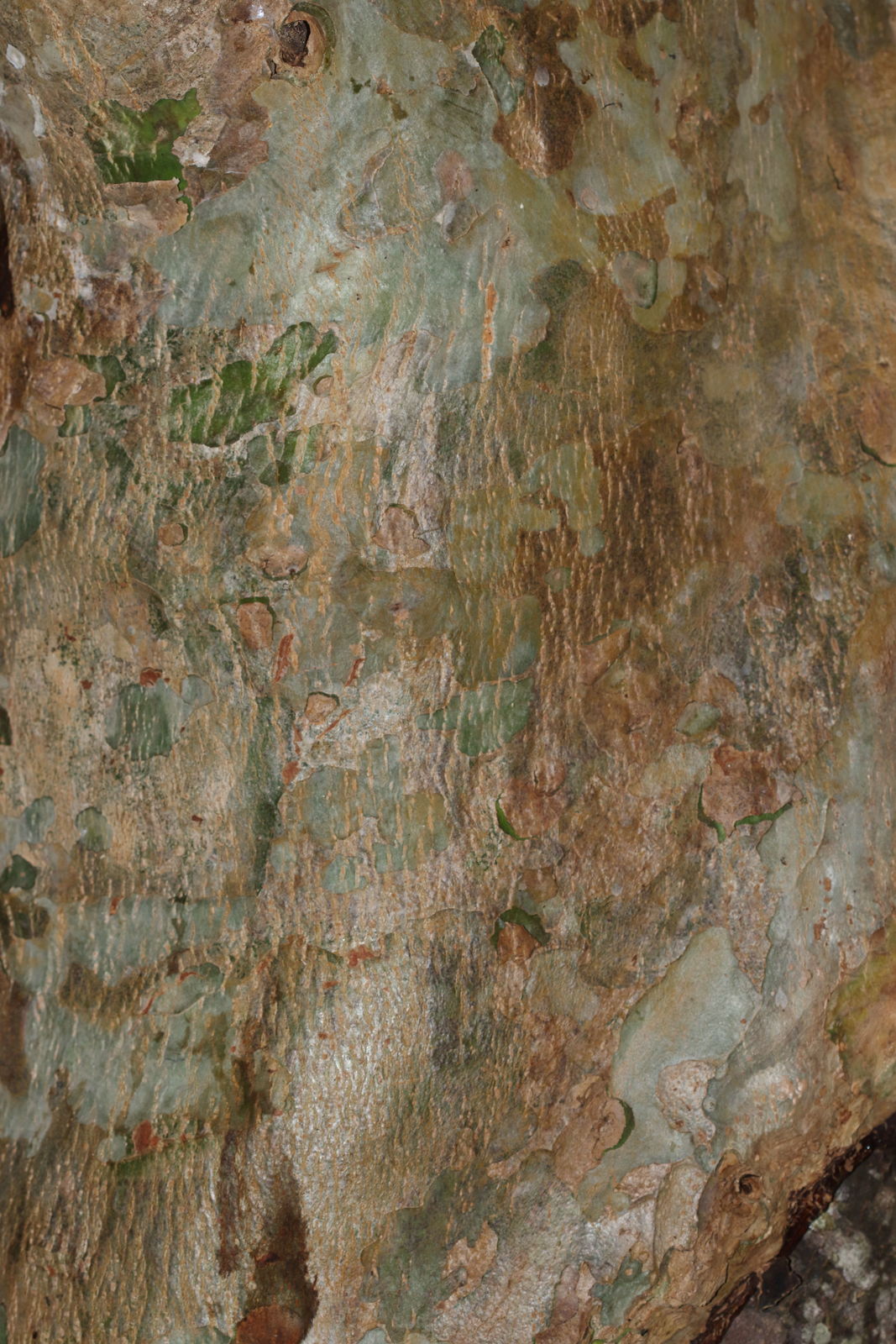
Smooth gray to whitish bark naturally sheds in broad, thin plates, which fall roughly once a year. This distinctive peeling helps identify the species even without leaves or fruit. 2 4
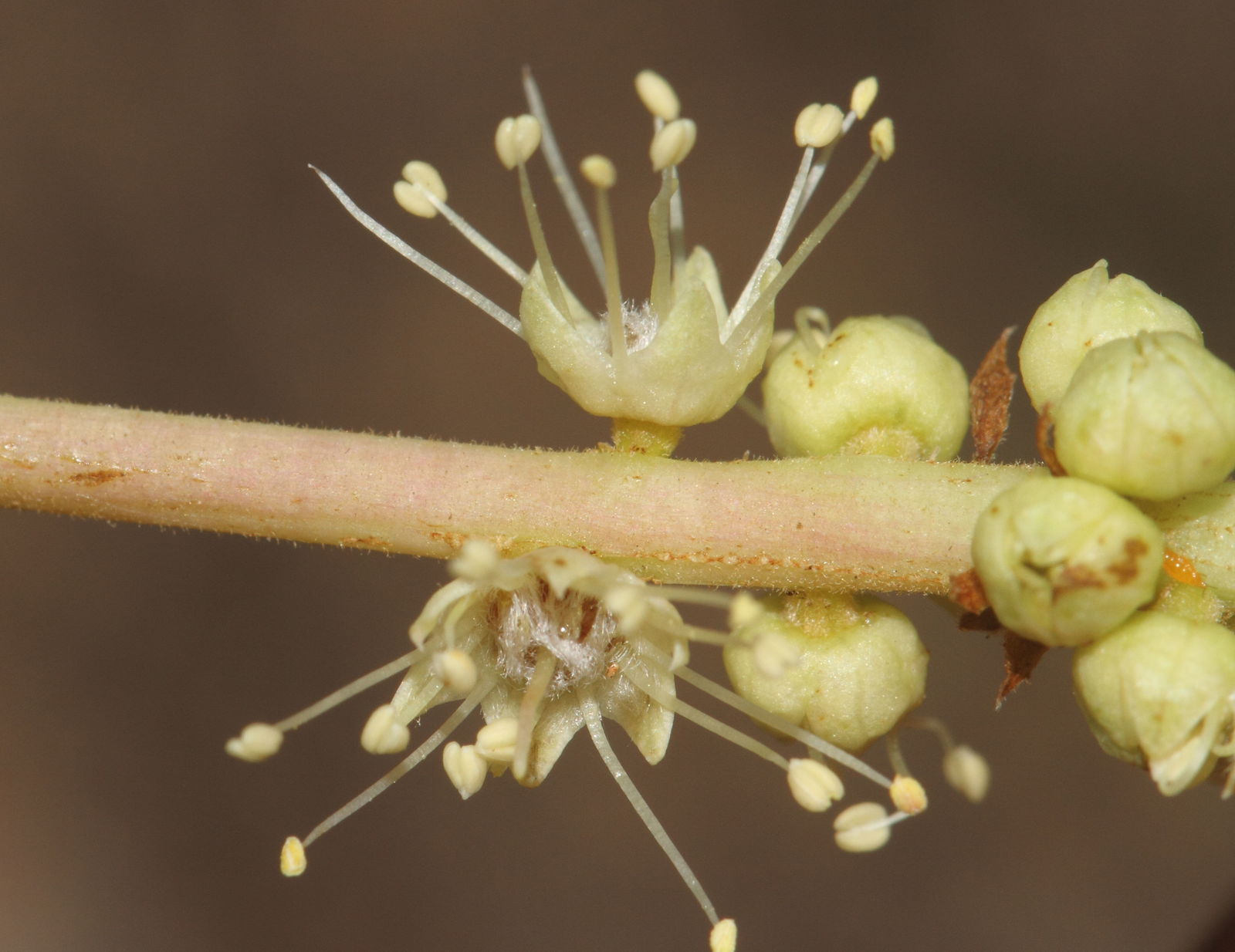
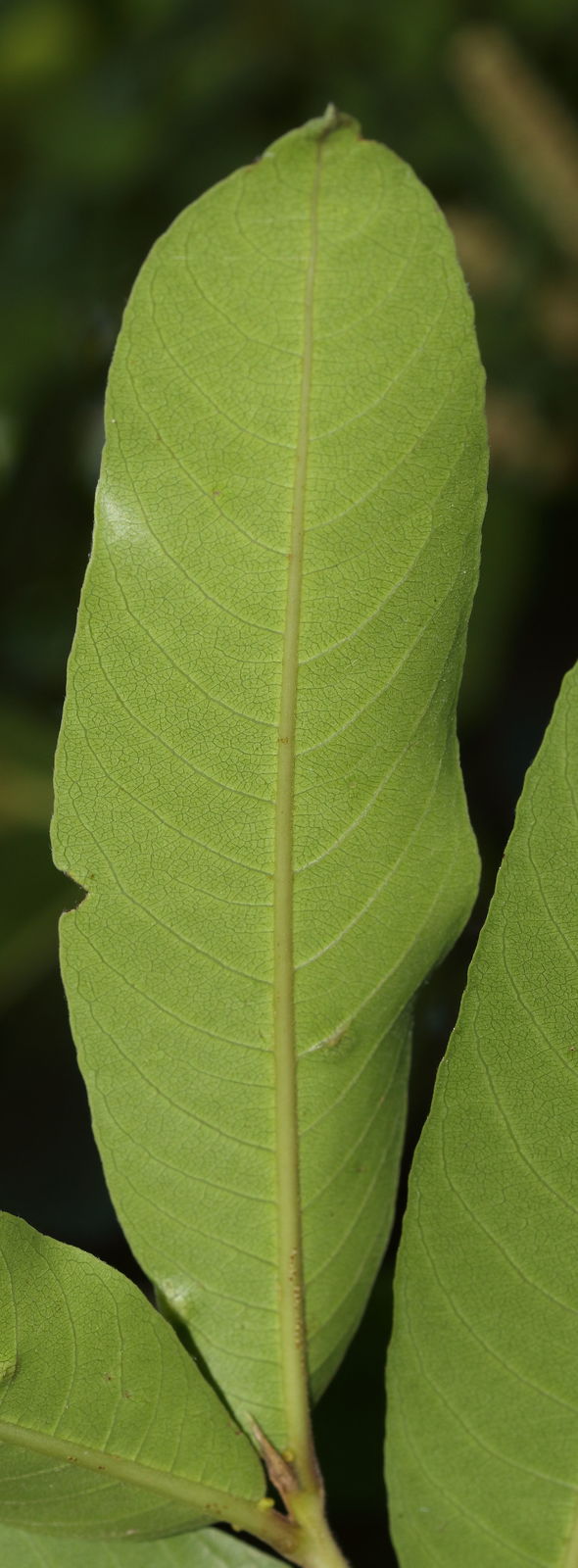
Leathery, simple oblong leaves measure 10–20 cm (4–8 in) long. Their upper surface is glossy green, the underside duller, and they sit almost opposite one another on the branches. Small, fragrant yellowish-white flowers grow in spikes in the leaf axils from March to June, depending on region. 6 2
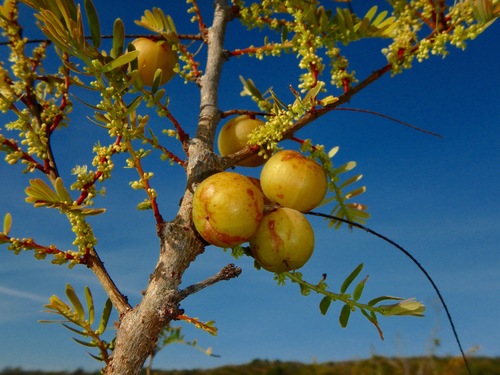
Oval, woody winged fruits bear five prominent ribs, characteristic of Terminalia. They measure 2.5–6 cm (1–2.4 in) long and turn from greenish to brown as they ripen between September and November. 2 4
Useful taxonomy
William Roxburgh first described the species as Pentaptera arjuna. Robert Wight and George Arnott Walker Arnott transferred it to Terminalia in 1834. Historical literature may use the following synonyms:
- Pentaptera arjuna Roxb. ex DC., the original combination
- Pentaptera glabra Roxb., a historical synonym
- Pentaptera angustifolia Roxb., a historical synonym
- Terminalia glabra Wight & Arn., a historical synonym
- Terminalia cuneata B.Heyne ex Roth, a historical synonym
- Terminalia berryi Wight & Arn., a historical synonym
- Myrobalanus cuneata (B.Heyne ex Roth) Kuntze, a historical synonym
Use the accepted name Terminalia arjuna as the consistent reference when comparing these older combinations. Historical names still appear in botanical publications and reference records. 1 9
Habitat and range
From Pakistan to Bangladesh, including Sri Lanka and Myanmar, Terminalia arjuna occupies the Indian subcontinent. It grows mainly along rivers and seasonal streams and on alluvial soils, from sea level to 1,200 m (3,940 ft). 2 7
Tropical plantings beyond the native range are widespread, particularly in East Africa and Southeast Asia. Arjun tree provides shade, supports agroforestry and stabilizes riverbanks. 2 3
Southern India’s riparian forests depend on this keystone species. Large trees, sometimes hollow, offer nesting sites for giant squirrels and white-rumped vultures. Dead trunks shelter termites, which in turn feed sloth bears. 4
Life cycle and reproduction
In the regions described, March–June flowering brings small yellowish-white flowers in spikes. Fruiting follows in September–November, producing the characteristic winged fruit. 6 2
Propagation relies on seed, with irregular germination taking 50–75 days. Natural success rates are low, ranging from 5–50% between seed batches. Seed can be stored at room temperature for up to three years before sowing. 2 3
Growth changes markedly with age: the first two or three years are slow, followed by faster development. Well-established young trees can gain 2–3 m (7–10 ft) in three years. First fruit usually appears at 6–7 years. 2
Uses and risks
Medicinal bark is the principal product. Rich in tannins, flavonoids and cardiotonic glycosides, it has served as a heart tonic in Ayurvedic medicine for centuries.
Clinical trials report improved ventricular ejection fraction at 1–2 g per day, with generally mild side effects such as headache or digestive upset. Follow-up lasting more than two years reported no blood, liver or kidney toxicity at customary doses. 7 8
Neither food-related nor contact toxicity is documented for Arjun tree; the seed inside the fruit is edible. Bark tannins, making up 20–24% of its mass, also serve in leather tanning. 3 2
Leaves support both ecology and livelihoods by feeding the tasar silkworm (Antheraea paphia). Its wild silk has recognized commercial value in India. 4
Varieties, look-alikes and related plants
For Terminalia arjuna, no horticultural cultivar is registered. The useful comparisons involve related species within the genus rather than named forms of Arjun tree. 1
Three related trees are particularly easy to confuse with Arjun tree:
- Terminalia catappa, sea almond, a tropical coastal tree with reddening leaves rather than a freshwater riverbank tree;
- Terminalia bellirica, another Indian medicinal Combretaceae, with oval but unwinged fruit;
- Terminalia chebula, also used in Ayurveda, distinguished by fruit with five less prominent ribs and darker bark.
None of these three relatives combines a buttressed trunk with pale bark peeling in broad plates. Sea almond grows on coastal sand rather than riverbanks; T. bellirica has oval fruit without Arjun tree’s five ribs; and T. chebula retains darker bark. Among these trees, the trunk-and-bark combination reliably identifies Arjun tree in the field. 2
Main sources
- Plants of the World Online / Kew, Terminalia arjuna (Roxb. ex DC.) Wight & Arn.
- PROTA / PlantUse, Terminalia arjuna
- Plants For A Future, Terminalia arjuna
- Wikipedia (EN), Terminalia arjuna
- Purdue University NewCROP, Terminalia arjuna factsheet
- Flora of Bangladesh, Arjun (Terminalia arjuna)
- PMC, Medicinal properties of Terminalia arjuna (Roxb.) Wight & Arn. — a review
- PMC, Terminalia arjuna in Chronic Stable Angina — systematic review and meta-analysis
- International Plant Names Index, Terminalia arjuna
Frequently asked questions
Is Arjun tree toxic to pets?
No toxicity is documented for Terminalia arjuna. Its bark is used in traditional medicine, and human clinical follow-up lasting more than two years reported no blood, liver or kidney toxicity at customary doses.
Why is Arjun tree bark used in herbal medicine?
The bark contains tannins, flavonoids and cardiotonic glycosides studied for their effects on heart function. Clinical trials report improved ventricular ejection fraction in patients with heart failure at doses of 1–2 g per day.
Where does Terminalia arjuna grow naturally?
It is native to the Indian subcontinent, growing mainly along rivers and seasonal streams from sea level to 1,200 m (3,940 ft) elevation.
Can Arjun tree grow outdoors in a temperate climate?
It cannot remain in the ground where winter temperatures approach 0 °C (32 °F), which can kill it. It is limited to USDA zones 10–12 and tropical or subtropical conditions throughout the year.
How does Arjun tree differ from Terminalia catappa?
Both are Combretaceae with winged fruit, but Arjun tree grows on freshwater riverbanks and has a buttressed trunk with pale bark peeling in plates. Terminalia catappa grows on tropical sandy coasts and sheds its reddened leaves twice a year.
Where does the name arjuna come from?
The Sanskrit name describes a pale or shining color, echoing the tree’s light bark. It shares its root with Arjuna, the warrior in the Mahabharata, an association often offered to explain the traditional use of the bark as a heart tonic.
Is Arjun tree fruit edible?
The seed inside the winged fruit is edible, but the fruit itself is not a common food. Bark remains the most widely used part, prepared as a decoction or powder.
Similar plants
If you are unsure about a plant’s toxicity, ask a botanist or veterinarian for advice.