
European white-elm (Ulmus laevis, )
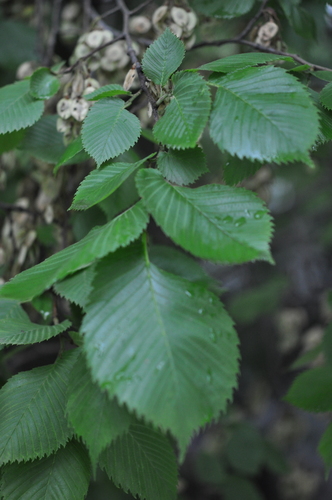
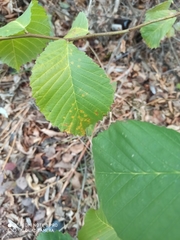
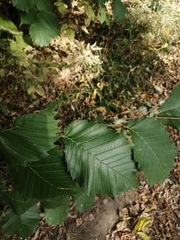
European white-elm (Ulmus laevis) is a large deciduous tree in the Ulmaceae family, native to European floodplain forests from France and southern Finland to the Urals and Kazakhstan. Rarely affected by Dutch elm disease compared with its European relatives, it has long flower stalks and hair-fringed winged fruits that distinguish it from other European elms.
Read moreEuropean white-elm, Russian elm, Spreading elm, European white elm, Fluttering elm and Stately elm
Allow a few hours of direct sun per day, preferably morning or evening.
Full sun to light partial shade
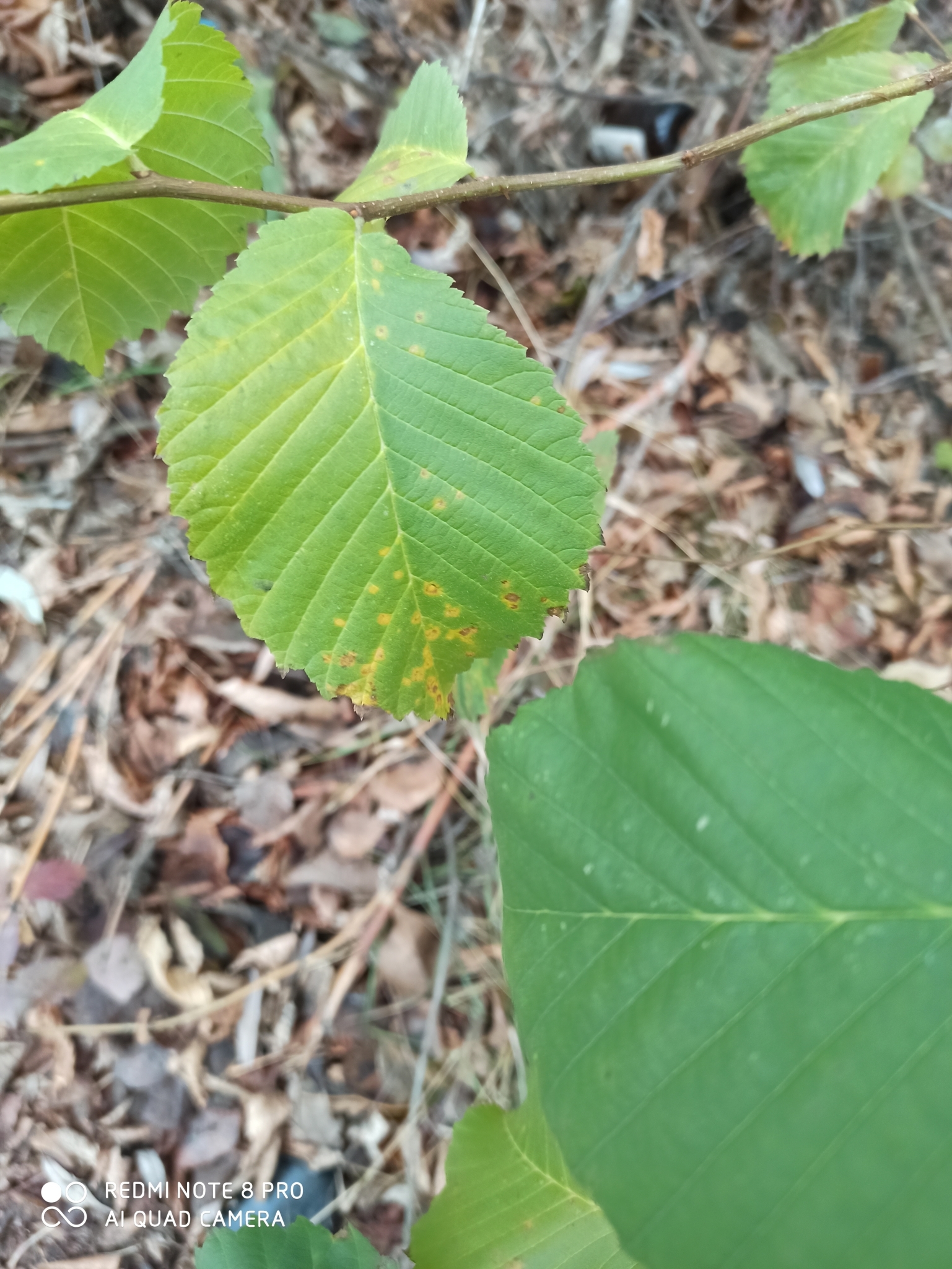



© photo
(c) Nikolay Panasenko, some rights reserved (CC BY-NC), uploaded by Nikolay Panasenko · cc-by-nc
Nadezhda Kiseleva · cc-by-nc
Roman A. Lagazyuk (Роман А. Лагазюк) · cc-by
Taken Oct 30, 2011 by Tela Botanica − Annick LARBOUILLAT (cc-by-sa)
Taken Nov 1, 2011 by Tela Botanica − Annick LARBOUILLAT (cc-by-sa)
Taken Sep 5, 2022 by Nella (cc-by-sa)
Taken Sep 25, 2019 by Jiří Vilím (cc-by-sa)
© copyright of the Board of Trustees of the Royal Botanic Gardens, Kew.


Global distribution
The native range of Ulmus laevis extends from France and southern Finland to the Urals, Kyrgyzstan and Kazakhstan, with a southern limit in Bulgaria and Crimea. Isolated populations survive in the Caucasus and Spain; the Spanish population is considered relict rather than introduced. The species is also planted outside its native range as a street tree, including in the United Kingdom and United States.
- Native7
- Introduced1
- France
- Germany
- Poland
- Russia
- Finland
- Turkey
- Spain
- United Kingdom
Hexagons: regions where the plant occurs. Green dots: native range.1
Identity
European white-elm (Ulmus laevis Pall., 1784), also known as Fluttering elm, is a large deciduous member of the Ulmaceae family, commonly 20–35 m (66–115 ft) tall. Compared with other European elms, it is rarely affected by Dutch elm disease. Long flower stalks and hair-fringed winged fruits distinguish it from the continent's other elms. 4 The epithet laevis means smooth in Latin, referring to bark and foliage softer to the touch than those of the much rougher wych elm. 3 1
North American plantings have used Russian elm as an alternative name, referring to the eastern part of its natural range beyond the Urals. The aliases Spreading elm and Stately elm are also used. The name European white elm does not describe a particular timber color: British foresters historically used white elm for the timber of wych elm, a source of continuing confusion. 4
Recognition
Typical heights of 20–35 m (66–115 ft) can be exceeded: exceptional trees in France reach over 39 m (128 ft). Trunk diameter may approach 2 m (6.6 ft), or more in very old specimens. Broad, flattened buttresses develop at the base, supported by shallow but widely spreading roots that help keep the trunk upright in waterlogged ground. 4 7
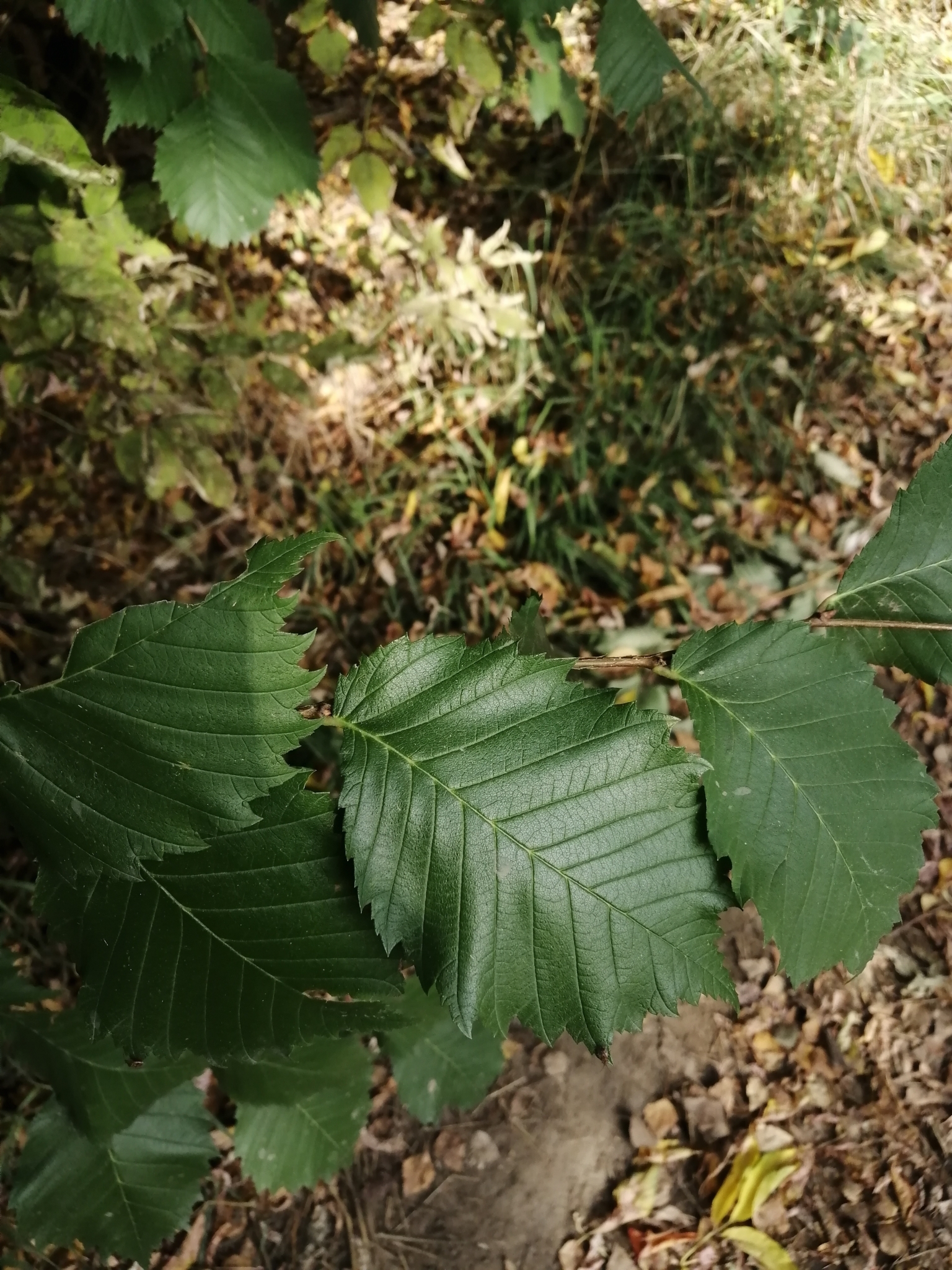
Leaves measuring 5–10 cm (2–4 in) have a strongly uneven base, rounded on one side of the stalk and sharply tapered on the other. Thin and almost translucent, they are soft above and downy gray below. Up to eighteen pairs of secondary veins remain unbranched toward the leaf margin. 4
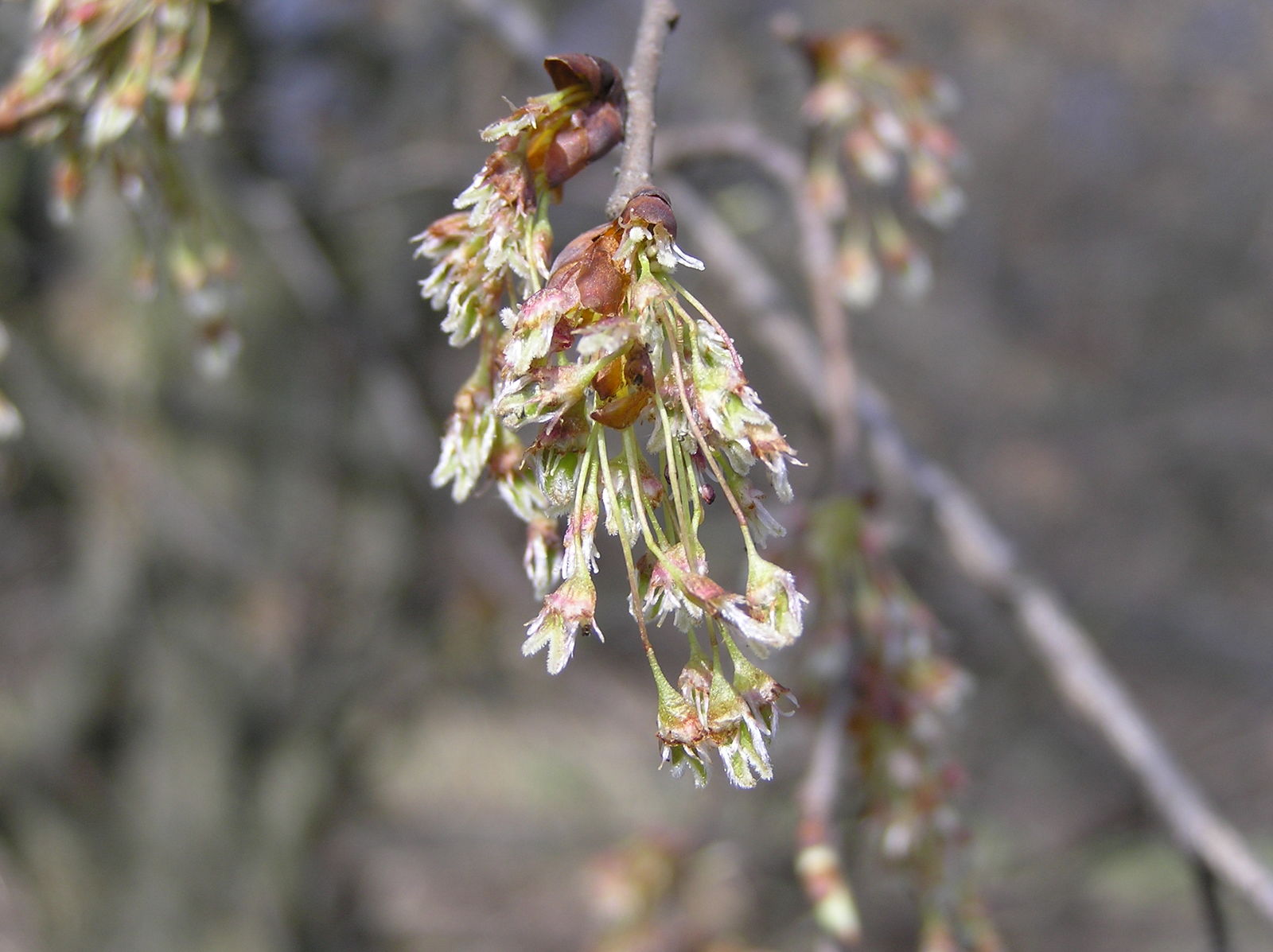
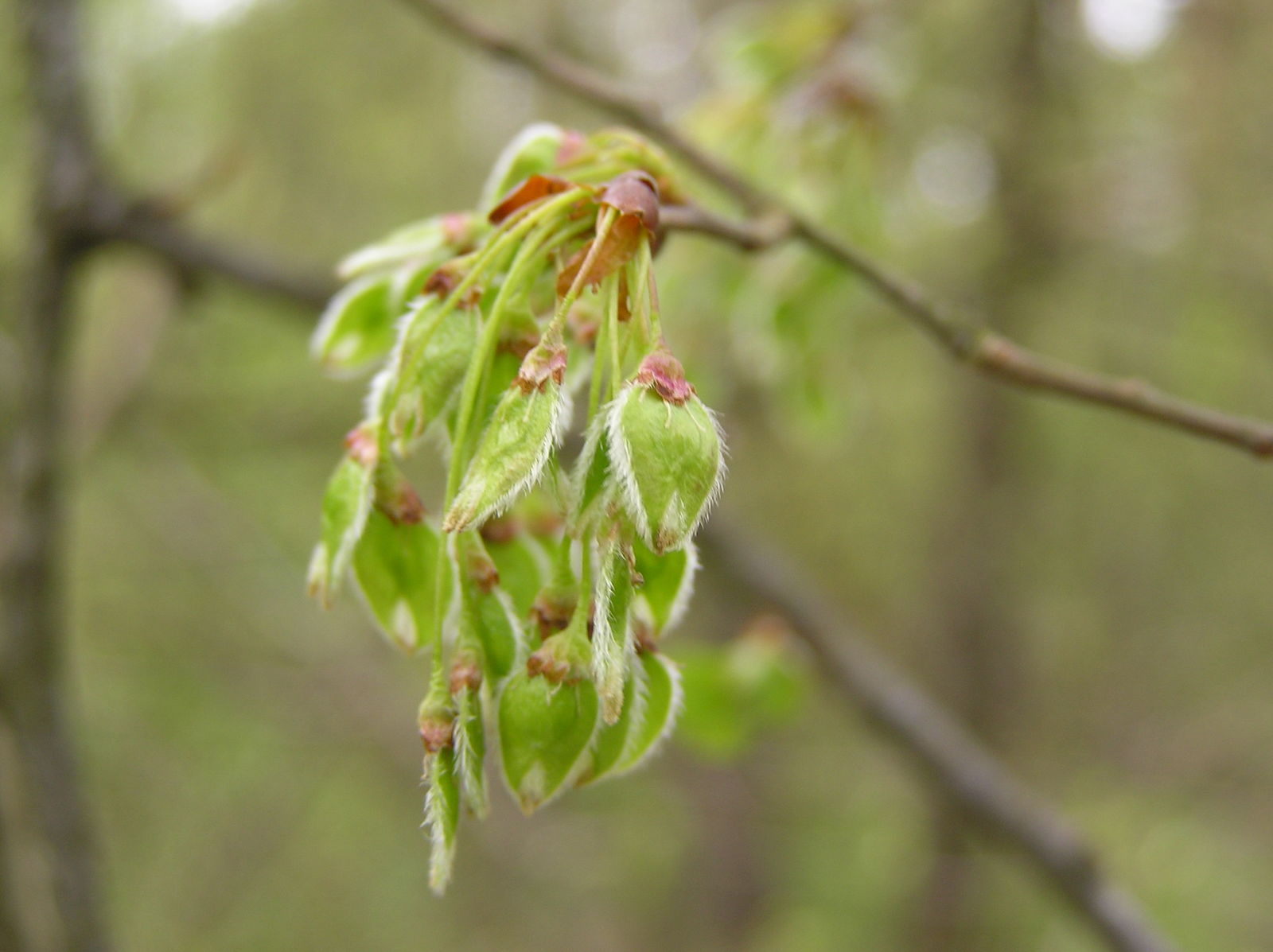
Cream flowers without petals open before the leaves in dense clusters of fifteen to thirty. Stalks about 20 mm (0.8 in) long distinguish this species from other European elms, even while leafless. The winged fruit, or samara, is under 15 mm (0.6 in) long, with a fringe of fine hairs around its entire edge; the other European elms have hairless samaras. 4
Useful taxonomy
POWO/WCVP accepts the name Ulmus laevis Pall., 1784. Several competing names formerly used for the species are now treated as synonyms:
- Ulmus effusa Willd., a former species name
- Ulmus pedunculata Foug., a name referring to the stalks
- Ulmus ciliata Ehrh., a name referring to the hairy margins
- Ulmus racemosa Borkh., a former taxonomic name
- Ulmus laevis var. celtidea Rogow., a historical variety
- Ulmus laevis var. parvifolia Jovan. & Radulović, a Serbian variety
No surviving specimen of the variety celtidea, described in nineteenth-century Ukraine, is currently known. The Serbian variety parvifolia remains rare in collections. Amid these names, the accepted Ulmus laevis provides the most dependable reference for herbarium specimens and nursery labels. 1 2 9
Habitat and range
From France and southern Finland, the native range extends east beyond the Urals to Kyrgyzstan and Kazakhstan, and southeast to Bulgaria and Crimea. Separate populations occur in the Caucasus and Spain. The Spanish population is now regarded as relict rather than introduced and may even have been the origin of the European population. 4 1
Along major rivers such as the Volga and Danube, European white-elm grows almost exclusively in floodplain forest, rarely above 400 m (1,310 ft). Established riverside trees can withstand more than one hundred days of continuous waterlogging. The species remains intolerant of drought and saline soils outside managed urban settings. 4
The IUCN lists this elm as Data Deficient, reflecting the lack of consistent population monitoring across the continent. Flood-control works and water abstraction that lower the water table in riverside forests are the principal identified pressures. 5
Life cycle and reproduction
Late winter or early spring flowering, depending on latitude, always precedes leaf emergence. The flowers are protandrous: male organs mature before female organs within the same flower, a sequence described here as favoring, without requiring, self-fertilization. 4
Hair-fringed samaras ripen in late spring. Germination measured in Serbian populations ranged from 45 to 60%, and fallen seed quickly loses viability. Fresh seed can germinate within a week without stratification, with the best seedlings reaching half a meter (1.6 ft) in their first year. 4
Young trees grow rapidly in moist soil: thirteen-year-old specimens have shown annual trunk-diameter increases of 4 cm (1.6 in) at breast height. Unlike many other European elms, which hybridize freely, Ulmus laevis does not cross with its close relatives in the wild, protecting its genetic identity from introgression. 4 6
Uses and risks
Rare infection does not mean genetic resistance to Dutch elm disease. Bark beetles carrying the fungus tend to avoid Ulmus laevis unless no other elms are available nearby. Spanish trials found alnulin in the bark, making it unattractive to these vectors. Even so, ten-year monitoring in France recorded localized losses of 28% in some populations, without confirming a widespread decline. 4 6
Finnish craftspeople traditionally used flexible young trunks for shaft bows and tough bark for strong bindings. Rapid growth and tolerance of compaction, air pollution and road salt now make the tree useful along urban streets, often replacing elms lost to disease elsewhere in Europe. 4
Neither timber, sap nor bark has documented toxicity to cats, dogs or horses. 8
Varieties, look-alikes and related plants
Ornamental collections include a few cultivars rarely seen outside arboretums: weeping 'Pendula', and the variegated 'Aureovariegata' and 'Argentovariegata', with yellow or silver-white leaf margins. 4
Comparisons with two related elms often resolve field uncertainty. Ulmus glabra, wych elm, has larger, rougher leaves, short flower stalks and hairless samaras. Ulmus minor, Field elm, has smaller leaves, also hairless samaras, and abundant root suckers, which European white-elm lacks. The hair-fringed samara margin and long flower stalk remain the most reliable confirmation of Ulmus laevis, even on a leafless tree. 1 4
Main sources
- Plants of the World Online / Kew, Ulmus laevis Pall.
- International Plant Names Index, Ulmus laevis Pall.
- Tela Botanica / eFlore, Ulmus laevis — distribution
- Trees and Shrubs Online (International Dendrology Society), Ulmus laevis
- IUCN Red List assessment, Ulmus laevis (2017)
- Collin & Bozzano, 2015, dynamic conservation of elm genetic resources in Europe, iForest
- USDA NPGS GRIN Taxonomy, Ulmus laevis
- ASPCA, Elm toxicity entry
- Tropicos, Ulmus laevis Pall.
Frequently asked questions
Does European white-elm resist Dutch elm disease?
It has no genetic resistance to the disease, but is rarely affected. The bark beetles that transmit it often prefer other elms, partly because a compound in the bark, alnulin, makes this species less attractive to them.
How can I distinguish Ulmus laevis from Ulmus glabra or Ulmus minor?
The fringe of fine hairs all around the winged fruit is the most reliable clue; the other two species have hairless fruits. Flower stalks about 20 mm long provide another useful feature before the leaves appear.
Where does European white-elm grow naturally?
Its native range runs from France and southern Finland to the Urals and Kazakhstan, with isolated populations in the Caucasus and Spain. It grows almost exclusively in floodplain forests along major rivers.
Can European white-elm be planted in cities?
Yes. Tolerance of soil compaction, pollution and road salt makes it a useful street tree, often planted to replace elms lost to Dutch elm disease.
Is European white-elm toxic to animals?
No toxicity to cats, dogs or horses is documented by the ASPCA for the foliage, bark or sap.
Why are the winged fruits of Ulmus laevis fringed with hairs?
Among European elms, the fringe of fine hairs around the fruit is distinctive to this species. Together with the long flower stalk, it is the most reliable identification feature when comparing related elms.
How long does European white-elm live?
The oldest recorded trees are several centuries old, with trunks more than 3 m across in central Europe. Growth is rapid during the first decades, then slows as the tree matures.
Similar plants
If you are unsure about a plant’s toxicity, ask a botanist or veterinarian for advice.