
Field elm (Ulmus minor, )
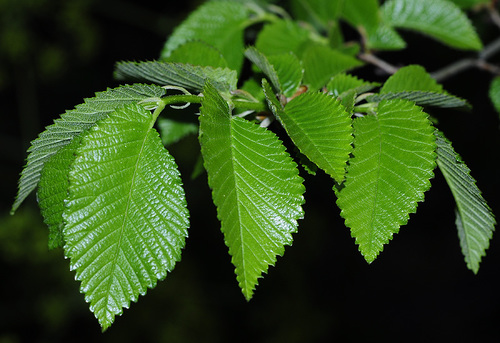

Field elm (Ulmus minor Mill., 1768) is a deciduous tree in the Ulmaceae family, native to Europe, Asia Minor and northwestern Iran, with populations in northwestern Africa. It grows with oak and ash in floodplain forests, and has uneven leaves and early winged fruits. Dutch elm disease has devastated it since the 1970s; prolific root suckering maintains the species without relying on seed.
Read moreField elm, Smooth-leaved elm and Small-leaved elm




© photo
(c) faluke, some rights reserved (CC BY-NC), uploaded by faluke · cc-by-nc
Olsza Borys · cc0
Eleftherios Katsillis · cc-by
Taken Nov 2, 2019 by isabelle dufresne (cc-by-sa)
Taken May 22, 2020 by sallent pep (cc-by-sa)
Taken Jul 23, 2020 by Arjan Deuzeman (cc-by-sa)
Taken May 12, 2019 by Claudio Nicolo (cc-by-sa)
© copyright of the Board of Trustees of the Royal Botanic Gardens, Kew.


Global distribution
The native range of Ulmus minor covers Europe, especially the south, extending to Asia Minor and northwestern Iran, with populations in northwestern Africa. Its northernmost outposts are the Baltic islands of Öland and Gotland, where ancient human introduction remains possible. The species has also been widely planted outside its native range, notably in North America.
- Native7
- Introduced3
- France
- Spain
- Italy
- Turkey
- Iran
- Morocco
- Algeria
- United Kingdom
- Sweden
- United States
Hexagons: regions where the plant occurs. Green dots: native range.1
Identity
Field elm (Ulmus minor Mill., 1768) is a deciduous tree in the Ulmaceae family, described by the English botanist Philip Miller. Plants of the World Online accepts this name, although botanists still regard its taxonomy within Ulmus as contested. 1 6
The name Field elm distinguishes this lowland tree from wych elm, Ulmus glabra, associated with higher ground. Also known as Smooth-leaved elm or Small-leaved elm, it characteristically grows in fields, hedgerows and alluvial plains. French regional names include ormeau, petit orme and the now uncommon ipréau. 7
Recognition
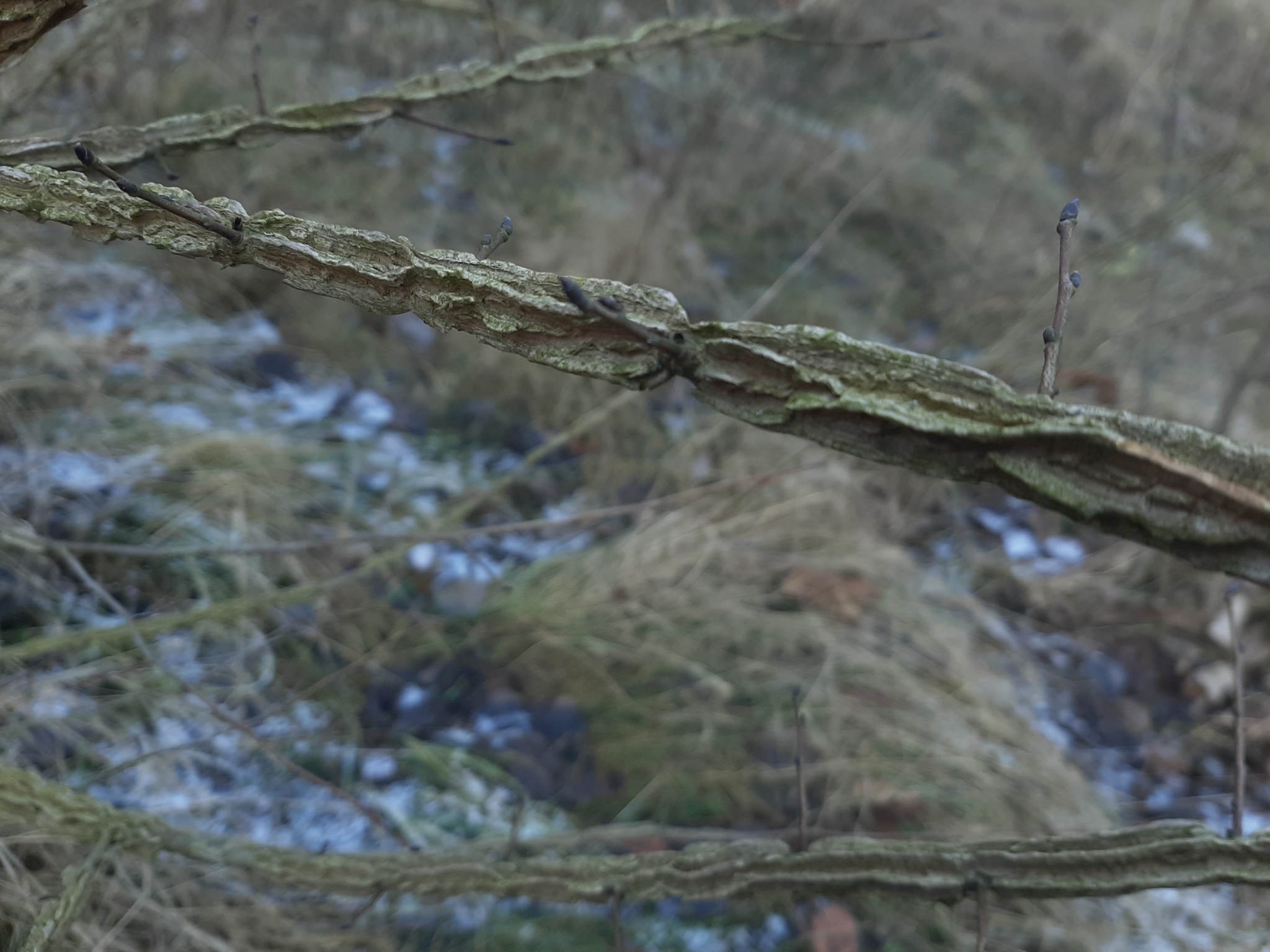
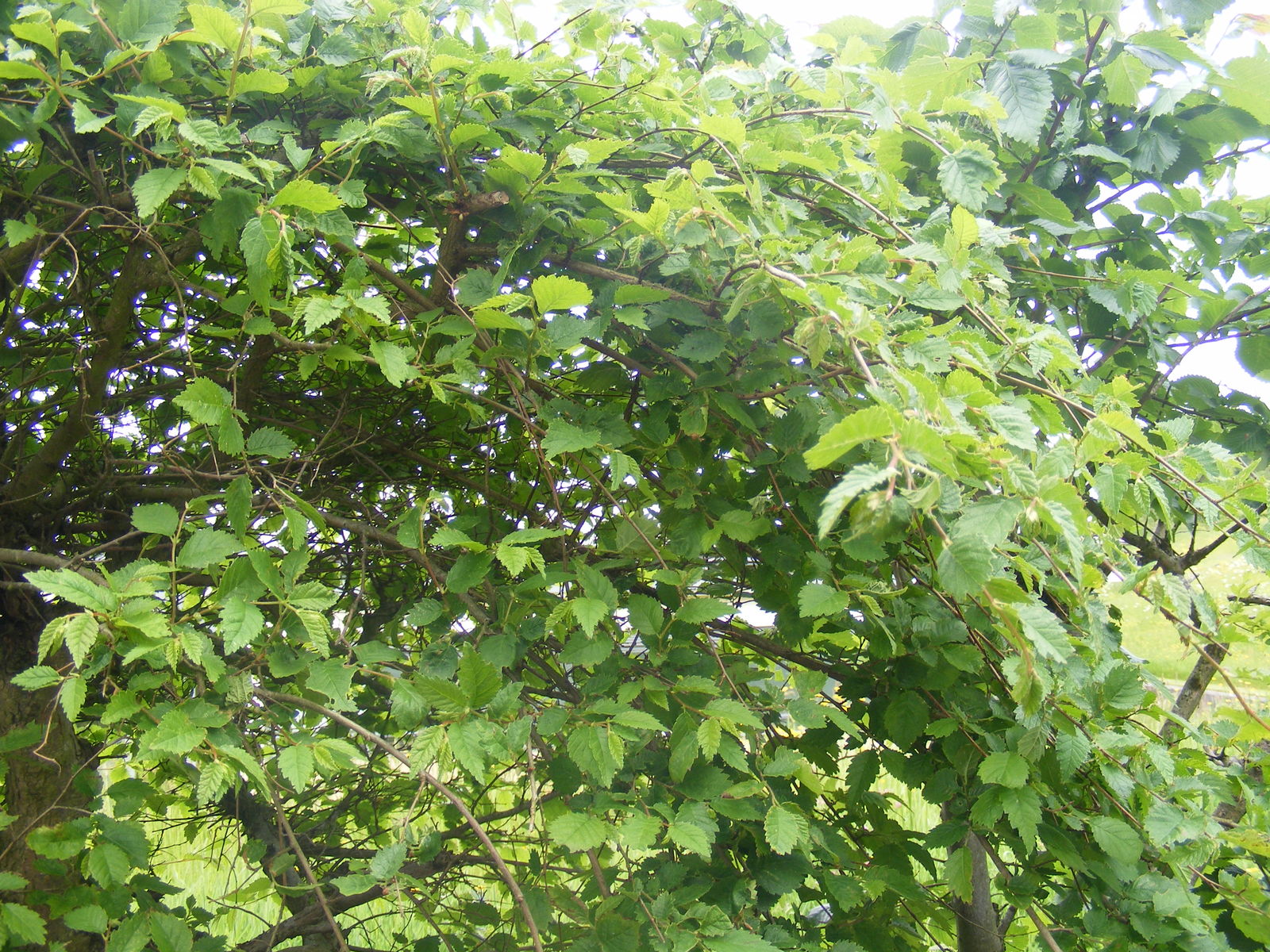
Healthy mature trees can exceed 30 m (98 ft), with a rounded crown and gray bark fissured into rectangular plates. Young twigs sometimes develop corky wings. 6
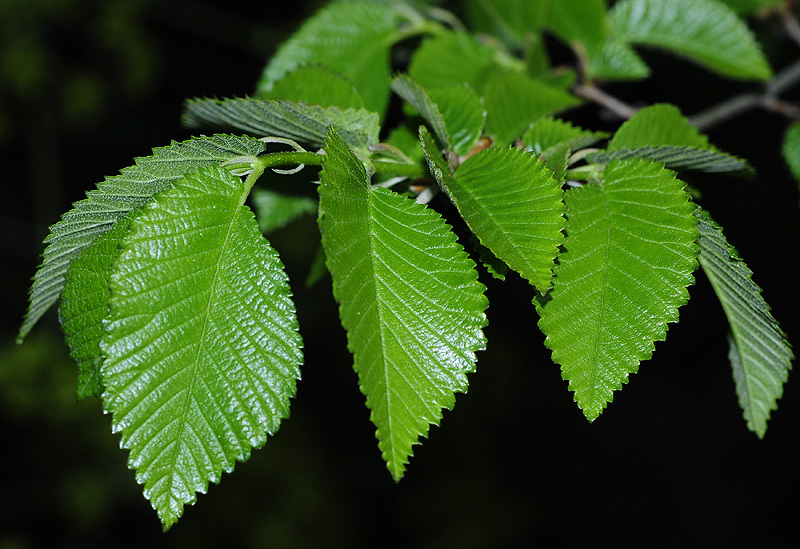
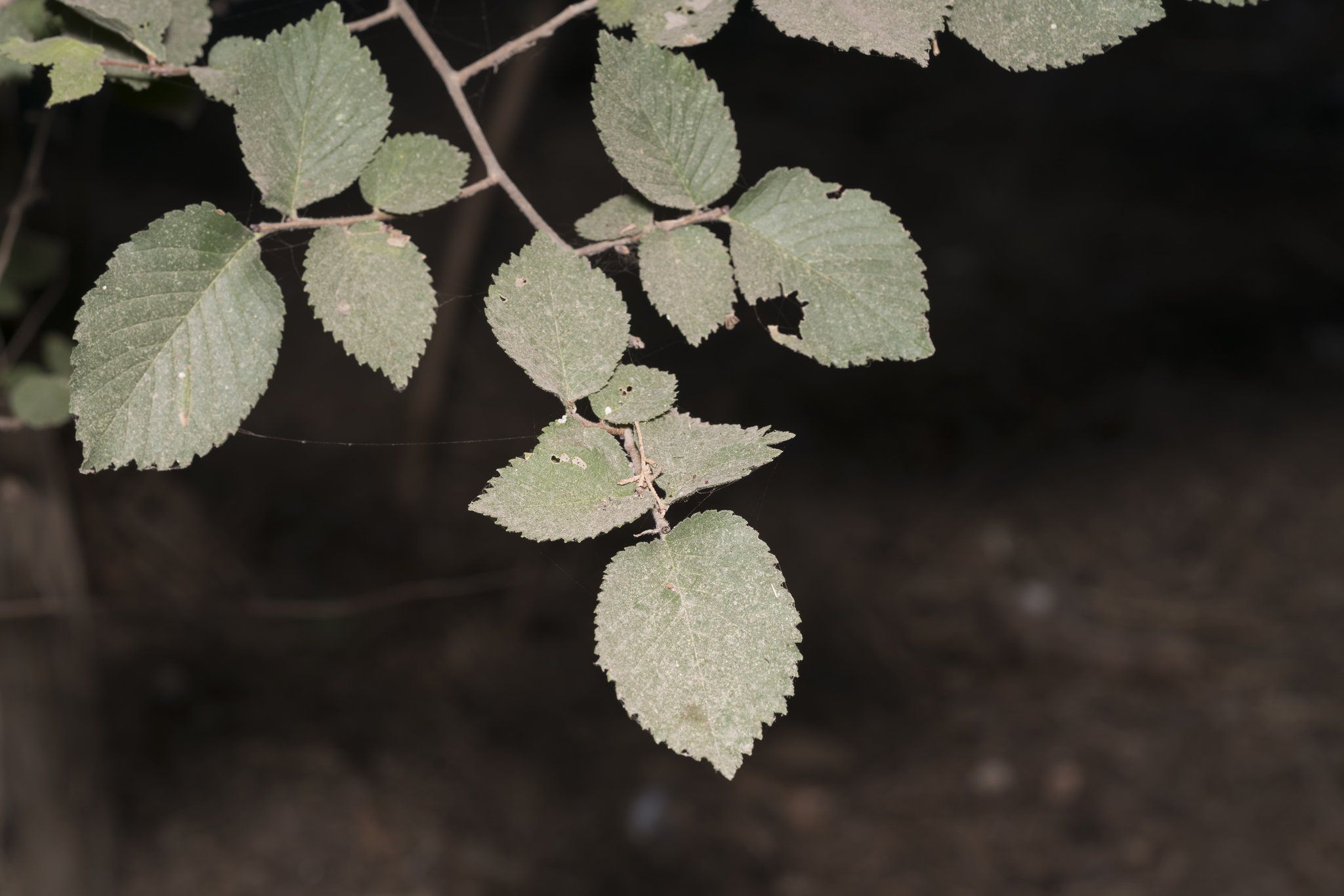
At 4–9 cm (1.6–3.5 in) long, the leaves are considerably smaller than those of wych elm, Ulmus glabra, a possible source of field confusion. Their base is strongly asymmetrical and the margin doubly toothed. Tiny black glands on the secondary veins provide a useful hand-lens character. 6
Dense clusters of inconspicuous reddish flowers appear before the leaves in February–March in the European seasonal setting described here. Oval to obovate, hairless samaras measure 12–15 mm (0.5–0.6 in) and have a notch at the tip, with the seed close to it. 6
Useful taxonomy
Few European elms have such a complicated synonymy. The following names have all referred, wholly or partly, to Ulmus minor:
- Ulmus procera Salisb., the historical English elm
- Ulmus minor subsp. minor, the nominal subspecies
- Ulmus carpinifolia Gled., a former name
- Ulmus campestris auct., an old name long used for the whole complex
Most significant is Ulmus procera: Plants of the World Online now treats English elm, long regarded as a separate species, as a synonym of Ulmus minor. The accepted name with its full authority remains the stable reference. 1 5
Habitat and range
Native populations of Ulmus minor range across Europe, especially the south, to Asia Minor and northwestern Iran, with further populations in northwestern Africa. The northernmost outposts are on the Baltic islands of Öland and Gotland, where human introduction remains possible. 1 6
Lowland floodplain forest with oak and ash is the typical habitat. Here the tree tolerates both summer flooding and prolonged drought. That combination also helps explain its long history in hedgerows away from rivers. 6
Globally, the International Union for Conservation of Nature lists the species as Data Deficient (DD). A full population assessment is lacking despite severe local losses to Dutch elm disease. 4
Life cycle and reproduction
Flowering is uncommon among surviving mature stems. In France, trees generally take around ten years to begin flowering, and most stems are reinfected with Dutch elm disease before reaching that age. With too few older trees fruiting regularly, sexual reproduction has become less frequent across the landscape. 6
Vigorous root suckering compensates for these losses. New shoots continually arise from roots and stumps, even after the main stem dies. This clonal capacity, more than seed reproduction, maintains Ulmus minor despite decades of disease; its genetic resources are therefore not currently regarded as threatened. 6
Uses and risks
Dense, moisture-resistant Field elm timber has traditionally served for furniture, flooring, firewood, shipbuilding and submerged structures such as piles. 3
Tree health presents the main risk. Dutch elm disease, a fungal infection transmitted by bark beetles, has devastated most mature European trees since the 1970s. Planting susceptible material in affected areas consequently remains inadvisable. 7 2
No toxicity to humans or domestic animals is documented. The species is absent from ASPCA and NC State Extension lists of toxic plants. 3
Varieties, look-alikes and related plants
Historical horticulture produced several notable clones. Sarniensis, Jersey elm, has a narrow upright habit that made it popular for nineteenth-century street planting. Umbraculifera forms a dense rounded crown on a straight trunk and remains a common street tree in central Asia and the Middle East. Rarer Dampieri is columnar, sometimes with cream-edged leaves. The most significant is English elm, a single clone introduced to England in antiquity and propagated by cuttings, now assigned to Ulmus minor rather than treated as a separate species. 2 1
The most frequent identification problems involve these relatives:
- Ulmus glabra, wych elm, with a more symmetrical leaf base and reproduction mainly by seed;
- Ulmus laevis, European white-elm, with hairs around the samara margin;
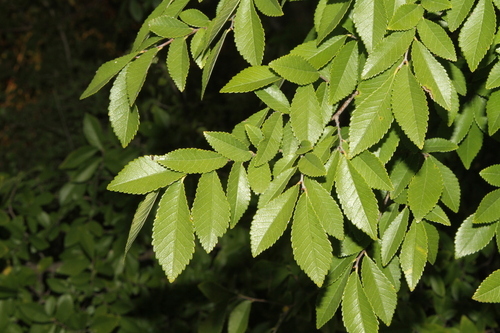
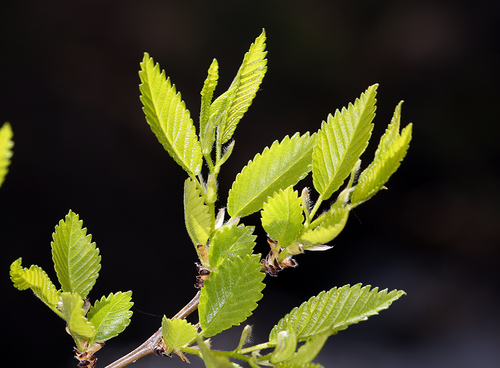
- Ulmus parvifolia and Ulmus pumila, two Asian species whose natural ranges do not overlap that of European Field elm.
An uneven leaf base, hairless notched samaras and abundant suckers together provide the most reliable recognition characters for Ulmus minor.
Main sources
Frequently asked questions
Is Field elm the same as English elm?
Almost. English elm, formerly called Ulmus procera, is a historical clone of Field elm introduced to England. Plants of the World Online now treats it as a synonym of Ulmus minor rather than a separate species.
Why have so many Field elms died in Europe?
Dutch elm disease, a fungal disease transmitted by bark beetles, has devastated mature trees since the 1970s. Even so, the species is not considered genetically endangered because it produces abundant shoots from stumps and roots.
Does Field elm flower often?
Mature flowering trees are uncommon because most stems are reinfected with Dutch elm disease before flowering age. Many elms visible today are young clonal shoots rather than trees grown from seed.
Is Field elm toxic to cats or dogs?
No toxicity is documented. The species is absent from ASPCA lists of toxic plants and from NC State Extension information on plants toxic to domestic animals.
What is Field elm wood used for?
Its resistance to moisture makes it useful for furniture, flooring, firewood, shipbuilding and submerged structures.
How can I tell Field elm from wych elm?
Field elm has an uneven leaf base and abundant root suckers. Ulmus glabra has a more symmetrical leaf base and reproduces mainly by seed.
Where is Field elm native?
Its native range covers Europe, especially the south, extending to Asia Minor and northwestern Iran, with populations in northwestern Africa. Its northernmost outposts are the Baltic islands of Öland and Gotland.
Similar plants
If you are unsure about a plant’s toxicity, ask a botanist or veterinarian for advice.