
Siberian elm (Ulmus pumila, )
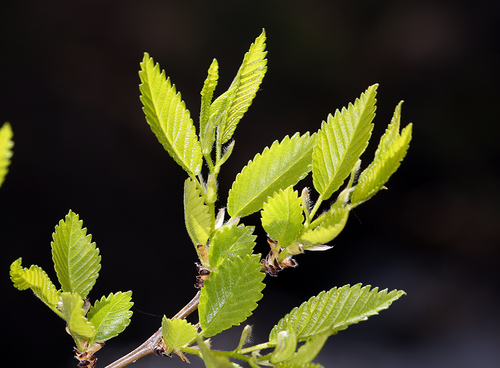
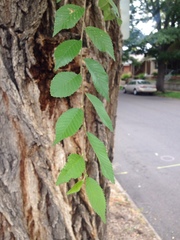
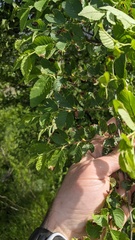
Siberian elm (Ulmus pumila L., 1753) is a deciduous tree in the Ulmaceae family, native to central Asia from eastern Siberia to Korea. Small symmetrical leaves and very early flowering before budbreak help identify it. Exceptional tolerance of cold and drought explains its worldwide spread, but brittle wood limits its ornamental value.
Read moreSiberian elm, Dwarf elm and Karagatch


© photo
(c) Steve Matson, some rights reserved (CC BY), uploaded by Steve Matson · cc-by
Aaron Sidder · cc0
Eric Schmidt · cc-by
Taken May 4, 2020 by javier izko (cc-by-sa)
Taken May 14, 2020 by Bayan Sergio (cc-by-sa)
Taken Sep 15, 2010 by Photoflora - Jean-Luc TASSET (©)
Taken Oct 10, 2022 by Sarah cap (cc-by-sa)
Taken Dec 7, 2021 by mohammad fazel dehkordi (cc-by-sa)
© copyright of the Board of Trustees of the Royal Botanic Gardens, Kew.




Global distribution
Ulmus pumila is native to central Asia in a broad sense: eastern Siberia, Mongolia, Tibet, northern China, northern Kashmir and Korea. Widely introduced in the 20th century for windbreaks and cold tolerance, it became naturalized and then invasive across much of North America and the Argentine pampas, sometimes hybridizing with native elms.
- Native5
- Introduced2
- Invasive2
- Russia (Siberia)
- Mongolia
- China
- Korea
- Kazakhstan
- Spain
- Japan
- United States
- Argentina
Hexagons: regions where the plant occurs. Green dots: native range.1
Identity
Siberian elm (Ulmus pumila L., 1753), also called dwarf elm, is a deciduous tree in the Ulmaceae family. Carl Linnaeus described it in 1753, and Plants of the World Online retains that name as the accepted botanical reference for the species. 1 7
Siberia supplies the geographical reference in its common name, but the native range also includes Mongolia, Tibet, northern China, northern Kashmir and Korea. The epithet pumila means small or dwarf. It reflects the bushy habit frequent in populations exposed to wind and cold: a stressed tree stays low and branched, while a sheltered one can reach 25 m (82 ft). 7 5
Recognition
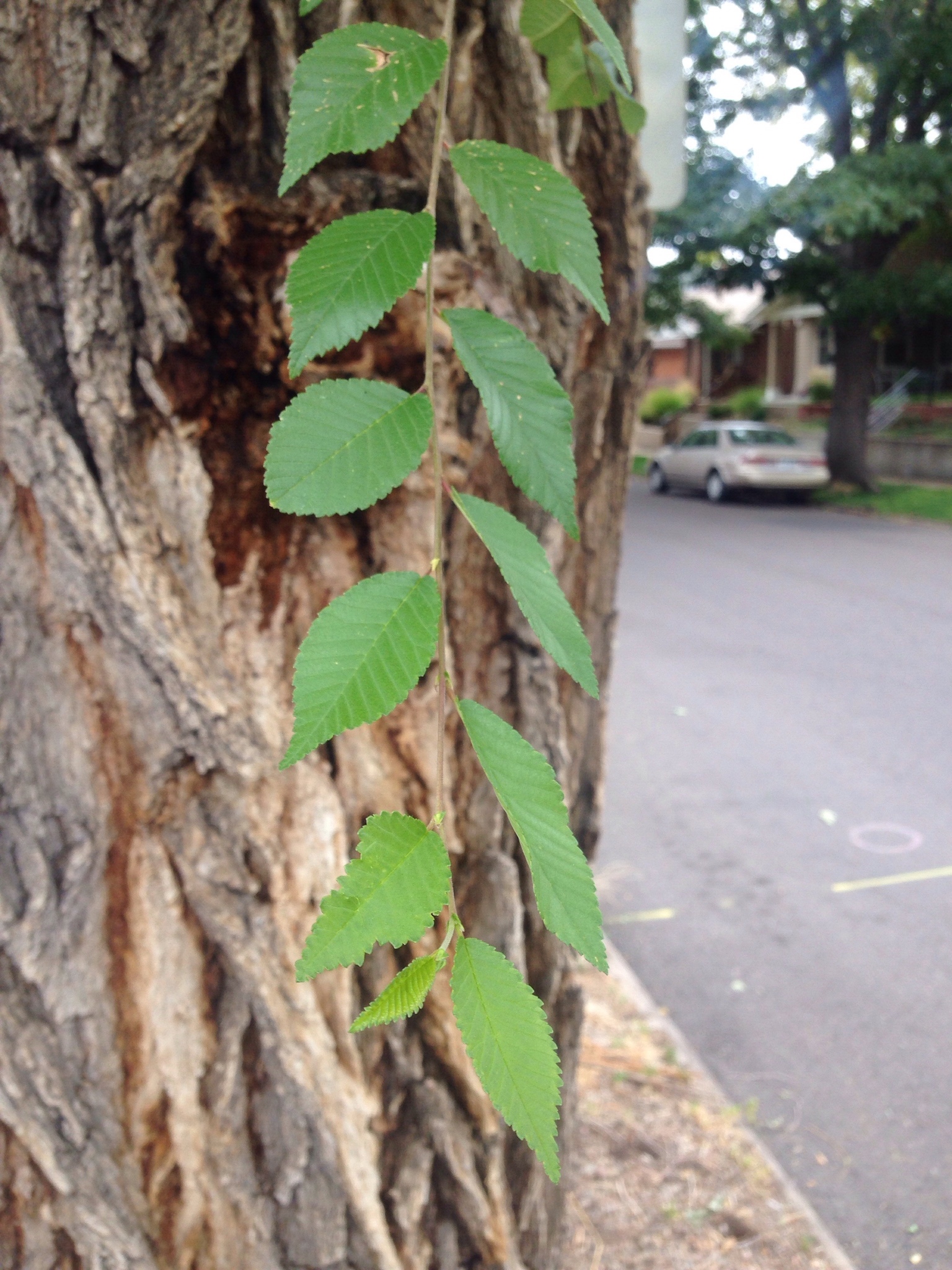
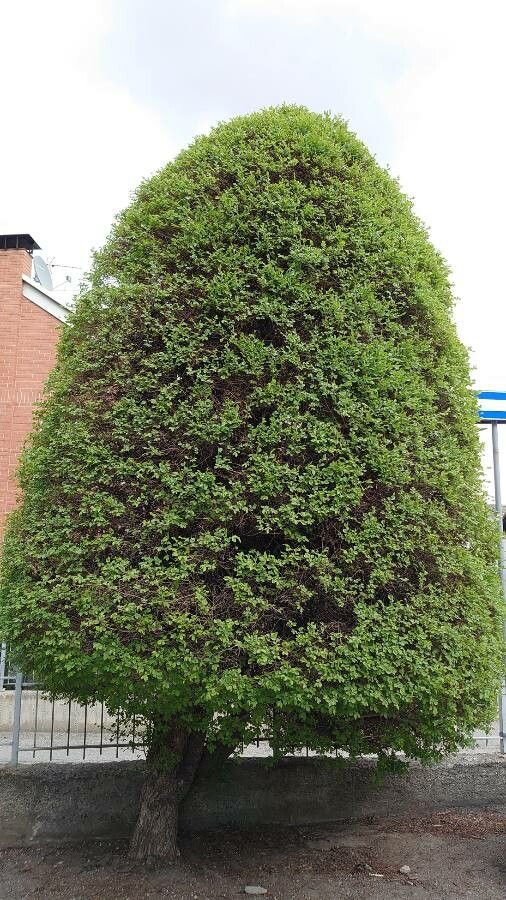
Established Siberian elms commonly grow 10–25 m (33–82 ft) tall, with trunks that may exceed 1 m (3.3 ft) in diameter in very old trees. Dark gray bark develops irregular lengthwise fissures. Young twigs are hairless or slightly downy, remain yellowish and have no obvious corky growth. 7 2
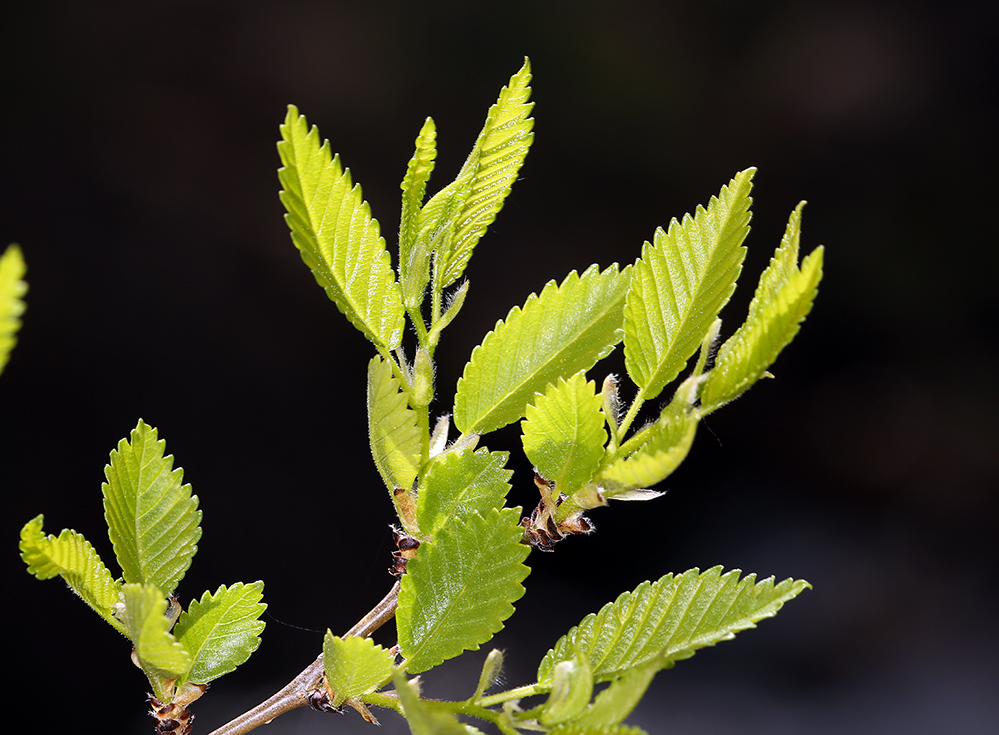
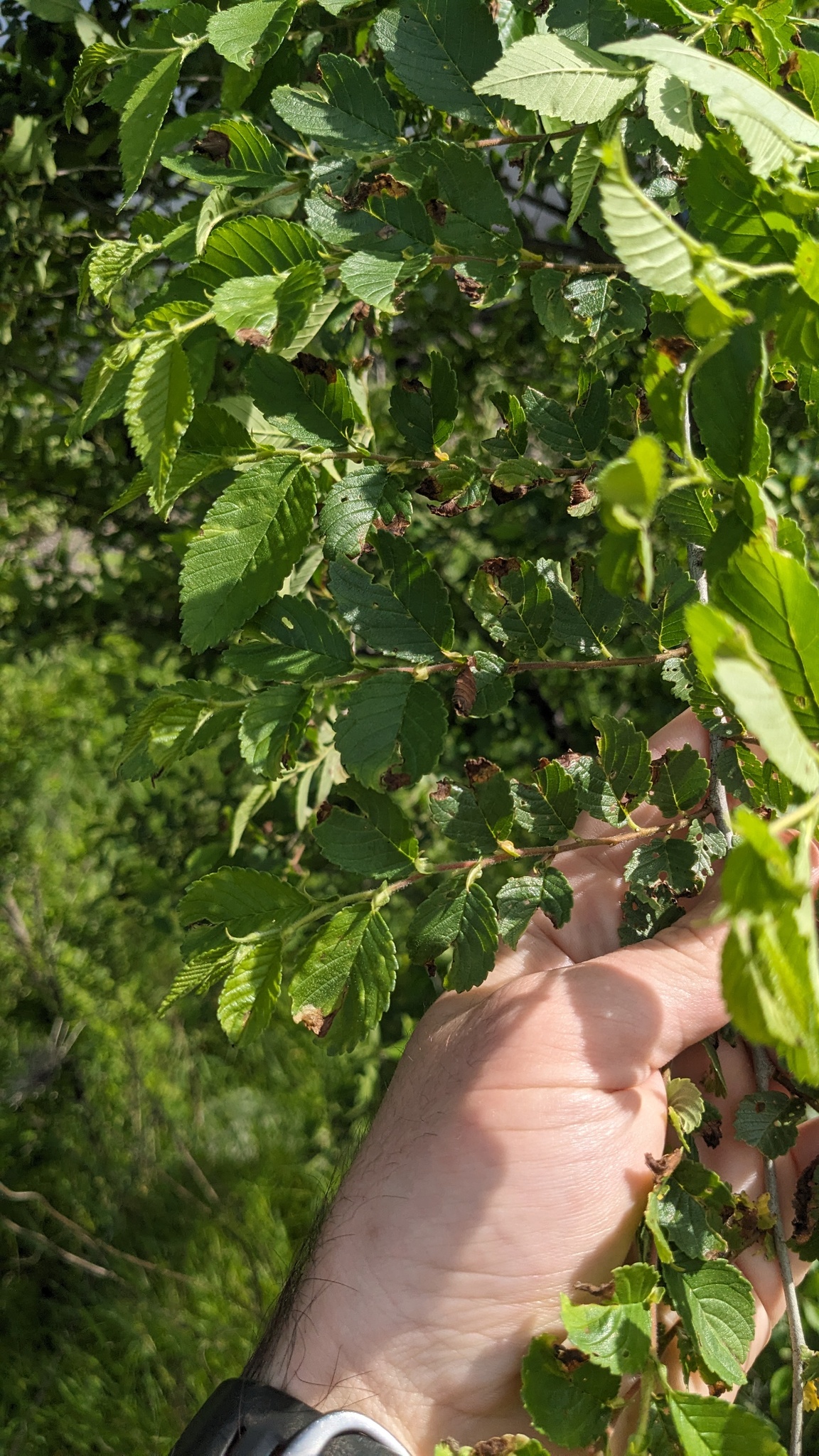
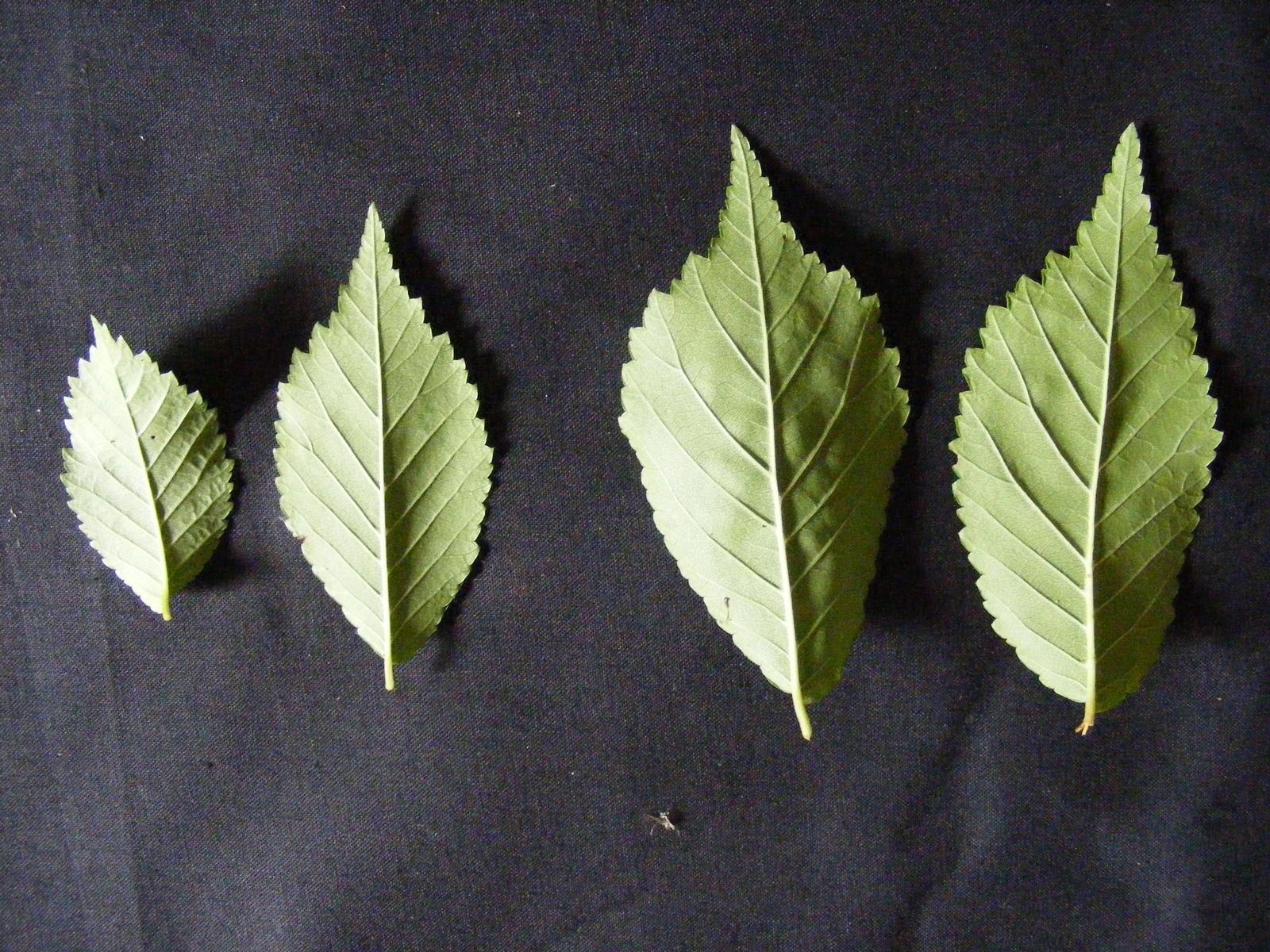
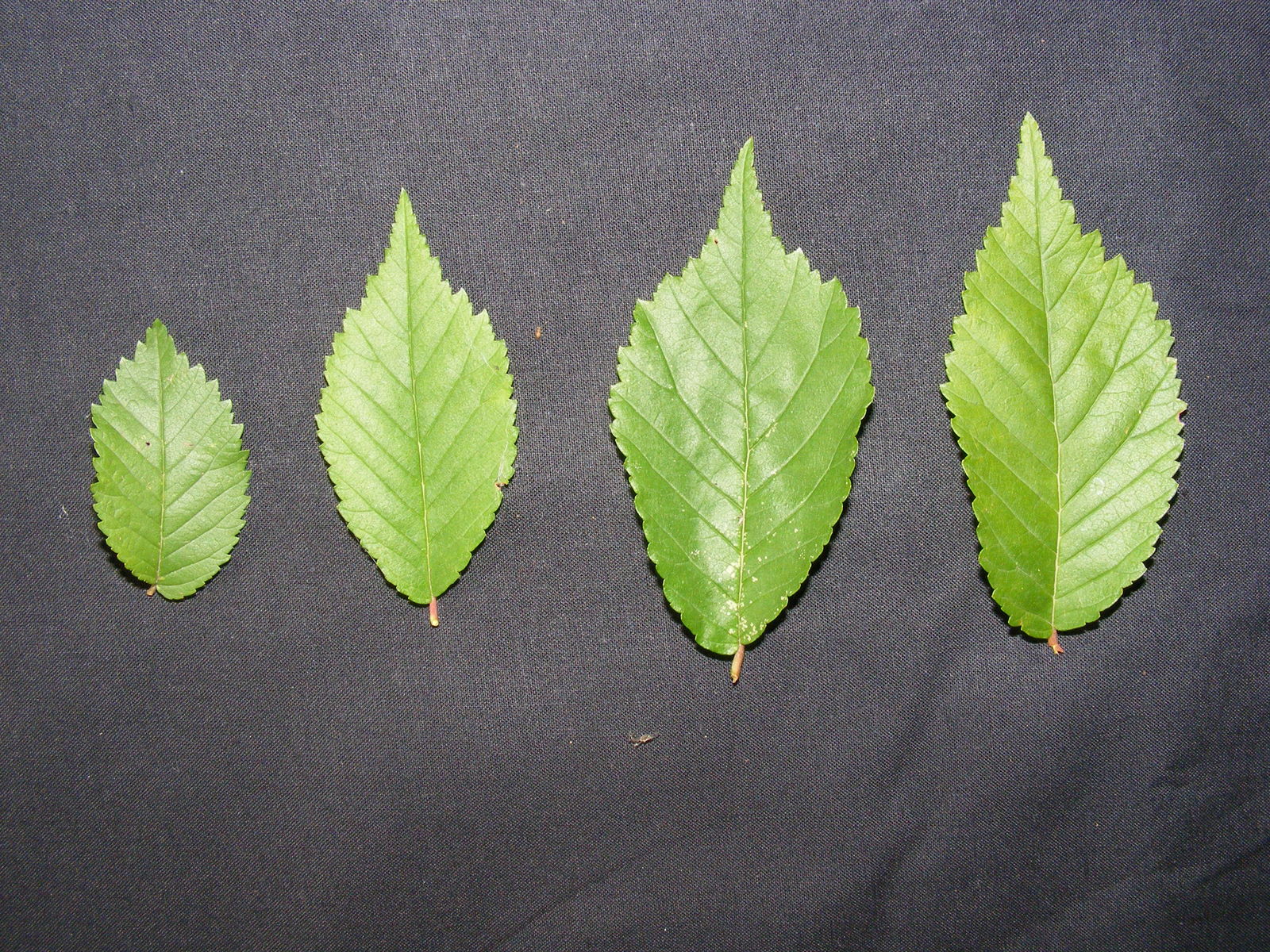
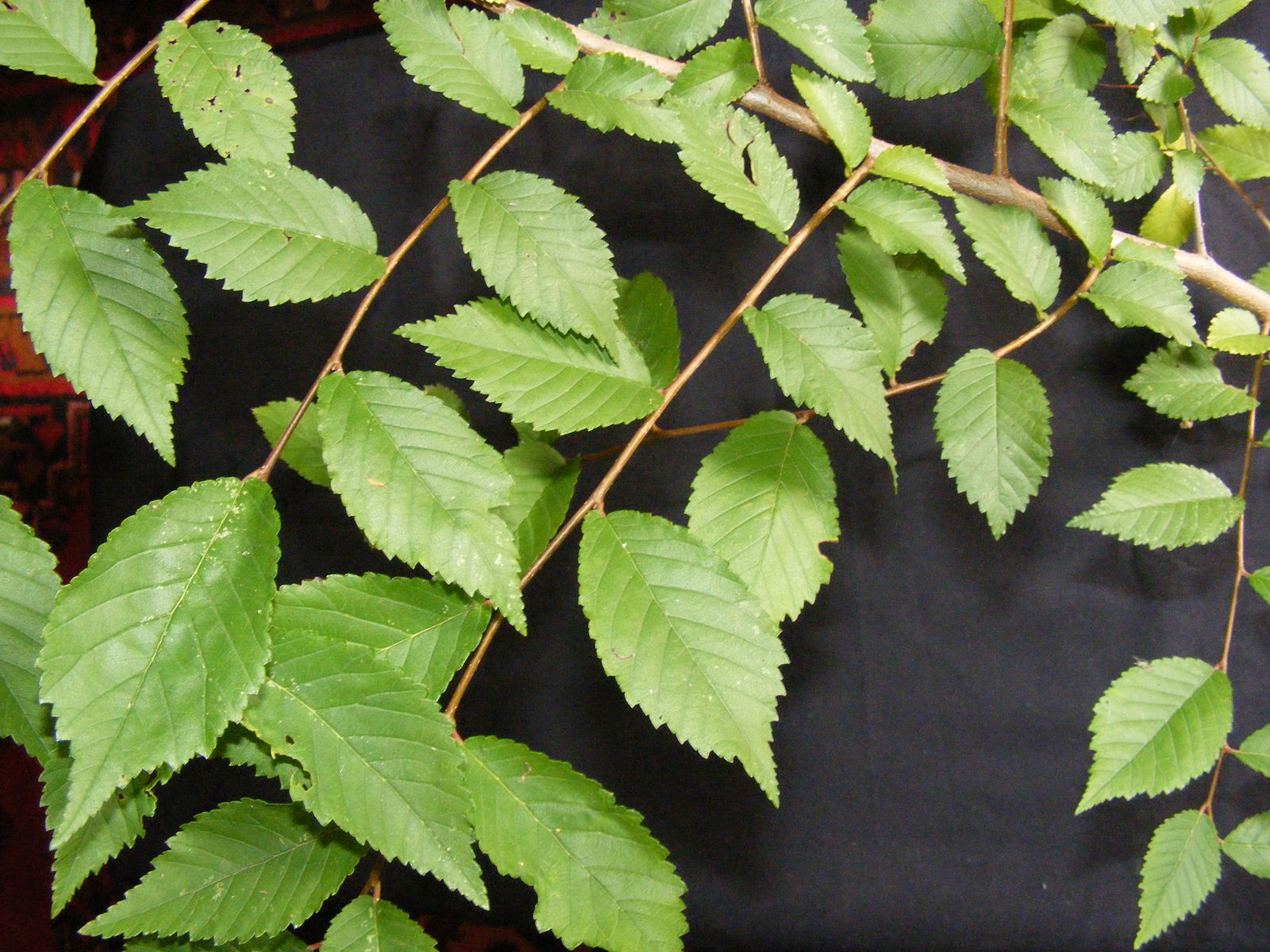
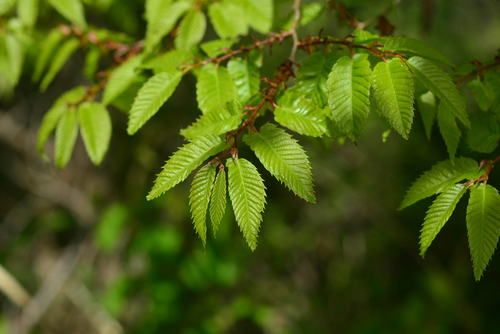
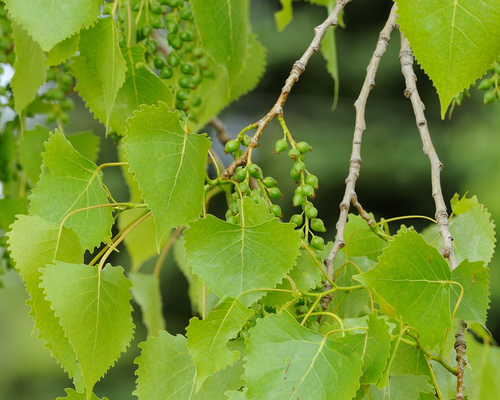
Elliptical to oval leaves are 2–8 cm (0.8–3 in) long, with a symmetrical base and a singly toothed margin. The even base is a useful field feature when comparing the species with most other elms, whose leaf bases are distinctly unequal. The foliage turns yellow in autumn, without particularly strong color. 7 5
Very early petal-free flowers appear in late winter, well before the leaves emerge. Each tiny flower, barely 3 mm (0.12 in) across, has a green calyx and stamens with reddish-brown anthers. Wind carries the pollen. The deeply notched winged fruits, or samaras, measure 1–1.5 cm (0.4–0.6 in), ripen within weeks and are also dispersed by wind. 7
Useful taxonomy
Revisions of the genus Ulmus have placed several earlier names in synonymy with this species: Ulmus campestris var. pumila K.Koch, Ulmus campestris var. pumila (L.) Maxim., Ulmus suberosa var. pumila Gaudin and Ulmus campestris f. pumila Herder. 1
An unrelated homonym is a recurring trap: Ulmus pumila Walter, 1788 is an illegitimate name published for a different plant. It should never be confused with the Asian species Linnaeus described 35 years earlier. The full name including its author, Ulmus pumila L., provides the stable reference. 1
Habitat and range
Across central Asia in the broad geographical sense, Siberian elm ranges from eastern Siberia to northern Kashmir and Korea. It grows on dry sandy or stony soils, on slopes and beside rivers, reaching 2,500 m (8,200 ft) in higher areas. It marks the woodland boundary in places, as the last tree species before the semi-desert landscapes of central Asia. 7 4
The International Union for Conservation of Nature assesses Ulmus pumila as Least Concern (LC), with no identified threat in its native range. Widely introduced for windbreaks in the 20th century, it has since become naturalized and invasive across much of North America, from central Mexico to Ontario, and in the Argentine pampas. 6 7
In Spain, where it was introduced as an ornamental during the reign of Philip II, Siberian elm hybridizes widely with native field elm (Ulmus minor), complicating conservation of that species’ genetic identity. Similar hybridization with Ulmus rubra in the United States threatens the genetic conservation of native slippery elm. 7
Life cycle and reproduction
Late-winter flowering begins several weeks before leaf budbreak and leaves Siberian elm flowers exposed to late frosts. This risk led Dutch breeding programs to exclude the species from their work on elms resistant to Dutch elm disease, despite the useful disease tolerance of some populations. 7
Samaras ripen rapidly after flowering and germinate almost as soon as they reach the ground, without needing stratification. That is unusual among temperate trees. Siberian elm also spreads through root suckers, helping it colonize disturbed ground such as railway embankments. 7
In temperate cultivation, trees rarely exceed 60 years, compared with 100–150 years for populations in the native range. An exceptionally large specimen recorded south of the Gobi Desert in 2009 had a circumference of 5.55 m (18 ft) and an estimated age of more than 250 years. 7
Uses and risks
The Dust Bowl storms of the 1930s prompted extensive windbreak planting of Siberian elm in the United States. Rapid growth and tolerance of drought and cold made it particularly attractive for that purpose. In Italy’s Po Valley, Ulmus pumila long served as a living support for grapevines, a practice abandoned with mechanization in the 1950s. 7
Its brittle wood and irregular crown now make this species a less favored ornamental tree. Branches break readily under snow or in strong winds. No toxicity is documented in humans or domestic animals, and Ulmus pumila does not appear on ASPCA lists of toxic plants. 3 2
Resistance to Dutch elm disease varies considerably with geographical origin. Trees from northwestern and northeastern China tolerate it better than those from central and southern China, making provenance relevant when selecting material. Against Verticillium wilt, another vascular fungal disease, Siberian elm is more tolerant than most cultivated elms. 7
Varieties, look-alikes and related plants
Hybrid cultivars Homestead and Regal combine the Dutch elm disease resistance of Ulmus pumila with a more regular habit than the wild type. The more recent New Horizon seeks a similar balance in a more compact form. Pinnatoramosa and Aurescens are selected for their silhouette or golden foliage; Variegata, a weeping variegated form, remains cultivated in China. 5
Siberian elm can be confused with several related trees:
- Ulmus minor, European field elm, with which it hybridizes widely in Spain;
- Ulmus rubra, North American slippery elm, whose natural hybridization raises conservation concerns;
- Ulmus parvifolia, true Chinese elm, sometimes confused with Siberian elm through loose use of the English name;
- Zelkova carpinifolia, Caucasian zelkova, a botanically distinct tree whose French common names can suggest an association with Siberian elm.
A symmetrical leaf base and very early flowering before leaf emergence remain the most reliable combination for distinguishing Ulmus pumila from European elms and Caucasian zelkova. They are more useful than a common name alone when identifying a young tree or checking nursery material. 7
Main sources
- Plants of the World Online / Kew, Ulmus pumila L.
- Missouri Botanical Garden, Ulmus pumila (Siberian elm)
- NC State Extension, Ulmus pumila - Siberian Elm
- Plants For A Future, Ulmus pumila database entry
- Trees and Shrubs Online, Ulmus pumila
- IUCN Red List, Ulmus pumila assessment
- Wikipédia (FR), Ulmus pumila
- Wikipedia (EN), Ulmus pumila
- Tela Botanica, Ulmus pumila L.
Frequently asked questions
Is Siberian elm really native to Siberia?
Yes, but its range is much wider: eastern Siberia, Mongolia, Tibet, northern China, northern Kashmir and Korea. The common name refers to only part of its native range.
Why is Siberian elm sometimes wrongly called Chinese elm?
The confusion comes from the English common name, sometimes used too loosely. True Chinese elm is a distinct species, Ulmus parvifolia, recognized by peeling bark and autumn rather than spring flowering.
Is Siberian elm toxic to dogs or cats?
No toxicity is documented. It does not appear on ASPCA lists of toxic or non-toxic plants, and available data classify it as non-toxic to humans and domestic animals.
Why was Siberian elm planted so widely in the United States?
After the Dust Bowl storms of the 1930s, rapid growth and tolerance of cold and drought made it a favored windbreak tree. Disease susceptibility later limited its ornamental use.
Does Siberian elm resist Dutch elm disease?
Resistance varies with origin: trees from northern China tolerate the disease better than those from central and southern China. It is especially resistant to another fungus, Verticillium, compared with other elms.
How can I distinguish Siberian elm from other elms?
Its symmetrical leaf base and small leaves, 2–8 cm (about 0.8–3 in) long, distinguish it from European elms with markedly uneven bases. Very early flowering before the leaves emerge is another reliable clue.
Is Siberian elm invasive?
Yes, in North America and the Argentine pampas, where it hybridizes with native elms such as Ulmus rubra. In Spain it hybridizes widely with Ulmus minor, complicating conservation of the native field elm.
Similar plants

If you are unsure about a plant’s toxicity, ask a botanist or veterinarian for advice.