
Chinese elm (Ulmus parvifolia, )
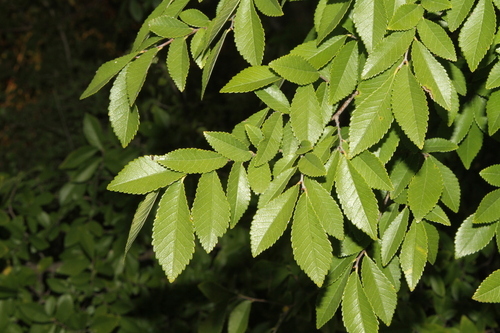

Chinese elm (Ulmus parvifolia Jacq., 1798) is a deciduous to semi-evergreen tree in the Ulmaceae family, native to East Asia: China, Taiwan, Korea, Japan and Vietnam. Its mottled bark peels in patches, and it differs from most elms by flowering in autumn rather than spring. Tolerance of urban soils and strong, though incomplete, resistance to Dutch elm disease make it a valued street tree. Its response to pruning also makes it one of the most widely grown bonsai trees.
Read moreChinese elm, Lacebark elm and Akinire



© photo
(c) Reid Hardin, some rights reserved (CC BY), uploaded by Reid Hardin · cc-by
葉子 · cc0
Douglas Goldman · cc-by-nc
Taken Apr 2, 2019 by JAMIE BROWN (cc-by-sa)
© copyright of the Board of Trustees of the Royal Botanic Gardens, Kew.




Global distribution
Ulmus parvifolia is native to East Asia, from central and southern China to Vietnam, South Korea and Japan (Honshu and Kyushu), including Taiwan. Introduced to Europe in the late 18th century and later to the United States and Australia, it now occurs on every continent except Antarctica and is locally invasive in several US states.
- Native5
- Introduced3
- Invasive1
- China
- Taiwan
- Vietnam
- South Korea
- Japan
- Australia
- United Kingdom
- South Africa
- United States
Hexagons: regions where the plant occurs. Green dots: native range.1
Identity
Chinese elm (Ulmus parvifolia Jacq., 1798), also known as lacebark elm, is a deciduous to semi-evergreen tree in the Ulmaceae family, native to East Asia. Nikolaus Joseph von Jacquin described it in 1798, and Plants of the World Online retains his name as the accepted botanical reference for the species. 1 8
The name lacebark elm refers to a feature visible at a glance: bark that peels in mottled gray, cream and reddish-brown patches, unlike the simply fissured bark of most elms. An employee of the US Department of Agriculture proposed this English name around 1908 to resolve an established nursery-trade confusion with Ulmus pumila, which was also sold as Chinese elm. 7
Recognition
Mature Chinese elms commonly reach 10–18 m (33–59 ft) tall with a spread of 15–20 m (49–66 ft). Very old trees may have a trunk more than 1 m (3.3 ft) across. The gray to gray-brown bark develops few fissures but peels in patches, exposing cream, orange and reddish-brown tones that distinguish it from most other elms. 8 7
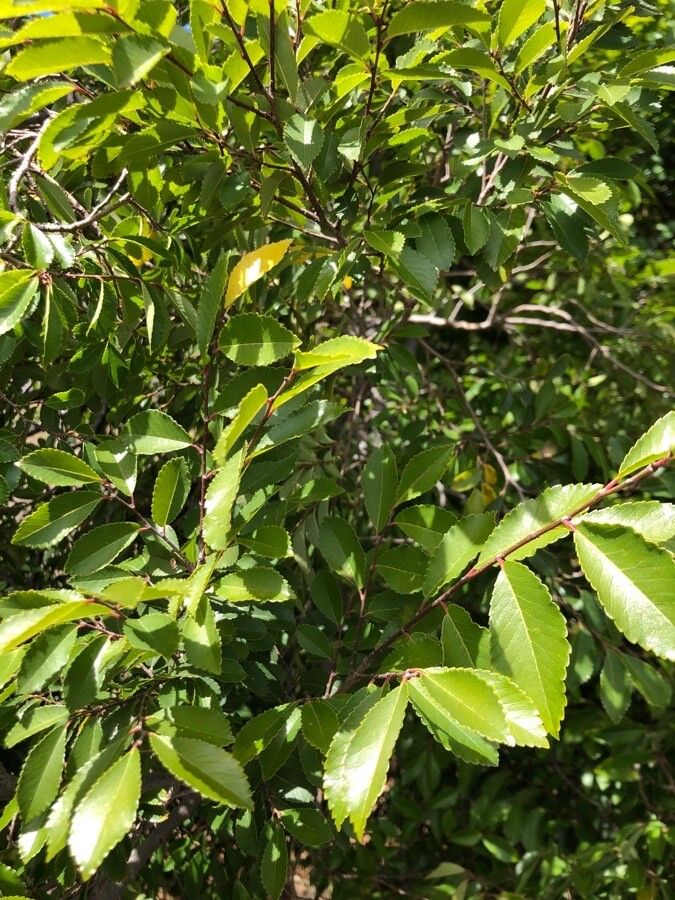
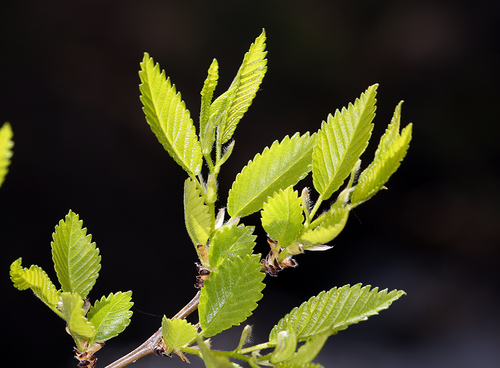
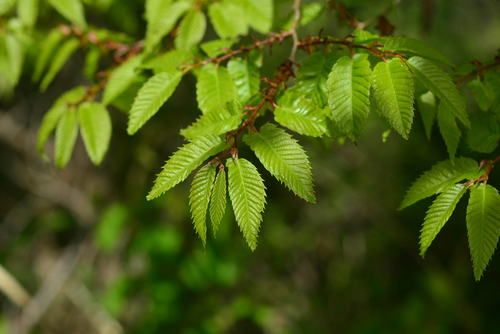
Small leaves, 2.5–5 cm (1–2 in) long, are oval to lance-shaped, leathery and glossy. Their symmetrical base and singly toothed margin help separate the species from elms with an uneven leaf base. In mild climates the leaves often persist into early or midwinter; in some autumns they turn purplish red before falling. 7 2
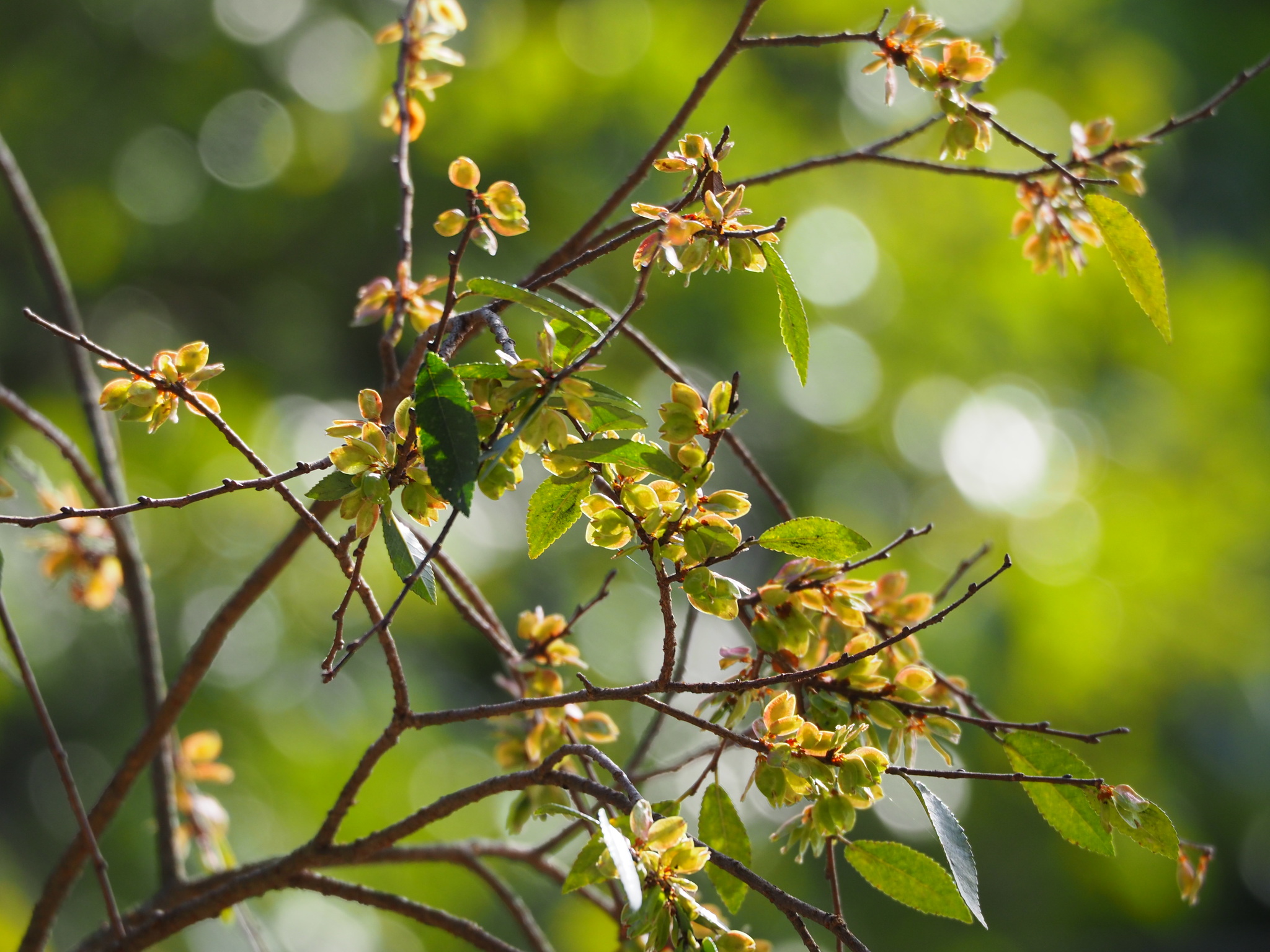
Unlike most elms, which flower before spring budbreak, Ulmus parvifolia produces its inconspicuous, petal-free flowers in early autumn. Its elliptical winged fruits, or samaras, measure 10–13 mm (about 0.4–0.5 in) and ripen within only a few weeks after flowering. 7
Useful taxonomy
Nursery names have long blurred distinctions between several Asian members of Ulmus. Botanical synonyms recorded for Chinese elm include:
- Ulmus parvifolia var. coreana (Nakai) Uyeki (botanical synonym)
- Ulmus parvifolia f. lanceolata (Nakai) Uyeki (botanical synonym)
- Ulmus suberosa var. parvifolia Roth (botanical synonym)
- Ulmus campestris var. parvifolia Loudon (botanical synonym)
- Ulmus chinensis Pers. (botanical synonym)
Using the full botanical name with its author, Ulmus parvifolia Jacq., avoids the most persistent confusion. Ulmus pumila is a completely different species, although many nurseries formerly sold it under the same common name, Chinese elm. 1 7
Habitat and range
Eastern Asia forms the natural range of Ulmus parvifolia, from central and southern China to Vietnam, South Korea and Japan, including Taiwan. It grows in rich soils near watercourses, on plains and at low elevations, generally below 800 m (2,625 ft) depending on the region. 5
The International Union for Conservation of Nature assesses Chinese elm as Least Concern (LC), with no identified threat within its native range. It reached Europe in the late 18th century, followed by the United States and Australia, with an Australian introduction recorded in 1857. Today it occurs on every continent except Antarctica. 6 7
Several US states, including New Jersey, Virginia and Wisconsin, regard Ulmus parvifolia as locally invasive. Disturbed ground and urban edges are particular settings for this behavior; its value as a planted tree does not prevent it from spreading beyond cultivation. 7
Life cycle and reproduction
Autumn flowers lack petals and rely on wind for pollination. Samaras form shortly afterward: unlike spring-flowering elms, Chinese elm has only a few weeks to ripen its fruits before winter. The season of flowering is therefore also a useful clue when comparing trees with similar leaves. 7
Seeds germinate quickly in nurseries without prolonged cold stratification, making sowing a straightforward propagation method. In the ground, a young tree takes 20–50 years to reach mature size, depending on growing conditions. In bonsai, root and foliage pruning deliberately slow development, and the plant tolerates this restraint well. 4 5
A tree planted in Central Park, New York, in 1865 remained the oldest documented lacebark elm in the United States until its death in the 1990s. Its trunk reached 1.4 m (4.6 ft) across, well beyond the meter already unusual for old urban trees. The cultivar Central Park Splendor was cloned directly from it. 7
Uses and risks
Compacted soil, pollution and confined spaces such as parking lots and sidewalks are conditions Chinese elm tolerates as an ornamental street tree. Once well established, it withstands frost down to about −34 °C (−29 °F), an unusual level of cold tolerance in an autumn-flowering tree. 3 4
Strong resistance to Dutch elm disease makes this species a useful parent for resistant hybrids such as Frontier, but it is not completely immune. More localized problems include scale insects and leaf spots. In the southern United States it is also vulnerable to Texas root rot. 7 3
No toxicity is documented in humans or domestic animals. Leaves, immature fruits and inner bark are even recorded among traditional edible uses in East Asia. These records describe traditional use rather than changing the botanical distinctions needed to identify the tree. 5
Varieties, look-alikes and related plants
Bonsai growers value Chinese elm for its response to pruning. It is one of the elms most widely used in bonsai and is often recommended to beginners because it tolerates varied light and humidity. Dwarf cultivars Seiju, Hokkaido and Yatsubusa were selected specifically for this use and have miniature foliage. 7
The main plants confused with Chinese elm are:
- Ulmus pumila, Siberian elm, long sold under the same common name, Chinese elm;
- Zelkova serrata, another East Asian member of Ulmaceae with conspicuous bark lenticels;
- Ulmus davidiana var. japonica, less widely grown in Europe but sometimes confused in Asian nurseries.
Growth is fast to moderate depending on the soil, yet slower than that of Siberian elm. This gives Chinese elm a denser habit that is easier to contain. Recommended spacing for urban rows is 6–10 m (20–33 ft), allowing room for the developing crown.
Mottled peeling bark, a symmetrical leaf base and autumn flowering provide the most dependable combination for identifying Ulmus parvifolia. Taken together, these features are more informative than a nursery label that uses Chinese elm loosely.
Main sources
- Plants of the World Online / Kew, Ulmus parvifolia Jacq.
- Missouri Botanical Garden, Ulmus parvifolia (Chinese elm)
- NC State Extension, Ulmus parvifolia - Chinese Elm
- Royal Horticultural Society, Ulmus parvifolia growing guide
- Plants For A Future, Ulmus parvifolia database entry
- IUCN Red List, Ulmus parvifolia assessment
- Wikipedia (EN), Ulmus parvifolia
- Wikipédia (FR), Orme de Chine
Frequently asked questions
Are Chinese elm and Siberian elm the same tree?
No. Ulmus parvifolia and Ulmus pumila are distinct species, but both were long sold as Chinese elm. The name lacebark elm was proposed to remove that ambiguity.
Why does Chinese elm bark peel in patches?
This is a natural feature: aging bark peels in patches, revealing cream, orange and reddish-brown tones. The mottled pattern explains the name lacebark elm and distinguishes it from elms with simply fissured bark.
Does Chinese elm resist Dutch elm disease?
It is among the most resistant elms, but it is not completely immune. This resistance makes it a valued parent for selected hybrids such as Frontier.
Why does Chinese elm flower in autumn?
It is an exception in the genus Ulmus, where most species flower before the leaves emerge in spring. In Ulmus parvifolia, inconspicuous early-autumn flowers are followed quickly by ripening samaras.
Is Chinese elm toxic to cats or dogs?
No toxicity is documented. Perenual lists the species as non-toxic to domestic animals and humans, and it does not appear on ASPCA lists of toxic plants.
Why is Chinese elm so popular for bonsai?
Tolerance of severe pruning, small leaves and adaptability to varied light and humidity make it a recommended choice for beginners. Dwarf cultivars such as Seiju and Hokkaido were selected specifically for bonsai.
How can I distinguish Chinese elm from other elms?
A symmetrical leaf base, small leaves, autumn flowering and mottled peeling bark are the most reliable features. Most other elms have asymmetrical leaf bases and flower in spring.
Similar plants
If you are unsure about a plant’s toxicity, ask a botanist or veterinarian for advice.