
Lingonberry (Vaccinium vitis-idaea, )
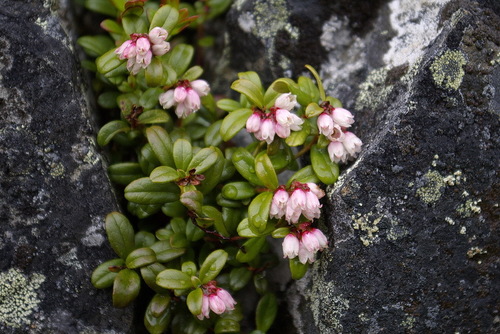
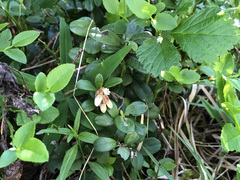
Lingonberry (Vaccinium vitis-idaea L., 1753) is an evergreen subshrub in the Ericaceae family, native to the boreal forests and Arctic tundra of Eurasia and North America. Creeping rhizomes form low mats bearing small, tart red berries long harvested throughout the circumboreal region.
Read moreLingonberry and Cowberry
Allow a few hours of direct sun per day, preferably morning or evening.
Full sun to light partial shade; deep shade greatly reduces fruiting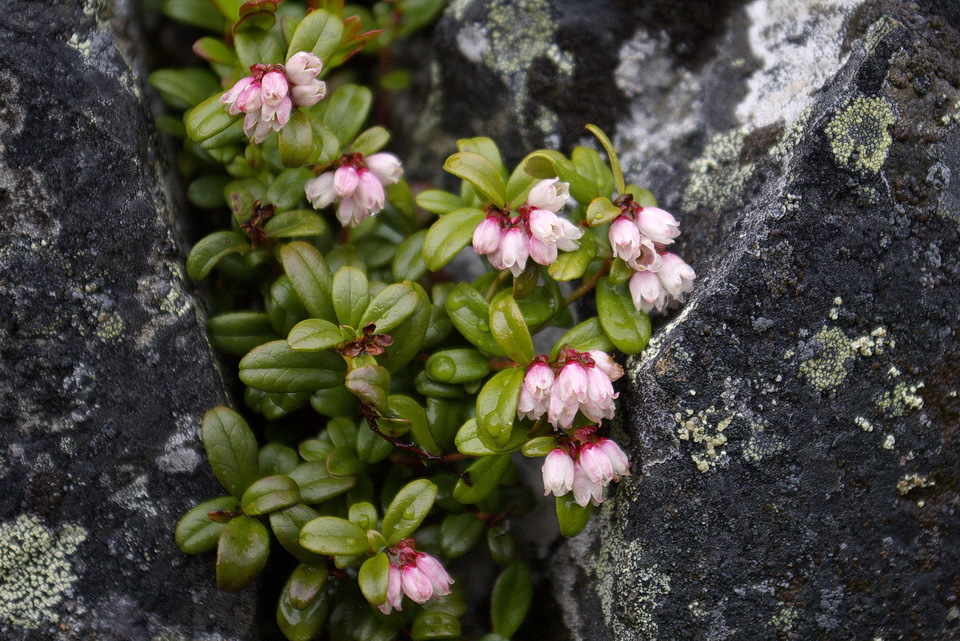


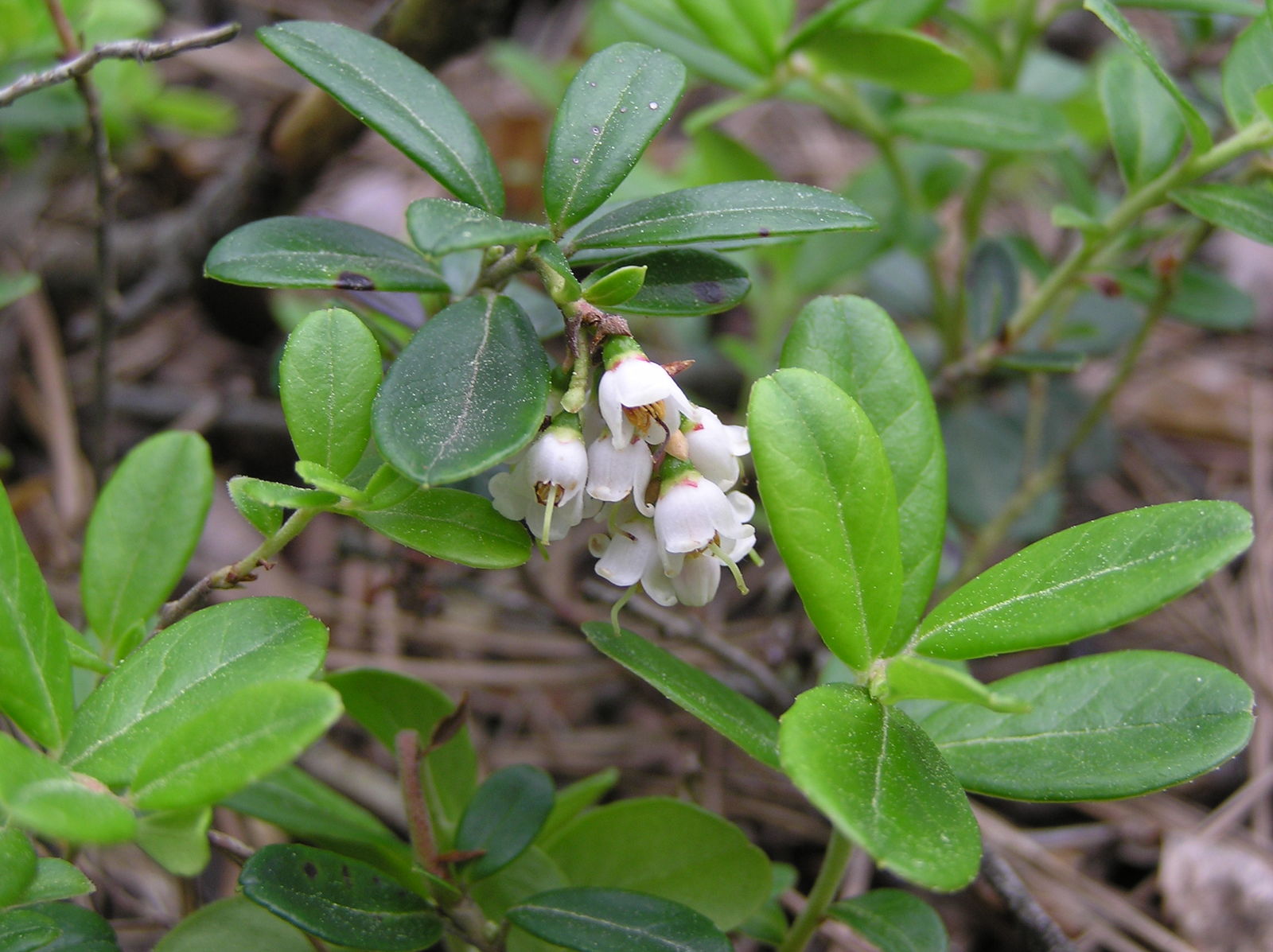
© photo
(c) Andy Fyon, some rights reserved (CC BY-NC), uploaded by Andy Fyon · cc-by-nc
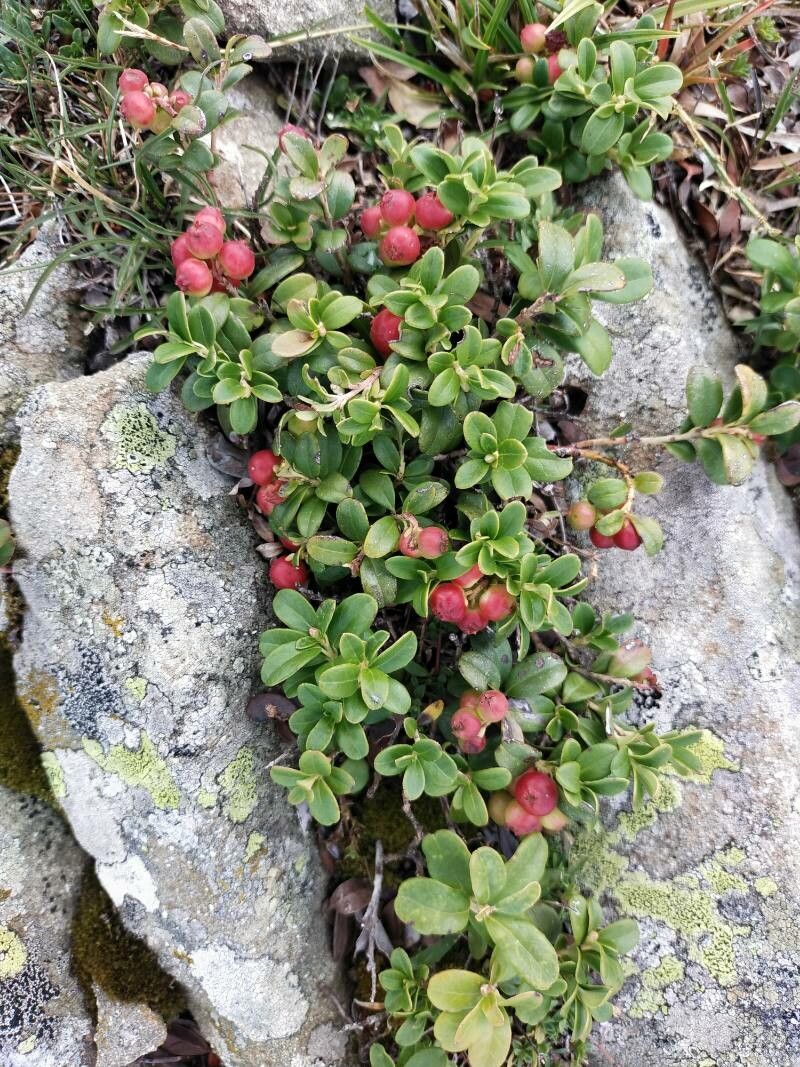
Jason Grant · cc-by
iNaturalist User · cc0
Taken Jun 19, 2014 by Tela Botanica − Liliane ROUBAUDI (cc-by-sa)
Taken Feb 21, 2017 by Yoan MARTIN (cc-by-sa)
Taken Sep 8, 2021 by Sylvain Piry (cc-by-sa)
© copyright of the Board of Trustees of the Royal Botanic Gardens, Kew.




Global distribution
POWO and the IUCN describe a circumboreal native range across cold Eurasia and North America, in boreal forest and Arctic tundra. In France, the species reaches its southern range limit in a few mountain ranges, where departmental legal protection reflects conservation needs rather than introduction or invasion.
- Native5
- Scandinavia and boreal Russia
- Canada and Alaska
- Northern United States
- Siberia and northern Japan
- France (mountain ranges)
Hexagons: regions where the plant occurs. Green dots: native range.1
Identity
Lingonberry (Vaccinium vitis-idaea L., 1753) is an accepted species of Vaccinium in the Ericaceae family. Linnaeus published it in the first volume of Species Plantarum. 1 2
Its epithet vitis-idaea means “vine of Mount Ida,” an ancient name adopted by Linnaeus without an actual connection to that mountain. Cowberry is another established English name. French names referring to Mount Ida preserve the same historical association, while the German name Preiselbeere identifies this species in Central European sources. 7 4
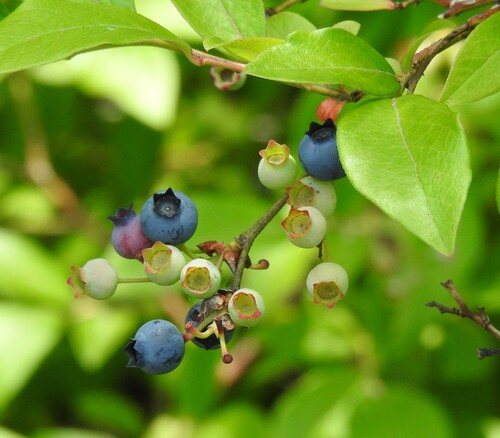
Red fruit separates lingonberry from its relative bilberry (Vaccinium myrtillus), which has blue-black berries. The two share a genus and a preference for acidic soil; the broader French term “airelle” can refer to several Vaccinium species.
Recognition
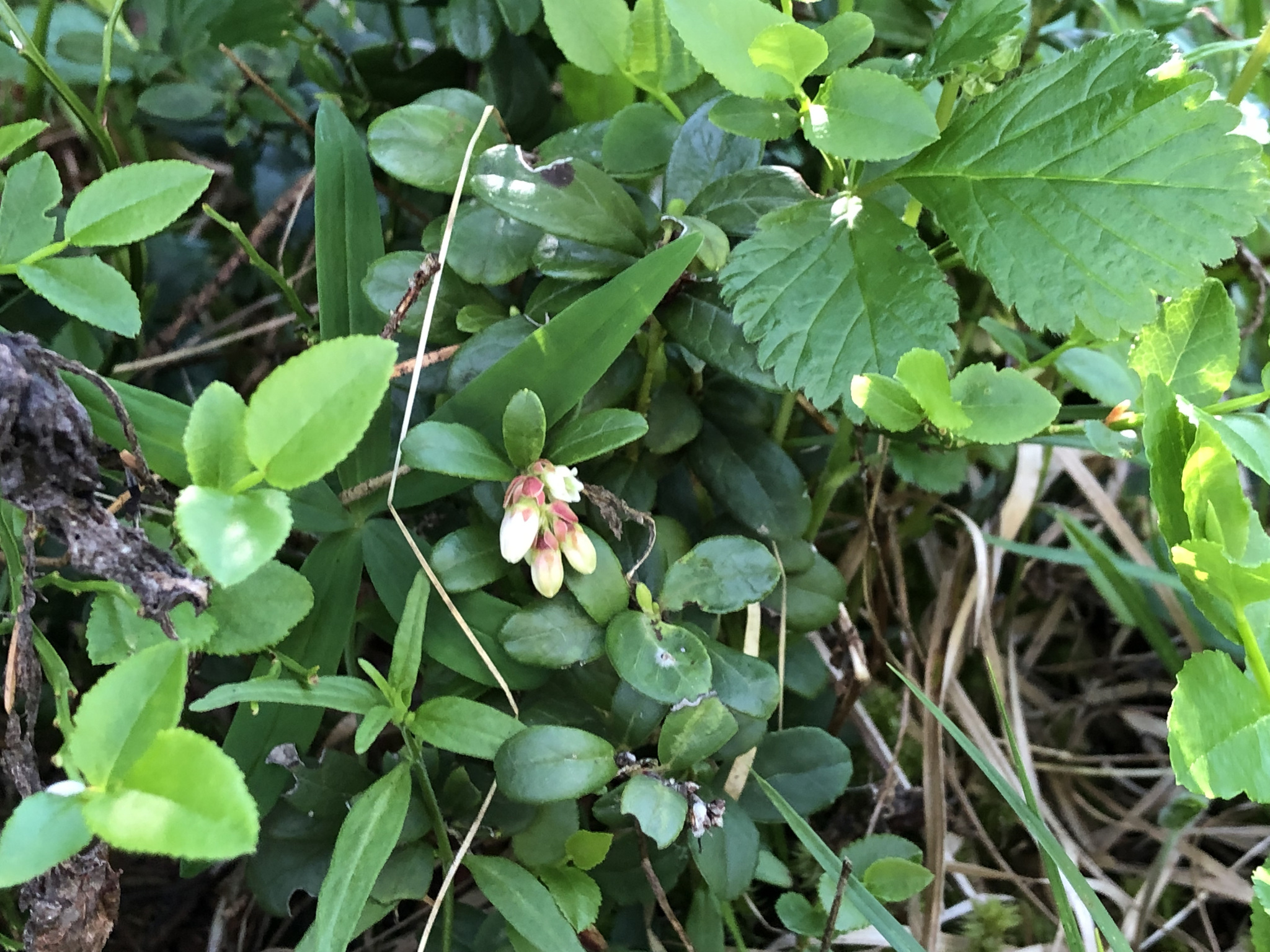
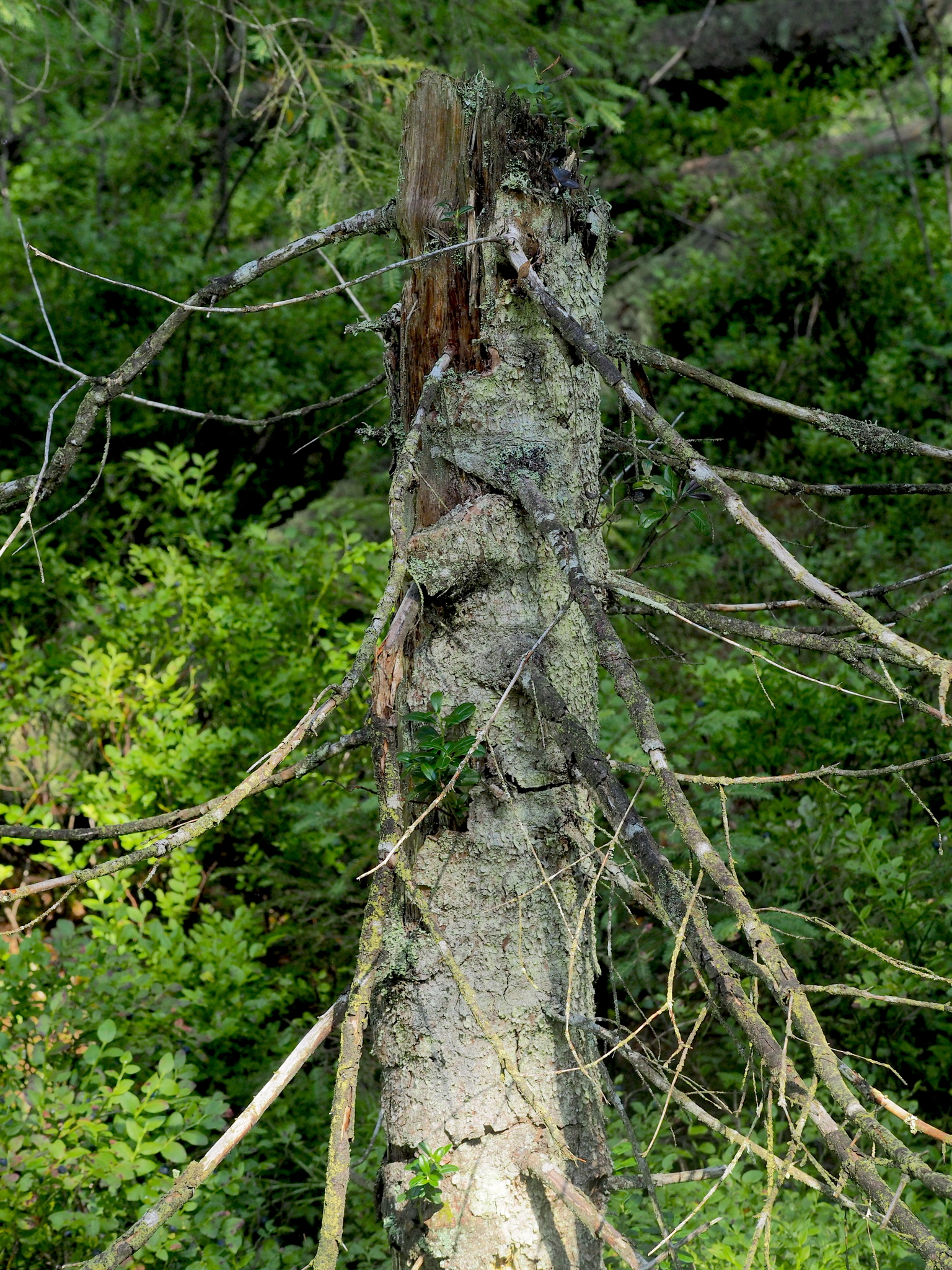
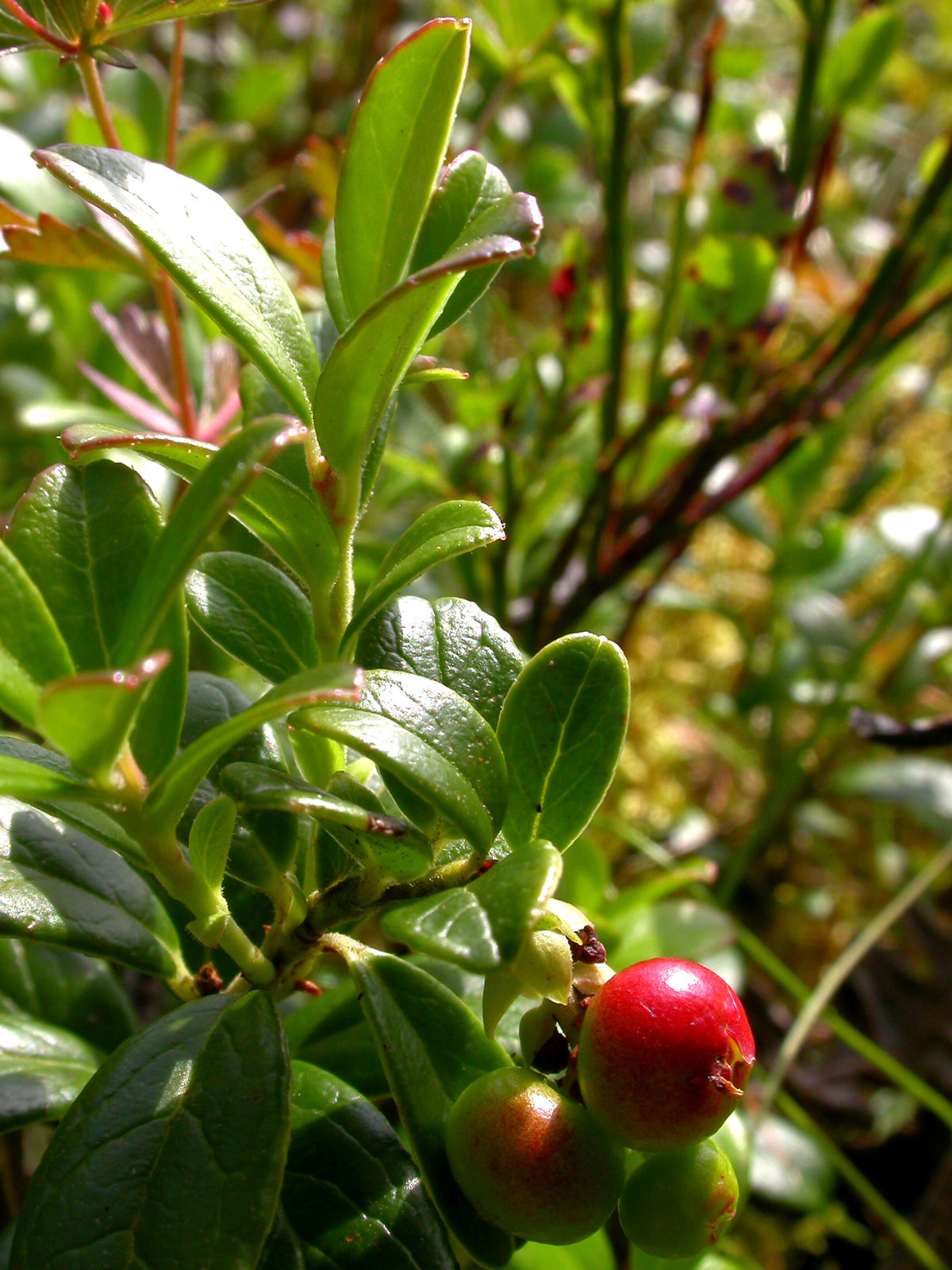
A mat of evergreen subshrubs, 10–40 cm (4–16 in) tall, develops as Vaccinium vitis-idaea extends its underground rhizomes. Slender, woody shoots carry oval, leathery, glossy leaves, dark green on top. 4 5
Look beneath a leaf for a reliable identification feature: small, dark glandular dots. These are absent from bearberry (Arctostaphylos uva-ursi), the species most easily confused with lingonberry on similar acidic ground. 4
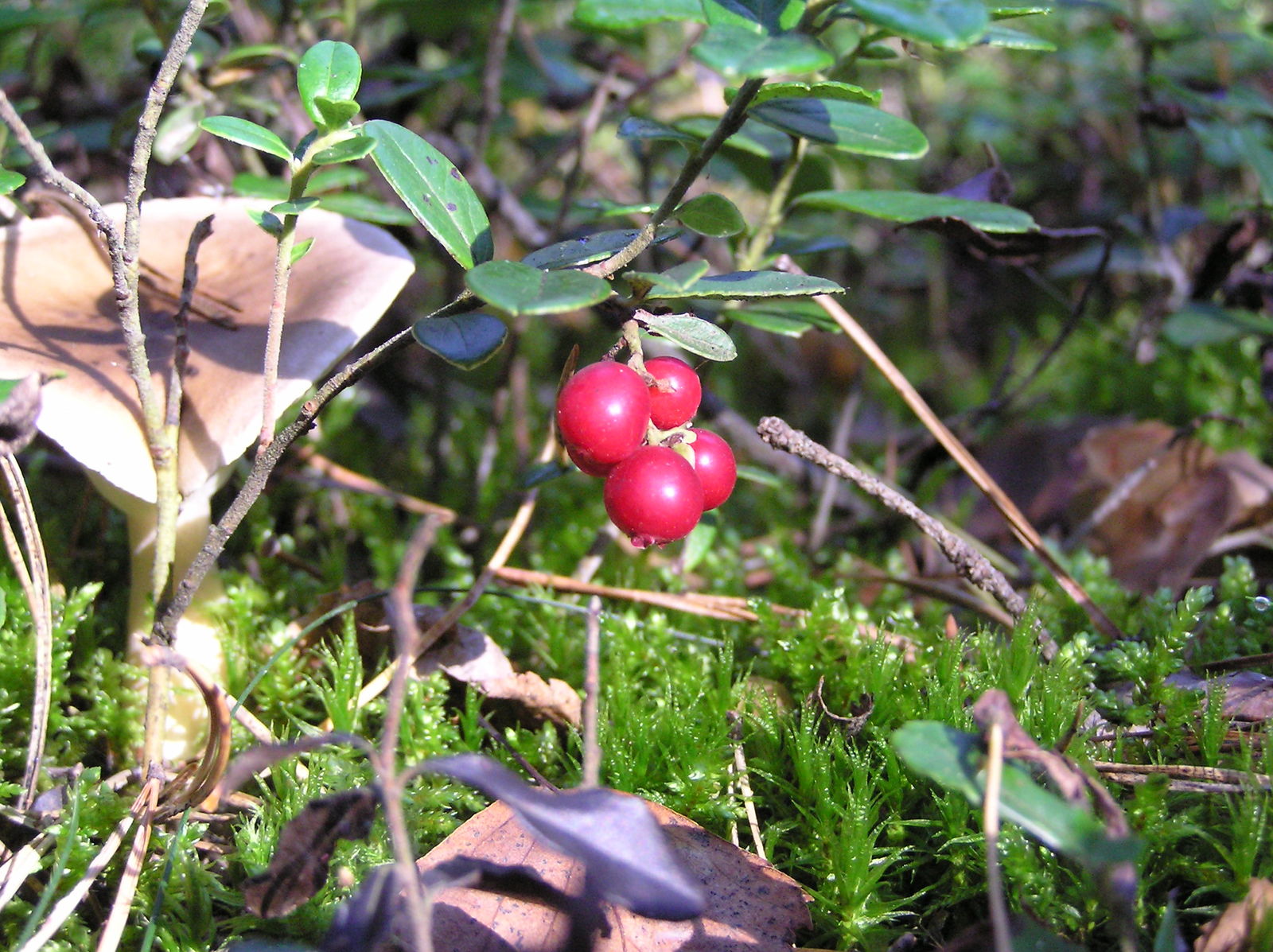
Bell-shaped white to pale pink flowers measure 3–8 mm (0.12–0.31 in) and appear in groups of 3–10. Abundant flowering begins only on plants 5–10 years old. Round, bright red berries measure 6–10 mm (0.24–0.39 in), taste tart when ripe and sweeten noticeably after frost. 1 3
Useful taxonomy
Within Vaccinium vitis-idaea, POWO distinguishes two geographic forms: the larger-leaved Eurasian variety vitis-idaea and the smaller-leaved North American variety minus, sometimes called lingonberry in a narrower sense. 1
Recent genome sequencing of the two subspecies places their divergence at about 5 million years ago. That interval resembles the separation between distinct Vaccinium species more than between simple geographic varieties, leading the study authors to question their taxonomic rank. 8
Both subspecies nevertheless remain diploid, share the same chromosome number and show no major genome rearrangement between them. The distinction concerns the time since divergence rather than a marked structural incompatibility. 8
Habitat and range
Across its circumboreal native range, lingonberry occupies boreal conifer forest and Arctic tundra in cold Eurasia and North America, including Canada, Alaska and the northern United States. The IUCN lists it as Least Concern globally. 1 6
French populations mark the southern edge of this range, surviving in a few mountain ranges as remnants of colder periods. Legal protection in several French departments concerns local conservation, a very different status from introduction or invasion. 7
Similar vulnerability at the range margins occurs in North America: lingonberry is endangered in Michigan and of special concern in Connecticut despite its abundance farther north. Soil must remain acidic, at pH 4.5–6; lime-rich ground quickly causes chlorosis and prevents the mat from establishing. 5
Life cycle and reproduction
Establishment begins slowly, from seed in acidic soil or a rhizome fragment taken from an existing clump. Young plants remain inconspicuous for some time before actively spreading rhizomes extend their cover. 3 5
Well-established plants flower abundantly after 5–10 years, when specialist bees and bumblebees visit the bells. Berries ripen from late summer into fall in the northern growing season and often persist through winter, providing late food for northern wildlife. 4
For cultivation, rhizome division and semi-ripe cuttings taken in late summer are the most reliable propagation methods. Seed is also possible but germination and growth are slow and irregular. 5
Uses and risks
Ripe lingonberries can be eaten raw or cooked into jam, syrup or compote. Their longstanding use alongside Scandinavian dishes is well documented, without particular risk to humans. 5
Leaves contain arbutin. Occasional leaf tea has a traditional use, but regular consumption is not recommended. No veterinary source classifies the plant as toxic to cats or dogs; its status for horses remains uncertain because specific data are lacking. 5
Persistent berries provide important winter food for moose and caribou in North America, when few other fruits remain on plants. 4
Varieties, look-alikes and related plants
Nurseries chiefly offer ornamental and fruiting selections of the Eurasian variety. These include the Koralle group, documented by the RHS for glossy foliage and berries around 10 mm (0.4 in) across, and Red Pearl, a larger-fruited selection grown alongside it. 3
Bearberry (Arctostaphylos uva-ursi) is the closest practical look-alike in the field: it forms similar evergreen mats with red berries on poor acidic soil, but lacks lingonberry’s characteristic glandular dots beneath the leaves. 4
Bilberry (Vaccinium myrtillus) presents another possible confusion, particularly where French common names overlap. Bilberry loses its leaves in winter and produces blue-black berries; lingonberry stays evergreen and fruits red. The scientific name provides a firmer reference than a shared common name.
A hand lens settles the leaf comparison quickly: dark glandular dots identify lingonberry, while their absence points toward bearberry or bilberry. 4 1
Main sources
- Plants of the World Online / Kew, Vaccinium vitis-idaea L.
- International Plant Names Index, Vaccinium vitis-idaea L.
- Royal Horticultural Society, Vaccinium vitis-idaea Koralle Group
- Missouri Botanical Garden Plant Finder, Vaccinium vitis-idaea
- Plants For A Future, Vaccinium vitis-idaea
- IUCN Red List, Vaccinium vitis-idaea assessment
- INPN, Vaccinium vitis-idaea L., 1753, lingonberry
- Genome sequencing of European and North American lingonberry subspecies, PMC10917501
Frequently asked questions
Is lingonberry poisonous?
No. The berries are edible, and the foliage is not classified as toxic to humans, cats or dogs. Leaf tea contains arbutin and should be an occasional drink rather than a daily one.
Are lingonberry and bilberry the same plant?
No. Lingonberry (Vaccinium vitis-idaea) is evergreen with red berries; bilberry (Vaccinium myrtillus) is deciduous with blue-black berries. Both belong to the same genus and favor acidic soil.
How can I tell lingonberry from bearberry?
Both form evergreen mats with red berries, but lingonberry has small, dark glandular dots on the underside of its leaves. Bearberry (Arctostaphylos uva-ursi) lacks these dots.
Is lingonberry invasive in France?
No. It is native to France, where a few mountain ranges mark the southern limit of its circumboreal range. Departmental protection applies in places; it is not treated as invasive.
Why distinguish the European and American subspecies?
Genome sequencing suggests the two forms diverged about 5 million years ago. This finding has reopened debate over their precise taxonomic rank despite their current treatment as varieties of one species.
What soil does lingonberry need in a garden?
Choose humus-rich, consistently moist acidic soil, pH 4.5–6, without lime. Full sun favors fruiting, although light partial shade is tolerated.
Similar plants
If you are unsure about a plant’s toxicity, ask a botanist or veterinarian for advice.