
Highbush blueberry (Vaccinium corymbosum, )
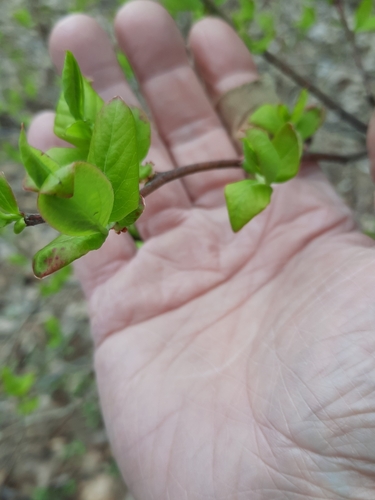

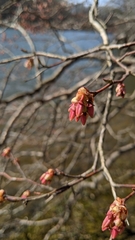
Highbush blueberry (Vaccinium corymbosum L., 1753) is a deciduous fruiting shrub in the Ericaceae family, native to eastern Canada and the eastern United States. White to pink flowers in corymbs give way to blue-purple berries covered in a waxy bloom. This cultivated species supplies most blueberries sold in stores today.
Read moreHighbush blueberry



© photo
iNaturalist User · cc0
(c) mamiles, some rights reserved (CC BY-NC-ND), uploaded by mamiles · cc-by-nc-nd
Erin Lalime · CC BY-NC
Taken May 5, 2022 by Rosalie Cécile (cc-by-sa)
Taken Jul 15, 2014 by Photoflora - Jean-Luc TASSET (©)
Taken Nov 15, 2005 by Photoflora - Jean-Luc TASSET (©)
Taken Oct 29, 2020 by Nick PHELPS (cc-by-sa)
Taken Nov 6, 2022 by Karen Yallico (cc-by-sa)
© copyright of the Board of Trustees of the Royal Botanic Gardens, Kew.




Global distribution
Plants of the World Online records a native range from eastern Canada to North Carolina and the eastern United States. In France, the national taxonomic reference classifies it as cultivated outdoors, without recording naturalization or invasive status.
- Native2
- Nova Scotia and Quebec
- Northeastern and east-central United States
Hexagons: regions where the plant occurs. Green dots: native range.1
Identity
Highbush blueberry (Vaccinium corymbosum L., 1753) is a deciduous fruiting shrub in the genus Vaccinium, family Ericaceae. Linnaeus described it in Species Plantarum in 1753. Plants of the World Online accepts the name and records its native range from eastern Canada to North Carolina and the eastern United States. 1 2
Soil acidity deserves attention before buying this shrub. It needs a pH of 4.5–5.5; unlike many hedge shrubs, it develops iron chlorosis and stops growing in calcareous soil. 3
Highbush blueberry differs from European bilberry (Vaccinium myrtillus), a lower wild species bearing single berries. Vaccinium corymbosum supplies most blueberries sold in stores today, grown in orchards rather than gathered in woodland. 8 3
Within France, the national taxonomic reference classifies this species as cultivated outdoors. It is absent from the wild in that reference while remaining clearly identified in the national flora. 8
Recognition
Tall, upright stems form a rounded, multistemmed shrub, much larger than North American lowbush blueberries gathered in woodland. North American horticultural accounts give mature heights of 1.8–3.6 m (6–12 ft) with a comparable spread; cultivated plants in cooler climates seldom exceed 2 m (6.5 ft). 3 4
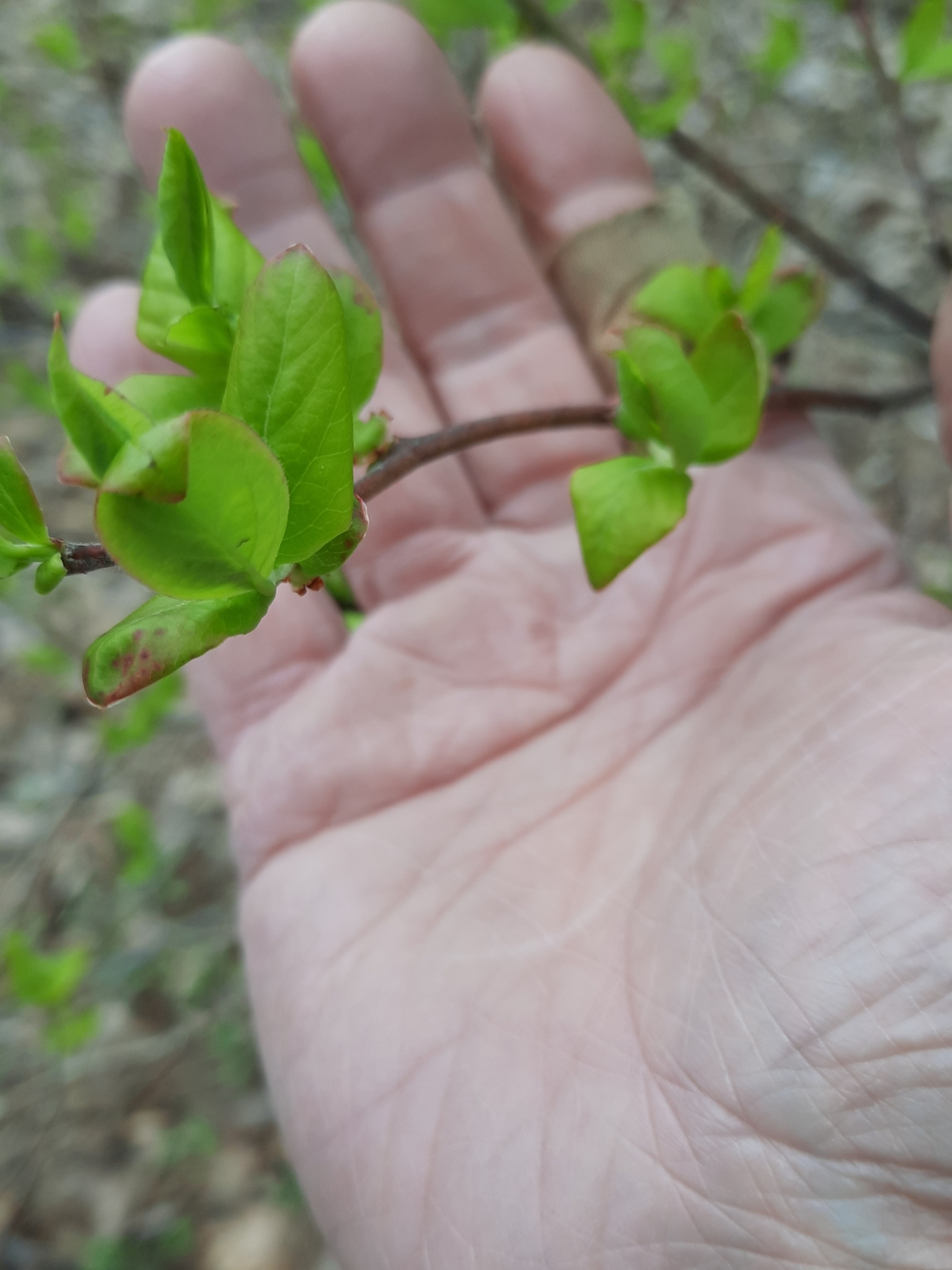
Simple, alternate leaves are oval to elliptical, with entire or finely toothed margins. Often reddish in spring, they turn green and then red, orange, yellow or purple in fall. This seasonal color is a widely recognized ornamental feature. 3
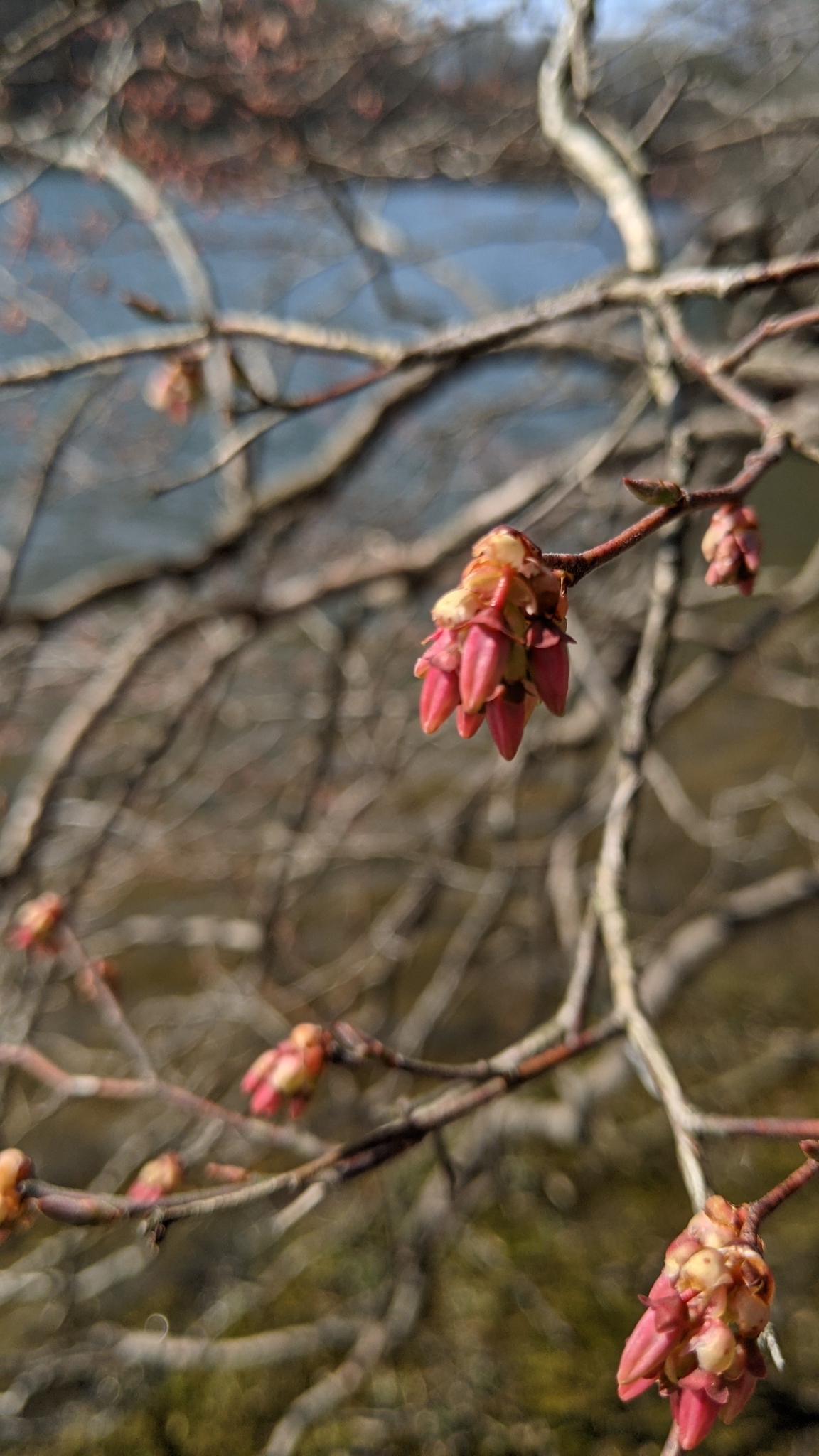
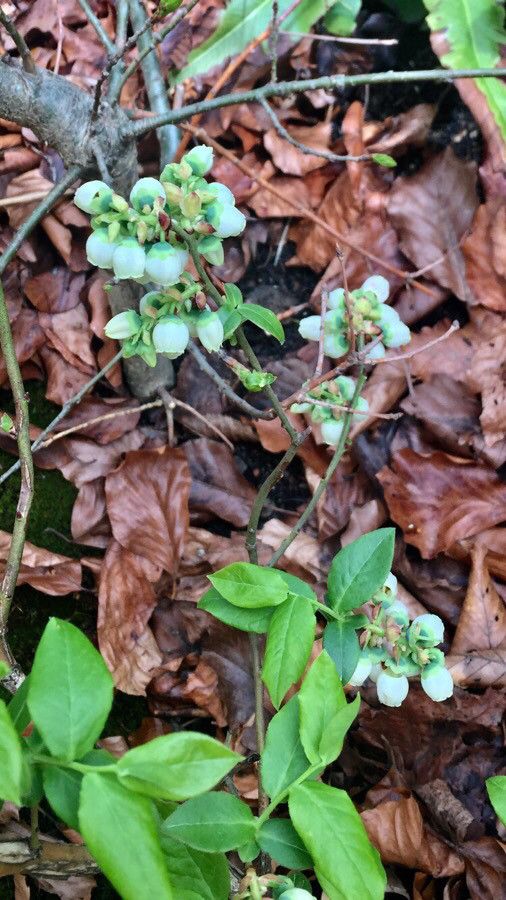
White to pink, bell- or urn-shaped flowers form short, tight clusters called corymbs, reflected in the epithet corymbosum. Flowering occurs in spring, March to May in the Northern Hemisphere examples, with timing varying by climate and often avoiding the very last frosts. 3
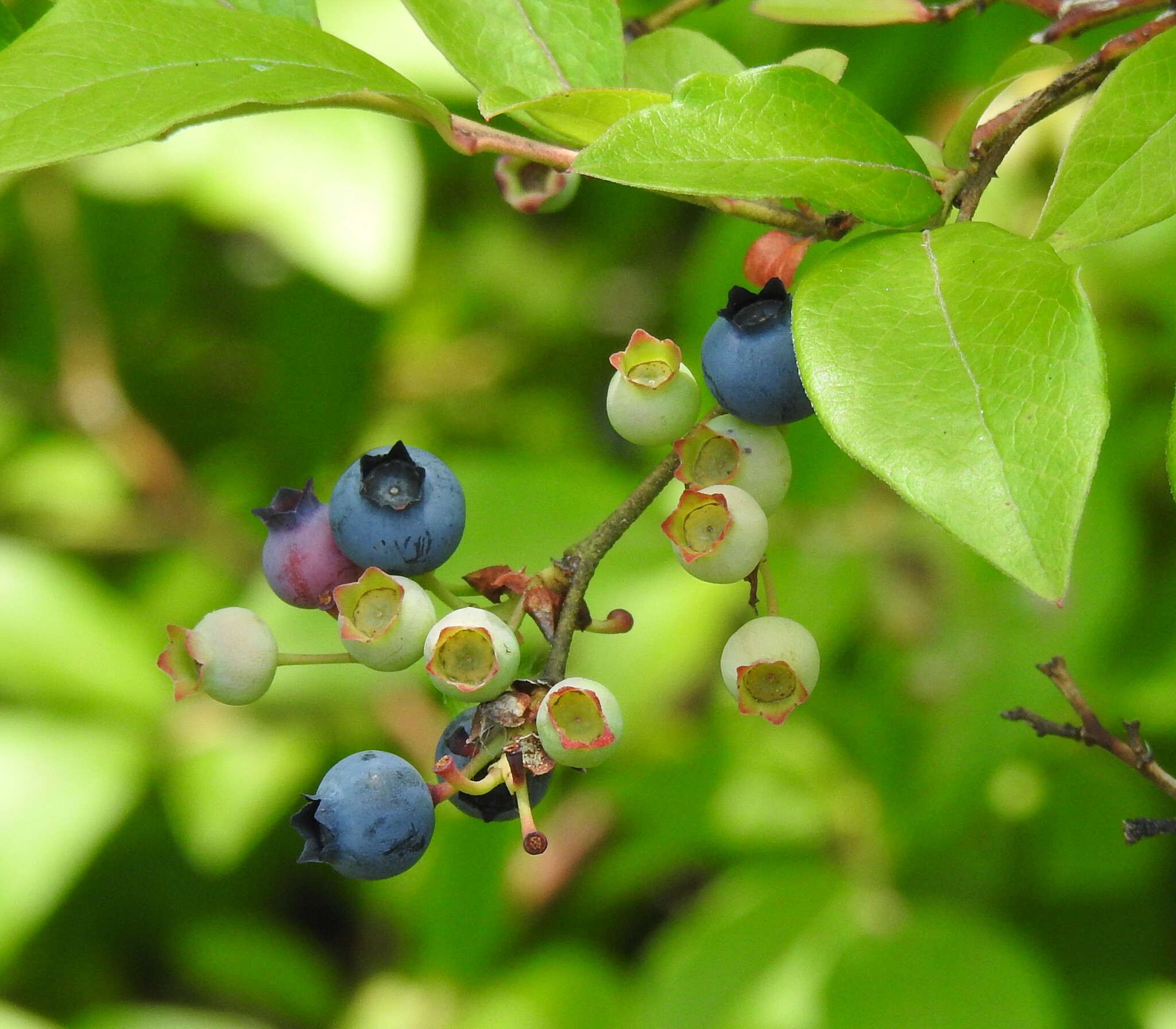
Ripe berries are round, about 8–16 mm (0.3–0.6 in) across, and evenly blue-purple beneath their waxy bloom; green or pink fruits are unripe. Pale flesh and small, soft seeds distinguish them from Gaylussacia huckleberries, whose darker fruits contain ten hard, stony seeds. 3 4
Useful taxonomy
For highbush blueberry, Plants of the World Online accepts Vaccinium corymbosum L. within Vaccinium sect. Cyanococcus, the group of blue-fruited North American blueberries. 1
Older classifications split populations among names now treated as synonyms: Cyanococcus corymbosus (L.) Rydb., Vaccinium constablaei A.Gray, Vaccinium simulatum Small and Vaccinium elongatum P.Watson. Older regional floras may therefore name populations differently from current treatments of V. corymbosum, reflecting a long history of nomenclatural instability. 1 7
Using the accepted scientific name avoids ambiguity. Common names such as blueberry cover several Vaccinium species with different hardiness and uses, just as the French words myrtille and bleuet do. 8 6
Habitat and range
Eastern Canada, North Carolina and the eastern United States make up the native range described by Plants of the World Online. Plants For A Future specifies Nova Scotia and Quebec, extending south to Florida. 1 4
Wild habitats include swamps, bogs, wet woods and pine woodland edges, alongside dry upland soils at some sites. In containers, its need for moisture calls for consistent watering, especially in the first year: the fine roots tolerate drying poorly. 4
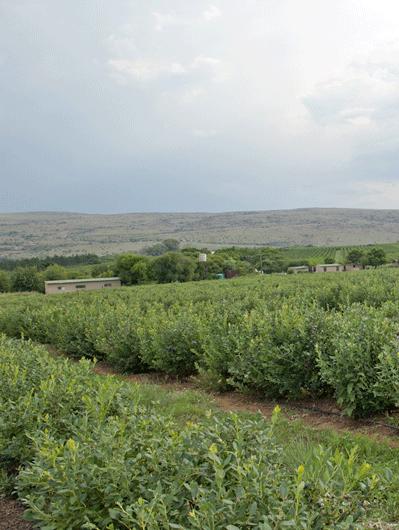
French taxonomic records place the shrub among species cultivated outdoors, without recording naturalization or invasive status. Nearly all French blueberry orchards use cultivars derived from Vaccinium corymbosum, introduced and selected since the early twentieth century. 8
Life cycle, pollination and harvest
Spring flowers open according to climate and cultivar; March to May applies to the Northern Hemisphere examples. Bees provide pollination, including several specialist Andrena species and the blueberry bee Habropoda laboriosa. 3
Hermaphroditic flowers make the species partly self-fertile. It can fruit alone, but yield and berry size increase markedly when several cultivars flowering together cross-pollinate. Without that contribution, berries are smaller and fewer. 4 3
Harvest extends through summer, and sometimes into early fall, depending on early, midseason or late cultivars; June to September is the Northern Hemisphere example. Horticultural accounts stress that berries stop ripening once picked, so they must remain on the shrub until ripe or they will stay very tart. 3 4
Food uses and risks
Ripe berries provide the main food use, eaten raw or cooked in pies and preserves, added to cereal or dried like raisins. They are rich in vitamin C. 4
Plants For A Future lists no known hazards, and the accounts consulted do not report toxicity to humans or domestic animals. Leaves have also been used for tea, a traditional use distinct from eating the fruit. 4
Orchard losses mainly involve mummy berry disease (Monilinia vaccinii-corymbosi), which dries fruits on the shrub, and birds, which can strip a plant before harvest without protective netting. 3
Cultivation, cultivars and look-alikes
Successful cultivation depends above all on acidic soil, pH 4.5–5.5, ideally near 5.0. Calcareous soil blocks iron uptake, causes chlorosis and halts growth; yellow leaves with green veins reveal the problem. 3 4
Winter chilling requirements accompany hardiness in USDA zones 3–8. Without enough cold under local conditions, dormancy does not fully break and flowering becomes irregular, reducing the harvest. 4
Growers use several cultivars to extend harvest from early to late summer: midseason Bluecrop, early Duke, cold-tolerant Patriot and late Elliott. 3
Useful comparisons include Vaccinium angustifolium, a lowbush blueberry with smaller fruits, Vaccinium fuscatum, a close relative with darker berries, and Gaylussacia baccata, whose blueberry-like fruits contain large, hard seeds. 3
Main sources
- Plants of the World Online / Kew, Vaccinium corymbosum L.
- International Plant Names Index, Vaccinium corymbosum L.
- NC State Extension Gardener Plant Toolbox, Vaccinium corymbosum
- Plants For A Future, Vaccinium corymbosum - High-Bush Blueberry
- USDA Forest Service FEIS, Vaccinium corymbosum
- USDA GRIN Global, Vaccinium corymbosum taxonomy detail
- Integrated Taxonomic Information System, Vaccinium corymbosum L.
- Tela Botanica, BDTFX taxonomic reference, Vaccinium corymbosum L.
Frequently asked questions
Is highbush blueberry the same as European bilberry?
No. Highbush blueberry is Vaccinium corymbosum, a cultivated shrub with clustered fruits. European bilberry is Vaccinium myrtillus, a low-growing wild species with single berries.
Do I need more than one plant for fruit?
The species is partly self-fertile and can fruit alone, but growing several cultivars that flower together greatly improves yield and berry size.
Why are the leaves turning yellow between the veins?
This is a sign of iron chlorosis caused by soil that is too calcareous. Correct the substrate acidity and avoid watering with hard, lime-rich water.
Can highbush blueberry grow in a pot?
Yes, in a large container with an acidic, well-drained substrate. Water regularly because the limited soil volume dries out faster than open ground.
When should I pick blueberries?
Harvest falls in summer and can extend into early fall depending on cultivar; June to September applies in Northern Hemisphere examples. Fruit does not ripen after picking, so leave berries on the shrub until fully ripe.
Is the fruit toxic to pets?
No known toxicity is reported for cats, dogs or humans, and ripe fruit is widely eaten.
How does it differ from lowbush blueberry, Vaccinium angustifolium?
Vaccinium corymbosum is a tall, upright shrub grown for the fresh market. Vaccinium angustifolium stays low and is mainly wild-growing or mechanically harvested.
Similar plants
If you are unsure about a plant’s toxicity, ask a botanist or veterinarian for advice.