
Fox grape (Vitis labrusca, )
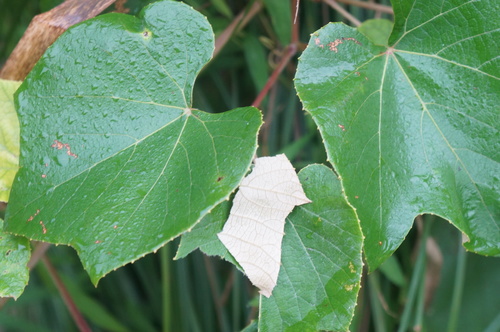
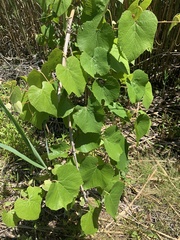
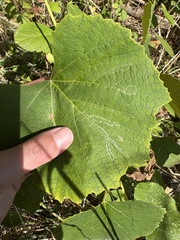
Fox grape (Vitis labrusca L.) is a deciduous woody climber in the Vitaceae family, native to eastern North America. Whitish felt beneath its leaves and tendrils at every node help identify it. It contributed to many North American grape cultivars and served as rootstock during the European phylloxera crisis.
Read moreFox grape
Allow a few hours of direct sun per day, preferably morning or evening.
Full sun; partial shade tolerated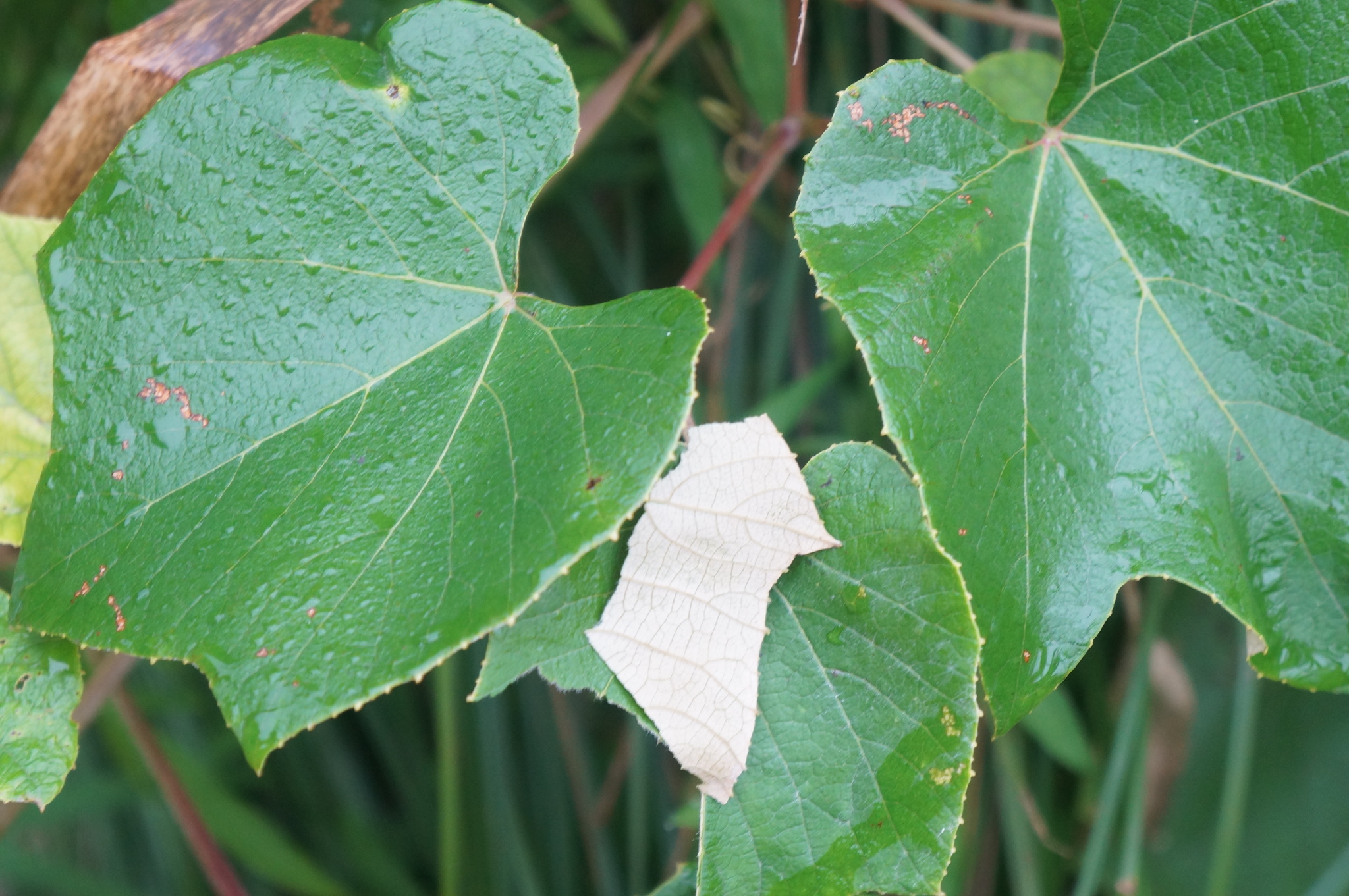


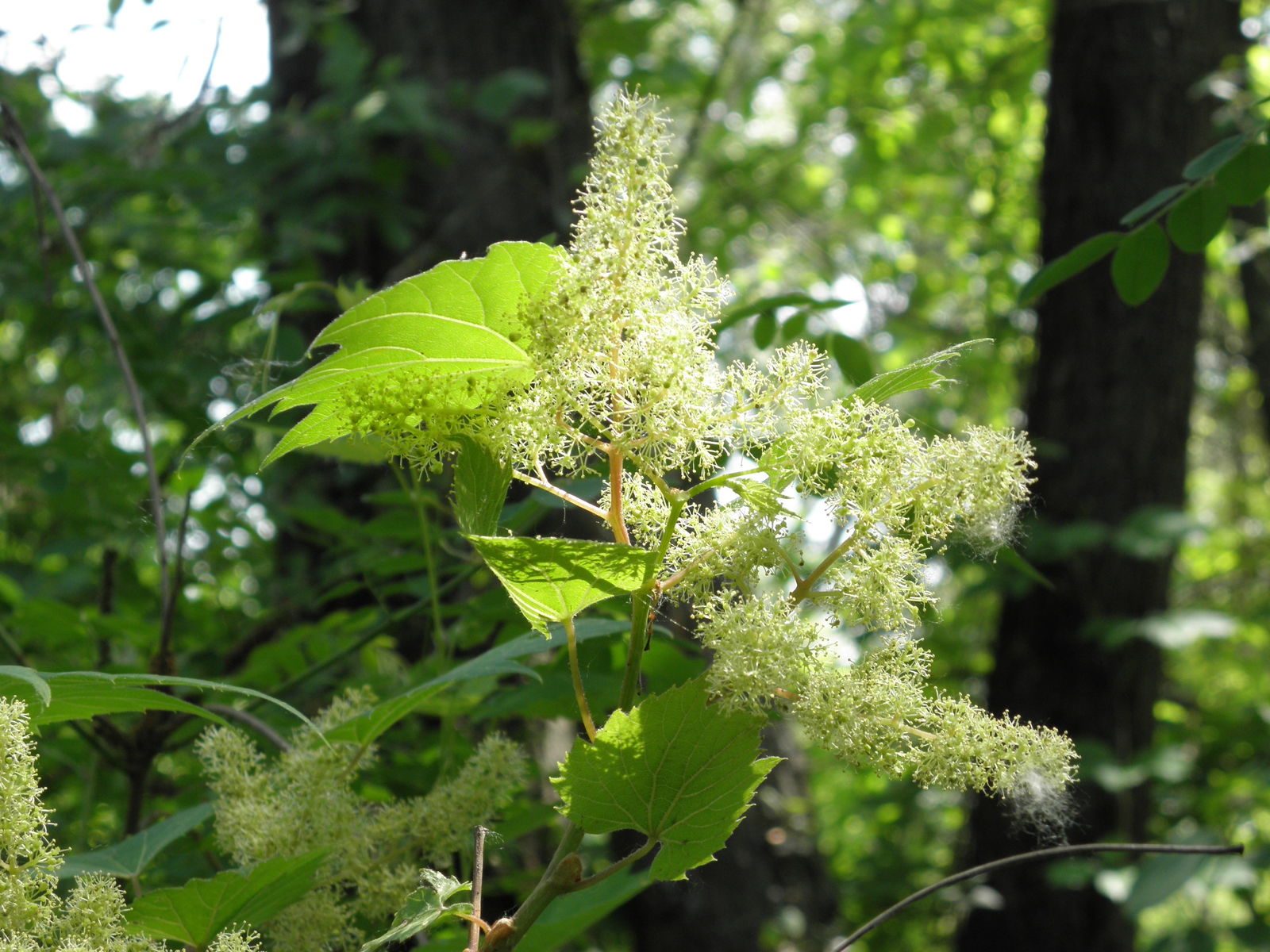
© photo
(c) Sara Rall, some rights reserved (CC BY-NC), uploaded by Sara Rall · cc-by-nc
Kathy Daniel · cc0
Mara McHaffie · cc0
Taken Jul 15, 2014 by Photoflora - Jean-Luc TASSET (©)
Taken Sep 15, 2016 by Tela Botanica − Jean-Marie PAGNIER (cc-by-sa)
© copyright of the Board of Trustees of the Royal Botanic Gardens, Kew.




Global distribution
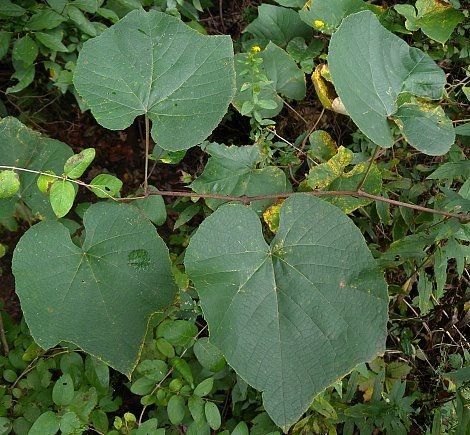
The native range of Vitis labrusca runs from southeastern Canada, in Ontario and Nova Scotia, to the southeastern United States, reaching Georgia and the vicinity of the Gulf of Mexico. Introduced to Europe in the nineteenth century as phylloxera-resistant rootstock, the species and its hybrids have naturalized at woodland edges without official invasive status in metropolitan France.
- Native2
- Introduced1
- Canada (Ontario, Nova Scotia)
- United States (Northeast and Southeast)
- Central Europe
Hexagons: regions where the plant occurs. Green dots: native range.1
Identity
Fox grape (Vitis labrusca L., 1753) is a deciduous woody climber in the genus Vitis, family Vitaceae. POWO recognizes Vitis labrusca as the accepted name, described by Carl Linnaeus in 1753. The species belongs to the native grape flora of eastern North America and is distinct from the European wine grape. 1
Two features distinguish fox grape from Vitis vinifera. The berry skin separates easily from the pulp when squeezed, a character known as slip-skin. A tendril or inflorescence also occurs at every node on the cane, compared with every second or third node in Vitis vinifera. Together these offer useful identification clues beyond fruit color. 2 3
Recognition
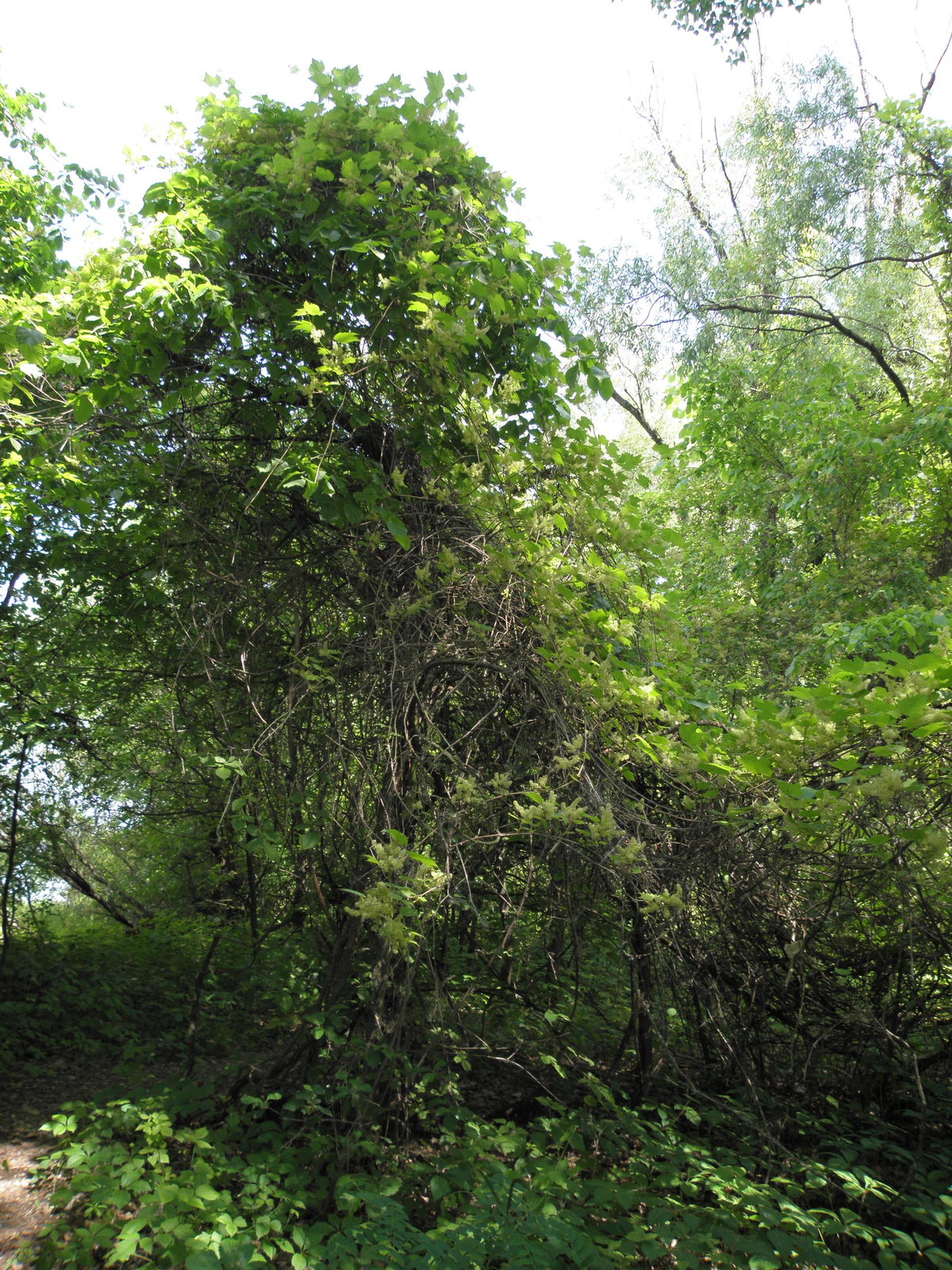
A vigorous supported fox grape can climb to 15 m (49 ft) according to PFAF. Missouri Botanical Garden gives a more usual height of 4.5–6 m (15–20 ft), with a similar spread. A trellis or supporting tree allows the vine to rise much higher than its typical garden dimensions suggest. 3 4
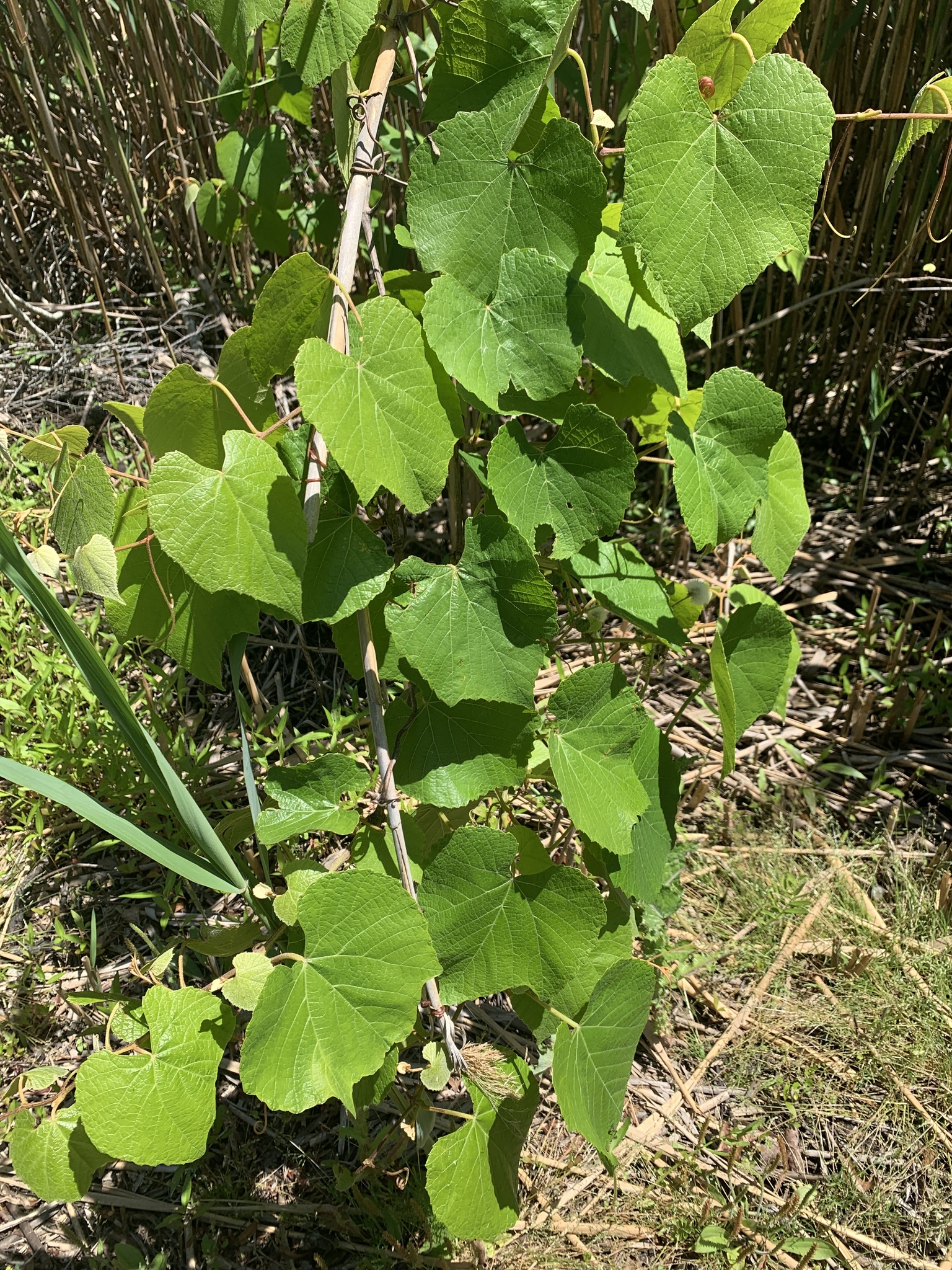
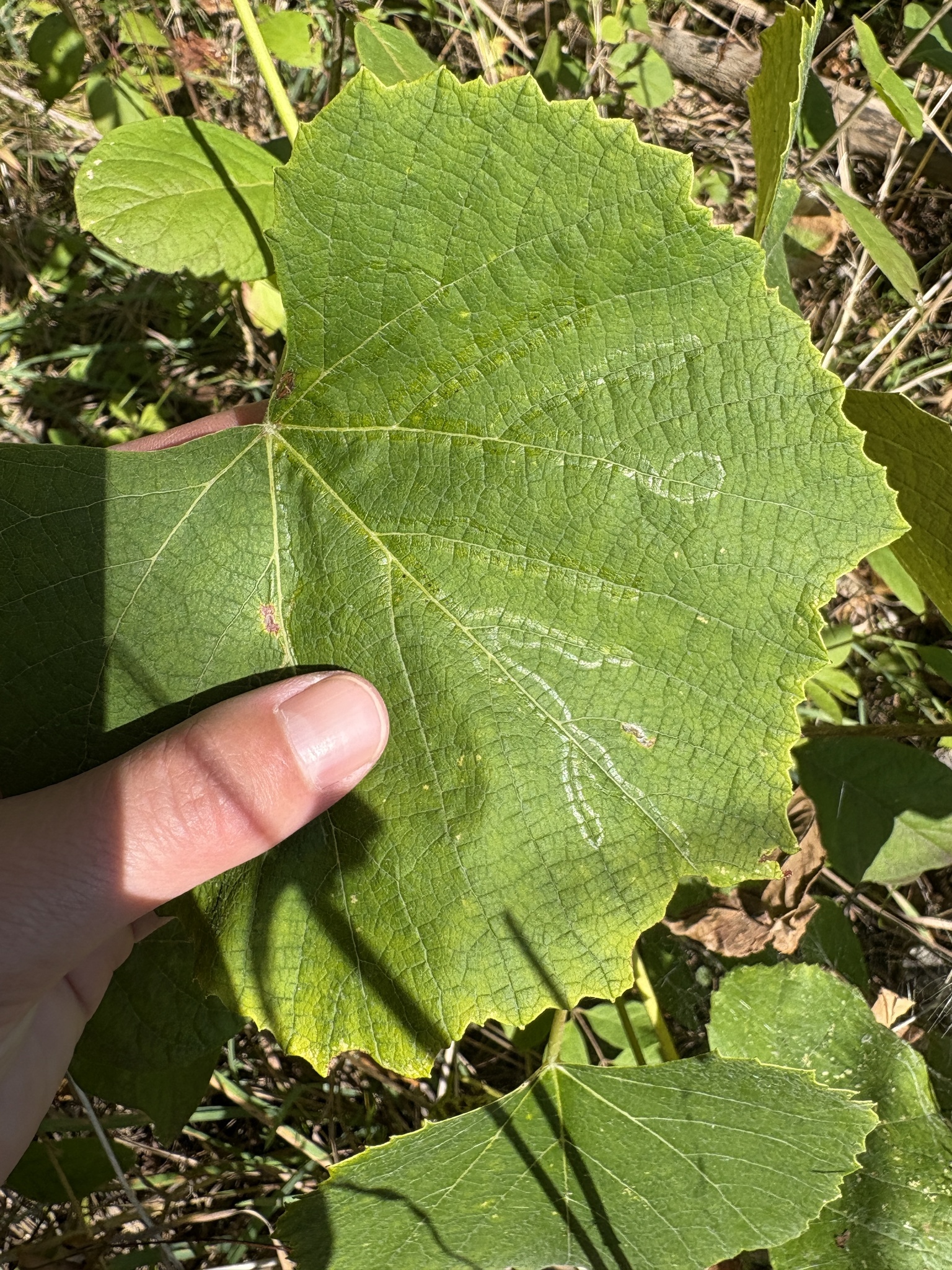
Whitish to rusty woolly felt covers young shoots and the undersides of mature leaves, a reliable character compared with the hairless undersides of most other Vitis. The upper surface remains smooth and clear green. Leaves are broad and heart-shaped, unlobed or shallowly three-lobed, with toothed margins. Older canes shed their bark in long brown strips. 5
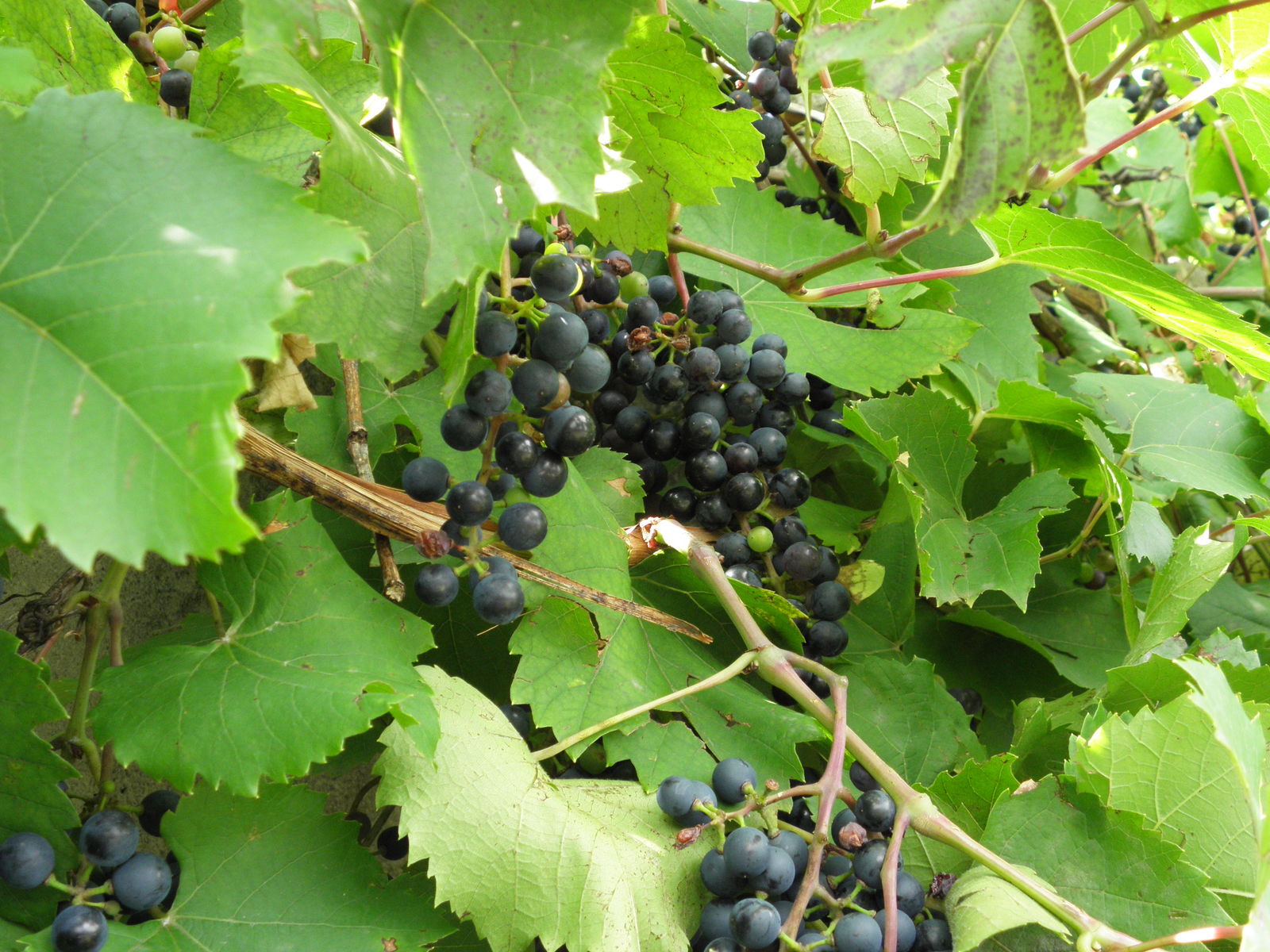
Tiny greenish flowers open in loose clusters from late spring into summer. The berries that follow are round, about 1.7 cm (0.7 in) across. They ripen in compact clusters in early to mid-fall, becoming blue-black at full maturity and developing an immediately recognizable musky aroma. 3 5
Young canes often carry leaves that are unlobed or only slightly wavy. Vigorous shoots arising near the base develop more pronounced lobes, though never the deep divisions of Vitis riparia or Vitis aestivalis, two North American wild grapes with a similar outline. This variability helps explain field misidentifications, especially when no fruit is available to settle the question. 5
Useful taxonomy
Roughly sixty species belong to Vitis, including several North American vines that resemble fox grape. Vitis riparia and Vitis aestivalis, for example, have the more deeply divided leaves mentioned above. The principal botanical synonyms include:
- Vitis vinifera var. labrusca (L.) Kuntze (a varietal combination)
- Vitis labrusca f. alba (Prince) Fernald (a named form)
- Vitis labrusca var. aestivalis (Michx.) Regel (a varietal name)
- Vitis labrusca var. catawba W.R.Prince (another varietal name)
The name Vitis × labruscana L.H.Bailey denotes a separate group often confused with the pure species. It covers commercial cultivars resulting from crosses between Vitis labrusca and Vitis vinifera, including Concord. These plants therefore also carry European grape ancestry, even when sold simply as fox grapes or American grapes. 1
Habitat and range
Fox grape occurs naturally from southeastern Canada, including Ontario and Nova Scotia, south through the southeastern United States to Georgia and near the Gulf of Mexico. USDA places the historical core of its distribution between New England and the southern Appalachians. This eastern North American origin distinguishes it from the European wine grape. 6 5
Wet or dry thickets, woodland margins and stream banks provide suitable habitat. The vine tolerates summer drought as well as temporarily waterlogged soil. Its ability to occupy these contrasting conditions helps explain why it can persist at the edges of woods and along watercourses rather than being confined to a single moisture regime. 3
Introduced to Europe in 1656, fox grape later spread widely during the nineteenth century as phylloxera-resistant rootstock. The species and its hybrids have naturalized along woodland edges there. In metropolitan France they are not classified as invasive in the source account, and remain chiefly associated with cultivation or rootstock use. This regional statement does not establish a status elsewhere. 5 8
Life cycle and reproduction
Self-fertile, bisexual flowers open from late spring into summer, with insects providing most pollination. Berries then need several months of warmth before ripening in early or mid-fall, depending on climate. Flowering and harvest therefore follow the local growing season rather than a calendar that applies equally in both hemispheres. 3
Growers mainly propagate fox grape by dormant hardwood cuttings, taking sections 20–40 cm (8–16 in) long in early winter. Seed is another option; cold stratification improves germination. A cutting-grown plant normally needs three to four years after planting before its first substantial harvest. Prune strictly in winter: cutting during active sap flow makes the vine “bleed” heavily from the wound. This is a classic sign of pruning too late rather than a serious danger to the plant. 3
Uses and risks
Fresh eating, drying, juice and jelly are all uses for fox grape fruit. Its characteristic musky flavor, described as foxy, comes mainly from methyl anthranilate. That compound was isolated in the 1920s and linked to the genetics of Concord a century later, connecting the familiar aroma with a specific chemical and genetic basis. 9
The foxy aroma also figures in the history of wine regulation. EU Regulation 1308/2013 prevents planting fox-grape-derived hybrids such as Noah, Isabelle, Clinton and Othello for wine production in the European Union. This is a legacy of French prohibitions in the 1930s, prompted by concern about excessive methanol. The restriction described here is specific to that regional wine context. 8
Dogs face a documented risk of acute kidney failure after eating fresh or dried grapes. Early signs include vomiting and lethargy within 12–24 hours. The mechanism remains debated, with tartaric acid frequently cited as the leading possibility; risk in cats is not firmly established. Grape leaves themselves are not reported as toxic in the source account. 7
Varieties, look-alikes and related plants
Commercial grapes presented as Vitis labrusca are mostly hybrids with Vitis vinifera, classified as Vitis × labruscana. Concord dominates North American juice and jelly production, well ahead of its main commercial alternatives, Catawba, Delaware and Niagara. Isabelle and Noah remain particularly associated with the European winemaking prohibition. 1 8
When identifying a vine on rough ground, a tendril at every cane node is a more consistent clue than the leaf felt, which can become less conspicuous late in the season. Tendrils are absent or intermittent at nodes in most other Vitis, including Vitis vinifera. Check several nodes rather than judging from a single leaf. 2
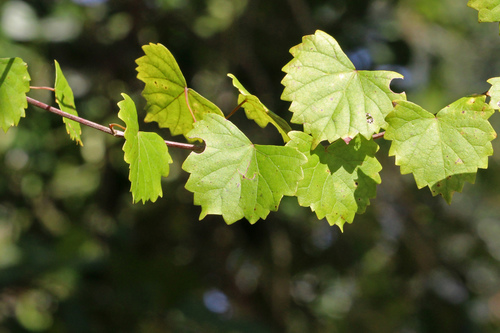
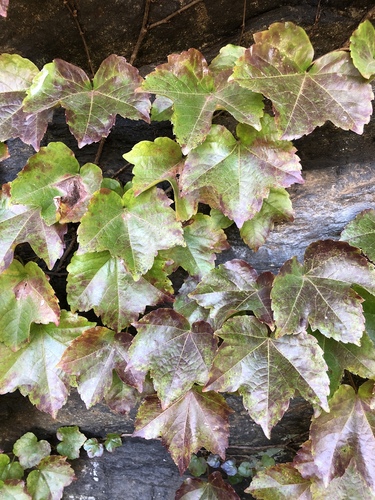
Woolly leaf undersides support identification when fruit is absent. Fox grape should also be distinguished from Parthenocissus tricuspidata, which attaches with adhesive pads rather than the tendrils of a grapevine. The climbing structure provides a practical separation even when both plants cover a wall or another supporting surface. 5
Main sources
- Plants of the World Online / Kew, Vitis labrusca L.
- Royal Horticultural Society, Vitis labrusca - fox grape
- Plants For A Future, Vitis labrusca
- Missouri Botanical Garden Plant Finder, Vitis labrusca
- Trees and Shrubs Online, Vitis labrusca
- USDA PLANTS Database, Vitis labrusca L. plant profile
- ASPCA Animal Poison Control, Grape and Raisin toxicity
- European Parliament, Grape varieties prohibited by EU legislation
- Horticulture Research / PMC, foxy aroma gene in Concord grape
Frequently asked questions
Is fox grape toxic to dogs?
Fresh or dried fruit is associated with a documented risk of acute kidney failure in dogs. The precise mechanism remains debated, with tartaric acid the most frequently cited candidate; risk in cats is not firmly established.
How does fox grape differ from European wine grape?
Fox grape has woolly leaf undersides, berry skins that separate easily from the pulp and strong natural resistance to phylloxera and mildews, unlike ungrafted Vitis vinifera.
Is fox grape fruit edible?
Yes, fresh, dried or made into juice and jelly. Its musky, foxy aroma is particularly strong in cultivars such as Concord and Niagara, derived from crosses with Vitis vinifera.
Why are some fox grape wines prohibited in Europe?
Under EU Regulation 1308/2013, varieties such as Noah, Isabelle, Clinton and Othello remain prohibited for wine planting in the Union. This reflects French restrictions from the 1930s prompted by fears of excess methanol.
Is fox grape invasive in France?
No official invasive status is assigned in metropolitan France. The species and its hybrids have locally naturalized along woodland edges, mainly from escaped vines or rootstocks, without designation as a species of concern.
Can I grow fox grape in a container?
It is possible but uncommon: the vine grows quickly and fruits better in the ground on a strong support. A large, very well-drained container remains an option mainly for ornamental use.
Is Concord a pure Vitis labrusca cultivar?
No. Concord is classified as Vitis × labruscana, a hybrid of Vitis labrusca and Vitis vinifera. This explains why its status in regulatory texts sometimes differs from that of the wild species.
Similar plants
If you are unsure about a plant’s toxicity, ask a botanist or veterinarian for advice.