














01
Kilalanin o hanapin
Isang photo, o paghahanap ayon sa pangalan.

Encyclopedia
Para sa bawat species, isang kumpletong profile: ang kailangan nito, saan ito nanggaling, para saan ito ginagamit, paano ito makikilala, at kung delikado ba ito sa mga alaga mo.
4.8 sa mga app store50,000+ gardeners
Monstera deliciosa
Ibang tawag: Philodendron pertusum, Monstera borsigiana
 +15
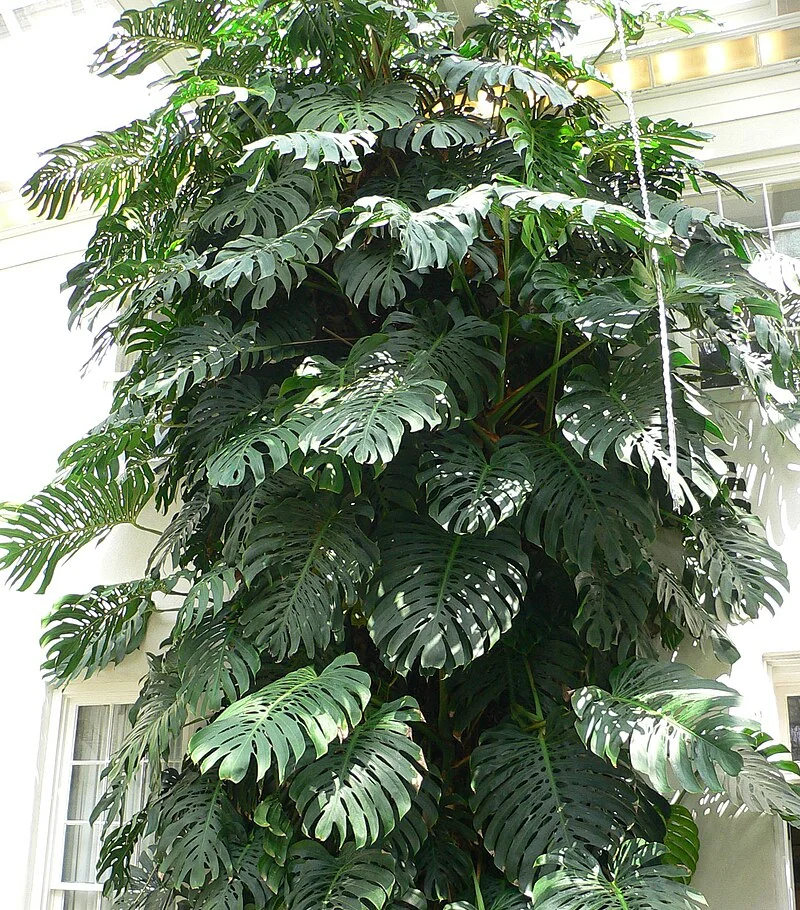
Galing ang Monstera deliciosa sa mga rainforest ng timog Mexico at Central America. Nahahati at nagkakabutas ang malalapad nitong dahon habang tumatanda, lalo na kapag mas maraming liwanag ang natatanggap nito.
Galing ang Monstera deliciosa sa mga rainforest ng timog Mexico at Central America. Nahahati at nagkakabutas ang malalapad nitong dahon habang tumatanda, lalo na kapag mas maraming liwanag ang natatanggap nito.
The specific epithet deliciosa means "delicious", referring to the edible fruit. The genus Monstera is named from the Latin word for "monstrous" or "abnormal", and refers to the unusual leaves with natural holes that members of the genus have. Its popular name as a houseplant of "Swiss cheese plant", or just "cheese plant", is commonly stated to refer to the "eyes" or holes that develop in its leaves similar to the holes in some Swiss-type cheeses such as Emmental cheese.
Source: Wikipedia
This member of the arum family (Araceae) is a hemiepiphyte with aerial roots. It is able to grow up to 20 m (66 ft) high in the wild, with large, leathery, glossy, pinnate, heart-shaped leaves 25, 90 cm (10, 35.5 in) long by 25, 75 cm (10, 29.5 in) broad. The leaves on young plants are smaller and entire with no lobes or holes, but soon produce lobed and fenestrate leaves as they grow. Although it can grow very tall in nature, it only measures between 2 and 3 m (6.6 and 9.8 ft) when grown indoors.
Source: Wikipedia
Monstera deliciosa is native to humid tropical forests, in lowlands and on lower mountains, in the south of Mexico and also in Costa Rica, Guatemala and Panama. The seeds fall to the ground, then the seedlings crawl (negative phototropism) until they meet a tree on which to attach. The many adjacent roots thus allow the plant to anchor against its new support and reach the canopy light (although it rarely grows in full sun and prefers a light dimmed by the foliage).
Source: Wikipedia
Monstera deliciosa is commonly grown outdoors as an ornamental plant in the tropics and subtropics. The plant requires a lot of space and a rich and loose soil (ideally garden soil and compost in equal parts). If it grows in the ground it is better to plant it near a tree, where it can climb, if not against a trellis. It is a "moderately greedy plant", in that it needs to be watered just to keep the soil slightly moist. Its hardiness is 11 (that is to say the coldest at −1 °C or 30 °F).
Source: Wikipedia
Monstera deliciosa is moderately toxic to both cats and dogs because it contains needle-like insoluble calcium oxalate crystals. These crystals may cause injury to the mouth, tongue, and digestive tract. It also causes dermatitis by direct contact with cat and dog skin.
Source: Wikipedia
In those areas where it grows naturally, M. deliciosa is considered a delicacy due to its sweet and exotic flavor. The fruit may be ripened by cutting it when the first scales begin to lift up and it begins to exude a pungent odor. It is wrapped in a paper bag and set aside until the scales begin popping off. The scales are then brushed off or fall away to reveal the edible flesh underneath. The flesh, which is similar to pineapple in texture, can be cut away from the core and eaten.
Source: Wikipedia
Ang mga tab ng profile, gaya ng sa app: ang overview, tapos ang mga seksyon ng artikulo sa Wikipedia tungkol sa species, sa sarili mong wika.
Hirap, toxicity, liwanag, pagdidilig.
Paglalarawan, saklaw, pagtatanim: ang mga seksyon ng artikulo nito sa Wikipedia, sa sarili mong wika.
Lumipat mula sa isang seksyon papunta sa susunod gaya ng sa app, nang hindi umaalis sa profile.
Subukan mo dito mismo: lumipat ng tab
Monstera deliciosa
Ibang tawag: Philodendron pertusum, Monstera borsigiana
+15Galing ang Monstera deliciosa sa mga rainforest ng timog Mexico at Central America. Nahahati at nagkakabutas ang malalapad nitong dahon habang tumatanda, lalo na kapag mas maraming liwanag ang natatanggap nito.
Galing ang Monstera deliciosa sa mga rainforest ng timog Mexico at Central America. Nahahati at nagkakabutas ang malalapad nitong dahon habang tumatanda, lalo na kapag mas maraming liwanag ang natatanggap nito.
The specific epithet deliciosa means "delicious", referring to the edible fruit. The genus Monstera is named from the Latin word for "monstrous" or "abnormal", and refers to the unusual leaves with natural holes that members of the genus have. Its popular name as a houseplant of "Swiss cheese plant", or just "cheese plant", is commonly stated to refer to the "eyes" or holes that develop in its leaves similar to the holes in some Swiss-type cheeses such as Emmental cheese.
Source: Wikipedia
This member of the arum family (Araceae) is a hemiepiphyte with aerial roots. It is able to grow up to 20 m (66 ft) high in the wild, with large, leathery, glossy, pinnate, heart-shaped leaves 25, 90 cm (10, 35.5 in) long by 25, 75 cm (10, 29.5 in) broad. The leaves on young plants are smaller and entire with no lobes or holes, but soon produce lobed and fenestrate leaves as they grow. Although it can grow very tall in nature, it only measures between 2 and 3 m (6.6 and 9.8 ft) when grown indoors.
Source: Wikipedia
Monstera deliciosa is native to humid tropical forests, in lowlands and on lower mountains, in the south of Mexico and also in Costa Rica, Guatemala and Panama. The seeds fall to the ground, then the seedlings crawl (negative phototropism) until they meet a tree on which to attach. The many adjacent roots thus allow the plant to anchor against its new support and reach the canopy light (although it rarely grows in full sun and prefers a light dimmed by the foliage).
Source: Wikipedia
Monstera deliciosa is commonly grown outdoors as an ornamental plant in the tropics and subtropics. The plant requires a lot of space and a rich and loose soil (ideally garden soil and compost in equal parts). If it grows in the ground it is better to plant it near a tree, where it can climb, if not against a trellis. It is a "moderately greedy plant", in that it needs to be watered just to keep the soil slightly moist. Its hardiness is 11 (that is to say the coldest at −1 °C or 30 °F).
Source: Wikipedia
Monstera deliciosa is moderately toxic to both cats and dogs because it contains needle-like insoluble calcium oxalate crystals. These crystals may cause injury to the mouth, tongue, and digestive tract. It also causes dermatitis by direct contact with cat and dog skin.
Source: Wikipedia
In those areas where it grows naturally, M. deliciosa is considered a delicacy due to its sweet and exotic flavor. The fruit may be ripened by cutting it when the first scales begin to lift up and it begins to exude a pungent odor. It is wrapped in a paper bag and set aside until the scales begin popping off. The scales are then brushed off or fall away to reveal the edible flesh underneath. The flesh, which is similar to pineapple in texture, can be cut away from the core and eaten.
Source: Wikipedia
01
Isang photo, o paghahanap ayon sa pangalan.
02
Hirap, toxicity, liwanag at pagdidilig, sa itaas ng profile.
03
Ang mga seksyon ng artikulo nito sa Wikipedia, isang tab bawat seksyon, sa sarili mong wika.
Pagkatapos ng overview, isang seksyon ng artikulo sa Wikipedia tungkol sa species ang laman ng bawat tab. Ipinapakita ng gallery ang dahon, bulaklak, bunga, itsura at balat ng puno para makilala mo ang species.
Monstera deliciosa
Ibang tawag: Philodendron pertusum, Monstera borsigiana
+15Galing ang Monstera deliciosa sa mga rainforest ng timog Mexico at Central America. Nahahati at nagkakabutas ang malalapad nitong dahon habang tumatanda, lalo na kapag mas maraming liwanag ang natatanggap nito.
Galing ang Monstera deliciosa sa mga rainforest ng timog Mexico at Central America. Nahahati at nagkakabutas ang malalapad nitong dahon habang tumatanda, lalo na kapag mas maraming liwanag ang natatanggap nito.
The specific epithet deliciosa means "delicious", referring to the edible fruit. The genus Monstera is named from the Latin word for "monstrous" or "abnormal", and refers to the unusual leaves with natural holes that members of the genus have. Its popular name as a houseplant of "Swiss cheese plant", or just "cheese plant", is commonly stated to refer to the "eyes" or holes that develop in its leaves similar to the holes in some Swiss-type cheeses such as Emmental cheese.
Source: Wikipedia
This member of the arum family (Araceae) is a hemiepiphyte with aerial roots. It is able to grow up to 20 m (66 ft) high in the wild, with large, leathery, glossy, pinnate, heart-shaped leaves 25, 90 cm (10, 35.5 in) long by 25, 75 cm (10, 29.5 in) broad. The leaves on young plants are smaller and entire with no lobes or holes, but soon produce lobed and fenestrate leaves as they grow. Although it can grow very tall in nature, it only measures between 2 and 3 m (6.6 and 9.8 ft) when grown indoors.
Source: Wikipedia
Monstera deliciosa is native to humid tropical forests, in lowlands and on lower mountains, in the south of Mexico and also in Costa Rica, Guatemala and Panama. The seeds fall to the ground, then the seedlings crawl (negative phototropism) until they meet a tree on which to attach. The many adjacent roots thus allow the plant to anchor against its new support and reach the canopy light (although it rarely grows in full sun and prefers a light dimmed by the foliage).
Source: Wikipedia
Monstera deliciosa is commonly grown outdoors as an ornamental plant in the tropics and subtropics. The plant requires a lot of space and a rich and loose soil (ideally garden soil and compost in equal parts). If it grows in the ground it is better to plant it near a tree, where it can climb, if not against a trellis. It is a "moderately greedy plant", in that it needs to be watered just to keep the soil slightly moist. Its hardiness is 11 (that is to say the coldest at −1 °C or 30 °F).
Source: Wikipedia
Monstera deliciosa is moderately toxic to both cats and dogs because it contains needle-like insoluble calcium oxalate crystals. These crystals may cause injury to the mouth, tongue, and digestive tract. It also causes dermatitis by direct contact with cat and dog skin.
Source: Wikipedia
In those areas where it grows naturally, M. deliciosa is considered a delicacy due to its sweet and exotic flavor. The fruit may be ripened by cutting it when the first scales begin to lift up and it begins to exude a pungent odor. It is wrapped in a paper bag and set aside until the scales begin popping off. The scales are then brushed off or fall away to reveal the edible flesh underneath. The flesh, which is similar to pineapple in texture, can be cut away from the core and eaten.
Source: Wikipedia
Nakahati ang toxicity ayon sa hayop: aso, pusa, kabayo. Ipinapaliwanag ng profile kung bakit toxic ang halaman, paano protektahan ang mga alaga mo at ano ang gagawin kung may nakakain nito, kasama ang contact ng poison control.
Monstera deliciosa
Ibang tawag: Philodendron pertusum, Monstera borsigiana
+15Galing ang Monstera deliciosa sa mga rainforest ng timog Mexico at Central America. Nahahati at nagkakabutas ang malalapad nitong dahon habang tumatanda, lalo na kapag mas maraming liwanag ang natatanggap nito.
Galing ang Monstera deliciosa sa mga rainforest ng timog Mexico at Central America. Nahahati at nagkakabutas ang malalapad nitong dahon habang tumatanda, lalo na kapag mas maraming liwanag ang natatanggap nito.
The specific epithet deliciosa means "delicious", referring to the edible fruit. The genus Monstera is named from the Latin word for "monstrous" or "abnormal", and refers to the unusual leaves with natural holes that members of the genus have. Its popular name as a houseplant of "Swiss cheese plant", or just "cheese plant", is commonly stated to refer to the "eyes" or holes that develop in its leaves similar to the holes in some Swiss-type cheeses such as Emmental cheese.
Source: Wikipedia
This member of the arum family (Araceae) is a hemiepiphyte with aerial roots. It is able to grow up to 20 m (66 ft) high in the wild, with large, leathery, glossy, pinnate, heart-shaped leaves 25, 90 cm (10, 35.5 in) long by 25, 75 cm (10, 29.5 in) broad. The leaves on young plants are smaller and entire with no lobes or holes, but soon produce lobed and fenestrate leaves as they grow. Although it can grow very tall in nature, it only measures between 2 and 3 m (6.6 and 9.8 ft) when grown indoors.
Source: Wikipedia
Monstera deliciosa is native to humid tropical forests, in lowlands and on lower mountains, in the south of Mexico and also in Costa Rica, Guatemala and Panama. The seeds fall to the ground, then the seedlings crawl (negative phototropism) until they meet a tree on which to attach. The many adjacent roots thus allow the plant to anchor against its new support and reach the canopy light (although it rarely grows in full sun and prefers a light dimmed by the foliage).
Source: Wikipedia
Monstera deliciosa is commonly grown outdoors as an ornamental plant in the tropics and subtropics. The plant requires a lot of space and a rich and loose soil (ideally garden soil and compost in equal parts). If it grows in the ground it is better to plant it near a tree, where it can climb, if not against a trellis. It is a "moderately greedy plant", in that it needs to be watered just to keep the soil slightly moist. Its hardiness is 11 (that is to say the coldest at −1 °C or 30 °F).
Source: Wikipedia
Monstera deliciosa is moderately toxic to both cats and dogs because it contains needle-like insoluble calcium oxalate crystals. These crystals may cause injury to the mouth, tongue, and digestive tract. It also causes dermatitis by direct contact with cat and dog skin.
Source: Wikipedia
In those areas where it grows naturally, M. deliciosa is considered a delicacy due to its sweet and exotic flavor. The fruit may be ripened by cutting it when the first scales begin to lift up and it begins to exude a pungent odor. It is wrapped in a paper bag and set aside until the scales begin popping off. The scales are then brushed off or fall away to reveal the edible flesh underneath. The flesh, which is similar to pineapple in texture, can be cut away from the core and eaten.
Source: Wikipedia
Binabaybay ng taxon explorer ang plant library ayon sa order, family at genus. Magsimula sa species na kilala mo at tuklasin ang mga kalapit nito.
Monstera deliciosa
Ibang tawag: Philodendron pertusum, Monstera borsigiana
+15Galing ang Monstera deliciosa sa mga rainforest ng timog Mexico at Central America. Nahahati at nagkakabutas ang malalapad nitong dahon habang tumatanda, lalo na kapag mas maraming liwanag ang natatanggap nito.
Galing ang Monstera deliciosa sa mga rainforest ng timog Mexico at Central America. Nahahati at nagkakabutas ang malalapad nitong dahon habang tumatanda, lalo na kapag mas maraming liwanag ang natatanggap nito.
The specific epithet deliciosa means "delicious", referring to the edible fruit. The genus Monstera is named from the Latin word for "monstrous" or "abnormal", and refers to the unusual leaves with natural holes that members of the genus have. Its popular name as a houseplant of "Swiss cheese plant", or just "cheese plant", is commonly stated to refer to the "eyes" or holes that develop in its leaves similar to the holes in some Swiss-type cheeses such as Emmental cheese.
Source: Wikipedia
This member of the arum family (Araceae) is a hemiepiphyte with aerial roots. It is able to grow up to 20 m (66 ft) high in the wild, with large, leathery, glossy, pinnate, heart-shaped leaves 25, 90 cm (10, 35.5 in) long by 25, 75 cm (10, 29.5 in) broad. The leaves on young plants are smaller and entire with no lobes or holes, but soon produce lobed and fenestrate leaves as they grow. Although it can grow very tall in nature, it only measures between 2 and 3 m (6.6 and 9.8 ft) when grown indoors.
Source: Wikipedia
Monstera deliciosa is native to humid tropical forests, in lowlands and on lower mountains, in the south of Mexico and also in Costa Rica, Guatemala and Panama. The seeds fall to the ground, then the seedlings crawl (negative phototropism) until they meet a tree on which to attach. The many adjacent roots thus allow the plant to anchor against its new support and reach the canopy light (although it rarely grows in full sun and prefers a light dimmed by the foliage).
Source: Wikipedia
Monstera deliciosa is commonly grown outdoors as an ornamental plant in the tropics and subtropics. The plant requires a lot of space and a rich and loose soil (ideally garden soil and compost in equal parts). If it grows in the ground it is better to plant it near a tree, where it can climb, if not against a trellis. It is a "moderately greedy plant", in that it needs to be watered just to keep the soil slightly moist. Its hardiness is 11 (that is to say the coldest at −1 °C or 30 °F).
Source: Wikipedia
Monstera deliciosa is moderately toxic to both cats and dogs because it contains needle-like insoluble calcium oxalate crystals. These crystals may cause injury to the mouth, tongue, and digestive tract. It also causes dermatitis by direct contact with cat and dog skin.
Source: Wikipedia
In those areas where it grows naturally, M. deliciosa is considered a delicacy due to its sweet and exotic flavor. The fruit may be ripened by cutting it when the first scales begin to lift up and it begins to exude a pungent odor. It is wrapped in a paper bag and set aside until the scales begin popping off. The scales are then brushed off or fall away to reveal the edible flesh underneath. The flesh, which is similar to pineapple in texture, can be cut away from the core and eaten.
Source: Wikipedia
Pangkalahatang gabay ang ibinibigay ng profile. Ang pag-aalagang angkop sa paso at kuwarto mo ay nasa page ng halaman mo, sa Garden ko.
Hindi pa lahat ng species ay may dokumentadong toxicity o kumpletong gallery. “Hindi alam” o “Walang available na data” ang ipinapakita ng profile sa halip na manghula.
Kung may nakaing halaman ang alaga mo, tumawag sa beterinaryo o sa poison control center. Tinutulungan ka ng profile na kumilos agad, hindi ito nagbibigay ng diagnosis.
Ang mahahalagang detalye (hirap, toxicity, liwanag, pagdidilig), gallery ayon sa bahagi ng halaman at ang klasipikasyon ng species, tapos ang mga seksyon ng artikulo nito sa Wikipedia sa mga tab, sa sarili mong wika.
Buksan ang profile ng species at i-tap ang toxicity: nakahati ang panganib para sa aso, pusa at kabayo kapag may datos.
Alisin ang natitirang piraso sa bibig nito nang hindi pinipilit, tandaan kung aling bahagi ang nakain at tumawag sa beterinaryo o sa poison control center. Nasa profile ng species ang mga hakbang na ito at ang mahahalagang contact.
Available pa rin offline ang profile ng mga halaman sa garden mo, kahit nasa dulo ka ng bakuran.
Paraan para silipin ang mga halaman ayon sa order, family at genus. Ipinapakita ng bawat antas kung ilang species ang saklaw nito at may isang tampok na species.
Mas kaunti ang dokumentasyon sa ilang species kaysa sa iba. Sa halip na manghula, sinasabi ng profile kapag hindi available ang isang datos.
Oo. Available din sa web ang encyclopedia ng Floralens, nang hindi ini-install ang app, sa iba't ibang wika.
Inilalarawan ng profile ang species. Ang page ng halaman mo, sa Garden ko, ay nagsisimula sa profile na iyon at iniaangkop ito sa paso, kuwarto at pag-aalaga mo.
Kunan ng photo ang isang halaman: bubukas ang profile nito kasama ng resulta.
Isang photo, mahigit 400,000 species, resulta sa loob ng wala pang 5 segundo kasama ang confidence score at mga alternatibo.
Tingnan ang pagkilala ng halamanIsang plano bawat halaman, mga notification sa oras na pinili mo, at dalas na sumusunod sa mga season.
Tingnan ang care remindersMga kuwarto, page para sa bawat halaman, mga growth photo, at ang journey ng bawat halaman.
Tingnan ang Garden koAng botanist na kabisado ang garden mo. Magtanong, at isinasaalang-alang ng sagot ang mga halaman mo.
Tingnan ang FloraTatlong photo at ilang tanong, tapos isang malamang na sanhi, mga plano sa paggamot ayon sa priority, at follow-up makalipas ang pitong araw.
Tingnan ang Dr. FloraI-post ang mga halaman mo, magtanong sa ibang plantito at plantita, at i-follow ang mga nagbibigay sa iyo ng inspirasyon.
Tingnan ang community65 badge sa 6 na pamilya, 8 serye na may tig-6 na antas at 17 minsanang badge, nakukuha sa mga ginagawa mo.
Tingnan ang mga badge