














01
Identificirajte ili pretražite
Fotografijom ili pretraživanjem po imenu.

Enciklopedija
Za svaku vrstu potpuna kartica: što joj treba, odakle potječe, čemu služi, kako je prepoznati i je li opasna za vaše životinje.
4,8 u trgovinama aplikacija50.000+ vrtlara
Monstera deliciosa
Drugi nazivi: Philodendron pertusum, Monstera borsigiana
 +15
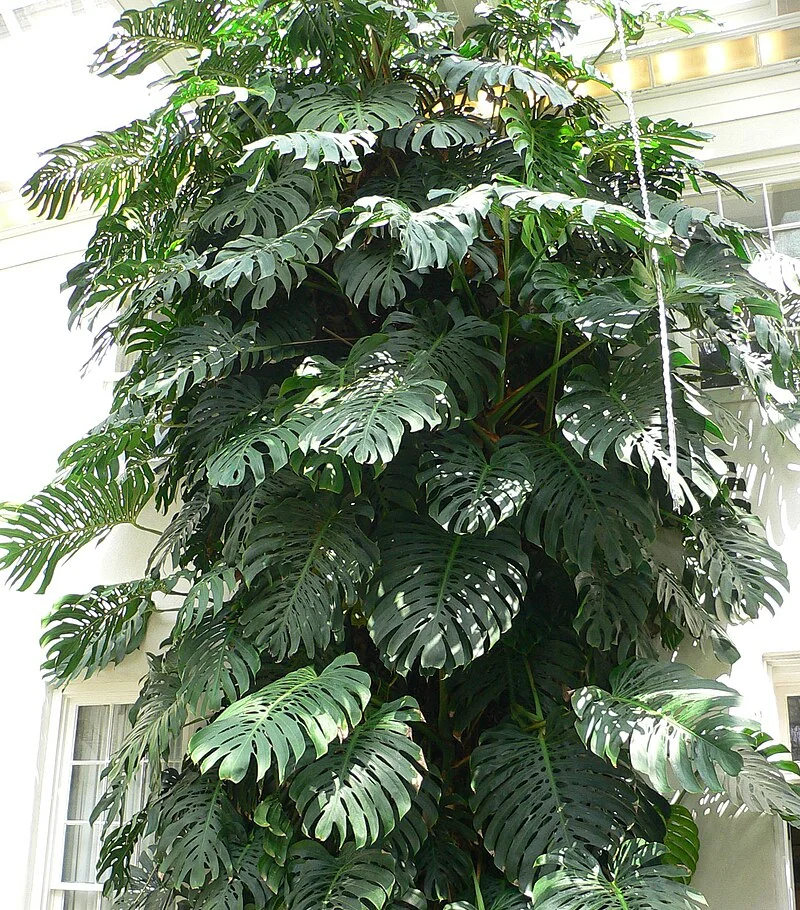
Monstera deliciosa potječe iz kišnih šuma južnog Meksika i Srednje Amerike. Njezini veliki listovi s godinama se urezuju i dobivaju rupe, to više što više svjetlosti dobiva.
Monstera deliciosa potječe iz kišnih šuma južnog Meksika i Srednje Amerike. Njezini veliki listovi s godinama se urezuju i dobivaju rupe, to više što više svjetlosti dobiva.
The specific epithet deliciosa means "delicious", referring to the edible fruit. The genus Monstera is named from the Latin word for "monstrous" or "abnormal", and refers to the unusual leaves with natural holes that members of the genus have. Its popular name as a houseplant of "Swiss cheese plant", or just "cheese plant", is commonly stated to refer to the "eyes" or holes that develop in its leaves similar to the holes in some Swiss-type cheeses such as Emmental cheese.
Izvor: Wikipedija
This member of the arum family (Araceae) is a hemiepiphyte with aerial roots. It is able to grow up to 20 m (66 ft) high in the wild, with large, leathery, glossy, pinnate, heart-shaped leaves 25, 90 cm (10, 35.5 in) long by 25, 75 cm (10, 29.5 in) broad. The leaves on young plants are smaller and entire with no lobes or holes, but soon produce lobed and fenestrate leaves as they grow. Although it can grow very tall in nature, it only measures between 2 and 3 m (6.6 and 9.8 ft) when grown indoors.
Izvor: Wikipedija
Monstera deliciosa is native to humid tropical forests, in lowlands and on lower mountains, in the south of Mexico and also in Costa Rica, Guatemala and Panama. The seeds fall to the ground, then the seedlings crawl (negative phototropism) until they meet a tree on which to attach. The many adjacent roots thus allow the plant to anchor against its new support and reach the canopy light (although it rarely grows in full sun and prefers a light dimmed by the foliage).
Izvor: Wikipedija
Monstera deliciosa is commonly grown outdoors as an ornamental plant in the tropics and subtropics. The plant requires a lot of space and a rich and loose soil (ideally garden soil and compost in equal parts). If it grows in the ground it is better to plant it near a tree, where it can climb, if not against a trellis. It is a "moderately greedy plant", in that it needs to be watered just to keep the soil slightly moist. Its hardiness is 11 (that is to say the coldest at −1 °C or 30 °F).
Izvor: Wikipedija
Monstera deliciosa is moderately toxic to both cats and dogs because it contains needle-like insoluble calcium oxalate crystals. These crystals may cause injury to the mouth, tongue, and digestive tract. It also causes dermatitis by direct contact with cat and dog skin.
Izvor: Wikipedija
In those areas where it grows naturally, M. deliciosa is considered a delicacy due to its sweet and exotic flavor. The fruit may be ripened by cutting it when the first scales begin to lift up and it begins to exude a pungent odor. It is wrapped in a paper bag and set aside until the scales begin popping off. The scales are then brushed off or fall away to reveal the edible flesh underneath. The flesh, which is similar to pineapple in texture, can be cut away from the core and eaten.
Izvor: Wikipedija
Odjeljci kartice, kao u aplikaciji: pregled, a zatim odjeljci članka o vrsti na Wikipediji, na vašem jeziku.
Zahtjevnost, otrovnost, svjetlost, zalijevanje.
Opis, rasprostranjenost, uzgoj: odjeljci njezina članka na Wikipediji, na vašem jeziku.
Prelazite s odjeljka na odjeljak kao u aplikaciji, bez napuštanja kartice.
Isprobajte ovdje na stranici: promijenite karticu
Monstera deliciosa
Drugi nazivi: Philodendron pertusum, Monstera borsigiana
+15Monstera deliciosa potječe iz kišnih šuma južnog Meksika i Srednje Amerike. Njezini veliki listovi s godinama se urezuju i dobivaju rupe, to više što više svjetlosti dobiva.
Monstera deliciosa potječe iz kišnih šuma južnog Meksika i Srednje Amerike. Njezini veliki listovi s godinama se urezuju i dobivaju rupe, to više što više svjetlosti dobiva.
The specific epithet deliciosa means "delicious", referring to the edible fruit. The genus Monstera is named from the Latin word for "monstrous" or "abnormal", and refers to the unusual leaves with natural holes that members of the genus have. Its popular name as a houseplant of "Swiss cheese plant", or just "cheese plant", is commonly stated to refer to the "eyes" or holes that develop in its leaves similar to the holes in some Swiss-type cheeses such as Emmental cheese.
Izvor: Wikipedija
This member of the arum family (Araceae) is a hemiepiphyte with aerial roots. It is able to grow up to 20 m (66 ft) high in the wild, with large, leathery, glossy, pinnate, heart-shaped leaves 25, 90 cm (10, 35.5 in) long by 25, 75 cm (10, 29.5 in) broad. The leaves on young plants are smaller and entire with no lobes or holes, but soon produce lobed and fenestrate leaves as they grow. Although it can grow very tall in nature, it only measures between 2 and 3 m (6.6 and 9.8 ft) when grown indoors.
Izvor: Wikipedija
Monstera deliciosa is native to humid tropical forests, in lowlands and on lower mountains, in the south of Mexico and also in Costa Rica, Guatemala and Panama. The seeds fall to the ground, then the seedlings crawl (negative phototropism) until they meet a tree on which to attach. The many adjacent roots thus allow the plant to anchor against its new support and reach the canopy light (although it rarely grows in full sun and prefers a light dimmed by the foliage).
Izvor: Wikipedija
Monstera deliciosa is commonly grown outdoors as an ornamental plant in the tropics and subtropics. The plant requires a lot of space and a rich and loose soil (ideally garden soil and compost in equal parts). If it grows in the ground it is better to plant it near a tree, where it can climb, if not against a trellis. It is a "moderately greedy plant", in that it needs to be watered just to keep the soil slightly moist. Its hardiness is 11 (that is to say the coldest at −1 °C or 30 °F).
Izvor: Wikipedija
Monstera deliciosa is moderately toxic to both cats and dogs because it contains needle-like insoluble calcium oxalate crystals. These crystals may cause injury to the mouth, tongue, and digestive tract. It also causes dermatitis by direct contact with cat and dog skin.
Izvor: Wikipedija
In those areas where it grows naturally, M. deliciosa is considered a delicacy due to its sweet and exotic flavor. The fruit may be ripened by cutting it when the first scales begin to lift up and it begins to exude a pungent odor. It is wrapped in a paper bag and set aside until the scales begin popping off. The scales are then brushed off or fall away to reveal the edible flesh underneath. The flesh, which is similar to pineapple in texture, can be cut away from the core and eaten.
Izvor: Wikipedija
01
Fotografijom ili pretraživanjem po imenu.
02
Zahtjevnost, otrovnost, svjetlost i zalijevanje, na vrhu kartice.
03
Odjeljci njezina članka na Wikipediji, jedan po jedan, na vašem jeziku.
Nakon pregleda svaki odjeljak kartice donosi jedan dio članka o vrsti na Wikipediji. Galerija prikazuje listove, cvjetove, plodove, habitus i koru kako biste prepoznali vrstu.
Monstera deliciosa
Drugi nazivi: Philodendron pertusum, Monstera borsigiana
+15Monstera deliciosa potječe iz kišnih šuma južnog Meksika i Srednje Amerike. Njezini veliki listovi s godinama se urezuju i dobivaju rupe, to više što više svjetlosti dobiva.
Monstera deliciosa potječe iz kišnih šuma južnog Meksika i Srednje Amerike. Njezini veliki listovi s godinama se urezuju i dobivaju rupe, to više što više svjetlosti dobiva.
The specific epithet deliciosa means "delicious", referring to the edible fruit. The genus Monstera is named from the Latin word for "monstrous" or "abnormal", and refers to the unusual leaves with natural holes that members of the genus have. Its popular name as a houseplant of "Swiss cheese plant", or just "cheese plant", is commonly stated to refer to the "eyes" or holes that develop in its leaves similar to the holes in some Swiss-type cheeses such as Emmental cheese.
Izvor: Wikipedija
This member of the arum family (Araceae) is a hemiepiphyte with aerial roots. It is able to grow up to 20 m (66 ft) high in the wild, with large, leathery, glossy, pinnate, heart-shaped leaves 25, 90 cm (10, 35.5 in) long by 25, 75 cm (10, 29.5 in) broad. The leaves on young plants are smaller and entire with no lobes or holes, but soon produce lobed and fenestrate leaves as they grow. Although it can grow very tall in nature, it only measures between 2 and 3 m (6.6 and 9.8 ft) when grown indoors.
Izvor: Wikipedija
Monstera deliciosa is native to humid tropical forests, in lowlands and on lower mountains, in the south of Mexico and also in Costa Rica, Guatemala and Panama. The seeds fall to the ground, then the seedlings crawl (negative phototropism) until they meet a tree on which to attach. The many adjacent roots thus allow the plant to anchor against its new support and reach the canopy light (although it rarely grows in full sun and prefers a light dimmed by the foliage).
Izvor: Wikipedija
Monstera deliciosa is commonly grown outdoors as an ornamental plant in the tropics and subtropics. The plant requires a lot of space and a rich and loose soil (ideally garden soil and compost in equal parts). If it grows in the ground it is better to plant it near a tree, where it can climb, if not against a trellis. It is a "moderately greedy plant", in that it needs to be watered just to keep the soil slightly moist. Its hardiness is 11 (that is to say the coldest at −1 °C or 30 °F).
Izvor: Wikipedija
Monstera deliciosa is moderately toxic to both cats and dogs because it contains needle-like insoluble calcium oxalate crystals. These crystals may cause injury to the mouth, tongue, and digestive tract. It also causes dermatitis by direct contact with cat and dog skin.
Izvor: Wikipedija
In those areas where it grows naturally, M. deliciosa is considered a delicacy due to its sweet and exotic flavor. The fruit may be ripened by cutting it when the first scales begin to lift up and it begins to exude a pungent odor. It is wrapped in a paper bag and set aside until the scales begin popping off. The scales are then brushed off or fall away to reveal the edible flesh underneath. The flesh, which is similar to pineapple in texture, can be cut away from the core and eaten.
Izvor: Wikipedija
Otrovnost je navedena za svaku životinju: pse, mačke, konje. Kartica objašnjava zašto je biljka otrovna, kako zaštititi životinje i što učiniti ako pojedu dio biljke, uz kontakte centara za kontrolu otrovanja.
Monstera deliciosa
Drugi nazivi: Philodendron pertusum, Monstera borsigiana
+15Monstera deliciosa potječe iz kišnih šuma južnog Meksika i Srednje Amerike. Njezini veliki listovi s godinama se urezuju i dobivaju rupe, to više što više svjetlosti dobiva.
Monstera deliciosa potječe iz kišnih šuma južnog Meksika i Srednje Amerike. Njezini veliki listovi s godinama se urezuju i dobivaju rupe, to više što više svjetlosti dobiva.
The specific epithet deliciosa means "delicious", referring to the edible fruit. The genus Monstera is named from the Latin word for "monstrous" or "abnormal", and refers to the unusual leaves with natural holes that members of the genus have. Its popular name as a houseplant of "Swiss cheese plant", or just "cheese plant", is commonly stated to refer to the "eyes" or holes that develop in its leaves similar to the holes in some Swiss-type cheeses such as Emmental cheese.
Izvor: Wikipedija
This member of the arum family (Araceae) is a hemiepiphyte with aerial roots. It is able to grow up to 20 m (66 ft) high in the wild, with large, leathery, glossy, pinnate, heart-shaped leaves 25, 90 cm (10, 35.5 in) long by 25, 75 cm (10, 29.5 in) broad. The leaves on young plants are smaller and entire with no lobes or holes, but soon produce lobed and fenestrate leaves as they grow. Although it can grow very tall in nature, it only measures between 2 and 3 m (6.6 and 9.8 ft) when grown indoors.
Izvor: Wikipedija
Monstera deliciosa is native to humid tropical forests, in lowlands and on lower mountains, in the south of Mexico and also in Costa Rica, Guatemala and Panama. The seeds fall to the ground, then the seedlings crawl (negative phototropism) until they meet a tree on which to attach. The many adjacent roots thus allow the plant to anchor against its new support and reach the canopy light (although it rarely grows in full sun and prefers a light dimmed by the foliage).
Izvor: Wikipedija
Monstera deliciosa is commonly grown outdoors as an ornamental plant in the tropics and subtropics. The plant requires a lot of space and a rich and loose soil (ideally garden soil and compost in equal parts). If it grows in the ground it is better to plant it near a tree, where it can climb, if not against a trellis. It is a "moderately greedy plant", in that it needs to be watered just to keep the soil slightly moist. Its hardiness is 11 (that is to say the coldest at −1 °C or 30 °F).
Izvor: Wikipedija
Monstera deliciosa is moderately toxic to both cats and dogs because it contains needle-like insoluble calcium oxalate crystals. These crystals may cause injury to the mouth, tongue, and digestive tract. It also causes dermatitis by direct contact with cat and dog skin.
Izvor: Wikipedija
In those areas where it grows naturally, M. deliciosa is considered a delicacy due to its sweet and exotic flavor. The fruit may be ripened by cutting it when the first scales begin to lift up and it begins to exude a pungent odor. It is wrapped in a paper bag and set aside until the scales begin popping off. The scales are then brushed off or fall away to reveal the edible flesh underneath. The flesh, which is similar to pineapple in texture, can be cut away from the core and eaten.
Izvor: Wikipedija
Istraživač taksona pretražuje knjižnicu biljaka po redu, porodici i rodu. Krenite od vrste koju poznajete i otkrijte njezine srodnike.
Monstera deliciosa
Drugi nazivi: Philodendron pertusum, Monstera borsigiana
+15Monstera deliciosa potječe iz kišnih šuma južnog Meksika i Srednje Amerike. Njezini veliki listovi s godinama se urezuju i dobivaju rupe, to više što više svjetlosti dobiva.
Monstera deliciosa potječe iz kišnih šuma južnog Meksika i Srednje Amerike. Njezini veliki listovi s godinama se urezuju i dobivaju rupe, to više što više svjetlosti dobiva.
The specific epithet deliciosa means "delicious", referring to the edible fruit. The genus Monstera is named from the Latin word for "monstrous" or "abnormal", and refers to the unusual leaves with natural holes that members of the genus have. Its popular name as a houseplant of "Swiss cheese plant", or just "cheese plant", is commonly stated to refer to the "eyes" or holes that develop in its leaves similar to the holes in some Swiss-type cheeses such as Emmental cheese.
Izvor: Wikipedija
This member of the arum family (Araceae) is a hemiepiphyte with aerial roots. It is able to grow up to 20 m (66 ft) high in the wild, with large, leathery, glossy, pinnate, heart-shaped leaves 25, 90 cm (10, 35.5 in) long by 25, 75 cm (10, 29.5 in) broad. The leaves on young plants are smaller and entire with no lobes or holes, but soon produce lobed and fenestrate leaves as they grow. Although it can grow very tall in nature, it only measures between 2 and 3 m (6.6 and 9.8 ft) when grown indoors.
Izvor: Wikipedija
Monstera deliciosa is native to humid tropical forests, in lowlands and on lower mountains, in the south of Mexico and also in Costa Rica, Guatemala and Panama. The seeds fall to the ground, then the seedlings crawl (negative phototropism) until they meet a tree on which to attach. The many adjacent roots thus allow the plant to anchor against its new support and reach the canopy light (although it rarely grows in full sun and prefers a light dimmed by the foliage).
Izvor: Wikipedija
Monstera deliciosa is commonly grown outdoors as an ornamental plant in the tropics and subtropics. The plant requires a lot of space and a rich and loose soil (ideally garden soil and compost in equal parts). If it grows in the ground it is better to plant it near a tree, where it can climb, if not against a trellis. It is a "moderately greedy plant", in that it needs to be watered just to keep the soil slightly moist. Its hardiness is 11 (that is to say the coldest at −1 °C or 30 °F).
Izvor: Wikipedija
Monstera deliciosa is moderately toxic to both cats and dogs because it contains needle-like insoluble calcium oxalate crystals. These crystals may cause injury to the mouth, tongue, and digestive tract. It also causes dermatitis by direct contact with cat and dog skin.
Izvor: Wikipedija
In those areas where it grows naturally, M. deliciosa is considered a delicacy due to its sweet and exotic flavor. The fruit may be ripened by cutting it when the first scales begin to lift up and it begins to exude a pungent odor. It is wrapped in a paper bag and set aside until the scales begin popping off. The scales are then brushed off or fall away to reveal the edible flesh underneath. The flesh, which is similar to pineapple in texture, can be cut away from the core and eaten.
Izvor: Wikipedija
Kartica daje opće smjernice. Njega prilagođena vašoj posudi i prostoriji nalazi se na stranici vaše biljke, u Mom vrtu.
Nemaju sve vrste još dokumentiranu otrovnost ili potpunu galeriju. Kartica tada prikazuje „Nepoznata” ili „Podaci nisu dostupni” umjesto da nagađa.
Ako životinja pojede biljku, nazovite veterinara ili centar za kontrolu otrovanja. Kartica vam pomaže da brzo djelujete, ali ne postavlja dijagnozu.
Ključne podatke (zahtjevnost, otrovnost, svjetlost, zalijevanje), galeriju po dijelovima biljke i klasifikaciju vrste, a zatim odjeljke njezina članka na Wikipediji, na vašem jeziku.
Otvorite karticu vrste i dodirnite otrovnost: rizik je naveden posebno za pse, mačke i konje kada su podaci dostupni.
Bez sile uklonite ostatke iz njezinih usta, zabilježite koji je dio pojela i nazovite veterinara ili centar za kontrolu otrovanja. Kartica vrste okuplja te korake i korisne kontakte.
Kartice biljaka iz vašeg vrta dostupne su i bez mreže, čak i na kraju vrta.
Način pregledavanja biljaka po redu, porodici i rodu. Svaka razina pokazuje koliko vrsta obuhvaća i ističe jednu poznatu vrstu.
Neke su vrste manje dokumentirane od drugih. Umjesto da nagađa, kartica navodi da podatak nije dostupan.
Da. Enciklopedija Floralens dostupna je i na webu, bez instaliranja aplikacije, na više jezika.
Kartica opisuje vrstu. Stranica vaše biljke, u Mom vrtu, polazi od te kartice i prilagođava je vašoj posudi, prostoriji i njezi.
Fotografirajte biljku: njezina se kartica otvara uz rezultat.
Jedna fotografija, više od 400.000 vrsta, rezultat za manje od 5 s s ocjenom pouzdanosti i alternativama.
Pogledajte prepoznavanje s fotografijePlan za svaku biljku, obavijesti u vrijeme koje odaberete i učestalost koja prati godišnja doba.
Pogledajte podsjetnike za njeguProstorije, stranica za svaku biljku, fotografije rasta i put svake od njih.
Pogledajte Moj vrtBotaničar koji vaš vrt zna napamet. Postavite pitanje, a odgovor uzima u obzir vaše biljke.
Pogledajte FloruTri fotografije, nekoliko pitanja, a zatim vjerojatni uzrok, planovi liječenja po prioritetu i kontrola sedam dana kasnije.
Pogledajte Dr. FloruObjavite svoje biljke, postavite pitanje drugim vrtlarima i pratite one koji vas nadahnjuju.
Pogledajte zajednicu65 znački u 6 obitelji, 8 serija sa 6 razina i 17 jedinstvenih postignuća, osvojenih vašim postupcima.
Pogledajte značke