














01
인식하거나 검색하세요
사진을 찍거나, 이름으로 검색하세요.

백과사전
식물 종마다 꼼꼼한 정보 카드가 있어요. 무엇이 필요한지, 어디에서 왔는지, 어디에 쓰이는지, 어떻게 알아보는지, 반려동물에게 위험한지까지.
앱 스토어 평점 4.850,000명 이상의 가드너
Monstera deliciosa
다른 이름: Philodendron pertusum, Monstera borsigiana
 +15
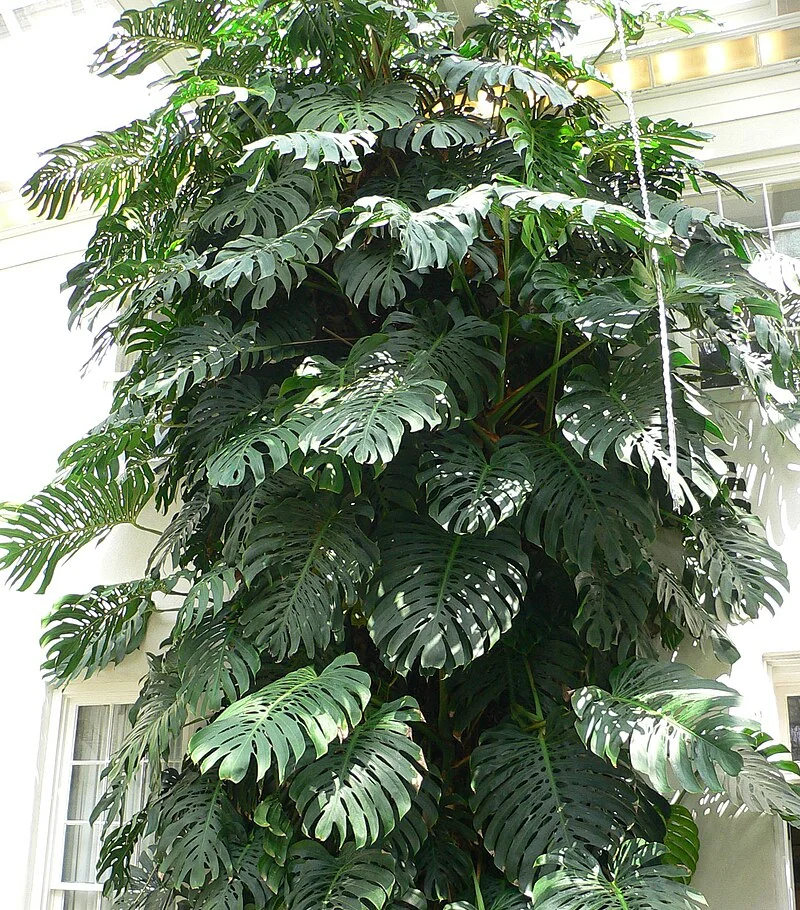
몬스테라 델리시오사는 멕시코 남부와 중앙아메리카의 열대 우림에서 왔어요. 큰 잎은 자라면서 갈라지고 구멍이 생기는데, 빛을 많이 받을수록 더 뚜렷해집니다.
몬스테라 델리시오사는 멕시코 남부와 중앙아메리카의 열대 우림에서 왔어요. 큰 잎은 자라면서 갈라지고 구멍이 생기는데, 빛을 많이 받을수록 더 뚜렷해집니다.
The specific epithet deliciosa means "delicious", referring to the edible fruit. The genus Monstera is named from the Latin word for "monstrous" or "abnormal", and refers to the unusual leaves with natural holes that members of the genus have. Its popular name as a houseplant of "Swiss cheese plant", or just "cheese plant", is commonly stated to refer to the "eyes" or holes that develop in its leaves similar to the holes in some Swiss-type cheeses such as Emmental cheese.
출처: 위키백과
This member of the arum family (Araceae) is a hemiepiphyte with aerial roots. It is able to grow up to 20 m (66 ft) high in the wild, with large, leathery, glossy, pinnate, heart-shaped leaves 25, 90 cm (10, 35.5 in) long by 25, 75 cm (10, 29.5 in) broad. The leaves on young plants are smaller and entire with no lobes or holes, but soon produce lobed and fenestrate leaves as they grow. Although it can grow very tall in nature, it only measures between 2 and 3 m (6.6 and 9.8 ft) when grown indoors.
출처: 위키백과
Monstera deliciosa is native to humid tropical forests, in lowlands and on lower mountains, in the south of Mexico and also in Costa Rica, Guatemala and Panama. The seeds fall to the ground, then the seedlings crawl (negative phototropism) until they meet a tree on which to attach. The many adjacent roots thus allow the plant to anchor against its new support and reach the canopy light (although it rarely grows in full sun and prefers a light dimmed by the foliage).
출처: 위키백과
Monstera deliciosa is commonly grown outdoors as an ornamental plant in the tropics and subtropics. The plant requires a lot of space and a rich and loose soil (ideally garden soil and compost in equal parts). If it grows in the ground it is better to plant it near a tree, where it can climb, if not against a trellis. It is a "moderately greedy plant", in that it needs to be watered just to keep the soil slightly moist. Its hardiness is 11 (that is to say the coldest at −1 °C or 30 °F).
출처: 위키백과
Monstera deliciosa is moderately toxic to both cats and dogs because it contains needle-like insoluble calcium oxalate crystals. These crystals may cause injury to the mouth, tongue, and digestive tract. It also causes dermatitis by direct contact with cat and dog skin.
출처: 위키백과
In those areas where it grows naturally, M. deliciosa is considered a delicacy due to its sweet and exotic flavor. The fruit may be ripened by cutting it when the first scales begin to lift up and it begins to exude a pungent odor. It is wrapped in a paper bag and set aside until the scales begin popping off. The scales are then brushed off or fall away to reveal the edible flesh underneath. The flesh, which is similar to pineapple in texture, can be cut away from the core and eaten.
출처: 위키백과
앱에서처럼 정보 카드의 탭을 살펴보세요. 개요에 이어 그 종의 위키백과 문서 섹션을 사용하는 언어로 보여 드려요.
난이도, 독성, 빛, 물 주기.
특징, 분포, 재배까지, 위키백과 문서의 섹션을 사용하는 언어로 읽을 수 있어요.
앱에서처럼 정보 카드를 벗어나지 않고 섹션을 옮겨 다닐 수 있어요.
여기서 직접 해 보세요. 탭을 바꿔 보세요
Monstera deliciosa
다른 이름: Philodendron pertusum, Monstera borsigiana
+15몬스테라 델리시오사는 멕시코 남부와 중앙아메리카의 열대 우림에서 왔어요. 큰 잎은 자라면서 갈라지고 구멍이 생기는데, 빛을 많이 받을수록 더 뚜렷해집니다.
몬스테라 델리시오사는 멕시코 남부와 중앙아메리카의 열대 우림에서 왔어요. 큰 잎은 자라면서 갈라지고 구멍이 생기는데, 빛을 많이 받을수록 더 뚜렷해집니다.
The specific epithet deliciosa means "delicious", referring to the edible fruit. The genus Monstera is named from the Latin word for "monstrous" or "abnormal", and refers to the unusual leaves with natural holes that members of the genus have. Its popular name as a houseplant of "Swiss cheese plant", or just "cheese plant", is commonly stated to refer to the "eyes" or holes that develop in its leaves similar to the holes in some Swiss-type cheeses such as Emmental cheese.
출처: 위키백과
This member of the arum family (Araceae) is a hemiepiphyte with aerial roots. It is able to grow up to 20 m (66 ft) high in the wild, with large, leathery, glossy, pinnate, heart-shaped leaves 25, 90 cm (10, 35.5 in) long by 25, 75 cm (10, 29.5 in) broad. The leaves on young plants are smaller and entire with no lobes or holes, but soon produce lobed and fenestrate leaves as they grow. Although it can grow very tall in nature, it only measures between 2 and 3 m (6.6 and 9.8 ft) when grown indoors.
출처: 위키백과
Monstera deliciosa is native to humid tropical forests, in lowlands and on lower mountains, in the south of Mexico and also in Costa Rica, Guatemala and Panama. The seeds fall to the ground, then the seedlings crawl (negative phototropism) until they meet a tree on which to attach. The many adjacent roots thus allow the plant to anchor against its new support and reach the canopy light (although it rarely grows in full sun and prefers a light dimmed by the foliage).
출처: 위키백과
Monstera deliciosa is commonly grown outdoors as an ornamental plant in the tropics and subtropics. The plant requires a lot of space and a rich and loose soil (ideally garden soil and compost in equal parts). If it grows in the ground it is better to plant it near a tree, where it can climb, if not against a trellis. It is a "moderately greedy plant", in that it needs to be watered just to keep the soil slightly moist. Its hardiness is 11 (that is to say the coldest at −1 °C or 30 °F).
출처: 위키백과
Monstera deliciosa is moderately toxic to both cats and dogs because it contains needle-like insoluble calcium oxalate crystals. These crystals may cause injury to the mouth, tongue, and digestive tract. It also causes dermatitis by direct contact with cat and dog skin.
출처: 위키백과
In those areas where it grows naturally, M. deliciosa is considered a delicacy due to its sweet and exotic flavor. The fruit may be ripened by cutting it when the first scales begin to lift up and it begins to exude a pungent odor. It is wrapped in a paper bag and set aside until the scales begin popping off. The scales are then brushed off or fall away to reveal the edible flesh underneath. The flesh, which is similar to pineapple in texture, can be cut away from the core and eaten.
출처: 위키백과
01
사진을 찍거나, 이름으로 검색하세요.
02
정보 카드 맨 위에 난이도, 독성, 빛, 물 주기가 있어요.
03
위키백과 문서의 섹션을 탭별로, 사용하는 언어로 보여 드려요.
개요 다음부터는 탭마다 그 종의 위키백과 문서 섹션이 하나씩 담겨 있어요. 갤러리에서는 잎, 꽃, 열매, 수형, 나무껍질을 보여 드려 식물 종을 알아보는 데 도움을 줍니다.
Monstera deliciosa
다른 이름: Philodendron pertusum, Monstera borsigiana
+15몬스테라 델리시오사는 멕시코 남부와 중앙아메리카의 열대 우림에서 왔어요. 큰 잎은 자라면서 갈라지고 구멍이 생기는데, 빛을 많이 받을수록 더 뚜렷해집니다.
몬스테라 델리시오사는 멕시코 남부와 중앙아메리카의 열대 우림에서 왔어요. 큰 잎은 자라면서 갈라지고 구멍이 생기는데, 빛을 많이 받을수록 더 뚜렷해집니다.
The specific epithet deliciosa means "delicious", referring to the edible fruit. The genus Monstera is named from the Latin word for "monstrous" or "abnormal", and refers to the unusual leaves with natural holes that members of the genus have. Its popular name as a houseplant of "Swiss cheese plant", or just "cheese plant", is commonly stated to refer to the "eyes" or holes that develop in its leaves similar to the holes in some Swiss-type cheeses such as Emmental cheese.
출처: 위키백과
This member of the arum family (Araceae) is a hemiepiphyte with aerial roots. It is able to grow up to 20 m (66 ft) high in the wild, with large, leathery, glossy, pinnate, heart-shaped leaves 25, 90 cm (10, 35.5 in) long by 25, 75 cm (10, 29.5 in) broad. The leaves on young plants are smaller and entire with no lobes or holes, but soon produce lobed and fenestrate leaves as they grow. Although it can grow very tall in nature, it only measures between 2 and 3 m (6.6 and 9.8 ft) when grown indoors.
출처: 위키백과
Monstera deliciosa is native to humid tropical forests, in lowlands and on lower mountains, in the south of Mexico and also in Costa Rica, Guatemala and Panama. The seeds fall to the ground, then the seedlings crawl (negative phototropism) until they meet a tree on which to attach. The many adjacent roots thus allow the plant to anchor against its new support and reach the canopy light (although it rarely grows in full sun and prefers a light dimmed by the foliage).
출처: 위키백과
Monstera deliciosa is commonly grown outdoors as an ornamental plant in the tropics and subtropics. The plant requires a lot of space and a rich and loose soil (ideally garden soil and compost in equal parts). If it grows in the ground it is better to plant it near a tree, where it can climb, if not against a trellis. It is a "moderately greedy plant", in that it needs to be watered just to keep the soil slightly moist. Its hardiness is 11 (that is to say the coldest at −1 °C or 30 °F).
출처: 위키백과
Monstera deliciosa is moderately toxic to both cats and dogs because it contains needle-like insoluble calcium oxalate crystals. These crystals may cause injury to the mouth, tongue, and digestive tract. It also causes dermatitis by direct contact with cat and dog skin.
출처: 위키백과
In those areas where it grows naturally, M. deliciosa is considered a delicacy due to its sweet and exotic flavor. The fruit may be ripened by cutting it when the first scales begin to lift up and it begins to exude a pungent odor. It is wrapped in a paper bag and set aside until the scales begin popping off. The scales are then brushed off or fall away to reveal the edible flesh underneath. The flesh, which is similar to pineapple in texture, can be cut away from the core and eaten.
출처: 위키백과
독성 정보는 강아지, 고양이, 말로 나누어 자세히 안내해요. 왜 독성이 있는지, 반려동물을 어떻게 지킬지, 먹었을 때 무엇을 해야 하는지 중독 상담 기관 연락처와 함께 알려 드립니다.
Monstera deliciosa
다른 이름: Philodendron pertusum, Monstera borsigiana
+15몬스테라 델리시오사는 멕시코 남부와 중앙아메리카의 열대 우림에서 왔어요. 큰 잎은 자라면서 갈라지고 구멍이 생기는데, 빛을 많이 받을수록 더 뚜렷해집니다.
몬스테라 델리시오사는 멕시코 남부와 중앙아메리카의 열대 우림에서 왔어요. 큰 잎은 자라면서 갈라지고 구멍이 생기는데, 빛을 많이 받을수록 더 뚜렷해집니다.
The specific epithet deliciosa means "delicious", referring to the edible fruit. The genus Monstera is named from the Latin word for "monstrous" or "abnormal", and refers to the unusual leaves with natural holes that members of the genus have. Its popular name as a houseplant of "Swiss cheese plant", or just "cheese plant", is commonly stated to refer to the "eyes" or holes that develop in its leaves similar to the holes in some Swiss-type cheeses such as Emmental cheese.
출처: 위키백과
This member of the arum family (Araceae) is a hemiepiphyte with aerial roots. It is able to grow up to 20 m (66 ft) high in the wild, with large, leathery, glossy, pinnate, heart-shaped leaves 25, 90 cm (10, 35.5 in) long by 25, 75 cm (10, 29.5 in) broad. The leaves on young plants are smaller and entire with no lobes or holes, but soon produce lobed and fenestrate leaves as they grow. Although it can grow very tall in nature, it only measures between 2 and 3 m (6.6 and 9.8 ft) when grown indoors.
출처: 위키백과
Monstera deliciosa is native to humid tropical forests, in lowlands and on lower mountains, in the south of Mexico and also in Costa Rica, Guatemala and Panama. The seeds fall to the ground, then the seedlings crawl (negative phototropism) until they meet a tree on which to attach. The many adjacent roots thus allow the plant to anchor against its new support and reach the canopy light (although it rarely grows in full sun and prefers a light dimmed by the foliage).
출처: 위키백과
Monstera deliciosa is commonly grown outdoors as an ornamental plant in the tropics and subtropics. The plant requires a lot of space and a rich and loose soil (ideally garden soil and compost in equal parts). If it grows in the ground it is better to plant it near a tree, where it can climb, if not against a trellis. It is a "moderately greedy plant", in that it needs to be watered just to keep the soil slightly moist. Its hardiness is 11 (that is to say the coldest at −1 °C or 30 °F).
출처: 위키백과
Monstera deliciosa is moderately toxic to both cats and dogs because it contains needle-like insoluble calcium oxalate crystals. These crystals may cause injury to the mouth, tongue, and digestive tract. It also causes dermatitis by direct contact with cat and dog skin.
출처: 위키백과
In those areas where it grows naturally, M. deliciosa is considered a delicacy due to its sweet and exotic flavor. The fruit may be ripened by cutting it when the first scales begin to lift up and it begins to exude a pungent odor. It is wrapped in a paper bag and set aside until the scales begin popping off. The scales are then brushed off or fall away to reveal the edible flesh underneath. The flesh, which is similar to pineapple in texture, can be cut away from the core and eaten.
출처: 위키백과
식물 분류 탐색으로 식물 라이브러리를 목, 과, 속 단위로 둘러볼 수 있어요. 아는 식물 종에서 출발해 가까운 식물을 발견해 보세요.
Monstera deliciosa
다른 이름: Philodendron pertusum, Monstera borsigiana
+15몬스테라 델리시오사는 멕시코 남부와 중앙아메리카의 열대 우림에서 왔어요. 큰 잎은 자라면서 갈라지고 구멍이 생기는데, 빛을 많이 받을수록 더 뚜렷해집니다.
몬스테라 델리시오사는 멕시코 남부와 중앙아메리카의 열대 우림에서 왔어요. 큰 잎은 자라면서 갈라지고 구멍이 생기는데, 빛을 많이 받을수록 더 뚜렷해집니다.
The specific epithet deliciosa means "delicious", referring to the edible fruit. The genus Monstera is named from the Latin word for "monstrous" or "abnormal", and refers to the unusual leaves with natural holes that members of the genus have. Its popular name as a houseplant of "Swiss cheese plant", or just "cheese plant", is commonly stated to refer to the "eyes" or holes that develop in its leaves similar to the holes in some Swiss-type cheeses such as Emmental cheese.
출처: 위키백과
This member of the arum family (Araceae) is a hemiepiphyte with aerial roots. It is able to grow up to 20 m (66 ft) high in the wild, with large, leathery, glossy, pinnate, heart-shaped leaves 25, 90 cm (10, 35.5 in) long by 25, 75 cm (10, 29.5 in) broad. The leaves on young plants are smaller and entire with no lobes or holes, but soon produce lobed and fenestrate leaves as they grow. Although it can grow very tall in nature, it only measures between 2 and 3 m (6.6 and 9.8 ft) when grown indoors.
출처: 위키백과
Monstera deliciosa is native to humid tropical forests, in lowlands and on lower mountains, in the south of Mexico and also in Costa Rica, Guatemala and Panama. The seeds fall to the ground, then the seedlings crawl (negative phototropism) until they meet a tree on which to attach. The many adjacent roots thus allow the plant to anchor against its new support and reach the canopy light (although it rarely grows in full sun and prefers a light dimmed by the foliage).
출처: 위키백과
Monstera deliciosa is commonly grown outdoors as an ornamental plant in the tropics and subtropics. The plant requires a lot of space and a rich and loose soil (ideally garden soil and compost in equal parts). If it grows in the ground it is better to plant it near a tree, where it can climb, if not against a trellis. It is a "moderately greedy plant", in that it needs to be watered just to keep the soil slightly moist. Its hardiness is 11 (that is to say the coldest at −1 °C or 30 °F).
출처: 위키백과
Monstera deliciosa is moderately toxic to both cats and dogs because it contains needle-like insoluble calcium oxalate crystals. These crystals may cause injury to the mouth, tongue, and digestive tract. It also causes dermatitis by direct contact with cat and dog skin.
출처: 위키백과
In those areas where it grows naturally, M. deliciosa is considered a delicacy due to its sweet and exotic flavor. The fruit may be ripened by cutting it when the first scales begin to lift up and it begins to exude a pungent odor. It is wrapped in a paper bag and set aside until the scales begin popping off. The scales are then brushed off or fall away to reveal the edible flesh underneath. The flesh, which is similar to pineapple in texture, can be cut away from the core and eaten.
출처: 위키백과
정보 카드는 일반적인 기준을 알려 줘요. 내 화분과 공간에 맞춘 관리는 내 정원의 식물 페이지에 있습니다.
모든 식물 종의 독성이나 갤러리가 아직 다 정리된 것은 아니에요. 그럴 때 정보 카드는 추측하지 않고 "알 수 없음" 또는 "데이터 없음"으로 표시합니다.
반려동물이 식물을 먹었다면 수의사나 중독 상담 기관에 연락하세요. 정보 카드는 빠른 대처를 돕지만, 진단을 내리지는 않습니다.
핵심 정보(난이도, 독성, 빛, 물 주기), 부위별 갤러리, 식물 분류 정보에 이어 위키백과 문서의 섹션이 탭으로 나뉘어 사용하는 언어로 담겨 있어요.
식물 종 정보 카드를 열고 독성을 누르세요. 데이터가 있는 경우 강아지, 고양이, 말에 대한 위험을 나누어 자세히 보여 드려요.
입에 남은 조각을 무리하지 않게 꺼내고, 어느 부위를 먹었는지 기록한 뒤 수의사나 중독 상담 기관에 연락하세요. 식물 종 정보 카드에 이런 응급 조치와 필요한 연락처가 정리되어 있어요.
내 정원에 있는 식물의 정보 카드는 인터넷이 없어도, 정원 깊숙한 곳에서도 볼 수 있어요.
목, 과, 속 단위로 식물을 둘러보는 방법이에요. 단계마다 몇 종이 포함되어 있는지 보여 주고, 대표 식물 종을 소개합니다.
식물 종마다 연구된 정도가 달라요. 정보 카드는 추측하는 대신, 데이터가 없다는 사실을 알려 드립니다.
네. Floralens 백과사전은 앱을 설치하지 않아도 웹에서 여러 언어로 볼 수 있어요.
정보 카드는 식물 종을 설명해요. 내 정원의 식물 페이지는 그 정보 카드에서 출발해 내 화분, 공간, 관리에 맞춰 조정됩니다.
사진 한 장, 40만 종 이상의 데이터, 5초 안에 나오는 결과. 신뢰도 점수와 다른 후보까지 함께 보여 드려요.
사진 식물 인식 보기식물별 관리 일정, 원하는 시간에 오는 알림, 계절에 따라 바뀌는 관리 주기.
식물 관리 알림 보기공간별 정리, 식물마다 전용 페이지, 성장 사진, 그리고 식물 하나하나의 여정.
내 정원 보기내 정원을 속속들이 아는 식물 전문가. 질문하면 내 식물을 고려해 답해 드려요.
Flora 보기사진 세 장과 몇 가지 질문이면 추정 원인과 우선순위별 치료 계획을 알려 드리고, 7일 뒤에 경과를 확인해요.
Dr. Flora 보기내 식물을 게시하고, 다른 가드너에게 질문하고, 영감을 주는 사람을 팔로우하세요.
커뮤니티 보기6개 분야, 65개의 배지. 6단계로 이뤄진 8개 시리즈와 한 번뿐인 배지 17개를 직접 한 일로 모아 보세요.
배지 보기