














01
Kenal pasti atau cari
Satu foto, atau carian mengikut nama.

Ensiklopedia
Untuk setiap spesies, profil yang lengkap: apa yang diperlukannya, dari mana asalnya, apa kegunaannya, cara mengenalinya, dan sama ada ia berbahaya kepada haiwan peliharaan anda.
4.8 di gedung aplikasi50,000+ pekebun
Monstera deliciosa
Nama lain: Philodendron pertusum, Monstera borsigiana
 +15
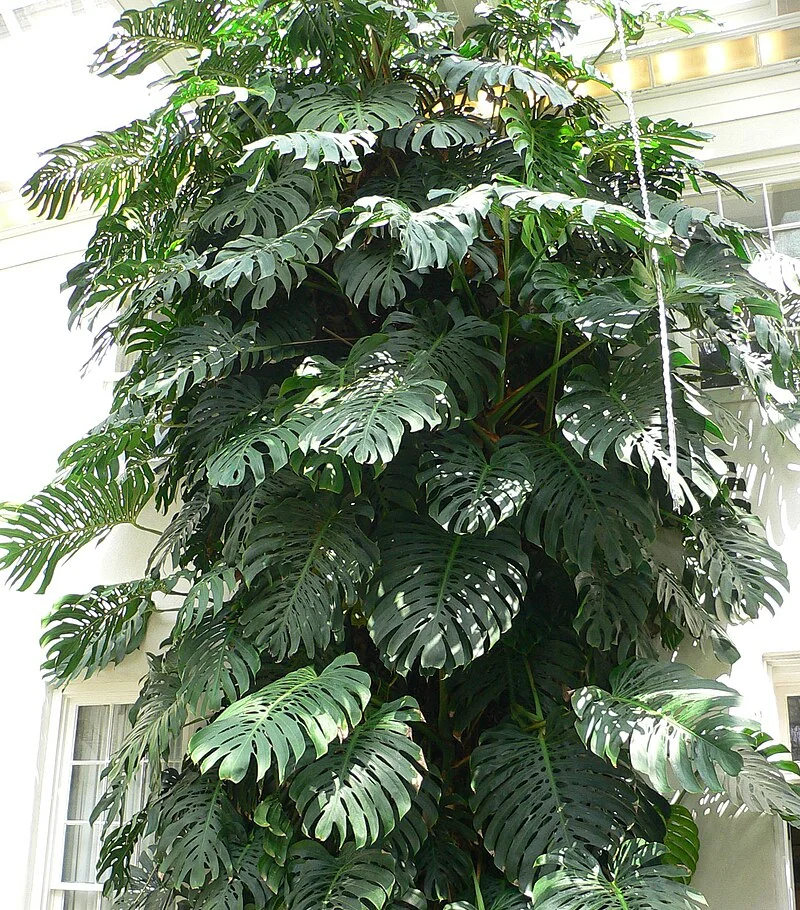
Monstera deliciosa berasal dari hutan hujan di selatan Mexico dan Amerika Tengah. Daunnya yang besar terbelah dan berlubang apabila semakin matang, lebih-lebih lagi jika ia menerima banyak cahaya.
Monstera deliciosa berasal dari hutan hujan di selatan Mexico dan Amerika Tengah. Daunnya yang besar terbelah dan berlubang apabila semakin matang, lebih-lebih lagi jika ia menerima banyak cahaya.
The specific epithet deliciosa means "delicious", referring to the edible fruit. The genus Monstera is named from the Latin word for "monstrous" or "abnormal", and refers to the unusual leaves with natural holes that members of the genus have. Its popular name as a houseplant of "Swiss cheese plant", or just "cheese plant", is commonly stated to refer to the "eyes" or holes that develop in its leaves similar to the holes in some Swiss-type cheeses such as Emmental cheese.
Sumber: Wikipedia
This member of the arum family (Araceae) is a hemiepiphyte with aerial roots. It is able to grow up to 20 m (66 ft) high in the wild, with large, leathery, glossy, pinnate, heart-shaped leaves 25, 90 cm (10, 35.5 in) long by 25, 75 cm (10, 29.5 in) broad. The leaves on young plants are smaller and entire with no lobes or holes, but soon produce lobed and fenestrate leaves as they grow. Although it can grow very tall in nature, it only measures between 2 and 3 m (6.6 and 9.8 ft) when grown indoors.
Sumber: Wikipedia
Monstera deliciosa is native to humid tropical forests, in lowlands and on lower mountains, in the south of Mexico and also in Costa Rica, Guatemala and Panama. The seeds fall to the ground, then the seedlings crawl (negative phototropism) until they meet a tree on which to attach. The many adjacent roots thus allow the plant to anchor against its new support and reach the canopy light (although it rarely grows in full sun and prefers a light dimmed by the foliage).
Sumber: Wikipedia
Monstera deliciosa is commonly grown outdoors as an ornamental plant in the tropics and subtropics. The plant requires a lot of space and a rich and loose soil (ideally garden soil and compost in equal parts). If it grows in the ground it is better to plant it near a tree, where it can climb, if not against a trellis. It is a "moderately greedy plant", in that it needs to be watered just to keep the soil slightly moist. Its hardiness is 11 (that is to say the coldest at −1 °C or 30 °F).
Sumber: Wikipedia
Monstera deliciosa is moderately toxic to both cats and dogs because it contains needle-like insoluble calcium oxalate crystals. These crystals may cause injury to the mouth, tongue, and digestive tract. It also causes dermatitis by direct contact with cat and dog skin.
Sumber: Wikipedia
In those areas where it grows naturally, M. deliciosa is considered a delicacy due to its sweet and exotic flavor. The fruit may be ripened by cutting it when the first scales begin to lift up and it begins to exude a pungent odor. It is wrapped in a paper bag and set aside until the scales begin popping off. The scales are then brushed off or fall away to reveal the edible flesh underneath. The flesh, which is similar to pineapple in texture, can be cut away from the core and eaten.
Sumber: Wikipedia
Tab profil, sama seperti dalam aplikasi: gambaran keseluruhan, kemudian bahagian-bahagian artikel Wikipedia tentang spesies itu, dalam bahasa anda.
Tahap kesukaran, ketoksikan, cahaya, penyiraman.
Huraian, taburan, penanaman: bahagian-bahagian artikel Wikipedianya, dalam bahasa anda.
Beralih dari satu bahagian ke bahagian lain seperti dalam aplikasi, tanpa meninggalkan profil.
Cuba terus di halaman ini: tukar tab
Monstera deliciosa
Nama lain: Philodendron pertusum, Monstera borsigiana
+15Monstera deliciosa berasal dari hutan hujan di selatan Mexico dan Amerika Tengah. Daunnya yang besar terbelah dan berlubang apabila semakin matang, lebih-lebih lagi jika ia menerima banyak cahaya.
Monstera deliciosa berasal dari hutan hujan di selatan Mexico dan Amerika Tengah. Daunnya yang besar terbelah dan berlubang apabila semakin matang, lebih-lebih lagi jika ia menerima banyak cahaya.
The specific epithet deliciosa means "delicious", referring to the edible fruit. The genus Monstera is named from the Latin word for "monstrous" or "abnormal", and refers to the unusual leaves with natural holes that members of the genus have. Its popular name as a houseplant of "Swiss cheese plant", or just "cheese plant", is commonly stated to refer to the "eyes" or holes that develop in its leaves similar to the holes in some Swiss-type cheeses such as Emmental cheese.
Sumber: Wikipedia
This member of the arum family (Araceae) is a hemiepiphyte with aerial roots. It is able to grow up to 20 m (66 ft) high in the wild, with large, leathery, glossy, pinnate, heart-shaped leaves 25, 90 cm (10, 35.5 in) long by 25, 75 cm (10, 29.5 in) broad. The leaves on young plants are smaller and entire with no lobes or holes, but soon produce lobed and fenestrate leaves as they grow. Although it can grow very tall in nature, it only measures between 2 and 3 m (6.6 and 9.8 ft) when grown indoors.
Sumber: Wikipedia
Monstera deliciosa is native to humid tropical forests, in lowlands and on lower mountains, in the south of Mexico and also in Costa Rica, Guatemala and Panama. The seeds fall to the ground, then the seedlings crawl (negative phototropism) until they meet a tree on which to attach. The many adjacent roots thus allow the plant to anchor against its new support and reach the canopy light (although it rarely grows in full sun and prefers a light dimmed by the foliage).
Sumber: Wikipedia
Monstera deliciosa is commonly grown outdoors as an ornamental plant in the tropics and subtropics. The plant requires a lot of space and a rich and loose soil (ideally garden soil and compost in equal parts). If it grows in the ground it is better to plant it near a tree, where it can climb, if not against a trellis. It is a "moderately greedy plant", in that it needs to be watered just to keep the soil slightly moist. Its hardiness is 11 (that is to say the coldest at −1 °C or 30 °F).
Sumber: Wikipedia
Monstera deliciosa is moderately toxic to both cats and dogs because it contains needle-like insoluble calcium oxalate crystals. These crystals may cause injury to the mouth, tongue, and digestive tract. It also causes dermatitis by direct contact with cat and dog skin.
Sumber: Wikipedia
In those areas where it grows naturally, M. deliciosa is considered a delicacy due to its sweet and exotic flavor. The fruit may be ripened by cutting it when the first scales begin to lift up and it begins to exude a pungent odor. It is wrapped in a paper bag and set aside until the scales begin popping off. The scales are then brushed off or fall away to reveal the edible flesh underneath. The flesh, which is similar to pineapple in texture, can be cut away from the core and eaten.
Sumber: Wikipedia
01
Satu foto, atau carian mengikut nama.
02
Tahap kesukaran, ketoksikan, cahaya dan penyiraman, di bahagian atas profil.
03
Bahagian-bahagian artikel Wikipedianya, tab demi tab, dalam bahasa anda.
Selepas gambaran keseluruhan, setiap tab memuatkan satu bahagian artikel Wikipedia tentang spesies itu. Galeri memaparkan daun, bunga, buah, perawakan dan kulit kayu untuk membantu anda mengenali spesies itu.
Monstera deliciosa
Nama lain: Philodendron pertusum, Monstera borsigiana
+15Monstera deliciosa berasal dari hutan hujan di selatan Mexico dan Amerika Tengah. Daunnya yang besar terbelah dan berlubang apabila semakin matang, lebih-lebih lagi jika ia menerima banyak cahaya.
Monstera deliciosa berasal dari hutan hujan di selatan Mexico dan Amerika Tengah. Daunnya yang besar terbelah dan berlubang apabila semakin matang, lebih-lebih lagi jika ia menerima banyak cahaya.
The specific epithet deliciosa means "delicious", referring to the edible fruit. The genus Monstera is named from the Latin word for "monstrous" or "abnormal", and refers to the unusual leaves with natural holes that members of the genus have. Its popular name as a houseplant of "Swiss cheese plant", or just "cheese plant", is commonly stated to refer to the "eyes" or holes that develop in its leaves similar to the holes in some Swiss-type cheeses such as Emmental cheese.
Sumber: Wikipedia
This member of the arum family (Araceae) is a hemiepiphyte with aerial roots. It is able to grow up to 20 m (66 ft) high in the wild, with large, leathery, glossy, pinnate, heart-shaped leaves 25, 90 cm (10, 35.5 in) long by 25, 75 cm (10, 29.5 in) broad. The leaves on young plants are smaller and entire with no lobes or holes, but soon produce lobed and fenestrate leaves as they grow. Although it can grow very tall in nature, it only measures between 2 and 3 m (6.6 and 9.8 ft) when grown indoors.
Sumber: Wikipedia
Monstera deliciosa is native to humid tropical forests, in lowlands and on lower mountains, in the south of Mexico and also in Costa Rica, Guatemala and Panama. The seeds fall to the ground, then the seedlings crawl (negative phototropism) until they meet a tree on which to attach. The many adjacent roots thus allow the plant to anchor against its new support and reach the canopy light (although it rarely grows in full sun and prefers a light dimmed by the foliage).
Sumber: Wikipedia
Monstera deliciosa is commonly grown outdoors as an ornamental plant in the tropics and subtropics. The plant requires a lot of space and a rich and loose soil (ideally garden soil and compost in equal parts). If it grows in the ground it is better to plant it near a tree, where it can climb, if not against a trellis. It is a "moderately greedy plant", in that it needs to be watered just to keep the soil slightly moist. Its hardiness is 11 (that is to say the coldest at −1 °C or 30 °F).
Sumber: Wikipedia
Monstera deliciosa is moderately toxic to both cats and dogs because it contains needle-like insoluble calcium oxalate crystals. These crystals may cause injury to the mouth, tongue, and digestive tract. It also causes dermatitis by direct contact with cat and dog skin.
Sumber: Wikipedia
In those areas where it grows naturally, M. deliciosa is considered a delicacy due to its sweet and exotic flavor. The fruit may be ripened by cutting it when the first scales begin to lift up and it begins to exude a pungent odor. It is wrapped in a paper bag and set aside until the scales begin popping off. The scales are then brushed off or fall away to reveal the edible flesh underneath. The flesh, which is similar to pineapple in texture, can be cut away from the core and eaten.
Sumber: Wikipedia
Ketoksikan diperincikan mengikut haiwan: anjing, kucing, kuda. Profil menerangkan mengapa tumbuhan itu toksik, cara melindungi haiwan peliharaan anda dan apa yang perlu dilakukan jika termakan, berserta maklumat hubungan pusat racun.
Monstera deliciosa
Nama lain: Philodendron pertusum, Monstera borsigiana
+15Monstera deliciosa berasal dari hutan hujan di selatan Mexico dan Amerika Tengah. Daunnya yang besar terbelah dan berlubang apabila semakin matang, lebih-lebih lagi jika ia menerima banyak cahaya.
Monstera deliciosa berasal dari hutan hujan di selatan Mexico dan Amerika Tengah. Daunnya yang besar terbelah dan berlubang apabila semakin matang, lebih-lebih lagi jika ia menerima banyak cahaya.
The specific epithet deliciosa means "delicious", referring to the edible fruit. The genus Monstera is named from the Latin word for "monstrous" or "abnormal", and refers to the unusual leaves with natural holes that members of the genus have. Its popular name as a houseplant of "Swiss cheese plant", or just "cheese plant", is commonly stated to refer to the "eyes" or holes that develop in its leaves similar to the holes in some Swiss-type cheeses such as Emmental cheese.
Sumber: Wikipedia
This member of the arum family (Araceae) is a hemiepiphyte with aerial roots. It is able to grow up to 20 m (66 ft) high in the wild, with large, leathery, glossy, pinnate, heart-shaped leaves 25, 90 cm (10, 35.5 in) long by 25, 75 cm (10, 29.5 in) broad. The leaves on young plants are smaller and entire with no lobes or holes, but soon produce lobed and fenestrate leaves as they grow. Although it can grow very tall in nature, it only measures between 2 and 3 m (6.6 and 9.8 ft) when grown indoors.
Sumber: Wikipedia
Monstera deliciosa is native to humid tropical forests, in lowlands and on lower mountains, in the south of Mexico and also in Costa Rica, Guatemala and Panama. The seeds fall to the ground, then the seedlings crawl (negative phototropism) until they meet a tree on which to attach. The many adjacent roots thus allow the plant to anchor against its new support and reach the canopy light (although it rarely grows in full sun and prefers a light dimmed by the foliage).
Sumber: Wikipedia
Monstera deliciosa is commonly grown outdoors as an ornamental plant in the tropics and subtropics. The plant requires a lot of space and a rich and loose soil (ideally garden soil and compost in equal parts). If it grows in the ground it is better to plant it near a tree, where it can climb, if not against a trellis. It is a "moderately greedy plant", in that it needs to be watered just to keep the soil slightly moist. Its hardiness is 11 (that is to say the coldest at −1 °C or 30 °F).
Sumber: Wikipedia
Monstera deliciosa is moderately toxic to both cats and dogs because it contains needle-like insoluble calcium oxalate crystals. These crystals may cause injury to the mouth, tongue, and digestive tract. It also causes dermatitis by direct contact with cat and dog skin.
Sumber: Wikipedia
In those areas where it grows naturally, M. deliciosa is considered a delicacy due to its sweet and exotic flavor. The fruit may be ripened by cutting it when the first scales begin to lift up and it begins to exude a pungent odor. It is wrapped in a paper bag and set aside until the scales begin popping off. The scales are then brushed off or fall away to reveal the edible flesh underneath. The flesh, which is similar to pineapple in texture, can be cut away from the core and eaten.
Sumber: Wikipedia
Penjelajah takson meneroka perpustakaan tumbuhan mengikut order, famili dan genus. Mulakan dengan spesies yang anda kenali dan temui spesies yang berkait rapat dengannya.
Monstera deliciosa
Nama lain: Philodendron pertusum, Monstera borsigiana
+15Monstera deliciosa berasal dari hutan hujan di selatan Mexico dan Amerika Tengah. Daunnya yang besar terbelah dan berlubang apabila semakin matang, lebih-lebih lagi jika ia menerima banyak cahaya.
Monstera deliciosa berasal dari hutan hujan di selatan Mexico dan Amerika Tengah. Daunnya yang besar terbelah dan berlubang apabila semakin matang, lebih-lebih lagi jika ia menerima banyak cahaya.
The specific epithet deliciosa means "delicious", referring to the edible fruit. The genus Monstera is named from the Latin word for "monstrous" or "abnormal", and refers to the unusual leaves with natural holes that members of the genus have. Its popular name as a houseplant of "Swiss cheese plant", or just "cheese plant", is commonly stated to refer to the "eyes" or holes that develop in its leaves similar to the holes in some Swiss-type cheeses such as Emmental cheese.
Sumber: Wikipedia
This member of the arum family (Araceae) is a hemiepiphyte with aerial roots. It is able to grow up to 20 m (66 ft) high in the wild, with large, leathery, glossy, pinnate, heart-shaped leaves 25, 90 cm (10, 35.5 in) long by 25, 75 cm (10, 29.5 in) broad. The leaves on young plants are smaller and entire with no lobes or holes, but soon produce lobed and fenestrate leaves as they grow. Although it can grow very tall in nature, it only measures between 2 and 3 m (6.6 and 9.8 ft) when grown indoors.
Sumber: Wikipedia
Monstera deliciosa is native to humid tropical forests, in lowlands and on lower mountains, in the south of Mexico and also in Costa Rica, Guatemala and Panama. The seeds fall to the ground, then the seedlings crawl (negative phototropism) until they meet a tree on which to attach. The many adjacent roots thus allow the plant to anchor against its new support and reach the canopy light (although it rarely grows in full sun and prefers a light dimmed by the foliage).
Sumber: Wikipedia
Monstera deliciosa is commonly grown outdoors as an ornamental plant in the tropics and subtropics. The plant requires a lot of space and a rich and loose soil (ideally garden soil and compost in equal parts). If it grows in the ground it is better to plant it near a tree, where it can climb, if not against a trellis. It is a "moderately greedy plant", in that it needs to be watered just to keep the soil slightly moist. Its hardiness is 11 (that is to say the coldest at −1 °C or 30 °F).
Sumber: Wikipedia
Monstera deliciosa is moderately toxic to both cats and dogs because it contains needle-like insoluble calcium oxalate crystals. These crystals may cause injury to the mouth, tongue, and digestive tract. It also causes dermatitis by direct contact with cat and dog skin.
Sumber: Wikipedia
In those areas where it grows naturally, M. deliciosa is considered a delicacy due to its sweet and exotic flavor. The fruit may be ripened by cutting it when the first scales begin to lift up and it begins to exude a pungent odor. It is wrapped in a paper bag and set aside until the scales begin popping off. The scales are then brushed off or fall away to reveal the edible flesh underneath. The flesh, which is similar to pineapple in texture, can be cut away from the core and eaten.
Sumber: Wikipedia
Profil memberikan panduan umum. Penjagaan yang disesuaikan dengan pasu dan bilik anda terdapat di halaman tumbuhan anda, dalam Taman saya.
Belum semua spesies mempunyai ketoksikan yang didokumenkan atau galeri yang lengkap. Profil memaparkan “Tidak diketahui” atau “Data tidak tersedia” dan bukannya meneka.
Jika termakan, hubungi doktor haiwan atau pusat racun. Profil membantu anda bertindak pantas, tetapi ia tidak membuat diagnosis.
Maklumat utama (tahap kesukaran, ketoksikan, cahaya, penyiraman), galeri mengikut bahagian tumbuhan dan klasifikasi spesies itu, kemudian bahagian-bahagian artikel Wikipedianya dalam tab, dalam bahasa anda.
Buka profil spesies itu dan sentuh ketoksikan: risikonya diperincikan untuk anjing, kucing dan kuda apabila datanya tersedia.
Keluarkan sisa dari mulutnya tanpa memaksa, catat bahagian yang dimakan dan hubungi doktor haiwan atau pusat racun. Profil spesies menghimpunkan langkah-langkah ini dan maklumat hubungan yang berguna.
Profil tumbuhan dalam taman anda tetap boleh dibaca tanpa rangkaian, walaupun di hujung taman.
Satu cara untuk meneroka tumbuhan mengikut order, famili dan genus. Setiap peringkat menunjukkan bilangan spesies yang dihimpunkannya dan menonjolkan satu spesies utama.
Sesetengah spesies kurang didokumenkan berbanding yang lain. Daripada meneka, profil menyatakan bahawa sesuatu data tidak tersedia.
Ya. Ensiklopedia Floralens juga boleh dibaca di web, tanpa memasang aplikasi, dalam beberapa bahasa.
Profil menerangkan spesies. Halaman tumbuhan anda, dalam Taman saya, bermula daripada profil itu dan menyesuaikannya dengan pasu, bilik dan penjagaan anda.
Ambil foto sebuah tumbuhan: profilnya terbuka bersama keputusannya.
Satu foto, lebih 400,000 spesies, keputusan dalam masa kurang 5 saat berserta skor keyakinan dan pilihan lain.
Lihat pengecaman fotoSatu pelan bagi setiap tumbuhan, pemberitahuan pada waktu yang dipilih dan kekerapan yang mengikut musim.
Lihat peringatan penjagaanBilik, satu halaman bagi setiap tumbuhan, foto pertumbuhan dan perjalanan setiap satunya.
Lihat Taman sayaAhli botani yang mengenali taman anda sepenuhnya. Ajukan soalan, dan jawapannya mengambil kira tumbuhan anda.
Lihat FloraTiga foto, beberapa soalan, kemudian punca yang mungkin, pelan rawatan mengikut keutamaan dan semakan tujuh hari kemudian.
Lihat Dr. FloraSiarkan tumbuhan anda, tanya soalan kepada peminat tumbuhan lain dan ikuti mereka yang memberi anda inspirasi.
Lihat komuniti65 lencana dalam 6 keluarga, 8 siri dengan 6 peringkat dan 17 pencapaian sekali sahaja, diperoleh melalui tindakan anda.
Lihat lencana