














01
Tanımlayın veya arayın
Bir fotoğraf ya da adıyla arama.

Ansiklopedi
Her tür için eksiksiz bir kart: neye ihtiyaç duyduğu, nereden geldiği, ne işe yaradığı, nasıl tanınacağı ve evcil hayvanlarınız için tehlikeli olup olmadığı.
Uygulama mağazalarında 4,850.000+ bahçıvan
Monstera deliciosa
Diğer adları: Philodendron pertusum, Monstera borsigiana
 +15
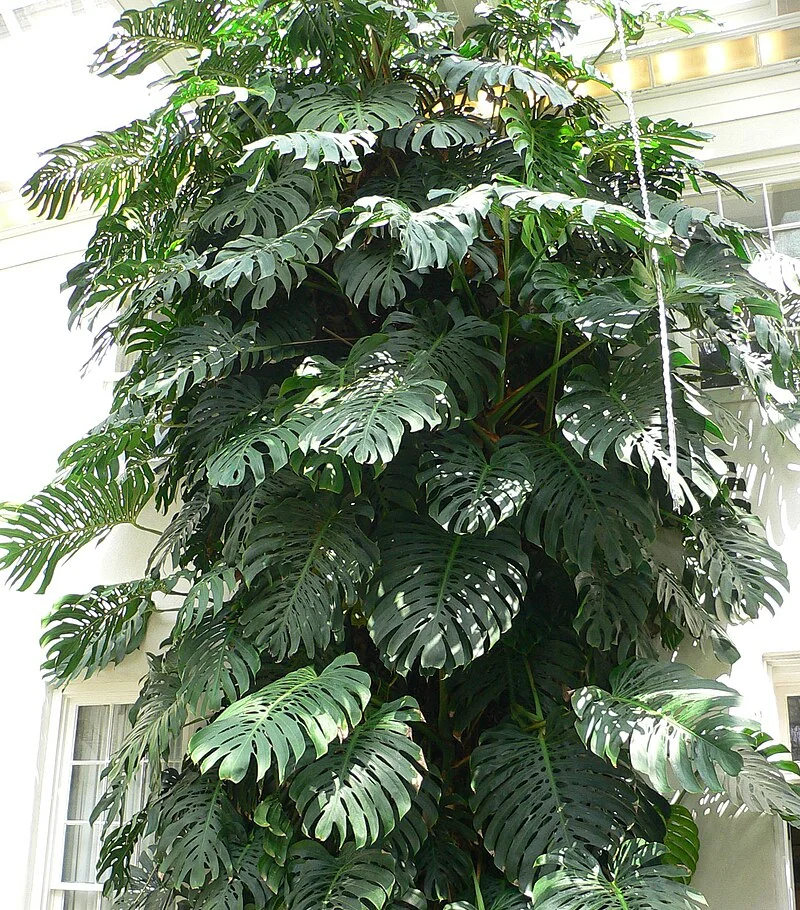
Monstera deliciosa, güney Meksika ve Orta Amerika'nın nemli ormanlarından gelir. Büyük yaprakları yaşlandıkça yarılır ve delinir; ne kadar çok ışık alırsa bu o kadar belirgin olur.
Monstera deliciosa, güney Meksika ve Orta Amerika'nın nemli ormanlarından gelir. Büyük yaprakları yaşlandıkça yarılır ve delinir; ne kadar çok ışık alırsa bu o kadar belirgin olur.
The specific epithet deliciosa means "delicious", referring to the edible fruit. The genus Monstera is named from the Latin word for "monstrous" or "abnormal", and refers to the unusual leaves with natural holes that members of the genus have. Its popular name as a houseplant of "Swiss cheese plant", or just "cheese plant", is commonly stated to refer to the "eyes" or holes that develop in its leaves similar to the holes in some Swiss-type cheeses such as Emmental cheese.
Kaynak: Wikipedia
This member of the arum family (Araceae) is a hemiepiphyte with aerial roots. It is able to grow up to 20 m (66 ft) high in the wild, with large, leathery, glossy, pinnate, heart-shaped leaves 25, 90 cm (10, 35.5 in) long by 25, 75 cm (10, 29.5 in) broad. The leaves on young plants are smaller and entire with no lobes or holes, but soon produce lobed and fenestrate leaves as they grow. Although it can grow very tall in nature, it only measures between 2 and 3 m (6.6 and 9.8 ft) when grown indoors.
Kaynak: Wikipedia
Monstera deliciosa is native to humid tropical forests, in lowlands and on lower mountains, in the south of Mexico and also in Costa Rica, Guatemala and Panama. The seeds fall to the ground, then the seedlings crawl (negative phototropism) until they meet a tree on which to attach. The many adjacent roots thus allow the plant to anchor against its new support and reach the canopy light (although it rarely grows in full sun and prefers a light dimmed by the foliage).
Kaynak: Wikipedia
Monstera deliciosa is commonly grown outdoors as an ornamental plant in the tropics and subtropics. The plant requires a lot of space and a rich and loose soil (ideally garden soil and compost in equal parts). If it grows in the ground it is better to plant it near a tree, where it can climb, if not against a trellis. It is a "moderately greedy plant", in that it needs to be watered just to keep the soil slightly moist. Its hardiness is 11 (that is to say the coldest at −1 °C or 30 °F).
Kaynak: Wikipedia
Monstera deliciosa is moderately toxic to both cats and dogs because it contains needle-like insoluble calcium oxalate crystals. These crystals may cause injury to the mouth, tongue, and digestive tract. It also causes dermatitis by direct contact with cat and dog skin.
Kaynak: Wikipedia
In those areas where it grows naturally, M. deliciosa is considered a delicacy due to its sweet and exotic flavor. The fruit may be ripened by cutting it when the first scales begin to lift up and it begins to exude a pungent odor. It is wrapped in a paper bag and set aside until the scales begin popping off. The scales are then brushed off or fall away to reveal the edible flesh underneath. The flesh, which is similar to pineapple in texture, can be cut away from the core and eaten.
Kaynak: Wikipedia
Uygulamadaki gibi kartın sekmeleri: önce genel bakış, ardından türün Wikipedia maddesinin bölümleri, kendi dilinizde.
Bakım zorluğu, zehirlilik, ışık, sulama.
Tanım, yayılış, yetiştirme: Wikipedia maddesinin bölümleri, kendi dilinizde.
Uygulamadaki gibi karttan çıkmadan bölümler arasında geçiş yapın.
Hemen burada deneyin: sekme değiştirin
Monstera deliciosa
Diğer adları: Philodendron pertusum, Monstera borsigiana
+15Monstera deliciosa, güney Meksika ve Orta Amerika'nın nemli ormanlarından gelir. Büyük yaprakları yaşlandıkça yarılır ve delinir; ne kadar çok ışık alırsa bu o kadar belirgin olur.
Monstera deliciosa, güney Meksika ve Orta Amerika'nın nemli ormanlarından gelir. Büyük yaprakları yaşlandıkça yarılır ve delinir; ne kadar çok ışık alırsa bu o kadar belirgin olur.
The specific epithet deliciosa means "delicious", referring to the edible fruit. The genus Monstera is named from the Latin word for "monstrous" or "abnormal", and refers to the unusual leaves with natural holes that members of the genus have. Its popular name as a houseplant of "Swiss cheese plant", or just "cheese plant", is commonly stated to refer to the "eyes" or holes that develop in its leaves similar to the holes in some Swiss-type cheeses such as Emmental cheese.
Kaynak: Wikipedia
This member of the arum family (Araceae) is a hemiepiphyte with aerial roots. It is able to grow up to 20 m (66 ft) high in the wild, with large, leathery, glossy, pinnate, heart-shaped leaves 25, 90 cm (10, 35.5 in) long by 25, 75 cm (10, 29.5 in) broad. The leaves on young plants are smaller and entire with no lobes or holes, but soon produce lobed and fenestrate leaves as they grow. Although it can grow very tall in nature, it only measures between 2 and 3 m (6.6 and 9.8 ft) when grown indoors.
Kaynak: Wikipedia
Monstera deliciosa is native to humid tropical forests, in lowlands and on lower mountains, in the south of Mexico and also in Costa Rica, Guatemala and Panama. The seeds fall to the ground, then the seedlings crawl (negative phototropism) until they meet a tree on which to attach. The many adjacent roots thus allow the plant to anchor against its new support and reach the canopy light (although it rarely grows in full sun and prefers a light dimmed by the foliage).
Kaynak: Wikipedia
Monstera deliciosa is commonly grown outdoors as an ornamental plant in the tropics and subtropics. The plant requires a lot of space and a rich and loose soil (ideally garden soil and compost in equal parts). If it grows in the ground it is better to plant it near a tree, where it can climb, if not against a trellis. It is a "moderately greedy plant", in that it needs to be watered just to keep the soil slightly moist. Its hardiness is 11 (that is to say the coldest at −1 °C or 30 °F).
Kaynak: Wikipedia
Monstera deliciosa is moderately toxic to both cats and dogs because it contains needle-like insoluble calcium oxalate crystals. These crystals may cause injury to the mouth, tongue, and digestive tract. It also causes dermatitis by direct contact with cat and dog skin.
Kaynak: Wikipedia
In those areas where it grows naturally, M. deliciosa is considered a delicacy due to its sweet and exotic flavor. The fruit may be ripened by cutting it when the first scales begin to lift up and it begins to exude a pungent odor. It is wrapped in a paper bag and set aside until the scales begin popping off. The scales are then brushed off or fall away to reveal the edible flesh underneath. The flesh, which is similar to pineapple in texture, can be cut away from the core and eaten.
Kaynak: Wikipedia
01
Bir fotoğraf ya da adıyla arama.
02
Kartın en üstünde bakım zorluğu, zehirlilik, ışık ve sulama.
03
Wikipedia maddesinin bölümleri, sekme sekme, kendi dilinizde.
Genel bakıştan sonra her sekme, türün Wikipedia maddesinden bir bölüm içerir. Galeri, türü tanımanıza yardımcı olmak için yaprakları, çiçekleri, meyveleri, formu ve kabuğu gösterir.
Monstera deliciosa
Diğer adları: Philodendron pertusum, Monstera borsigiana
+15Monstera deliciosa, güney Meksika ve Orta Amerika'nın nemli ormanlarından gelir. Büyük yaprakları yaşlandıkça yarılır ve delinir; ne kadar çok ışık alırsa bu o kadar belirgin olur.
Monstera deliciosa, güney Meksika ve Orta Amerika'nın nemli ormanlarından gelir. Büyük yaprakları yaşlandıkça yarılır ve delinir; ne kadar çok ışık alırsa bu o kadar belirgin olur.
The specific epithet deliciosa means "delicious", referring to the edible fruit. The genus Monstera is named from the Latin word for "monstrous" or "abnormal", and refers to the unusual leaves with natural holes that members of the genus have. Its popular name as a houseplant of "Swiss cheese plant", or just "cheese plant", is commonly stated to refer to the "eyes" or holes that develop in its leaves similar to the holes in some Swiss-type cheeses such as Emmental cheese.
Kaynak: Wikipedia
This member of the arum family (Araceae) is a hemiepiphyte with aerial roots. It is able to grow up to 20 m (66 ft) high in the wild, with large, leathery, glossy, pinnate, heart-shaped leaves 25, 90 cm (10, 35.5 in) long by 25, 75 cm (10, 29.5 in) broad. The leaves on young plants are smaller and entire with no lobes or holes, but soon produce lobed and fenestrate leaves as they grow. Although it can grow very tall in nature, it only measures between 2 and 3 m (6.6 and 9.8 ft) when grown indoors.
Kaynak: Wikipedia
Monstera deliciosa is native to humid tropical forests, in lowlands and on lower mountains, in the south of Mexico and also in Costa Rica, Guatemala and Panama. The seeds fall to the ground, then the seedlings crawl (negative phototropism) until they meet a tree on which to attach. The many adjacent roots thus allow the plant to anchor against its new support and reach the canopy light (although it rarely grows in full sun and prefers a light dimmed by the foliage).
Kaynak: Wikipedia
Monstera deliciosa is commonly grown outdoors as an ornamental plant in the tropics and subtropics. The plant requires a lot of space and a rich and loose soil (ideally garden soil and compost in equal parts). If it grows in the ground it is better to plant it near a tree, where it can climb, if not against a trellis. It is a "moderately greedy plant", in that it needs to be watered just to keep the soil slightly moist. Its hardiness is 11 (that is to say the coldest at −1 °C or 30 °F).
Kaynak: Wikipedia
Monstera deliciosa is moderately toxic to both cats and dogs because it contains needle-like insoluble calcium oxalate crystals. These crystals may cause injury to the mouth, tongue, and digestive tract. It also causes dermatitis by direct contact with cat and dog skin.
Kaynak: Wikipedia
In those areas where it grows naturally, M. deliciosa is considered a delicacy due to its sweet and exotic flavor. The fruit may be ripened by cutting it when the first scales begin to lift up and it begins to exude a pungent odor. It is wrapped in a paper bag and set aside until the scales begin popping off. The scales are then brushed off or fall away to reveal the edible flesh underneath. The flesh, which is similar to pineapple in texture, can be cut away from the core and eaten.
Kaynak: Wikipedia
Zehirlilik hayvana göre ayrıntılandırılır: köpekler, kediler, atlar. Kart, bitkinin neden zehirli olduğunu, hayvanlarınızı nasıl koruyacağınızı ve yutma durumunda ne yapmanız gerektiğini, zehir danışma merkezlerinin iletişim bilgileriyle birlikte açıklar.
Monstera deliciosa
Diğer adları: Philodendron pertusum, Monstera borsigiana
+15Monstera deliciosa, güney Meksika ve Orta Amerika'nın nemli ormanlarından gelir. Büyük yaprakları yaşlandıkça yarılır ve delinir; ne kadar çok ışık alırsa bu o kadar belirgin olur.
Monstera deliciosa, güney Meksika ve Orta Amerika'nın nemli ormanlarından gelir. Büyük yaprakları yaşlandıkça yarılır ve delinir; ne kadar çok ışık alırsa bu o kadar belirgin olur.
The specific epithet deliciosa means "delicious", referring to the edible fruit. The genus Monstera is named from the Latin word for "monstrous" or "abnormal", and refers to the unusual leaves with natural holes that members of the genus have. Its popular name as a houseplant of "Swiss cheese plant", or just "cheese plant", is commonly stated to refer to the "eyes" or holes that develop in its leaves similar to the holes in some Swiss-type cheeses such as Emmental cheese.
Kaynak: Wikipedia
This member of the arum family (Araceae) is a hemiepiphyte with aerial roots. It is able to grow up to 20 m (66 ft) high in the wild, with large, leathery, glossy, pinnate, heart-shaped leaves 25, 90 cm (10, 35.5 in) long by 25, 75 cm (10, 29.5 in) broad. The leaves on young plants are smaller and entire with no lobes or holes, but soon produce lobed and fenestrate leaves as they grow. Although it can grow very tall in nature, it only measures between 2 and 3 m (6.6 and 9.8 ft) when grown indoors.
Kaynak: Wikipedia
Monstera deliciosa is native to humid tropical forests, in lowlands and on lower mountains, in the south of Mexico and also in Costa Rica, Guatemala and Panama. The seeds fall to the ground, then the seedlings crawl (negative phototropism) until they meet a tree on which to attach. The many adjacent roots thus allow the plant to anchor against its new support and reach the canopy light (although it rarely grows in full sun and prefers a light dimmed by the foliage).
Kaynak: Wikipedia
Monstera deliciosa is commonly grown outdoors as an ornamental plant in the tropics and subtropics. The plant requires a lot of space and a rich and loose soil (ideally garden soil and compost in equal parts). If it grows in the ground it is better to plant it near a tree, where it can climb, if not against a trellis. It is a "moderately greedy plant", in that it needs to be watered just to keep the soil slightly moist. Its hardiness is 11 (that is to say the coldest at −1 °C or 30 °F).
Kaynak: Wikipedia
Monstera deliciosa is moderately toxic to both cats and dogs because it contains needle-like insoluble calcium oxalate crystals. These crystals may cause injury to the mouth, tongue, and digestive tract. It also causes dermatitis by direct contact with cat and dog skin.
Kaynak: Wikipedia
In those areas where it grows naturally, M. deliciosa is considered a delicacy due to its sweet and exotic flavor. The fruit may be ripened by cutting it when the first scales begin to lift up and it begins to exude a pungent odor. It is wrapped in a paper bag and set aside until the scales begin popping off. The scales are then brushed off or fall away to reveal the edible flesh underneath. The flesh, which is similar to pineapple in texture, can be cut away from the core and eaten.
Kaynak: Wikipedia
Takson gezgini, bitki kütüphanesini takım, familya ve cinse göre gezer. Tanıdığınız bir türden yola çıkın ve komşularını keşfedin.
Monstera deliciosa
Diğer adları: Philodendron pertusum, Monstera borsigiana
+15Monstera deliciosa, güney Meksika ve Orta Amerika'nın nemli ormanlarından gelir. Büyük yaprakları yaşlandıkça yarılır ve delinir; ne kadar çok ışık alırsa bu o kadar belirgin olur.
Monstera deliciosa, güney Meksika ve Orta Amerika'nın nemli ormanlarından gelir. Büyük yaprakları yaşlandıkça yarılır ve delinir; ne kadar çok ışık alırsa bu o kadar belirgin olur.
The specific epithet deliciosa means "delicious", referring to the edible fruit. The genus Monstera is named from the Latin word for "monstrous" or "abnormal", and refers to the unusual leaves with natural holes that members of the genus have. Its popular name as a houseplant of "Swiss cheese plant", or just "cheese plant", is commonly stated to refer to the "eyes" or holes that develop in its leaves similar to the holes in some Swiss-type cheeses such as Emmental cheese.
Kaynak: Wikipedia
This member of the arum family (Araceae) is a hemiepiphyte with aerial roots. It is able to grow up to 20 m (66 ft) high in the wild, with large, leathery, glossy, pinnate, heart-shaped leaves 25, 90 cm (10, 35.5 in) long by 25, 75 cm (10, 29.5 in) broad. The leaves on young plants are smaller and entire with no lobes or holes, but soon produce lobed and fenestrate leaves as they grow. Although it can grow very tall in nature, it only measures between 2 and 3 m (6.6 and 9.8 ft) when grown indoors.
Kaynak: Wikipedia
Monstera deliciosa is native to humid tropical forests, in lowlands and on lower mountains, in the south of Mexico and also in Costa Rica, Guatemala and Panama. The seeds fall to the ground, then the seedlings crawl (negative phototropism) until they meet a tree on which to attach. The many adjacent roots thus allow the plant to anchor against its new support and reach the canopy light (although it rarely grows in full sun and prefers a light dimmed by the foliage).
Kaynak: Wikipedia
Monstera deliciosa is commonly grown outdoors as an ornamental plant in the tropics and subtropics. The plant requires a lot of space and a rich and loose soil (ideally garden soil and compost in equal parts). If it grows in the ground it is better to plant it near a tree, where it can climb, if not against a trellis. It is a "moderately greedy plant", in that it needs to be watered just to keep the soil slightly moist. Its hardiness is 11 (that is to say the coldest at −1 °C or 30 °F).
Kaynak: Wikipedia
Monstera deliciosa is moderately toxic to both cats and dogs because it contains needle-like insoluble calcium oxalate crystals. These crystals may cause injury to the mouth, tongue, and digestive tract. It also causes dermatitis by direct contact with cat and dog skin.
Kaynak: Wikipedia
In those areas where it grows naturally, M. deliciosa is considered a delicacy due to its sweet and exotic flavor. The fruit may be ripened by cutting it when the first scales begin to lift up and it begins to exude a pungent odor. It is wrapped in a paper bag and set aside until the scales begin popping off. The scales are then brushed off or fall away to reveal the edible flesh underneath. The flesh, which is similar to pineapple in texture, can be cut away from the core and eaten.
Kaynak: Wikipedia
Kart genel bilgiler verir. Saksınıza ve odanıza uygun bakım, Bahçem'deki bitkinizin sayfasında yer alır.
Her türün belgelenmiş zehirlilik bilgisi veya eksiksiz bir galerisi henüz yok. Kart tahmin yürütmek yerine “Bilinmiyor” ya da “Veri mevcut değil” gösterir.
Yutma durumunda bir veterinerle veya bir zehir danışma merkeziyle iletişime geçin. Kart hızlı hareket etmenize yardımcı olur, teşhis koymaz.
Temel bilgiler (bakım zorluğu, zehirlilik, ışık, sulama), bitki kısmına göre bir galeri ve türün sınıflandırması, ardından Wikipedia maddesinin bölümleri sekmeler halinde, kendi dilinizde.
Türün kartını açın ve zehirliliğe dokunun: veri mevcutsa risk köpekler, kediler ve atlar için ayrıntılı olarak belirtilir.
Ağzında kalan parçaları zorlamadan çıkarın, hangi kısmı yediğini not edin ve bir veterinerle veya bir zehir danışma merkeziyle iletişime geçin. Türün kartı bu adımları ve faydalı iletişim bilgilerini bir araya getirir.
Bahçenizdeki bitkilerin kartlarına, bahçenin en ucunda bile internet olmadan erişebilirsiniz.
Bitkileri takım, familya ve cinse göre gezmenin bir yolu. Her seviye kaç tür içerdiğini gösterir ve öne çıkan bir türü vurgular.
Bazı türler diğerlerinden daha az belgelenmiştir. Kart tahmin yürütmek yerine bir verinin mevcut olmadığını belirtir.
Evet. Floralens ansiklopedisine uygulamayı yüklemeden, web üzerinden birçok dilde de göz atabilirsiniz.
Kart türü anlatır. Bahçem'deki bitkinizin sayfası bu karttan yola çıkar ve onu saksınıza, odanıza ve bakımınıza göre uyarlar.
Bir bitkinin fotoğrafını çekin: kartı sonuçla birlikte açılır.
Tek fotoğraf, 400.000'den fazla tür, güven puanı ve alternatifleriyle 5 saniyeden kısa sürede bir sonuç.
Fotoğrafla tanımayı görünHer bitki için bir plan, seçtiğiniz saatte bildirimler ve mevsimleri takip eden sıklıklar.
Bakım hatırlatıcılarını görünOdalar, her bitki için bir sayfa, gelişim fotoğrafları ve her birinin yolculuğu.
Bahçem'i görünBahçenizi ezbere bilen botanikçi. Bir soru sorun, cevap bitkilerinizi hesaba katar.
Flora'yı görünÜç fotoğraf ve birkaç soru, ardından olası bir neden, önceliğe göre sıralanmış tedavi planları ve yedi gün sonra bir kontrol.
Dr. Flora'yı görünBitkilerinizi paylaşın, diğer bitkiseverlere soru sorun ve size ilham verenleri takip edin.
Topluluğu görün6 ailede 65 rozet, 6 seviyeli 8 seri ve 17 tek seferlik rozet; hepsi yaptıklarınızla kazanılır.
Rozetleri görün