
Bear's breeches (Acanthus mollis, )
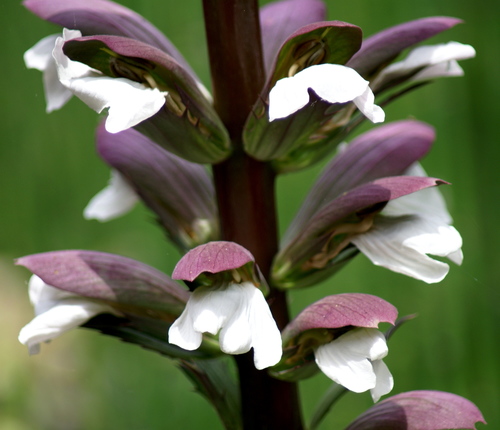

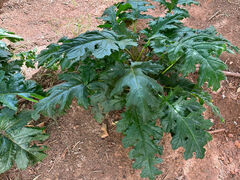
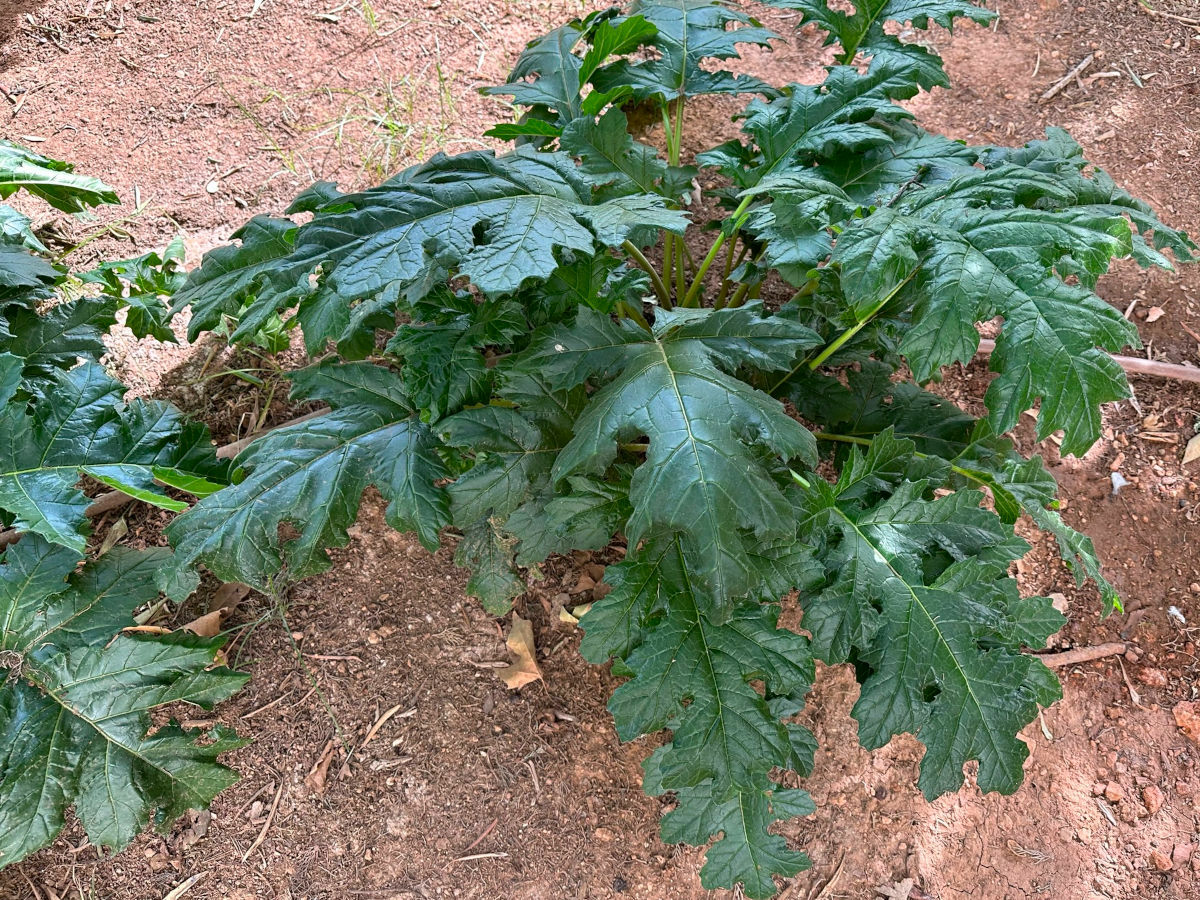
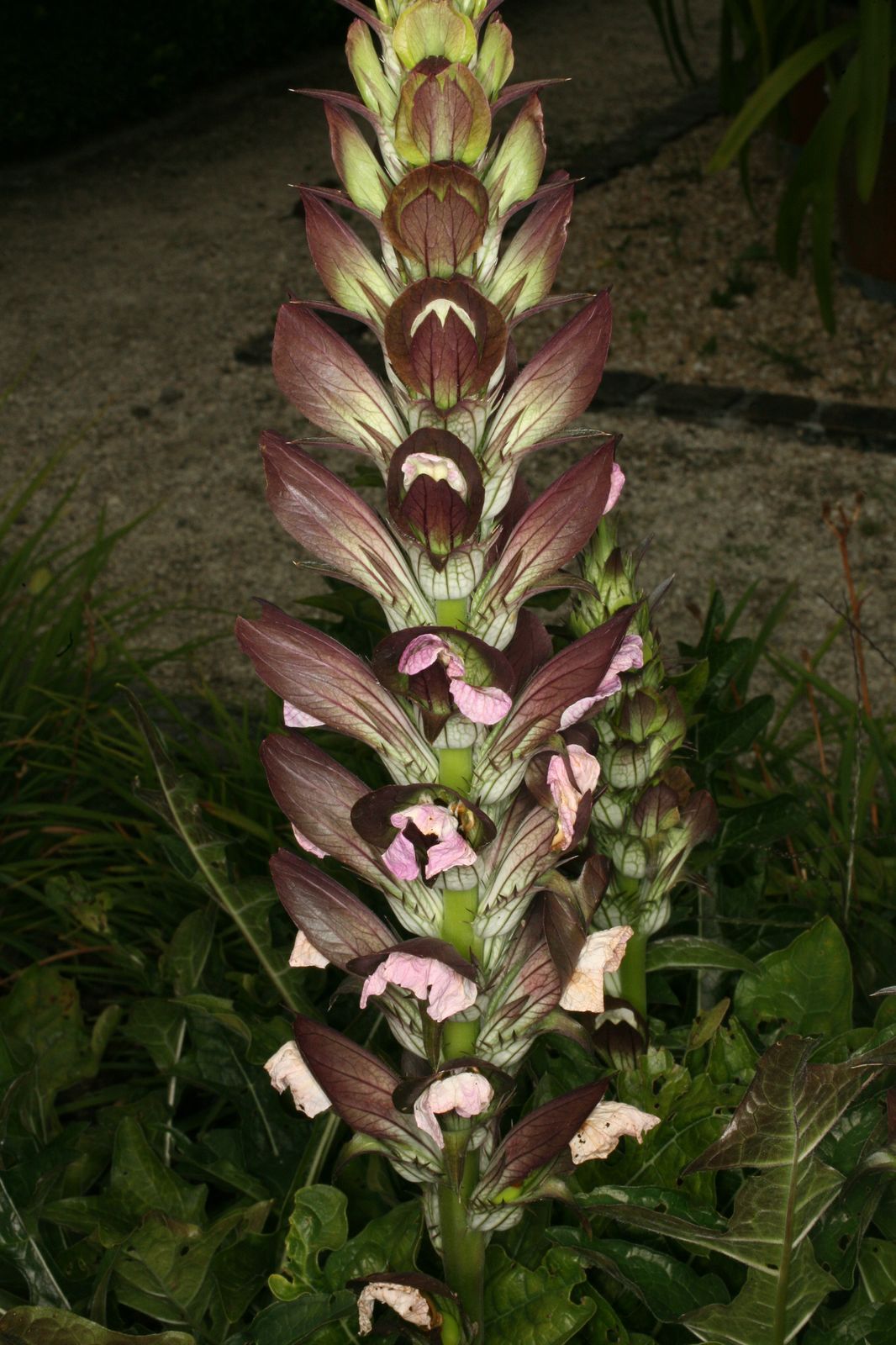
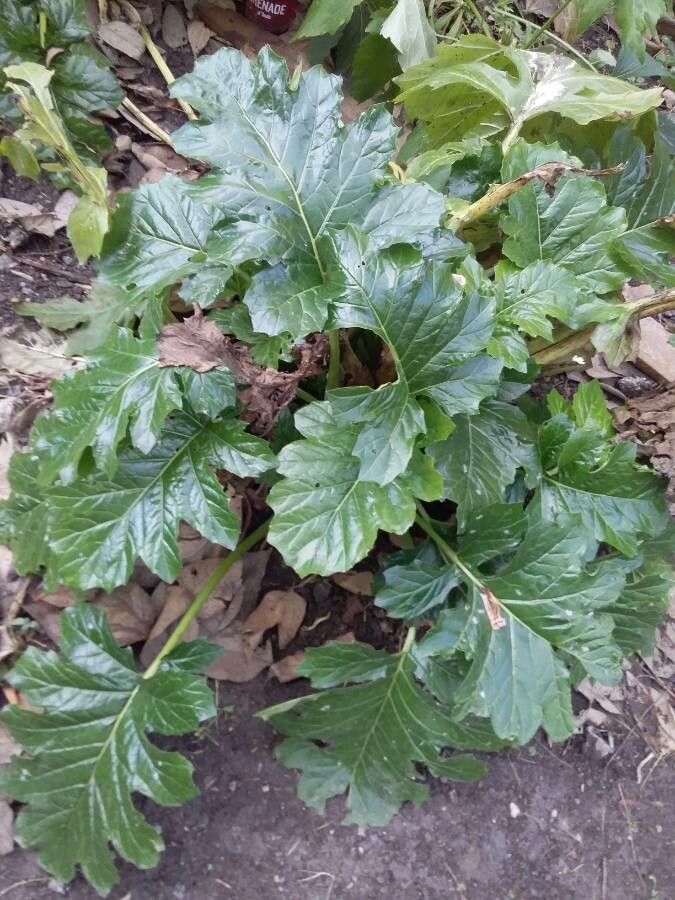
Bear's breeches (Acanthus mollis L., 1753) is an herbaceous perennial in the Acanthaceae, native to the western Mediterranean and the Maghreb. A broad rosette of glossy, lobed, spineless leaves and upright flower spikes with prickly purple bracts distinguish it. It can be confused with Acanthus spinosus, whose leaves are distinctly spiny.
Read moreBear's breeches, Bear's breech, Sea dock, Bear's foot plant and Oyster plant
Give plenty of ambient light without direct sun on the leaves.
Sun, partial shade or shade; flowers best with more light


© photo
(c) KC McKenz, some rights reserved (CC BY-ND) · cc-by-nd
Gianni Del Bufalo bygdb · cc-by
Peter Chen 2.0 · cc-by
Taken Jun 20, 2022 by Dave Flack (cc-by-sa)
Taken May 8, 2020 by Guitty (cc-by-sa)
Taken Jan 21, 2022 by Fabrice Rubio (cc-by-sa)
Taken Jul 4, 2021 by Dieter Wagner (cc-by-sa)
© copyright of the Board of Trustees of the Royal Botanic Gardens, Kew.




Global distribution
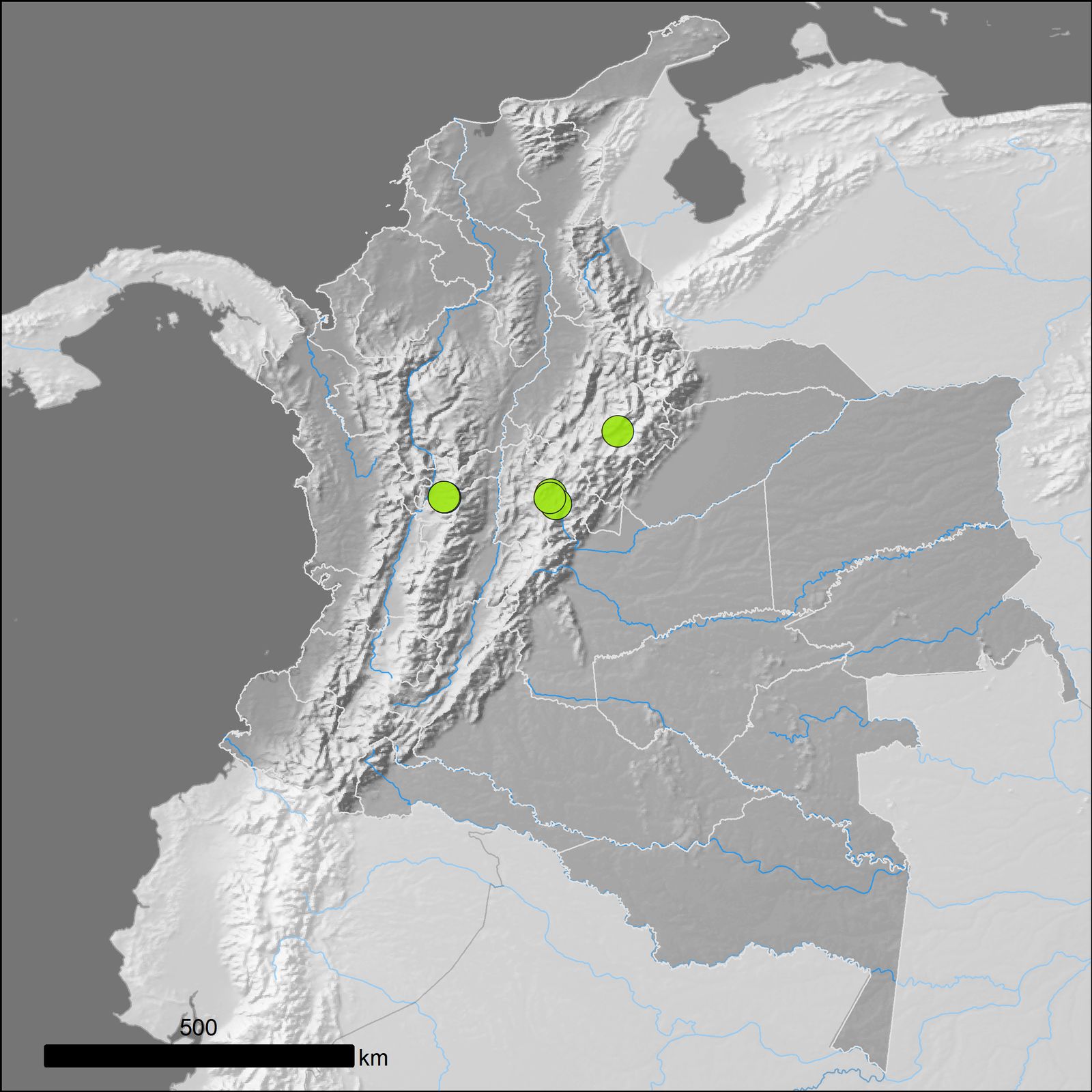
The native range of Acanthus mollis covers the western Mediterranean, from southern Spain, France and Italy to Croatia and Montenegro, with populations in Morocco, Algeria and Tunisia. It is naturalized in Greece and Great Britain and widely cultivated beyond its native range. New Zealand monitors it as an environmental weed.
- Native7
- Introduced2
- Invasive1
- Morocco
- Algeria
- Tunisia
- Spain
- France
- Italy
- Croatia
- Greece
- United Kingdom
- New Zealand
Hexagons: regions where the plant occurs. Green dots: native range.1
Identity
Bear's breeches (Acanthus mollis L., 1753) is a Mediterranean perennial in the Acanthaceae. Its broad, glossy, lobed leaf blades are spineless, unlike those of Acanthus spinosus, whose lobes end in stiff points. POWO and IPNI trace both species to Linnaeus's 1753 publication, providing a clear botanical distinction between these superficially similar acanthuses. 1 2
The epithet mollis means soft or smooth, a useful description of the unarmed foliage. Tela Botanica confirms Acanthus mollis as the reference scientific name in the Acanthaceae. The soft leaf blade contrasts with the sharply pointed foliage of Acanthus spinosus, even though both species bear prickly floral structures. 7
The common name bear's breech, also used in the plural, belongs to a different reading of the foliage. In several European languages the leaf lobes have been compared to a bear's paw. No single precise origin of the English name is universally agreed, so that comparison is best treated as an interpretation. 5
Recognition
Broad rosettes of dark green, glossy, deeply lobed leaves give this vigorous perennial its architectural shape. RHS describes upright flower spikes, often 1–1.5 m (3.3–5 ft) tall, carrying white flowers with prickly purple bracts in late spring and summer. The leaves are unarmed; the flower spikes require more careful handling. 4
A white lower lip, veined pink-purple and 3.5–5 cm (1.4–2 in) long, dominates each flower. Above it, the often violet-tinged upper calyx forms a helmet over the corolla. Only a bee strong enough to push the floral parts apart can reach the nectar deep inside; the violet carpenter bee (Xylocopa violacea) is among those able to do so. 9
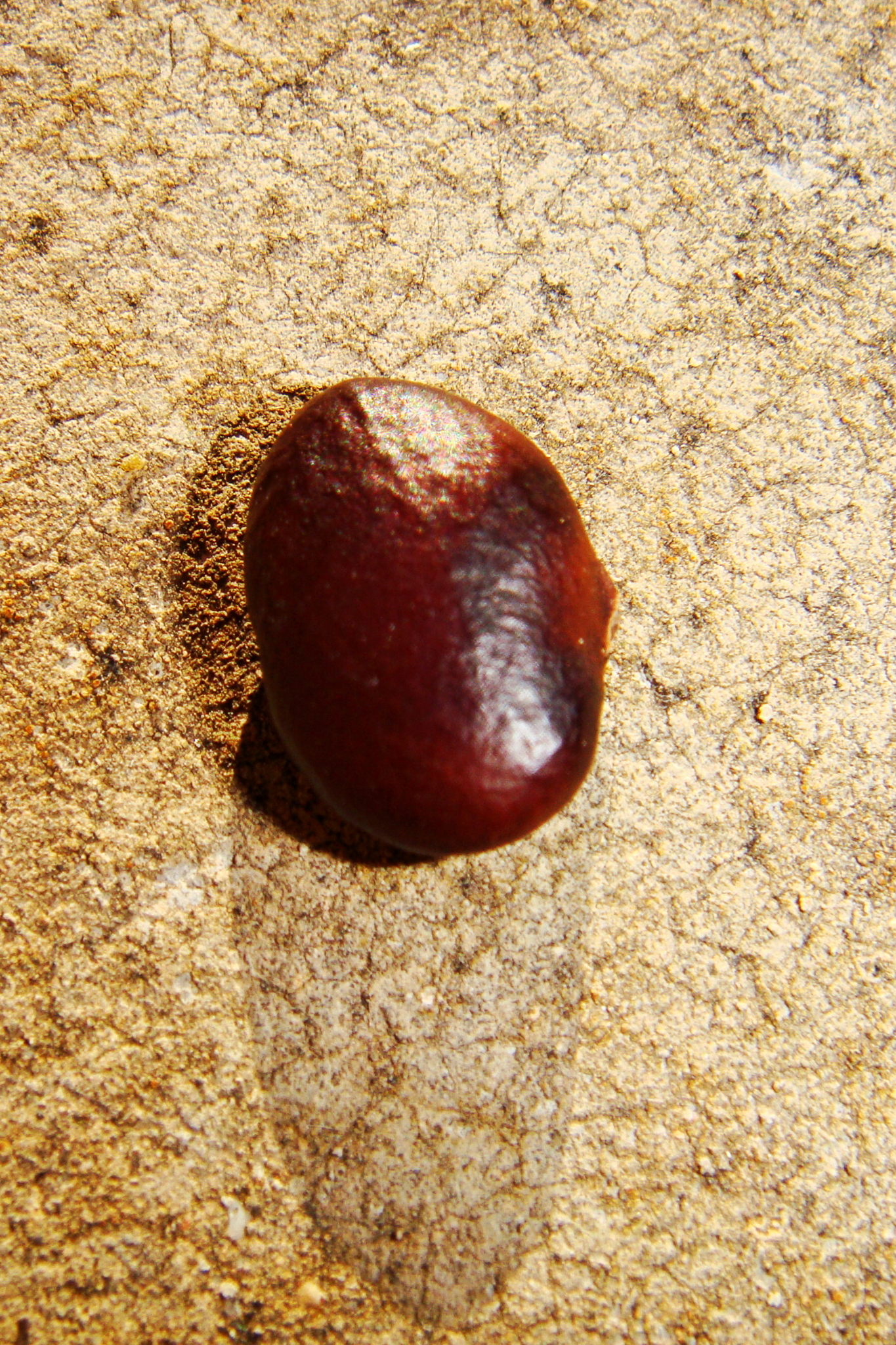
Leathery capsules 2–3.5 cm (0.8–1.4 in) long release two to four large brown seeds when ripe. Thick, fleshy roots hold reserves that allow an entire clump to regrow from a fragment left in the soil. This ability explains both the plant's resilience and the difficulty of removing it from a border once established. 9 4
Semi-evergreen foliage persists almost year-round in mild climates, according to Missouri Botanical Garden, but dies back when winter temperatures fall below about −6 °C (21 °F). Plants For A Future describes bisexual, bee-pollinated flowers and tolerance of soils ranging from light to heavy clay, provided drainage remains good. Winter leaf retention therefore depends on local conditions. 5 6
Useful taxonomy
Within the accepted species Acanthus mollis L., botanical references recognize two geographically distinct subspecies. Acanthus mollis subsp. mollis is the widespread southern European form, while Acanthus mollis subsp. platyphyllus belongs to the Maghreb. These names describe botanical divisions of the species, rather than nursery cultivars selected for leaf color or flowering. 1 3
Older labels and horticultural databases may use several scientific synonyms:
- Acanthus latifolius E.Goeze, a historical synonym
- Acanthus longifolius Poir., a historical synonym
- Acanthus niger Mill., a historical synonym
- Acanthus hispanicus Loudon, a historical synonym
- Acanthus spinosissimus Host, an illegitimate name
Nursery cultivar 'Latifolius' reuses one of those former species names, Acanthus latifolius E.Goeze. In its current horticultural sense it identifies a broader-leaved form, rather than a separate accepted species. Distinguishing a cultivar label from a historical botanical synonym helps when comparing old records with modern nursery catalogs. 4 1
Habitat and range
Western Mediterranean populations extend from southern Spain, France and Italy to Croatia and Montenegro, with further native populations in the Maghreb. RHS summarizes the range more broadly as southern Europe to northwestern Africa. This Mediterranean origin helps explain the plant's familiar place in dry gardens beyond its natural distribution. 4 7
Introduced ornamental populations have naturalized in Greece and established in Great Britain, particularly Cornwall. In New Zealand, cultivation is recorded from 1958. There it appears among the 386 environmental weeds listed by the Department of Conservation in 2024, illustrating how a familiar garden perennial can become a concern outside its native range. 6 8
Within mainland France, bear's breeches is native and grows wild in Mediterranean scrub, open woodland edges and along paths up to about 300 m (985 ft). It also characterizes some Mediterranean riparian elm woodlands. These records describe its French habitat; they do not make every population elsewhere in the world native. 9
Uses and risks
Architectural foliage for shady or partly shaded borders, cut flower spikes and dry Mediterranean gardens are its main ornamental uses. RHS warns that bear's breeches can become a nuisance when poorly controlled. Root fragments left after digging can regenerate, making the original planting position an important decision even where the plant is not a regulated weed. 4
Serious toxicity after ingestion is not documented, and Plants For A Future lists no known hazards. Its food-use rating is nevertheless zero: this is not an edible plant. Dioscorides and Galen described acanthus-leaf poultices for burns and sprains. In the sixteenth century Leonhart Fuchs recommended it for consumption, the historical disease term for tuberculosis, while an Italian tradition associated it with tarantula bites. These are historical accounts rather than current treatment advice. 6 9
Hot, dry summer weather favors powdery mildew, the common disease noted by RHS. Otherwise the foliage is fairly resistant to disease. Missouri Botanical Garden identifies slugs and snails as frequent visitors to tender spring growth, so damaged young leaves and white powder on mature foliage have different likely explanations. 4 5
Varieties, look-alikes and related plants
Among the cultivars listed by RHS, 'Latifolius' is a broader-leaved, hardier form and the most widely sold nursery selection. 'Niger' has dark flower stems, 'Hollard's Gold' has golden foliage, and 'Tasmanian Angel' has creamy white variegation. These cultivated differences alter the display without changing the species' ability to spread from roots. 4
Prickly leaf blades distinguish Acanthus spinosus from the soft, spineless foliage of Acanthus mollis. Another nursery look-alike, Acanthus hungaricus, is more compact and less freely spreading. Looking at the leaf blade rather than the prickly floral bracts helps separate the two best-known Mediterranean species when both are in flower. 5
Stylized acanthus leaves recur throughout classical architecture. An art-historical tradition credits the Greek sculptor Callimachus with taking inspiration from leaves around a votive basket to create the Corinthian capital's ornament. The resulting motif remains visible on many neoclassical buildings, carrying the plant's leaf form far beyond the Mediterranean garden. 9
Main sources
- Plants of the World Online / Kew, Acanthus mollis L.
- International Plant Names Index, Acanthus mollis L.
- GBIF Backbone Taxonomy, Acanthus mollis L.
- Royal Horticultural Society, Acanthus mollis - bear's breech
- Missouri Botanical Garden Plant Finder, Acanthus mollis
- Plants For A Future, Acanthus mollis - Bear's Breeches
- Tela Botanica / eFlore BDTFX, Acanthus mollis
- New Zealand Plant Conservation Network, Acanthus mollis
- Reader file from Wikipedia FR, Acanthus mollis
Frequently asked questions
Is bear's breeches poisonous to cats and dogs?
No serious toxicity following ingestion is documented. Plants For A Future lists no known hazards.
Why is bear's breeches taking over my border?
A root fragment left in the ground can regenerate a new clump. RHS advises against moving established plants for this reason and recommends a container or root barrier.
Why are the leaves covered in white powder?
Powdery mildew is favored by hot, dry weather, especially in late summer. RHS lists it among the most frequent diseases of this species.
Why is my bear's breeches not flowering?
Dense shade can delay or prevent flowering, as can the plant being too young. RHS gives a flowering age of two to five years, depending on conditions.
How is acanthus linked to Greek architecture?
The stylized acanthus leaf inspired the ornament of the Corinthian capital, a motif still visible in classical and neoclassical architecture.
How can I tell Acanthus mollis from Acanthus spinosus?
The leaf blade is the simplest clue. Acanthus mollis has spineless leaves, while Acanthus spinosus is distinctly prickly along the full length of the blade.
Is bear's breeches edible?
No. Plants For A Future gives it a food-use rating of zero. Only traditional external uses, as a poultice, are reported.
Similar plants
If you are unsure about a plant’s toxicity, ask a botanist or veterinarian for advice.