
Horse-chestnut (Aesculus hippocastanum, )
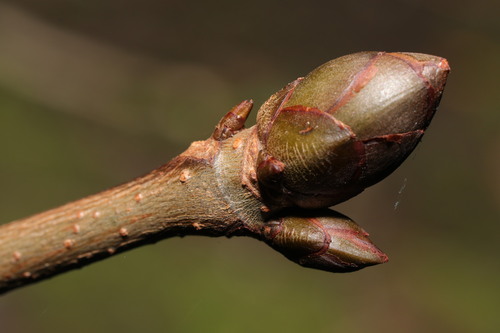
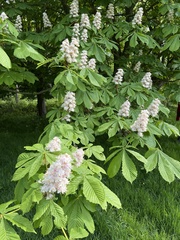
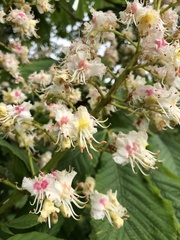
Horse-chestnut (Aesculus hippocastanum) is a large deciduous tree in the Sapindaceae, native to a few mountain ranges in the Balkans. Its palmate leaves have 5–7 leaflets, upright clusters of white flowers appear in spring, and its spiny fruit capsules contain seeds toxic to domestic animals.
Read moreHorse-chestnut, Horse chestnut and Common horse chestnut


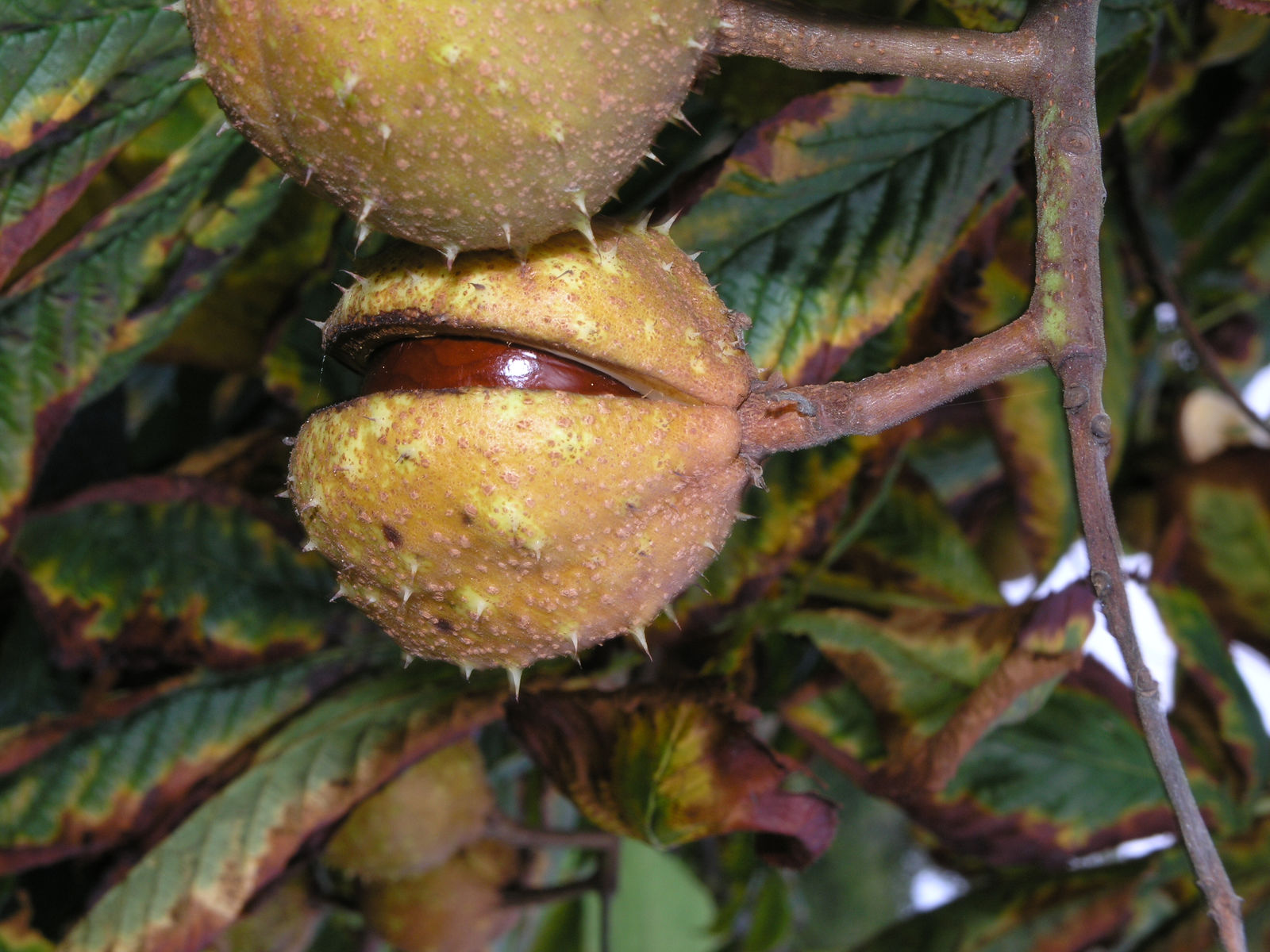
© photo
Stephen James McWilliam · cc0
Charles Joynson · cc0
iNaturalist User · cc0
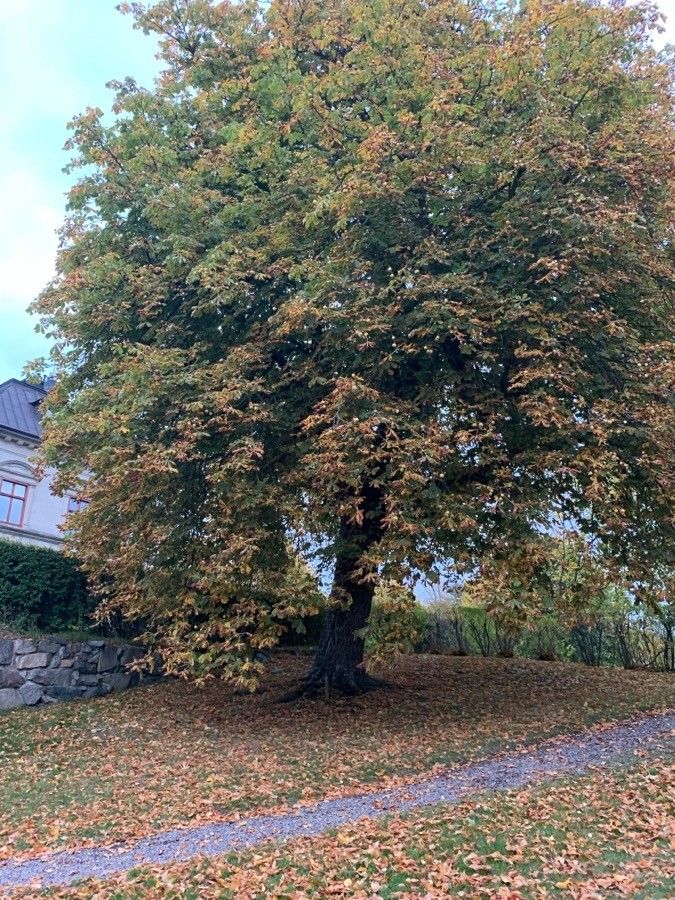
Taken Jun 5, 2022 by Andrzej Konstantynowicz (cc-by-sa)
Taken Aug 2, 2022 by Dominik Muczyński (cc-by-sa)
Taken Sep 14, 2022 by Fabrice Rubio (cc-by-sa)
Taken Apr 29, 2019 by Pep Secem (cc-by-sa)
© copyright of the Board of Trustees of the Royal Botanic Gardens, Kew.




Global distribution
The strictly native range of Aesculus hippocastanum is confined to a few Balkan mountain ranges in Bulgaria, Albania, northern Greece and North Macedonia, with small, scattered natural populations. Introduced to central Europe during the Renaissance, it is now widely cultivated beyond that range; native and planted occurrences are distinct.
- Native4
- Introduced2
- Bulgaria
- Albania
- Greece
- North Macedonia
- Austria
- United States
Hexagons: regions where the plant occurs. Green dots: native range.1
Identity
Horse-chestnut (Aesculus hippocastanum L., 1753), also called Common horse chestnut, is a large deciduous Aesculus in the Sapindaceae. This family also includes maples following the merger of the former Hippocastanaceae and Aceraceae. Its French name “marronnier d'Inde” does not indicate Indian origin: it reflects an old geographical misunderstanding when the tree was unfamiliar to Europeans. 1 5
The epithet hippocastanum, literally horse chestnut, recalls the historical use of crushed seeds for horses with coughs and shortness of breath. Its seeds resemble those of sweet chestnut (Castanea sativa), despite the trees belonging to different families, Sapindaceae and Fagaceae. Aesculin makes raw Horse-chestnut seeds unsuitable for human consumption, unlike sweet chestnuts, which are eaten roasted. 7 6
Recognition
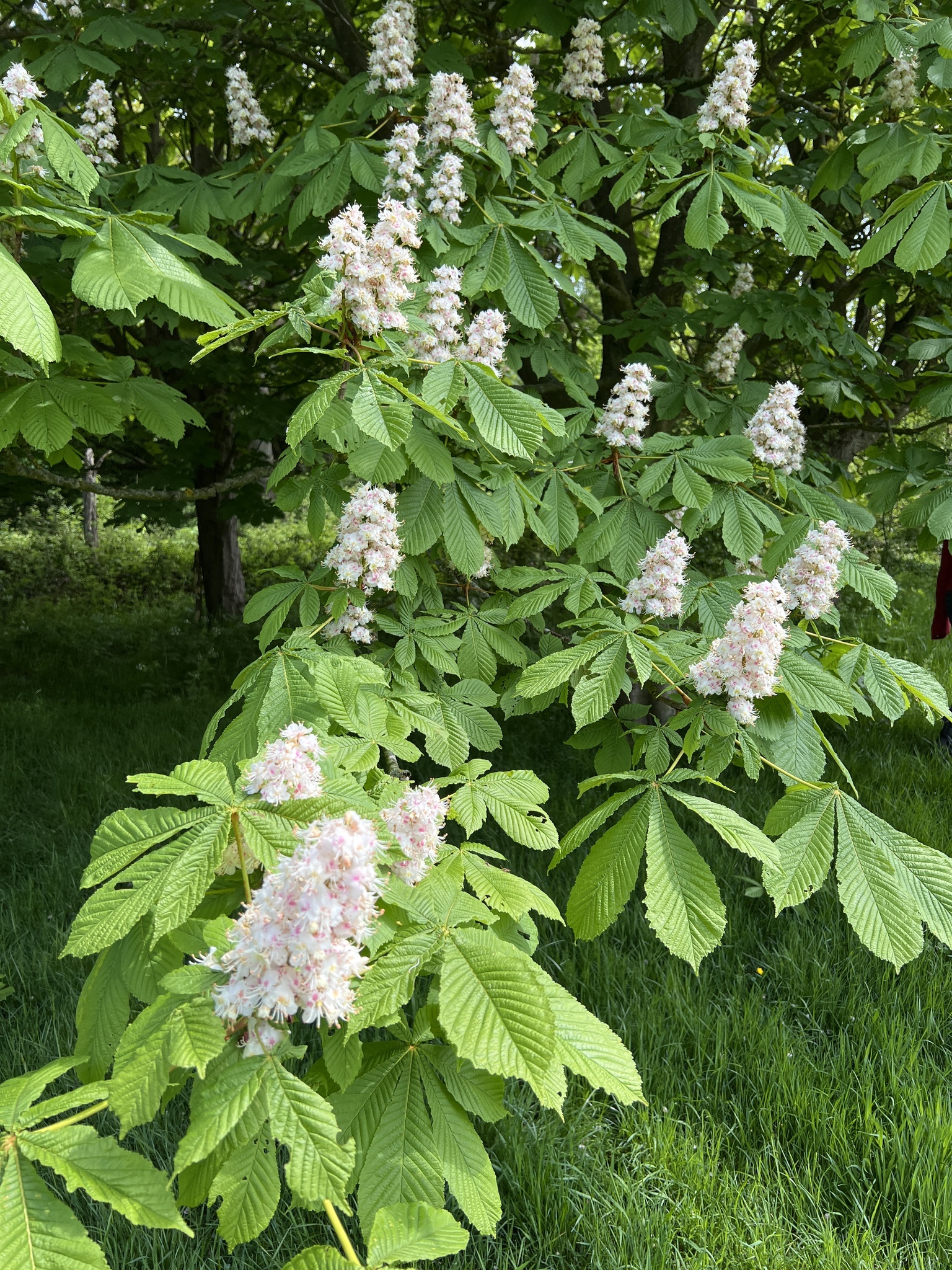
A broad, rounded crown tops this imposing tree, commonly 20–30 m (66–98 ft) tall, with exceptional specimens reported near 39 m (128 ft). Each palmate compound leaf has 5–7 stalkless leaflets. Sweet chestnut has simple, toothed leaves that never divide into leaflets, so this outline often separates the trees even at a distance. 2 3
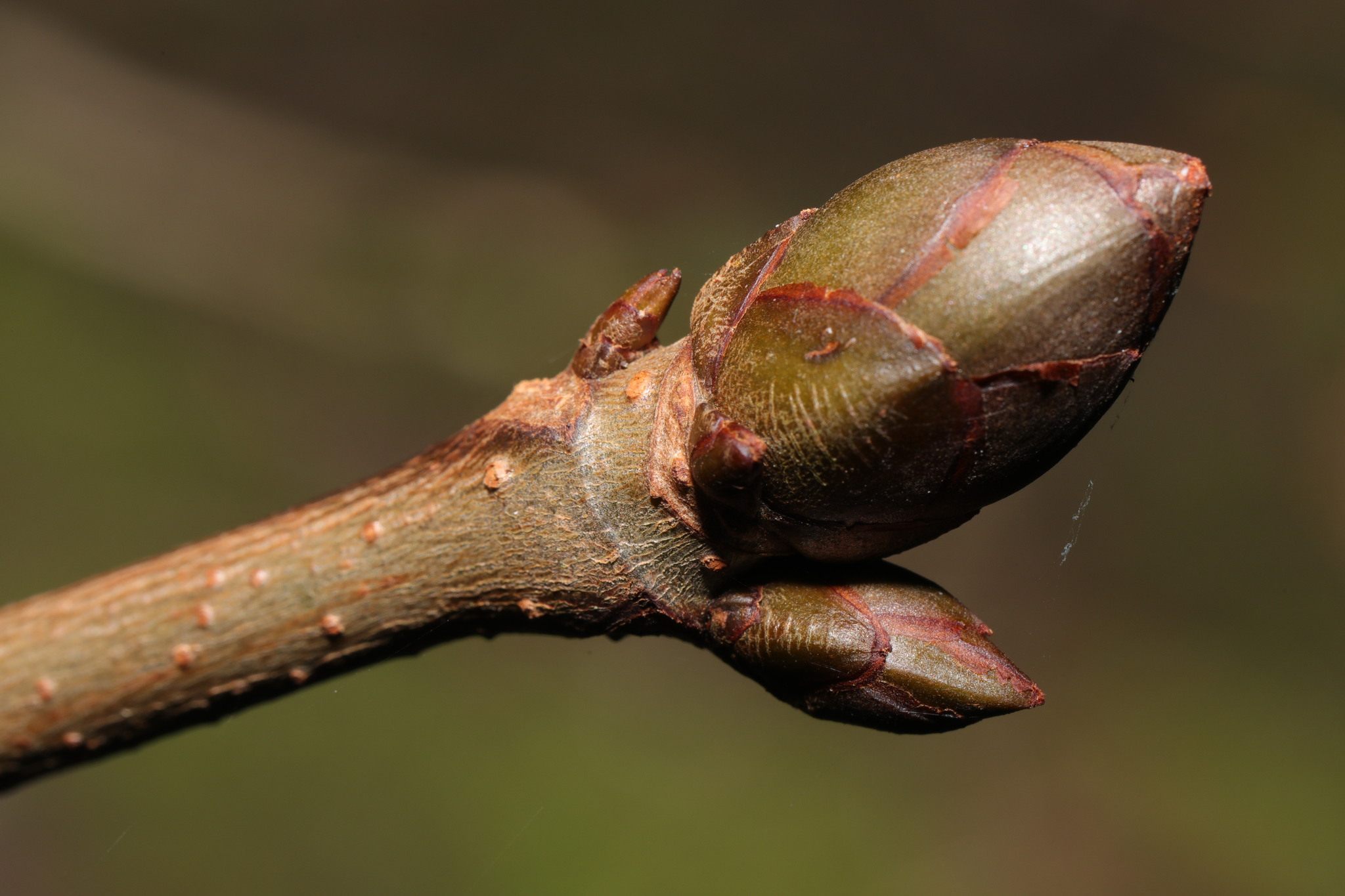
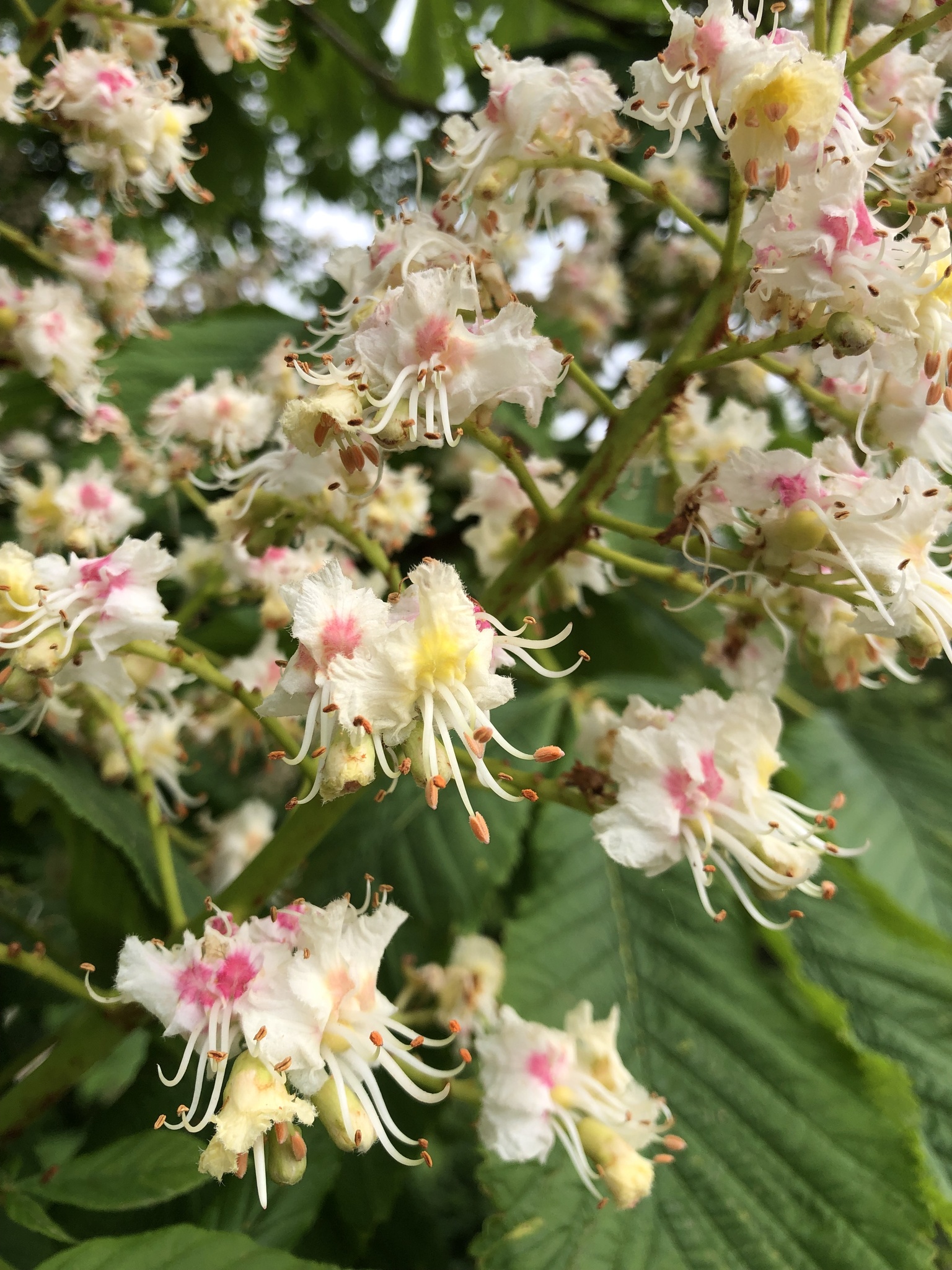
Winter buds remain sticky and glossy, a reliable clue before the leaves open. Spring flowers are white, marked yellow and then red as they age. They form conspicuous upright thyrses above the foliage, reaching or exceeding 20–30 cm (8–12 in) on well-exposed trees. 2 7
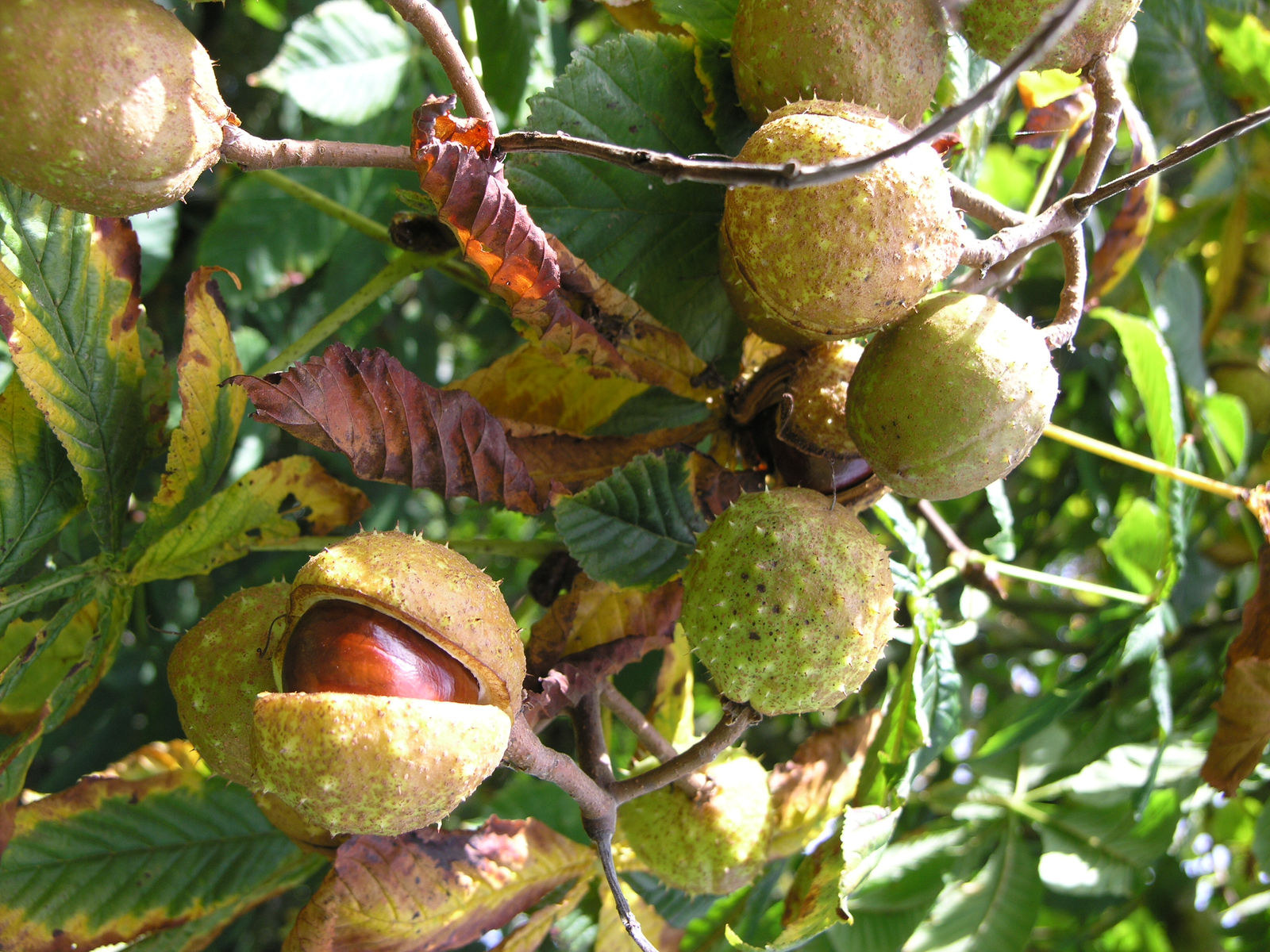
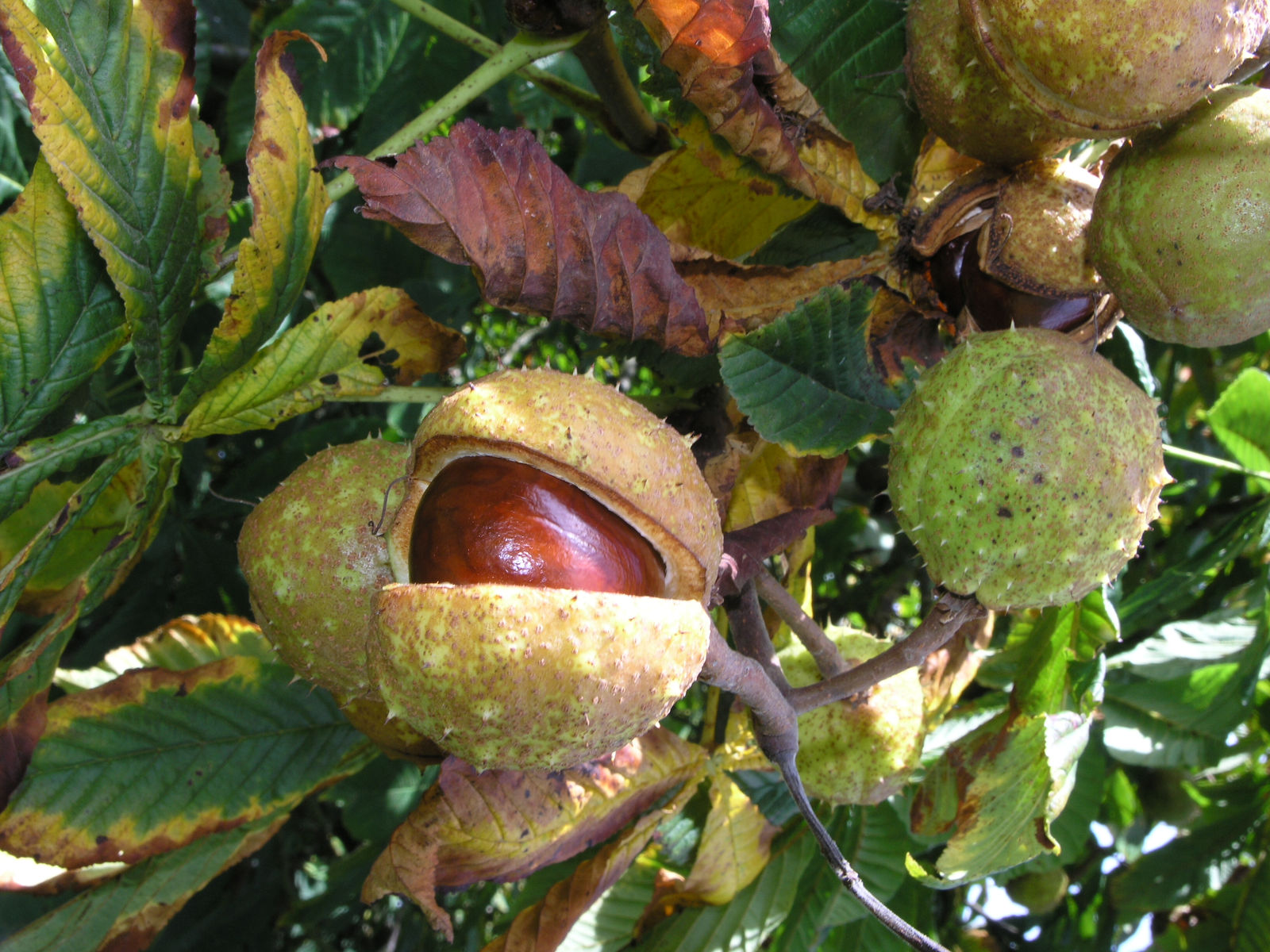
A green, spiny capsule 4–6 cm (1.6–2.4 in) across splits into three valves at maturity, releasing one to three glossy brown seeds, commonly called conkers. The gray-brown bark flakes in irregular plates on older trees. 3
Useful taxonomy
Linnaeus described Aesculus hippocastanum in 1753 in Species Plantarum, the work that still underpins botanical nomenclature. Aesculus now belongs to the Sapindaceae subfamily Hippocastanoideae, after a long period in the former family Hippocastanaceae. 1 5
Historical and horticultural names associated with the species should be distinguished from the accepted name:
- Hippocastanum vulgare Gaertn. (historical synonym)
- Pawia hippocastanum (L.) Kuntze
- Aesculus procera Salisb.
- Aesculus asplenifolia Loudon
- Aesculus hippocastanum var. umbraculifera H.Jaeger
- Aesculus hippocastanum f. baumannii C.K.Schneid.
The accepted scientific name, Aesculus hippocastanum, remains the stable reference. Horticultural varieties such as Baumannii and Umbraculifera are grafted selections of the same taxon, rather than separate species. 1 2
Habitat and range
Only a few mountain ranges in the Balkans form the strictly native range: Bulgaria, Albania, northern Greece and North Macedonia. Small, scattered natural populations often grow in moist forested ravines. 8 7
Renaissance introductions to central Europe began the tree's widespread ornamental planting; this was deliberate distribution rather than natural expansion. Horse-chestnut tolerates clay, loam and sand as well as calcareous soils, explaining its urban presence on ground very different from its original habitat. 2 3
Wild populations in Greece, Albania and North Macedonia remain fragmented, some with only a few hundred mature individuals. The species is classified as vulnerable in its native range. Beyond that range, where trees are mainly planted, the conservation status has a different context. 8
Life cycle and reproduction
Flowering occurs in spring, with timing dependent on climate. Individual flowers measure just 1.5–2.5 cm (0.6–1 in), but their upright thyrses are visible from a distance and attract pollinating insects. 7 6
Autumn brings ripe seeds, which fall inside spiny capsules that split into three valves. In cultivation, sowing after winter cold stratification reproduces the species with single, fertile flowers. Sterile Baumannii cannot produce viable seedlings: grafting is needed to preserve its double flowers faithfully. 6 2
Geneva has used a Horse-chestnut on the Promenade de la Treille as an official phenological marker since 1818. Each year, the Grand Council secretariat records its first opening leaf, traditionally marking the city's beginning of spring. 9
Uses and risks
Shade and showy flowers explain its main ornamental role as a specimen, avenue or park tree. Seed extracts rich in aescin are traditionally used in herbal medicine for venous insufficiency and heavy-feeling legs. 6 7
Raw seeds, young shoots and bark contain aesculin and saponins that cause digestive upset in dogs, cats and horses after ingestion. Unlike sweet chestnuts, Horse-chestnut seeds are not edible raw for humans. 4 6
Urban trees may suffer early browning from midsummer as horse-chestnut leaf miner (Cameraria ohridella) larvae tunnel through the leaf blades, without killing the tree. Bacterial canker caused by a Pseudomonas bacterium weakens already stressed trees more severely and is the more serious of these two threats. 2 3
Varieties, look-alikes and related plants
Horticultural selections meet different needs. Sterile, double-flowered Baumannii produces no capsules, reducing cleanup of fallen fruit along city streets. Umbraculifera has a dwarf, rounded crown, while Memmingeri has irregularly white-marbled leaves. 2
Sweet chestnut (Castanea sativa), in the Fagaceae, is the commonest source of confusion. Horse-chestnut's palmate compound leaf differs clearly from sweet chestnut's simple toothed blade, even at a distance. Fruits also differ: the Horse-chestnut capsule, 4–6 cm (1.6–2.4 in) across, has short, widely spaced spines, while sweet chestnut has a densely prickly burr. A related garden hybrid, Aesculus × carnea, resulting from a cross with a North American relative, has pink to red flowers. 3 5
Main sources
- Plants of the World Online / Kew, Aesculus hippocastanum L.
- Royal Horticultural Society, Aesculus hippocastanum - horse chestnut
- Missouri Botanical Garden, Aesculus hippocastanum
- ASPCA, Horse Chestnut toxicity entry
- INPN / MNHN, Aesculus hippocastanum L., 1753 (cd_nom 80334)
- Plants For A Future, Aesculus hippocastanum
- Trees and Shrubs Online, Aesculus hippocastanum
- IUCN, European Red List of Trees - Aesculus hippocastanum assessment
- SWI swissinfo.ch, Spring begins in Geneva when the official horse chestnut tree blossoms
Frequently asked questions
Is Horse-chestnut a true chestnut?
No. Horse-chestnut belongs to the Sapindaceae, while sweet chestnut (Castanea sativa) belongs to the Fagaceae. Their seeds look similar, but Horse-chestnut has palmate compound leaves and sweet chestnut has simple, toothed leaves.
Are Horse-chestnut seeds poisonous?
Yes, to dogs, cats and horses. Raw seeds contain aesculin and saponins that cause digestive upset if swallowed. Unlike sweet chestnuts, Horse-chestnut seeds are not edible raw for humans.
Why do Horse-chestnut leaves turn brown in summer?
The most frequent cause is the horse-chestnut leaf miner (Cameraria ohridella), whose caterpillars tunnel inside the leaf blades, causing early browning without killing the tree. A dry summer on compacted soil can cause similar symptoms.
What is Horse-chestnut extract used for in herbal medicine?
Seed extract, rich in aescin, is traditionally used for venous insufficiency and heavy-feeling legs. This refers to a standardized extract, not to eating the raw seed.
Where does Horse-chestnut really come from?
Its native range is limited to a few Balkan mountain ranges. It was introduced to central Europe during the Renaissance and owes its widespread presence to intensive ornamental planting, rather than natural expansion.
Why do some Horse-chestnut trees produce no fruit?
Double-flowered cultivars such as Baumannii are sterile and never form spiny capsules. They are deliberately chosen for urban street plantings where fallen fruit creates maintenance work.
Is Horse-chestnut threatened?
In its native Balkan range, the species is classified as vulnerable, with small, fragmented wild populations. That conservation status does not apply in the same way beyond its native range, where the tree is mainly planted.
Similar plants
If you are unsure about a plant’s toxicity, ask a botanist or veterinarian for advice.