
Common agrimony (Agrimonia eupatoria, )
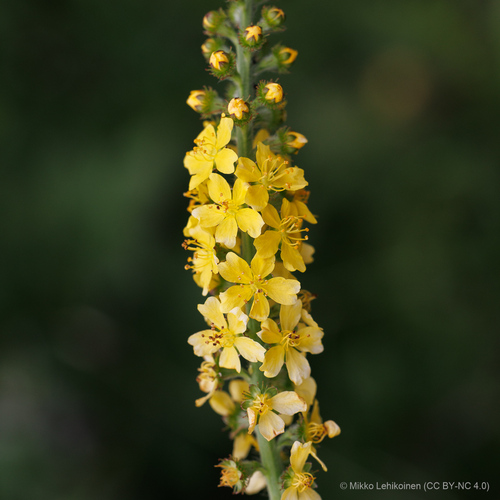
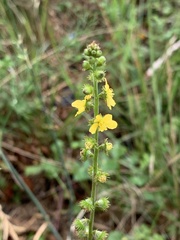
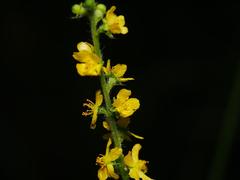
Common agrimony (Agrimonia eupatoria) is an herbaceous perennial in the Rosaceae, native to Europe, North Africa and western Asia as far as Afghanistan. Long upright spikes of small yellow flowers in summer are followed by hooked fruits that cling to clothing and animal fur. Traditionally used as an astringent medicinal herb, it grows in meadows, hedges and banks on calcareous soils.
Read moreCommon agrimony, Agrimony, Churchsteeples, Sticklewort and Medicinal agrimony



© photo
(c) Mikko Lehikoinen, some rights reserved (CC BY-NC), uploaded by Mikko Lehikoinen · cc-by-nc
Martin Genner · cc0
Alexis Tinker-Tsavalas · cc-by
Taken Aug 1, 2021 by Alexander Pappas (cc-by-sa)
Taken Jul 5, 2020 by Giode Tonpino (cc-by-sa)
Taken Aug 16, 2021 by El Mojito (cc-by-sa)
Taken Sep 3, 2019 by Pietro Brignoli (cc-by-sa)
© copyright of the Board of Trustees of the Royal Botanic Gardens, Kew.




Global distribution
The native range of Agrimonia eupatoria covers Europe, North Africa and Macaronesia, extending east through western Asia to Afghanistan. It remains widespread within this range, without a notable invasive status elsewhere.
- Native8
- France
- United Kingdom
- Germany
- Spain
- Morocco
- Madeira
- Turkey
- Afghanistan
Hexagons: regions where the plant occurs. Green dots: native range.1
Identity
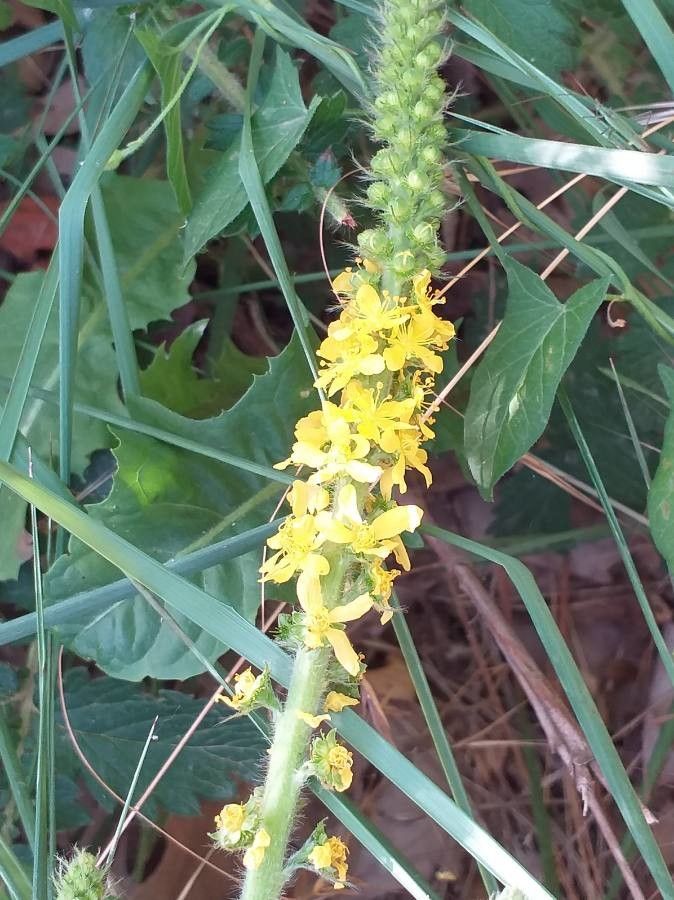
Common agrimony (Agrimonia eupatoria L., 1753) stands out at a distance through its upright yellow flower spike, 30–80 cm (12–31 in) tall and sometimes reaching 1 m (3.3 ft). Hooked fruits follow the flowers and cling to clothes and animal fur, a distinctive combination among French meadow Rosaceae. This herbaceous perennial belongs to the genus Agrimonia in the Rosaceae family and is also known as agrimony and churchsteeples. 5 1
The epithet eupatoria comes from the Greek eupatorios, mentioned by Dioscorides in connection with King Mithridates VI Eupator, renowned for his knowledge of medicines. The French name aigremoine arose through medieval confusion between argemone, another medicinal plant, and agrimonia. Copyists mixed the two names between translations, and usage eventually preserved that confusion. 5
Roughly 12–15 species of herbaceous perennials make up Agrimonia, sharing yellow flower spikes and pinnate leaves with smaller leaflets between the larger ones. Common agrimony is the most widespread European species and has been cultivated and gathered since antiquity for its astringent properties. 6
Recognition
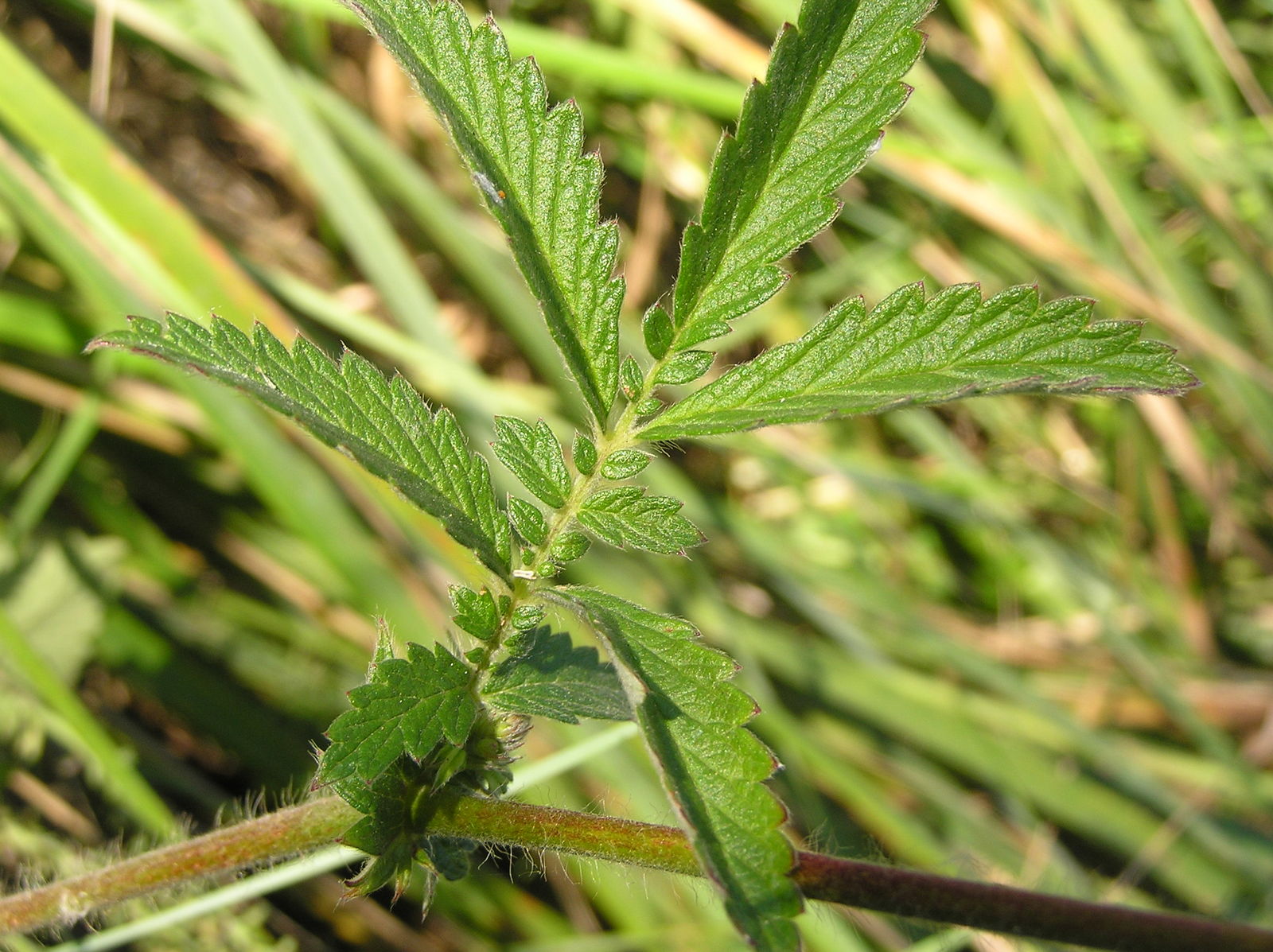
Hairy, often reddish stems rise without branching to 30–80 cm (12–31 in), occasionally 1 m (3.3 ft) in favorable conditions. Alternate, pinnately compound leaves combine large toothed oval leaflets with small intervening ones. Their whitish, hairy undersides contrast with the dark green upper surface, providing a useful identification feature even when no flowers are present. 2 5
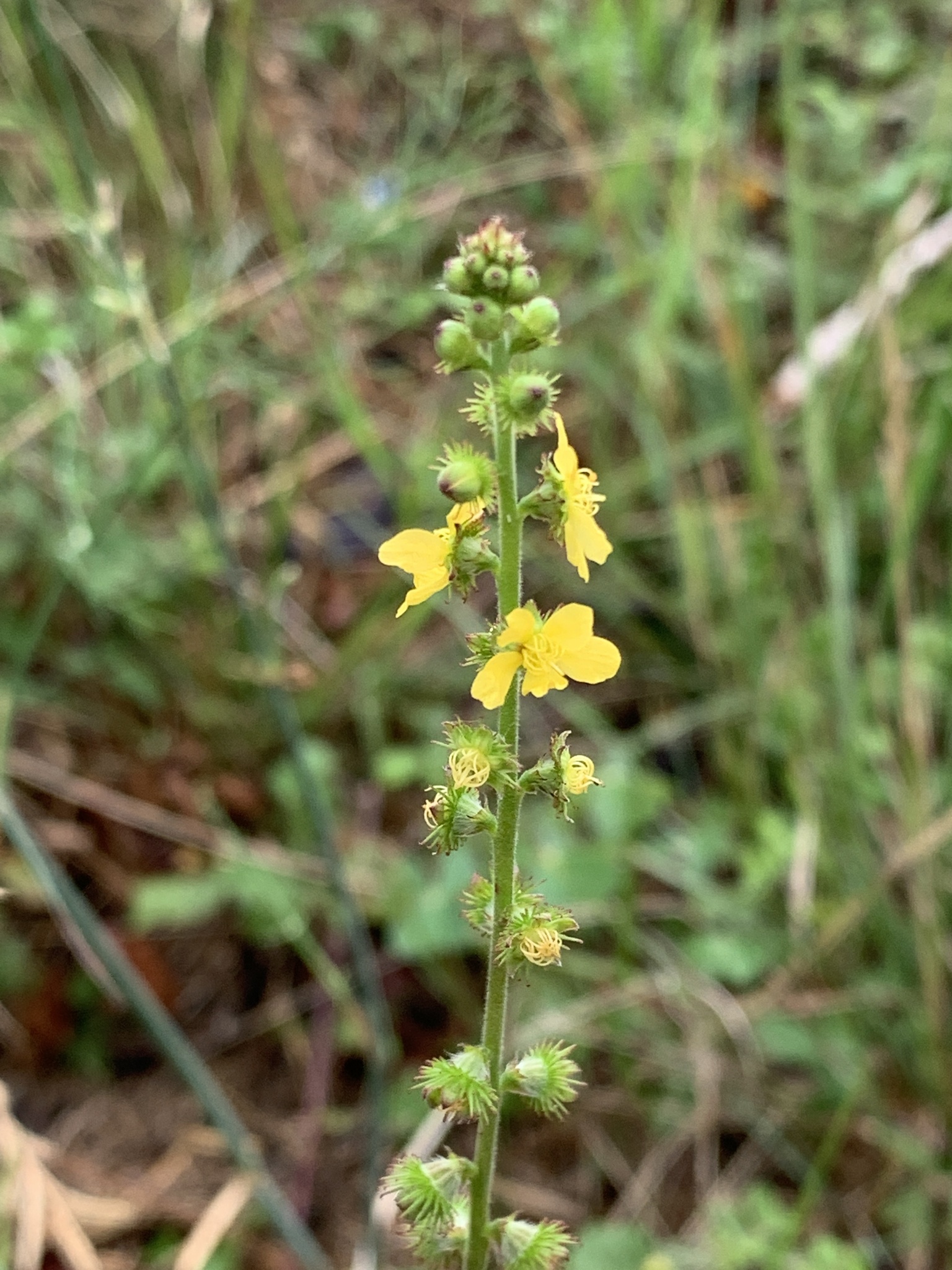
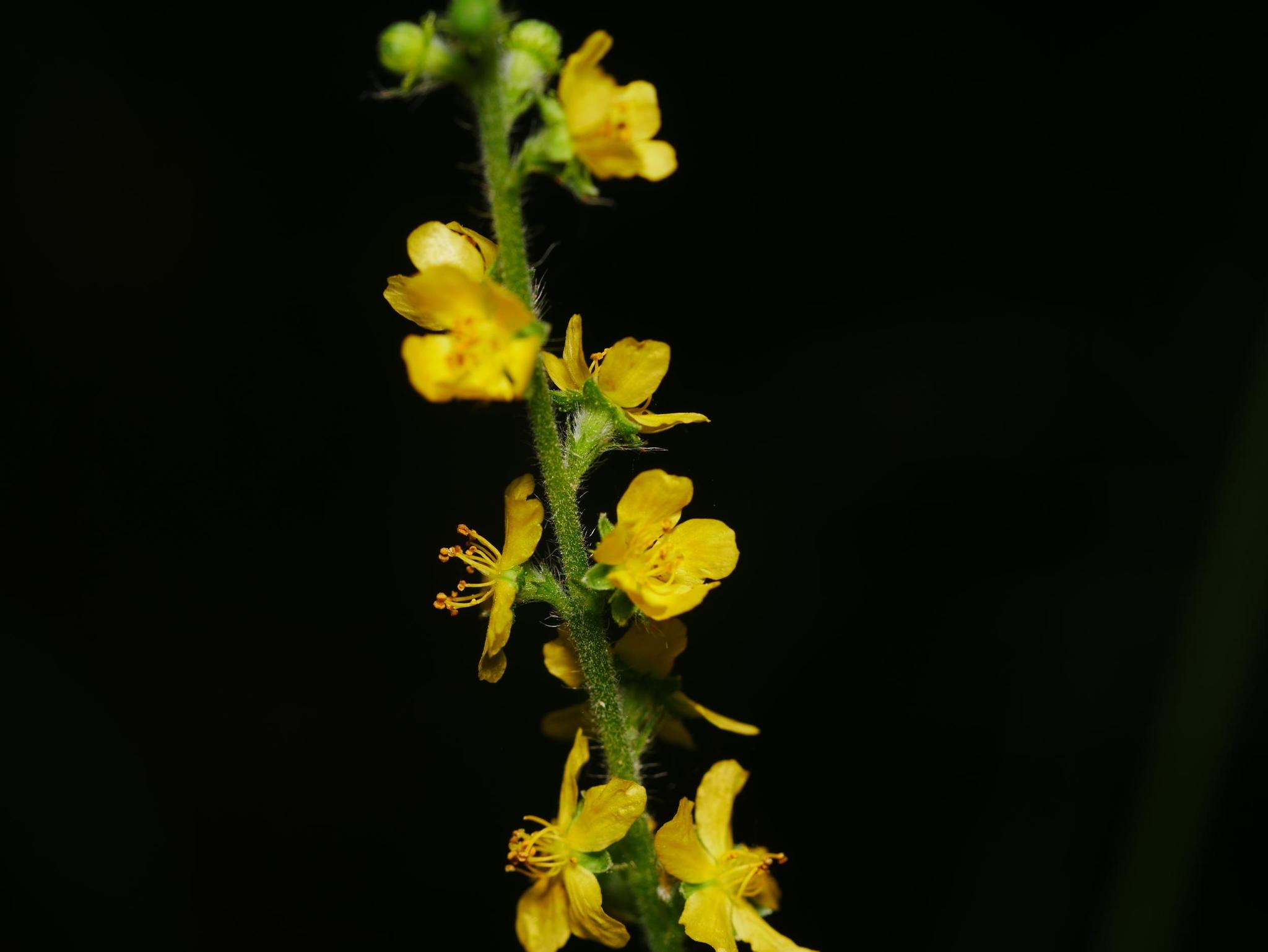
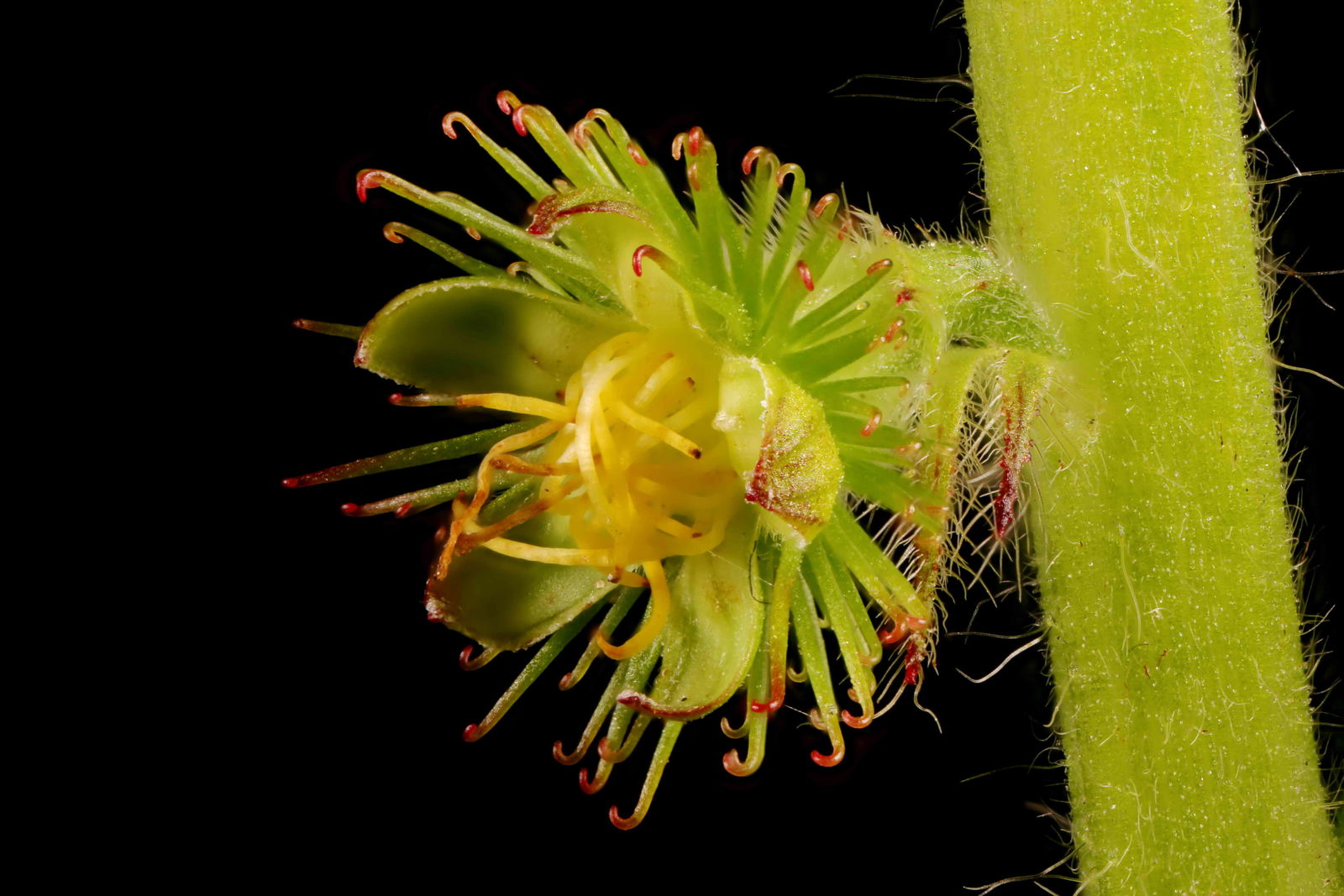
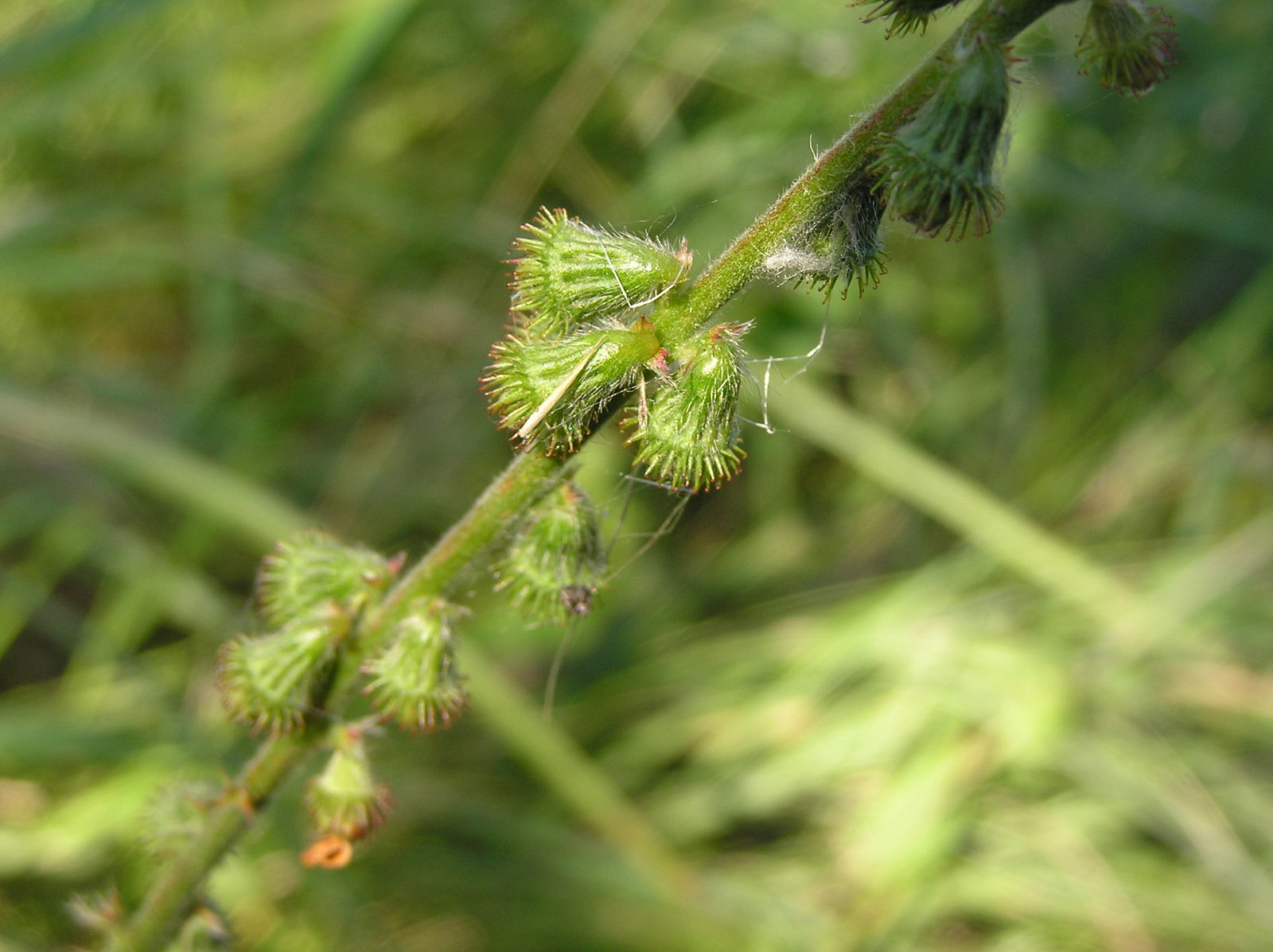
During summer and early fall, a long upright terminal spike carries small yellow flowers 12–13 mm (about 0.5 in) across, each with five petals and around ten stamens. Lower flowers open before those at the tip, so buds, open flowers and young fruits often share one spike. The resulting top-shaped fruits are ridged and covered in curved hooks. This mechanism of dispersal on animals, called epizoochory, transports the seeds much farther than a simple fall beneath the parent plant. 6 5
Useful taxonomy
Kew accepts Agrimonia eupatoria L. and recognizes three subspecies: the typical subspecies in Europe and North Africa, subsp. asiatica in western and central Asia, and subsp. grandis in the Canary Islands. Several historical varieties remain lower-rank synonyms rather than distinct taxa. 1 5
- Agrimonia eupatoria var. major Boiss. (historical varietal name)
- Agrimonia eupatoria subsp. grandis (Asch. & Graebn.) Bornm. (Canary Islands subspecies)
- Agrimonia eupatoria subsp. asiatica (Juz.) Skalický (Asian subspecies)
Across languages, the accepted scientific name provides a consistent reference. English churchsteeples and agrimony, German Odermennig and Slovak repík lekársky all refer to Agrimonia eupatoria, despite their very different everyday names. 1
Habitat and range
Macaronesia, including the Canary Islands and Madeira, forms the western end of a native range spanning Europe and North Africa and extending through western Asia to Afghanistan. 1 8
Throughout France and its wider native range, common agrimony occupies lean meadows, cool woodland edges, hedges and banks on basic soils, in lowlands and uplands. It favors relatively young meadows, often established for less than 50 years, making it a useful indicator of extensive rather than intensive agricultural management. 6 2
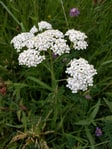
Winter waterlogging encourages rhizome rot, its main cultivation problem. Well-drained calcareous soil suits it even when poor and stony. Too much nitrogen makes flower spikes fall in rain or strong wind; competitive grasses also gain an advantage in enriched ground. A mature clump spreads 30–50 cm (12–20 in) and grows well beside Achillea millefolium or Origanum vulgare, which share its preference for calcareous, freely draining soil.
Life cycle and reproduction
Flowering lasts through summer into early fall, depending on climate, with seed ripening toward the end of summer and early fall. A thickened perennial rhizome renews growth each spring after the winter loss of foliage. Fall-sown plants remain without flowers for a year or two: the rhizome takes 2–3 years to develop enough to support its first spike. Hardy to about −20 °C (−4 °F), in USDA zones 4–9, it withstands severe winters without special protection, while waterlogged soil is a greater danger than frost alone. 2
Hooked fruits travel on animal fur or clothing before falling away from the parent. Seed germination is irregular, taking 2–6 weeks at about 13 °C (55 °F). Dividing established clumps late in the growing season therefore gives a faster, more reliable result than sowing seed. 2
Uses and risks
Traditional herbal medicine is the principal use of common agrimony. Its flowering tops contain around 5% tannins and are harvested in mid- to late summer, then dried in shade to reduce degradation under direct light. They have long been used in astringent infusions and gargles for mild diarrhea and sore throats. These are traditional applications of the plant. 2 5
Fresh or dried leaves and flowers also make a refreshing tea served hot or cold, known in French as thé des bois. The plant is not listed as toxic to cats, dogs or horses; the available information for horses remains limited. Excessive tannin intake can cause digestive discomfort and temporary constipation in people. 2 3
Historically, agrimony was included in eau d’arquebuse, a remedy applied to gunshot wounds. British folklore also credited a sprig beneath a pillow with keeping a person asleep for a long time, a belief that belongs to its cultural history rather than a demonstrated effect. 6
Varieties, look-alikes and related plants
Two close European relatives are Agrimonia procera, with sticky scented glands beneath the leaflets, and Agrimonia pilosa, found chiefly in Asia and eastern Europe. Leaf undersides distinguish the first from common agrimony in the field: glandular and fragrant in A. procera, they are simply hairy and whitish in A. eupatoria. 6
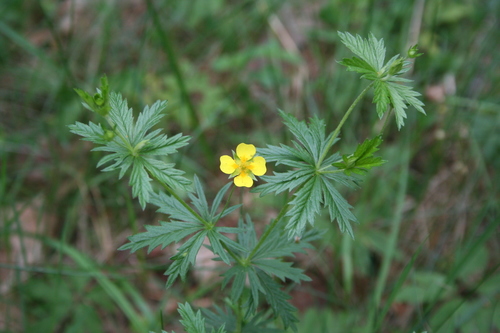
Other meadow Rosaceae can look similar from a distance. Potentilla erecta has palmate leaves quite unlike agrimony’s pinnate foliage. Sanguisorba minor bears rounded reddish flower heads, clearly different from the long yellow spike of common agrimony.
Main sources
- Plants of the World Online / Kew, Agrimonia eupatoria L.
- Plants For A Future, Agrimonia eupatoria
- Tela Botanica / eFlore BDTFX, Agrimonia eupatoria
- INPN / MNHN, Agrimonia eupatoria L. (cd_nom 80410)
- Wikipedia FR, Common agrimony
- Wikipedia EN, Agrimonia eupatoria
- GBIF, Agrimonia eupatoria L.
- USDA GRIN Global, Agrimonia eupatoria L.
Frequently asked questions
Is common agrimony toxic to cats and dogs?
No. Agrimonia eupatoria is not listed as toxic to cats or dogs. Excessive tannin consumption can cause digestive problems and constipation in people.
How can I distinguish common agrimony from fragrant agrimony?
Agrimonia procera has sticky, fragrant glands beneath its leaflets. Agrimonia eupatoria lacks these glands and has simply hairy, whitish leaf undersides.
Can agrimony be used as an herbal tea?
Yes. Dried flowering tops are infused as an astringent tea traditionally used for mild diarrhea and sore throats. Use cautiously during pregnancy.
Where does the name agrimony come from?
The French name arose from medieval confusion between the Greek argemone, another medicinal plant, and agrimonia. The epithet eupatoria honors King Mithridates VI Eupator, mentioned by Dioscorides for his knowledge of medicines.
Why do agrimony seeds cling to clothing?
The fruits bear curved hooks that grip fabric and animal fur. This dispersal mechanism, called epizoochory, carries seeds away from the parent before they detach.
Where does common agrimony grow in France?
It colonizes lean meadows, hedges, banks and woodland edges on calcareous soils in lowlands and uplands across almost all of France.
Is common agrimony threatened?
No. Its broad native range covers Europe, North Africa and western Asia, and it remains common in most suitable meadows and hedges.
Similar plants
If you are unsure about a plant’s toxicity, ask a botanist or veterinarian for advice.