
Chocolate vine (Akebia quinata, )
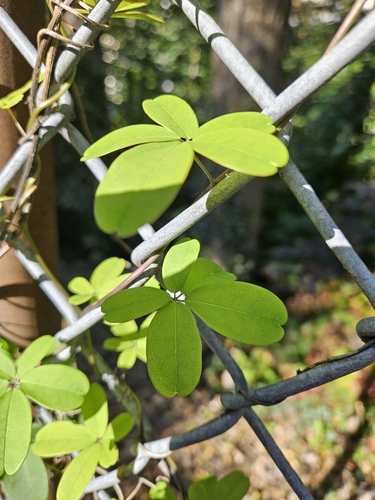
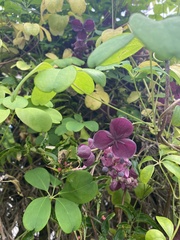
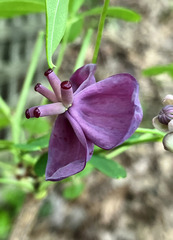
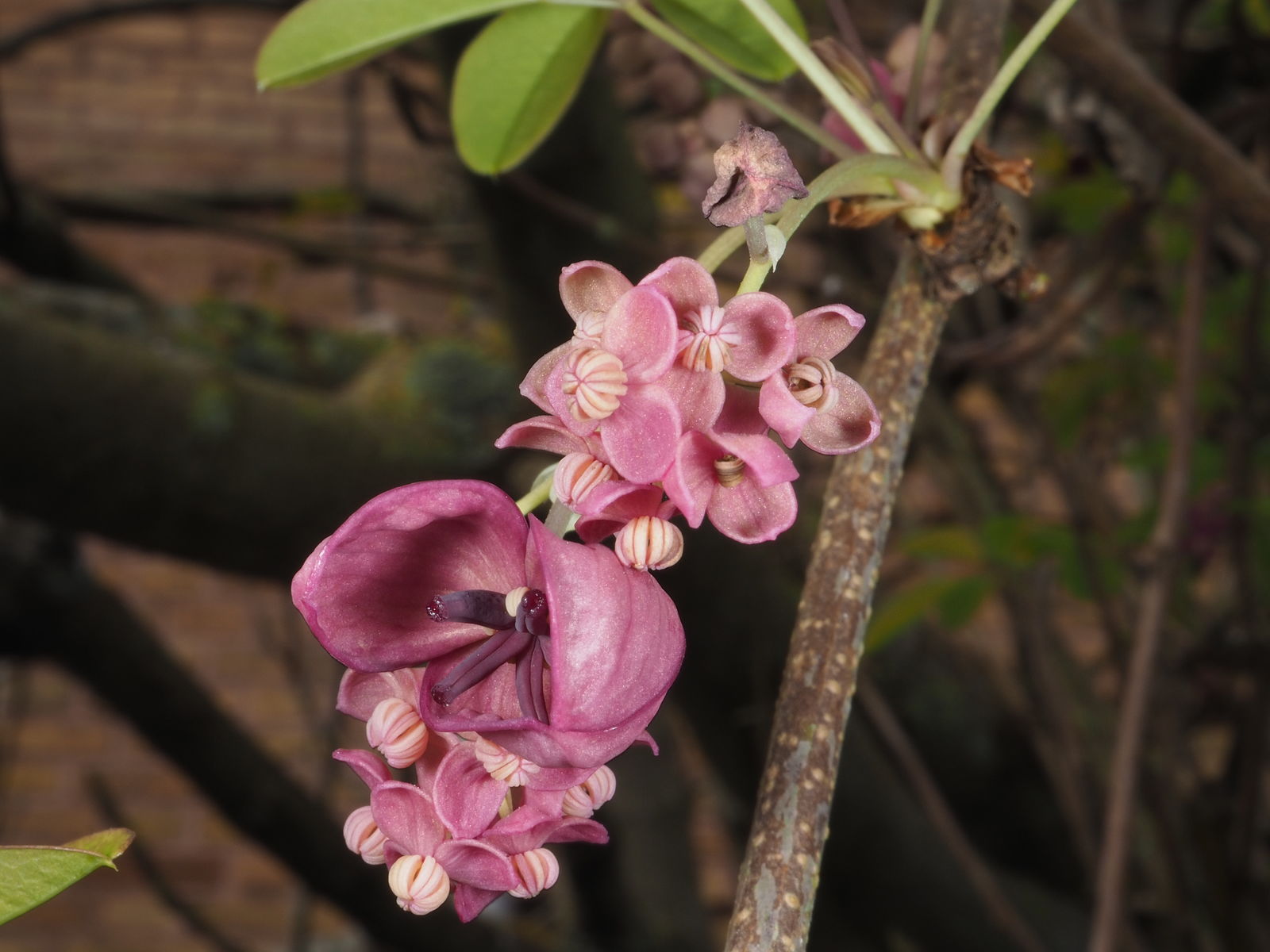
Chocolate vine (Akebia quinata) is a semi-evergreen climber in the Lardizabalaceae, native to temperate forests in China, Korea and Japan. It bears separate male and female flowers on the same plant but is self-incompatible. Small, chocolate-purple, fragrant flowers appear in local spring, followed by violet sausage-shaped fruit if cross-pollination succeeds.
Read moreChocolate vine, Five-leaf akebia and Akebi
Allow a few hours of direct sun per day, preferably morning or evening.
Partial shade to full sun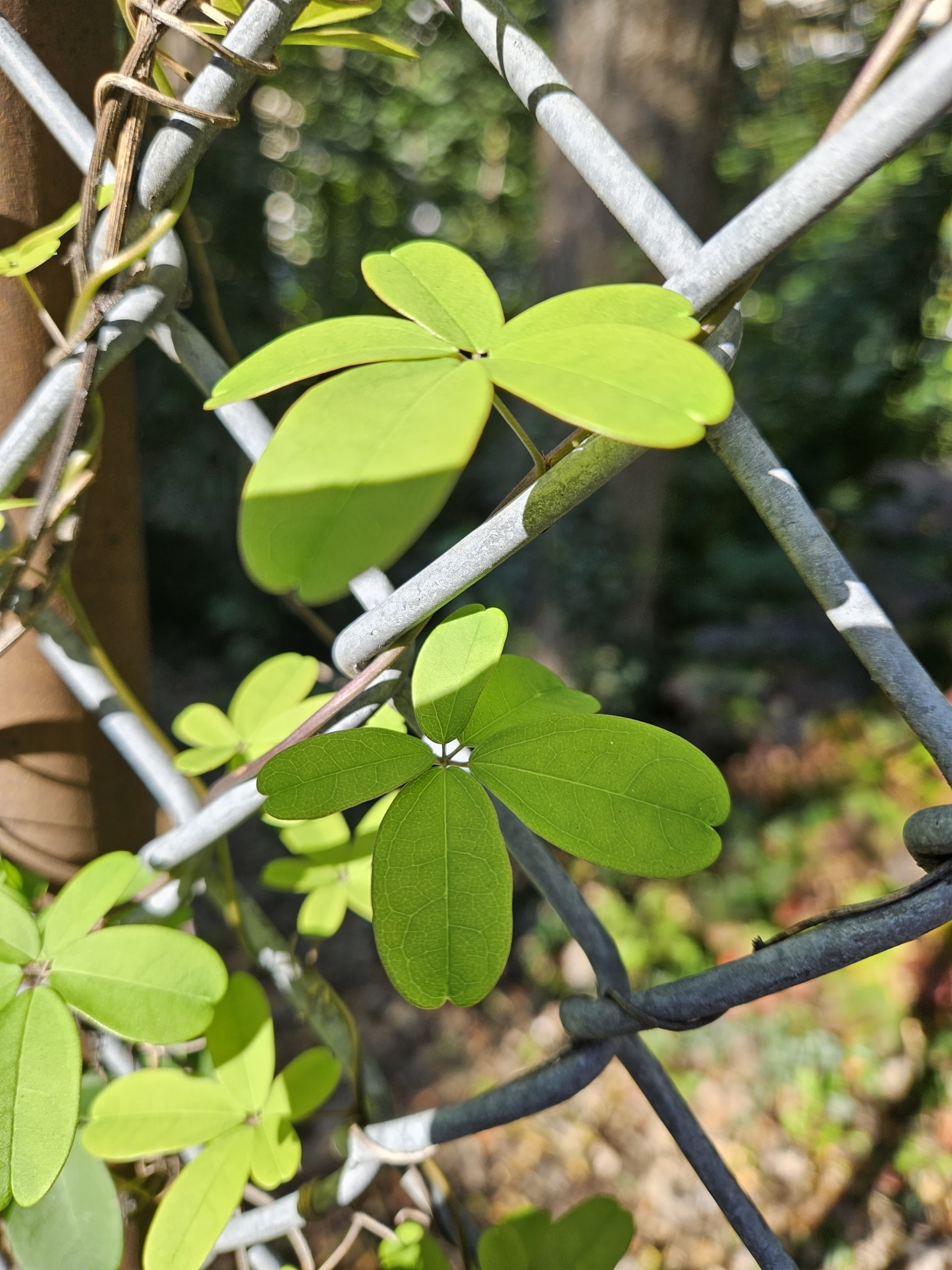
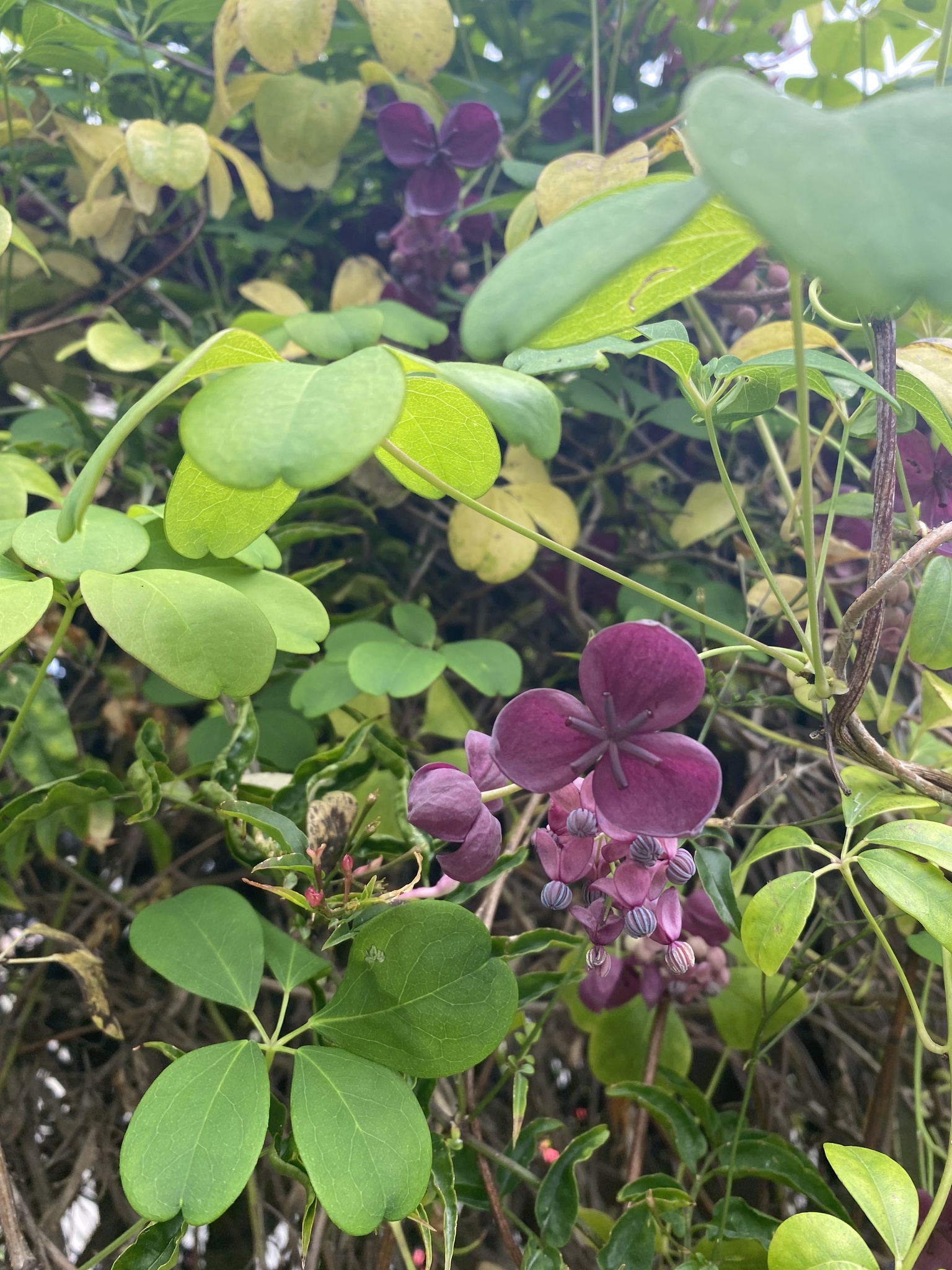
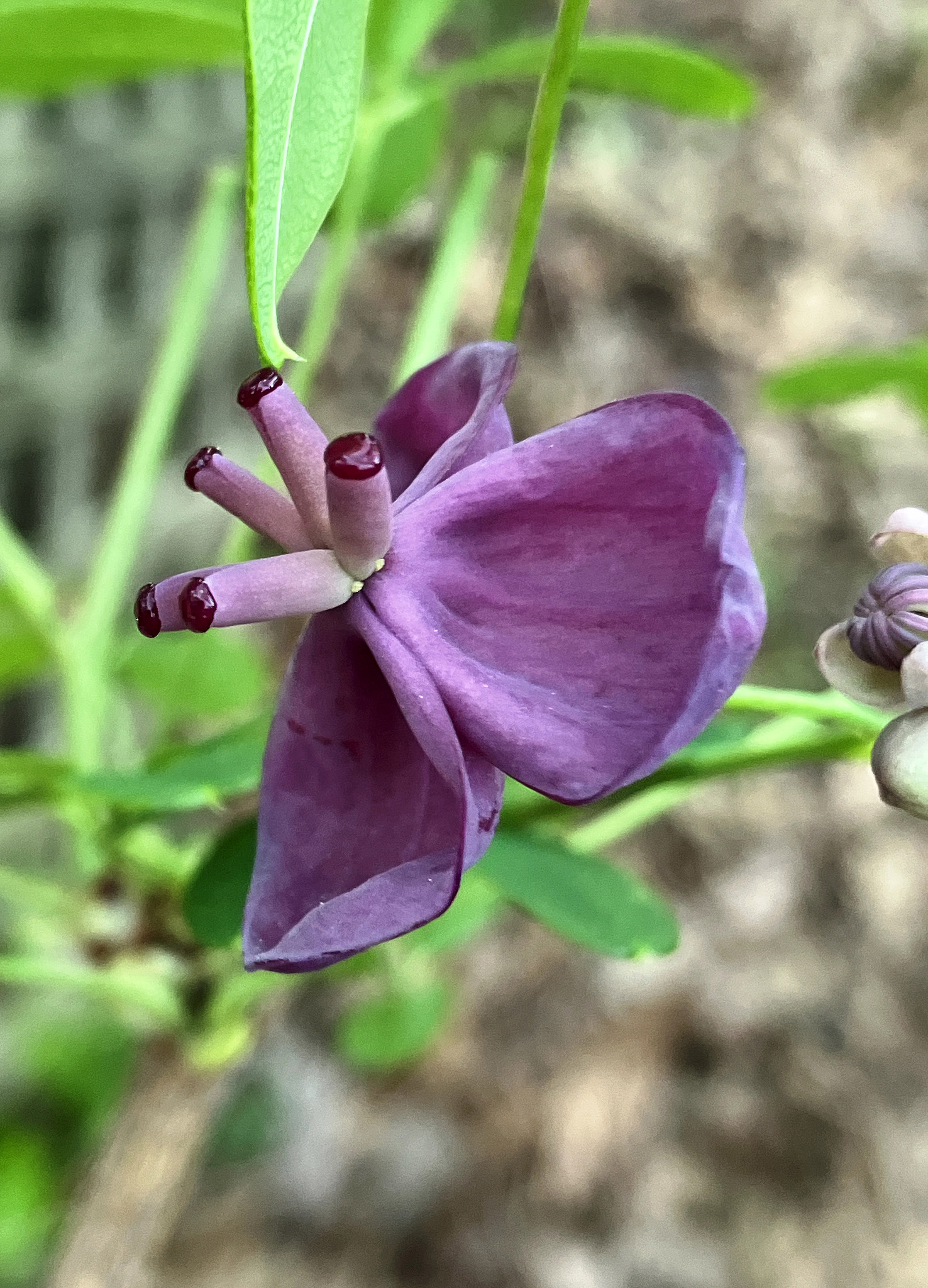


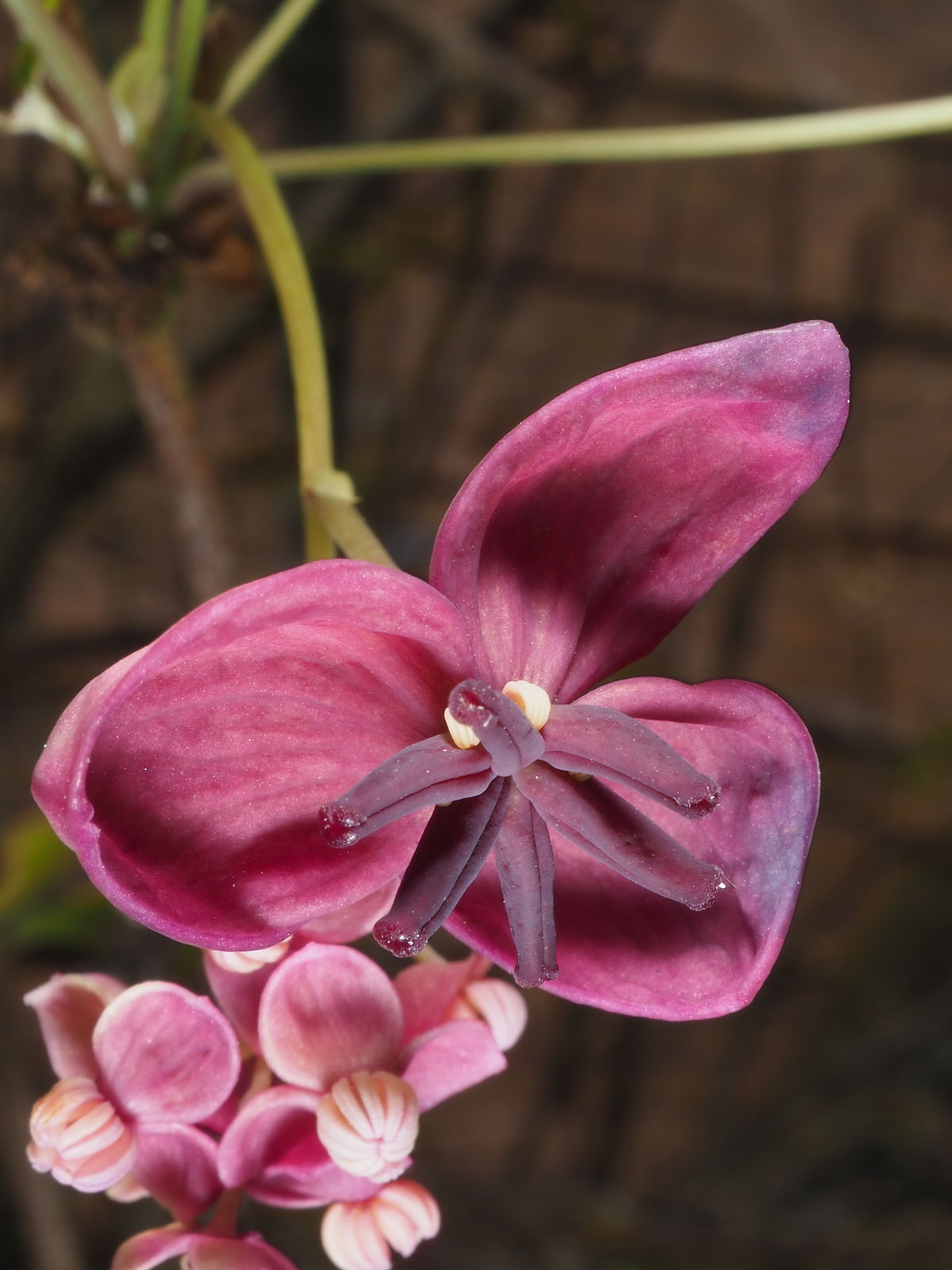
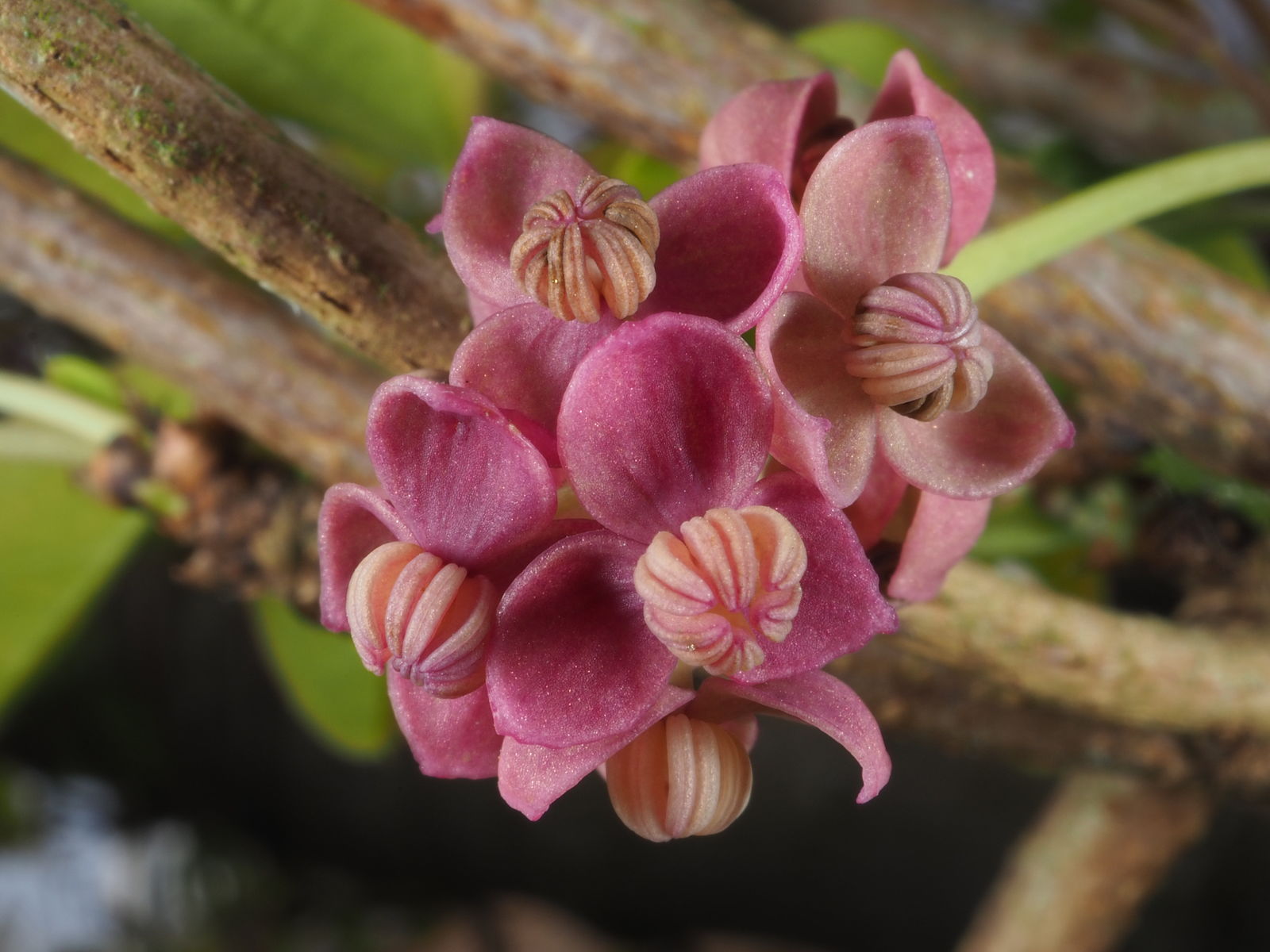
© photo
Daniel Atha · cc0
iNaturalist User · cc0
Allen Browne · cc0
Taken May 13, 2019 by Wilhelm Rogmann (cc-by-sa)
Taken Jun 3, 2019 by zmei (cc-by-sa)
Taken Jun 7, 2021 by Zeynep Mutlu (cc-by-sa)
Taken Aug 12, 2021 by Ulysse Remars (cc-by-sa)
© copyright of the Board of Trustees of the Royal Botanic Gardens, Kew.


Global distribution
Akebia quinata is native to central and eastern China, the Korean Peninsula and south-central Japan. Widely introduced ornamentally to North America and Europe, it has naturalized in several mild, humid regions, where vigorous growth creates a documented risk of localized woodland colonization.
- Native3
- Invasive1
- China
- South Korea
- Japan
- United States (East Coast)
Hexagons: regions where the plant occurs. Green dots: native range.1
Identity
Chocolate vine (Akebia quinata (Thunb. ex Houtt.) Decne., 1839) is a semi-evergreen climber in the Lardizabalaceae, the only Akebia commonly grown in Europe for dense foliage and chocolate-colored spring flowers. The epithet quinata means “arranged in fives,” referring to its five leaflets. Its closest relative, Akebia trifoliata, has three, a distinction visible even without flowers. 1 2
The name chocolate vine comes from the sweet, chocolate-like scent of its small dark purple flowers in local spring, attracting pollinating insects as temperatures first rise. In Japan, where the fruit has been harvested for centuries, it is called akebi. 4
Recognition
Chocolate vine climbs quickly. Twining stems coil around a support without tendrils or clinging roots, covering 6–12 m (20–39 ft) once established. Without support, stems trail along the ground, form low clumps and flower later. 2 4
Leaves consist of five oval leaflets. They remain semi-evergreen in mild climates but are shed when winter temperatures fall below −15 °C (5 °F).
The species is monoecious. Separate male and female flowers grow on the same hanging raceme, with larger females at its base and smaller males toward the tip. Both are chocolate-purple to dark brown, matching the plant’s scent. 5 3
After successful cross-pollination, a female flower develops a violet, sausage-shaped fruit 5–10 cm (2–4 in) long. It opens along one side in local autumn, revealing white pulp dotted with black seeds. Without a second compatible plant nearby, the flower drops without fruiting. 4 5
Useful taxonomy
POWO/WCVP accepts Akebia quinata (Thunb. ex Houtt.) Decne., the only species of the genus widely sold under that name in Western horticulture. Several forms and varieties have been described, mostly for minor flower or leaf differences:
- Akebia quinata f. albiflora Y.N.Lee, a white-flowered form
- Akebia quinata var. longeracemosa (Matsum.) Rehder & E.H.Wilson, a long-racemed variety
- Akebia quinata var. polyphylla Nakai
- Akebia quinata f. diplochlamys (Makino) T.Shimizu
The genus also includes Akebia trifoliata, with three leaflets rather than five. The two sometimes hybridize in cultivation as Akebia ×pentaphylla. Leaflet number distinguishes the two parent species even on a shoot without flowers or fruit. 1 6
Habitat and distribution
Chocolate vine occurs naturally from central and eastern China to the Korean Peninsula and south-central Japan. It grows in temperate deciduous forests, hedges, edges and along streams, from sea level to about 1,500 m (4,920 ft). 4 7
Widely introduced as an ornamental to North America and Europe, chocolate vine has naturalized along the US East Coast in mild, humid regions. Rapid twining growth makes it a species of concern, notably in North Carolina. That designation applies to the American regions concerned; in mainland France it remains a garden ornamental without an equivalent documented status. 5 8
Life cycle and reproduction
Flowering falls in local spring, corresponding to March–April in the Northern Hemisphere setting described, depending on climate. Male and female flowers are separate on the same cluster. Without a genetically different plant nearby, it flowers annually without fruit: chocolate vine is self-incompatible and needs two distinct plants for effective cross-pollination. 5 4
After pollination, fruit ripens over several months and opens in local autumn. Propagation mainly uses semi-ripe cuttings in summer. Autumn-sown seed germinates slowly after stratification. Layering also works: stems root naturally, and the resulting new plants can be lifted and replanted. 4
Uses and risks
Gardeners use chocolate vine ornamentally, quickly covering a trellis, pergola or old fence with dense leaves and small, fragrant flowers. Vigorous twining growth covers a support within a few years but becomes a disadvantage without annual pruning after flowering. 2 5
In East Asia, the white pulp of ripe fruit is eaten raw, sweet but rather bland; the more bitter violet rind is usually cooked, often fried. Young shoots serve as a vegetable in some traditional cuisines, and stems enter traditional medicinal preparations. No toxicity is documented in cats, dogs or humans; equine status remains poorly documented. 4
Varieties, lookalikes and related plants
Described variants such as white-flowered f. albiflora and long-racemed var. longeracemosa remain botanical curiosities rather than stable cultivars in the ordinary horticultural trade. 1
Two groups cause frequent confusion:
- Akebia trifoliata, with three leaflets rather than five, and its hybrid Akebia ×pentaphylla;
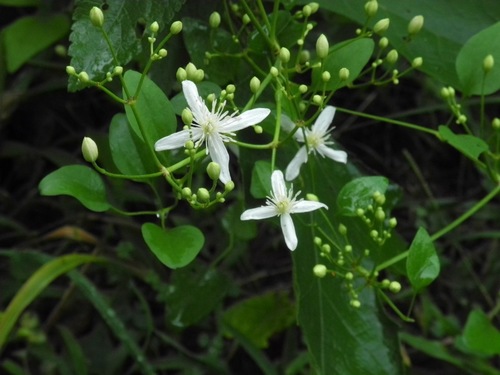
- some small-flowered clematis, whose climbing habit looks similar at a distance but whose leaves never have five fan-arranged leaflets.
Two features help identify a shoot: five oval leaflets per leaf and, in season, chocolate-purple flower clusters. No clematis combines both features.
Main sources
- Plants of the World Online / Kew, Akebia quinata (Thunb. ex Houtt.) Decne.
- Royal Horticultural Society, Akebia quinata - chocolate vine
- Missouri Botanical Garden Plant Finder, Akebia quinata
- Plants For A Future, Akebia quinata
- NC State Extension Gardener Plant Toolbox, Akebia quinata
- International Plant Names Index, Akebia quinata record
- GBIF, Akebia quinata species record
- USDA PLANTS Database, Akebia quinata profile (AKQU)
Frequently asked questions
Why does my chocolate vine never produce fruit?
Akebia quinata bears male and female flowers on the same cluster but is self-incompatible. A single plant flowers without fruiting. A second, genetically different plant is needed for fruit production.
Is chocolate vine invasive?
Its vigorous twining habit makes it a species of concern in several temperate North American regions, notably North Carolina. No equivalent invasive status is documented in France, although regular pruning remains advisable.
Can you eat chocolate vine fruit?
The white pulp is eaten raw once the ripe fruit opens. It is sweet but rather bland. The bitter violet rind is fried or stuffed in some East Asian culinary traditions.
How does Akebia quinata differ from Akebia trifoliata?
Leaflet number is the most reliable distinction: five in Akebia quinata, three in Akebia trifoliata. The two sometimes hybridize in cultivation as Akebia ×pentaphylla.
Is chocolate vine toxic to cats and dogs?
No toxicity is documented in cats, dogs or humans. The available sources give little information about its status in horses.
What support does chocolate vine need?
A sturdy trellis, pergola or old fence suits its twining stems, which coil without tendrils or clinging roots. A fragile support may bend under a mature vine several meters (several yards) long.
Similar plants
If you are unsure about a plant’s toxicity, ask a botanist or veterinarian for advice.