
Paraná pine (Araucaria angustifolia, )
Paraná pine (Araucaria angustifolia) is a large conifer in the Araucariaceae, native to southern and southeastern Brazil, northeastern Argentina and eastern Paraguay. Its mature candelabra crown and large female cones are distinctive. Severe loss of its native forest has left the species critically endangered.
Read moreParaná pine, Brazilian pine and Candelabra tree


© photo
Paisaje Protegido Paso Centurión y Sierra de Ríos · cc0
Frank Thomas Sautter · cc0
Pietro · cc-by
Taken Apr 27, 2019 by Pierre Bonnet (cc-by-sa)
Taken Jun 17, 2021 by anabalon diego (cc-by-sa)
Taken Jun 2, 2015 by Tela Botanica − _ _ (cc-by-sa)
© copyright of the Board of Trustees of the Royal Botanic Gardens, Kew.


Global distribution
Araucaria angustifolia is native to southern and southeastern Brazil, especially Paraná, Santa Catarina and Rio Grande do Sul, extending to São Paulo, Minas Gerais and Rio de Janeiro; also Misiones in Argentina and eastern Paraguay. Beyond this range it remains uncommon in cultivation, largely in mild, sheltered climates, unlike its former dominance in native araucaria forest.
Identity
Paraná pine (Araucaria angustifolia (Bertol.) Steud., 1840), also known as Brazilian pine or candelabra tree, is a large conifer in the Araucariaceae. Logging and agriculture destroyed about 97% of its native forest habitat within a century, leading to its critically endangered classification on the IUCN Red List. 6 Italian botanist Antonio Bertoloni first described it as Columbea angustifolia in 1819. Ernst Gottlieb von Steudel transferred it to Araucaria in 1840, producing the accepted combination used today. 1 8
Despite the common name, this tree does not belong to Pinus. Pine refers to a broadly similar outline and comparable timber uses rather than membership of the true pine genus. Indigenous names in its home region include curi and curiúva. The Portuguese name for the edible seed, pinhão, derives from pinha, meaning a cone. 7
Recognition
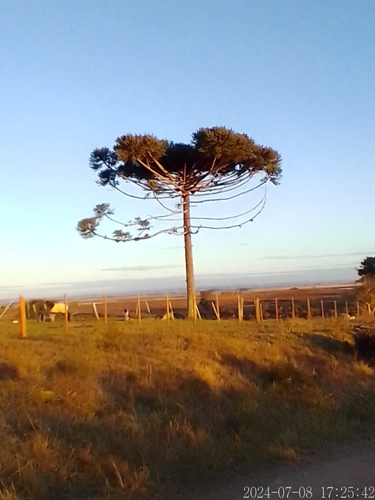
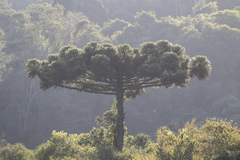
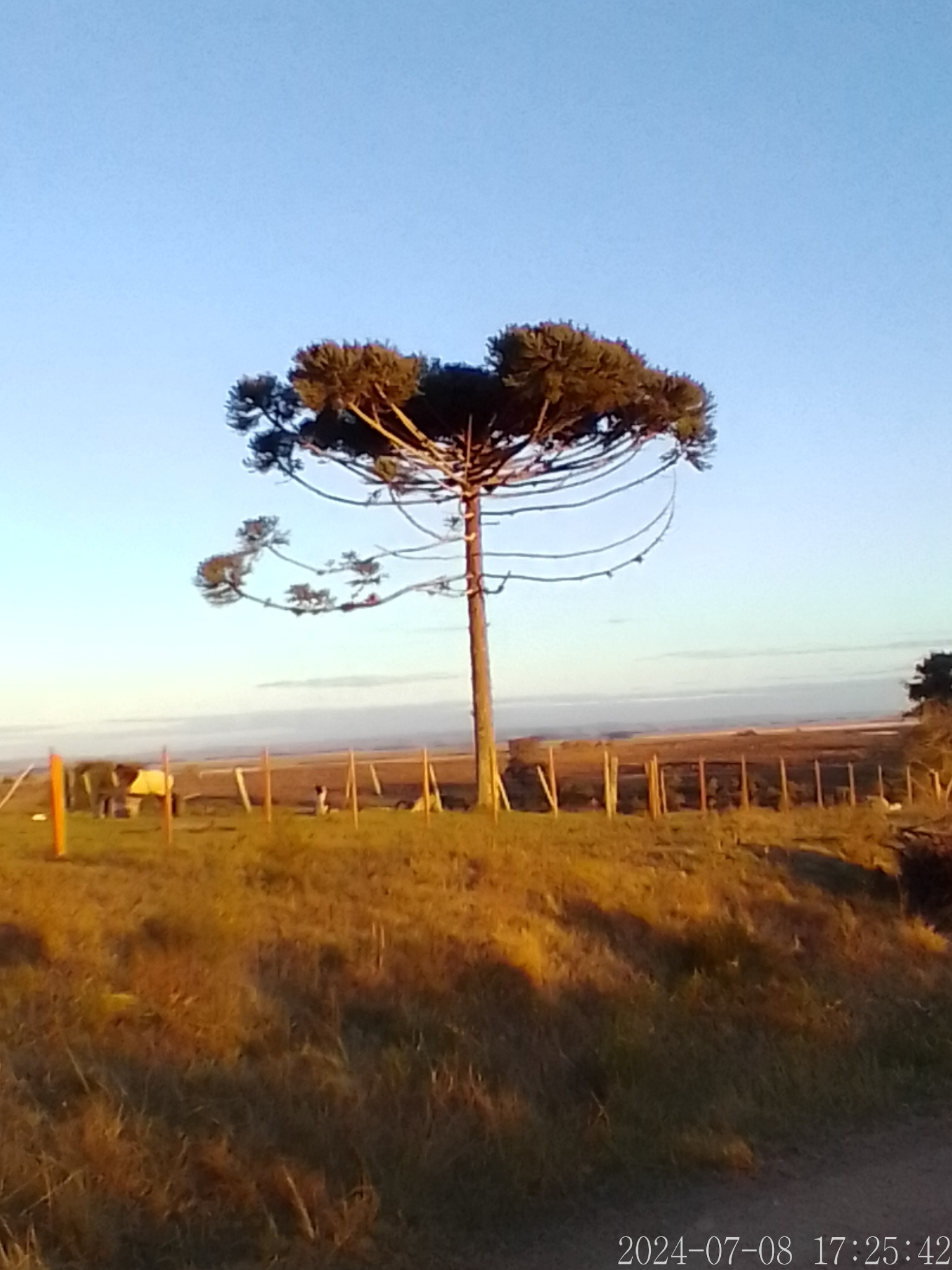
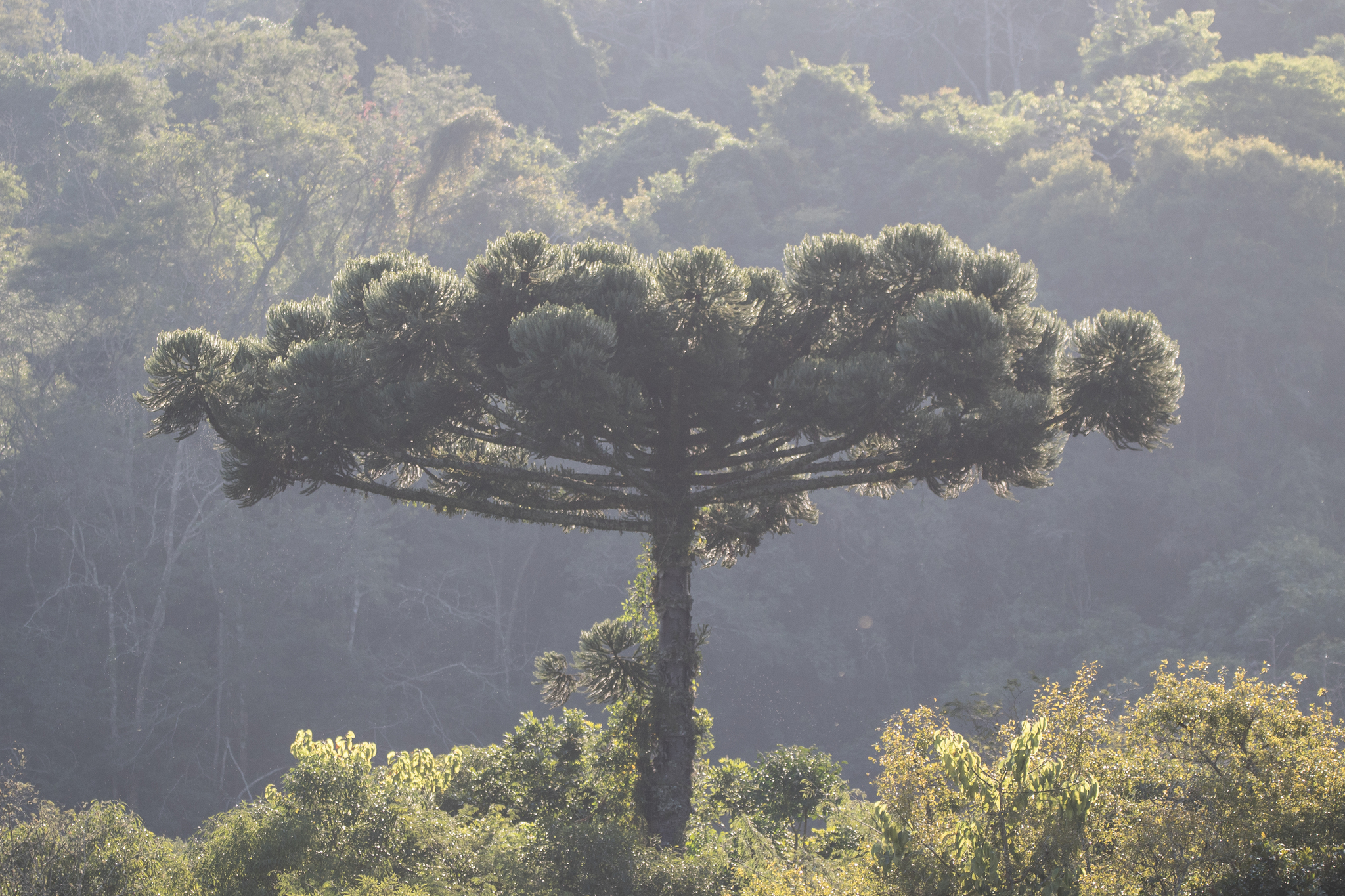
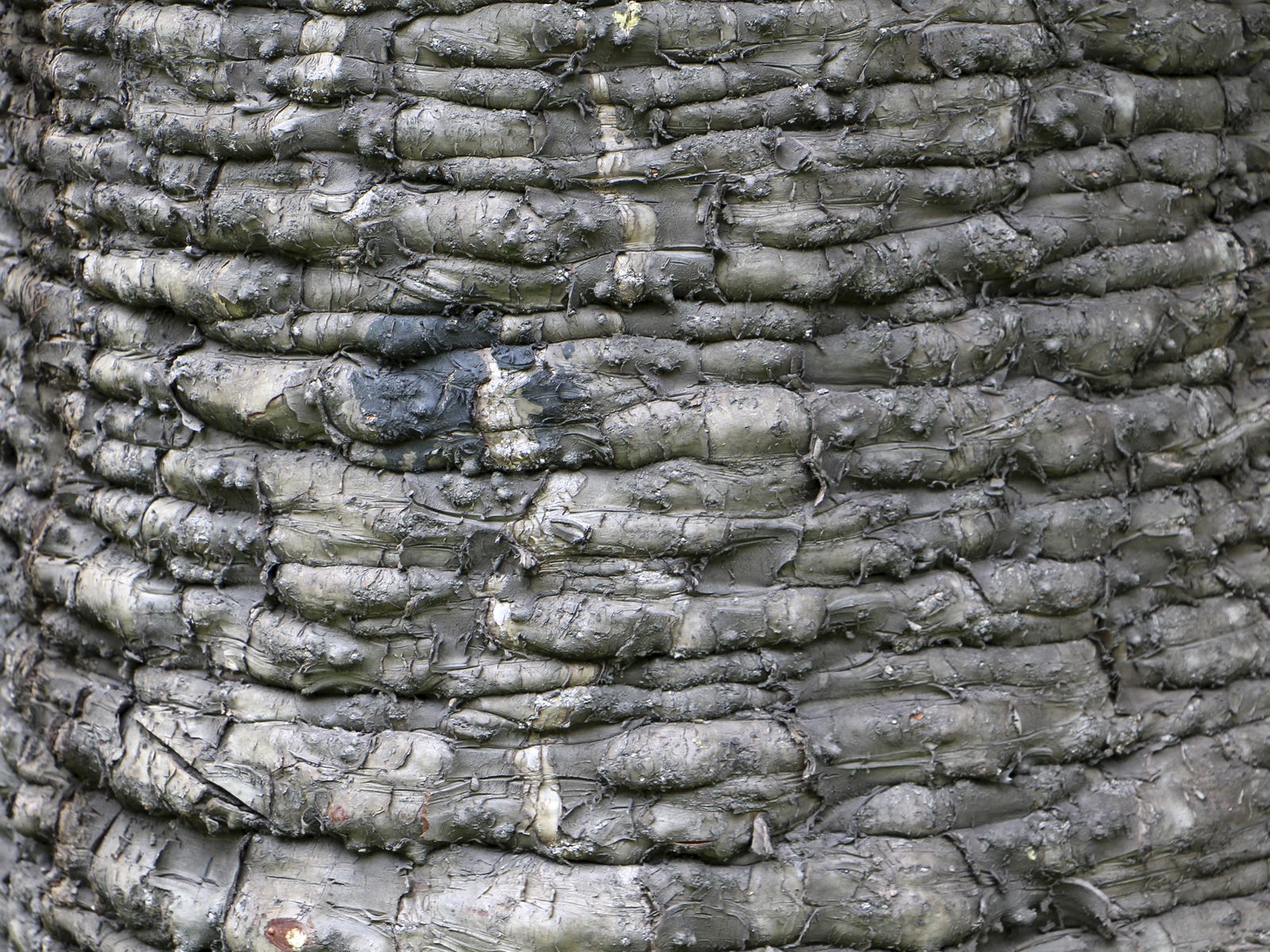
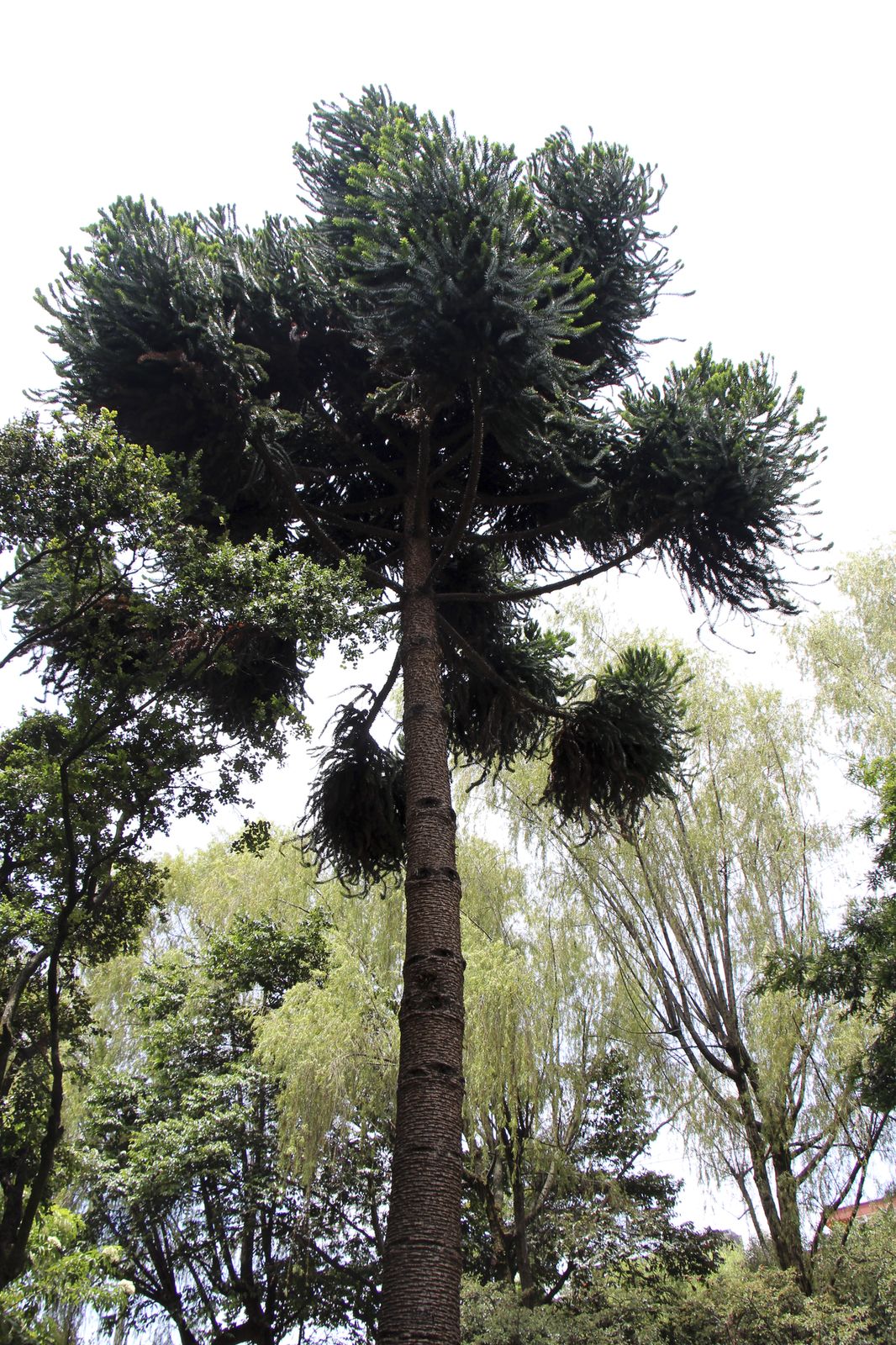
A mature candelabra-shaped crown is the clearest distant recognition feature of Paraná pine. Young trees are narrow, dense and pyramidal; as they age, lower branches die, leaving a flat, spreading crown above a clear trunk. Trees commonly reach 25–40 m (82–131 ft), with a trunk exceeding 1 m (3.3 ft) in diameter. Thick, scaly bark can reach 15 cm (6 in) and has horizontal markings. 3 5
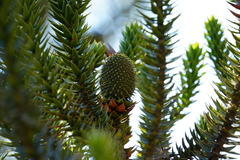
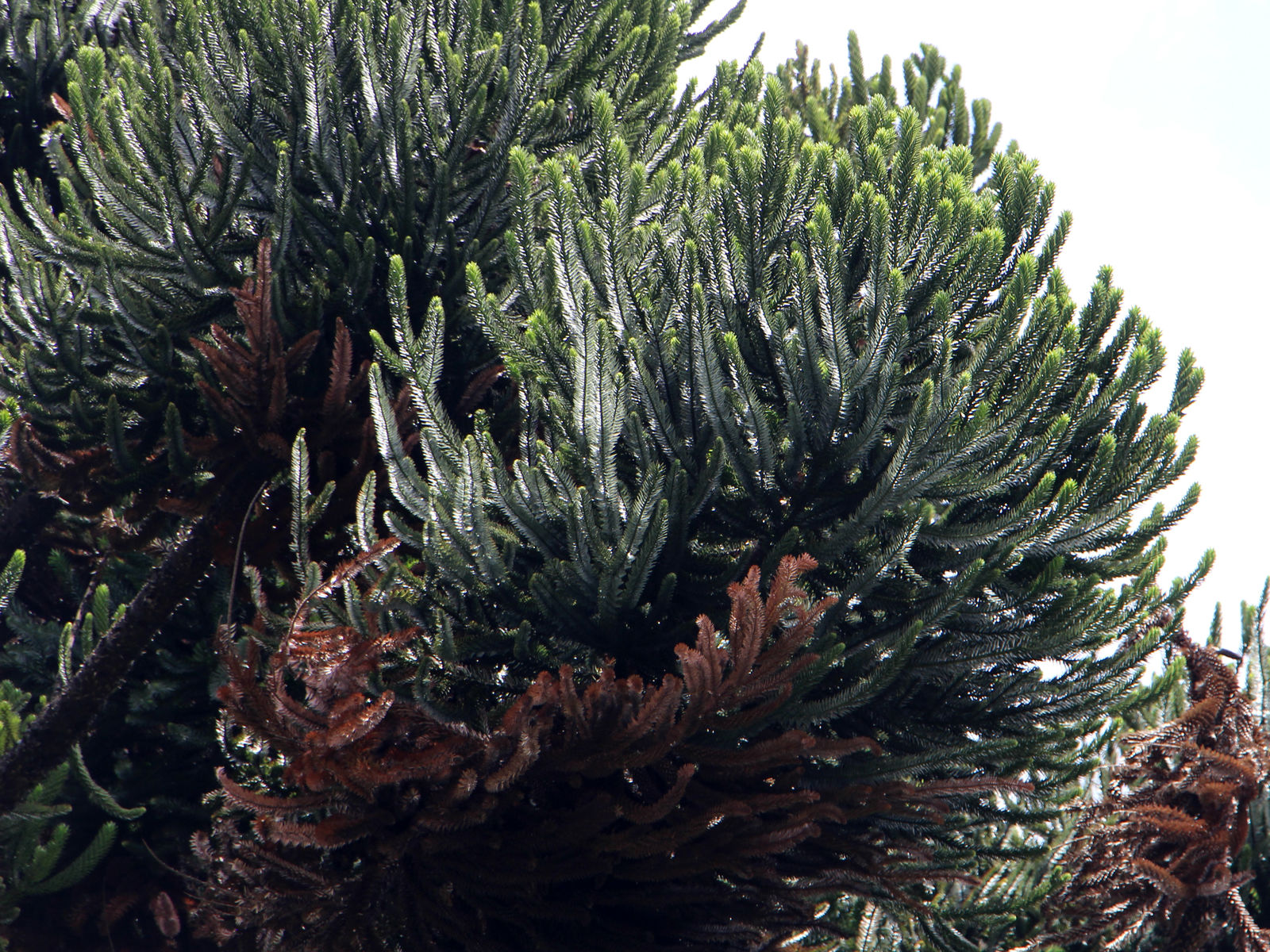
Stiff triangular leaves measure 2–6 cm (0.8–2.4 in) long and 5–10 mm (0.2–0.4 in) wide at the base. Their edges and tips are very sharp, and the leaves spiral tightly around the branches. Young fertile shoots carry shorter, more closely spiraled foliage than sterile shoots, providing a detail to examine on trees reaching reproductive age. 2 3
Useful taxonomy
Bertoloni's original Columbea angustifolia, published in 1819, belongs to a genus no longer accepted for this tree. Steudel's 1840 transfer to Araucaria established the currently accepted name. Other combinations proposed by later authors are now treated as synonyms rather than separate species:
- Araucaria brasiliana A.Rich., a historical synonym
- Araucaria brasiliensis G.Don, another historical combination
- Araucaria dioica (Vell.) Stellfeld, a synonym
- Pinus dioica Vell., an earlier pine combination
- Araucaria elegans Carrière, a historical synonym
Botanical varieties described during the 20th century include vinacea, associated with reddish-purple cones, and caiova, reputed to ripen seed early. They remain in taxonomic synonymy, and their horticultural status is uncertain depending on the reference. The accepted species name Araucaria angustifolia provides the stable reference when those older names appear in literature or on labels. 1
Habitat and range
Southern and southeastern Brazil form the core native range, notably Paraná, Santa Catarina and Rio Grande do Sul, with extensions into São Paulo, Minas Gerais and Rio de Janeiro. It also occurs in Misiones, Argentina, and eastern Paraguay. Its mixed humid forest habitat lies at 500–2,300 m (1,640–7,550 ft) on well-drained acidic soils, receiving 1,500–2,000 mm (59–79 in) of rain annually. 5 4
Known as mata de araucárias, this subtropical forest associates Paraná pine with Podocarpus lambertii and several Ocotea species. Outside its native range, the tree is uncommon in horticulture and largely restricted to mild, sheltered conditions. Some collections in the United Kingdom and, more rarely, France illustrate that limited cultivated presence rather than a broad tolerance of cold European winters. 5 3
The IUCN lists the species as critically endangered following an estimated 97% loss of forest habitat within a century. Timber extraction, agriculture and replacement plantations acted together in this decline. Its familiar silhouette and former role as a dominant forest tree should therefore not be mistaken for evidence that wild populations remain secure. 6 7
Life cycle and reproduction
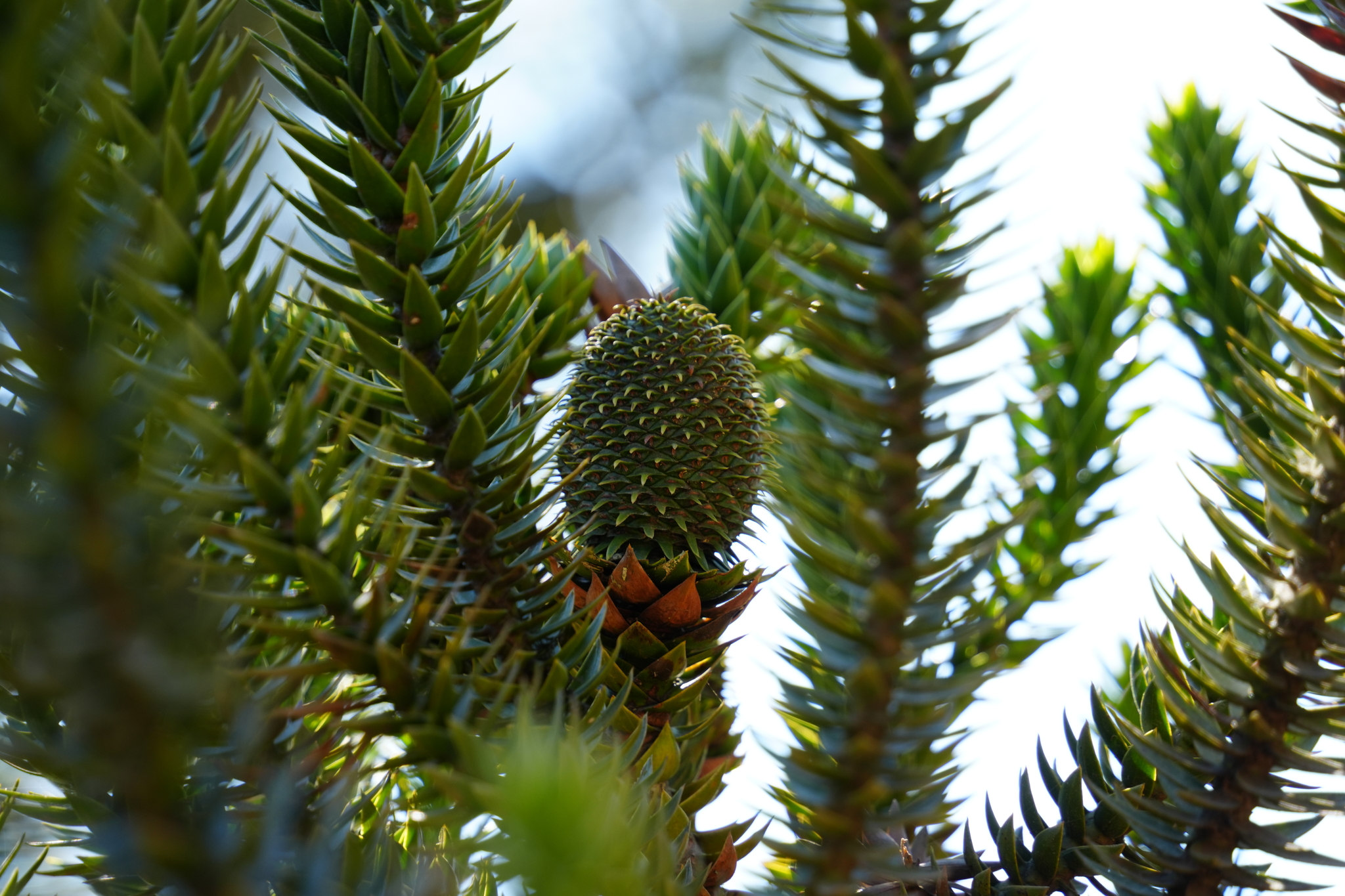
Separate male and female trees make Paraná pine dioecious, with pollen carried by the wind. Seed production requires pollen to reach a female tree; an isolated individual without a pollen source cannot produce viable seed. Cylindrical male cones reach 8–20 cm (3–8 in) long. Rounded female cones measure 12–25 cm (5–10 in) across and weigh close to 1 kg (2.2 lb) at maturity. 5 7
Female cones take about 2–3 years to mature after pollination. They then break apart on the tree, releasing roughly 100–150 seeds, called pinhões, each about 5 cm (2 in) long. These seeds are too heavy for long-distance wind dispersal. Animals carry them instead, with the azure jay, Cyanocorax caeruleus, among the important dispersers. 7 5
Under favorable conditions, female trees often produce their first fertile cones at 10–15 years old. Cultivation usually begins with fresh seed, sown individually. Germination takes around 1–2 months at approximately 15 °C (59 °F), making seed freshness and the slow progress toward reproductive maturity relevant to anyone raising a young tree. 4
Uses and risks
Timber marketed as Paraná pine was long among Brazil's heavily exploited woods, used in construction, furniture, plywood and paper pulp. Its versatility helped drive intensive extraction and a marked decline throughout the native range. The commercial timber name is therefore part of both the tree's economic history and the explanation for its conservation status. 4 7
Starchy seeds are eaten cooked and remain an important traditional food in southern Brazil, particularly during the Southern Hemisphere winter. No toxic principle is documented for people or domestic animals in the consulted references. The clear handling hazard is physical injury: rigid leaves with sharp edges and tips can cut or puncture skin when touched. 4
Varieties, look-alikes and related plants
Few stable horticultural cultivars are documented for Paraná pine compared with more familiar garden conifers. Botanical varieties such as vinacea, alba and caiova, described from natural populations during the 20th century, remain in taxonomic synonymy. Their nursery distribution is marginal and poorly documented, so these names should not imply a well-established range of widely available garden selections. 1
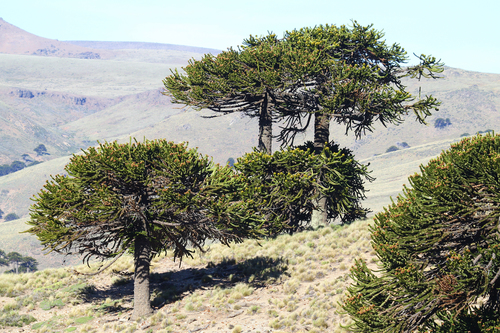
Monkey puzzle (Araucaria araucana) is the main source of confusion. Its longer, even sharper leaves cover branches with a reptilian appearance. This Andean species withstands much stronger frost, around -20 °C (-4 °F) compared with about -6 °C (21 °F) for Paraná pine, helping explain its wider use in European gardens. 2 Norfolk Island pine (Araucaria heterophylla), often sold as a houseplant, offers another contrast: its softer, nonprickly foliage differs from the rigid, sharp leaves of Paraná pine.
Main sources
- Plants of the World Online / Kew, Araucaria angustifolia (Bertol.) Steud.
- Royal Horticultural Society, Araucaria angustifolia
- Trees and Shrubs Online (International Dendrology Society), Araucaria angustifolia
- Plants For A Future, Araucaria angustifolia
- The Gymnosperm Database, Araucaria angustifolia
- IUCN Red List, Araucaria angustifolia assessment
- Wikipedia (EN), Araucaria angustifolia
- INPN / MNHN, Araucaria angustifolia (Bertol.) Kuntze, 1898 (cd_nom 610750)
Frequently asked questions
Is Paraná pine a true pine?
No. Araucaria angustifolia belongs to Araucariaceae, distinct from Pinaceae. Its common name refers to a similar outline and timber use, rather than a botanical relationship with Pinus.
Why is Paraná pine critically endangered?
The species lost about 97% of its forest habitat within a century through logging, agriculture and replacement plantations. The IUCN Red List classifies it as critically endangered.
Are Paraná pine seeds edible?
Yes, once cooked. The starchy seeds, called pinhões, are a traditional food in southern Brazil, particularly during the Southern Hemisphere winter. No human toxicity is documented.
How can I tell male and female Paraná pines apart?
They cannot be distinguished before reproductive maturity. Male and female cones grow on separate trees, and only females produce the large seed-bearing cones, often beginning at about 10–15 years.
Can Paraná pine grow outdoors in a temperate garden?
Only in a mild climate sheltered from severe frost, with ample open space. It remains uncommon in European horticulture, is less hardy than monkey puzzle and is sensitive to harsh winters.
How does Paraná pine differ from monkey puzzle?
Araucaria angustifolia grows in Brazilian subtropical forests and tolerates severe cold poorly. The Andean Araucaria araucana withstands frost down to about -20 °C (-4 °F) and has longer, sharper leaves.
Why does Paraná pine change shape with age?
Young trees are dense and pyramidal. As they age, lower branches die and fall, leaving a flat candelabra crown atop a clear trunk, the characteristic outline of the mature species.
Similar plants

If you are unsure about a plant’s toxicity, ask a botanist or veterinarian for advice.