
Silver birch (Betula pendula, )
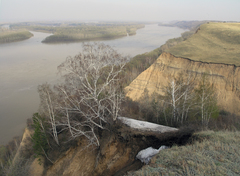
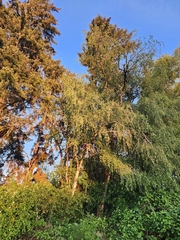
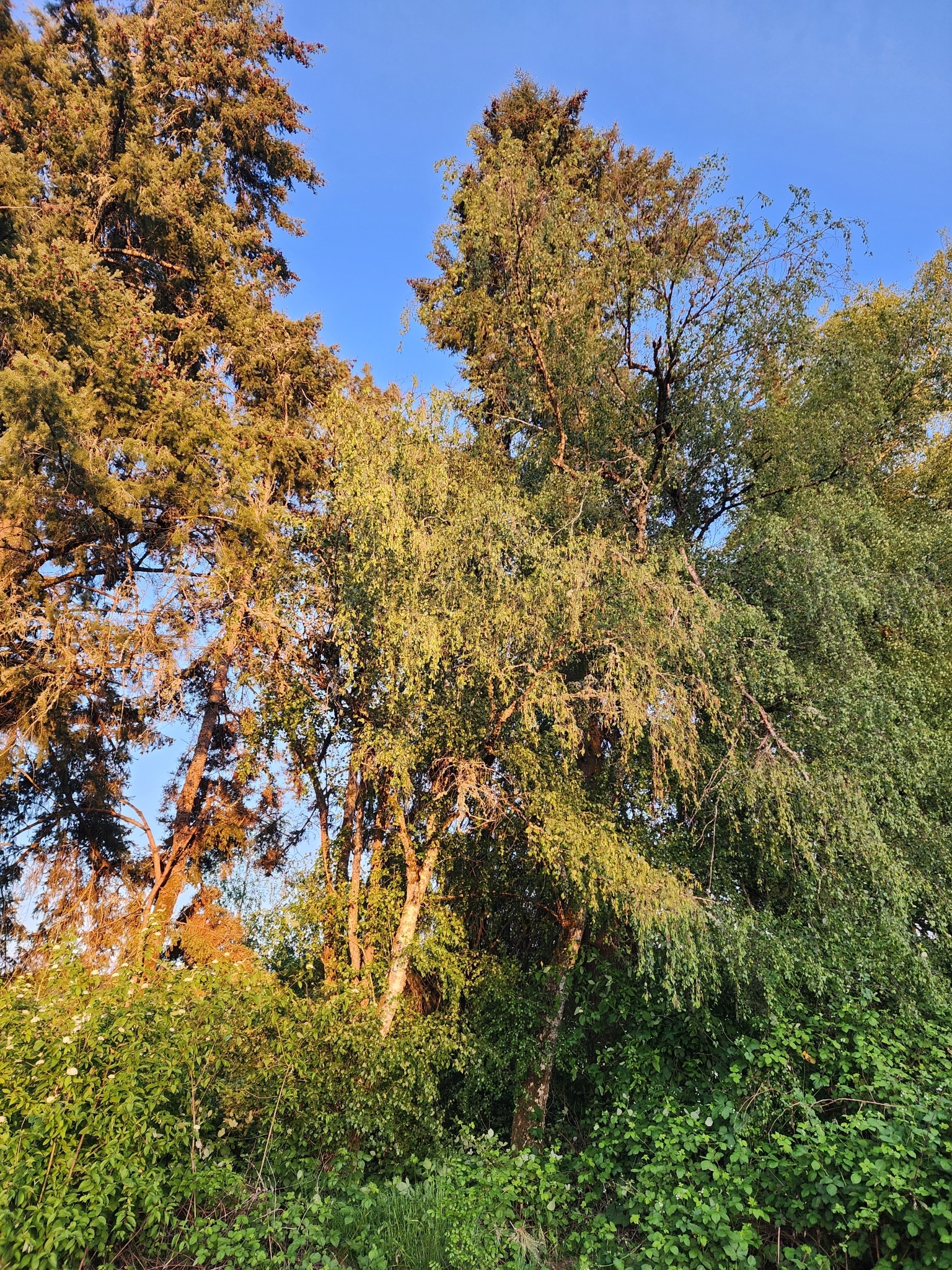
Silver birch (Betula pendula) is a deciduous pioneer tree in the Betulaceae family, native to most of Europe and parts of temperate Asia. Its silvery-white bark peels in thin strips; slender, resin-warty twigs carry triangular, doubly toothed leaves. It quickly colonizes bare ground before giving way to later forest trees.
Read moreSilver birch, European white birch, Weeping birch and Lady of the woods



© photo
(c) Полина Яковлевна Нехаева (Лихачева), some rights reserved (CC BY-NC), uploaded by Полина Яковлевна Нехаева (Лихачева) · cc-by-nc
Oleg Kosterin · cc0
Benjamin David · cc0
(c) Нурхайдарова Татьяна, some rights reserved (CC BY) · cc-by
(c) Oleg Kosterin, some rights reserved (CC BY) · cc-by
Global distribution
Silver birch is native to most of Europe and parts of temperate Asia, reaching Siberia, the Caucasus and northern Iran, with isolated mountain populations in Turkey. In southern Europe it persists only at cooler high elevations. Introduced to North America as an ornamental, it is now considered invasive in several parts of Canada and the northern United States.
- Native5
- Introduced2
- Invasive1
- France
- United Kingdom
- Finland
- Russia
- Turkey
- United States
- Australia
- Canada
Hexagons: regions where the plant occurs. Green dots: native range.1
Identity
Silver birch (Betula pendula Roth, 1788), also called weeping birch or European white birch, is a deciduous tree in the genus Betula, in the Betulaceae family. Its young, hairless twigs carry small resinous warts, a useful distinction from downy birch, whose shoots are hairy. 1 7
The epithet pendula describes the fine, flexible branchlets that often droop on older trees, explaining the name weeping birch. The British nickname lady of the woods refers to the slender silhouette and pale trunk of a mature tree. 2
Abundant winged seeds allow this pioneer species to colonize bare or disturbed ground quickly. Growth is concentrated in its first 20 years, helping it establish before later forest trees such as oak or beech take over. 7 4
Recognition
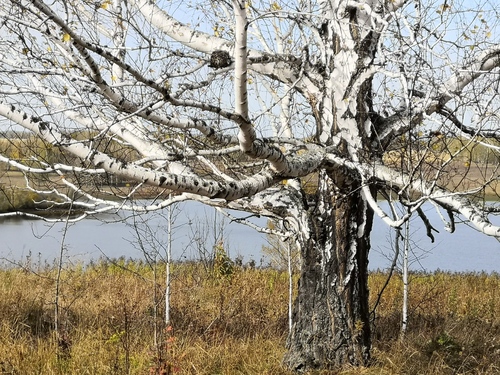
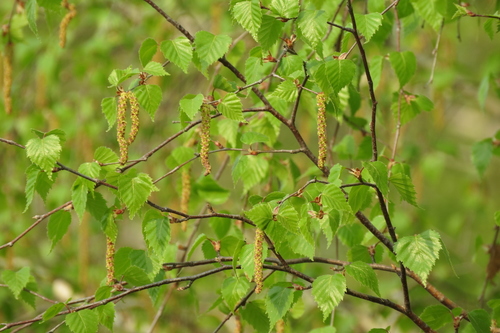
On favorable ground, silver birch commonly reaches 15 to 25 m (49 to 82 ft). Its initially pyramidal crown becomes more open, with drooping branch tips. The young trunk has silvery-white bark that peels in thin horizontal strips. At the base of older trees, the bark turns black and develops deep, diamond-shaped fissures. 2 3
Its alternate leaves are triangular to diamond-shaped, with tapering tips and distinctly double-toothed margins, carried on slender stalks. The foliage turns yellow in fall before dropping, an easy feature to recognize from a distance on mature trees. 2 3
A silver birch carries both male and female catkins, making it monoecious. Hanging male catkins form during the preceding fall; shorter female catkins stand upright at first and droop at maturity. The catkins open early in spring before the leaves appear, allowing pollen to travel through the still-bare woodland. 5
Useful taxonomy
Albrecht Wilhelm Roth described Betula pendula in 1788. The species belongs to Betulaceae, the family that also includes alders and hornbeams. 1 7
Botanical names provide a firmer reference than common names, which vary between regions. The French name “bouleau blanc,” for example, can refer either to Betula pendula or to its close relative downy birch. The binomial avoids that ambiguity. 6
Downy birch (Betula pubescens Ehrh.) is its most frequent look-alike. The two species share a range, but downy birch favors moist to waterlogged soils, while silver birch generally prefers drier, well-drained ground. 6
Habitat and range
Most of Europe and part of temperate Asia form the native range of silver birch, extending to Siberia, the Caucasus, northern Iran and the mountains of Turkey. In southern Europe it persists only at cooler high elevations. 1 4
Within France, silver birch colonizes heaths, bogs, disturbed ground and forest clearings, reaching 2,000 m (6,560 ft) in mountain forests. Introduced into North America, it is now considered invasive in several parts of Canada and the northern United States, where it competes with local plants on disturbed soil. 7 6
The International Union for Conservation of Nature lists Betula pendula as Least Concern, an assessment consistent with its extensive range and abundant populations. 8
Life cycle and reproduction
Spring wind pollination takes place before leaf emergence. Each male catkin releases abundant pollen, one of Europe's main spring respiratory allergens. Its protein Bet v 1 accounts for the great majority of birch pollen allergy cases, with frequent cross-reactions to apple, hazelnut or celery. 5 9
Minute winged seeds ripen in midsummer to late summer inside female catkins that break apart at maturity. Young trees grow quickly: the first seeds appear at 8 to 10 years, with full production at around 15 to 20 years in a well-lit position. 5 4
Seed readily propagates the typical species in cultivation. Cultivars selected for distinctive foliage or habit require grafting to preserve their characteristics. 2
Uses and risks
Pale, easily worked birch wood is used for plywood, veneers, skis and kitchen utensils. It also makes excellent firewood, although it burns quickly. The waterproof bark was historically used for roof shingles and small containers. 4 5
As spring sap rises through the trunk, it can be tapped by an incision, as with maple. It is drunk fresh, concentrated by evaporation or fermented. Silver birch is not considered toxic when ingested by people or domestic animals, but its pollen remains one of the most frequent triggers of seasonal allergic rhinitis. 5 9
Cuts made during the early spring sap rise bleed heavily and for a prolonged period. Experienced pruners therefore work in midwinter or at the very end of summer. 2
Varieties, look-alikes and related plants
Distinctive horticultural cultivars include Youngii, a grafted tree that cascades to the ground; Tristis, with a straight trunk beneath weeping branchlets; Laciniata, with deeply cut leaves and a similarly weeping habit; and Purpurea, with purple foliage unusual for a birch. 2
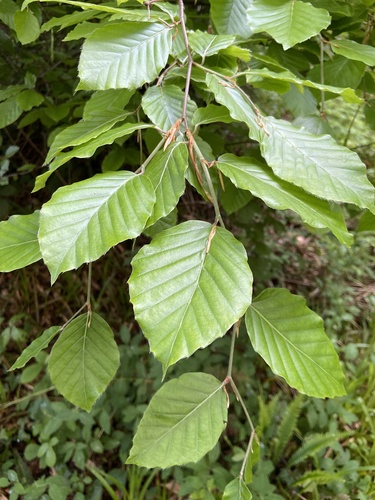
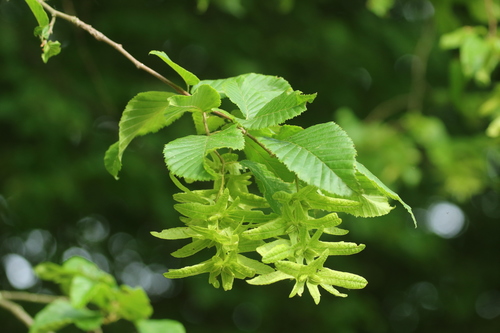
Distinguishing it from downy birch (Betula pubescens) is especially useful: the latter has hairy, unwarty twigs, rounder and simply toothed leaves, and a preference for wetter ground. Before its white bark develops, a young silver birch may also be mistaken for an alder or hornbeam. 6 7
Main sources
- Plants of the World Online / Kew, Betula pendula Roth
- Royal Horticultural Society, Betula pendula - silver birch
- Missouri Botanical Garden, Betula pendula
- NC State Extension, Betula pendula (European White Birch)
- Plants For A Future, Betula pendula
- Tela Botanica, Betula pendula Roth
- INPN / MNHN, Betula pendula Roth, 1788 (cd_nom 85903)
- IUCN Red List of Threatened Species, Betula pendula assessment
- PMC, Cross-reactivity between aeroallergens and food allergens (Bet v 1, birch pollen)
Frequently asked questions
How can I tell silver birch from downy birch?
Young silver birch twigs are hairless with small resinous warts, while those of Betula pubescens are hairy and lack warts. Silver birch favors dry, well-drained soil; downy birch prefers moist to waterlogged ground.
Is silver birch poisonous?
No. The species is not considered toxic when ingested by people or domestic animals. Its main health risk comes from pollen, one of the most common spring respiratory allergens in Europe.
Why does birch bark turn black at the base?
This is a normal change as the tree ages. The smooth, white bark of the young trunk gradually darkens and cracks at the base of well-developed trees; it does not indicate a health problem.
Is birch pollen a strong allergen?
Yes. Bet v 1, a protein in silver birch pollen, accounts for the great majority of birch pollen allergy cases. Sensitized people often have cross-reactions to apple, hazelnut or celery.
Can silver birch sap be harvested?
Yes. In early spring, an incision in the trunk releases sap, as with maple. The mildly sweet sap is drunk fresh, concentrated by evaporation or fermented, a traditional practice especially in northern and eastern Europe.
When should silver birch be pruned?
In midwinter or at the very end of summer, rather than early spring. Pruning during the sap rise causes heavy, prolonged bleeding from the cuts.
Is silver birch invasive?
Not in Europe, where it is native. Introduced to North America as an ornamental tree, silver birch is considered invasive in several regions of Canada and the northern United States.
Similar plants
If you are unsure about a plant’s toxicity, ask a botanist or veterinarian for advice.