
European beech (Fagus sylvatica, )

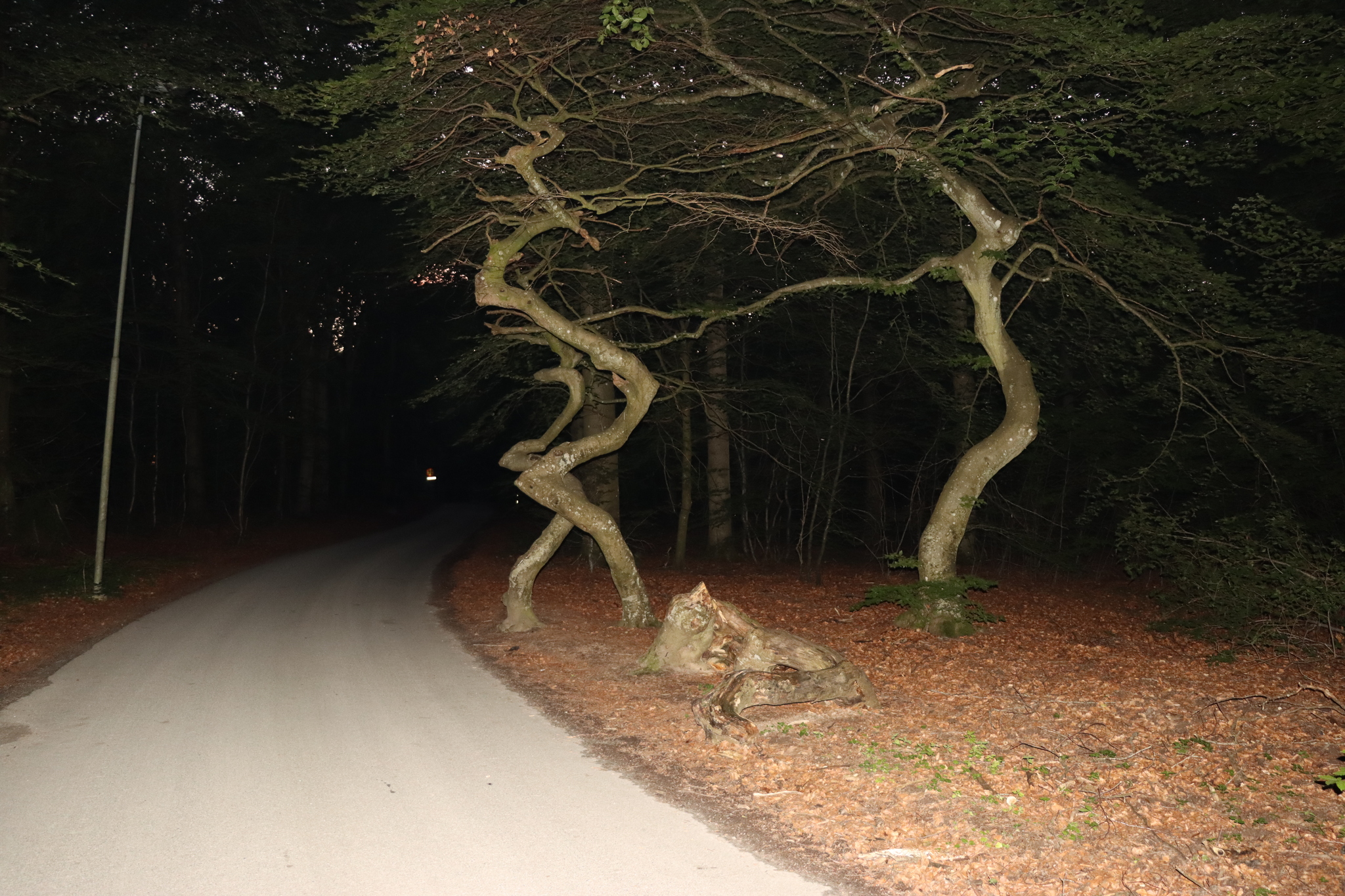
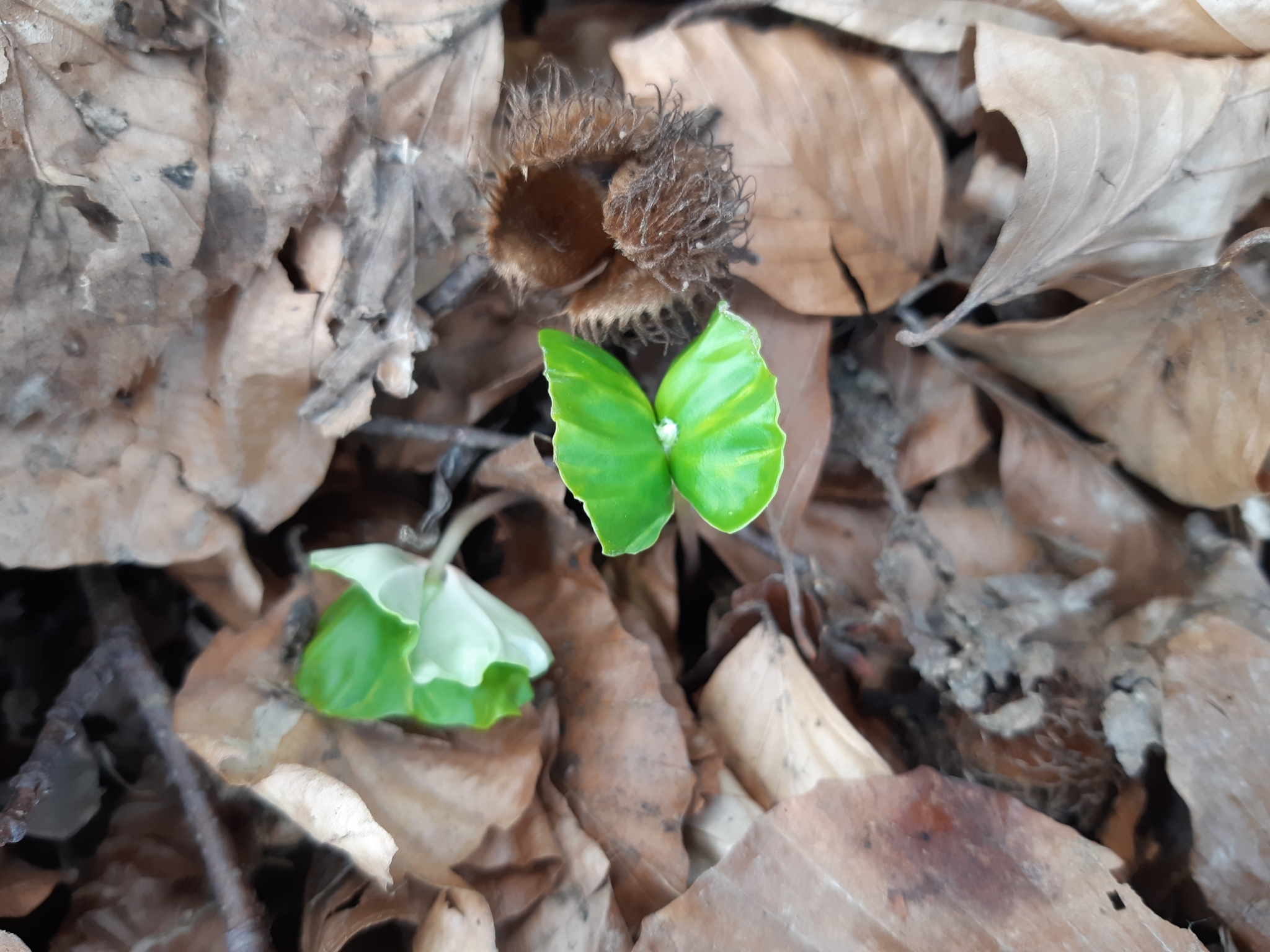
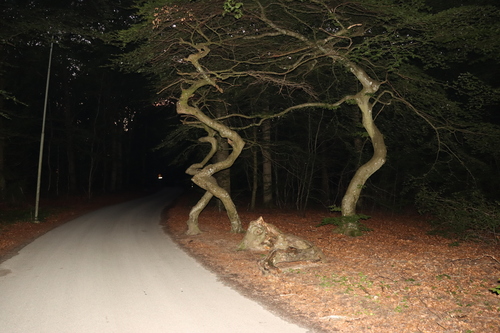
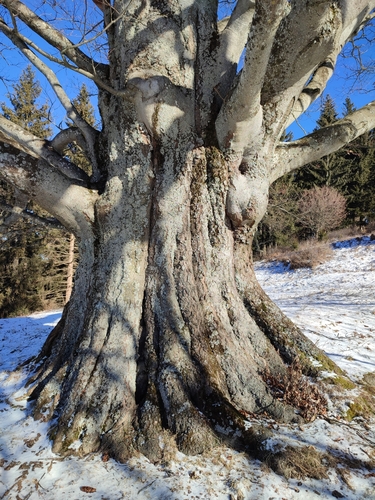
European beech (Fagus sylvatica) is a large deciduous tree in the Fagaceae family, native to temperate Europe. Smooth gray bark remains largely uncracked with age. Its oval leaves have silky hairs along their edges, and triangular beechnuts grow in pairs or threes inside a prickly husk.
Read moreEuropean beech and Common beech

© photo
(c) mikeburchett, some rights reserved (CC BY-NC) · cc-by-nc
Marino Linić · cc0
Todd Patterson · cc0
no rights reserved · cc0
(c) Erwin Gruber, some rights reserved (CC BY) · cc-by
Global distribution
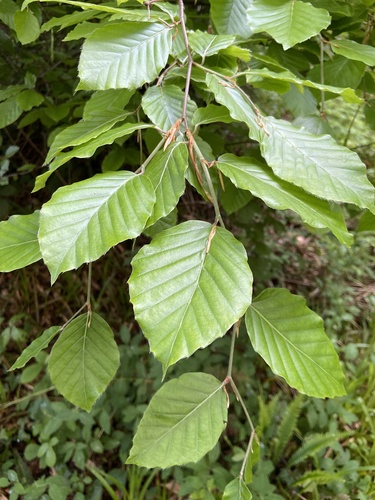
The native range covers temperate Europe, from southern Scandinavia and the British Isles to northern Spain, Italy and the Balkans, extending toward Asia Minor and the Caucasus. In France it grows in moist woodland across most of the country, including Corsica, except on the Mediterranean plain where summers are too hot and dry.
- Native8
- Metropolitan France
- Germany
- United Kingdom
- Belgium
- Italy
- Spain
- Poland
- Denmark
Hexagons: regions where the plant occurs. Green dots: native range.1
Identity
European beech (Fagus sylvatica L., 1753), also known as common beech, is a large deciduous member of the Fagaceae family, alongside oaks and chestnuts. Linnaeus described it in his Species Plantarum in 1753. More than 270 years later, the same binomial remains its accepted scientific name in current botanical databases. 1 7
The epithet sylvatica comes from Latin silva, meaning forest. It describes the tree’s ecological role: across much of France outside the Mediterranean region, beech dominates extensive forests, either alone or mixed with oak and hornbeam. 8 7
Recognition
Smooth gray bark remains one of beech’s most reliable identification features, even on old trees. It cracks much less than the bark of most large forest trees, whose trunks develop deep fissures as they age. 7 6
Oval leaves have smooth or slightly wavy-toothed margins, with silky hairs especially visible as the buds open. They are usually 5–10 cm (2–4 in) long, with 7–9 pairs of veins, and turn golden bronze in fall. Young trees and clipped hedges often retain dead brown foliage until spring, a useful winter feature known as marcescence. 4 3
Depending on growing conditions, trees commonly reach 30 m (100 ft) tall, rarely exceeding 40 m (130 ft), with crowns 10–15 m (33–50 ft) wide. Growth is moderate and steady, without a pronounced slowdown once the tree reaches adulthood. 5
Useful taxonomy
Fagus silvatica, a spelling sometimes encountered in older floras, is simply a variant of the accepted name Fagus sylvatica L. Scopoli once placed the tree in the chestnut genus as Castanea fagus Scop.. That abandoned synonym reflects the visual similarities between these neighboring members of the Fagaceae family. 7 1
Eastern European and Caucasian populations are sometimes distinguished as subspecies orientalis, or treated as a separate species, Fagus orientalis. These different treatments help explain why geographic variation does not always receive the same taxonomic rank in different references. 1
Habitat and range
Across temperate Europe, European beech ranges from southern Scandinavia and the British Isles to northern Spain, Italy and the Balkans, extending toward Asia Minor and the Caucasus. 7 1
French populations occupy moist woodland through almost the entire country, including Corsica. The Mediterranean plain is the main exception, because summer drought limits the species there. 7 8
Plant sociologists often describe beech-dominated woodland as climax forest. Beech tolerates shade well enough to regenerate beneath its own canopy, where many pioneer trees cannot establish. The IUCN lists it as Least Concern, although its documented sensitivity to hot, dry summers is an increasing concern in lowland regions. 7 9 4
Life cycle and reproduction
Each beech tree carries separate male and female flowers, making it monoecious. Flowering occurs in April and May. Male flowers hang in rounded, long-stalked catkins; female flowers occur in groups of two or three within a four-part, bristly covering. 7 4
Flowering often begins only at 30–80 years of age. This long juvenile period explains why a young beech planted in a garden may take decades to produce its first nuts. 4
At maturity, the woody, prickly husk opens into four valves, releasing two or three shiny brown, triangular beechnuts, which ripen in August and September. Large quantities eaten raw can cause nausea and digestive upset in people and dogs. Roasted nuts are eaten, and the nuts can also be pressed for edible oil historically used for lighting. 7 4 5
Fallen beechnuts feed birds, wild boar, rodents and other small mammals in late fall. This ecological role is documented in both Europe and North America, where the tree has been widely planted beyond its native range. 4
Uses and risks
Dense, even-grained beech wood is used for joinery, light structural work, turning, firewood and charcoal. Tender young leaves gathered in spring can also be eaten raw in salads, where they have a mild flavor. 7 5
As a specimen tree, beech is sensitive to hot summers and compacted urban soils. It also transplants poorly, limiting its urban use compared with more tolerant trees. Clipped into a hedge, however, it provides a dense year-round screen because of its retained winter leaves. 4 3
Beech is vulnerable to beech bark disease, which involves a scale insect and fungi in the genus Nectria. Powdery mildew and various cankers may also affect weakened trees. 6
Varieties, look-alikes and related plants
Horticultural selections of the same species offer markedly different forms. Purpurea, in the Atropurpurea Group, has purple to copper foliage; Pendula has a weeping habit; and Dawyck forms a narrow column used in urban rows. Tricolor has pink, white and green variegated leaves that are more sensitive to full sun. 6 2
In North America, the most likely look-alike is American beech (Fagus grandifolia). It can grow larger and has paler gray bark, while its longer leaves have more conspicuous teeth. 6
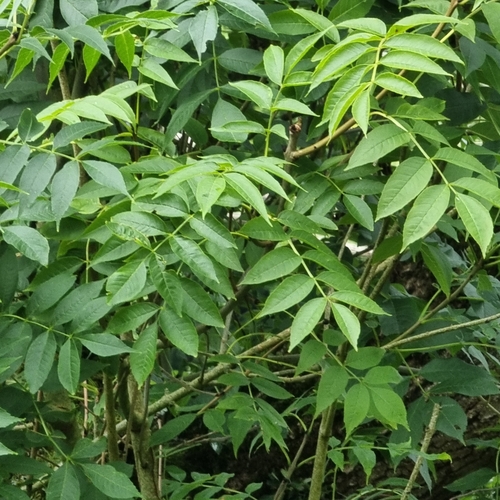
For European look-alikes, examine the leaf blade. Beech leaves are smooth-edged or finely wavy, whereas European hornbeam, which can look similar from a distance because of its smooth bark, has distinctly toothed leaf margins. 7
Main sources
- Plants of the World Online / Kew, Fagus sylvatica L.
- Royal Horticultural Society, Fagus sylvatica - common beech
- Royal Horticultural Society, How to grow beech - growing guide
- NC State Extension, Fagus sylvatica (European Beech)
- Plants For A Future, Fagus sylvatica
- Missouri Botanical Garden, Fagus sylvatica
- Tela Botanica, Fagus sylvatica L.
- INPN / MNHN, Fagus sylvatica L., 1753 (cd_nom 97947)
- IUCN Red List of Threatened Species, Fagus sylvatica assessment
Frequently asked questions
Does European beech lose its leaves in winter?
Yes. Mature trees shed most leaves in fall, but young trees and clipped hedges often retain dead brown leaves all winter, a process called marcescence.
Is European beech toxic to cats and dogs?
The foliage is not known to be toxic. Large quantities of raw beechnuts may cause digestive upset in people and dogs; roasting removes the particular concern associated with eating them raw.
How can I tell beech from hornbeam?
Beech leaf edges are smooth or gently wavy, while European hornbeam leaves are distinctly toothed all around, even though both trees have similarly smooth bark.
Why do beech hedges stay brown all winter?
Marcescence causes young shoots and clipped hedges to retain dead leaves until spring budbreak. Unpruned mature trees generally shed their leaves in fall.
When does a beech first produce nuts?
Flowering and the first beechnut crop often begin only at 30–80 years, depending on growing conditions. A garden planting therefore requires considerable patience.
Can you eat beechnuts?
Yes, in modest quantities and preferably roasted. Too many raw nuts can cause nausea and digestive upset. Historically, they also supplied edible oil used for lighting.
Is European beech threatened?
The IUCN lists it as Least Concern because of its broad European distribution. Repeated hot, dry summers nevertheless increasingly weaken lowland stands, especially on shallow soils.
Similar plants
If you are unsure about a plant’s toxicity, ask a botanist or veterinarian for advice.