
European ash (Fraxinus excelsior, )
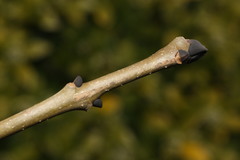
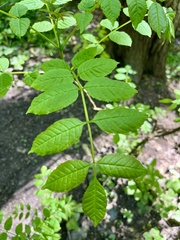
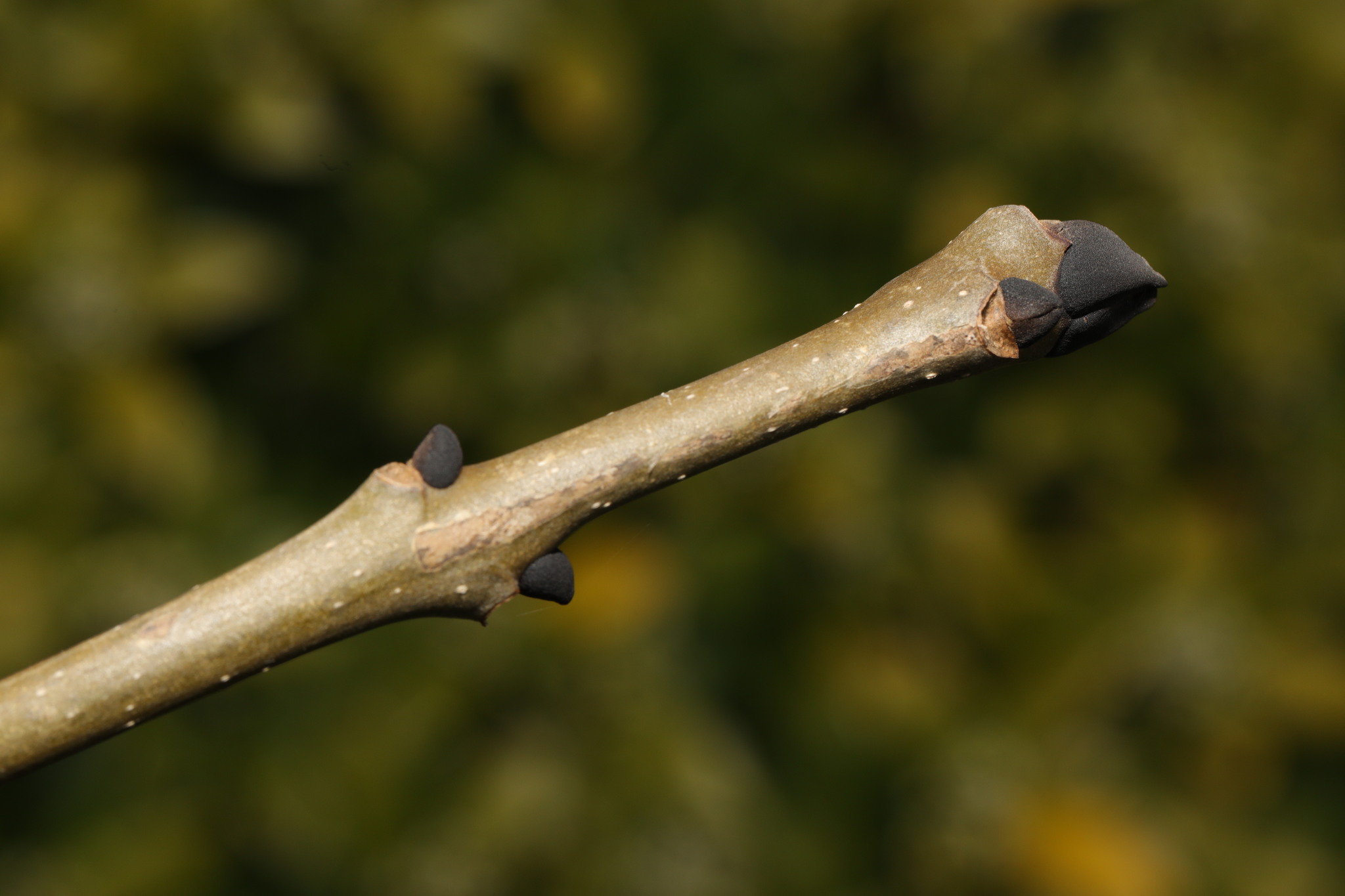
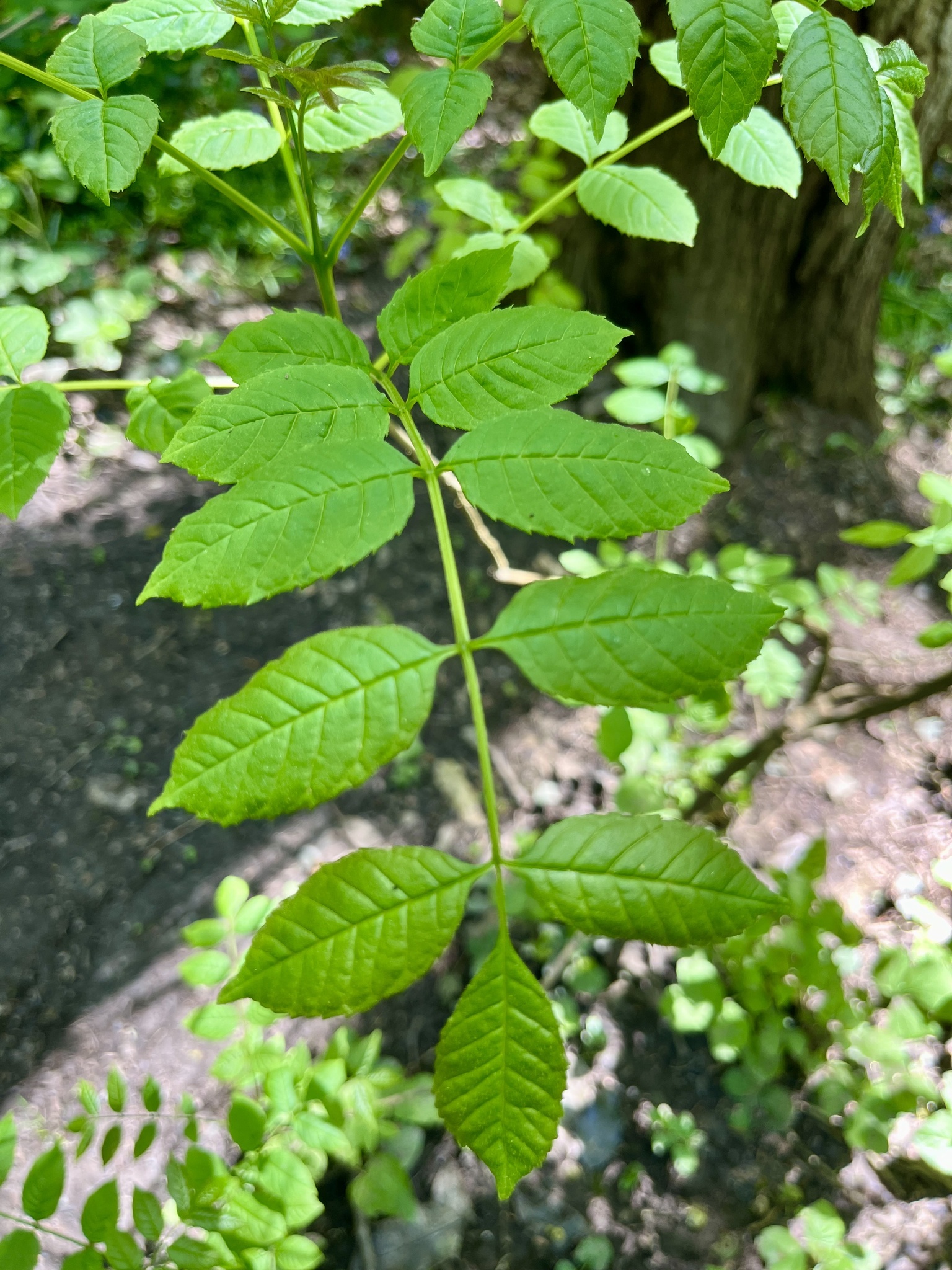
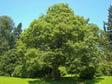
European ash (Fraxinus excelsior L., 1753) is a large deciduous tree in the olive family, native to most of Europe east to the Caucasus and the Alborz Mountains of Iran. Velvety black buds identify it in winter; opposite compound leaves grow on flattened shoots during the growing season.
Read moreEuropean ash, Common ash and Ash

© photo
(c) nicky-by-nature, some rights reserved (CC BY-NC) · cc-by-nc
Stephen James McWilliam · cc0
Kieran Roy Powell · cc0
(c) Iona M., some rights reserved (CC BY) · cc-by
(c) Mary E. Macaulay, P.Eng., some rights reserved (CC BY) · cc-by
Global distribution
Fraxinus excelsior is native to most of Europe north to around 61°N, east to the Volga basin in Russia and southeast to the Caucasus and the Alborz Mountains of Iran. It is absent from Iceland, North Africa and the southernmost parts of Europe, where narrow-leaved ash replaces it locally. Naturalized populations occur beyond its native range, notably in New Zealand.
- Native6
- Introduced3
- Mainland France
- United Kingdom
- Germany
- Norway
- Caucasus
- Iran
- New Zealand
- United States
- Canada
Hexagons: regions where the plant occurs. Green dots: native range.1
Identity
European ash (Fraxinus excelsior L., 1753), also called common ash or simply ash, is an accepted species in the genus Fraxinus, family Oleaceae. POWO traces the name to Linnaeus's 1753 publication and describes a large temperate tree native from Europe to the Caucasus and the Alborz Mountains of Iran. 1 3
Within mainland France, European ash is one of the commonest forest trees, alongside oak and beech. Its French name frêne élevé refers to its tall stature. An older regional name, langue d'oiseau, meaning bird's tongue, describes the elongated winged seed. 4 3
Norse mythology describes Yggdrasil, a giant ash linking nine worlds and supporting the universe. Celtic druids cut ritual staffs from its straight, fibrous wood. These traditions help explain the ash's recurring presence in western European place names and protective hedges. 5
Recognition
Garden and avenue trees commonly reach 20–25 m (66–82 ft); forest specimens exceed 35 m (115 ft) on favorable sites. The straight, slender trunk may reach 1.6–1.8 m (5.2–5.9 ft) in diameter in old trees. The RHS gives an eventual height around 25 m (82 ft) and spread over 8 m (26 ft). Smooth grayish young bark fissures with age. 2 5
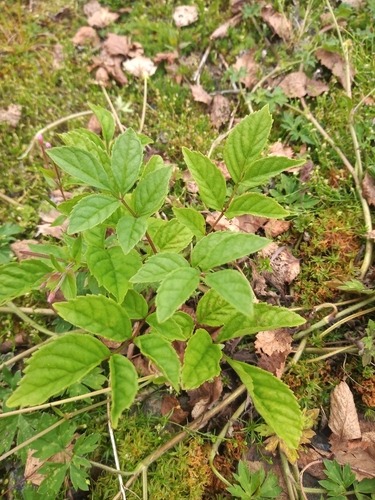
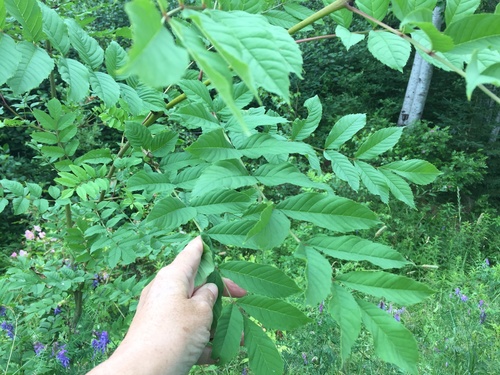
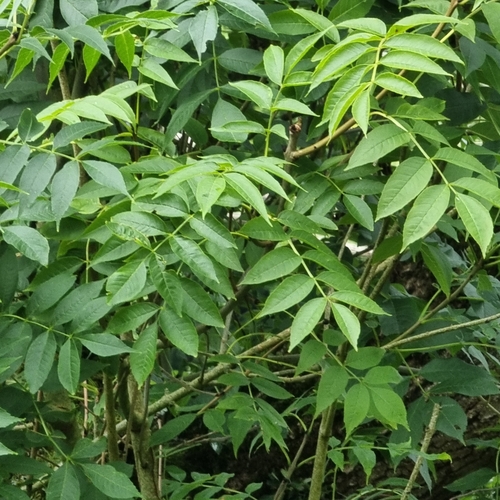
Among common large European trees with opposite branching, including sycamore maple, European ash stands out in winter through velvety black terminal buds, with paired buds on rather flattened shoots. This identifies it without leaves. During the growing season, opposite, odd-pinnate leaves carry 7–15 toothed leaflets on a rachis up to 30 cm (12 in) long. 5
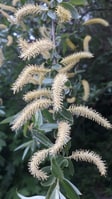
Before leaves emerge, flowers open from February to April in its European range. They lack petals and are purplish on female trees and darker on males; individual trees may bear male, female or bisexual flowers. Wind carries the pollen, which can cause allergies. Winged samaras 3–4 cm (1.2–1.6 in) long hang in clusters and disperse during winter and early spring. 5
Useful taxonomy
Botanically, the accepted name is Fraxinus excelsior L., family Oleaceae. Its long synonymy includes historical names such as Fraxinus pendula Aiton and Fraxinus excelsior var. monophylla. Three subspecies are currently recognized: F. excelsior subsp. excelsior, subsp. coriariifolia and subsp. siciliensis. 3 1
Other ashes growing in mainland France create local confusion: Fraxinus angustifolia, a more southerly tree with narrower leaflets; Fraxinus ornus, with fragrant white inflorescences; North American Fraxinus americana; and Fraxinus pennsylvanica. Scientific names provide a stable reference when common names overlap. 3
Habitat and range
Most of Europe lies within the native range, north to about 61°N, east to Russia's Volga basin and southeast to the Caucasus and Iran's Alborz Mountains. European ash is absent from Iceland, North Africa and Europe's southernmost regions, where narrow-leaved ash takes its place. Introductions have also naturalized locally in New Zealand, the United States and Canada. 1 5
French populations favor moist valley bottoms, calcareous or slightly acidic soil and upland ravine forests up to 1,500 m (4,920 ft). Typical mixed stands include riverside alder-ash woods and lowland oak-ash woods, both protected habitat types under the European Habitats Directive. 4 3
Life cycle and reproduction
Light-demanding European ash is a gap species: growth slows markedly in shade and resumes when an opening appears overhead. After several years devoted mainly to establishing roots, stem growth accelerates, reaching as much as 10 m (33 ft) in 20 years on favorable sites. 5
Late frosts often destroy terminal buds on young shoots, explaining the frequent forked trunks despite the species' usual winter hardiness. Seed is the only reliable method for propagating the wild type; ornamental cultivars are grafted to preserve their characteristic habit. 3
Uses and risks
Pearly white, hard and highly elastic timber makes ash one of Europe's valuable hardwoods. Used as fuel since the Neolithic, it now supplies tool handles, sports equipment such as hockey sticks, vehicle bodywork and furniture. A frequent cosmetic defect, black heart, affects older trees on wet clay but does not reduce the wood's mechanical strength. 5 3
Veterinary sources consulted do not identify ingestion toxicity for common domestic animals, but sap can irritate skin and abundant pollen is a recognized allergen. In France, a 2020 order requires nurseries selling European ash to display an allergy warning label; this is a French requirement rather than a universal rule. 8 9
Disease is the most serious threat. Ash dieback, caused by Hymenoscyphus fraxineus, formerly Chalara fraxinea, kills shoots and then the crown and can kill a tree within a few years. It has contributed to the species' Near Threatened status on the global IUCN Red List. In North America, the Asian beetle emerald ash borer (Agrilus planipennis) adds to the damage by cutting lethal galleries beneath the bark. 6 7
Varieties, look-alikes and related plants
Nursery selections include 'Pendula', with a weeping habit especially striking in winter, and 'Aurea', with golden young shoots. Rarer forms include 'Diversifolia', with simple rather than compound leaves, and 'Jaspidea', whose bark is golden during its early years. These cultivars remain forms of Fraxinus excelsior. 3
Rowan (Sorbus aucuparia) and black elder (Sambucus nigra) are common field look-alikes because both have compound leaves. Rowan has more numerous leaflets toothed to the base; elder has hollow stems and a distinctive smell when crushed. Ash's black buds and winged samaras are the most reliable features for separating the three. 5
Main sources
- Plants of the World Online / Kew, Fraxinus excelsior L.
- Royal Horticultural Society, Fraxinus excelsior - common ash
- Tela Botanica / eFlore BDTFX, Fraxinus excelsior
- INPN / MNHN, Fraxinus excelsior L., 1753
- Woodland Trust, Ash - Fraxinus excelsior
- Forest Research (UK), Ash dieback - Hymenoscyphus fraxineus
- IUCN Red List, Fraxinus excelsior assessment
- ASPCA, Toxic and non-toxic plant list for dogs
- Légifrance, order of September 4, 2020 on allergy warning labels for ash trees
Frequently asked questions
Is European ash poisonous to cats and dogs?
The veterinary sources consulted do not identify ingestion toxicity for cats or dogs. Caution is still useful around sap, which irritates some people’s skin, and pollen, which can trigger allergies during flowering.
How can I identify European ash in winter?
Look for velvety black terminal buds and opposite paired buds on rather flattened shoots. No other common large European tree shows this contrast so clearly.
What is ash dieback?
Ash dieback is caused by the fungus Hymenoscyphus fraxineus, formerly called Chalara fraxinea. It kills shoots and then the crown and can kill a tree within a few years, making it the species’ principal disease threat in Europe.
Is European ash threatened with extinction?
The IUCN lists it as Near Threatened globally because of ash dieback and emerald ash borer. It remains Least Concern in mainland France, where populations are still abundant.
Can I plant European ash in a small garden?
It is generally unsuitable. Mature trees often exceed 20–25 m (66–82 ft) and develop a broad crown, making them better suited to parks, large gardens and avenues than confined spaces.
How does European ash differ from narrow-leaved ash?
European ash occupies temperate and central Europe. Narrow-leaved ash (Fraxinus angustifolia) replaces it in southern Europe and the Mediterranean basin and has fewer, narrower leaflets.
Why does ash pollen require warning labels in France?
Under a French order issued in 2020, ash sellers must label the allergy risk from pollen, which this wind-pollinated tree produces in large quantities.
Similar plants
If you are unsure about a plant’s toxicity, ask a botanist or veterinarian for advice.