
Ackee (Blighia sapida, )
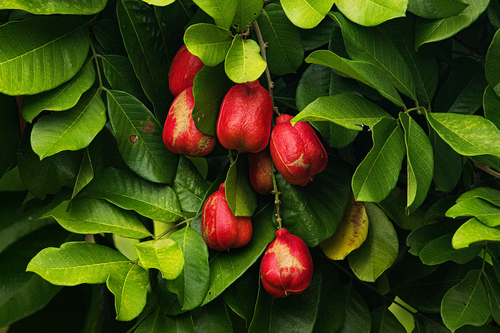


Ackee (Blighia sapida) is an evergreen fruit tree in the Sapindaceae native to tropical West and Central Africa. Introduced to Jamaica in the 18th century, it became the national fruit and an ingredient in ackee and saltfish. The cream-colored aril is edible only after the fruit has opened naturally into three valves and has been properly prepared and cooked. Unripe fruit contains dangerous hypoglycin A.
Read moreAckee, Akee and Ackee apple
Place in full sun, with intense direct light all day long.


© photo
(c) Bart Wursten, some rights reserved (CC BY-NC), uploaded by Bart Wursten · cc-by-nc
Wikimedia Commons · CC BY-SA or Public Domain
Taken Apr 17, 2019 by OTS - O. Vargas (cc-by-nc-sa)
Taken Nov 17, 2019 by Nelson Zamora Villalobos (cc-by-nc)
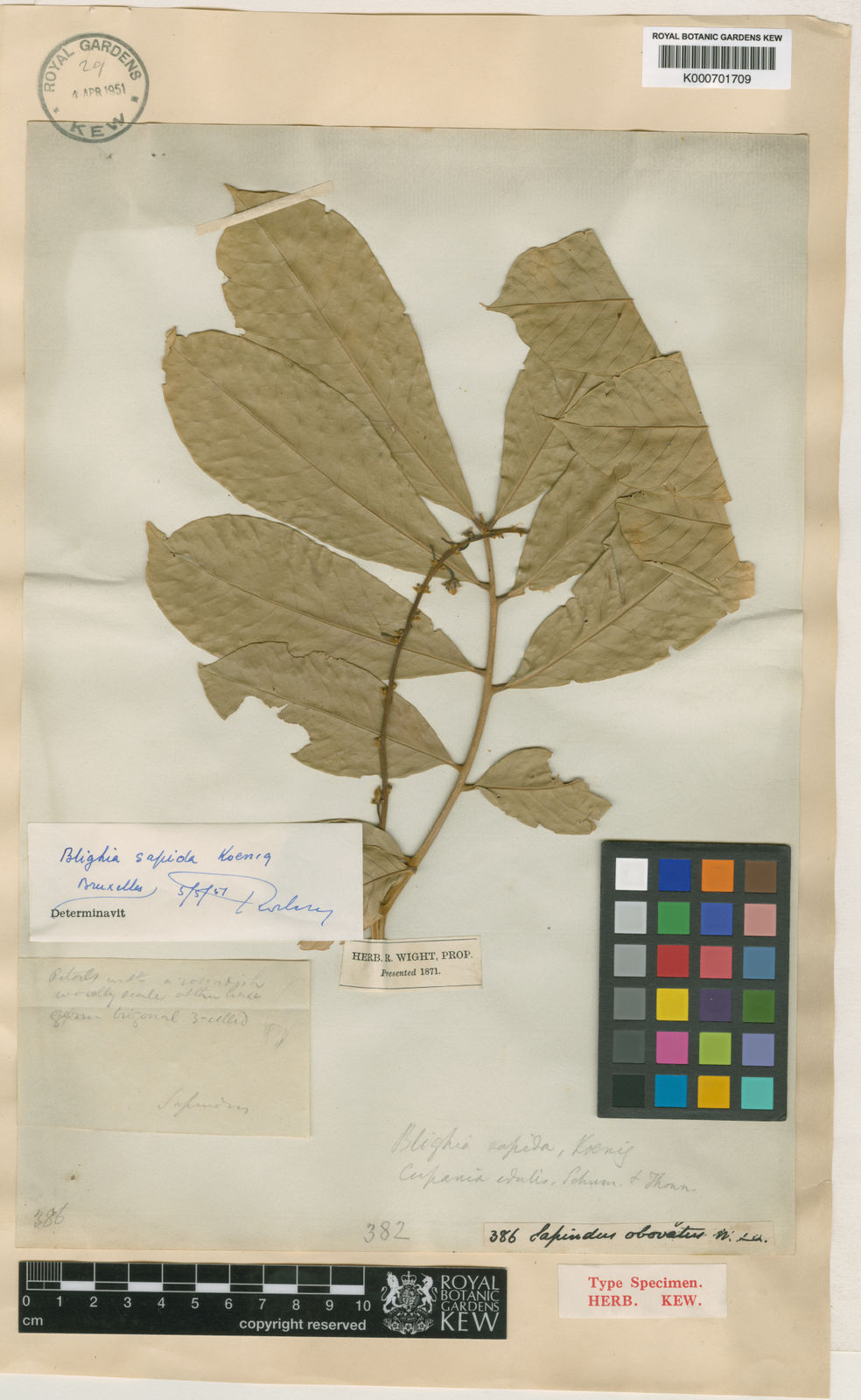
© copyright of the Board of Trustees of the Royal Botanic Gardens, Kew.


Global distribution
Blighia sapida is native to tropical West and Central Africa, from Senegal to Cameroon and Gabon. Introduced to Jamaica before 1778, it naturalized there and became the national fruit. Ornamental and fruit cultivation later spread it to other tropical regions.
- Native4
- Introduced3
- Ghana
- Ivory Coast
- Nigeria
- Cameroon
- Jamaica
- Haiti
- Belize
Hexagons: regions where the plant occurs. Green dots: native range.1
Identité
Ackee (Blighia sapida K.D.Koenig, 1806), also spelled akee and known as ackee apple, is a fruit tree in the Sapindaceae, the family of lychee and longan. Its capsule must open naturally into three valves on the tree before its arils can be prepared for eating. Closed fruit or fruit that fell before opening can contain dangerous hypoglycin A. Native to tropical West and Central Africa, the species takes its scientific name from Captain William Bligh, who brought seeds from Jamaica to the Royal Botanic Gardens, Kew, in 1793. Latin sapida means tasty, referring to the cooked aril rather than the rest of the plant. 1 2
The English name ackee derives from Akan (Twi) akye fufo, a language spoken in present-day Ghana. That region supplied some of the seeds taken to Jamaica in the 18th century. French Caribbean usage includes arbre à fricassée, recalling the cooked aril's resemblance in texture to scrambled eggs. 2
Recognition
Smooth, pale gray bark and evergreen foliage characterize Blighia sapida. Cultivated Jamaican trees commonly reach 10–12 m (33–39 ft), with records up to 20 m (66 ft) in favorable conditions. The dense, spreading crown provides valued shade in tropical gardens. 2 3
Even-pinnate compound leaves carry three to five pairs of leathery, elliptic to obovate leaflets, 15–30 cm (6–12 in) long, glossy green above and duller beneath. Fragrant, hairy white flowers appear in clusters 7.5–17.5 cm (3–7 in) long at the leaf axils. 2
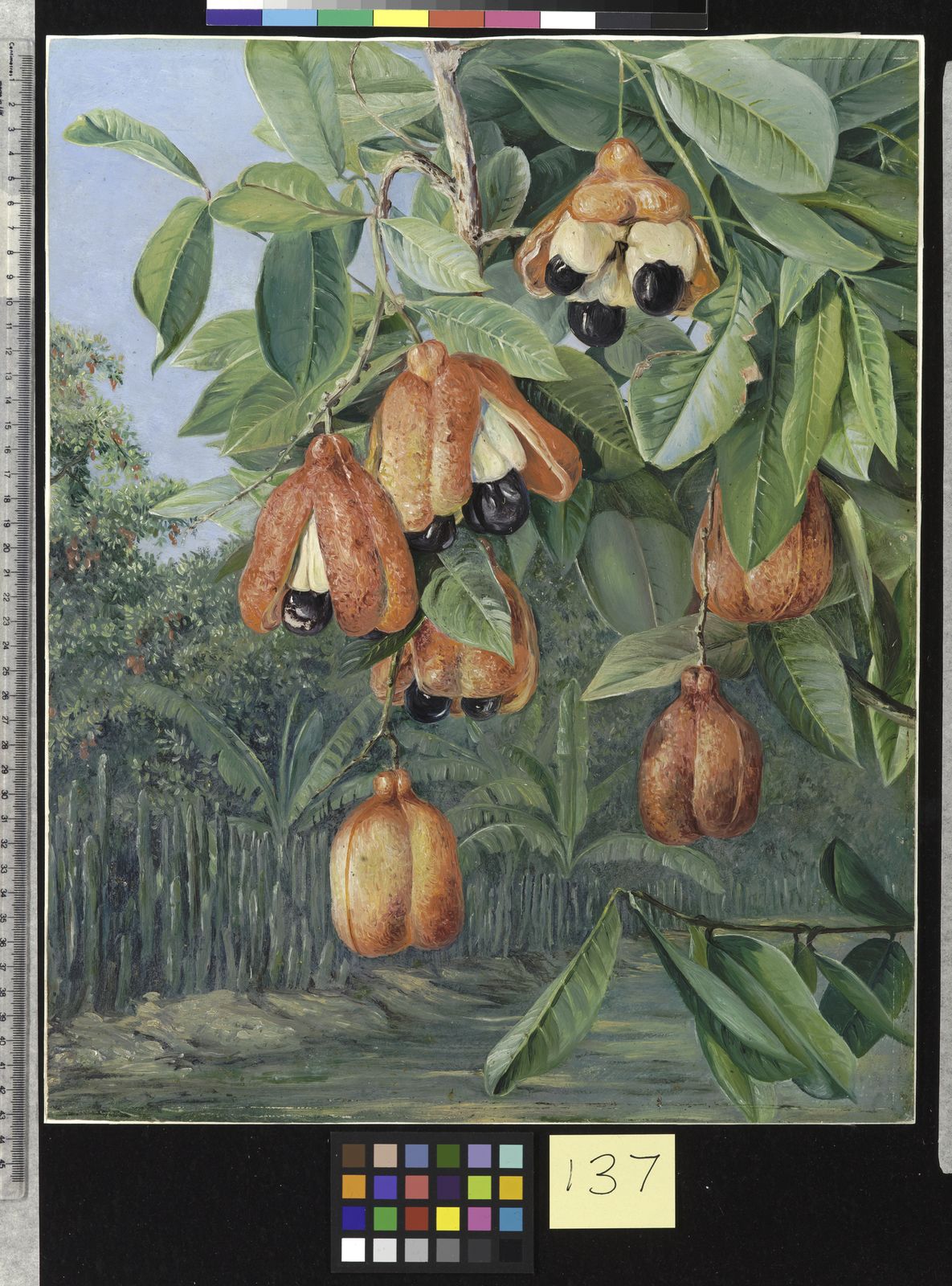
Pear-shaped, three-lobed capsules measure 7–10 cm (2.8–4 in) and turn from green through yellow to scarlet as they ripen. They open naturally into three valves, exposing three large glossy black seeds partly surrounded by cream to pale yellow arils. Natural opening marks the stage at which the arils can be prepared for food. Groups of three to ten capsules on a branch create conspicuous red and yellow patches across a fruiting crown. 2 3
Useful taxonomy
POWO/WCVP accepts Blighia sapida K.D.Koenig, described in 1806 from tropical West African material. The genus Blighia, honoring Captain Bligh, contains several tropical African species. Neither Blighia unijugata nor Blighia welwitschii has a recognized edible fruit, so culinary substitution is inappropriate. 1 8
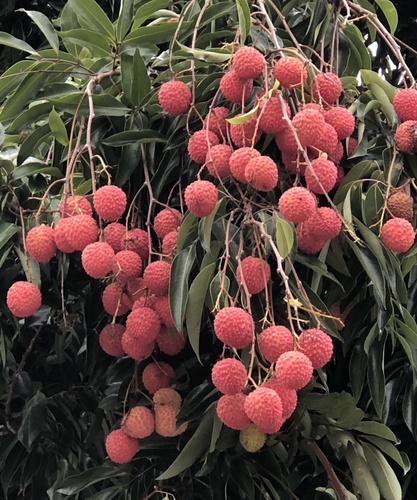
Sapindoideae is the subfamily containing ackee, lychee (Litchi chinensis) and longan (Dimocarpus longan). Each fruit has an edible aril around a large seed, but lychee and longan do not share the particular toxicity of unripe ackee. 8
Habitat and range
Tropical West and Central African forests and seasonally dry wooded savannas form its native habitat, from Senegal to Cameroon and Gabon. The species occurs up to 900 m (2,950 ft) above sea level. 3 9
Introduced to Jamaica before 1778 on ships connecting West Africa and the Caribbean, ackee naturalized readily in a tropical climate resembling its native conditions. It became Jamaica's national fruit and a central ingredient in ackee and saltfish. 7 2
The IUCN assessment classifies Blighia sapida as Least Concern. Its native range remains extensive, and cultivation extends from Florida to East Africa. Local pressures such as agricultural clearance have not produced a generalized decline. 5
Life cycle and reproduction
Fresh seeds germinate in two to four weeks, with a high success rate. Seed-grown trees take three to five years to bear fruit, compared with one to two years for air-layered or grafted plants. 3
Several months separate flowering from fruiting. Green capsules enlarge slowly, then turn yellow and scarlet in the final days before opening naturally on the tree. This color change helps track ripening, but color alone does not replace spontaneous opening into three valves. Harvesting closed capsules exposes consumers to high concentrations of hypoglycin A in the arils. 4 6
Uses and risks
Properly prepared and cooked ripe arils serve as a vegetable in Jamaican cooking, especially with salted cod in ackee and saltfish. Fried with onions and peppers, they are often compared to scrambled eggs. Preparation always requires removing the seeds and the toxic pink membrane, or raphe, connecting them to the aril. 7 6
Unripe arils enclosed in a capsule contain hypoglycin A, which causes Jamaican vomiting sickness. Symptoms include uncontrollable vomiting, severe hypoglycemia and seizures; severe cases, particularly in children, can be fatal. Seeds contain concentrated hypoglycin B, described as half as toxic as hypoglycin A but equally unsuitable for eating. 6 2
Documented poisoning chiefly concerns humans. Evidence for pets is limited, and that absence does not establish safety for dogs or cats. 6
Varieties, look-alikes and related plants
Jamaican growers distinguish two broad horticultural types among nearly forty-eight local selections. Butter has deeper yellow, delicate arils; Cheese has paler, firmer arils. Unlike lychee or longan, ackee lacks widely distributed horticultural cultivars consistently labeled under individual commercial names. 2
Ripeness, rather than a look-alike species, poses the main identification hazard. A capsule that remains closed or fell before opening is toxic fruit to discard entirely, rather than food that can be eaten cautiously. Waiting for natural opening into three valves is an essential safeguard against hypoglycin A poisoning, followed by proper preparation. Related Blighia unijugata and Blighia welwitschii have smaller, inedible fruits and strictly African ranges. 8 1
Main sources
- Plants of the World Online / Kew, Blighia sapida K.D.Koenig
- Purdue University / Julia F. Morton, Fruits of Warm Climates, Akee
- Plants For A Future, Blighia sapida
- Missouri Botanical Garden Plant Finder, Blighia sapida
- IUCN Red List, Blighia sapida assessment (2019)
- PMC / Isenberg et al., hypoglycin A in Sapindaceae arils
- Jamaica Information Service, Jamaican National Fruit, Ackee
- USDA-ARS GRIN Taxonomy, Blighia sapida
- USDA PLANTS Database, Blighia sapida profile
Frequently asked questions
Can you eat ackee safely?
Only the aril of fully ripe fruit that has opened naturally into three valves on the tree can be eaten after cooking. Discard the entire fruit if it remains closed or fell before opening.
Why is unripe ackee poisonous?
Unripe arils contain hypoglycin A, the toxin responsible for Jamaican vomiting sickness, with vomiting, severe hypoglycemia and seizures. Seeds contain concentrated hypoglycin B.
How does ackee differ from lychee and longan?
All three belong to the Sapindaceae and have an edible aril around a large seed. Ackee, however, must open naturally before harvest, a requirement that does not apply to lychee or longan.
Where does the name Blighia sapida come from?
The name honors Captain William Bligh, who brought the fruit from Jamaica to the Royal Botanic Gardens, Kew, in 1793. The Latin epithet sapida means tasty.
Is ackee native to Jamaica?
No. It is native to tropical West and Central Africa and was introduced to Jamaica before 1778, probably on ships traveling between Africa and the Caribbean, before becoming the national fruit.
How can you recognize ackee suitable for eating?
The essential sign is a capsule opening naturally into three valves on the tree. The black seeds and the toxic pink membrane connecting them to the aril must then be removed.
Can ackee grow outdoors in cold climates?
It needs a stable tropical climate to fruit and is sensitive to freezing below -3 °C. In cold climates, young potted plants need heated indoor protection. It is grown outdoors in Guadeloupe and Martinique.
Similar plants
If you are unsure about a plant’s toxicity, ask a botanist or veterinarian for advice.