
Papaya (Carica papaya, )
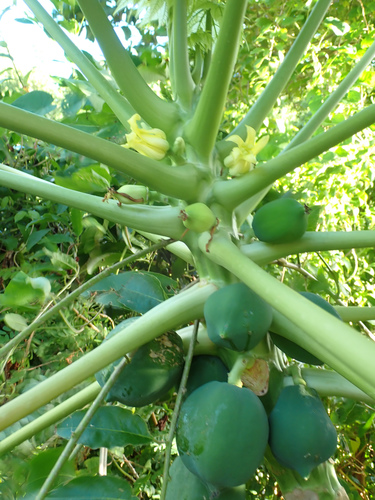
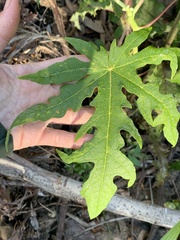
Papaya (Carica papaya L.) is a large, semiwoody herb in the Caricaceae, native to southern Mexico and Central America and often mistaken for a tree. A crown of deeply lobed palmate leaves tops its single, unbranched stem. Male, female or hermaphrodite plants bear the flowers that produce papain-rich papaya fruits.
Read morePapaya, Pawpaw and Papaw
Allow a few hours of direct sun per day, preferably morning or evening.
Full sun for fruit production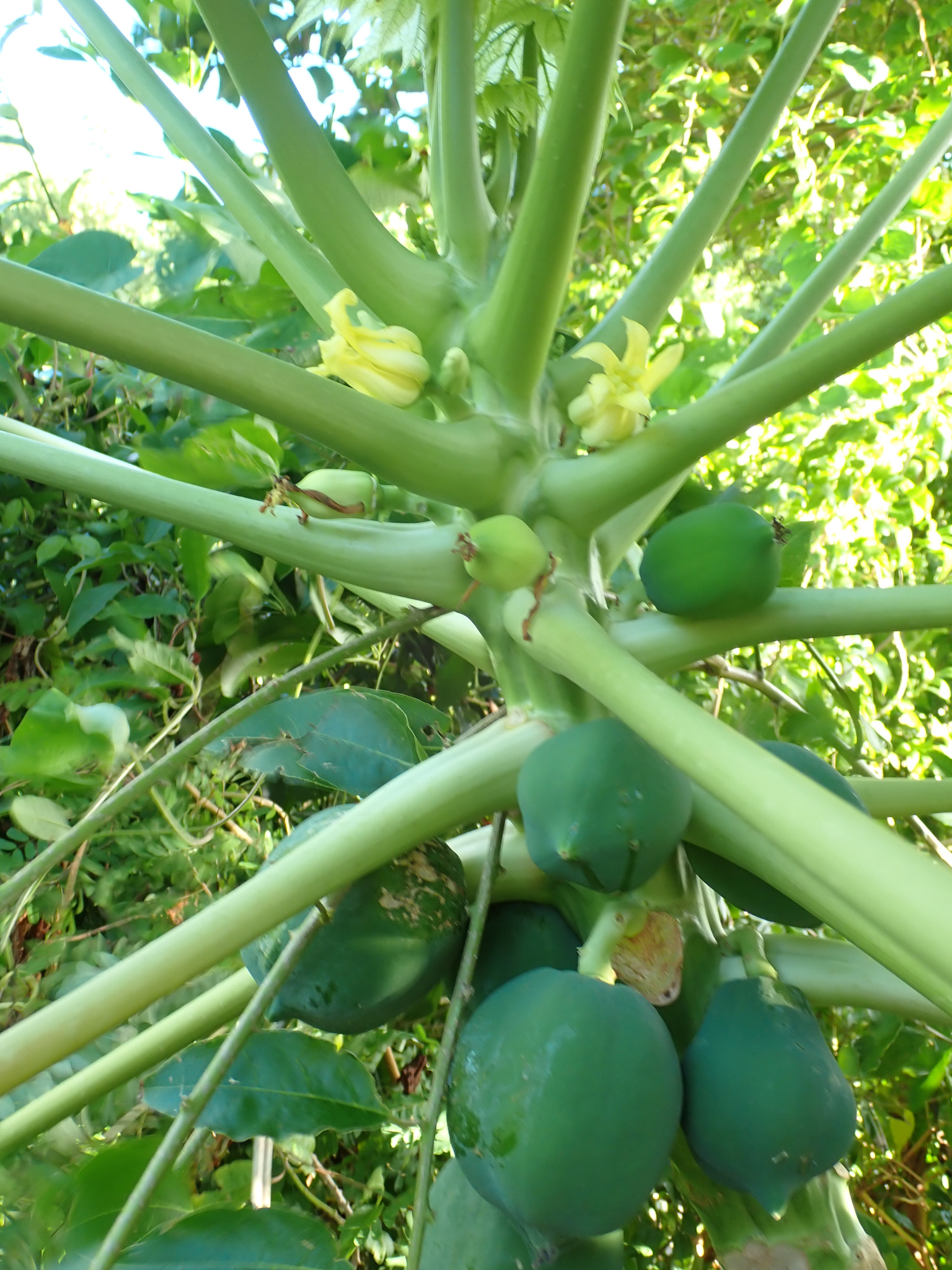


© photo
Don Loarie · cc-by
Stevie Steele · cc-by
Taken Jun 27, 2021 by Guerrero Quitorán Juan Manuel Jesús (cc-by-sa)
Taken Apr 13, 2021 by Gonzalo (cc-by-sa)
Taken Sep 10, 2015 by Tela Botanica − Anziz AHMED ABDOU (cc-by-sa)
Taken Apr 17, 2019 by OTS - R. Aguilar (cc-by-nc-sa)
Taken Jun 25, 2019 by medino antonio (cc-by-sa)
© copyright of the Board of Trustees of the Royal Botanic Gardens, Kew.




Global distribution
The exact native range of Carica papaya remains uncertain; botanists generally place it between southern Mexico and Venezuela. Cultivated since pre-Columbian times, it reached the Caribbean in the early 16th century, then spread through Spanish trade to the Philippines, Asia and tropical Africa.
- Native3
- Introduced4
- Mexico
- Guatemala
- Costa Rica
- Hawaii
- India
- Philippines
- Australia
Hexagons: regions where the plant occurs. Green dots: native range.1
Identity
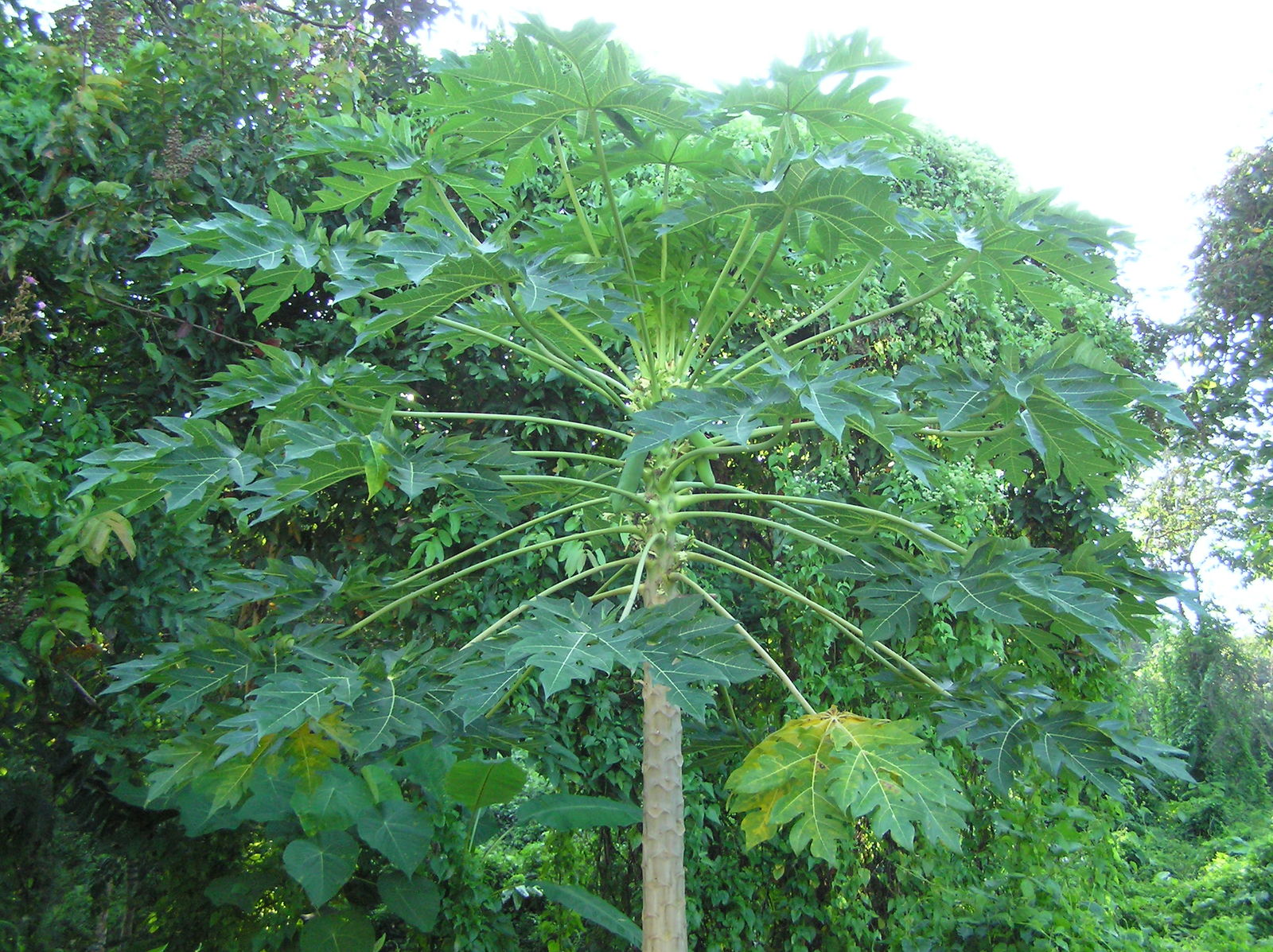
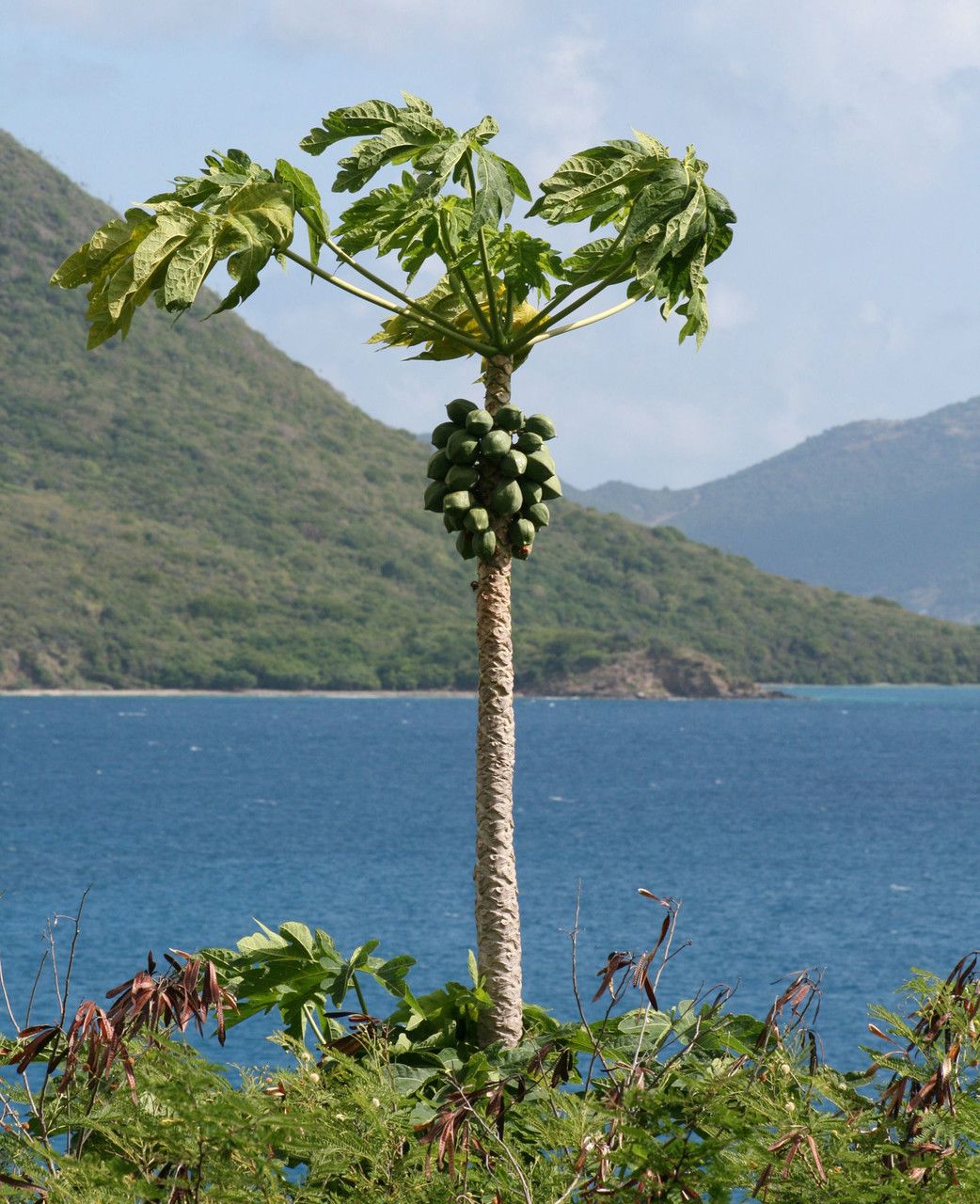
Papaya (Carica papaya L., 1753) resembles a tree but is a large, semiwoody herb in the Caricaceae. It grows on a single, unbranched stem and reaches 6–9 m (20–30 ft) in favorable tropical climates. 3 7
Wounded stems and leaves release abundant milky white latex containing papain, an enzyme used in pharmaceuticals and food processing as well as cooking. Frost kills Papaya in temperate climates; its hardiness range is USDA zones 9–12. 6 4
Recognition
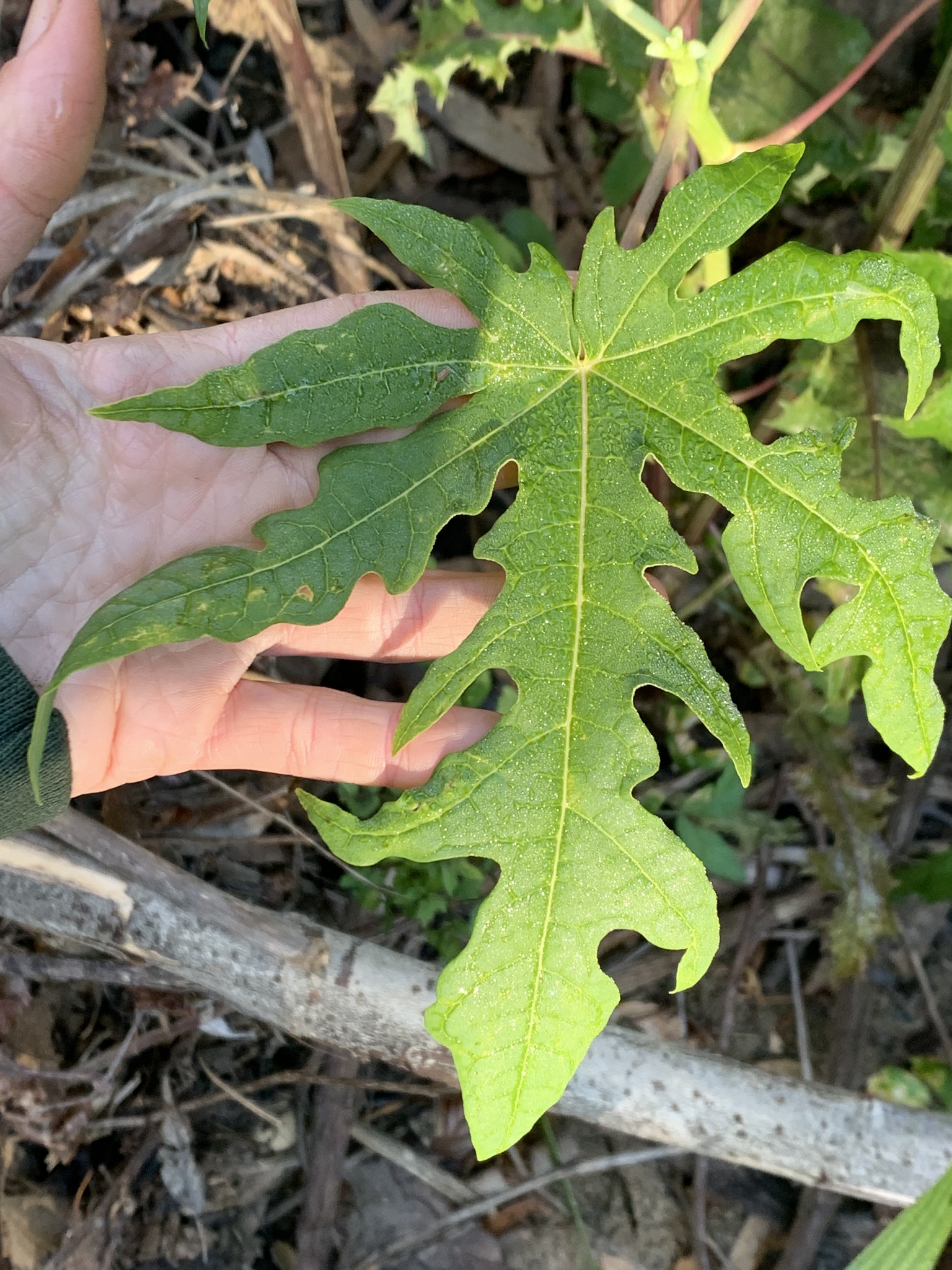
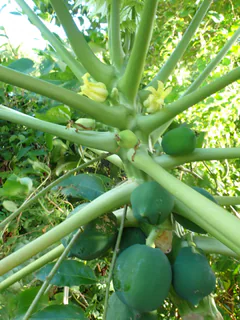
A hollow, gray-green, unbranched stem topped by a crown of large leaves distinguishes Papaya. Leaf blades measure 30–60 cm (12–24 in) across and are deeply divided into 5–9 lance-shaped lobes. Long, hollow leaf stalks attach spirally around the stem. 7
Five cream petals surround flowers of three forms borne on different plants. Male flowers hang in long panicles measuring 1.5–1.8 m (5–6 ft), female flowers are solitary or in small groups, and some cultivars produce hermaphrodite flowers capable of setting fruit alone. 3 7
Ripe fruits range from egg-shaped to pear-shaped and usually measure 15–30 cm (6–12 in) long, with extremes of 50 cm (20 in) reported in some wild forms. Yellow, orange or salmon-colored flesh surrounds a central cavity lined with wrinkled black seeds, each enclosed in a gelatinous coating. 3 7
Useful taxonomy
Within Carica, Carica papaya is the type species and by far the most widely cultivated member of a genus comprising about twenty recognized species in the Caricaceae. Linnaeus published the name in 1753; POWO and IPNI attach no competing heterotypic synonym at this rank. 1 2
The name pawpaw creates a regional ambiguity rather than a botanical synonym problem. In Australian English it denotes Papaya, while in North America it also denotes Asimina triloba, a deciduous Annonaceae tree unrelated to Papaya. 3
Habitat and range
Long cultivation since pre-Columbian times obscures Papaya's exact origin: no unequivocal wild population has been identified. Botanists place its homeland between southern Mexico and Venezuela. It colonizes lowland wasteland, clearings and forest edges in warm, humid climates. 1 5
By the early 16th century, Papaya had reached the Caribbean. Spanish navigators then took it to the Philippines around 1550, from where it spread to India, Southeast Asia and tropical Africa within a few decades. 3 7
Life cycle and reproduction
Papaya seeds germinate in 3–5 weeks, a period that can be shortened by removing the surrounding aril. Growth is rapid, reaching 1.8–3 m (6–10 ft) in the first year, with the first flowers possible after just 6 months. 3 6
Flower sex determines fruit production. An exclusively male plant never bears fruit; a female or hermaphrodite plant is needed nearby. Cultivars such as Solo combine female and hermaphrodite plants in equal proportions without requiring a male plant. A topped male or hermaphrodite plant can sometimes resume growth with female flowers, a documented example of sexual plasticity. 3
Ripening takes 6–11 months after flowering, depending on climate. Commercial orchard yields decline after 3–4 years, prompting growers to renew plantings at that interval. 3
Uses and risks
Fresh ripe Papaya is the plant's best-documented edible part and carries no particular risk in ordinary use. Cooked green fruit serves as a vegetable in several tropical cuisines, while peppery seeds are sometimes used as a condiment. 3 6
Raw latex is irritating. It contains the protein-digesting enzymes papain and chymopapain: the latter is more abundant, while the former is more active. Older leaves and seeds also contain alkaloids, notably carpaine, whose effects on the heart and respiration have been compared with digitalin and disappear on cooking. 3 Sap and pollen can trigger allergic reactions in sensitive people, sometimes making even ripe fruit unsuitable for them afterward. 3
Varieties, look-alikes and related plants
Fruit size and reproductive behavior distinguish commercial cultivars. Hawaiian Solo produces compact 0.5–1 kg (1.1–2.2 lb) fruits without a male plant; Dwarf Solo, selected in 1955, further reduces the size of the whole plant. Australia's Hybrid No. 5 and South Africa's Honey Gold instead emphasize heavier, thick-fleshed fruits that mature later. 3
Common names cause more confusion than Papaya's appearance. Besides the shared name with Asimina triloba, some languages distinguish the fruit and the whole plant with separate words: French uses papaye for the fruit and papayer for the plant. English generally uses Papaya for both. 3
Main sources
- Plants of the World Online / Kew, Carica papaya L.
- International Plant Names Index, Carica papaya L.
- Julia F. Morton, Fruits of Warm Climates, Papaya (Purdue NewCROP)
- Missouri Botanical Garden, Plant Finder, Carica papaya
- USDA GRIN Taxonomy, Carica papaya L.
- Plants For A Future, Carica papaya
- Monaco Nature Encyclopedia, Carica papaya
Frequently asked questions
Is Papaya a tree?
Botanically, no. Carica papaya is a large, semiwoody herb with a single stem and no true secondary wood growth, despite its resemblance to a small tree.
Is Papaya poisonous to cats and dogs?
Ripe fruit is not poisonous. Latex and unripe fruit contain irritating enzymes and alkaloids, so substantial ingestion calls for caution in animals as well as children.
Why do some Papaya plants never produce fruit?
An exclusively male plant does not bear fruit. A female or hermaphrodite plant is needed nearby, except with cultivars such as Solo, which combine female and hermaphrodite flowers in the same planting.
Are pawpaw and Papaya the same plant?
Pawpaw refers to Papaya in Australian English, but in North America the same word denotes Asimina triloba, a completely different species unrelated to Carica papaya.
How long does Papaya take to fruit?
Fruit generally ripens 6–11 months after flowering, depending on climate, and the first flowers can appear as early as 6 months after sowing.
Where does Papaya come from?
Its exact origin remains uncertain, but botanists generally place it in southern Mexico and Central America. It spread throughout the tropical world from the 16th century onward.
Can you eat green papaya?
Yes, cooked as a vegetable in several tropical cuisines. Raw green fruit releases irritating latex, so large quantities are best avoided.
Similar plants
If you are unsure about a plant’s toxicity, ask a botanist or veterinarian for advice.