
Red silk cotton tree (Bombax ceiba, )


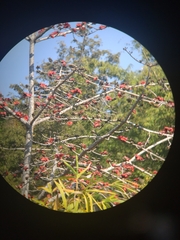
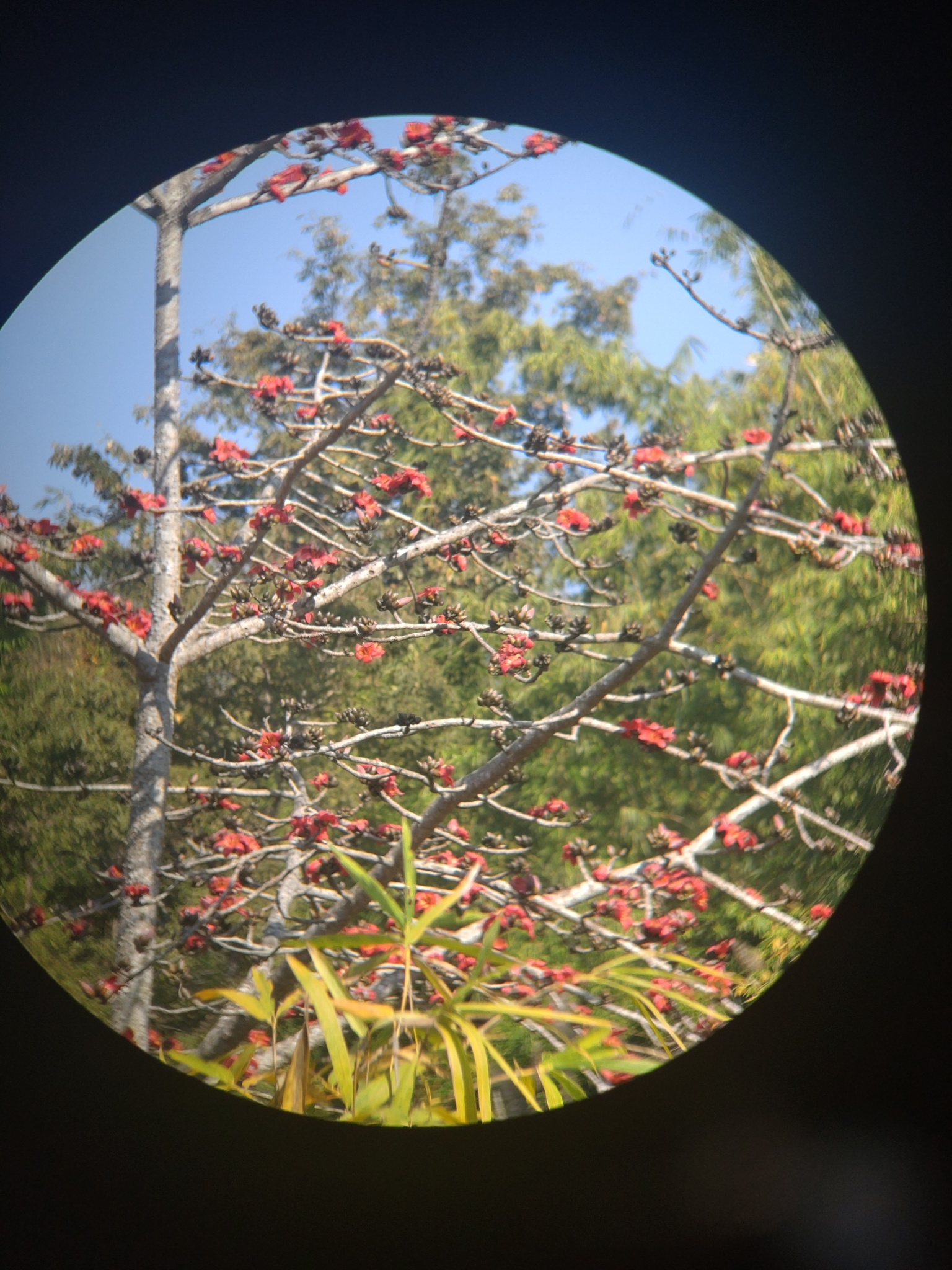
Red silk cotton tree (Bombax ceiba) is a large deciduous Malvaceae tree native to tropical and subtropical Asia, from Pakistan and India to southern China, Southeast Asia and northern Australia. It sheds its foliage before flowering, displaying large orange-red blooms on bare branches, then produces capsules filled with white, silky fiber similar to kapok.
Read moreRed silk cotton tree, Malabar silk-cotton tree, Red cotton tree and Semal

© photo
T R Shankar Raman · cc0
(c) Raymond Khoo, some rights reserved (CC BY-NC), uploaded by Raymond Khoo · cc-by-nc
Utain Pummarin · cc0
Taken Oct 9, 2021 by Begona Dorado del Águila (cc-by-sa)
© copyright of the Board of Trustees of the Royal Botanic Gardens, Kew.




Global distribution
Bombax ceiba is native to tropical and subtropical Asia, from Pakistan and India to southern China, island Southeast Asia and northern Australia. It is widely planted as a street tree throughout this area. In mainland France, an unsuitable climate restricts it to greenhouses and botanical collections.
- Native8
- India
- Pakistan
- Southern China
- Thailand
- Vietnam
- Philippines
- Papua New Guinea
- Northern Australia
Hexagons: regions where the plant occurs. Green dots: native range.1
Identity
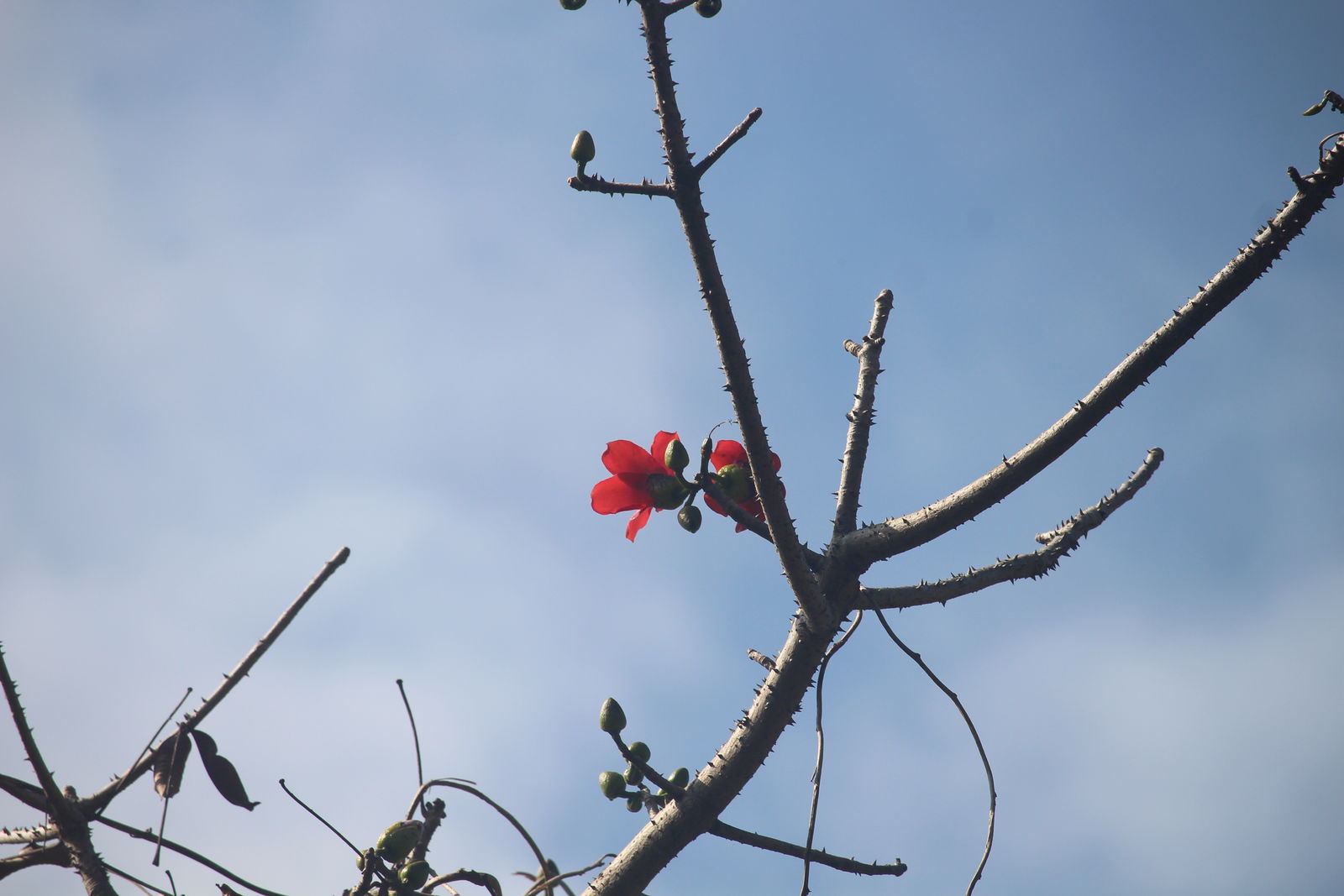
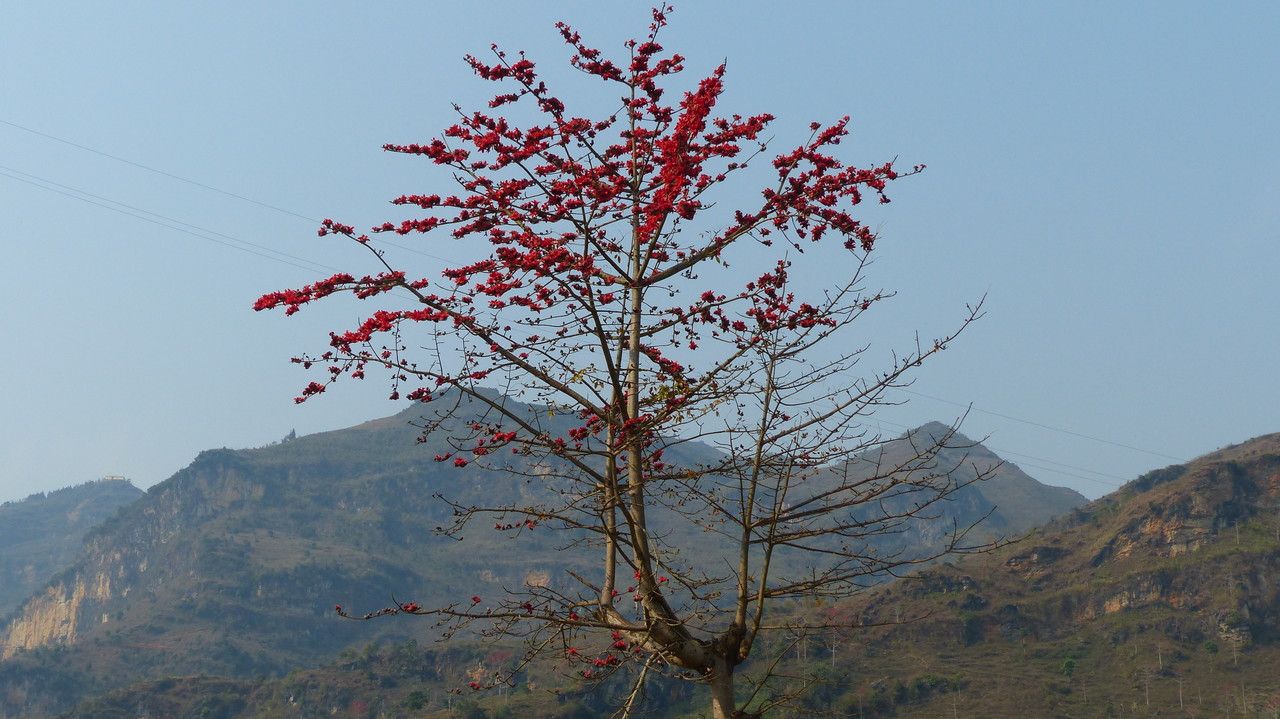
Red silk cotton tree (Bombax ceiba L., 1753), also called Malabar silk-cotton tree, red cotton tree or semal, is a large deciduous tree in the Malvaceae subfamily Bombacoideae. Its striking field mark is flowering on completely bare wood: in the documented Asian seasonal cycle, fleshy blooms 7–12 cm (3–5 in) across appear from February to April. 1 2 3
The English name kapok can cause confusion with Ceiba pentandra, the true American kapok tree with white flowers. Both trees yield similar silky fruit fiber, but belong to different genera. 2
In southern China, its nickname 英雄树, the “hero tree,” refers to scarlet flowers held upright on bare branches. Its flower is the official floral emblem of Guangzhou. 6
Recognition
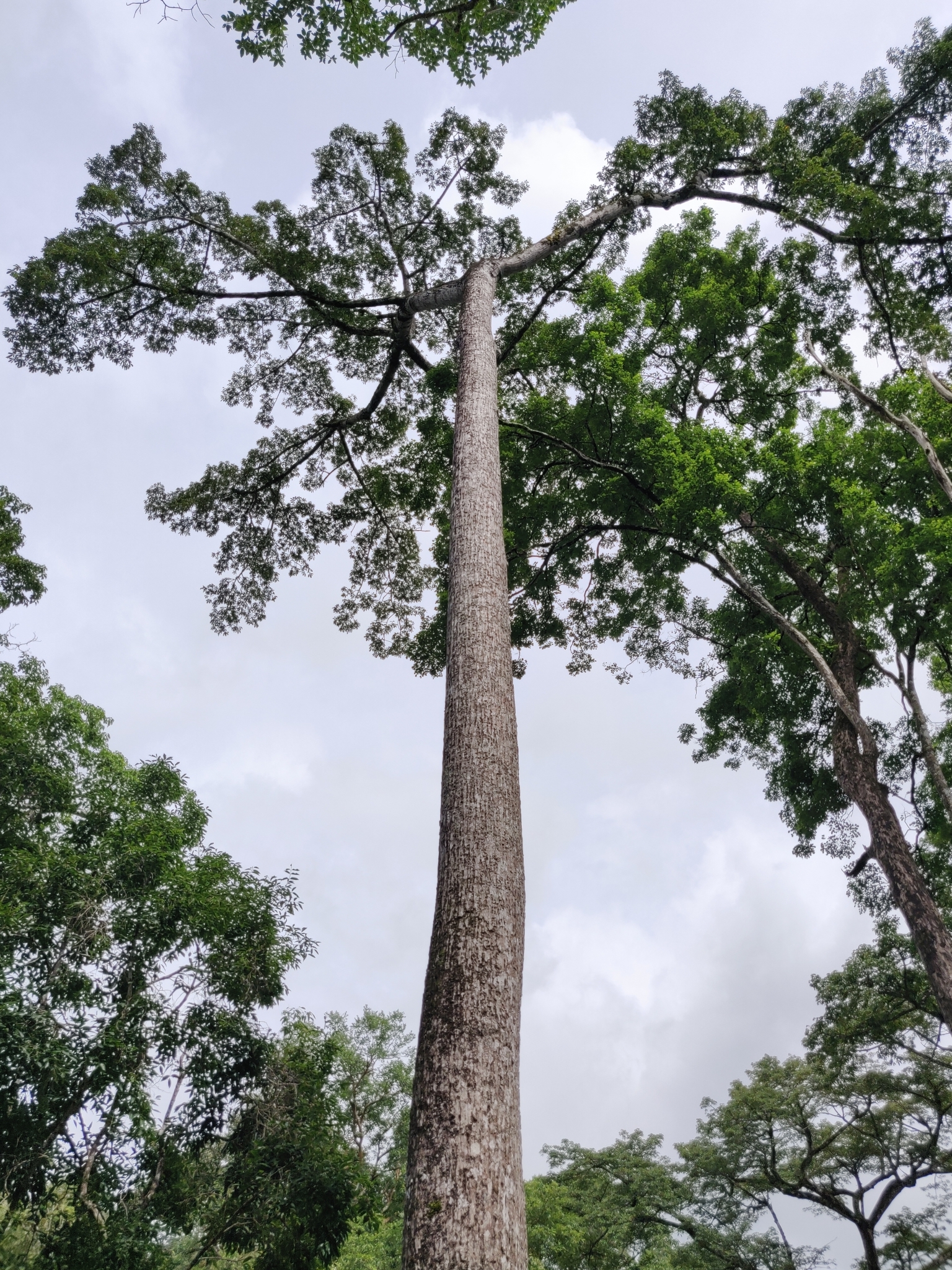
A young trunk carries numerous thick conical spines that gradually wear away with age, distinguishing immature trees from old specimens with nearly smooth bark. Cultivated trees commonly reach 18–23 m (59–75 ft), with occasional records of 40 m (131 ft) in especially favorable humid tropical forest. 3 4
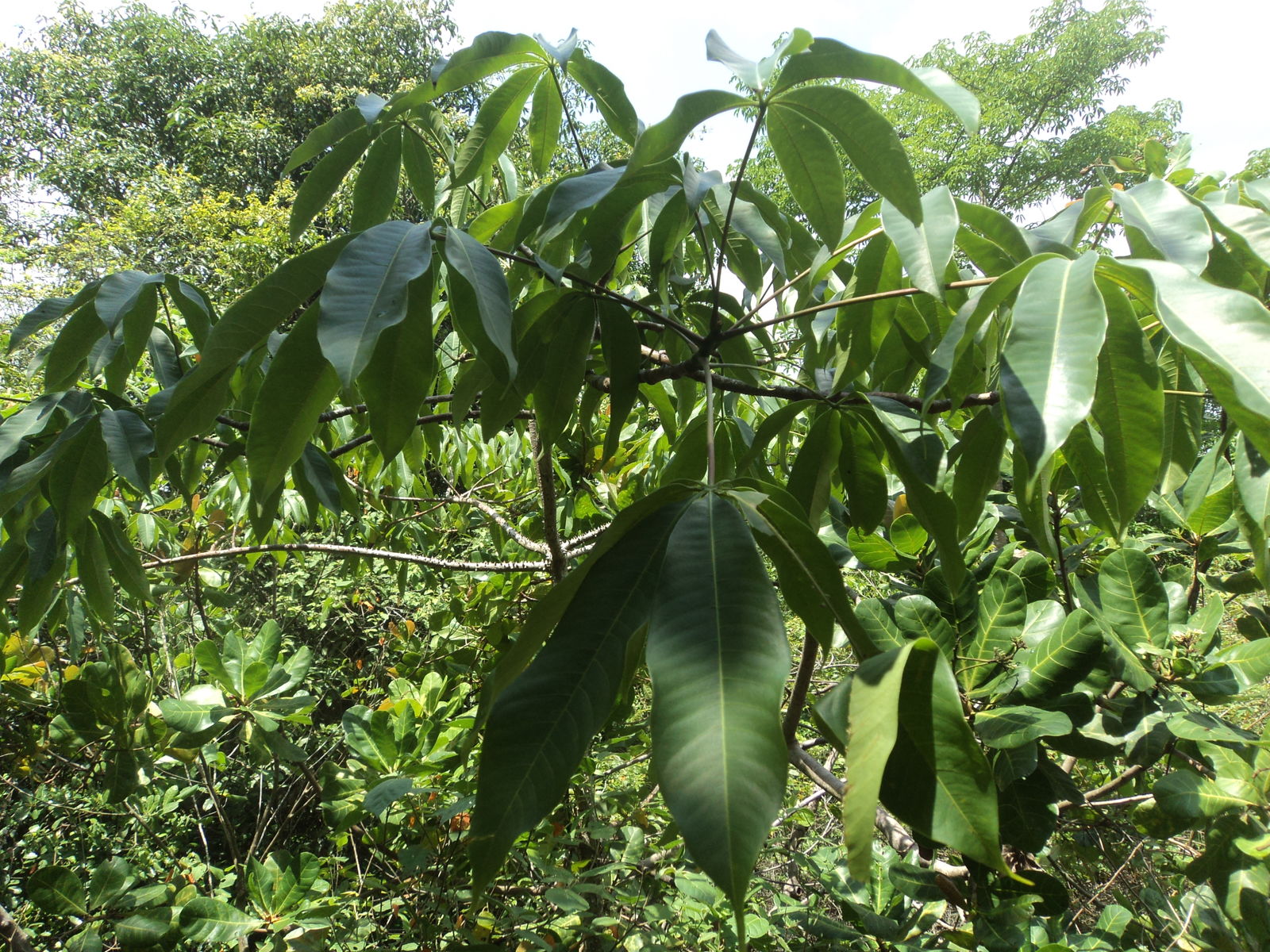
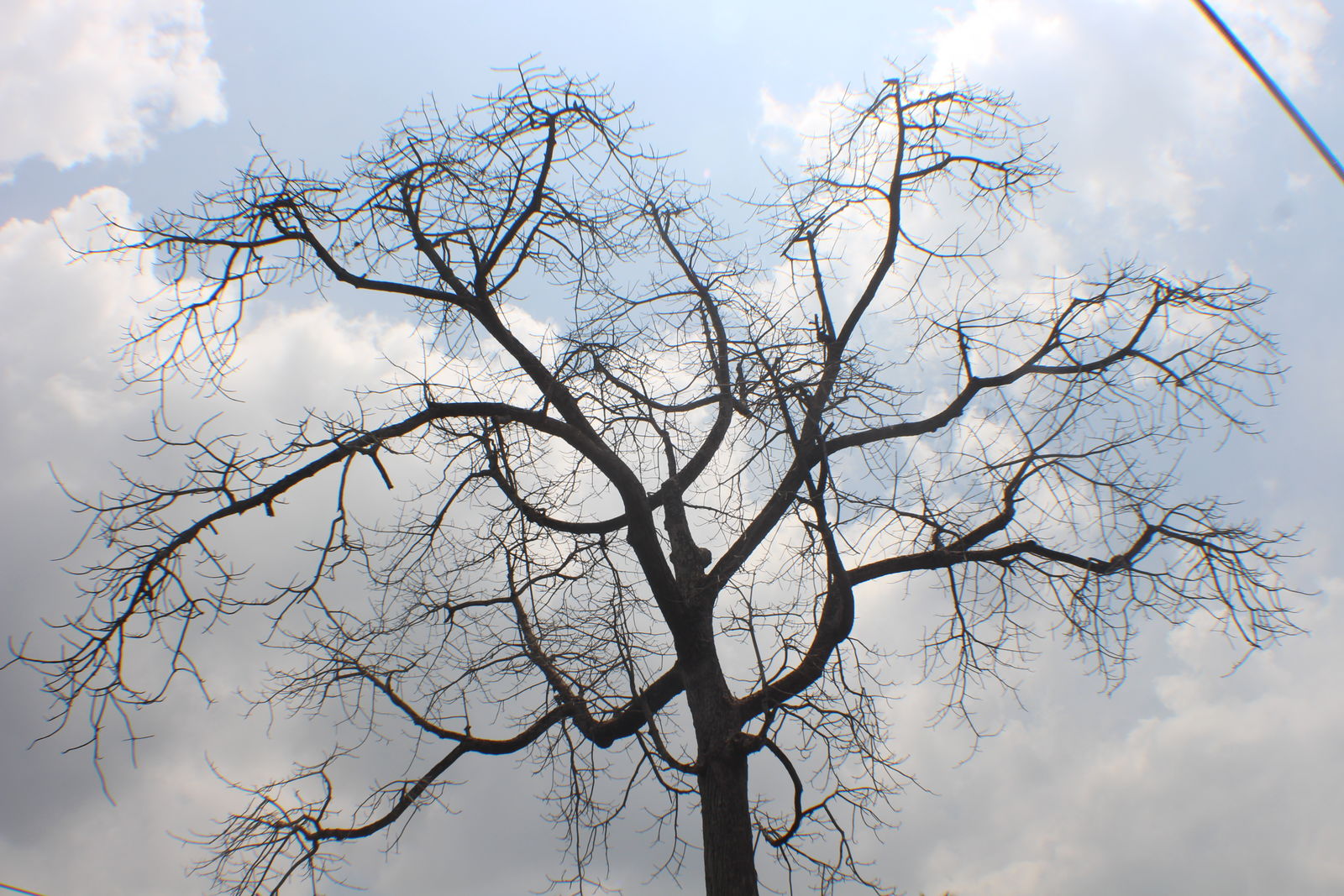
Long, flexible petioles support palmate leaves composed of five to seven leathery, lance-shaped leaflets. All the foliage falls before flowering, leaving the branches entirely bare. 6 3
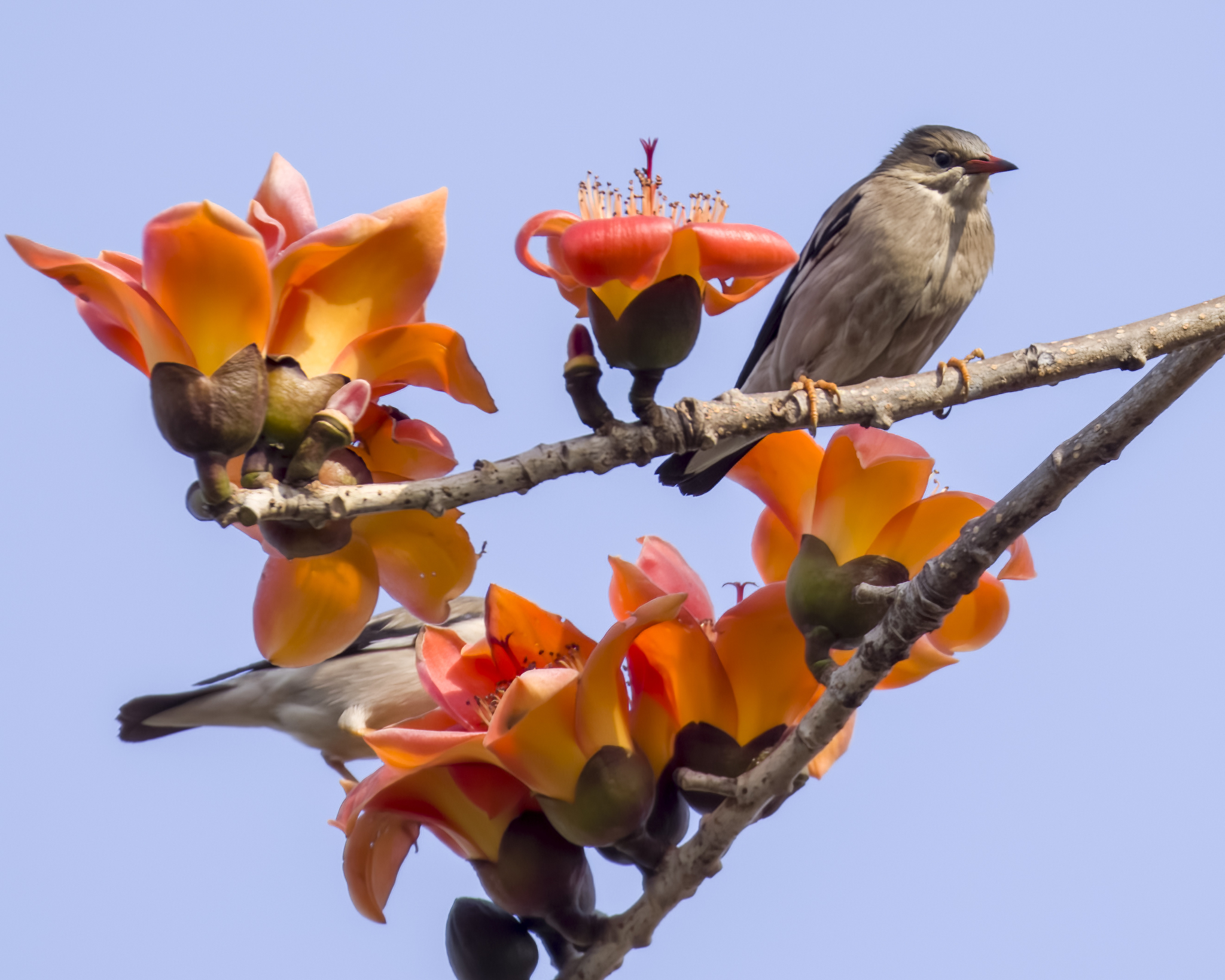
Fleshy, cup-shaped flowers measure 7–12 cm (3–5 in) across, with five bright red to orange-red petals and a central tuft of yellow stamens. In the documented Asian cycle, they appear from February to April, singly or in small clusters, with each tree flowering for about a month. 3 6
A woody capsule about 13 cm (5 in) long changes from green to brown as it matures. It splits in April–May in the native seasonal cycle, releasing black seeds wrapped in white, silky fiber that the wind carries away. 6 3
Useful taxonomy
Botanical references accept Bombax ceiba L., although Indian and Chinese literature long used the synonym Bombax malabaricum DC., still found in older botanical and medical publications. Other historical synonyms include Salmalia malabarica (DC.) Schott & Endl. and Gossampinus malabarica (DC.) Merr. 1 2
The name Bombax ceiba Burm.f., published in 1768, is a nomenclatural trap: it represents a misapplication, while the valid name remains the one Linnaeus published in 1753. The Chinese variety Bombax ceiba var. leiocarpum A.Robyns, with hairless capsules, belongs to the same species. 1
Habitat and range
Across tropical and subtropical Asia, the native range runs from Pakistan and India to southern China, Southeast Asia and northern Australia, including Sri Lanka, Myanmar, Thailand, Vietnam, the Philippines and Papua New Guinea. 1 6
Humid tropical deciduous forest supports the species, as do dry valleys and savannas in southern China up to 1,400 m (4,600 ft). Widely planted along urban streets in tropical Asia, it is restricted to greenhouses or botanical collections in mainland France because it lacks sufficient cold hardiness. 4
The IUCN assessment classifies red silk cotton tree as Least Concern, despite local pressures from habitat loss and collection of kapok fiber in some regions. 7
Life cycle and reproduction
In India, growth occurs in two distinct flushes: one in spring and another during the summer monsoon. This pattern accounts for rapid growth despite the long, leafless winter pause. 6
Blooms on completely bare branches attract bees and nectar-feeding birds, standing out without foliage competing for attention. In the documented Asian cycle, ripe capsules split in April–May and release seeds whose buoyant fiber enables long-distance wind dispersal. 6
Seed propagation needs no compulsory pretreatment. Germination takes 10–25 days; soaking seeds in warm water for 12 hours can improve emergence. Semi-ripe cuttings offer another option, although they are seldom used in practice. 5
Uses and risks
Silky seed fiber, similar to true kapok, long filled pillows, mattresses and later life jackets. Its fibers insulate, resist water and are light enough to float. Inner bark supplies cordage fiber, while trunk gum, known as Malabar gum, serves locally as a traditional adhesive. 5
Asian food traditions use several parts of the tree. In India, the calyx of the flower bud was traditionally eaten as a vegetable; young leaves and roots are also cooked. Roasted seeds supply edible oil. In Thailand, dried flower cores enter kaeng khae curry and spicy nam ngiao soup. 5 6
No toxicity is documented in humans, cats or dogs; horse status remains unknown because data are lacking. The main hazard is physical: conical spines on young trunks can cause injury during handling or pruning. 3
Varieties, look-alikes and related plants
Unlike many familiar ornamental plants, red silk cotton tree has no established horticultural cultivars. The botanical variety leiocarpum, recognized in China, has hairless fruits. 1
Three related trees are common sources of confusion:
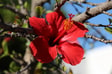
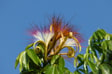
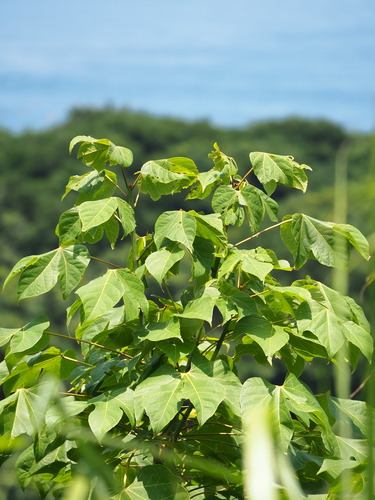
- Ceiba pentandra, the true kapok tree, has white flowers and grows in tropical America; the shared English name silk-cotton tree can obscure the distinction;
- Bombax buonopozense Pellegr. & Vuillet grows in West Africa and has red flowers closely resembling those of red silk cotton tree;
- Bombax insigne Wall. grows in South Asia and has larger, paler flowers.
Scientific names provide a steadier guide than common names, which vary between countries. They are the most reliable way to distinguish these trees with similar habits, flowers and fiber uses. 2
Main sources
- Plants of the World Online / Kew, Bombax ceiba L.
- Integrated Taxonomic Information System, Bombax ceiba L., TSN 21593
- NC State Extension, Bombax ceiba - Kapok Tree
- Missouri Botanical Garden Plant Finder, Bombax ceiba
- Plants For A Future, Bombax ceiba
- Wikipedia (EN), Bombax ceiba
- IUCN Red List, Bombax ceiba assessment 2020
Frequently asked questions
Is red silk cotton tree the same as Ceiba pentandra?
No. Both produce similar fibers and share the name silk-cotton tree, but Bombax ceiba has red flowers and Asian origins, while Ceiba pentandra has white flowers and American origins.
Is red silk cotton tree poisonous?
No toxicity is documented in humans, cats or dogs; horse status remains unknown because data are lacking. Young leaves and roasted seeds are traditionally eaten in Asia.
Why does red silk cotton tree flower without leaves?
It is deciduous and sheds all its leaves before flowering. This makes the flowers conspicuous to birds and bees without foliage competing for attention.
Which trees resemble red silk cotton tree?
Common look-alikes are Ceiba pentandra, the true kapok tree with white flowers, Bombax buonopozense from West Africa, and Bombax insigne, a related South Asian species.
What is the silky fiber inside its capsules used for?
This kapok-like fiber long filled pillows, mattresses and life jackets because it insulates, repels water and floats. Synthetic materials have largely replaced it.
Where is red silk cotton tree native?
Its native range spans tropical and subtropical Asia, from Pakistan and India to southern China, Southeast Asia and northern Australia. It is widely planted beyond this range, particularly along city streets.
Is red silk cotton tree threatened?
No. The IUCN lists it as Least Concern, despite local pressure from habitat loss and fiber collection in some regions.
Similar plants
If you are unsure about a plant’s toxicity, ask a botanist or veterinarian for advice.