
Tree pepper (Capsicum pubescens, )
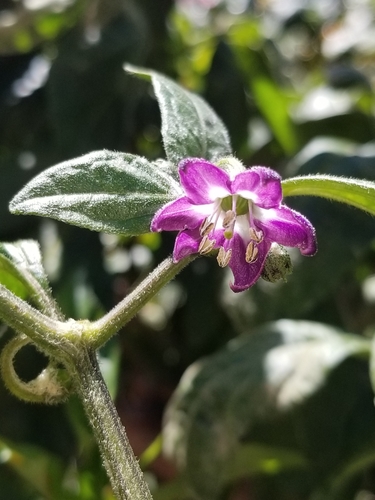


Tree pepper (Capsicum pubescens) is a Solanaceae subshrub native to the Peruvian and Bolivian Andes. Unlike other domesticated peppers, it grows at altitude in cool climates and is recognizable by its hairy leaves, mauve flowers and black seeds.
Read moreTree pepper, Locoto, Chile manzano and Rocoto



© photo
(c) AwadNeme, some rights reserved (CC BY-NC), uploaded by AwadNeme · cc-by-nc
Alfredo F. Fuentes Claros · cc-by-nc
Wikimedia Commons · CC BY-SA or Public Domain
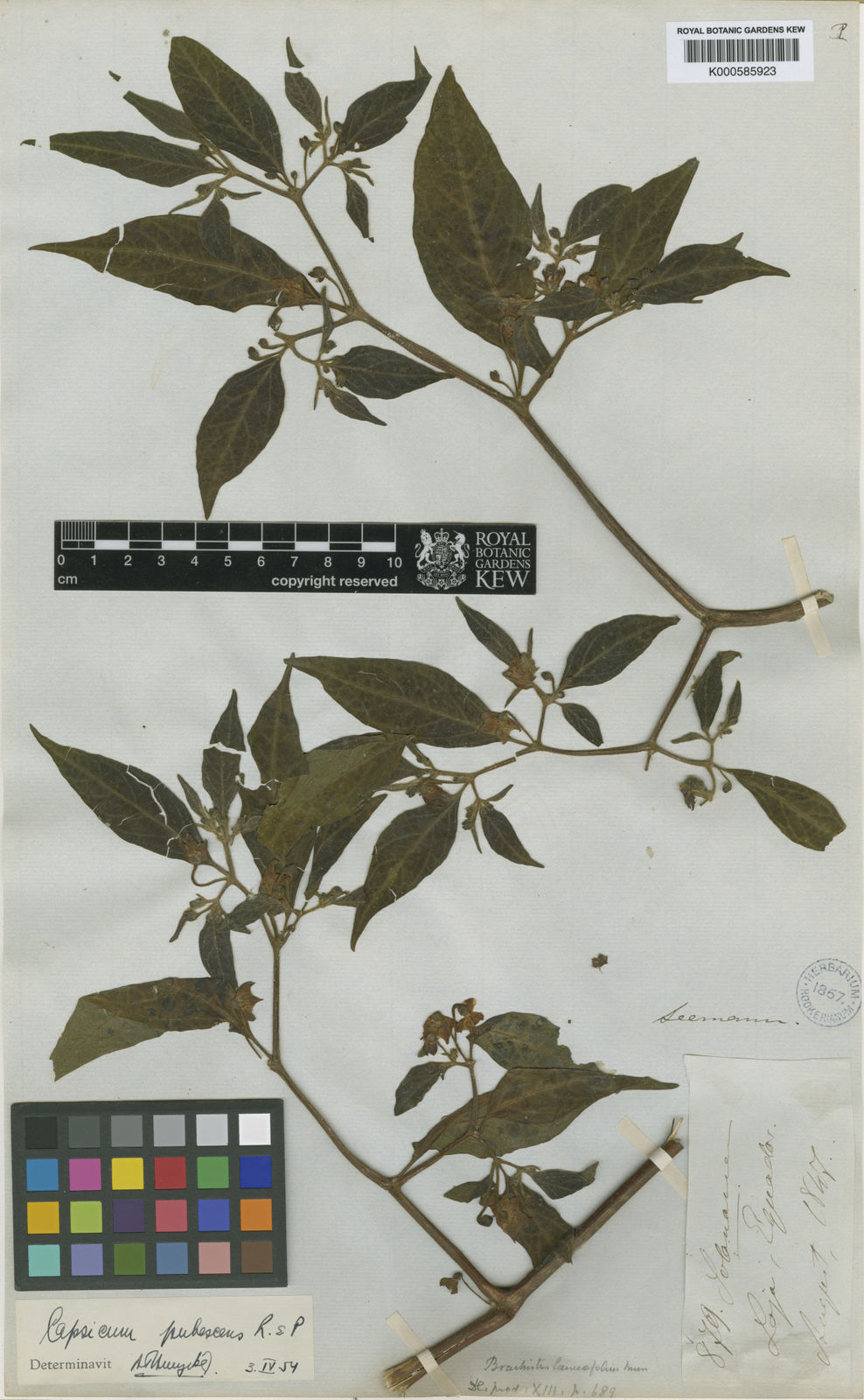
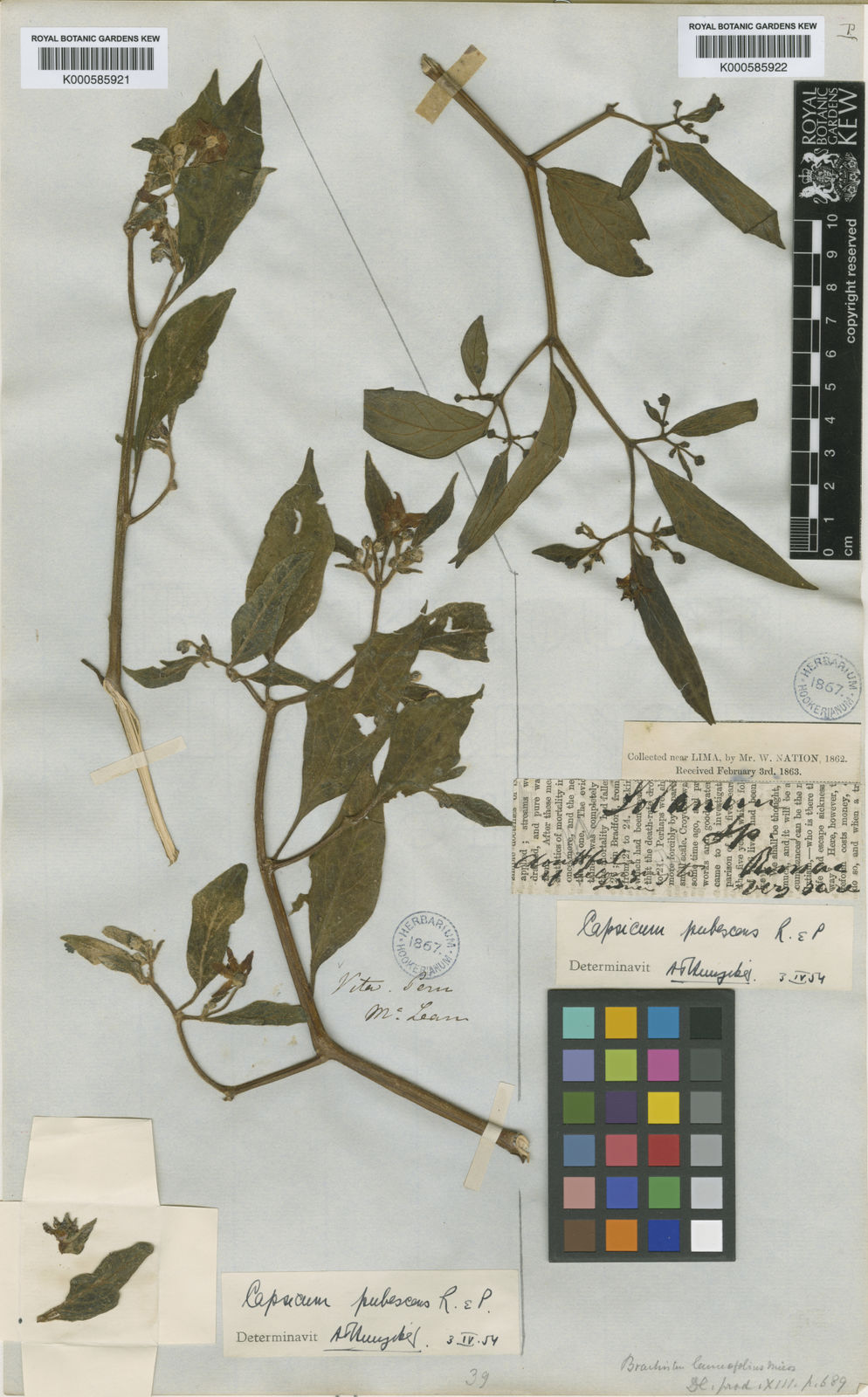
© copyright of the Board of Trustees of the Royal Botanic Gardens, Kew.




Global distribution
Native to the Andes of Peru, Bolivia and Ecuador, Capsicum pubescens grows at high elevations in cool climates. Domesticated about 6,000 BCE, it later spread to Mexico as chile manzano and to other producing regions, including Indonesia.
- Native3
- Introduced2
- Peru
- Bolivia
- Ecuador
- Mexico
- Indonesia
Hexagons: regions where the plant occurs. Green dots: native range.1
Identity
Tree pepper (Capsicum pubescens Ruiz & Pav., 1799), also called rocoto, locoto or chile manzano, is a subshrub in Capsicum, family Solanaceae. It is one of the five domesticated species alongside Capsicum annuum, Capsicum baccatum, Capsicum chinense and Capsicum frutescens, but the most genetically isolated of the five. 1 5
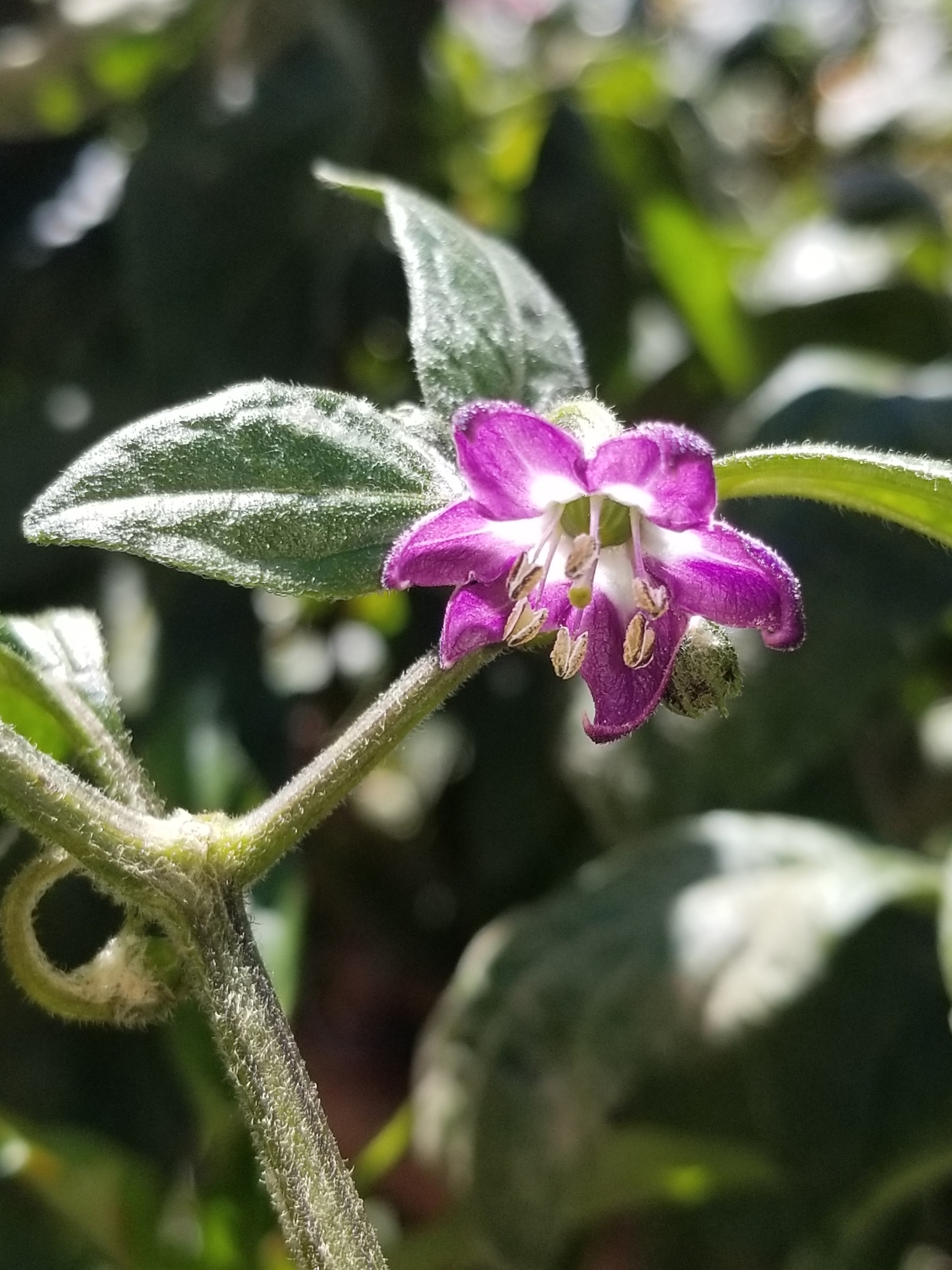
The epithet pubescens means hairy, describing the downy foliage that immediately distinguishes it from other cultivated peppers with smooth leaves. Combined with black ripe seeds, this hairiness provides a stronger taxonomic clue than foliage texture alone: the other four domesticated Capsicum have cream or tan seeds, never black. 5 2
Recognition
Flower color makes a clear distinction: the corolla is mauve to violet-blue, paler at its center, with anthers partly violet and partly white. Other domesticated species have white or cream flowers, making confusion unlikely once plants bloom. 5 4
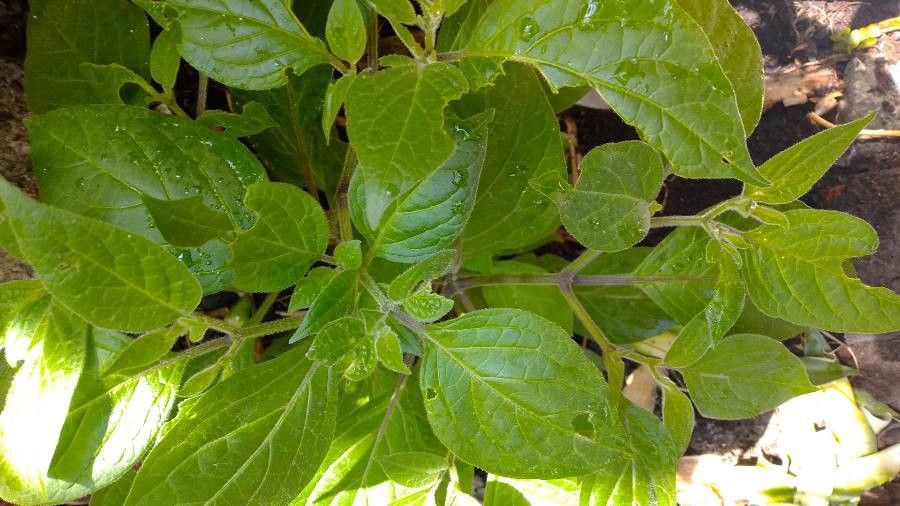
Simple green leaves carry fine down that can be felt by touch, contrasting with the smooth blades of lowland peppers. The subshrub becomes woody at the base and can reach 4 m (13 ft) after several years, while most annual peppers remain much more compact. 5 7
Thick fruits are often pear-shaped or rounded like small apples, with juicy flesh and a length of 6–7 cm (2.4–2.8 in). They ripen red, yellow, orange, green or brown depending on cultivar, but color alone cannot establish the species with certainty. 4 5
Useful taxonomy
The accepted botanical name recorded by POWO is Capsicum pubescens Ruiz & Pav., described in 1799 in Flora Peruviana, et Chilensis. Unlike Capsicum chinense or Capsicum annuum, it has no widely used botanical synonyms, consistent with its marked genetic isolation within the genus. 1 2
The Andean names rocoto and locoto do not denote different taxa. Rocoto comes from Quechua rukutu, used chiefly in Peru and Ecuador; locoto comes from Aymara luqutu, used in Bolivia and northern Argentina. In Mexico, chile manzano describes the round, apple-like fruit of the same species. 5 4
Reproductively, rocoto remains isolated from the other four domesticated peppers. It is the least widespread cultivated species and the most distinct member of that group, explaining the absence of horticultural crosses with annual peppers or habanero. 5 3
Habitat and range
Across Andean highlands, the native range covers the Andes of Peru, Bolivia and Ecuador, at about 1,600–3,600 m (5,250–11,800 ft), in conditions much cooler than the tropical lowlands of other cultivated peppers. Andean domestication dates to about 6,000 BCE, attested by remains from Peru's Guitarrero Caves. 5 7 8
This highland origin creates an unusual requirement for a pepper: rocoto does not tolerate constant tropical lowland heat, but withstands brief frosts down to −5 °C (23 °F). One plant can remain productive for up to 15 years in cool, humid conditions, an unusual lifespan for a cultivated pepper. 7 4
Beyond the Andes, the species is cultivated in Mexico as chile manzano, in Indonesia and in heated Dutch greenhouses during the spring-to-autumn season documented there. Smaller-scale winter cultivation is also reported in Spain and Italy. 5
Life cycle and reproduction
Seed germinates slowly, taking three to four weeks at about 20 °C (68 °F), longer than in most other peppers. After transplanting, plants bear one flower per node, unlike the grouped flowers of Capsicum chinense. 7 5
Harvest starts three to eight months after planting, with fruit needing at least three months after flowering to mature. Each plant yields about 0.5 kg (1.1 lb) per harvest, modest compared with annual peppers but offset by production continuing over several years. 5 4
Propagation is almost entirely from seed, with cuttings uncommon in home cultivation. Thick flesh and high moisture also make sun-drying ineffective: a closed drying tunnel reduces about 80 kg (176 lb) of fresh fruit to only 6.4 kg (14.1 lb) of dried product. 5
Uses and risks
Fruits are used fresh as condiments, in sauces or pastes, but the best-known preparation fills them with a savory stuffing before baking: Peruvian rocoto relleno. Thick, juicy flesh tolerates prolonged baking, unlike thin-walled peppers that collapse and soften in the oven. 5 7
Rocoto generally scores 100,000–200,000 Scoville heat units, with a broader range of 2,400–250,000 across cultivars and growing conditions. Its chemistry is distinctive: fruits contain a high proportion of dihydrocapsaicin alongside the more familiar capsaicin. 4 5
The veterinary safety of Capsicum pubescens for cats and dogs is not established by the cited sources. Capsaicinoids concentrate chiefly in the fruit’s internal partitions and black seeds. Contact irritates the mouth, eyes and skin, and substantial ingestion causes digestive upset in children. 5
Varieties, look-alikes and related plants
Rocoto rojo and rocoto amarillo are among Peru’s most widely sold forms, distinguished chiefly by ripe fruit color, red or yellow-orange. In Mexico, chile manzano and chile perón describe rounder and more elongated fruits of the same species. 5
The species hosts Anastrepha ludens, the Mexican fruit fly, listed by EPPO as a quarantine pest. Conversely, rocoto resists Phytophthora capsici, an oomycete causing major agricultural losses in other peppers, much better than other Solanaceae. 5
Frequent look-alikes include:
- Capsicum chinense, habanero pepper, with several flowers per node and a tropical lowland habitat far from rocoto’s cool Andes;
- Capsicum annuum, with white flowers, cream seeds and a herbaceous habit much more compact than rocoto’s woody subshrub framework;
- Capsicum baccatum, a South American ají whose spotted corolla contrasts with rocoto’s unspotted one.
At a market stall, seed color is the clearest clue, more reliable than fruit shape or color: black in Capsicum pubescens, cream or tan in the other four domesticated species. The scientific name remains the reference that stays consistent between markets. 5 1
Main sources
- Plants of the World Online / Kew, Capsicum pubescens Ruiz & Pav.
- International Plant Names Index, Capsicum pubescens
- Wikidata, Capsicum pubescens (Q133428)
- Wikipedia FR, Capsicum pubescens
- Wikipedia EN, Capsicum pubescens
- Wikipedia ES, Capsicum pubescens
- Plants For A Future, Capsicum pubescens
- USDA PLANTS Database, Capsicum pubescens (CAPU38)
Frequently asked questions
Are rocoto and habanero the same pepper species?
No. Habanero belongs to Capsicum chinense, a lowland tropical species. Rocoto belongs to Capsicum pubescens, an Andean species adapted to cold.
Why does rocoto tolerate cold better than other peppers?
Its Andean origin, at 1,600–3,600 m (5,250–11,800 ft), selected it to withstand brief frosts down to −5 °C (23 °F), unlike lowland tropical Capsicum.
Is rocoto poisonous to cats and dogs?
The cited sources do not establish safety for cats and dogs. Hot fruits can irritate the mouth and digestive tract.
How can rocoto be distinguished from other cultivated peppers?
The clearest features are hairy foliage, mauve to violet-blue corollas and black ripe seeds. Other domesticated Capsicum have white flowers and cream or tan seeds.
Are chile manzano and rocoto the same plant?
Yes. Chile manzano is the Mexican name for Capsicum pubescens, referring to its apple-shaped fruit. Rocoto and locoto denote the same species in Peru and Bolivia respectively.
Similar plants
If you are unsure about a plant’s toxicity, ask a botanist or veterinarian for advice.