
Natal plum (Carissa macrocarpa, )
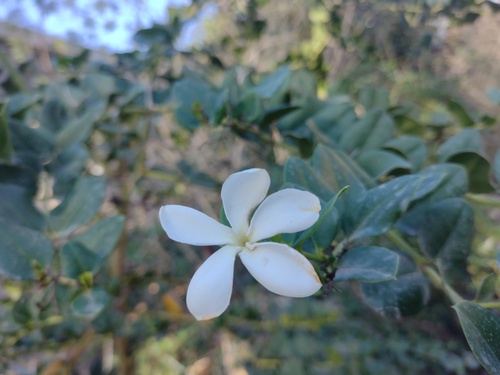
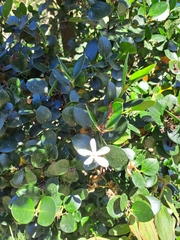
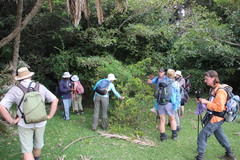
Natal plum (Carissa macrocarpa) is a thorny evergreen shrub in Apocynaceae, native to the coast of southern and eastern Africa. Its parts release white latex, fragrant white flowers open through much of the year, and the red fruit resembles a small plum and is edible when fully ripe.
Read moreNatal plum, Carissa, Amatungulu, Num-num and Noem-noem
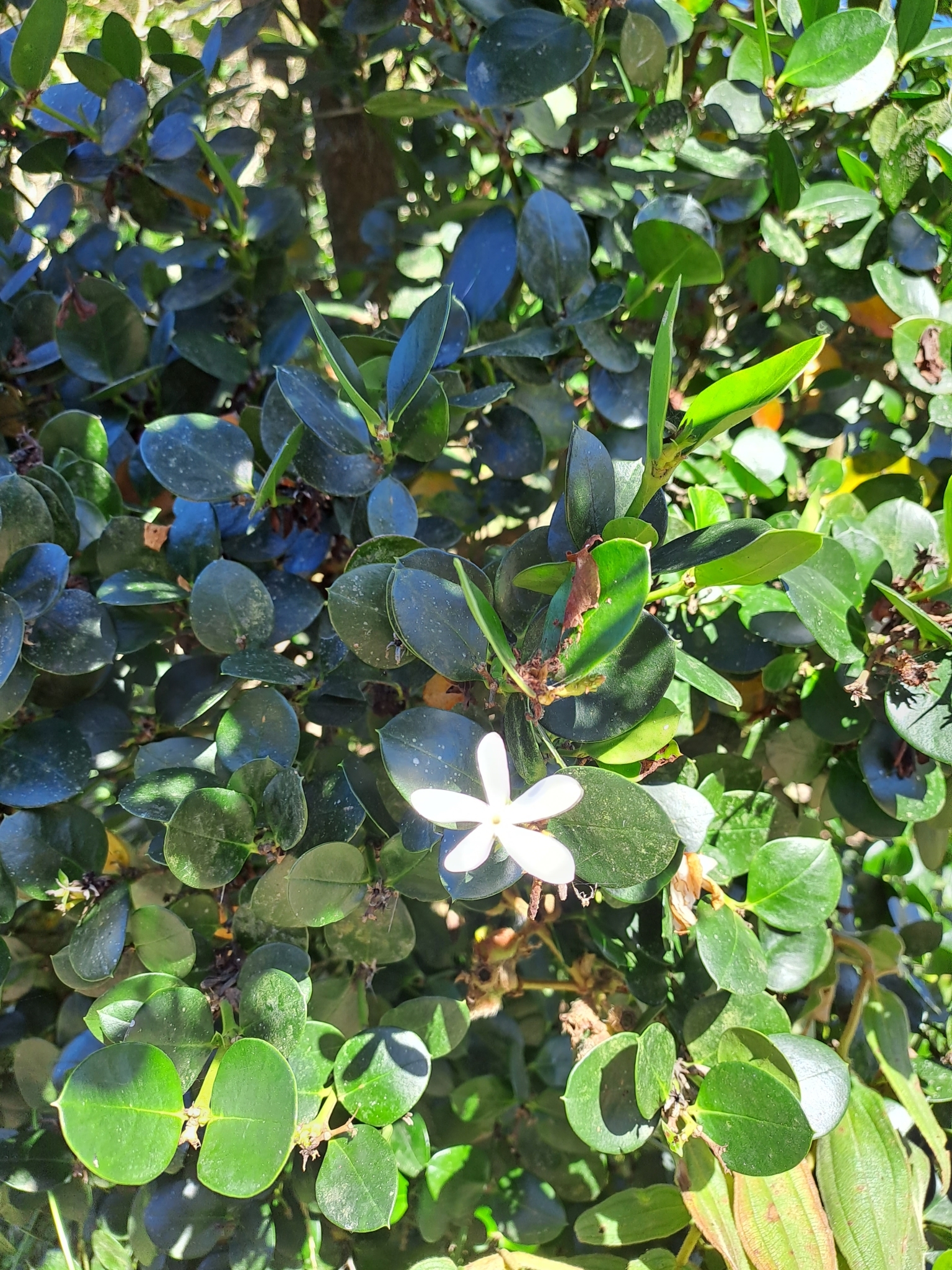
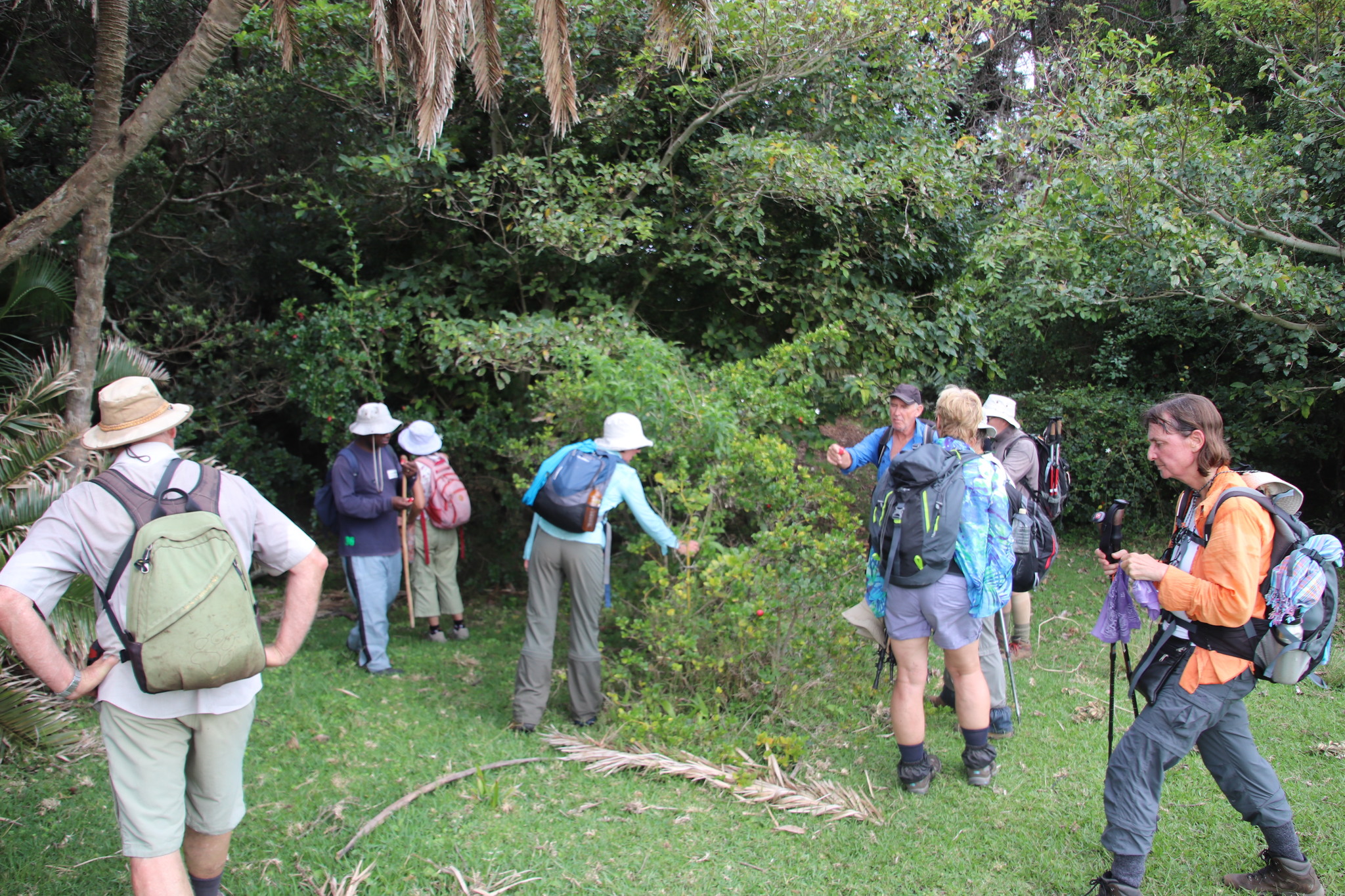


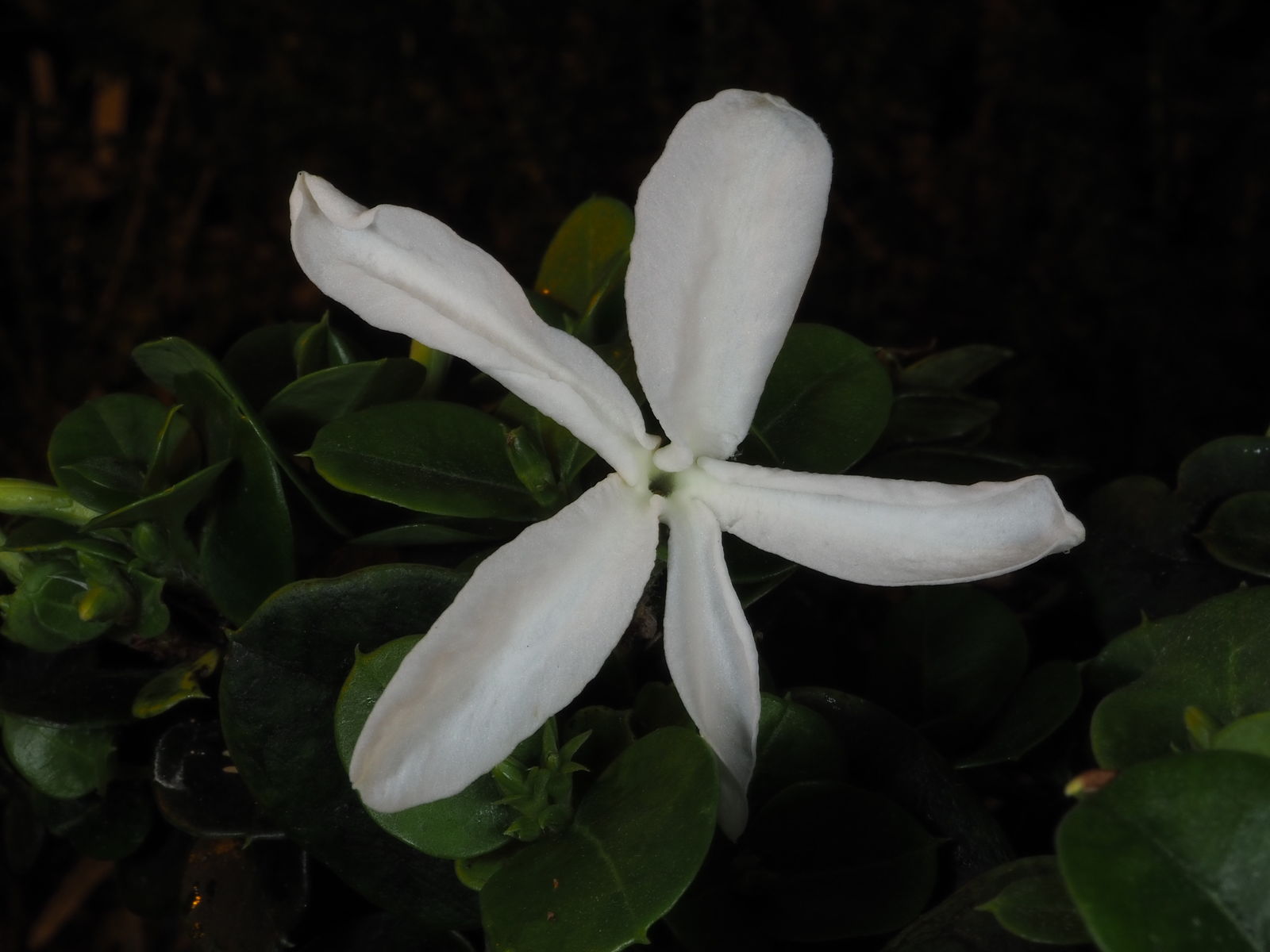
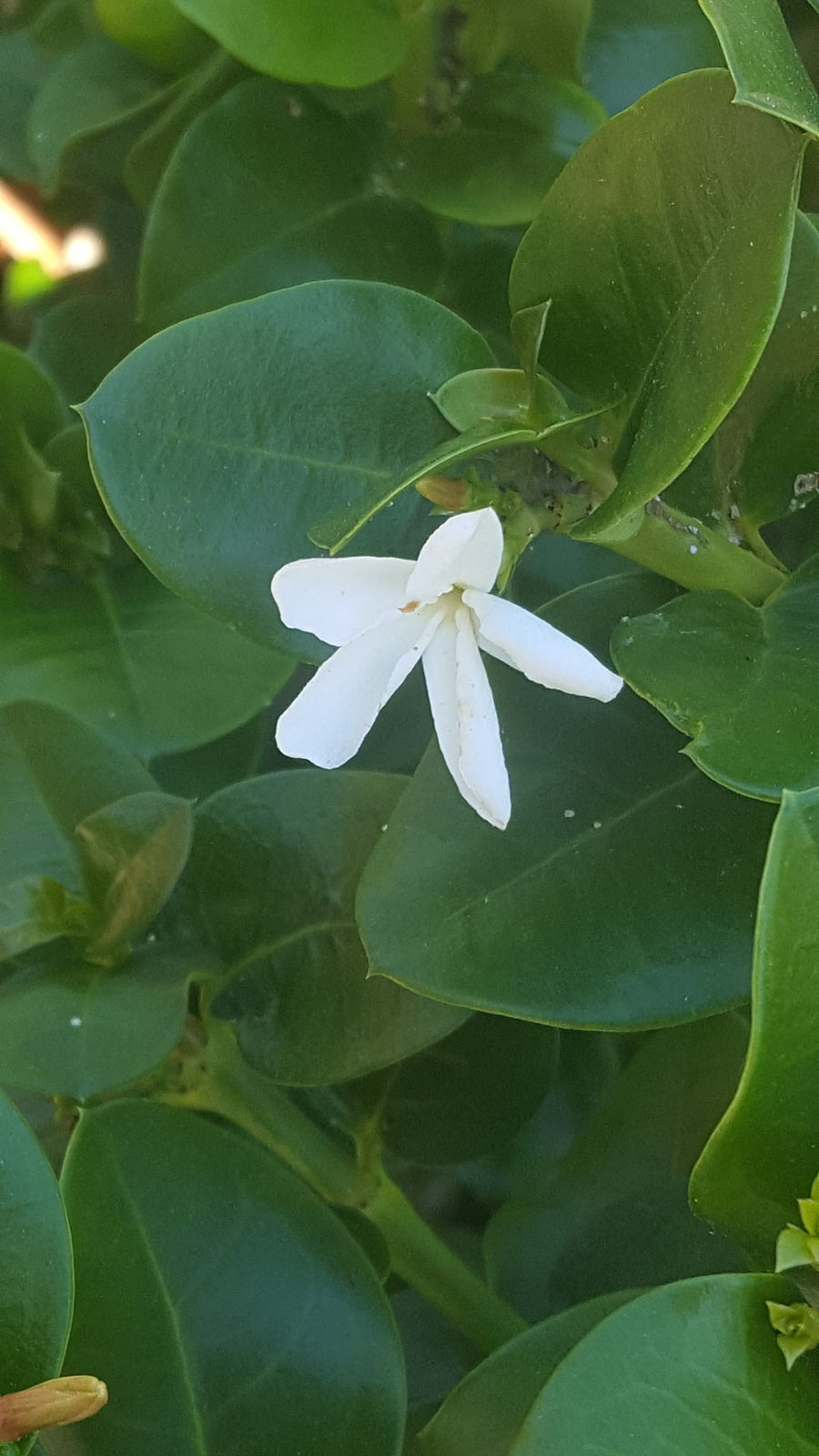
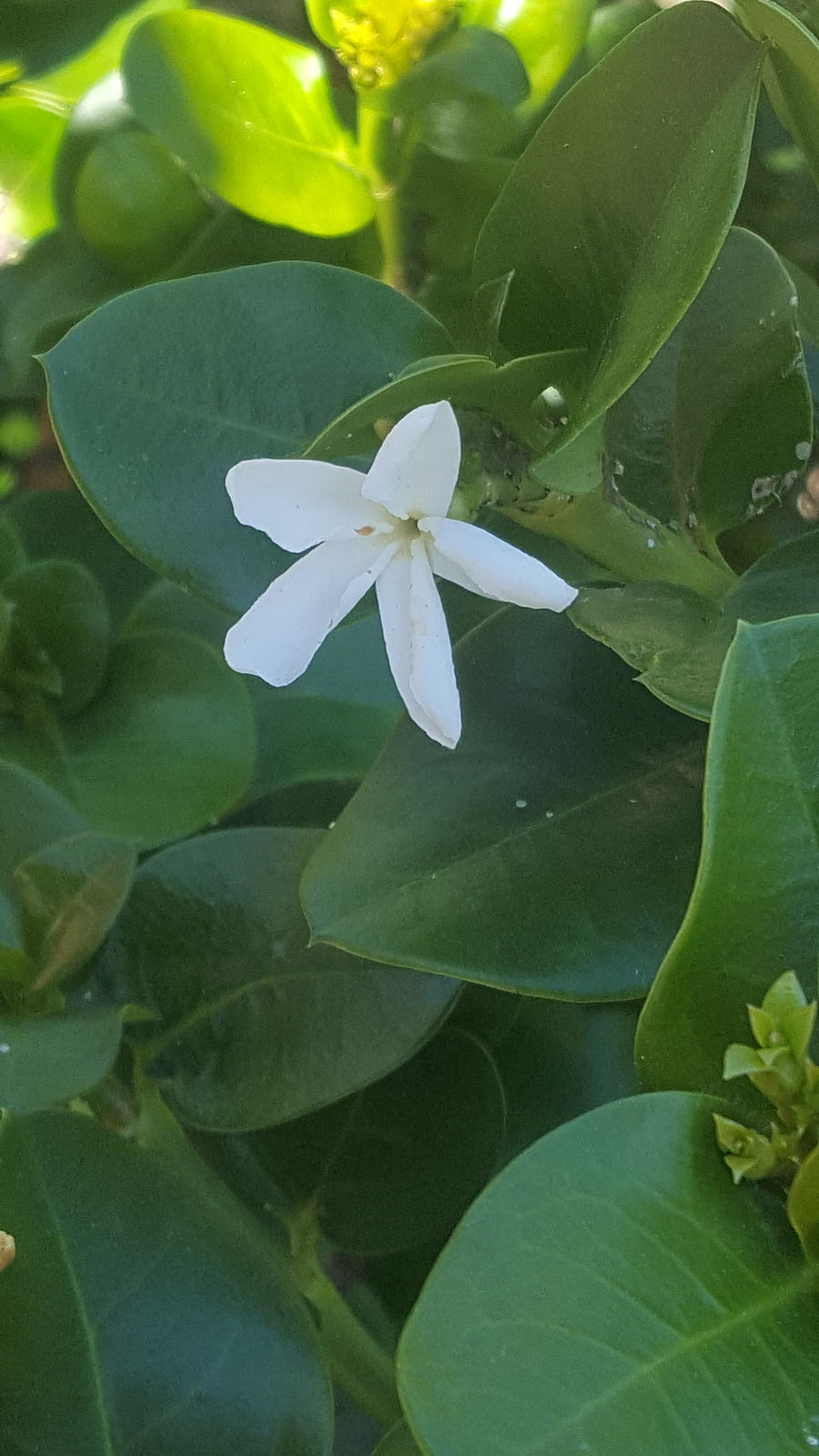
© photo
Robert Martin · cc-by
Mmatjie Mashao · cc-by-sa
Tony Rebelo · cc-by-nc
Taken Nov 26, 2022 by Francois Mansour (cc-by-sa)
Taken Aug 17, 2021 by Espinoza-Zevallos Marco Elías (cc-by-sa)
Taken Nov 16, 2022 by Trap Hers (cc-by-sa)
Taken Apr 11, 2022 by Peláez Navarrete Miguel Ángel (cc-by-sa)
Taken Aug 14, 2021 by Daniel Sánchez (cc-by-sa)
© copyright of the Board of Trustees of the Royal Botanic Gardens, Kew.


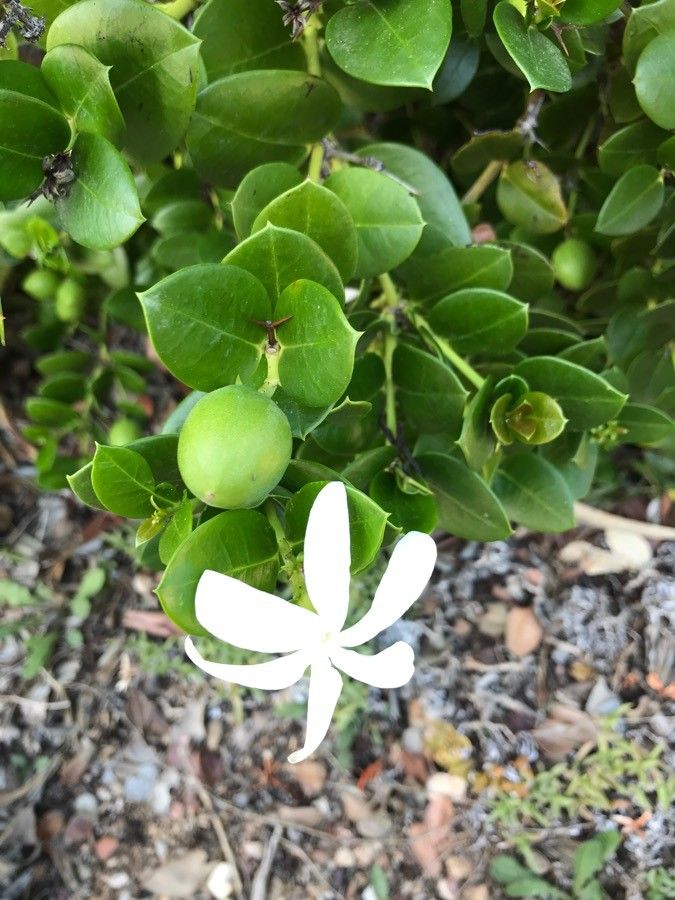


Global distribution
The native range of Carissa macrocarpa extends from Kenya to the southeastern Cape of South Africa, centered on the KwaZulu-Natal coast. It is cultivated widely in tropical and subtropical regions for salt and drought tolerance. Status varies by territory: recommended for dune stabilization in Florida, but monitored as an exotic species in Hawaii.
- Native3
- Introduced2
- Invasive1
- South Africa
- Kenya
- Mozambique
- Florida (United States)
- California (United States)
- Hawaii (United States)
Hexagons: regions where the plant occurs. Green dots: native range.1
Identity
Natal plum (Carissa macrocarpa (Eckl.) A.DC., 1844), also called carissa, is a thorny evergreen Carissa shrub in Apocynaceae. Greek makros, large, and karpos, fruit, explain macrocarpa, referring to fruit markedly larger than in other members of the genus. Injured stems release white, gummy latex, a feature that rules out confusion with a thornless shrub on the same coast. 1 5 3
Its common name records its geographic origin: Natal plum grows wild along South Africa’s Natal coast. The Zulu amatungulu, behind the English name num-num, denotes both fruit and shrub, whereas Afrikaans noem-noem refers only to the fruit. 3 5
Recognition
A dense, rounded bush, often as broad as it is tall, usually reaches 1–4 m (3–13 ft), with specimens growing to 5 m (16 ft) in particularly favorable positions. Rigid, Y-shaped forked thorns can exceed 5 cm (2 in), further distinguishing it from thornless shrubs in the same habitat. 3 4
Opposite, oval leaves are leathery and glossy dark green, measuring 2–5 cm (0.8–2 in) long. 5 3
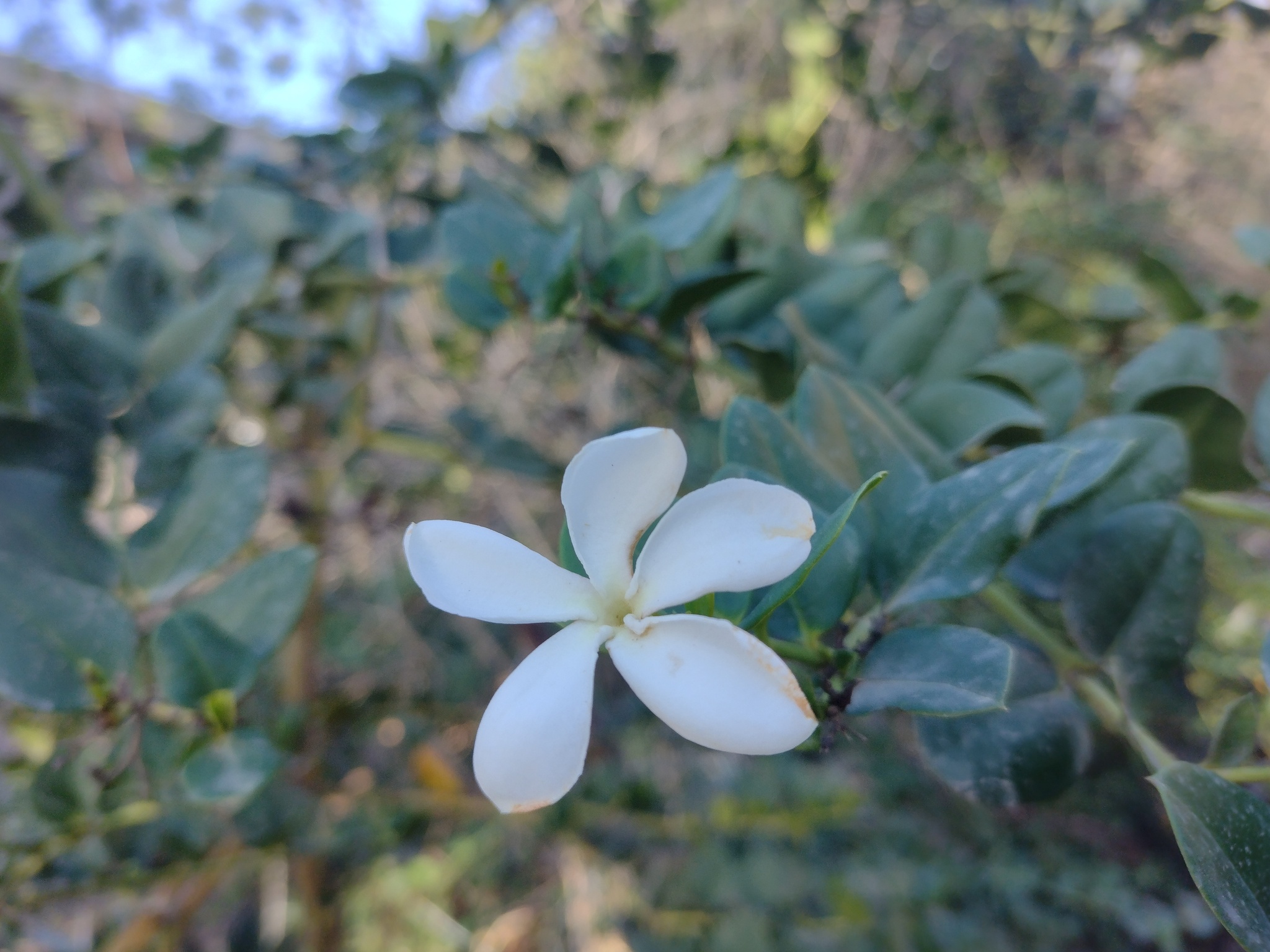
White, five-lobed, star-shaped flowers smell of jasmine, most strongly at night, and open through nearly the whole year in favorable climates. The egg-shaped drupe measures 2.5–6 cm (1–2.4 in), turning from green to bright red or dark purple when fully ripe. Its juicy flesh has a flavor reminiscent of strawberry or cranberry. 4 3
Useful taxonomy
The accepted name in POWO has several synonyms worth recognizing when identifying or buying a plant:
- Arduina macrocarpa Eckl., the basionym published in 1830;
- Carissa grandiflora (E.Mey.) A.DC., long used and still present in older accounts, including veterinary databases;
- Carissa africana A.DC..
Carissa grandiflora causes the most frequent confusion. It persists in horticultural literature and older animal-toxicology references, although the accepted botanical name is Carissa macrocarpa. North American veterinary references also continue to list the plant under that older synonym. 1 6 2
Habitat and range
From Kenya to the southeastern Cape, the native range spans eastern and southern Africa, centered on the KwaZulu-Natal coast. Here Carissa macrocarpa grows in coastal scrub on dunes and at low forest edges, in full sun or partial shade. 1 5
Introduced to the United States in the late 19th century, Natal plum is now cultivated in Florida, California, Hawaii and other tropical and subtropical regions for salt and drought tolerance. In Florida, where it is not native, it is recommended for stabilizing coastal dunes. 7 3
The same salt and drought tolerance that favors cultivation in Florida presents a different problem in Hawaii, where the species is listed among recorded invasive exotics. This contrast between a conservation planting and a monitored weed depends chiefly on local climate and the proximity of sensitive natural habitats to ornamental plantings. 8
Life cycle and reproduction
Fragrance attracts nocturnal insect pollinators to Natal plum flowers, a feature inherited from its coastal native habitat. Outside that range, insufficient nighttime pollination explains why some well-flowered plants produce no fruit. 3
Seeds germinate in two to four weeks, but seedlings grow slowly and variably at first, bearing their first fruit at about two years. Growers favor vegetative propagation for earlier cropping; Morton describes air layering, ground layering and budding. The approximately 30-day rooting period concerns cuttings: a young branch is first notched and left attached for about two months, then detached and planted in sand. Ordinary cuttings root poorly. 3
Uses and risks
Dark red to purple ripe fruits are eaten fresh or made into preserves, jelly, sauces and pastries. Cooking releases a little latex that sticks to the pan, so aluminum is avoided; oil readily removes the residue. Green fruit, by contrast, is rich in irritating latex, as is sap from stems and leaves. 3 4
The ASPCA lists Natal plum under its former name Carissa grandiflora as non-toxic to dogs, cats and horses. Separately, NC State Extension describes possible minor illnesses such as vomiting or diarrhea after substantial ingestion in its human poisoning section. This human assessment does not qualify the ASPCA veterinary classification. 6 4
Rigid forked thorns make Natal plum useful as a defensive hedge and coastal privacy screen. Salt and spray tolerance also make it a frequent choice for stabilizing sandy slopes. Below −5 °C (23 °F), frost severely damages poorly established young plants. In temperate climates, only dwarf cultivars grown in containers can be kept frost-free in a conservatory or cool greenhouse. 3 4
Varieties, look-alikes and related plants
Horticultural selections fall into two groups. Fruit-producing cultivars include Fancy, Torrey Pines and Gifford; dwarf ornamentals such as Boxwood Beauty, Prostrata and Nana, grown as ground cover or clipped edging, have little value for fruit production. 3
Two close relatives in the same genus can be confused with Natal plum:
- Carissa bispinosa (L.) Desf. ex Brenan, with smaller flowers and fruits, occurs at higher elevations in southern Africa;
- Carissa edulis (Forssk.) Vahl, widely used in traditional East African medicine, bears edible fruits much smaller than those of C. macrocarpa.
Among these species, ripe fruit size provides the most reliable distinction, more clearly than thorn shape or overall vigor. In Carissa macrocarpa, fruits reach 2.5–6 cm (1–2.4 in) when ripe, substantially larger than those of C. bispinosa and C. edulis. This is the very feature commemorated by the epithet macrocarpa. 1 5
Main sources
- Plants of the World Online / Kew, Carissa macrocarpa (Eckl.) A.DC.
- International Plant Names Index, Carissa macrocarpa record
- Purdue University NewCROP, Julia Morton, Natal Plum
- NC State Extension Gardener Plant Toolbox, Carissa macrocarpa
- PlantZAfrica / SANBI, Carissa macrocarpa
- ASPCA, Natal Plum toxicity entry
- Florida Plant Atlas (University of South Florida), Carissa macrocarpa
- Invasive Plant Atlas of the United States, natal-plum
Frequently asked questions
Is Natal plum toxic to cats and dogs?
The ASPCA lists Natal plum under the synonym Carissa grandiflora as non-toxic to dogs, cats and horses. Separately, NC State describes possible digestive upset after substantial ingestion in its human poisoning section; this is not a veterinary severity assessment.
Can Natal plum fruit be eaten?
Yes, but only when fully ripe and dark red to purple. Green fruit is rich in latex and irritates the mouth and digestive tract.
Why does my Natal plum not bear fruit?
Outside its native range, nocturnal pollination may be insufficient despite plentiful flowers. Heavy pruning late in the season or a plant that is still young also often explains a lack of fruit.
What is the difference between Carissa macrocarpa and Carissa grandiflora?
Botanically, none. Carissa grandiflora is an older synonym of the currently accepted Carissa macrocarpa, still common in horticultural and veterinary literature.
Can Natal plum withstand frost?
An established plant tolerates brief frost down to about −5 °C (23 °F), but young plants suffer below 0 °C (32 °F). In temperate climates, growing it in a container protected over winter is the most reliable option.
Is Natal plum considered invasive?
Its status depends strongly on the territory. It is included among exotic species recorded in Hawaii, whereas Florida recommends it for stabilizing coastal dunes.
How is Natal plum propagated?
Morton describes air layering, ground layering and budding. The approximately 30-day rooting period concerns cuttings detached and planted after a young branch has been notched and left attached for about two months. Seedlings grow slowly and variably at first.
Similar plants

If you are unsure about a plant’s toxicity, ask a botanist or veterinarian for advice.