
Endive (Cichorium endivia, )


Endive (Cichorium endivia) is an annual or biennial vegetable in the Asteraceae, grown for its bitter salad leaves. Broad-leaved escarole and finely divided curly endive are its two main horticultural groups. Despite the shared name, it is distinct from the witloof sold as endive in France.
Read moreEndive, Escarole and Cultivated endive


© photo
Wikimedia Commons · CC BY-SA or Public Domain
Wikipedia · CC BY-SA
Taken Aug 30, 2021 by Daan Schrauwen (cc-by-sa)
Taken Sep 15, 2011 by Photoflora - Jean-Luc TASSET (©)
Taken Jul 24, 2021 by Manuëlle (cc-by-sa)
Taken Aug 13, 2021 by Caro Lohou (cc-by-sa)
Taken Oct 17, 2021 by Gianni Del Bufalo (cc-by-sa)
© copyright of the Board of Trustees of the Royal Botanic Gardens, Kew.





Global distribution
Cichorium endivia is a cultigen whose strict area of origin is limited to the eastern Mediterranean basin, around Egypt and the Near East. Cultivation then spread throughout Europe and into temperate regions worldwide. Records outside this original area almost always represent sown plants, with lasting naturalization rare.
- Native2
- Introduced1
- Egypt
- Near East
- India
Hexagons: regions where the plant occurs. Green dots: native range.1
Identity
Endive (Cichorium endivia L.), also called cultivated endive, is an annual or biennial vegetable in the Asteraceae, grown for its rosette of bitter leaves. Linnaeus described it under this name in 1753. No strictly wild population has ever been found since. It is a cultigen, a species originating and maintained in human cultivation. 1 3
In everyday French, endive usually means witloof, grown by forcing a root in darkness and belonging to a different species, Cichorium intybus. Endive itself grows in the open ground and develops green leaves that are never deprived of light: this difference in method, dark forcing versus outdoor cultivation, separates the two plants despite their shared name. Escarole and curly endive are its two main horticultural groups. 2 4
Recognition
A low, spreading rosette forms first. Escarole has broad, smooth or slightly wavy leaves, bright to dark green. Curly endive, or frisée, has finely divided, curled leaves with almost lace-like edges. 3 2
The rosette's heart is a useful feature in the vegetable garden: pale yellow after blanching, it contrasts with the green, bitter outer leaves. Blanching for 10–15 days, by tying the leaves together or covering them with an opaque cloche, markedly reduces bitterness before harvest. 4 3
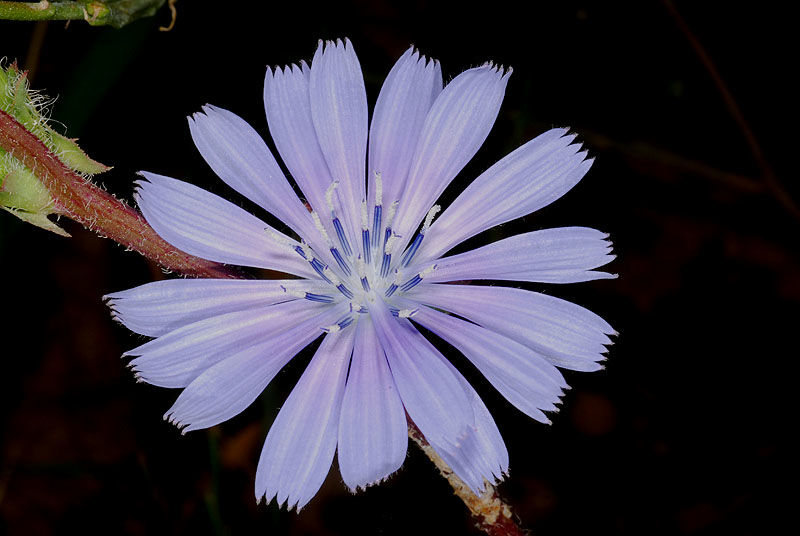
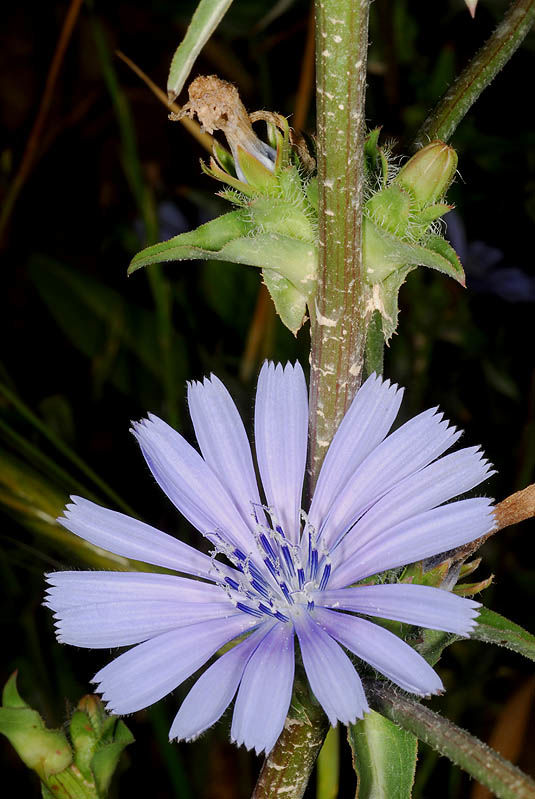
If left in the ground beyond its first growing season, the plant produces a branched flowering stem that can exceed 1 m (3.3 ft), bearing the small sky-blue flower heads typical of Cichorium. Each opens for only one morning. Flowering is uncommon in vegetable crops because the leaves are harvested well before this stage. 5 1
Useful taxonomy
Linnaeus described the species as Cichorium endivia L. in 1753. There are only a few species in Cichorium, but endive's horticultural diversity has generated numerous infraspecific names. POWO places the following in synonymy with the species:
- Cichorium endivia var. crispum (Mill.) DC., the curly endive group;
- Cichorium endivia var. latifolium DC., the escarole group;
- Cichorium endivia var. sativum DC., a historical name for cultivated forms;
- Cichorium pumilum Jacq., a dwarf form sometimes treated as a distinct subspecies.
These four infraspecific names are thus associated with the same accepted taxon, Cichorium endivia. Identifying a variety by this scientific name rather than a horticultural synonym reduces confusion. A separate pitfall remains: Cichorium intybus var. endivia, a combination belonging to a different species that older horticultural books sometimes cite in error instead of the correct name. 1 7
Habitat and range
Cichorium endivia is a cultigen whose strict area of origin is limited to the eastern Mediterranean basin, around Egypt and the Near East. No clearly wild population is recognized outside this presumed original area. 1 5
Cultivation spread early throughout the Mediterranean and then across temperate Europe. A cool-season crop, endive prefers 15–20 °C (59–68 °F). Above 25 °C (77 °F), the leaves become more bitter and bolting starts earlier, limiting production during the height of summer. 4 6
Now grown worldwide, endive chiefly occupies autumn and winter vegetable beds where the climate permits, both outdoors and under unheated protection. It rarely escapes gardens: the few records at woodland edges or on waste ground remain associated with nearby crops, without lasting establishment. 3 2
Life cycle and reproduction
Vegetative growth is completed within one season. Cool conditions bring germination in one to two weeks, followed by rapid formation of the leaf rosette, broad-leaved in escarole or finely divided in curly endive. This is the harvest stage, sometimes after 10–15 days of blanching. 4 2
An unharvested plant that survives winter, or one driven prematurely by summer heat, bolts from its second season. It sends up a flowering stem with self-pollinating, sky-blue heads followed by dry seeds with a short pappus. Vegetable production almost always avoids this reproductive stage so that the leaves can be harvested instead. 5 3
Propagation is exclusively by seed, sown in place or in a nursery bed and barely covered. Plants are transplanted at four to five leaves for successive crops from spring through summer, according to local conditions. 2 4
Uses and risks
Endive is chiefly a food crop. Leaves are eaten raw in salads, often as blanched escarole hearts, or cooked in soups and gratins in several Mediterranean traditions. Escarole also features in the Italian broth-based soup scarola e fagioli. Roots of some forms have served as a coffee substitute, as in the related Cichorium intybus. 3 4 8
No notable toxicity is associated with Cichorium endivia: the leaves are eaten raw or cooked, with no known food-safety risk. Bitterness is stronger in unblanched outer leaves or plants that have bolted. It reduces their appeal at the table without posing a health problem. 4 2
Varieties, look-alikes and related plants
Numerous cultivars are selections within the two horticultural groups, not separate species. Frisée de Meaux and Frisée Wallonne represent finely divided curly endive; Scarole Géante Maraîchère and Scarole Cornet de Bordeaux belong to the broad-leaved group. Frisée Wallonne offers better protection through light frosts down to -3 °C (27 °F), where escaroles fail. Matching the group, sowing season and cold tolerance to growing conditions helps avoid a failed harvest. 2
Common sources of confusion include:
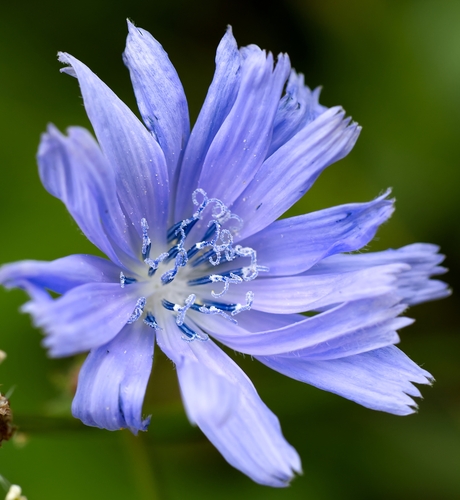
- Cichorium intybus, chicory, which also bears the French name endive when grown as dark-forced witloof;
- lettuce, Lactuca sativa, some cutting types of which resemble a young endive rosette;
- related wild and ornamental chicories with less bitter leaves or a different habit.
The common name endive covers two different species, whereas a Latin binomial identifies just one. On a seed packet or produce label, the scientific name distinguishes root-forced witloof (Cichorium intybus) from the green leaf rosette of Cichorium endivia. 1 5
Main sources
- Plants of the World Online / Kew, Cichorium endivia L.
- Royal Horticultural Society, endive - wd (Cichorium endivia)
- Encyclopaedia Britannica, endive
- USDA PLANTS Database, Cichorium endivia (CIEN)
- GBIF Backbone Taxonomy, Cichorium endivia L.
- Integrated Taxonomic Information System, Cichorium endivia
- International Plant Names Index, Cichorium endivia L.
- Plants For A Future, Cichorium endivia
Frequently asked questions
Is endive the same plant as Belgian endive?
Not exactly. In everyday French, endive mainly means witloof, produced from Cichorium intybus by forcing roots in darkness. Cichorium endivia is a separate species, grown outdoors for green leaves as escarole or curly endive.
What is the difference between escarole and curly endive?
Both belong to Cichorium endivia. Escarole has broad, smooth or slightly wavy leaves and a milder flavor. Curly endive has finely divided, curled leaves, with more bitterness in the outer foliage.
Is endive poisonous?
No. Cichorium endivia leaves are edible raw or cooked. Bitterness, stronger in unblanched or bolted plants, may put some people off without presenting a food-safety risk.
Why is the heart blanched before harvest?
Tying the leaves together or covering the plant with a cloche excludes light from the heart for 10–15 days. This reduces bitterness and produces the pale-yellow hearts valued in cooking.
When should you sow and harvest endive?
Sow successive batches from spring through summer, according to the intended harvest season. Depending on type and climate, a rosette takes 70–110 days from sowing to harvest.
What plants are confused with endive?
The main confusion is with Cichorium intybus, chicory, which shares the French name endive when grown as witloof. The scientific name is the most reliable distinction between the two species.
Where does endive come from?
It is a cultigen whose area of origin is limited to the eastern Mediterranean basin, around Egypt and the Near East. Cultivation then spread throughout Europe and into temperate regions worldwide.
Similar plants

If you are unsure about a plant’s toxicity, ask a botanist or veterinarian for advice.