
Ceylon cinnamon (Cinnamomum verum, )
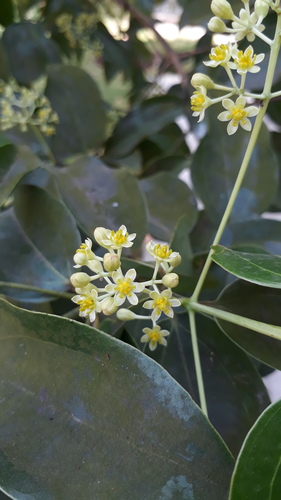

Ceylon cinnamon (Cinnamomum verum) is an evergreen tree in the Lauraceae family, native to the humid forests of Sri Lanka. Coppiced and trained as a low, multistemmed shrub for harvesting, it supplies true cinnamon from its inner bark, with a finer aroma and much less coumarin than Chinese cinnamon (Cinnamomum cassia).
Read moreCeylon cinnamon and True cinnamon
Allow a few hours of direct sun per day, preferably morning or evening.
Full sun; light partial shade for young plants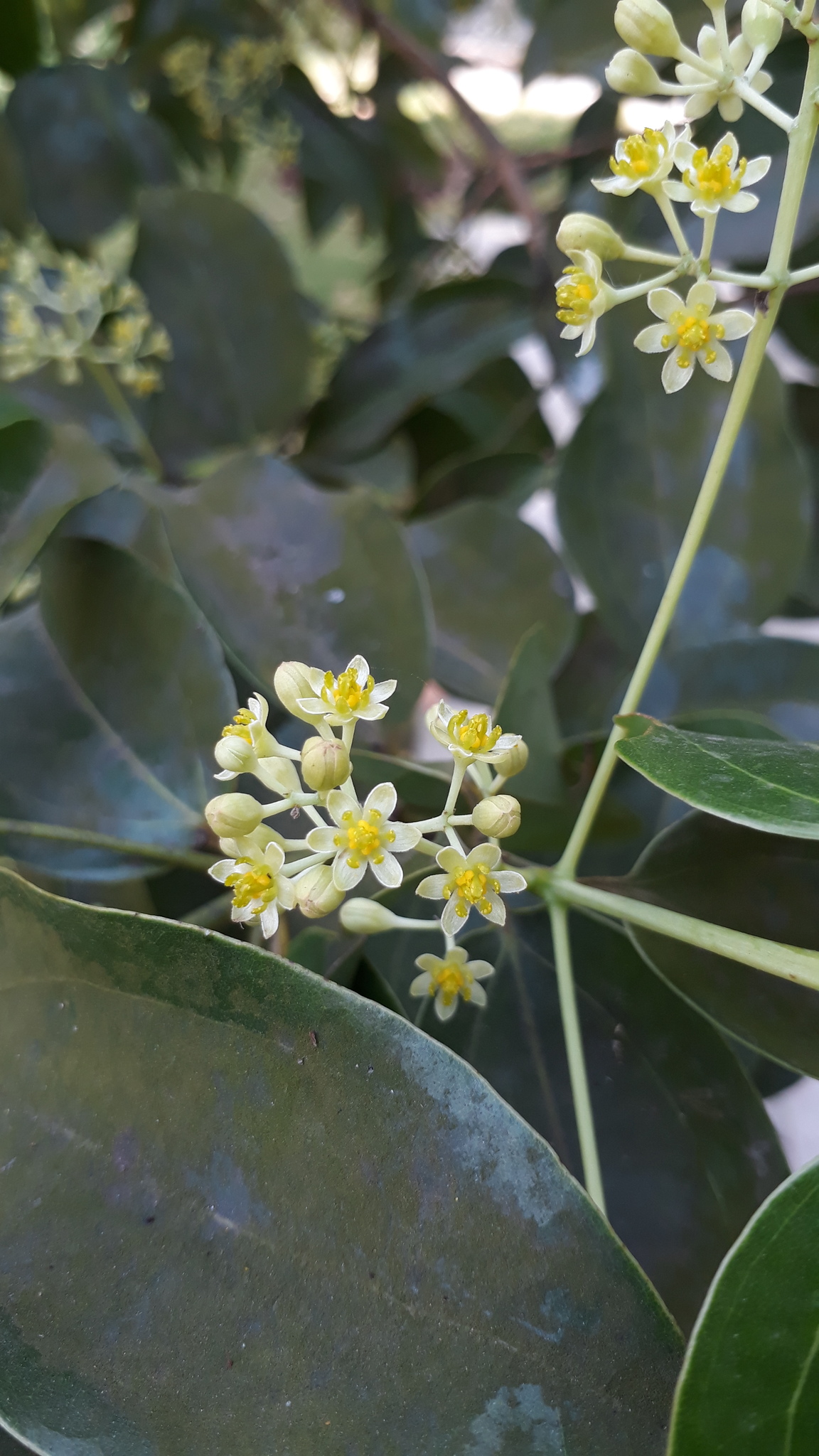


© photo
Sayee Girdhari · cc-by
Wikimedia Commons · CC BY-SA or Public Domain
Wikipedia · CC BY-SA
Taken Aug 20, 2021 by pedrogc -- (cc-by-sa)
Taken Aug 31, 2022 by Trap Hers (cc-by-sa)
© copyright of the Board of Trustees of the Royal Botanic Gardens, Kew.




Global distribution
Cinnamomum verum is strictly native only to Sri Lanka, where it grows in humid tropical forest up to about 700 m elevation. Cultivation later spread to other tropical regions for bark production. Local naturalization must be distinguished from its restricted native range.
- Native1
- Invasive1
- Sri Lanka
- Seychelles
Hexagons: regions where the plant occurs. Green dots: native range.1
Identity
Ceylon cinnamon (Cinnamomum verum J.Presl, 1823) is an evergreen tree in the genus Cinnamomum, family Lauraceae, native to Sri Lanka's humid forests. Also called true cinnamon, it supplies the spice from its inner bark, which is peeled and dried. This material needs to be distinguished from Cinnamomum cassia, Chinese cinnamon sold under the same commercial name. 1 4
The Latin epithet verum means “true,” directly recalling that distinction. Among the species' historical synonyms, Cinnamomum zeylanicum Blume remains the most widely used in older botanical and horticultural literature. It derives from Ceylon, the island's former colonial name. 9 1
Recognition
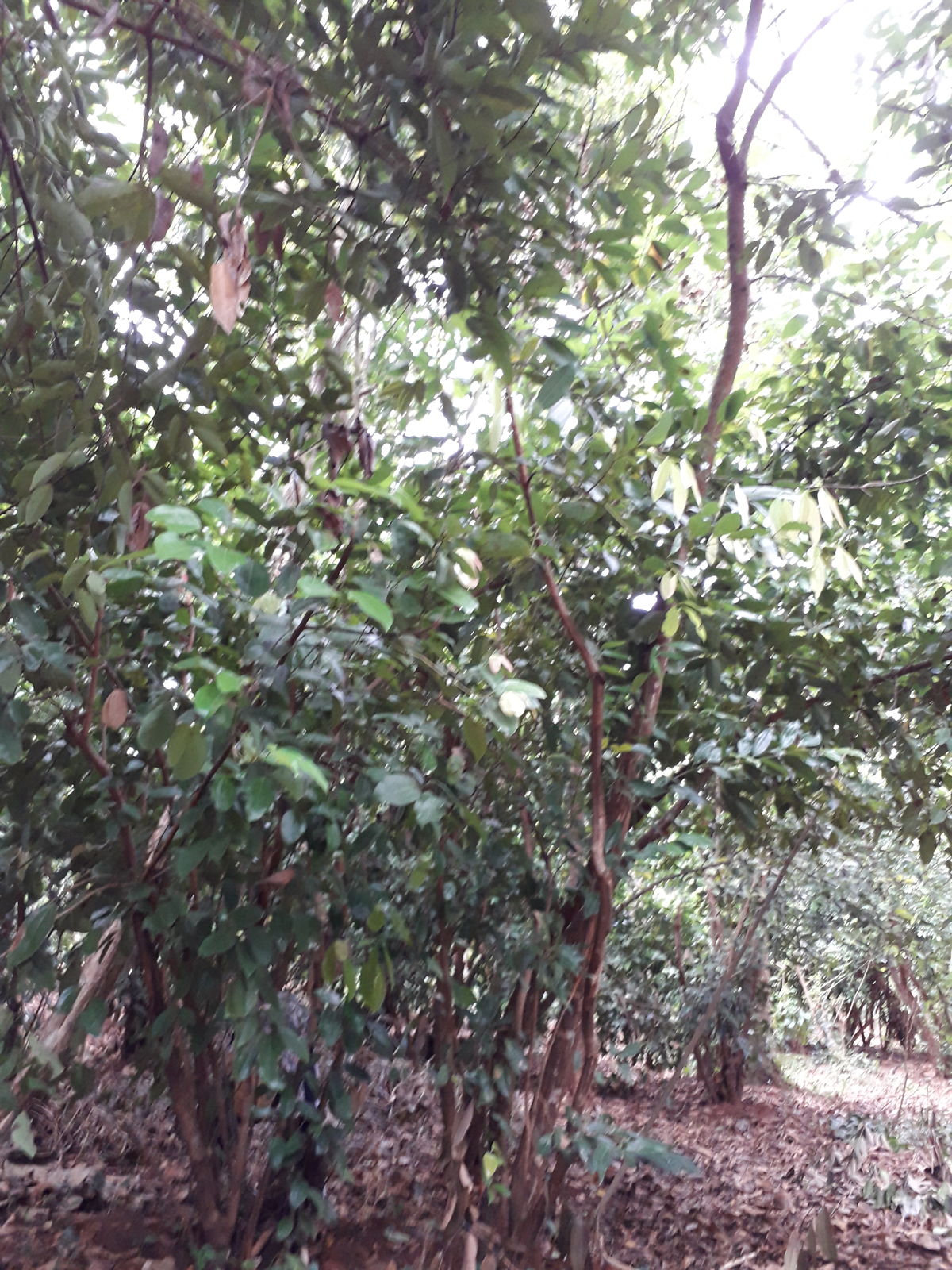
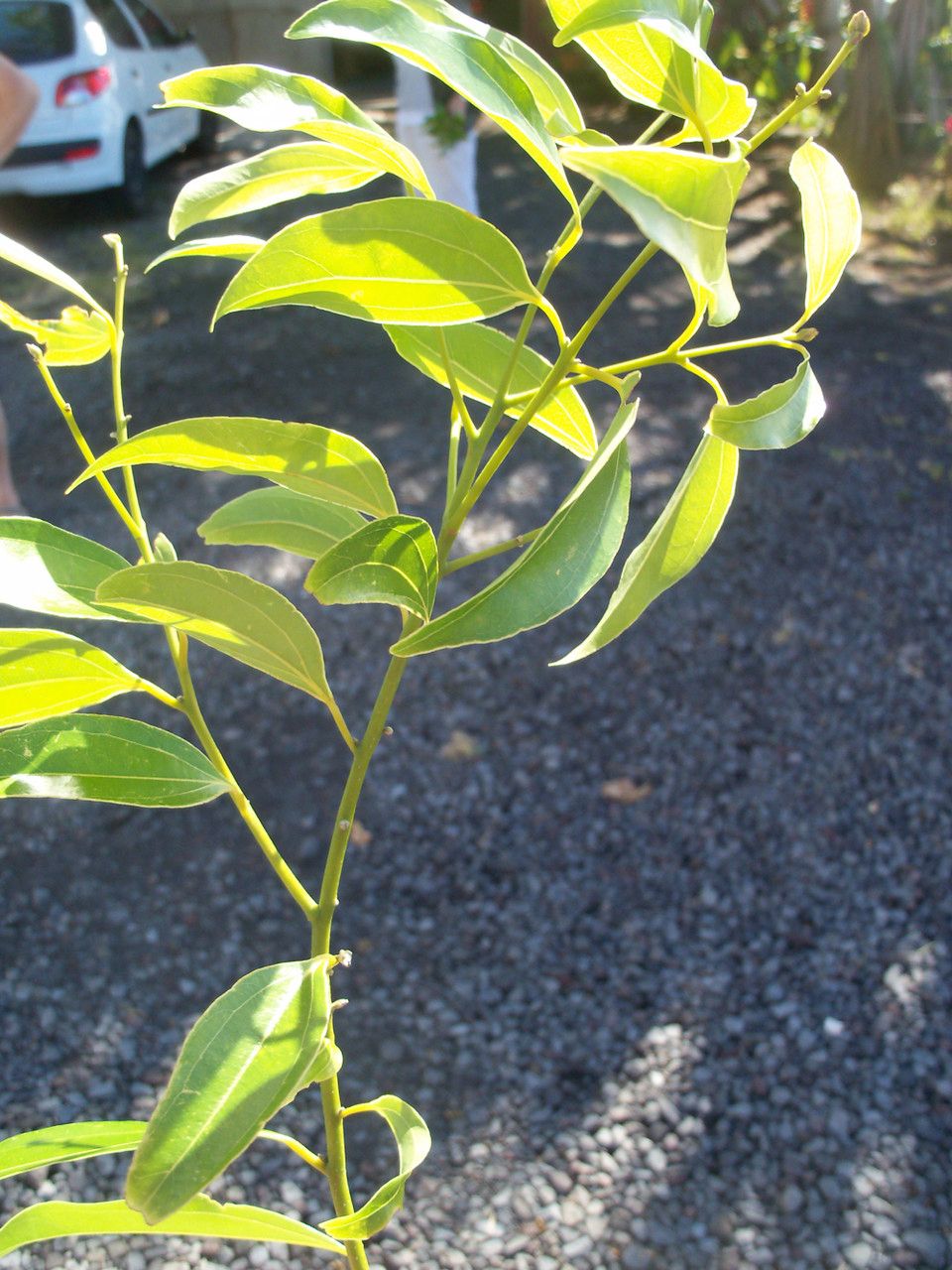
Left unpruned in the wild, Cinnamomum verum reaches 10 to 15 m (33 to 49 ft) tall with a spread of 6 to 12 m (20 to 39 ft). Commercial growers regularly coppice it and maintain low, multistemmed plants 2 to 3 m (7 to 10 ft) tall, making bark harvesting much easier. 2 4
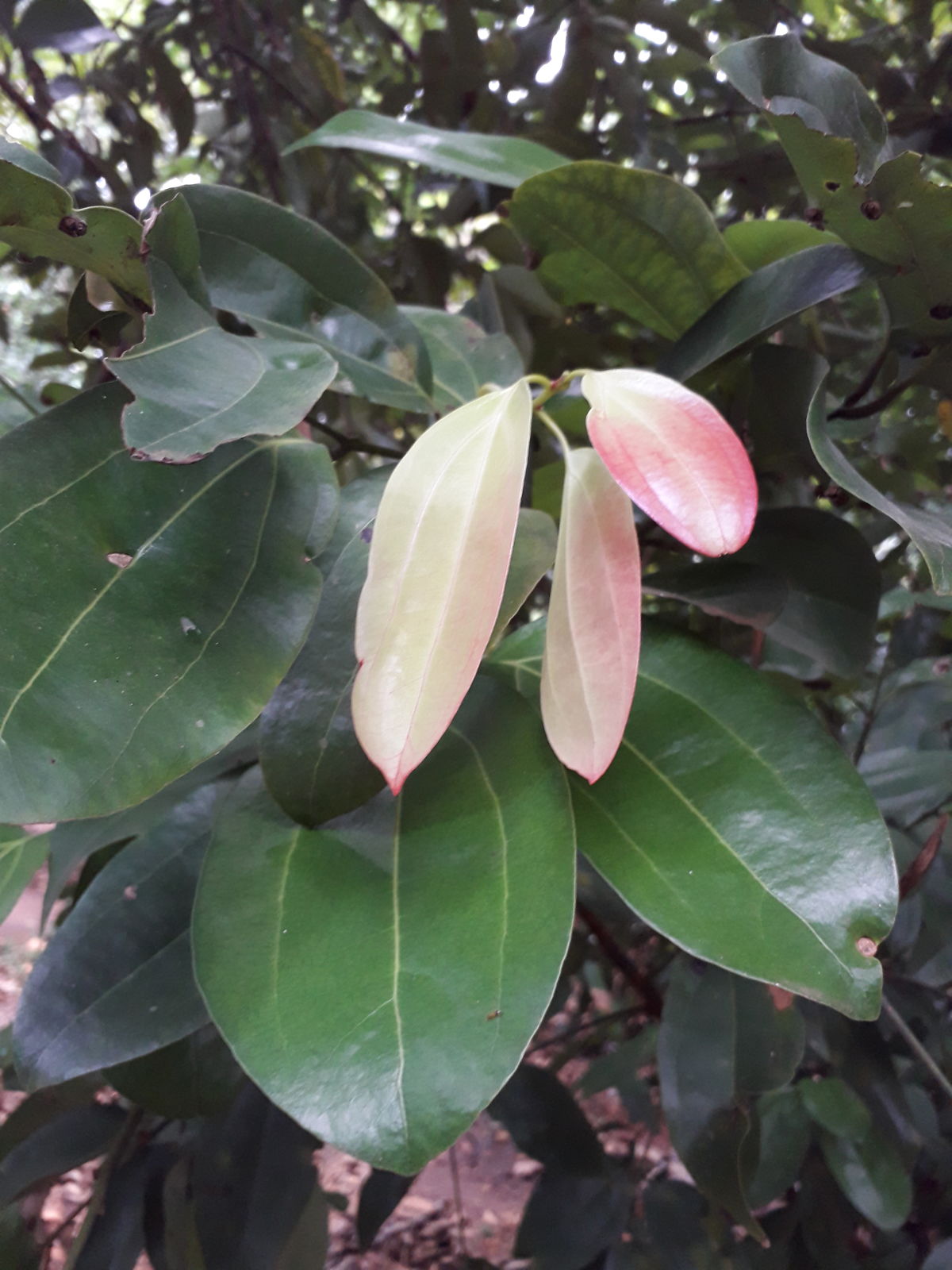
Opposite, leathery, glossy leaves measure 7 to 18 cm (3 to 7 in) long. Their veins provide the most reliable identifying feature: three main veins start at the base and converge toward the tip. This three-veined pattern is clearer than the pinnate venation of most other Lauraceae, including Cinnamomum cassia. Young leaves often emerge reddish or purple before turning green. 6 4
Small cream to pale yellow flowers open in terminal or axillary panicles and have an odor many observers find unpleasant. The fruit is an egg-shaped drupe about 1 to 2 cm (0.4 to 0.8 in) long, green at first and purplish black when ripe, with a single seed. 2 6
Useful taxonomy
POWO/WCVP accepts Cinnamomum verum J.Presl. One synonym remains common, derived from the island's colonial name:
- Cinnamomum zeylanicum Blume, published directly in Cinnamomum and still the synonym most often cited in commercial catalogs and older herbaria.
Other names now treated as synonyms trace the history of the species' reclassification between genera:
- Cinnamomum cinnamomum (L.) H.Karst., a name described by Linnaeus and transferred to Cinnamomum by H. Karsten
- Laurus cinnamifera Stokes, published directly in Laurus before the species was placed in Cinnamomum
- Camphorina cinnamomum (L.) Farw., Farwell's transfer of the same Linnaean name to the now abandoned genus Camphorina
- Persea cinnamomum Spreng., published directly in Persea by Sprengel
For a plant label, the stable reference is the accepted name Cinnamomum verum. The species to distinguish in shops is Cinnamomum cassia, Chinese or Saigon cinnamon, often sold simply as “cinnamon” without a species distinction. 1 9
Habitat and range
Sri Lanka alone forms the strict native range, with the species growing in humid tropical forest at low and middle elevations up to about 700 m (2,300 ft). This restricted range, together with continuing pressure from land conversion, has led to Cinnamomum verum being listed as Vulnerable on the IUCN Red List since 2024. 7 6
Sri Lankan production still accounts for 80 to 90% of the world's Ceylon cinnamon. Cultivation has also spread to the Seychelles, Madagascar, Tanzania and several Indonesian islands, where introduced plants sometimes self-seed. In the Seychelles, the species is even listed among invasive plants threatening the local endemic flora, a status distinct from ordinary ornamental cultivation elsewhere. 9 7
Life cycle and reproduction
Winter flowering produces inconspicuous panicles with an uninviting scent, of greater interest to local pollinators than to most gardeners. Commercial production depends on stem regrowth after coppicing rather than on flowering. Seasonal timing refers to the growing conditions described, rather than a universal calendar. 4
A planted tree supplies harvestable bark from 2 to 3 years old and remains productive for 40 to 50 years through repeated cutting back to the stump. Stems one to two years old and 1.5 to 5 cm (0.6 to 2 in) in diameter are cut and peeled with brass tools to release the inner bark. It is dried in shade and then in darkness until it forms the rolled sticks, or “quills,” sold commercially. 9 4
Two cultivars selected by Sri Lanka's Department of Export Agriculture, 'Sri Gemunu' and 'Sri Wijaya', are now distributed to standardize bark yield and quality, alongside traditional propagation from fresh seed. 5
Uses and risks
Dried inner bark provides Ceylon cinnamon, valued for an aroma that is finer, more floral and less pungent than Chinese cinnamon. Essential oils extracted from the bark and leaves also flavor confectionery and drinks and scent cosmetics. 5 4
The plant and bark are nontoxic to cats, dogs and horses according to the available veterinary accounts. Concentrated essential oil can, however, irritate the skin or digestive tract, and its use is discouraged for young children and during pregnancy. 4 9
Coumarin content is a safety distinction between Cinnamomum verum and Cinnamomum cassia: Ceylon cinnamon contains only traces of coumarin, while Chinese cinnamon contains much more. The European Food Safety Authority has set a tolerable daily intake for coumarin, which heavy regular consumption of Chinese cinnamon can exceed. 8
Varieties, look-alikes and related plants
Ceylon cinnamon sticks have many thin layers rolled together, whereas Chinese cinnamon often forms a single, thicker roll. Packaging and processing can change a stick's shape, however. Before buying, the origin on the packaging (Sri Lanka for Ceylon cinnamon; China, Indonesia or Vietnam for cassia) is therefore more reliable than appearance alone. 9
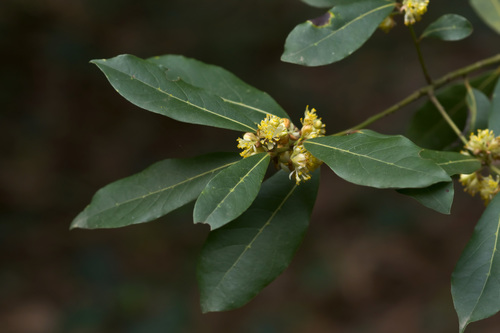
The common shopping confusion involves Cinnamomum cassia, often sold under the same commercial name, “cinnamon.” The genus Cinnamomum also includes the camphor tree (Cinnamomum camphora), whose bark and wood smell of camphor, quite unlike the sweet aroma sought in C. verum.
Main sources
- Plants of the World Online / Kew, Cinnamomum verum J.Presl
- Royal Horticultural Society, Cinnamomum verum
- Missouri Botanical Garden Plant Finder, Cinnamomum verum
- NC State Extension Gardener Plant Toolbox, Cinnamomum verum
- Plants For A Future, Cinnamomum verum
- Monaco Nature Encyclopedia, Cinnamomum verum
- IUCN Red List, Cinnamomum verum assessment (de Kok, 2024)
- EFSA Journal, Coumarin in flavourings and other food ingredients (2008)
- Wikipedia (FR), Ceylon cinnamon
Frequently asked questions
Is Ceylon cinnamon the same species as Chinese cinnamon?
No. Ceylon cinnamon comes from Cinnamomum verum, while Chinese cinnamon, or cassia, comes from Cinnamomum cassia, a distinct species with thicker bark and much more coumarin.
Is Ceylon cinnamon toxic to cats and dogs?
No. The plant and its bark are considered nontoxic to cats, dogs and horses. Concentrated essential oil can, however, irritate the skin or digestive tract at high doses.
Why is Ceylon cinnamon considered safer than Chinese cinnamon?
Cinnamomum verum contains only traces of coumarin, whereas Cinnamomum cassia contains much more. The European Food Safety Authority recommends limiting regular consumption of cinnamon rich in coumarin.
How can I recognize a true cinnamon stick?
A Ceylon cinnamon stick has many thin layers rolled together, whereas Chinese cinnamon often forms a single, thicker roll. The origin stated on the packaging remains the most reliable guide.
Where does the name Cinnamomum verum come from?
The epithet verum means “true” in Latin and distinguishes the species from Cinnamomum cassia. The still widely used synonym Cinnamomum zeylanicum comes from Ceylon, the former name of Sri Lanka.
How long does Ceylon cinnamon remain productive?
A planted tree begins producing harvestable bark at 2 to 3 years old and remains productive for 40 to 50 years through repeated cutting back to the stump.
Is Ceylon cinnamon threatened in the wild?
Yes. The IUCN has classified it as Vulnerable since 2024 because its native range is restricted to Sri Lanka and its forest habitat is declining locally.
Similar plants
If you are unsure about a plant’s toxicity, ask a botanist or veterinarian for advice.