
Trifoliate orange (Citrus trifoliata, )
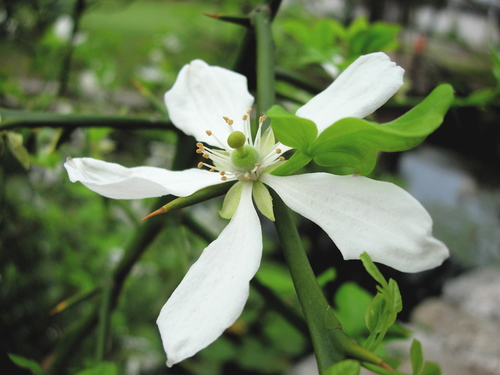
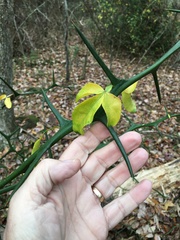
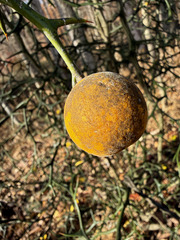
Trifoliate orange (Citrus trifoliata) is a deciduous shrub in the Rutaceae family, native to China. Long placed separately in Poncirus, it differs from other cultivated citrus through its three-part leaves, long thorns and winter leaf loss. Its exceptional hardiness makes it a standard rootstock for growing citrus outside the tropics.
Read moreTrifoliate orange, Hardy orange and Karatachi



© photo
(c) Josh*m, some rights reserved (CC BY-NC-SA) · cc-by-nc-sa
Becky Dill · cc0
Allen Browne · cc0
Taken Feb 5, 2022 by Giacomo Sellan (cc-by-sa)
Taken Jun 13, 2021 by Trap Hers (cc-by-sa)
Taken Jun 25, 2014 by Tela Botanica − Yoan MARTIN (cc-by-sa)
© copyright of the Board of Trustees of the Royal Botanic Gardens, Kew.




Global distribution
Citrus trifoliata is native to central and southern China; several regional floras also include Korea. Long introduced to Japan and widely planted elsewhere for its hardiness, it has naturalized in the southeastern United States, where several states list it as invasive.
- Native2
- Introduced2
- Invasive1
- China
- Korea
- Japan
- Eastern Australia
- United States (southeast)
Hexagons: regions where the plant occurs. Green dots: native range.1
Identity
Trifoliate orange (Citrus trifoliata L., 1763), also known as hardy orange or karatachi, is a deciduous shrub in the Rutaceae family. Long separated into Poncirus, it has rejoined Citrus in current classifications. Its appearance nevertheless differs from all other cultivated citrus: bright green bark bristles with thorns, and the leaves fall each autumn. 1 2
The historical name Poncirus trifoliata (L.) Raf. remains widely used in horticulture and older scientific literature; both names refer to the same plant. 1
China is the species' home, where it has grown for centuries along woodland edges and in hedges. It subsequently spread to Korea and then Japan, where its hardiness was already valued. 3
Recognition
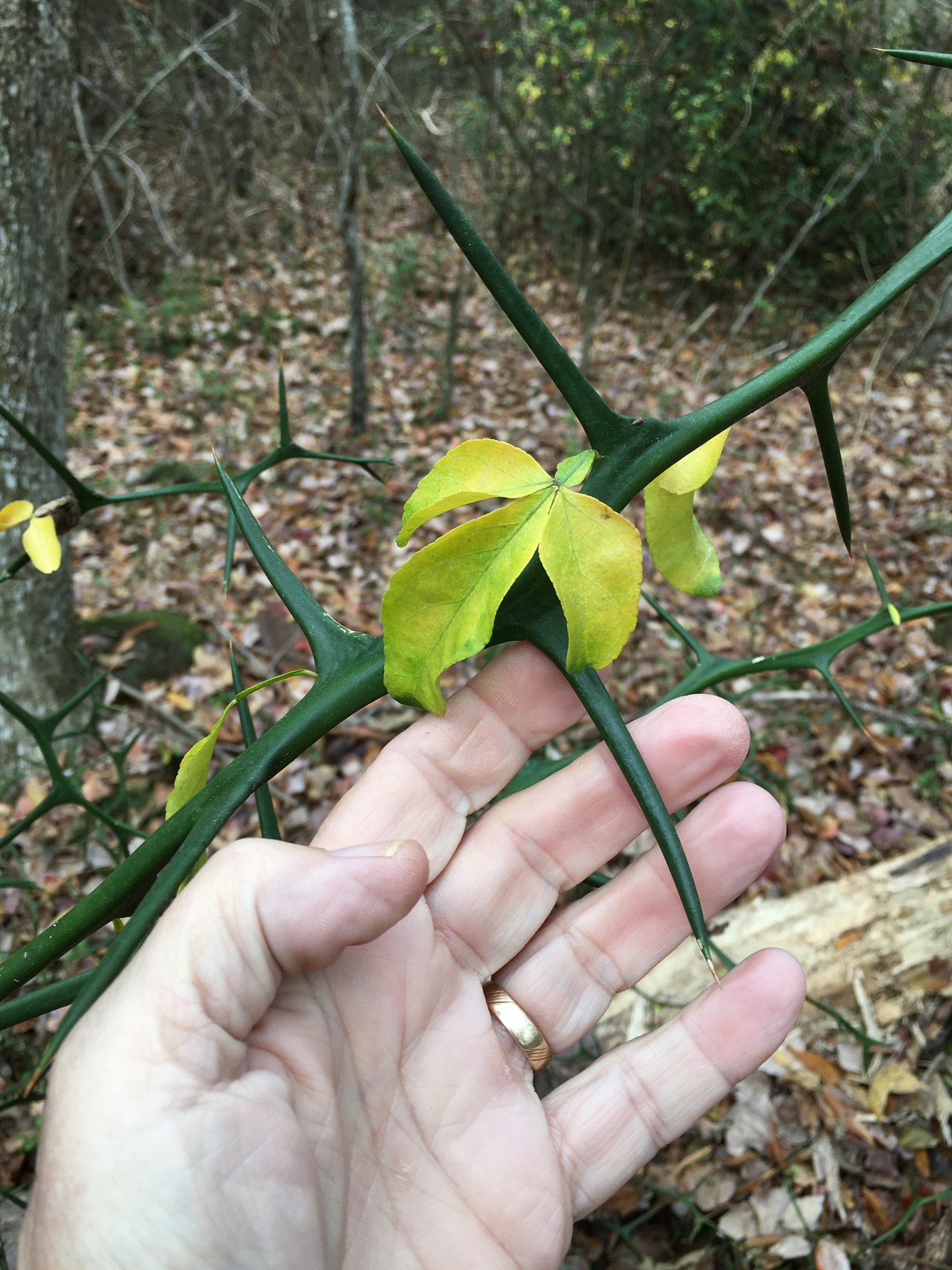
Three leaflets on a winged petiole give Citrus trifoliata its distinctive trifoliate leaves, an arrangement unique among cultivated citrus. Unlike most evergreen Citrus, it is deciduous, losing all its leaves each winter. 3 4
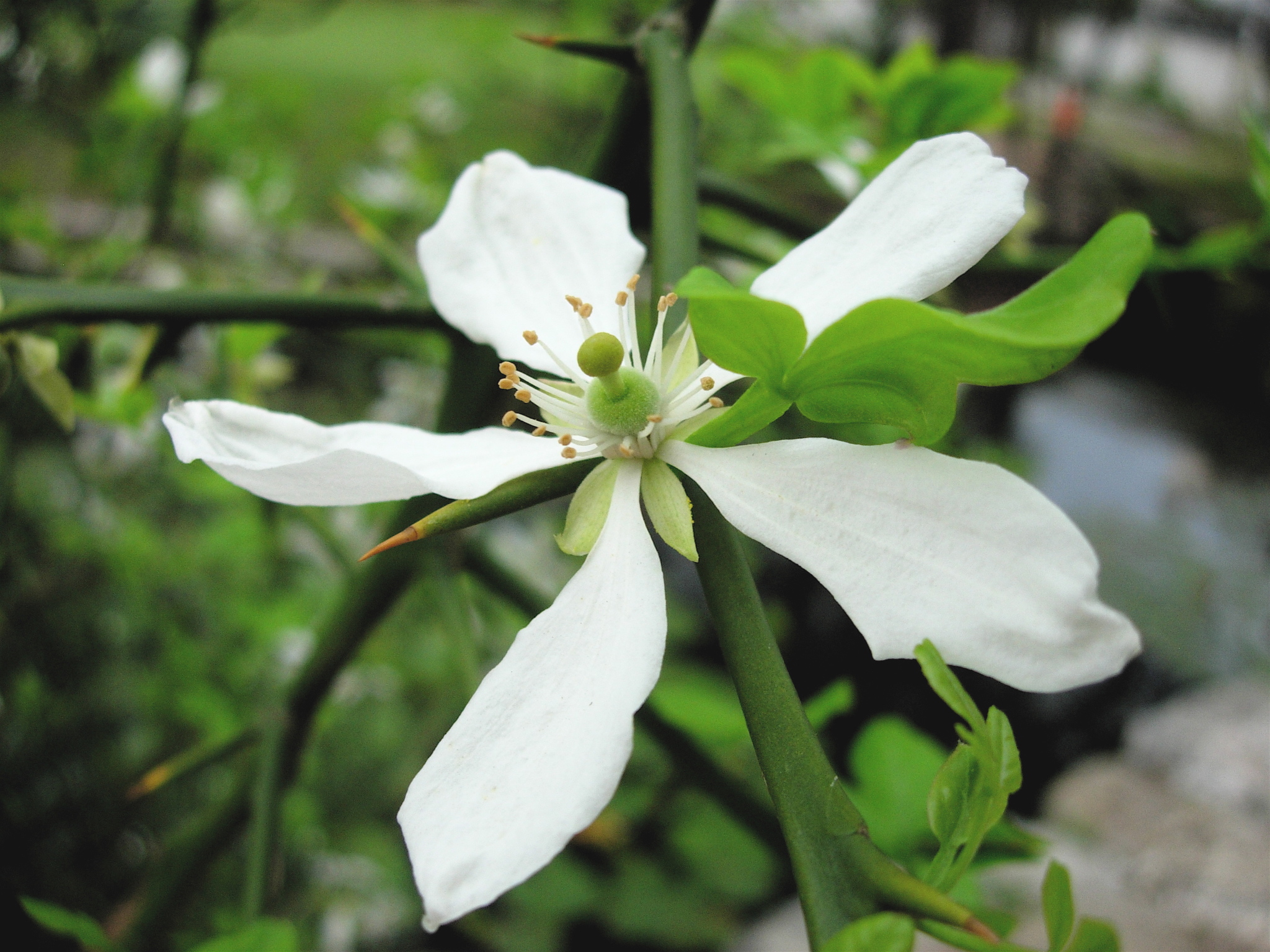
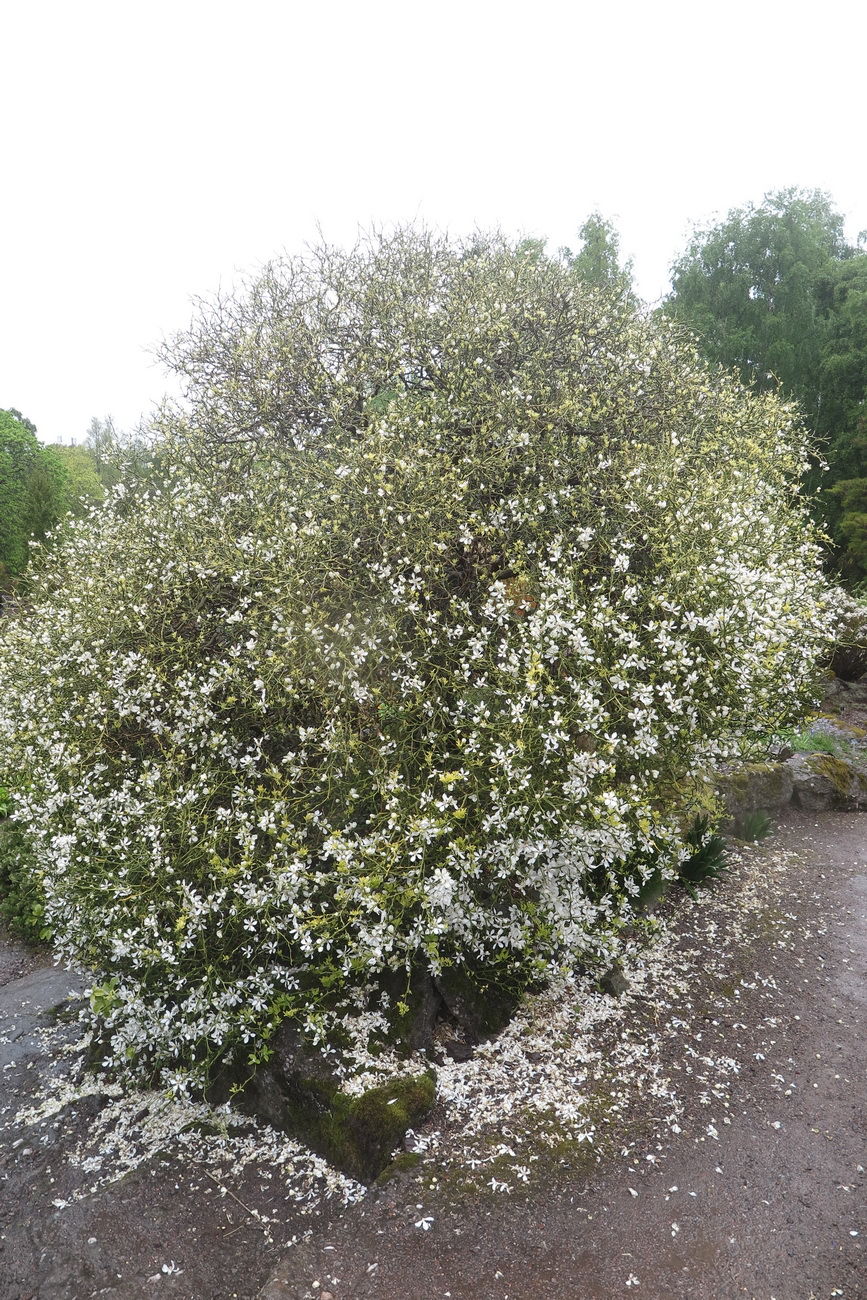
Bright green, angular stems carry long, rigid thorns at every node. Firm contact can cause scratches, explaining the plant's use as a barrier. The shrub forms a dense outline 2 to 6 m (7 to 20 ft) tall and about 2 to 5 m (7 to 16 ft) wide. 4 2
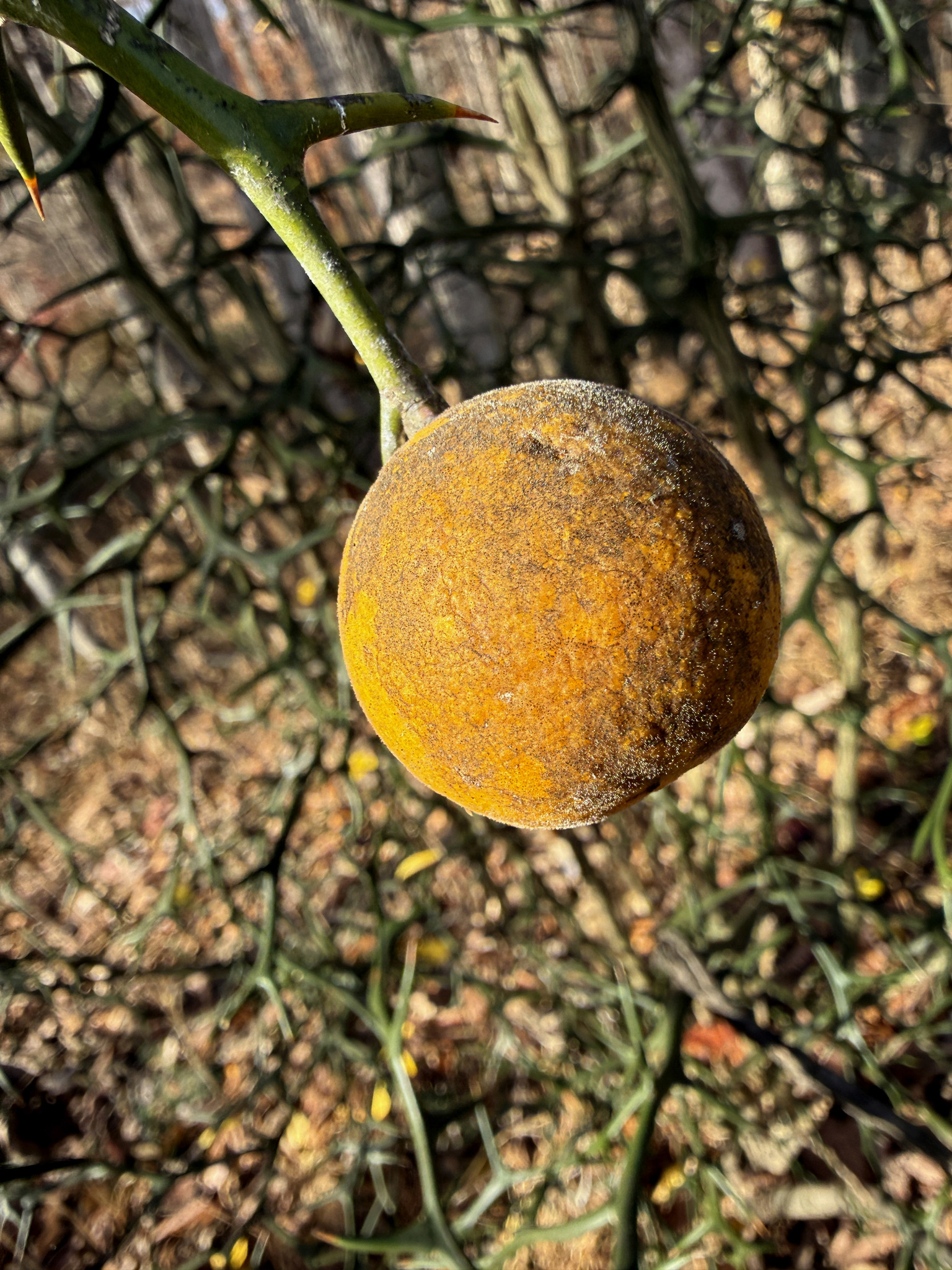
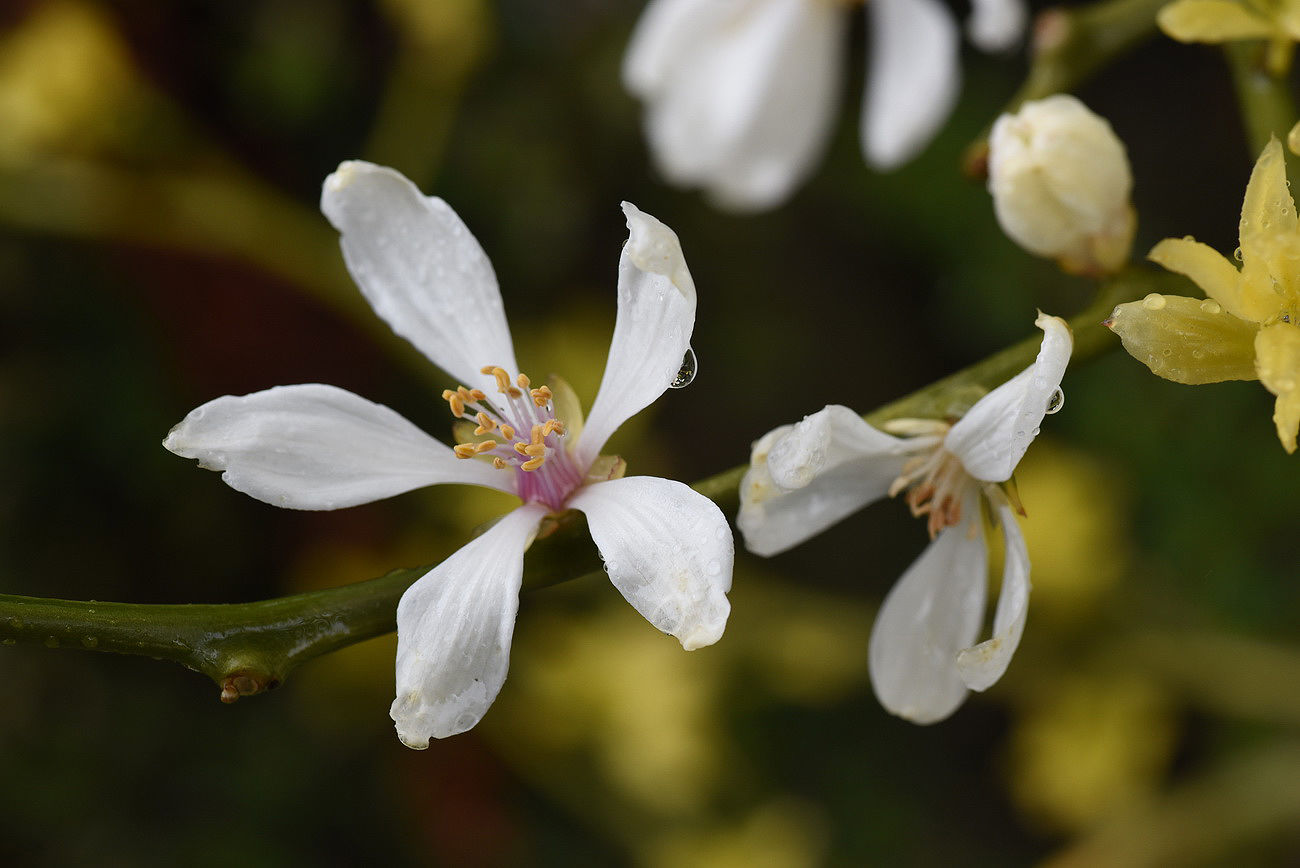
Solitary white flowers have four or five petals, reach up to 7 cm (2.8 in) across and open in spring, often before the leaves fully emerge. Round, downy fruit turns dull yellow when ripe in fall. Its rough, slightly fuzzy skin feels different from that of ordinary citrus. 4 3
Useful taxonomy
Authors have classified this species in different ways. During the twentieth century it was separated into Poncirus because of its deciduous, trifoliate leaves, before a more recent taxonomic revision returned it to Citrus. 1
The principal synonyms to recognize are:
- Poncirus trifoliata (L.) Raf., the historical generic placement
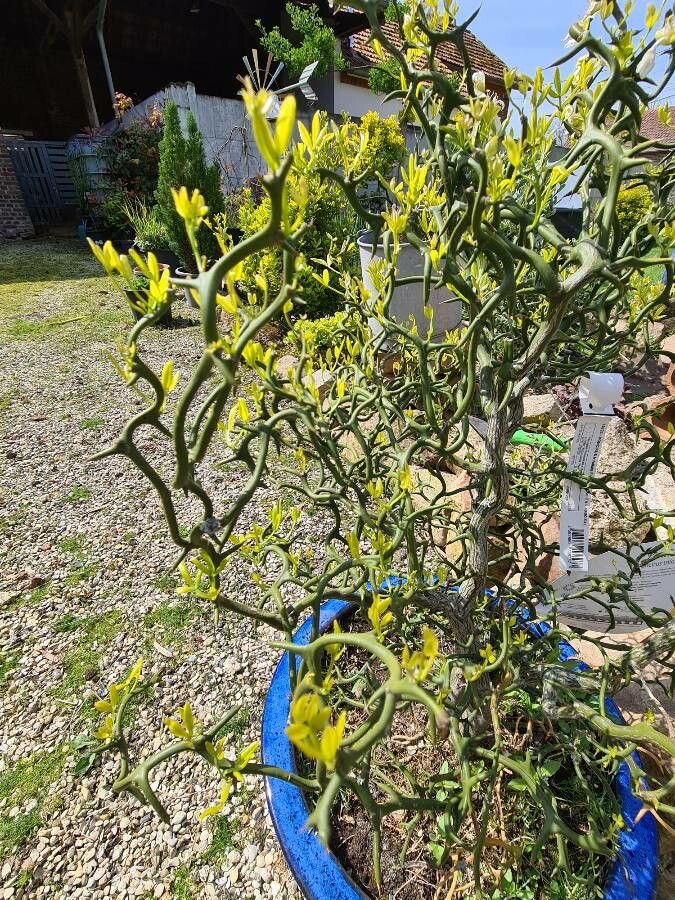
- Citrus trifoliata var. monstrosa T.Itô, the twisted-stem variety
- Poncirus trifoliata f. monstrosa (T.Itô) H.Hara, the corresponding form name
The twisted-stem variety monstrosa gave rise to the ornamental cultivar Flying Dragon. The currently accepted scientific name remains Citrus trifoliata, but Poncirus trifoliata still circulates in the nursery trade and rootstock descriptions. 1 9
Habitat and range
Central and southern China form the native range, with several regional floras also including Korea. Long introduced to Japan, the plant is cultivated there as karatachi, particularly in defensive hedges along fields. 3 1
Widely planted elsewhere for its hardiness, it has naturalized in the southeastern United States, colonizing woodland edges, rural hedges and wasteland. It is officially recorded as invasive in Alabama, Georgia, South Carolina and Virginia. Each plant produces many seeds that germinate readily under forest cover, accelerating its spread into understories and along roadsides. 7 3
Within France, the species remains mainly cultivated as citrus rootstock or ornamental hedging, without documented invasive status. This is a regional account. 8
Life cycle and reproduction
Fragrant flowers appear singly on the previous year's wood in spring, generally April–May in the Northern Hemisphere conditions described, depending on climate. Fruit takes several months to ripen and falls in autumn, often after the first leaves have dropped. 4 2
Propagation is mainly from seed after several weeks of cold stratification, or from cuttings of semi-ripe shoots in summer. A seed-raised plant generally takes 3 to 5 years to flower for the first time. 5
Cold resistance provides the species' main agricultural value. A Citrus variety grafted onto its roots gains several degrees of frost tolerance compared with the same variety on its own roots. This makes it a standard rootstock for growing citrus outside tropical areas. 5 9
Uses and risks
In East Asia, dried immature fruit is used in Zhi Shi, a traditional digestive remedy. It was the main source until the Song dynasty, when bitter orange, Citrus aurantium, replaced it as a supposedly more active ingredient. 3
Raw fruit is extremely sour and bitter, unsuitable for eating directly. It is mainly used for marmalades and tart drinks. 5
Like most citrus, the plant contains irritating essential oils and psoralens. These can cause digestive problems and possible contact dermatitis when foliage or fruit peel is handled in full sun. The ASPCA classifies the species as toxic to cats, dogs and horses. 6 3
Long, rigid thorns also present a substantial physical hazard. They explain the traditional use as an impenetrable defensive hedge rather than a freestanding ornamental specimen. 4
Varieties, look-alikes and related plants
Flying Dragon, with twisted stems and strongly curved thorns, is the most widely grown ornamental selection; it also serves as a dwarfing rootstock for container-grown citrus. Rubidoux and Pomeroy are two other rootstock selections: the former chosen for vigor, the latter used in research to distinguish citrus nematode biotypes. 9
Young plants of ordinary Citrus are the most frequent source of confusion. Deciduous, trifoliate foliage, with three leaflets per leaf, is the reliable guide: no conventional commercial citrus loses its leaves in winter or has this leaf arrangement. 4 3
Crosses with other Citrus, producing citranges or citrumelos, favor the inheritance of thorns and better cold tolerance in grafted plants without reproducing the trifoliate parent's deciduous foliage.
Main sources
- Plants of the World Online / Kew, Citrus trifoliata L.
- Royal Horticultural Society, Citrus trifoliata - Japanese bitter orange
- North Carolina Extension Gardener Plant Toolbox, Citrus trifoliata
- Missouri Botanical Garden Plant Finder, Poncirus trifoliata
- Plants For A Future, Poncirus trifoliata
- ASPCA, Orange (Citrus) toxicity entry
- Invasive Plant Atlas of the United States, trifoliate orange
- INPN / MNHN, Poncirus trifoliata (L.) Raf.
- Givaudan Citrus Variety Collection / UC Riverside, rootstock varieties
Frequently asked questions
Is trifoliate orange a true citrus?
Yes, botanically. It belongs to the Rutaceae family and the genus Citrus under current classification, although it was long separated into Poncirus because its deciduous, three-part leaves differ greatly from other Citrus.
Can you eat trifoliate orange fruit?
The raw fruit is extremely sour and bitter, and practically inedible as it is. It is mainly used for marmalades or tart drinks, and its dried immature fruit is an ingredient in a traditional East Asian remedy.
Why is trifoliate orange used as a rootstock?
Its roots confer much greater cold resistance than conventional Citrus. A variety grafted onto it tolerates frosts that the same plant on its own roots would not withstand.
Is trifoliate orange invasive?
It is invasive in the southeastern United States, where it colonizes woodland edges and wasteland and appears on several official invasive-species lists. In France it remains mainly cultivated, without documented invasive status.
Is trifoliate orange toxic to cats and dogs?
Like most citrus, it contains irritating essential oils and psoralens. The ASPCA classifies it as toxic to cats, dogs and horses, with possible digestive problems after ingestion.
What is the difference between Citrus trifoliata and Poncirus trifoliata?
They are two names for the same plant. Poncirus trifoliata is the historical name, still widely used in horticulture; Citrus trifoliata is the botanical name now adopted by the main taxonomic databases.
How do you prune a trifoliate orange hedge?
Prune just after flowering, wearing thick gloves and long sleeves because of the thorns. Annual pruning is enough to contain growth without compromising the following year’s flowers.
Similar plants

If you are unsure about a plant’s toxicity, ask a botanist or veterinarian for advice.