
Calabash tree (Crescentia cujete, )
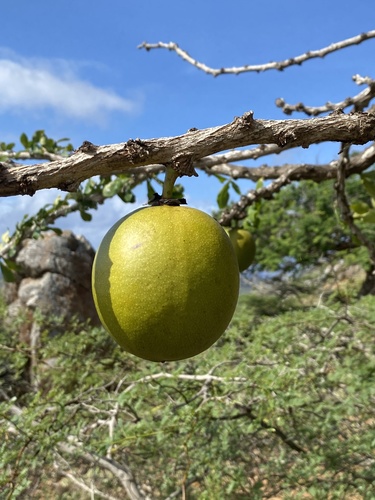
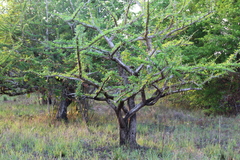

Calabash tree (Crescentia cujete) is a tropical evergreen in the Bignoniaceae family, native to tropical America from Mexico and the Caribbean to Colombia and Venezuela. Its flowers grow directly on the trunk and branches, followed by spherical, woody-shelled fruits that can exceed 25 cm (10 in) in diameter. Emptied and dried, the shell becomes a calabash, a traditional container used throughout the tropics.
Read moreCalabash tree and Common calabash tree
Allow a few hours of direct sun per day, preferably morning or evening.
Full sun to light partial shade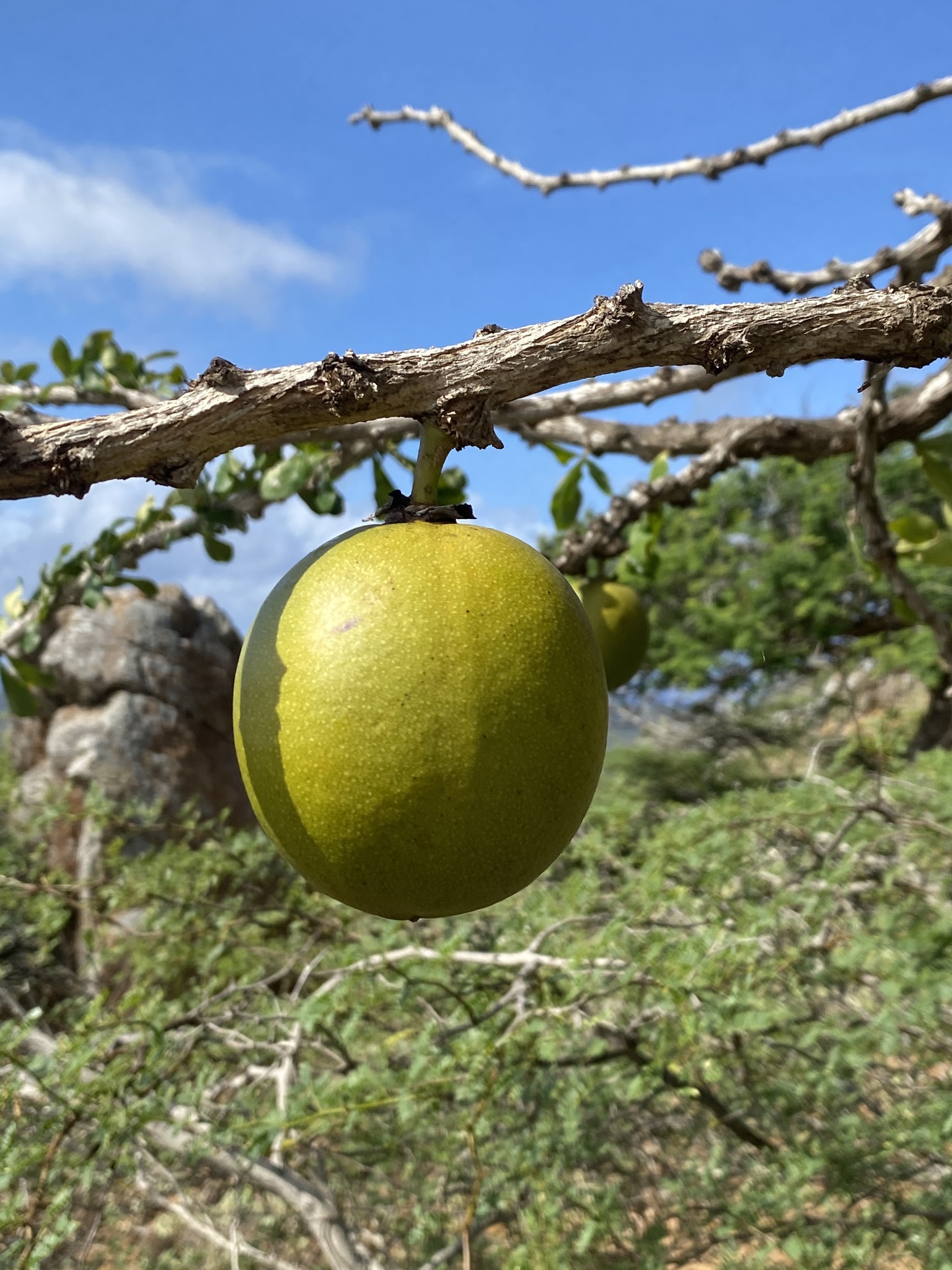



© photo
Jean-Paul Boerekamps · cc0
Tereso Hernández Morales · cc-by
Wikimedia Commons · CC BY-SA or Public Domain
Taken May 7, 2014 by Tela Botanica − Céline PIRAT (cc-by-sa)
Taken Feb 23, 2017 by Tela Botanica − Liliane ROUBAUDI (cc-by-sa)
Taken Mar 6, 2013 by Daniel Barthelemy (cc-by-sa)
© copyright of the Board of Trustees of the Royal Botanic Gardens, Kew.




Global distribution
The exact native range of Crescentia cujete remains uncertain because it has been cultivated beyond its original limits for centuries. The documented core covers Mexico, Central America, the Caribbean and northern South America. The tree has since become naturalized or established in cultivation in many tropical regions.
- Native4
- Introduced2
- Mexico
- Colombia
- Cuba
- Costa Rica
- India
- United States (Florida)
Hexagons: regions where the plant occurs. Green dots: native range.1
Identity
Calabash tree (Crescentia cujete L., 1753), also known as Common calabash tree, is an evergreen in the genus Crescentia, family Bignoniaceae. Carl Linnaeus described it in 1753. It grows wild across a broad belt of tropical America, from Mexico and the Caribbean to Colombia and Venezuela. Botanists describe the precise native range as uncertain because cultivation has carried it beyond its original limits for so long. 1 6
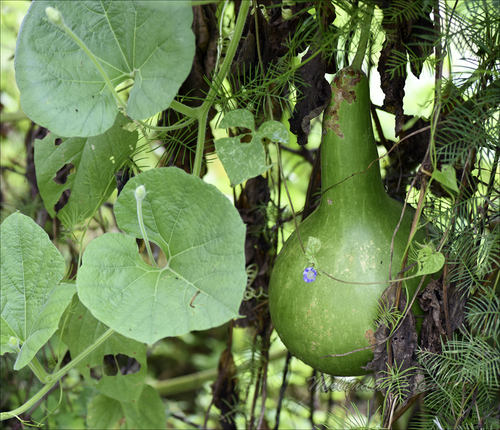
The name calabash refers directly to the object made from its fruit: a traditional container fashioned from the woody shell after it has been emptied and dried. Bottle gourd (Lagenaria siceraria) shares that common name without being closely related. One plant is a tree, the other an annual vine; it is the container made from their fruits that links the names. 2
Recognition
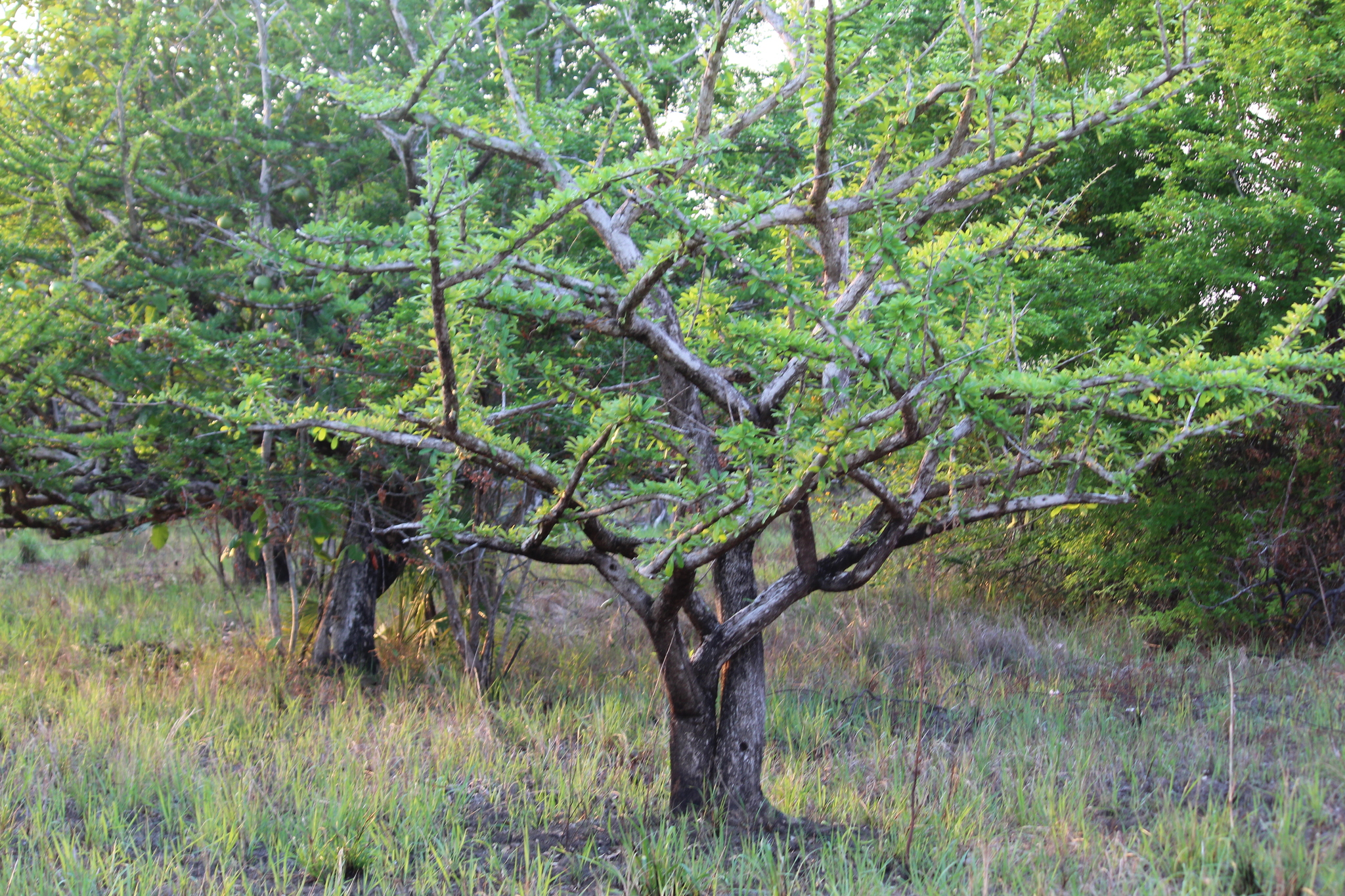
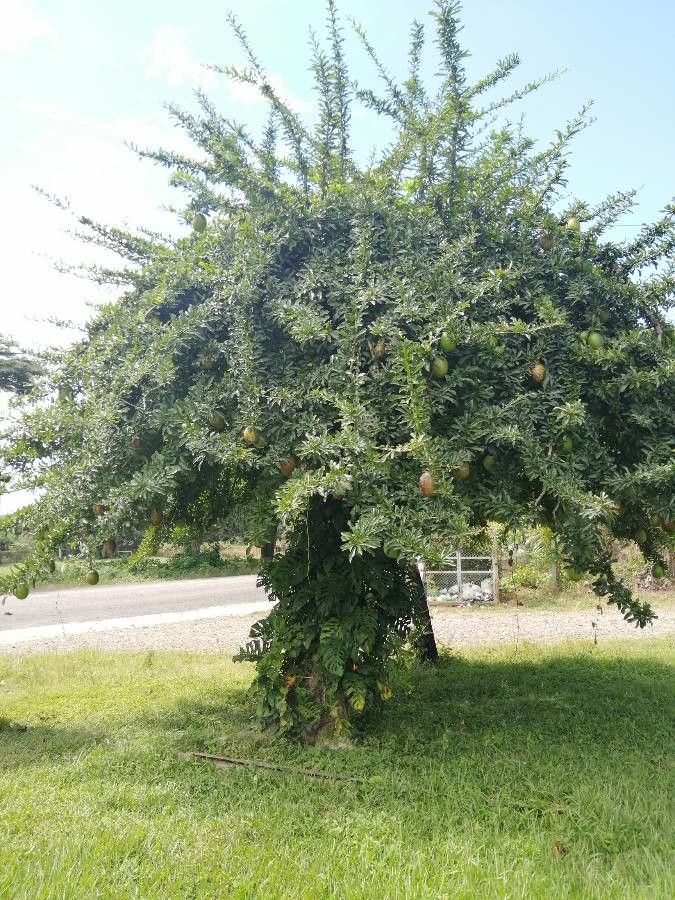
A medium-sized, broadly branched tree, calabash tree stands 6–9 m (20–30 ft) tall with a comparable spread of 6–8 m (20–26 ft). Its outline is often irregular, with branching beginning near the base. Simple, spoon-shaped leaves grow alternately or in clusters on short side shoots and may reach 25 cm (10 in) in length. 3 2
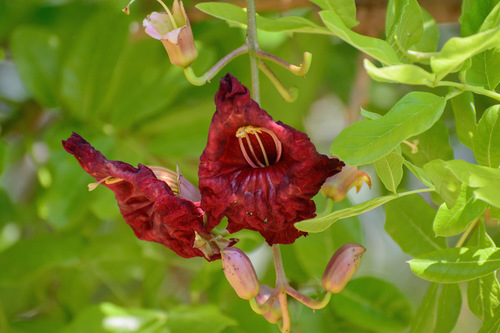
Flowers emerge directly from the trunk and large branches rather than from the axils of young leaves. This cauliflorous habit is a striking identification feature of Crescentia cujete. The tubular flowers, up to 5 cm (2 in) long, are light yellow-brown outside and marked with purple inside. They open in the evening and give off a strong, often unpleasant odor that attracts their nocturnal pollinators. 3
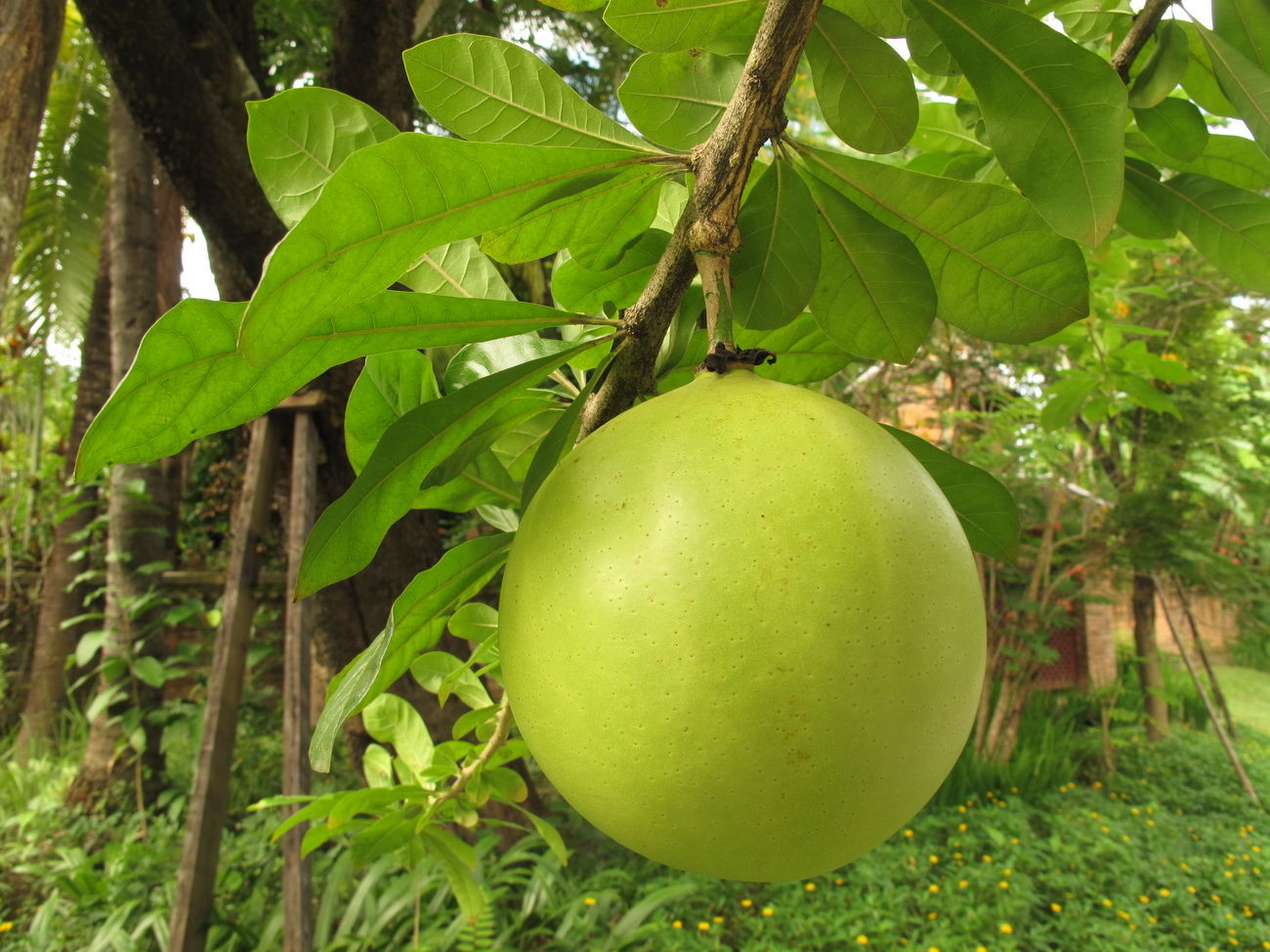
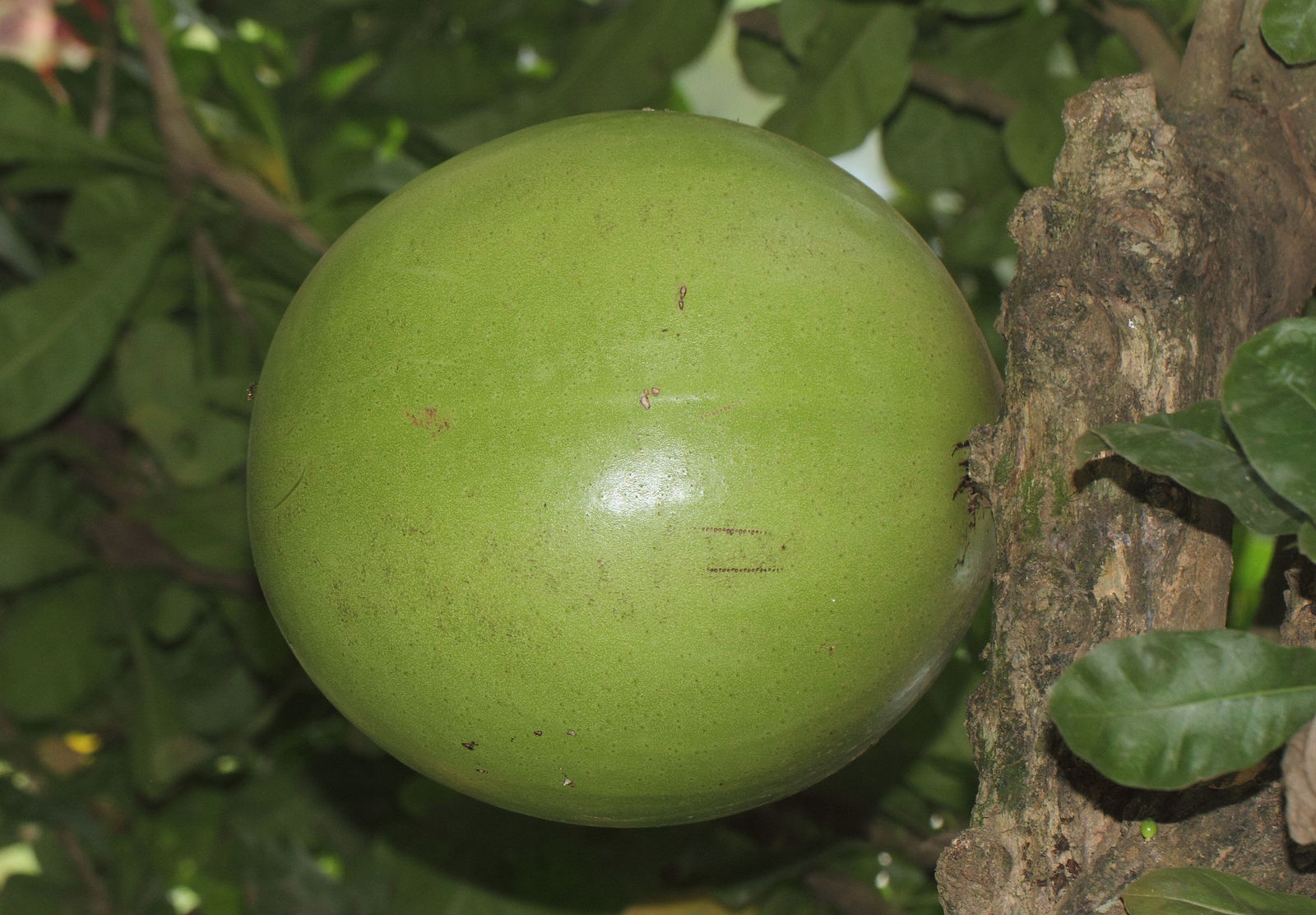
Its fruit is a spherical to egg-shaped berry with a hard, woody shell. It can reach 30 cm (12 in) long and 25 cm (10 in) across, with exceptional reports of 45–50 cm (18–20 in). Green at first, it becomes yellow-brown when ripe. Fruits hang directly from the trunk or main branches rather than from the tips of small shoots. 3
Useful taxonomy
For this cultivated tropical tree, POWO/WCVP accepts the name Crescentia cujete L. It is the only species in the genus widely grown in cultivation. Its extensive botanical synonymy includes many names published during the 19th century that are now seldom encountered:
- Crescentia cucurbitina L. (botanical synonym)
- Crescentia latifolia Mill. (botanical synonym)
- Crescentia obovata Benth. (botanical synonym)
- Crescentia acuminata Kunth (botanical synonym)
- Crescentia arborea Raf. (botanical synonym)
- Crescentia cujete var. puberula Bureau & K.Schum. (botanical synonym)
Within Bignoniaceae, Crescentia belongs to the tribe Crescentieae alongside Amphitecna and Parmentiera. These are also American genera with fleshy fruits and flowers borne on older woody parts of the plant. The tribal placement provides a botanical connection separate from the shared everyday name of calabash tree and bottle gourd. 6 1
Habitat and range
Coastal scrub, dry lowlands, roadsides, abandoned pasture and forest edges all provide habitat for calabash tree. It occurs from sea level to 420 m (1,380 ft) elevation. Tolerance of poor soil and drought helps explain why it has become naturalized beyond its native range rather than remaining confined to moist, fertile sites. 2
The IUCN has assessed Crescentia cujete as Least Concern since 2018. Its very extensive distribution, abundant population and lack of an identified major threat underpin that assessment. This is a conservation assessment of the species as a whole, rather than an indication of where any individual tree originated. 7
Long cultivated beyond its original range, calabash tree is naturalized in India and commonly grown in tropical Africa and Southeast Asia. Florida lies at the extreme edge of its potential growing range. There it is considered nonnative and is not recorded growing wild outside planted settings in the cited account. 4
Life cycle and reproduction
Trunk-borne flowering extends over several months, with timing depending on climate. The flowers of Crescentia cujete open in the evening and are pollinated by bats. This combination of flowers on old wood and nocturnal pollination is shared with other Bignoniaceae, including the sausage tree, Kigelia africana. 3
After fruit set, the developing berry takes about 6 months to ripen fully. Its shell gradually hardens as it grows. Once the mature fruit has been emptied and dried, that shell forms a rigid container. The familiar crafted calabash thus comes from a fruit that has completed a long period of development on the tree. 3
Propagation uses seed extracted from the pulp, or cuttings and air layering to reproduce a productive tree more quickly. Without that shortcut, a tree raised from seed takes several years before its first trunk-borne flowers appear. A young seedling and an already productive tree therefore differ substantially in the wait before flowering. 2
Uses and risks
Emptied and dried fruit shells become containers, bowls, cups and especially maracas. These uses are documented throughout tropical America and as far as West Africa, where the tree has been introduced. The dense wood also supplies tool handles, ox yokes and fuelwood, alongside the better-known uses of the hard fruit shell. 2
Traditional medicine uses the fruit pulp and leaves for coughs, diarrhea and lung complaints. These belong to folk medicine and do not amount to validated treatments. Raw pulp and seeds are reported as irritants. Roasting is the preparation used to make seeds edible in a traditional drink called carabobo; this regional use should not be confused with eating the raw fruit. 2
As an ornamental, calabash tree is planted alone to show its irregular silhouette and unusual flowers emerging from the trunk. Once established, its drought tolerance and modest maintenance needs make it relatively undemanding in tropical or subtropical climates without frost. Those climatic limits matter when considering it for an outdoor planting. 3
Varieties, look-alikes and related plants
Stable horticultural cultivars are not widely documented for Crescentia cujete. The more densely hairy variety puberula remains a fine botanical distinction rather than a nursery selection, and the wild type still dominates ornamental cultivation. A botanical variety name on a label should therefore not be read as evidence of a selected garden cultivar. 1
The following plants are the main sources of confusion:
- Lagenaria siceraria, bottle gourd, is an unrelated annual vine sharing only the common name calabash;
- Kigelia africana, sausage tree, also bears trunk-borne flowers but has elongated fruits hanging from long stalks;
- Crescentia alata, a related species, has compound, three-leaflet leaves, unlike the simple leaves of Crescentia cujete.
Leaf structure clearly separates the two Crescentia species. In Crescentia cujete each leaf is simple and spoon-shaped; in Crescentia alata it is compound with three leaflets. When flowers and fruits are absent, this leaf detail allows the two related trees to be distinguished in the field.
Main sources
- Plants of the World Online / Kew, Crescentia cujete L.
- Plants For A Future, Crescentia cujete
- Missouri Botanical Garden Plant Finder, Crescentia cujete
- Florida Plant Atlas / University of South Florida, Crescentia cujete
- Integrated Taxonomic Information System, Crescentia cujete L.
- USDA GRIN Global Taxonomy, Crescentia cujete L.
- IUCN Red List, Crescentia cujete assessment (2018)
Frequently asked questions
Are calabash tree and bottle gourd the same plant?
No. Crescentia cujete is a tropical evergreen tree in the Bignoniaceae family, while bottle gourd (Lagenaria siceraria) is an annual vine in the Cucurbitaceae family. They share only the common name calabash, applied to their hard-shelled fruits.
Is calabash tree fruit edible?
Raw pulp and seeds are reported to be irritants. Some traditional preparations, such as roasted seeds or candied young fruit, are documented locally, but these are regional uses rather than everyday foods.
Why do calabash tree flowers grow on the trunk?
Crescentia cujete is cauliflorous: flowers emerge directly from old wood instead of the axils of young leaves. This makes them accessible to pollinating bats flying close to the trunk.
How long does calabash tree fruit take to ripen?
After flowering, the berry takes about 6 months to reach full size and maturity. Its shell gradually hardens, becoming a rigid container once emptied and dried.
Can calabash tree grow outdoors in a frosty climate?
No. The species is frost-sensitive and does not tolerate temperatures below about 2 °C (36 °F). Outdoor cultivation is restricted to frost-free tropical and subtropical climates; elsewhere it needs a heated greenhouse, including in metropolitan France.
What is the conservation status of calabash tree?
The IUCN has assessed Crescentia cujete as Least Concern since 2018 because it has a very wide range, an abundant population and no major identified threat.
What is the fruit shell used for?
Emptied and dried, it is traditionally used to make containers, bowls, cups and especially maracas throughout tropical America and parts of Africa where the tree has been introduced.
Similar plants
If you are unsure about a plant’s toxicity, ask a botanist or veterinarian for advice.