
Cucumber (Cucumis sativus, )
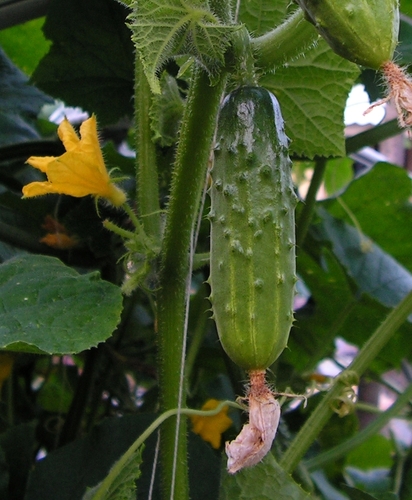
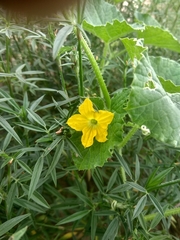

Cucumber (Cucumis sativus) is an annual vegetable plant in the Cucurbitaceae family, grown for its elongated fruit eaten fresh. A creeping or climbing vine with tendrils and separate male and female flowers, it originated at the foot of the Himalayas. Its edible, non-toxic fruit, with occasional bitterness, makes it one of the most widely grown fruiting vegetables.
Read moreCucumber, Garden cucumber and Gherkin


© photo
(c) Bff, some rights reserved (CC BY-SA) · cc-by-sa
Geetha Ramaswami · cc-by
Wikimedia Commons · CC BY-SA or Public Domain
Taken Jun 15, 2022 by Arnaud (cc-by-sa)
Taken Jun 28, 2020 by albin fourne (cc-by-sa)
Taken Aug 27, 2020 by Kevin Renders (cc-by-sa)
Taken Jan 1, 1800 by Tela Botanica − Daniel MATHIEU (cc-by-sa)
Taken Apr 28, 2015 by Samuel Dufour-Kowalski (cc-by-sa)
© copyright of the Board of Trustees of the Royal Botanic Gardens, Kew.




Global distribution
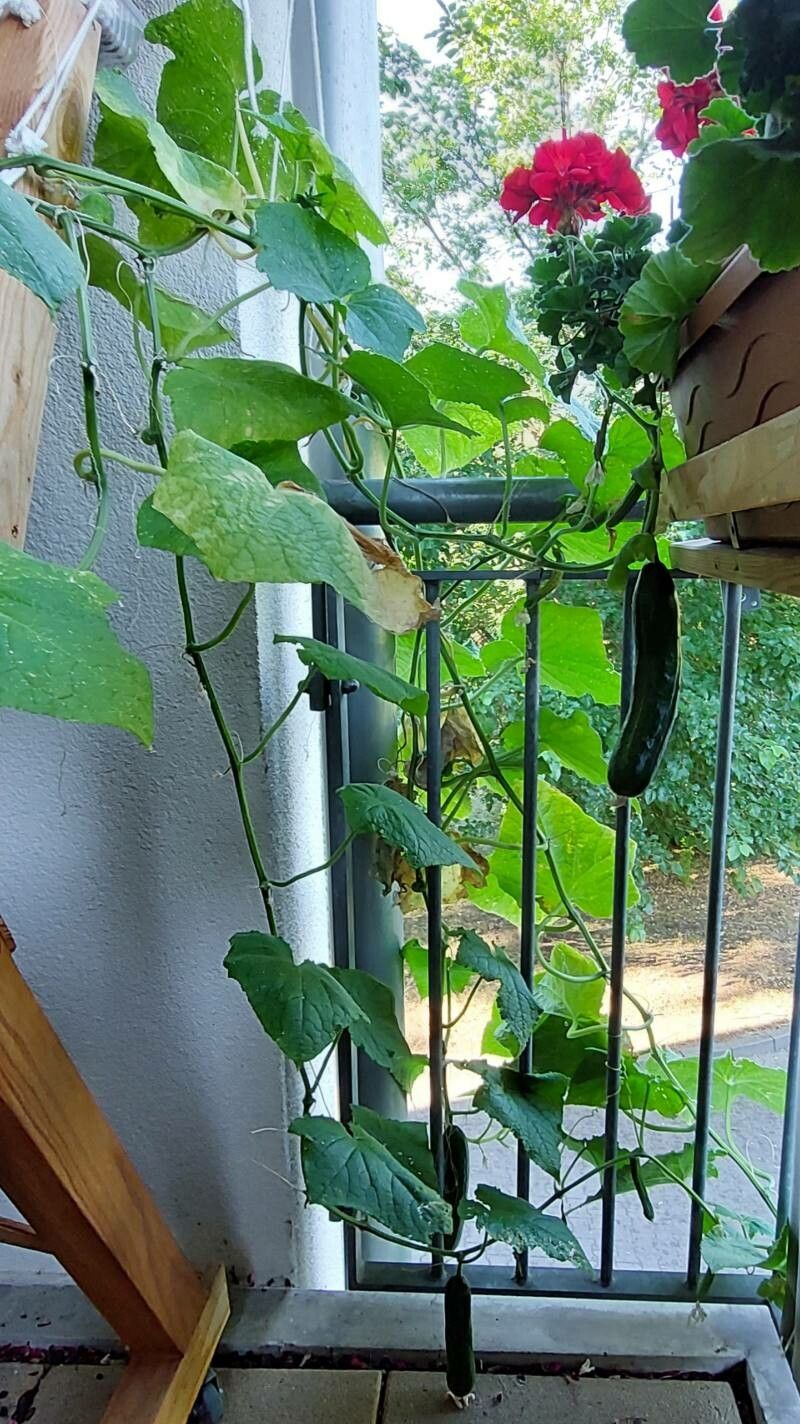
Cucumis sativus is primarily known as a cultivated plant. Its native range extends from the Himalayan foothills to southern China and northern Thailand, where ancestral forms occur. From this Asian center, cucumber cultivation spread throughout temperate and warm regions worldwide; its occurrence there reflects sowing rather than wild vegetation.
Identity
Cucumber (Cucumis sativus L., 1753) is a vegetable plant in the Cucurbitaceae family and the genus Cucumis. This creeping or climbing annual vine is grown for elongated fruit eaten fresh. Domesticated long ago, it ranks among the most widespread fruiting vegetables in gardens and protected cultivation. 1 4
A Garden cucumber is grown as a frost-tender annual, sown in warmth in spring and harvested through summer until cold weather ends production. Small fruits picked young for pickling are called Gherkin cucumbers. These names refer to the same species, distinct from other cultivated Cucurbitaceae such as zucchini and melon. 2 3
Recognition
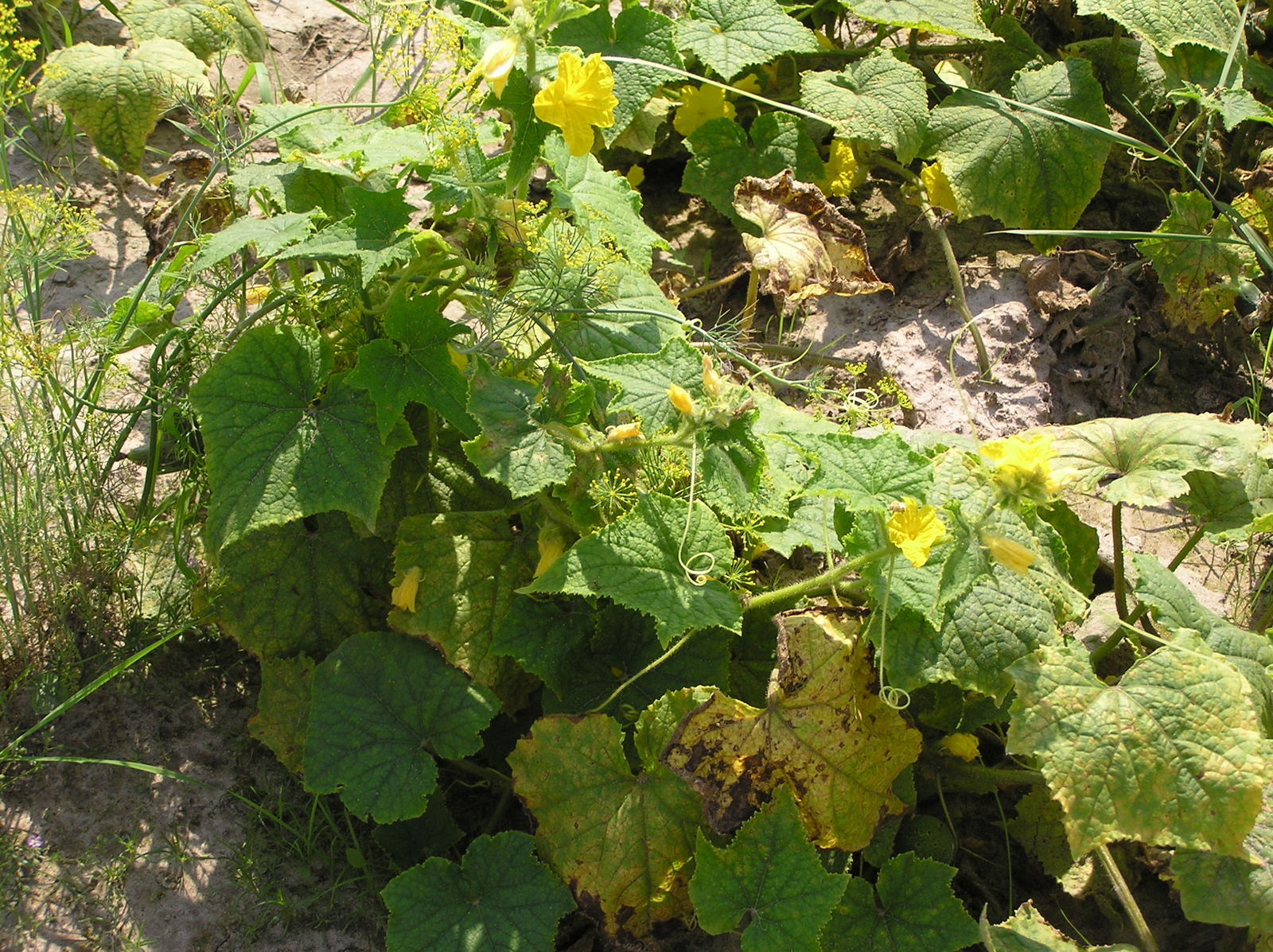
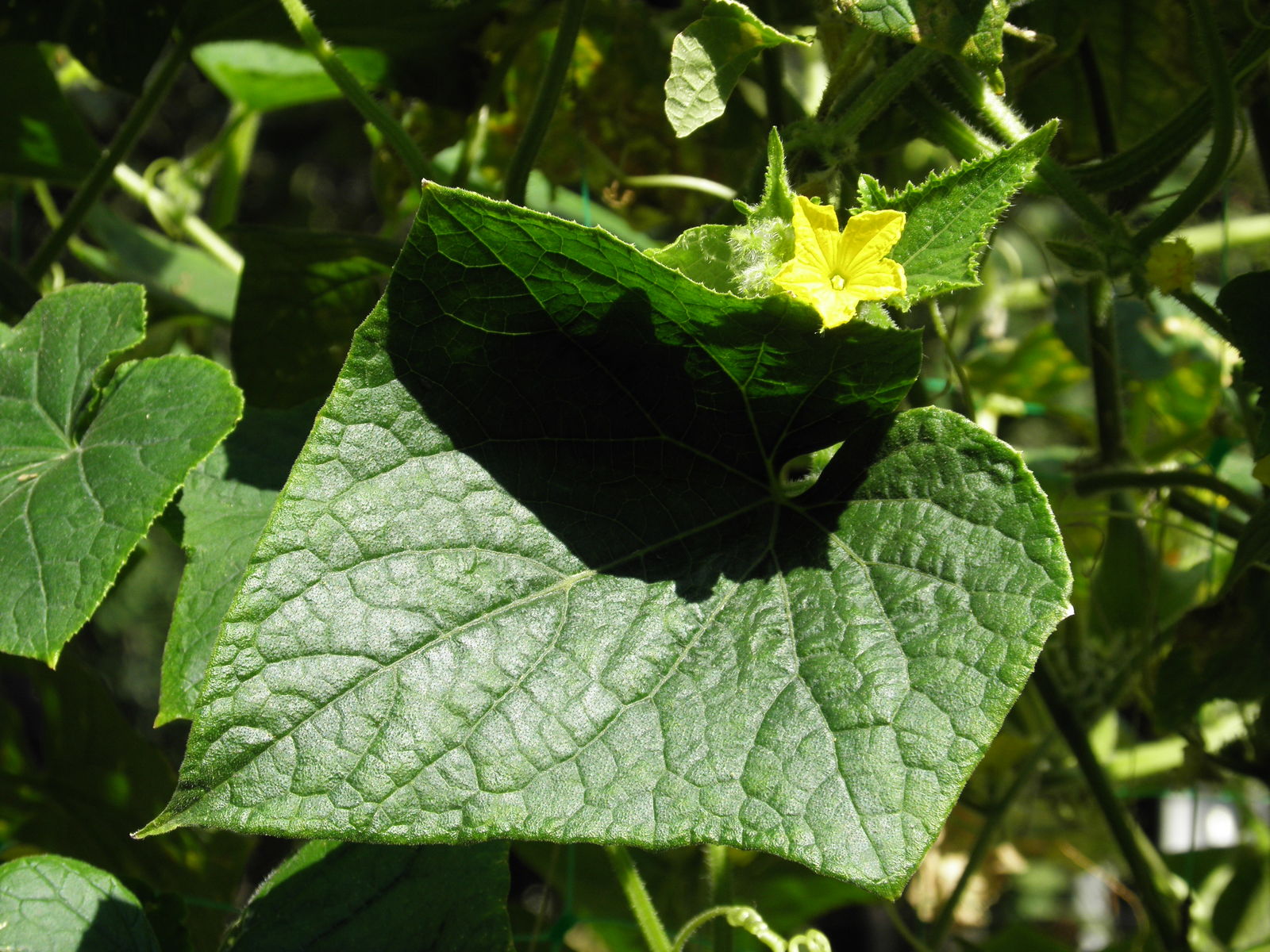
Tendrils and a flexible, angular, bristly stem define the growth habit of Cucumis sativus. The stem creeps along the soil or climbs using simple tendrils arising from leaf axils. Broad, rough leaves are palmate, with three or five pointed lobes. 3 5
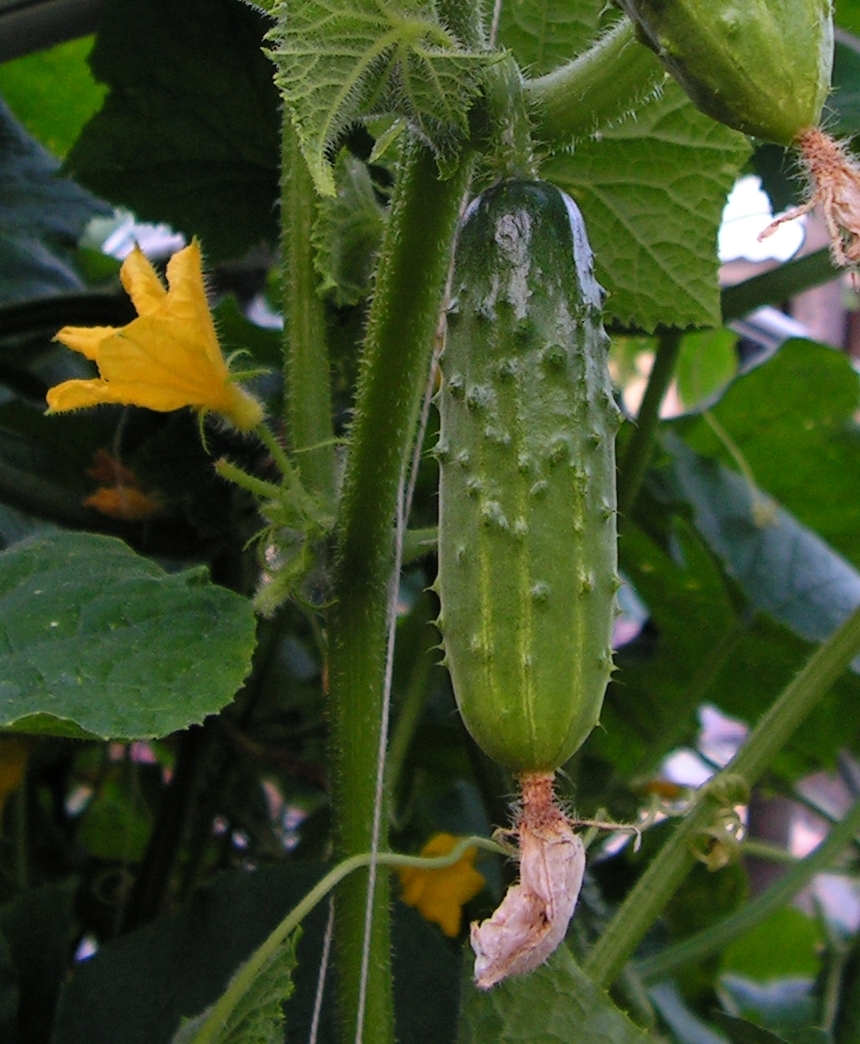
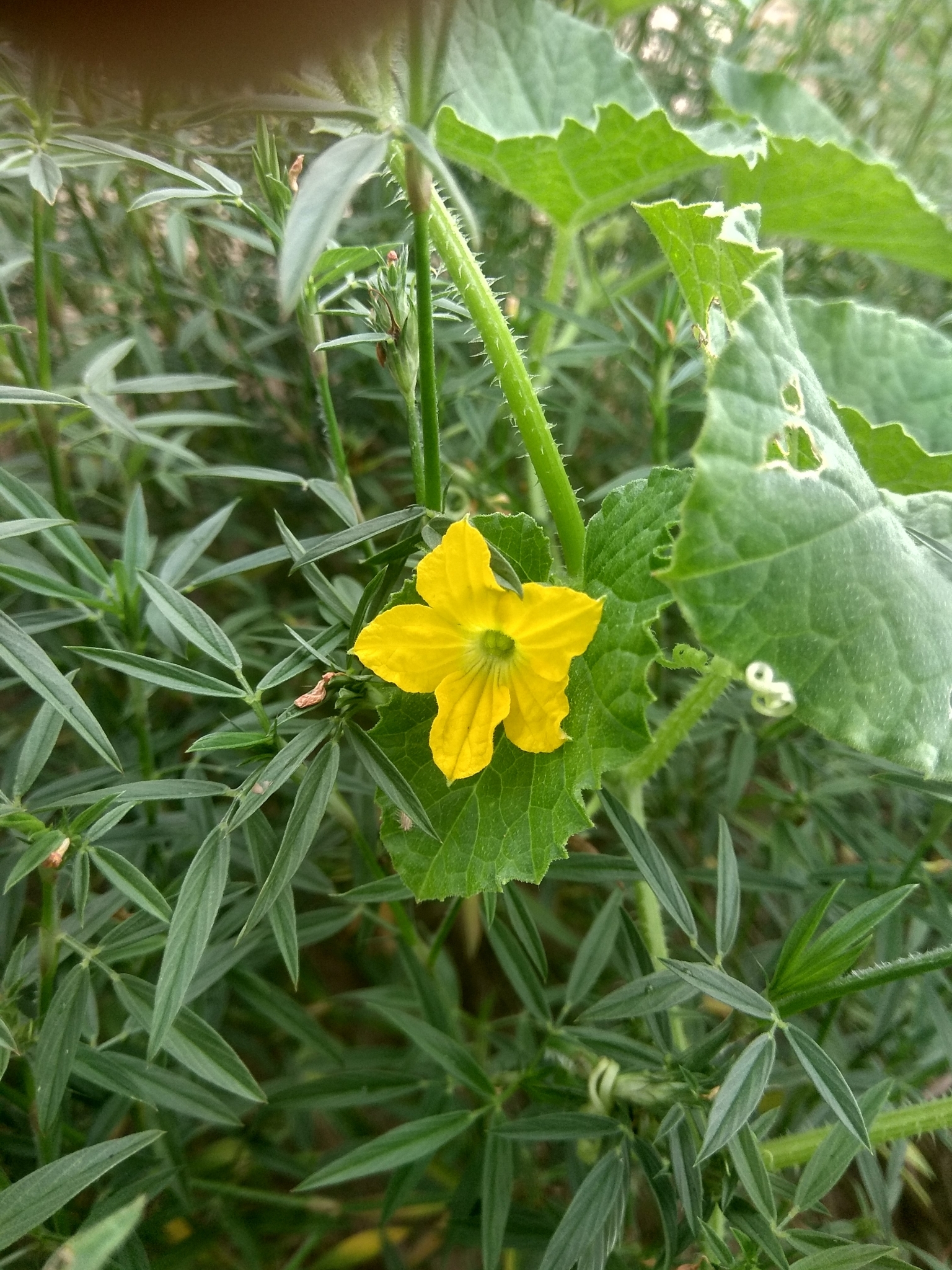
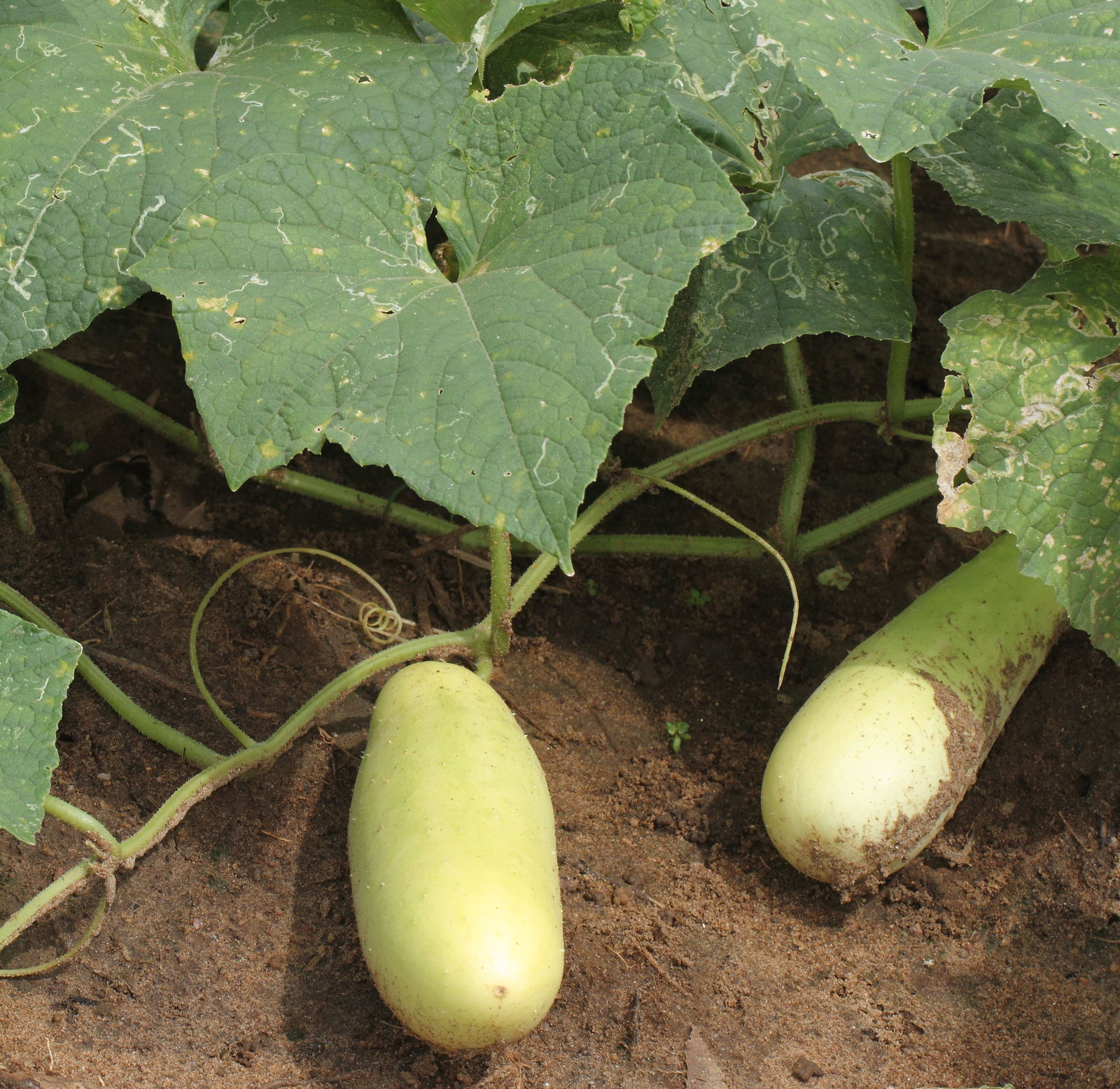
Male and female yellow, funnel-shaped flowers grow separately on the same plant, a condition called monoecy. Female flowers have a small developing fruit beneath the corolla. The cylindrical, elongated fruit is green, with smooth, ribbed or warty skin depending on cultivar, and ranges from a few centimeters (around an inch) to over 30 cm (12 in) long. 4 6
Pale, watery flesh surrounds numerous white, flat seeds. Young cucumbers picked before the seeds harden remain tender and crisp; fruit left on the vine yellows, swells and becomes bitter and fibrous. 2 5
Useful taxonomy
In 1753, Linnaeus described cucumber as Cucumis sativus L. The genus Cucumis also includes melon, and older names and horticultural forms remain in circulation. Names worth recognizing include:
- Cucumis esculentus Salisb., historical name
- Cucumis sativus var. hardwickii (Royle) Alef.
- Cucumis sativus var. sikkimensis Hook.f.
- Cucumis rumphii Hassk.
- Cucumis vilmorinii Spreng.
The small-fruited variety hardwickii, from the Himalayan foothills, is considered closest to ancestral wild cucumbers before selection for large cultivated fruits. The accepted name Cucumis sativus provides a consistent botanical reference: vegetable cultivar names describe selected forms, rather than separate species. 1 5
Habitat and range
Cultivation accounts for most records of Cucumis sativus. Its original range extends from the Himalayan foothills to southern China and northern Thailand, the probable home of its small-fruited ancestral forms. 1 4
From its Asian origins, cucumber growing spread throughout the Mediterranean and then across temperate and warm regions worldwide. It is now grown in garden beds, greenhouses and large market-garden fields, on moist, fertile, well-drained soil in sunny locations. 3 6
Beyond that original range, its presence generally reflects deliberate sowing. As a frost-tender annual, cucumber does not establish lasting wild populations in temperate climates; cultivated occurrences should therefore be distinguished from wild species. 5 1
Life cycle and reproduction
Insect pollination is central to traditional cucumber production. Bees carry pollen between the separate male and female flowers of these monoecious plants, enabling fruit set in conventional cultivars. Some modern greenhouse cultivars are parthenocarpic and set fruit without pollination. 4 2
Warm weather drives a short, very rapid life cycle. The first harvest comes 50 to 70 days after sowing, depending on cultivar and climate. Picking young fruit before seed maturity prolongs production: regular harvesting keeps the vine flowering and fruiting until cold weather arrives. 6 3
Raise cucumber plants from seed. In temperate regions, sow in warmth under cover in spring because germination requires warm soil and seedlings are sensitive to cold. Transplant outdoors once all frost risk has passed, then train plants up stakes or a trellis. 2 8
Uses and risks
Fresh eating and pickling are the main culinary uses. Cucumbers are eaten raw in salads or as a refreshing accompaniment, while small, young fruits are pickled in vinegar. This fruiting vegetable is valued more for its watery, crisp freshness than for nutrient density and appears in countless summer dishes. 4 5
The ASPCA lists cucumber as non-toxic to cats, dogs and horses, and people eat its fruit. Occasional bitterness comes from cucurbitacins, compounds produced particularly after heat, drought or irregular watering. Modern cultivars are almost free of this bitterness. 7 6
Varieties, look-alikes and related plants
Garden selections vary in fruit type and growing requirements. Marketmore is a productive, resistant outdoor cucumber; Vert long maraîcher is an older long, ribbed type; Vert petit de Paris is picked young for gherkins; parthenocarpic greenhouse hybrids produce long, smooth, non-bitter fruit. Check fruit type, time to harvest and suitability for outdoor or protected growing before buying seed.
Other cultivated members of Cucurbitaceae can cause confusion:
- Cucumis melo, melon, in the same genus but with sweet fruit ;
- Cucurbita pepo, zucchini, with stockier fruit and a thicker stem ;
- Citrullus lanatus, watermelon, another vegetable vine with large fruit.
A tendril-bearing stem, rough palmate leaves and elongated green fruit with pale flesh form the most reliable combination for recognizing cucumber, Cucumis sativus. 3 1
Main sources
- Plants of the World Online / Kew, Cucumis sativus L.
- Royal Horticultural Society, cucumbers - grow your own
- Missouri Botanical Garden, Cucumis sativus
- Encyclopaedia Britannica, cucumber
- Plants For A Future, Cucumis sativus
- North Carolina State Extension, Cucumis sativus
- ASPCA, cucumber (Cucumis sativus) non-toxic plant entry
- Penn State Extension, cucumber production
Frequently asked questions
Is cucumber toxic?
No. Cucumber fruit is edible, and the ASPCA lists the plant as non-toxic to cats, dogs and horses. Occasional bitterness from cucurbitacins can make a fruit unpleasant.
Why does my cucumber taste bitter?
Bitterness comes from cucurbitacins, compounds the plant produces especially after heat, drought or irregular watering. Consistent watering and modern non-bitter cultivars help reduce the problem.
How much sun do cucumbers need?
Full sun is essential. A warm, wind-sheltered site with moist soil gives the best harvests; in cool climates, a greenhouse or growing tunnel makes fruit production more reliable.
Do cucumbers need a lot of water?
Yes. They need regular, generous watering during the growing season, preferably at the base in the morning to avoid wetting leaves and encouraging disease.
When should I harvest cucumbers?
Harvest begins about 50 to 70 days after sowing and continues through summer. Pick young, evenly shaped fruit before the seeds harden; this encourages new fruits to develop.
Which plants look like cucumber?
Confusion mainly involves other cultivated Cucurbitaceae, such as zucchini and melon. Tendrils, rough palmate leaves and elongated green fruit are the best identifying features.
Where did cultivated cucumber originate?
Cucumber originated in an area extending from the Himalayan foothills to southern China and northern Thailand. Domesticated long ago, it is now grown throughout temperate and warm regions.
Similar plants

If you are unsure about a plant’s toxicity, ask a botanist or veterinarian for advice.