
Round-leaved sundew (Drosera rotundifolia, )
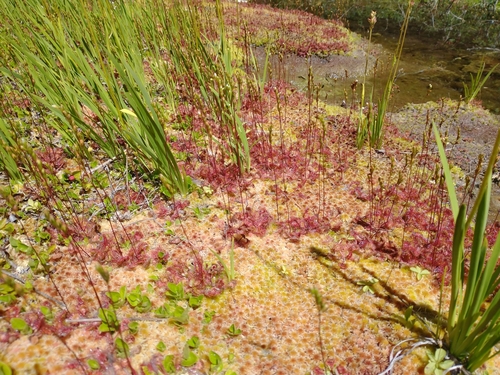
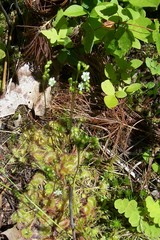
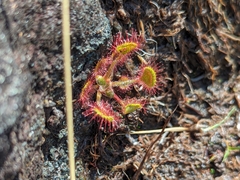
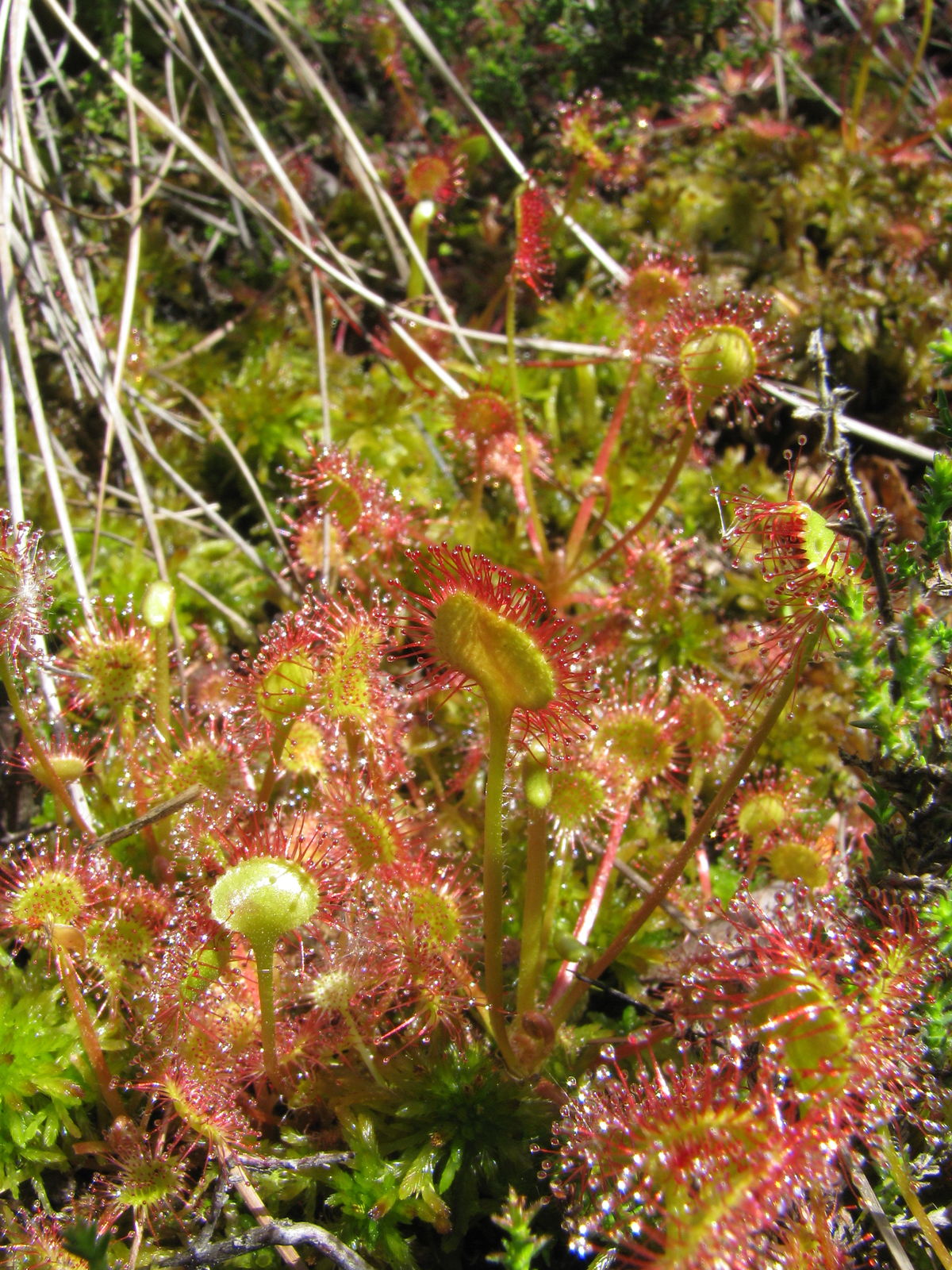
Round-leaved sundew (Drosera rotundifolia) is a small carnivorous perennial in the Droseraceae family, widespread in acidic bogs across the Northern Hemisphere. Its rosette of round leaves bears red tentacles tipped with sticky mucilage droplets that trap and digest small insects, supplementing the nitrogen-poor peat soil.
Read moreRound-leaved sundew, Roundleaf sundew and Common sundew
Allow a few hours of direct sun per day, preferably morning or evening.
Full sun to light partial shade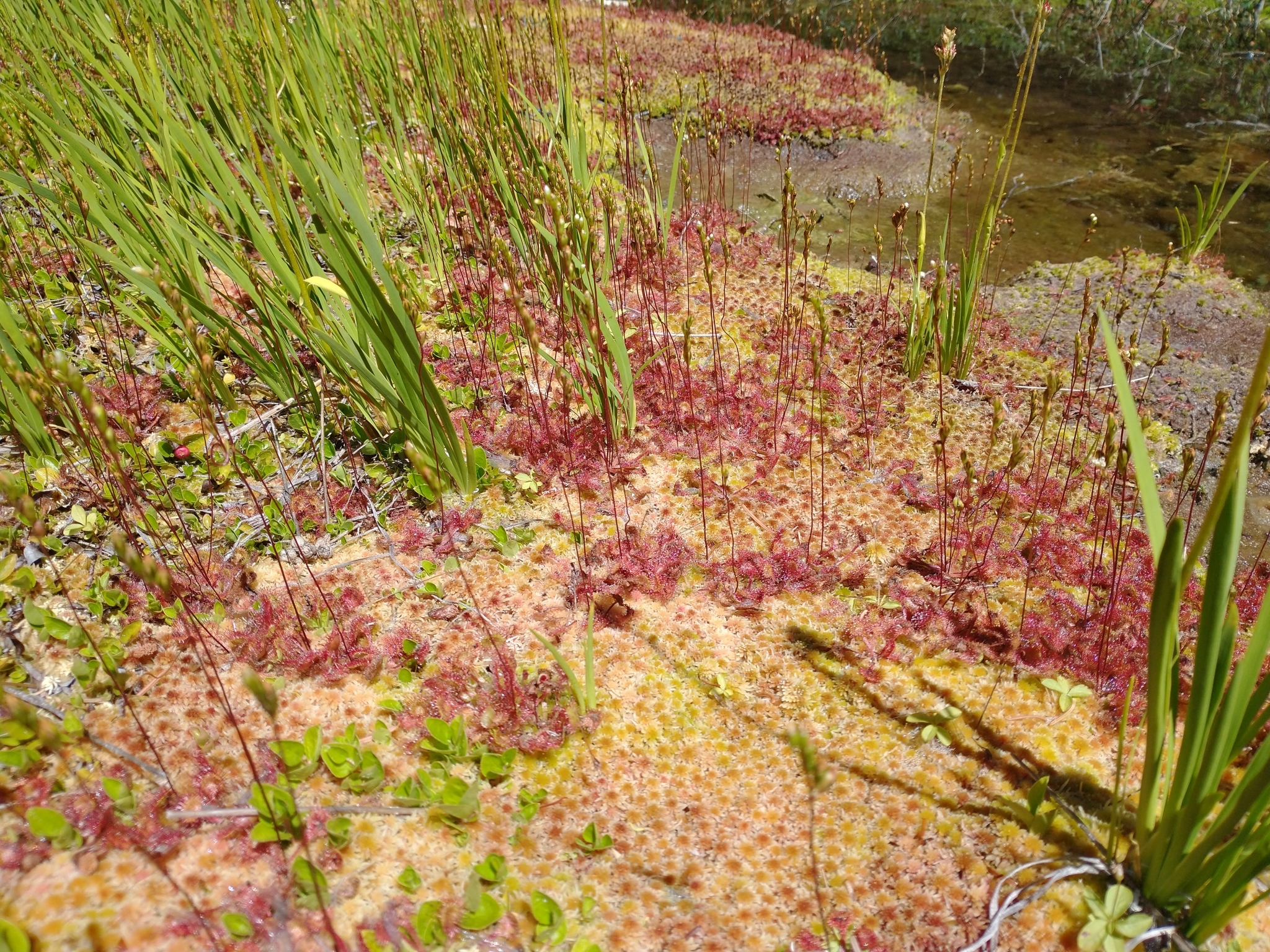


© photo
Drew Meyer · cc0
Dave Behm · cc0
Charlotte Kirchner · cc-by
Taken Jan 1, 1970 by Photoflora - L'Abbé COSTE (©)
Taken Jun 30, 1851 by Tela Botanica − Herbier PONTARLIER-MARICHAL (cc-by-sa)
Taken Jan 1, 1800 by Tela Botanica − Daniel MATHIEU (cc-by-sa)
Taken Sep 20, 1982 by Tela Botanica − Michel GELLÉ (cc-by-sa)
Taken Jul 10, 2013 by Tela Botanica − Liliane Roubaudi (cc-by-sa)
© copyright of the Board of Trustees of the Royal Botanic Gardens, Kew.


Global distribution
Drosera rotundifolia has a circumboreal range, among the widest in the genus. It spans almost all of Europe, Siberia, much of North America (Canada except the Prairies and tundra, southern Alaska, the Pacific Northwest and the Appalachians south to Georgia and Louisiana), Japan and Korea. Isolated populations also occur in Turkey, the Caucasus, Kamchatka, eastern and northeastern China, and exceptionally in the Southern Hemisphere in New Guinea and the Philippines (Mindanao).
- Native9
- Metropolitan France
- United Kingdom
- Germany
- Sweden
- Canada
- United States
- Japan
- New Guinea
- Philippines (Mindanao)
Hexagons: regions where the plant occurs. Green dots: native range.1
Identity
Round-leaved sundew (Drosera rotundifolia L., 1753), also known as Roundleaf sundew or Common sundew, is a small carnivorous perennial in the Droseraceae family. Carl Linnaeus described it in 1753, making it one of the earliest carnivorous plants formally named. Charles Darwin devoted most of his experiments on plant carnivory, published in Insectivorous Plants in 1875, to this species rather than any other, including the Venus flytrap. 1 3
The genus name Drosera comes from ancient Greek drosos, meaning “dew,” and describes the shining mucilage droplets on the tentacles, visible even in dry, sunny weather. The English name sundew evokes the same appearance. Its French name rossolis derives from medieval Latin ros solis, “dew of the sun.” The plant also gave its name to a southern European liqueur made since the Middle Ages; the later Italian word rosolio lost that botanical connection. 2
Recognition
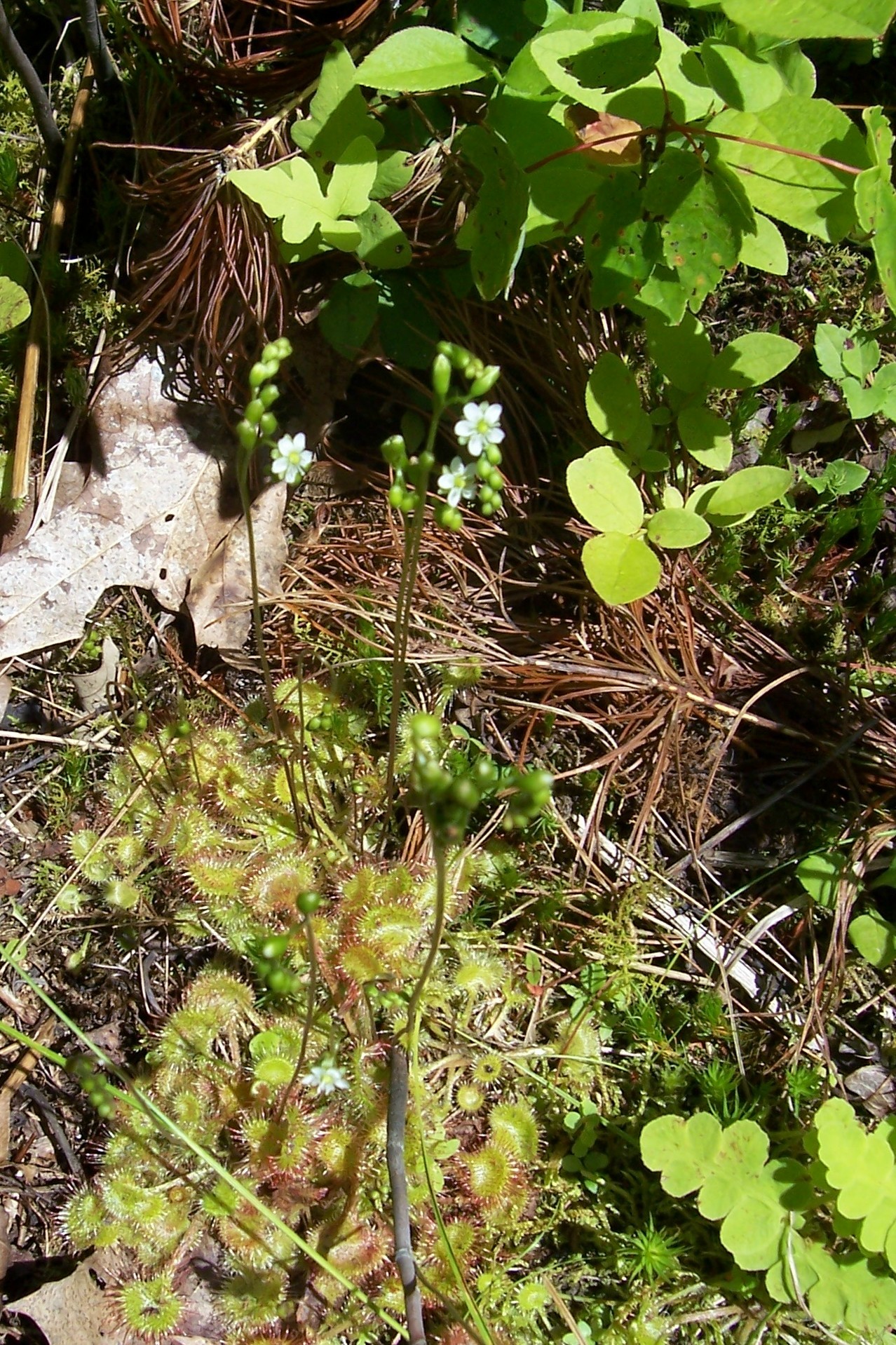
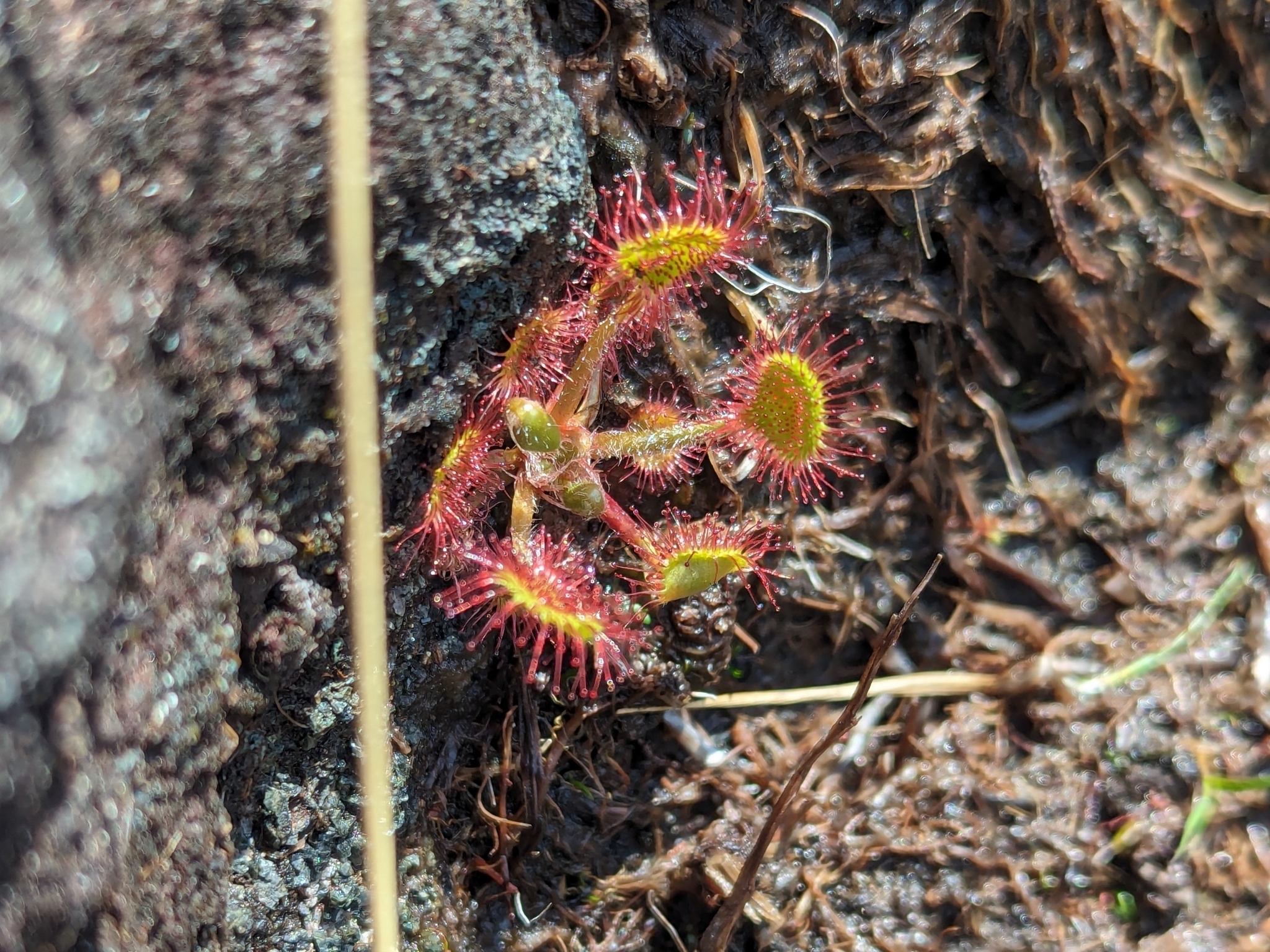
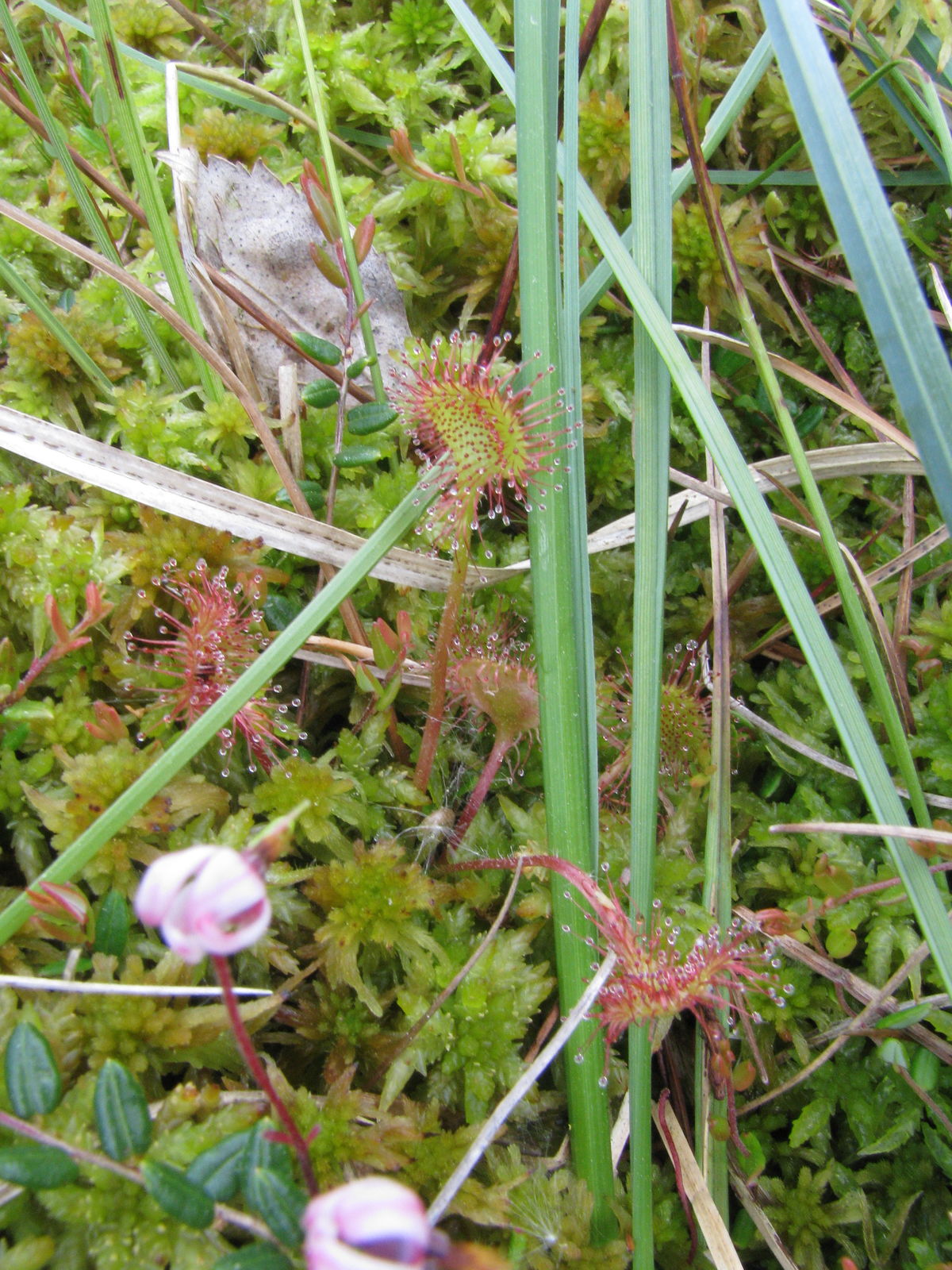
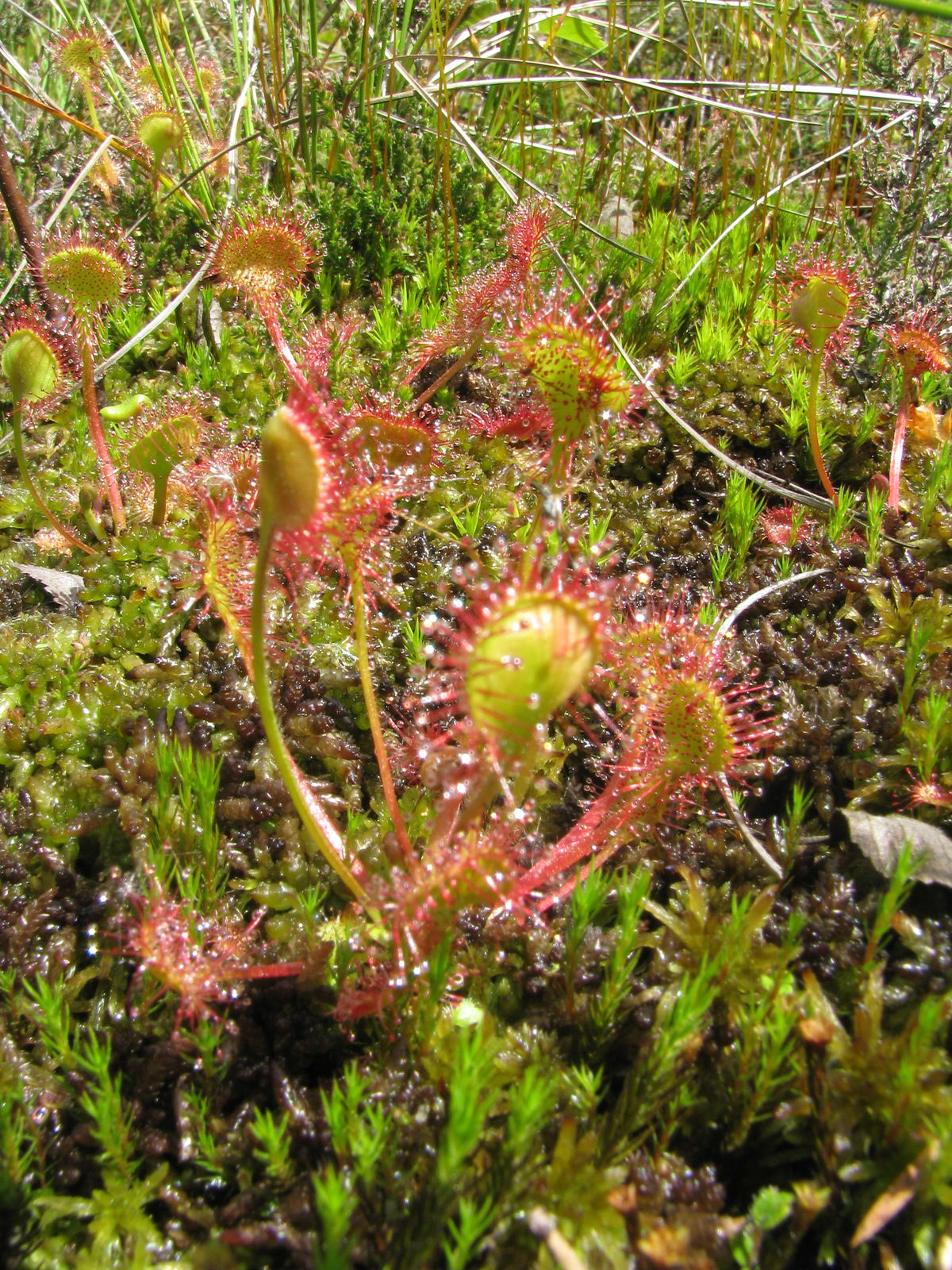
A basal rosette carries round leaf blades, 4–10 mm (0.16–0.39 in) across, on slender, hairy petioles 1.3–5 cm (0.5–2 in) long. Red tentacles cover the upper surface, each ending in a gland that secretes sweet, sticky mucilage to attract and trap small insects. The whole rosette generally measures 3–5 cm (1.2–2 in) across. 3 2
An upright, leafless flower stalk, 5–25 cm (2–10 in) tall, holds the flowers well above the sticky foliage, keeping pollinating insects away from the plant’s own traps. The white or pink flowers have five petals and measure 1.25 cm (0.5 in) across or less. They produce slender, tapered, light-brown seeds 1–1.5 mm (0.04–0.06 in) long. 3 6
Winter survival depends on a hibernaculum, a bud of tightly curled leaves at ground level that replaces the summer foliage during cold weather. A rosette turning black in fall may therefore be entering dormancy rather than dying. 6
Useful taxonomy
More than 150 species belong to Drosera, but three similar species often share European bogs. Leaf shape is easier to check in the field than flowers or seeds, which are absent outside their season. Drosera rotundifolia has a round blade and a European range wider than those of its two relatives combined. Drosera anglica Huds. has an elongated, narrow blade, while Drosera intermedia Hayne has a spoon-shaped blade. These species sometimes hybridize: Drosera × obovata Mert. & W.D.J.Koch is the sterile natural cross between D. rotundifolia and D. anglica. None replaces Drosera rotundifolia as the accepted name published by Linnaeus in 1753. 1
Habitat and range
Across its circumboreal range, Drosera rotundifolia occupies one of the widest distributions in the genus. It occurs through almost all of Europe, Siberia, much of North America (Canada except the Prairies and tundra, southern Alaska, the Pacific Northwest and the Appalachians south to Georgia and Louisiana), Japan and Korea. Isolated populations also reach Turkey, the Caucasus, Kamchatka, New Guinea and the Philippines (Mindanao). 6 3
Acidic sphagnum bogs, marshes and fens are its main habitat, along with waterlogged sandy shores and open black spruce swamp woodland. It needs abundant light and soil poor in nitrogen and phosphorus, without lime or fertilizer. 6
Within France, the species occurs outside the Mediterranean fringe but is restricted to bogs, an increasingly rare lowland habitat. National protection prohibits destruction, transport and sale of any part of the plant there. Drainage can dry a bog’s acidic substrate within a few years, causing sundew to disappear. Globally, the IUCN lists it as Least Concern, although some U.S. states, including Illinois, Iowa and Tennessee, consider it locally threatened. 7 5 8
Life cycle and reproduction
An insect attracted to the sweet mucilage becomes stuck on a tentacle. Neighboring tentacles gradually bend toward it, while digestive enzymes dissolve its soft tissues over several days. The plant mainly extracts ammonia and available nitrogen, scarce in peat soil. Research also shows it can take nutrients from the soil when available: carnivory supplements its nutrition rather than being an absolute dependency. 3
Summer flowers develop on the upright stalk above the rosette. Seeds fall near the parent and germinate in 4–8 weeks on damp sphagnum at about 20 °C (68 °F). In cultivation, dividing established rosettes yields identical plants within a season; leaf and root cuttings can also be taken during active growth. 6 4
Uses and risks
Cultivated Round-leaved sundew is primarily ornamental, grown in artificial bogs, terrariums or pots standing in water, alongside living sphagnum. No toxic compound is recorded for this species, and it does not appear on lists of plants poisonous to domestic animals. 4
Extracts containing flavonoids such as hyperoside and quercetin were long used in herbal medicine as antispasmodics and expectorants for coughs, chronic bronchitis and asthma; the digestive secretion was also used on warts. That medicinal reputation encouraged intensive wild collection across Europe, weakening natural populations long before legal protection was introduced. 4 8
Varieties, look-alikes and related plants
Specialist growers mainly offer Charles Darwin, selected to grow without strict winter dormancy and easier to maintain year-round than wild-origin plants. Forma comosa, with branched flower stalks and more flowers, remains uncommon and circulates mainly among North American collectors. Neither changes the botanical identity of the species. 4
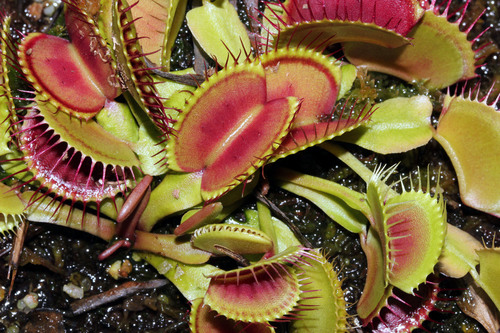
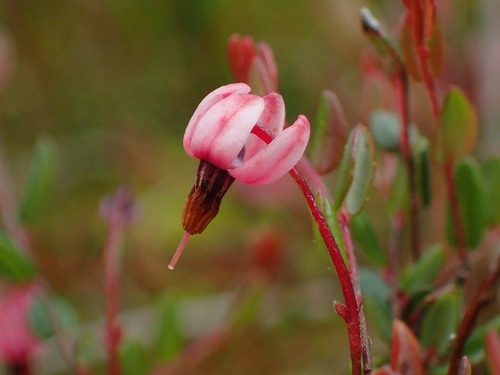
Bog companions most likely to cause confusion are Drosera anglica and Drosera intermedia, described above, which may also hybridize with D. rotundifolia. Common cranberry (Vaccinium oxycoccos) shares its peat-bog habitat but traps no insects and draws nitrogen directly from the peat. The more widely sold Venus flytrap, Dionaea muscipula, catches prey by actively closing its lobes; sundew relies on sticky mucilage without rapid movement. 6
Main sources
- Plants of the World Online / Kew, Drosera rotundifolia L.
- Royal Horticultural Society, Drosera rotundifolia - round-leaved sundew
- Encyclopaedia Britannica, Roundleaf sundew
- Plants For A Future, Drosera rotundifolia
- IUCN Red List, Drosera rotundifolia assessment (2016)
- US Forest Service FEIS, Drosera rotundifolia species review
- INPN / MNHN, Drosera rotundifolia - round-leaved sundew
- Parcs nationaux de France, Le drosera à feuilles rondes (Drosera rotundifolia); original page archived 21 May 2026
Frequently asked questions
Is Round-leaved sundew protected in France?
Yes. National protection prohibits destroying, transporting or selling any part of Drosera rotundifolia throughout France, where it survives only in increasingly scarce bog habitats.
Why do its leaves lose their dew droplets in winter?
The plant forms a hibernaculum, a bud of tightly curled leaves at ground level, to survive winter. This does not mean it has died; sticky leaves return when growth resumes the following spring.
Is Round-leaved sundew toxic to cats or dogs?
No proven toxic compound is recorded for this species. It contains small amounts of plumbagin, with no documented poisoning cases in humans or domestic animals.
How does Drosera rotundifolia differ from other European sundews?
Its round leaf blade distinguishes it from the elongated leaves of Drosera anglica and the spoon-shaped leaves of Drosera intermedia. The three can share a bog; the natural hybrid Drosera × obovata also occurs.
How was sundew used in herbal medicine?
Extracts rich in flavonoids such as hyperoside and quercetin were traditionally used as antispasmodics and expectorants for coughs, chronic bronchitis and asthma. This reputation led to intensive wild collection, now prohibited for protected populations.
Do indoor sundews need to be hand-fed?
Not if the plant receives enough light and occasional access to small insects. Never put meat or liquid fertilizer on the tentacles; these spoil the digestive mucilage rather than feed the plant.
Can I collect a wild sundew to grow at home?
No, where it is protected. Collecting wild Drosera rotundifolia is prohibited in France. Plants sold by carnivorous-plant specialists come from seed or tissue culture rather than bog collection.
Similar plants
If you are unsure about a plant’s toxicity, ask a botanist or veterinarian for advice.