
Chinese water chestnut (Eleocharis dulcis, )
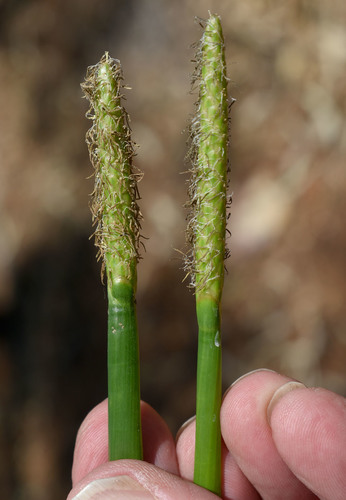

Chinese water chestnut (Eleocharis dulcis) is an aquatic perennial sedge in the Cyperaceae, native to tropical and subtropical Asia, tropical Africa and Oceania. Without true leaves, it has bright green tubular stems and produces round underground corms with crisp white flesh beneath the mud. These have long been cultivated as an aquatic vegetable.
Read moreChinese water chestnut, Water chestnut, Bíqí and Mǎtí
Place in full sun, with intense direct light all day long.
Full sun; grow in sunny, shallow water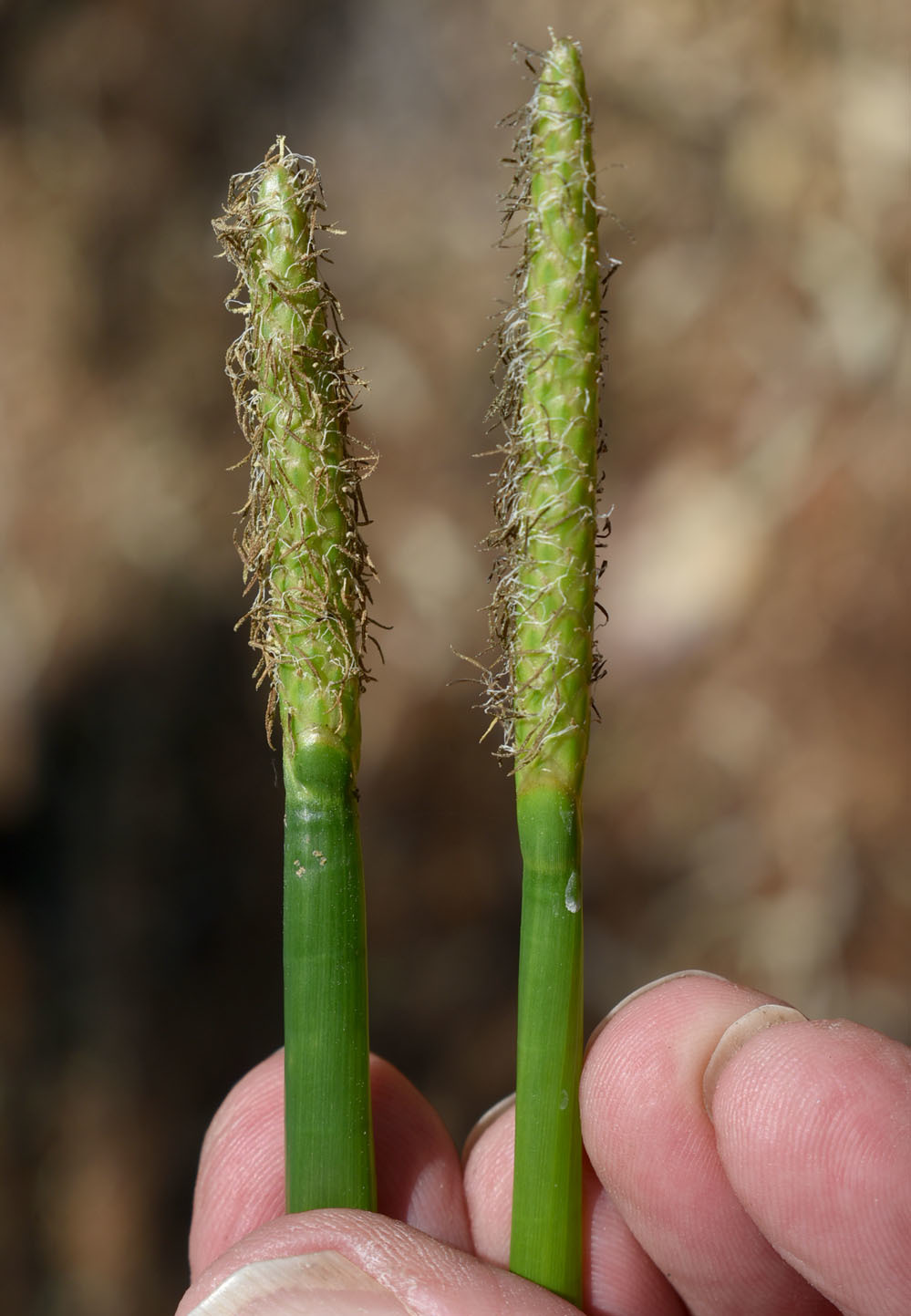


© photo
(c) Russell Cumming, some rights reserved (CC BY-NC), uploaded by Russell Cumming · cc-by-nc
Wikimedia Commons · CC BY-SA or Public Domain
Wikipedia · CC BY-SA
© copyright of the Board of Trustees of the Royal Botanic Gardens, Kew.


Global distribution
The native range of Eleocharis dulcis includes tropical and subtropical Asia, tropical Africa and Oceania, with a confirmed presence in northern Australia. It is widely cultivated in East and Southeast Asia and has been introduced commercially to other warm regions.
- Native6
- Introduced1
- China (Guangxi, Guangdong)
- Thailand
- India
- Philippines
- Australia (Northern Territory)
- Tropical and southern Africa
- United States (Florida, California)
Hexagons: regions where the plant occurs. Green dots: native range.1
Identity
Chinese water chestnut (Eleocharis dulcis (Burm.f.) Trin. ex Hensch., 1833), often shortened to water chestnut, is an aquatic perennial sedge in the Cyperaceae. Its name has nothing to do with true chestnuts in Castanea: it describes the shape and crunch of the underground corm, the only part eaten. 3 1
The corm is not toxic, but eating it raw without peeling or washing can cause fasciolopsiasis: its surface may carry the intestinal fluke Fasciolopsis buski from standing water. Peeling or cooking eliminates it.
In China, it is called bíqí (荸荠) and mǎtí (马蹄). The latter literally means horse’s hoof, describing the corm’s flattened, rounded shape. The qualifier Chinese distinguishes it from another water chestnut, Trapa natans, a completely different plant sharing the common name. 2
Recognition
Eleocharis dulcis has no true leaves. Bright green tubular stems, upright and regularly partitioned inside, perform photosynthesis. They reach 1–1.5 m (3.3–5 ft) to capture light above shallow water and end in a single yellowish-brown spikelet, without petals or showy color. 2 3
Beneath the mud, each clump develops one or more round corms 2.5–4 cm (1–1.6 in) across. A scaly dark brown to blackish skin surrounds crisp white flesh containing nearly 80% water. Only this corm is edible; the aerial stems are not eaten. 3 4
Useful taxonomy
Burman first described the plant as a grass in 1768, naming it Andropogon dulcis Burm.f.. Trinius and Henschel transferred it to Eleocharis in the Cyperaceae in 1833. Its leafless tubular stem can indeed be mistaken for a grass. The accepted name, Eleocharis dulcis (Burm.f.) Trin. ex Hensch., records both stages of that taxonomic history. 1
Several synonyms have been used for the same plant:
- Eleocharis tuberosa Schult., a synonym of Chinese water chestnut
- Eleocharis plantaginea (Retz.) Roem. & Schult., another name for this species
- Scirpus tuberosus Roxb., an older synonym
- Scirpus plantagineus Retz., also listed in its synonymy
The cultivated large-corm form is classified as Eleocharis dulcis var. tuberosa (Schult.) T.Koyama, distinct from the smaller-cormed wild type. 1 7
Habitat and range
Its native range includes tropical and subtropical Asia, tropical Africa and Oceania, extending to northern Australia. There, magpie geese eat the corms and use the tubular foliage to build floating nests during the wet season. 2 1
The plant roots in mud under shallow standing water, about 10 cm (4 in) deep, in full sun, needed to develop good-sized corms. It is grown commercially in southern China, Thailand, Taiwan, the Philippines and India, and has been introduced commercially to the United States and southwestern Australia. 2 6
Life cycle and reproduction
Cultivation requires about seven frost-free months. Corms sprout once soil reaches about 13.6 °C (56.5 °F). Vegetative growth accelerates at 30–35 °C (86–95 °F), followed by corm formation under conditions 5 °C (9 °F) cooler. A day length below 12 hours markedly speeds corm enlargement, leading to harvest in local late summer or autumn as stems yellow and dry. 2 5
Aquatic pests include caddisfly larvae, caterpillars, leafhoppers and scale insects that attack the stems. Rust (Uromyces) and stem blight (Cylindrosporium eleocharidis) develop in warm, humid conditions, while soil nematodes attack the developing corms. 5 2
Propagation is almost always by corm division, planting in local spring. Seed propagation is slower and chiefly experimental. One corm produces a whole clump in a season, with reported Chinese yields of 20–40 metric tons/ha (8.9–17.8 US tons/acre) and 47–85 metric tons/ha (21–38 US tons/acre) in intensive systems. 4 2
Uses and risks
The corm is eaten raw or cooked, with a sweet flavor and crisp texture. Ferulic acid oligomers stiffen its cell walls, explaining why it stays firm after prolonged cooking, in a stir-fry or in a can, rather than freshness alone. Raw corms supply about 97 kcal and 24 g (0.85 oz) carbohydrate per 100 g (3.5 oz), with notable potassium, manganese and vitamin B6. 2 4
Chinese and Thai cooking uses include stir-fries, flour for water chestnut cake, canned corms and candied pieces in the Thai dessert thap thim krop. 2
The corm is not toxic to people or common domestic animals. However, eating it raw without peeling or washing carries a risk: the surface may bear Fasciolopsis buski metacercariae from standing water, causing fasciolopsiasis. Peeling and thorough washing, or cooking, eliminates this risk. 2
Varieties, look-alikes and related plants
The cultivated var. tuberosa has much larger corms than the wild type without being a separate species. The accepted name remains Eleocharis dulcis. 1
The main look-alikes are:
- Trapa natans, also called water caltrop or water chestnut, an annual floating Lythraceae with horned fruit, unrelated to Eleocharis dulcis despite the shared common name;
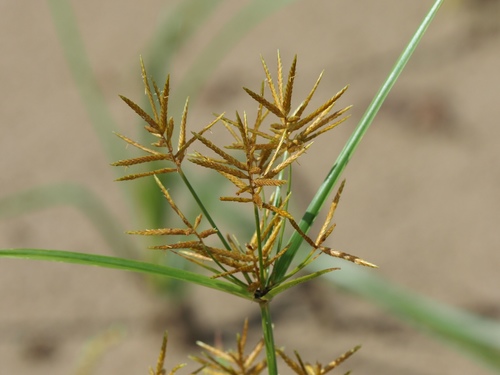
- Cyperus esculentus, tiger nut, another Cyperaceae with sweet tubers but a different genus and a nuttier flavor;
- other wild Eleocharis, which can look similar vegetatively without producing commercially sized corms.
Without visible corms or spikelets, careful collection is the only way to distinguish these plants sharing marsh and rice-paddy habitats. 3
Main sources
- Plants of the World Online / Kew, Eleocharis dulcis (Burm.f.) Trin. ex Hensch.
- Wikipedia, Eleocharis dulcis
- Wikipedia FR, Chinese water chestnut (Eleocharis dulcis)
- Plants For A Future, Eleocharis dulcis
- Rural Industries Research and Development Corporation, Chinese Water Chestnut handbook
- Department of Agriculture and Food, Western Australia, Chinese water chestnuts in Western Australia
- USDA PLANTS Database, Eleocharis dulcis
Frequently asked questions
Is Chinese water chestnut a true chestnut?
No. Eleocharis dulcis is a sedge in the Cyperaceae, unrelated to true chestnuts in the genus Castanea. Its name refers only to the shape and crunch of the edible corm.
Is it safe to eat water chestnuts raw?
The corm is not toxic, but its surface can carry Fasciolopsis buski metacercariae from standing water. Peeling and thorough washing, or cooking, eliminates this fasciolopsiasis risk.
How does it differ from Trapa natans?
Trapa natans, also called water chestnut or water caltrop, is an annual floating plant in the Lythraceae with a horned fruit. It shares only a common name with Eleocharis dulcis, without a botanical relationship.
How can Chinese water chestnut be recognized without flowers or visible corms?
Its bright green, upright tubular stems, divided internally by partitions and without true leaves, remain the most reliable feature even without a visible spikelet or corm.
Is Chinese water chestnut toxic to cats and dogs?
The corm is not documented as toxic to cats, dogs or people; information for horses is still lacking.
How can Chinese water chestnut be grown at home?
Plant corms in local spring in a pond or large submerged container in full sun, maintaining 5–10 cm (2–4 in) of water. Harvest comes 6–8 months later, in local late summer.
Why do the corms stay crisp after cooking?
Ferulic acid oligomers stiffen the corm’s cell walls. This chemistry, more than freshness, explains why water chestnuts keep their crunch in a stir-fry or a can.
Similar plants

If you are unsure about a plant’s toxicity, ask a botanist or veterinarian for advice.