
Japanese aralia (Fatsia japonica, )
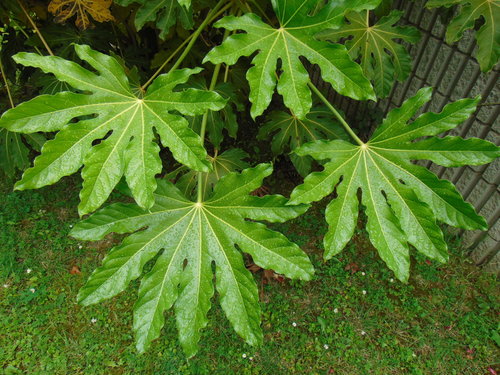
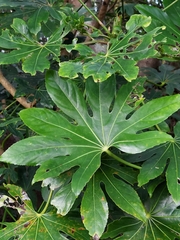
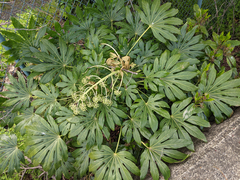
Japanese aralia (Fatsia japonica) is an evergreen shrub in the Araliaceae, native to coastal forests in southern Japan and South Korea. Its large, glossy leaves have seven to nine lobes, making it one of the few shrubs that can fill a deeply shaded bed with foliage year-round.
Read moreJapanese aralia, Paperplant, Fatsia and False castor oil plant
Place in indirect light or in a shaded room.
Partial to deep shade


© photo
(c) Napocesco, some rights reserved (CC BY-NC-SA) · cc-by-nc-sa
iNaturalist User · cc-by
Timur Kalininsky · cc-by
Taken May 4, 2017 by Pierre Bonnet (cc-by-sa)
Taken Aug 3, 2020 by Giode Tonpino (cc-by-sa)
Taken Feb 7, 2022 by paul (cc-by-sa)
Taken Feb 7, 2020 by mohammad fazel dehkordi (cc-by-sa)
Taken Nov 3, 2017 by Eva Sebrechts (cc-by-sa)
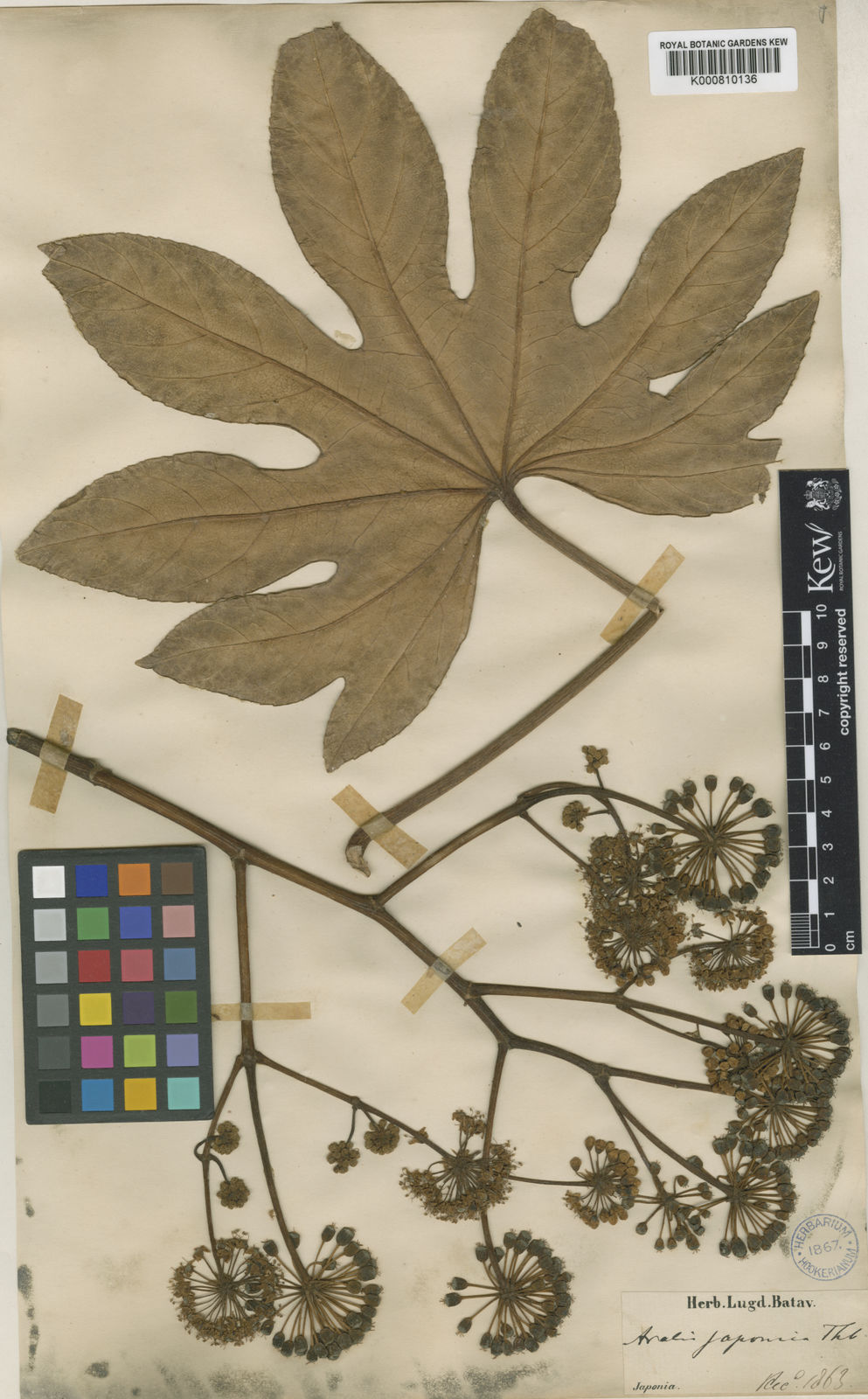
© copyright of the Board of Trustees of the Royal Botanic Gardens, Kew.




Global distribution
Fatsia japonica is native to southern Japan, including the Nansei Islands, and South Korea. It has naturalized locally outside this range, notably in New Zealand, and is not considered invasive in metropolitan France.
- Native2
- Introduced1
- Japan
- South Korea
- New Zealand
Hexagons: regions where the plant occurs. Green dots: native range.1
Identity
Japanese aralia (Fatsia japonica (Thunb.) Decne. & Planch., 1854), also known as paperplant, is an evergreen shrub and the most familiar horticultural member of the genus Fatsia. Carl Peter Thunberg first described it as Aralia japonica Thunb. in 1780, before Joseph Decaisne and Jules Émile Planchon established Fatsia in 1854. 1 2
Its genus name comes from the Japanese hachi, meaning eight, a reference to the usual number of leaf lobes. The Japanese common name yatsude means “eight fingers” for the same reason, although leaves on a single plant often have seven to nine lobes. Fatsia and false castor oil plant are other established English names for this shrub. 3
Recognition
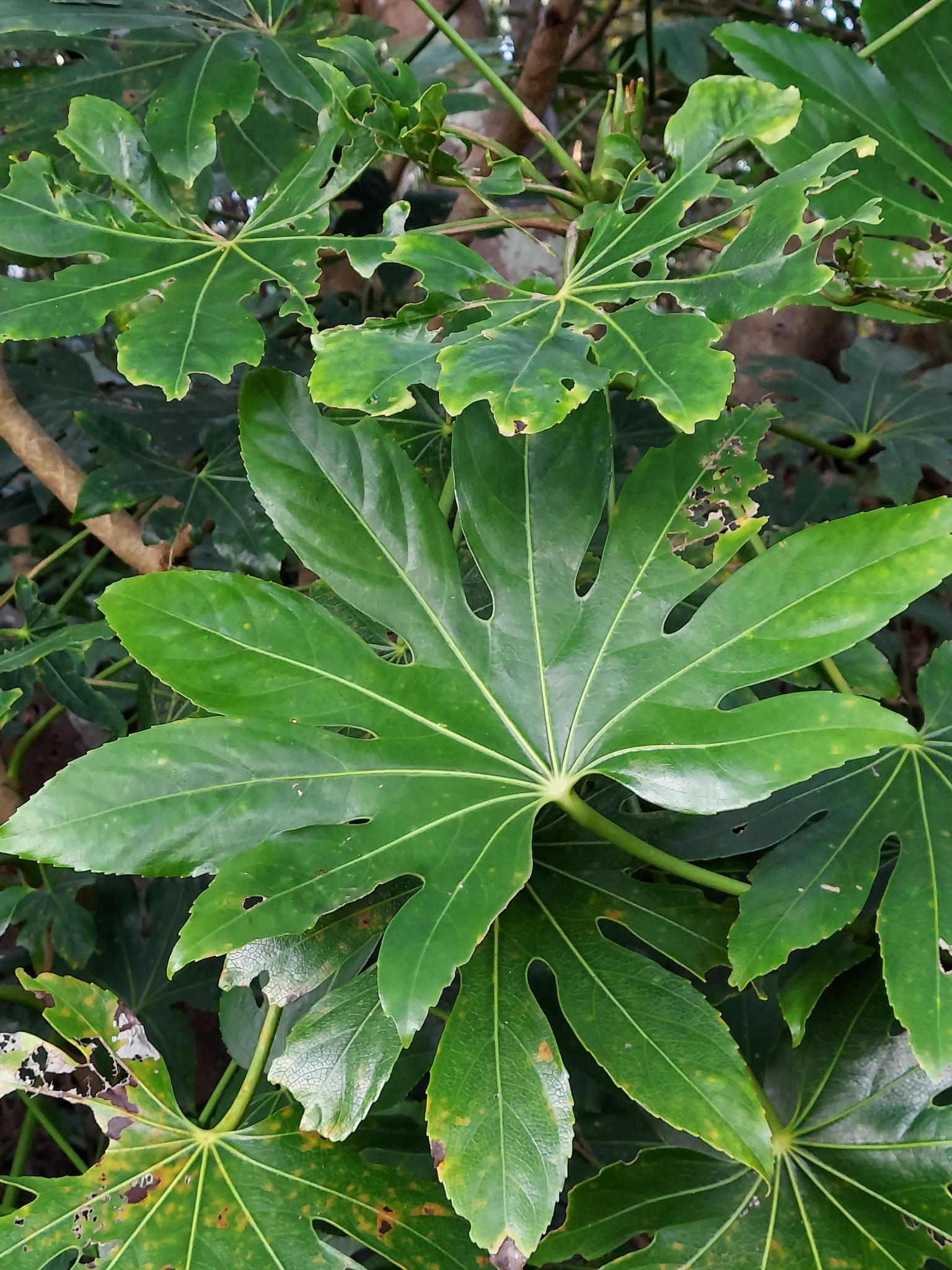
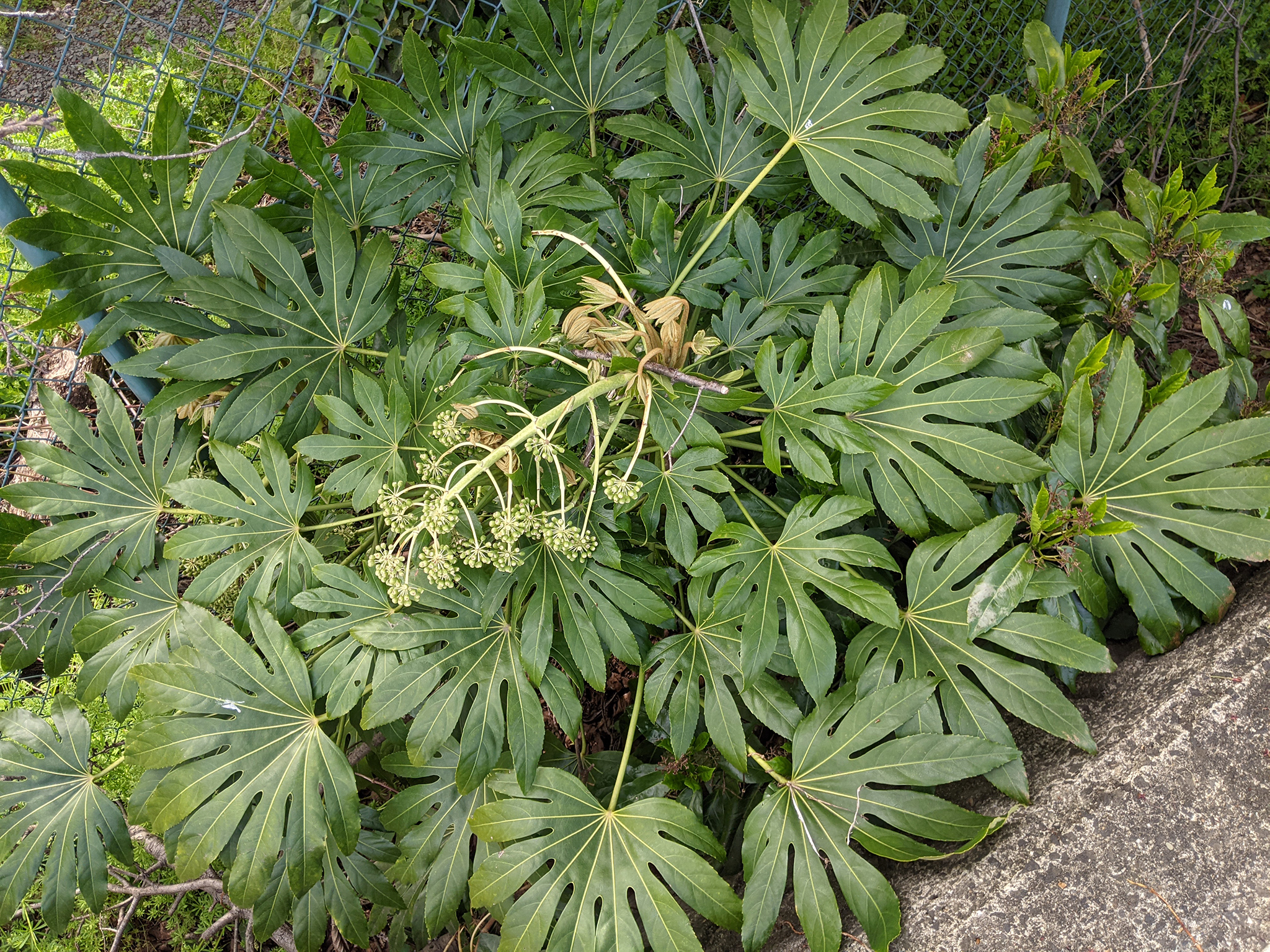
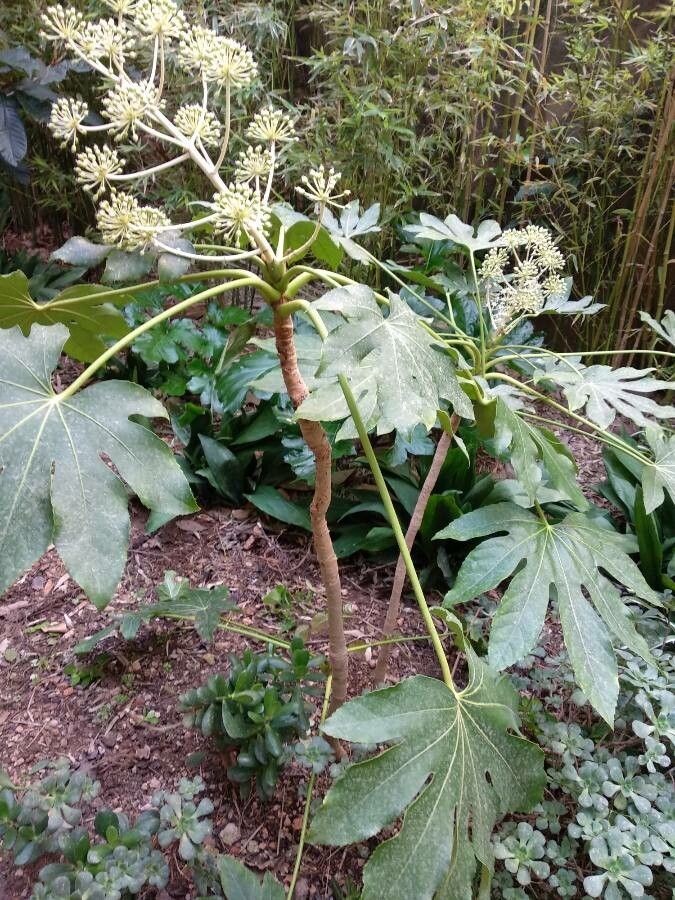
Broad, glossy leaves give Fatsia japonica its spreading silhouette. Stems branch sparsely and are often bare at the base; established shrubs commonly reach 2.5–4 m (8–13 ft) tall with a similar spread. Long leaf stalks carry dark green, palmately lobed blades, with 7–9 deep lobes extending halfway to two-thirds toward the leaf base. 3 4
Small creamy white flowers appear in autumn in dense umbels, grouped into large terminal panicles. Round fruits follow, changing from green to black as they ripen in winter. Fruiting is uncommon on plants grown indoors. 5 4
Young plants, container specimens and those receiving little light may have less deeply lobed leaves and never flower. A lack of flowers therefore does not rule out identification as Japanese aralia. 5
Useful taxonomy
Earlier names for this species are now treated as botanical synonyms:
- Aralia japonica Thunb., the original name or basionym
- Aralia sieboldii K.Koch
- Dimorphanthus japonicus (Thunb.) Endl.
- Echinopanax japonicus (Thunb.) Kuntze
- Fatsia japonica var. liukiuensis Hatus. ex H.Ohba
Botanically, the accepted name is Fatsia japonica, in the Araliaceae alongside ivy (Hedera) and ginseng (Panax). The close relationship between Fatsia and Hedera helps explain the existence of ×Fatshedera lizei, a hybrid produced by crossing Japanese aralia with Hedera hibernica. 1 2
Habitat and range
Southern Japan, including the Nansei Islands, and South Korea form the native range of Fatsia japonica. There it grows in coastal forests and woodland understory, in partial to deep shade. 1 5
Cultivation extends well beyond that native range into temperate regions with mild winters, including the United Kingdom and metropolitan France. In New Zealand, the shrub has naturalized locally on abandoned land, spreading through seed and suckers without being regarded there as a major ecological threat. 3 4
Coastal woodland conditions help explain its tolerance of salt spray and poor soils. Established plants withstand wind well in sheltered positions, although exposed leaves can suffer. Its narrow native range contrasts with cultivation along many temperate coasts with mild winters. 5 8
Life cycle and reproduction
Autumn umbels of creamy white flowers attract pollinating insects when relatively few other shrubs are still flowering. Following insect pollination, black fruits about 6 mm (¼ in) across ripen in winter. 5 4
Growers usually propagate Japanese aralia from semi-ripe stem cuttings, taken in late summer and rooted under protection in 4–8 weeks. Seed propagation is also possible, but often delays the first flowers by 3–4 years compared with a cutting. 3 5
Plants established in the ground develop their mature habit and most deeply lobed leaves after 2–4 years. Flowering generally starts in the third or fourth year. 4
Uses and risks
Shaded borders, urban garden backdrops and large conservatory containers suit Japanese aralia particularly well. Few evergreen shrubs accept such limited direct sun while producing this volume of foliage. Against a shaded wall or beneath trees, the shrub provides screening throughout the year. 3 4
The ASPCA classifies Fatsia japonica as non-toxic to cats, dogs and horses, making it a useful ornamental where pets have access. Its sticky, resinous sap nevertheless contains a falcarinol analogue that can cause contact dermatitis in sensitive people. Cross-reactions with other Araliaceae, including ivy and schefflera, have been documented. 6 7
A large pot in a conservatory or bright entrance hall gives its dense foliage room to develop. Indoors, this substantial leaf canopy can structure a planting where few other evergreen foliage plants reach a comparable size. 4
Varieties, look-alikes and related plants
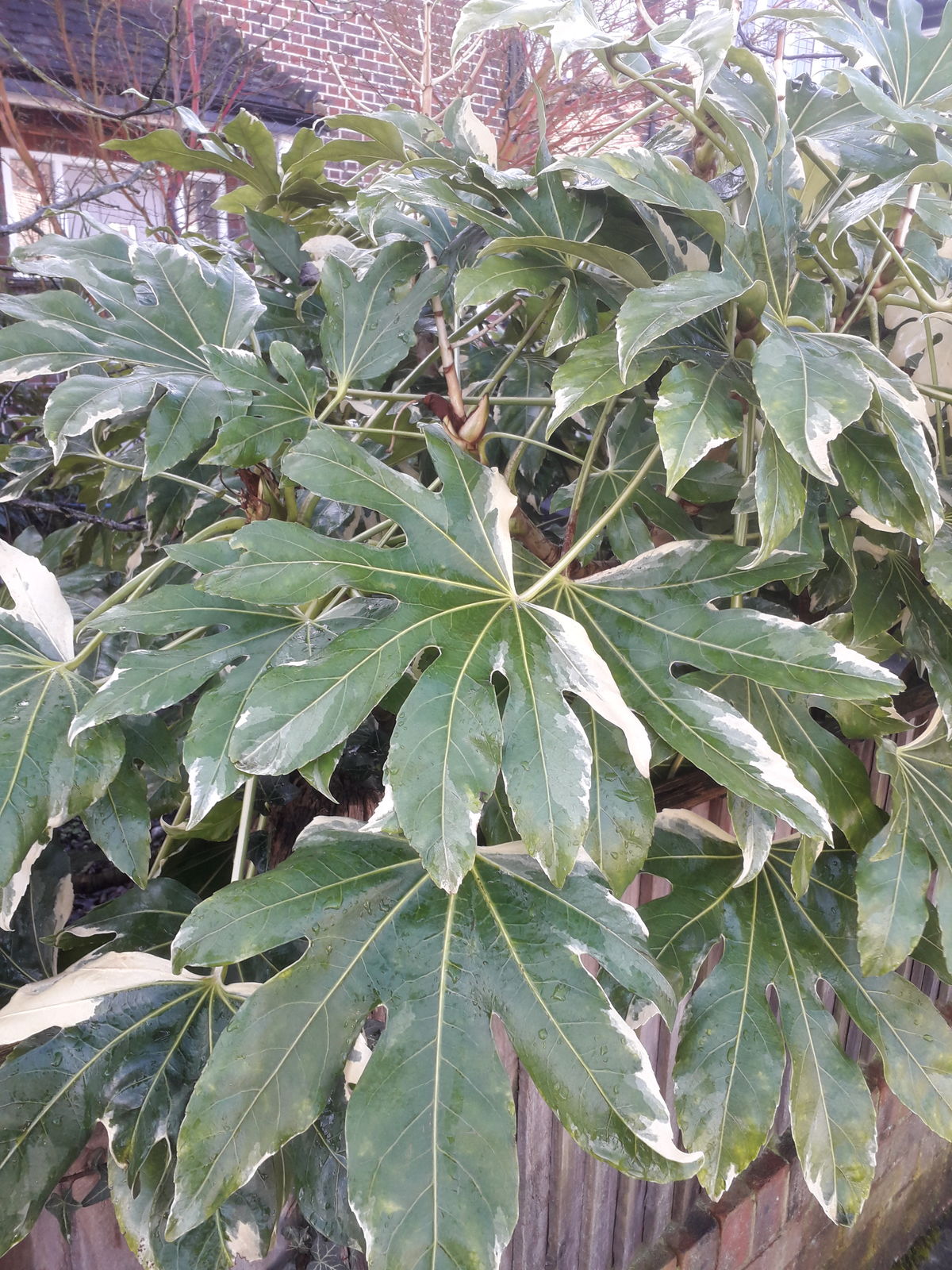
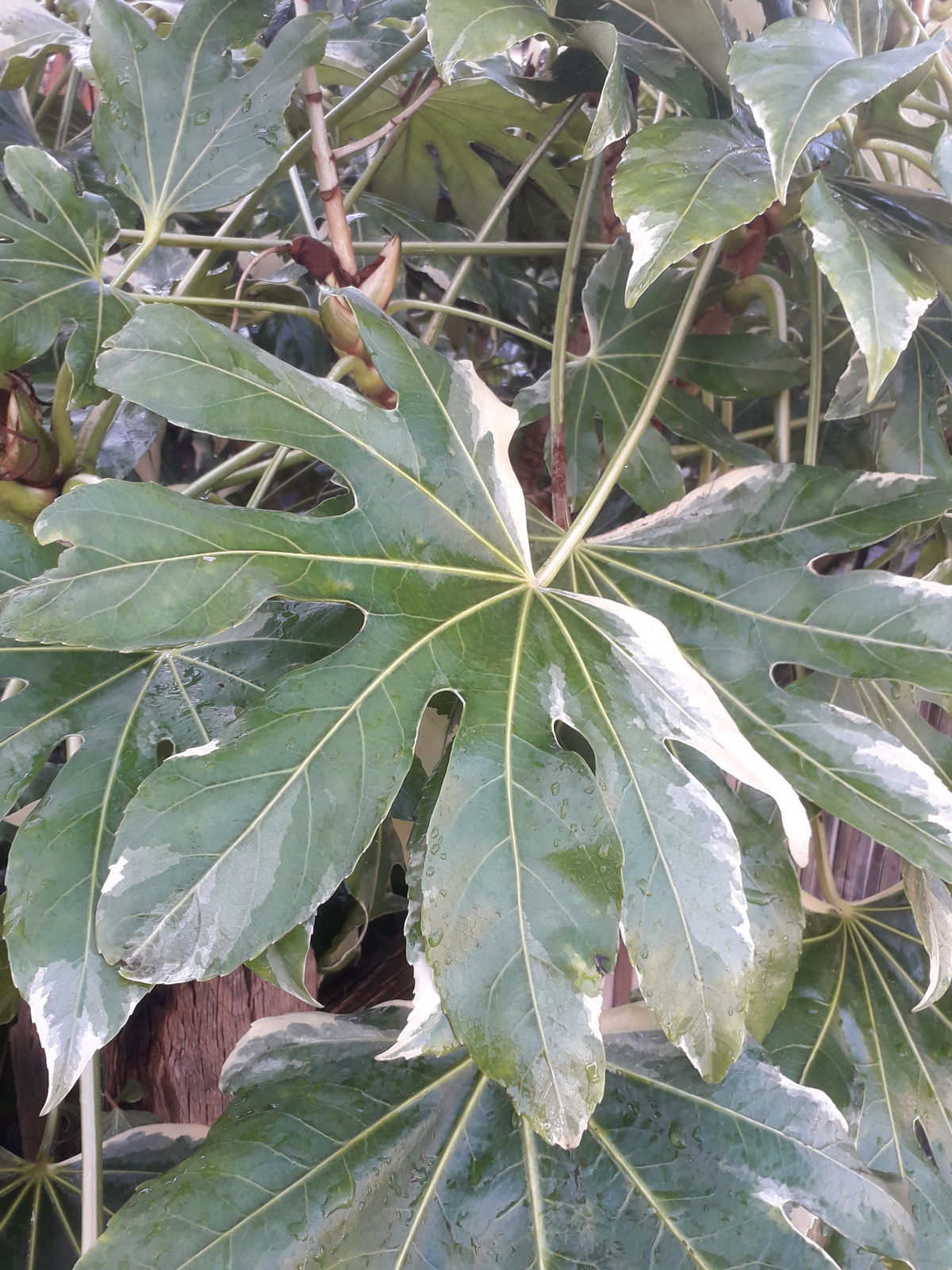
Variegata, with cream-edged leaves, and the more compact, white-speckled Spider's Web have both received the RHS Award of Garden Merit, as has the species itself. Moseri has a shorter, denser habit that suits small gardens. 3
Several plants can cause confusion at first glance:
- ×Fatshedera lizei, the ivy hybrid, has less deeply lobed leaves and a partly climbing habit;
- Aralia elata is a spiny shrub with compound leaves, quite different to the touch;
- Schefflera arboricola has fingerlike groups of separate leaflets that suggest a similar outline from a distance.
Leaf structure is more reliable than foliage color or size for separating these plants. A simple, palmate leaf deeply divided into seven to nine points indicates Fatsia japonica, while a compound leaf made up of distinct leaflets points toward a related genus.
Main sources
- Plants of the World Online / Kew, Fatsia japonica (Thunb.) Decne. & Planch.
- International Plant Names Index, Fatsia japonica record
- Royal Horticultural Society, Fatsia japonica details
- Missouri Botanical Garden Plant Finder, Fatsia japonica
- NC State Extension Gardener Plant Toolbox, Fatsia japonica
- ASPCA, Japanese aralia toxicity entry
- Contact Dermatitis 1999, allergens of Fatsia japonica and cross-reactions in Araliaceae
- USDA GRIN Global Taxonomy, Fatsia japonica
Frequently asked questions
Is Japanese aralia toxic to cats and dogs?
No. The ASPCA lists Fatsia japonica as non-toxic to cats, dogs and horses. Its sticky sap can still irritate skin, so wear gloves when pruning.
Why isn't my Japanese aralia flowering?
Autumn flowers appear mainly on established plants growing in the ground from three to four years old. A young container plant or one receiving too little light may take several years to flower for the first time.
Can Fatsia japonica grow in full sun?
It tolerates gentle morning sun, but strong afternoon sun scorches and yellows the leaves, especially in hot climates. Partial to deep shade produces the largest, greenest foliage.
How does Fatsia japonica differ from Fatshedera lizei?
×Fatshedera lizei is a sterile hybrid between Fatsia japonica and the ivy Hedera hibernica. Its leaves are intermediate and less deeply lobed, and its growth is more flexible and partly climbing compared with Japanese aralia.
How hardy is Fatsia japonica in the ground?
Once well rooted, the shrub is considered hardy to about -15 °C (5 °F), corresponding to USDA zones 8–10. In colder conditions, a sheltered position against a wall or winter protection is needed.
Does Fatsia japonica need pruning every year?
No. Routine annual pruning is unnecessary. Prune when the stems become bare at the base or the shrub outgrows its space, preferably just after flowering.
Similar plants
If you are unsure about a plant’s toxicity, ask a botanist or veterinarian for advice.