
Globe amaranth (Gomphrena globosa, )
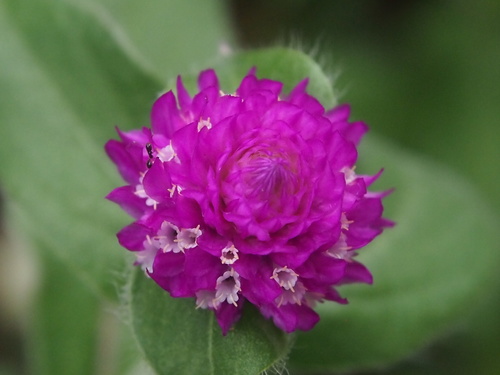


Globe amaranth (Gomphrena globosa) is an annual of the Amaranthaceae, native to Central America and northern South America. Its dense, rounded heads have papery magenta, purple, pink, white or orange bracts that retain their color for weeks after drying. It is grown in beds, edging and dried-flower arrangements, with decorative heads that last after cutting.
Read moreGlobe amaranth, common globe amaranth and bachelor's button
Place in full sun, with intense direct light all day long.


© photo
(c) Sunnetchan, some rights reserved (CC BY-NC-ND), uploaded by Sunnetchan · cc-by-nc-nd
Wikimedia Commons · CC BY-SA or Public Domain
Taken Sep 3, 2019 by Fedan Hacizade (cc-by-sa)
Taken Aug 15, 2015 by Photoflora - Jean-Luc TASSET (©)
Taken Apr 5, 2020 by shahid shahid (cc-by-sa)
Taken Jan 10, 2022 by huy HO (cc-by-sa)
© copyright of the Board of Trustees of the Royal Botanic Gardens, Kew.


Global distribution
Gomphrena globosa is native to Central America and northern South America, from Mexico to Brazil through Guatemala, Panama, Colombia and Venezuela. It is widely cultivated elsewhere as an ornamental and dried flower; these cultivated areas remain distinct from its native range.
- Native6
- Mexico
- Guatemala
- Panama
- Colombia
- Venezuela
- Brazil
Hexagons: regions where the plant occurs. Green dots: native range.1
Identity
Globe amaranth (Gomphrena globosa L., 1753) is an annual of the Amaranthaceae, grown for its decorative flower heads. Linnaeus described it in Species Plantarum in 1753. It has since become a widely planted bedding flower and a familiar dried flower around the world. 1 2
Its English names also include common globe amaranth and bachelor's button, the latter shared with other garden plants. The French name immortelle violette refers to the heads retaining their color for weeks, sometimes months, after cutting and drying. The durable colored structures are papery bracts, rather than the softer petals familiar in roses or daisies. 5 7
Recognition
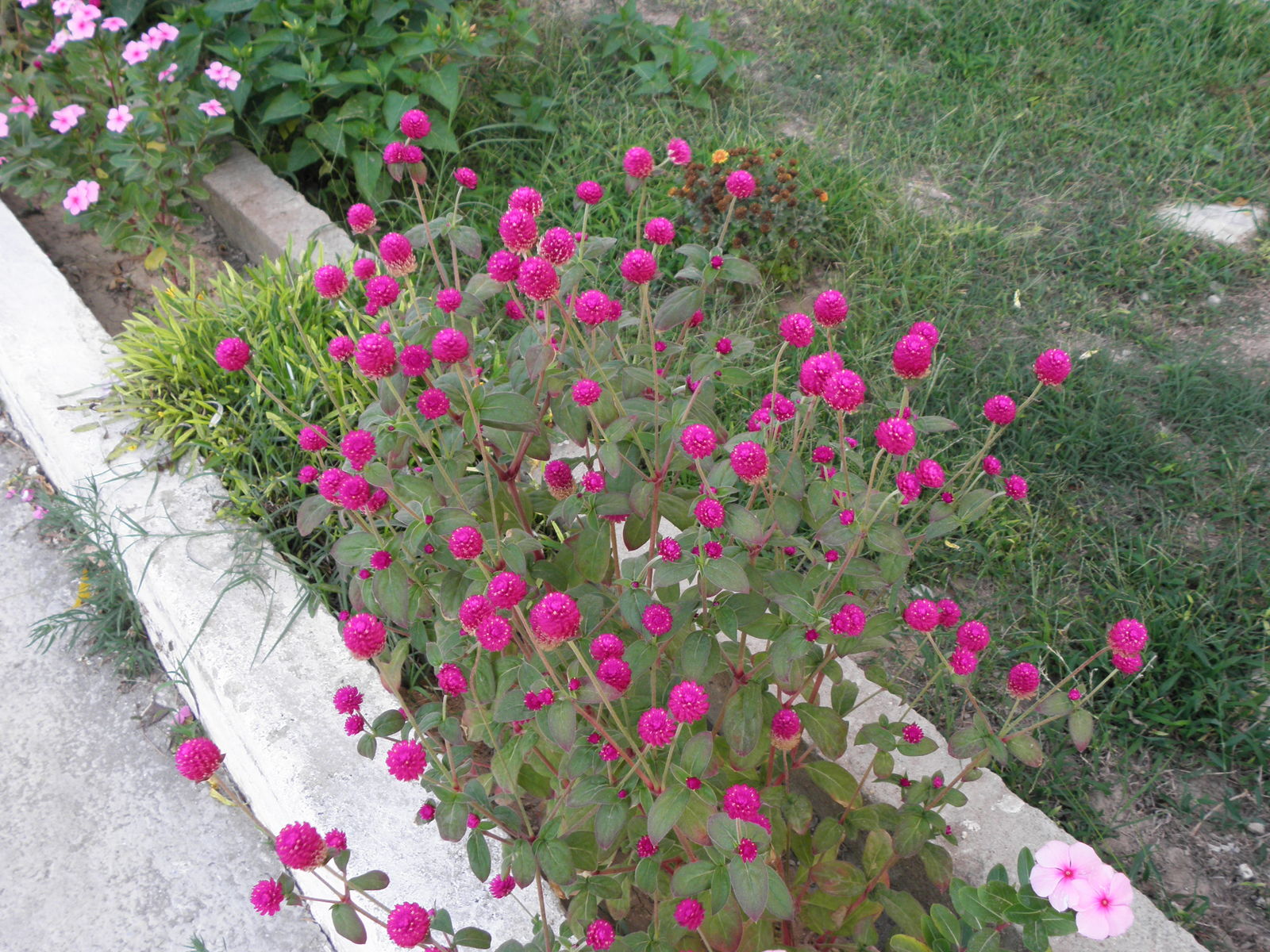
An upright, branching clump reaches 15–90 cm (6–35 in), depending on the variety. The stiff, slightly hairy stems are swollen at the nodes, a feature common in the Amaranthaceae. Opposite, oblong, stalkless leaves grow up to 15 cm (6 in) long; a covering of white hairs is especially conspicuous on young plants and becomes less noticeable with age. 3 5
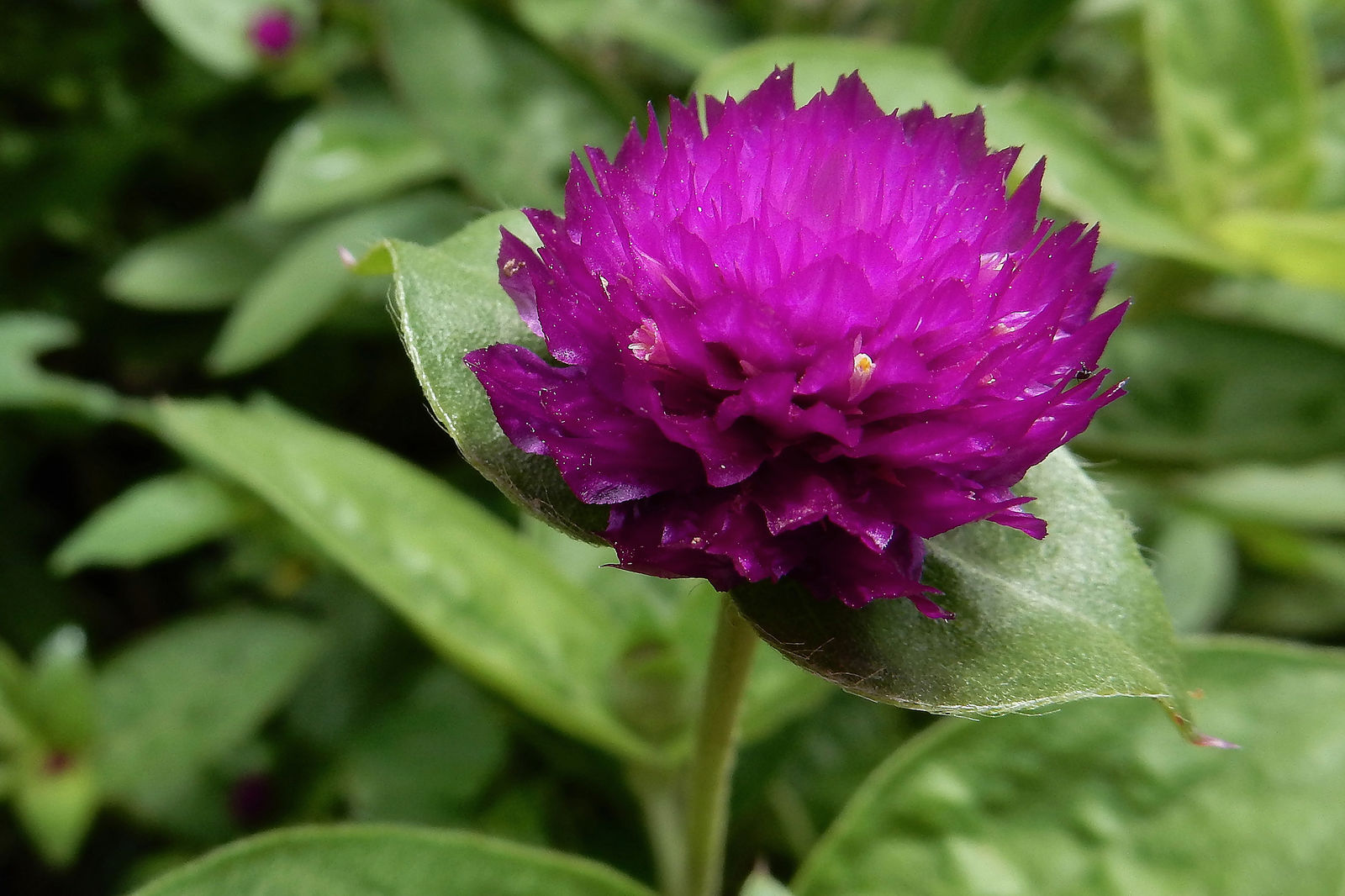
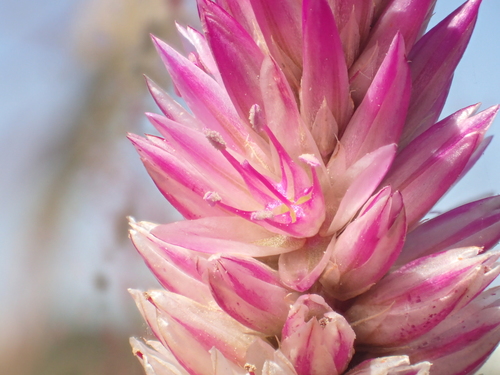
Color varies considerably between cultivars, making the flower head a more useful identifying feature. A dense globe 2–4 cm (0.8–1.6 in) across sits at the tip of each flowering stem. The true flowers are tiny and inconspicuous inside it. Magenta, purple, pink, white or orange papery bracts supply the show, with yellow stamen tips visible among them. 3 4
Useful taxonomy
The accepted botanical name is Gomphrena globosa L., as recorded by Kew. Historical infraspecific names have been placed in synonymy, including:
- Gomphrena globosa var. albiflora Moq., a historical synonym
- Gomphrena globosa subsp. africana Stuchlík, a historical synonym
- Gomphrena globosa subsp. mexicana Stuchlík, a historical synonym
- Gomphrena globosa var. carnea Moq., a historical synonym
More than a hundred American and Australian species belong to Gomphrena. Its closest familiar horticultural relative is Gomphrena haageana, strawberry globe amaranth, with heads that are more elongated than round. The genus name is thought to derive from the ancient Latin gromphaena, used by Pliny the Elder for an amaranth-like plant. The epithet globosa describes the rounded head. 1 5
Habitat and range
Central America and northern South America form its native range, extending from Mexico to Brazil through Guatemala, Panama, Colombia and Venezuela. It grows in open, sunny places, including savannas, dry forest margins and disturbed ground, on well-drained soils of poor to moderate fertility. These open habitats help explain its familiar use in sunny flower beds. 4 5
Cultivation has spread globe amaranth far beyond that range, through both tropical and temperate gardens. In Nepal its heads are woven into ceremonial garlands, while dried heads are used in infusions in several South Asian traditions. Such ornamental and household uses explain a broad cultivated distribution; cultivation alone should not be confused with invasive naturalization. 5 6
Life cycle and reproduction
Sow on the surface at 15–20 °C (59–68 °F). Starting under cover six to eight weeks before the last frost brings flowering forward; direct sowing is possible once frost danger has passed. Emergence can be irregular over one to three weeks, so relatively dense sowing compensates for modest germination. 4 5
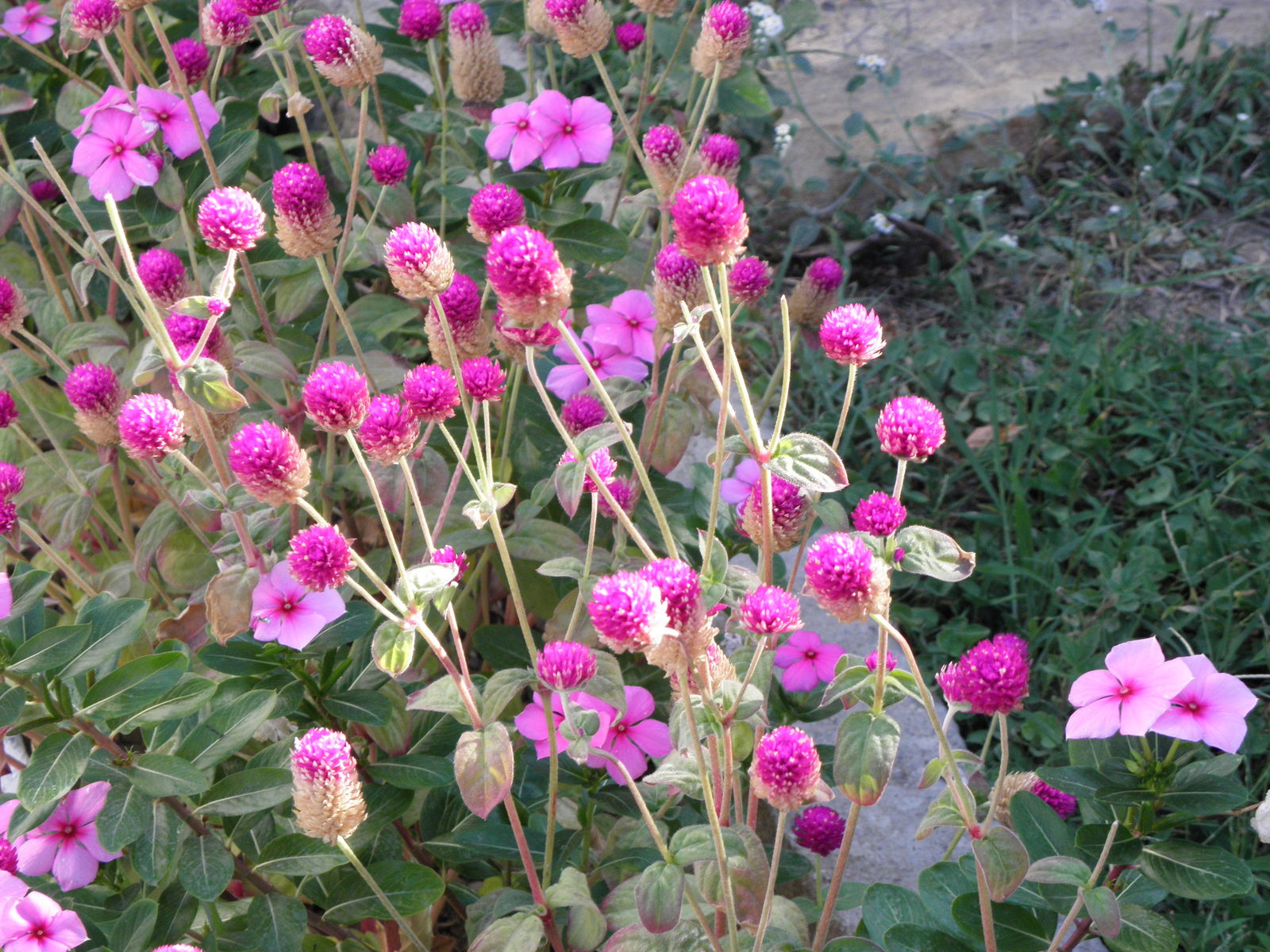
Flowering begins in summer, corresponding to July in the temperate Northern Hemisphere, roughly 8–10 weeks after sowing. Regular removal of spent heads keeps flowers coming until the first frost. Following insect pollination, the heads mature small, dry, indehiscent fruits containing one seed each. They can be collected late in the season for sowing the following year. 5 3
Uses and risks
Beds, edging and containers account for much of its ornamental use, but fresh and dried cut flowers are equally important. Heads retain their color for weeks when hung upside down away from direct light. This lasting quality explains their regular appearance in dried arrangements and potpourri, as well as names suggesting an everlasting flower. 5 7
Colored bracts owe their shades to betalains, especially gomphrenin. These pigments are more stable than the anthocyanins that color most garden flowers, helping the heads retain color when dried. The pigments and other phenolic compounds in the plant are also studied for their antioxidant properties. 8 7
Safety records do not list Gomphrena globosa as toxic to cats or dogs. Its status for horses remains uncertain, because specific published data are lacking. No notable human risk is documented from ordinary ornamental use. 5
Varieties, look-alikes and related plants
Gardeners encounter several named lines: vivid red 'Strawberry Fields'; tall, freely flowering, bright pink 'Fireworks'; the dwarf 'Gnome' series in white and purple, compact below 25 cm (10 in); and the taller 'Ping Pong' series, grown for cut and dried flowers. Mature height and dominant color help match a selection to the intended bed or bouquet. 3 4
The main look-alikes are:
- Gomphrena haageana, strawberry globe amaranth, with more elongated heads, usually orange or vivid red;
- Celosia argentea, another amaranth-family plant, whose plumed or crested inflorescences have a very different outline;
- everlasting flowers of Helichrysum in the Asteraceae, used for drying but belonging to a separate family.
Neither height nor color alone reliably separates cultivars and species. The compact, globular head and smooth-looking bracts distinguish Gomphrena globosa from feathery celosia inflorescences and the elongated heads of strawberry globe amaranth. The shape of the entire head remains more informative than a single brightly colored bract. 1 5
Main sources
- Plants of the World Online / Kew, Gomphrena globosa L.
- International Plant Names Index, Gomphrena globosa L.
- Royal Horticultural Society, Gomphrena globosa
- Missouri Botanical Garden Plant Finder, Gomphrena globosa
- NC State Extension, Gomphrena globosa
- Plants For A Future, Gomphrena globosa
- Encyclopaedia Britannica, globe amaranth
- Tela Botanica, The unexpected properties of globe amaranth
Frequently asked questions
Is globe amaranth toxic to cats and dogs?
Perenual reports Gomphrena globosa as not listed as toxic to cats or dogs, but the botanical references cited here do not independently confirm that assessment. Its safety for horses remains uncertain because specific published data are lacking. Absence from a toxic-plant list does not establish safety.
Why do globe amaranth flowers keep their color when dried?
The color comes from papery bracts rich in betalains, pigments described as more stable than the anthocyanins that color most garden flowers. The tiny true flowers remain hidden inside the head.
Should globe amaranth be sown indoors or outdoors?
Either is possible. Sowing in warmth under cover six to eight weeks before the last frost brings flowering forward; direct sowing after frost is possible but delays flowering by several weeks.
How does Gomphrena globosa differ from Gomphrena haageana?
Gomphrena haageana, strawberry globe amaranth, has more elongated heads, usually orange or vivid red. Gomphrena globosa has round heads in magenta, purple, pink, white and orange.
Is globe amaranth annual or perennial?
It is grown as an annual in most places and is killed by the first frost. In frost-free tropical climates, USDA zones 9–11, it can behave as a short-lived perennial.
How can globe amaranth keep flowering into fall?
Remove faded heads regularly and avoid excess nitrogen fertilizer, which favors foliage rather than flowers. A full-sun position remains the most important condition.
Where does the name Gomphrena come from?
The genus name derives from an old Latin word used by Pliny the Elder for an amaranth-like plant. The epithet globosa simply describes the rounded head.
Similar plants

If you are unsure about a plant’s toxicity, ask a botanist or veterinarian for advice.