
crimson-eyed rose-mallow (Hibiscus moscheutos, )
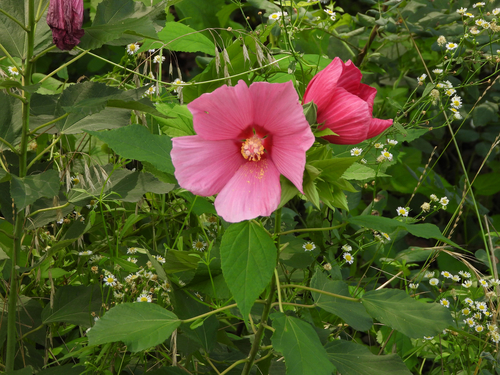
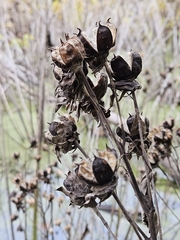
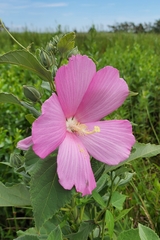
crimson-eyed rose-mallow (Hibiscus moscheutos) is an herbaceous perennial in the Malvaceae, native to wetlands in eastern North America. Its shoots die back underground each winter, then a clump of upright stems grows again in spring, bearing some of the largest flowers among hardy hibiscus.
Read morecrimson-eyed rose-mallow, rose mallow, swamp rose-mallow and crimsoneyed rosemallow
Allow a few hours of direct sun per day, preferably morning or evening.
Full sun; tolerates light partial shade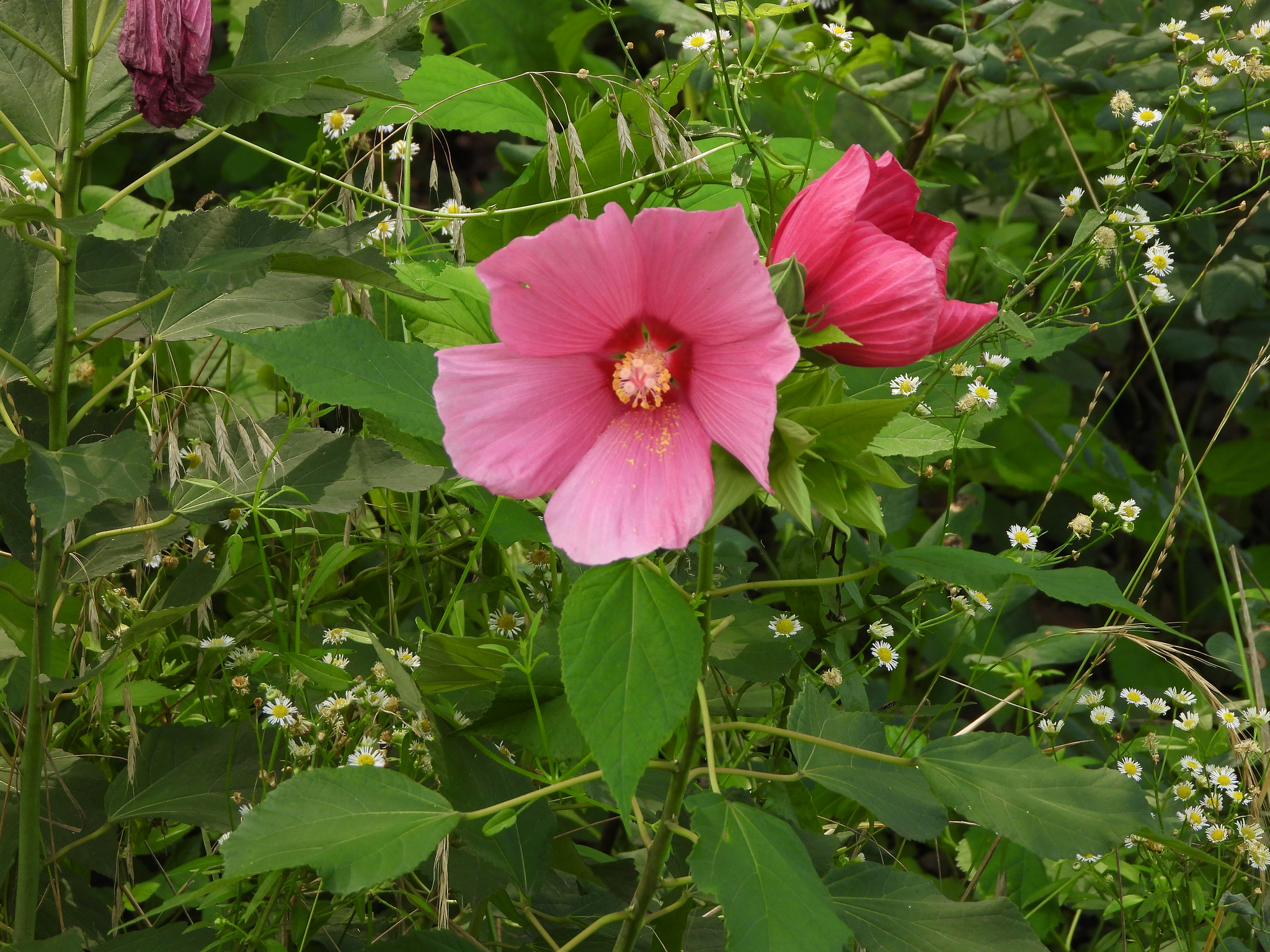


© photo
(c) Chuangzao, some rights reserved (CC BY-NC), uploaded by Chuangzao · cc-by-nc
Daniel Atha · cc0
Jack · cc0
Taken Sep 16, 2019 by Wilhelm Rogmann (cc-by-sa)
Taken Oct 1, 2020 by Dieter Albrecht (cc-by-sa)
Taken Aug 26, 2020 by Marco Dansereau (cc-by-sa)
Taken Sep 21, 2019 by raspiasse marcel (cc-by-sa)
Taken Jul 19, 2019 by jeffemcfresh (cc-by-sa)
© copyright of the Board of Trustees of the Royal Botanic Gardens, Kew.




Global distribution
Hibiscus moscheutos is native to southeastern Canada (Ontario) and the central-eastern United States, from Massachusetts and Ontario south to Florida and Texas. Subspecies lasiocarpos extends into northeastern Mexico, California and Utah. In Europe, the plant is cultivated in borders or beside ponds.
- Native3
- Canada
- United States
- Mexico
Hexagons: regions where the plant occurs. Green dots: native range.1
Identity
crimson-eyed rose-mallow (Hibiscus moscheutos L., 1753) is an herbaceous perennial in the genus Hibiscus, in the mallow family, Malvaceae. Its flowers reach 15–25 cm (6–10 in) across, a feature that often identifies the plant before its foliage needs closer examination. Unlike woody garden hibiscus, it loses all its aboveground growth each winter and sends up fresh shoots every spring from an underground woody crown. 1 2 4
Other established names include rose mallow, swamp rose-mallow and crimsoneyed rosemallow. The swamp name points to its natural waterside and wetland habitat, while the crimson eye describes the dark red center of an often white or pink flower. Its French name, ketmie des marais, likewise combines an old generic term for hardy hibiscus with a reference to marshes. 3 8
Recognition
Upright stems, unbranched at their bases, form a clump that commonly reaches 1–2.5 m (3–8 ft) in a single growing season, much faster than most border perennials. The leaves are triangular, hairy underneath and sometimes divided into three shallow lobes. Their shape varies considerably between individual plants, so foliage alone is an unreliable basis for identification. 3 8
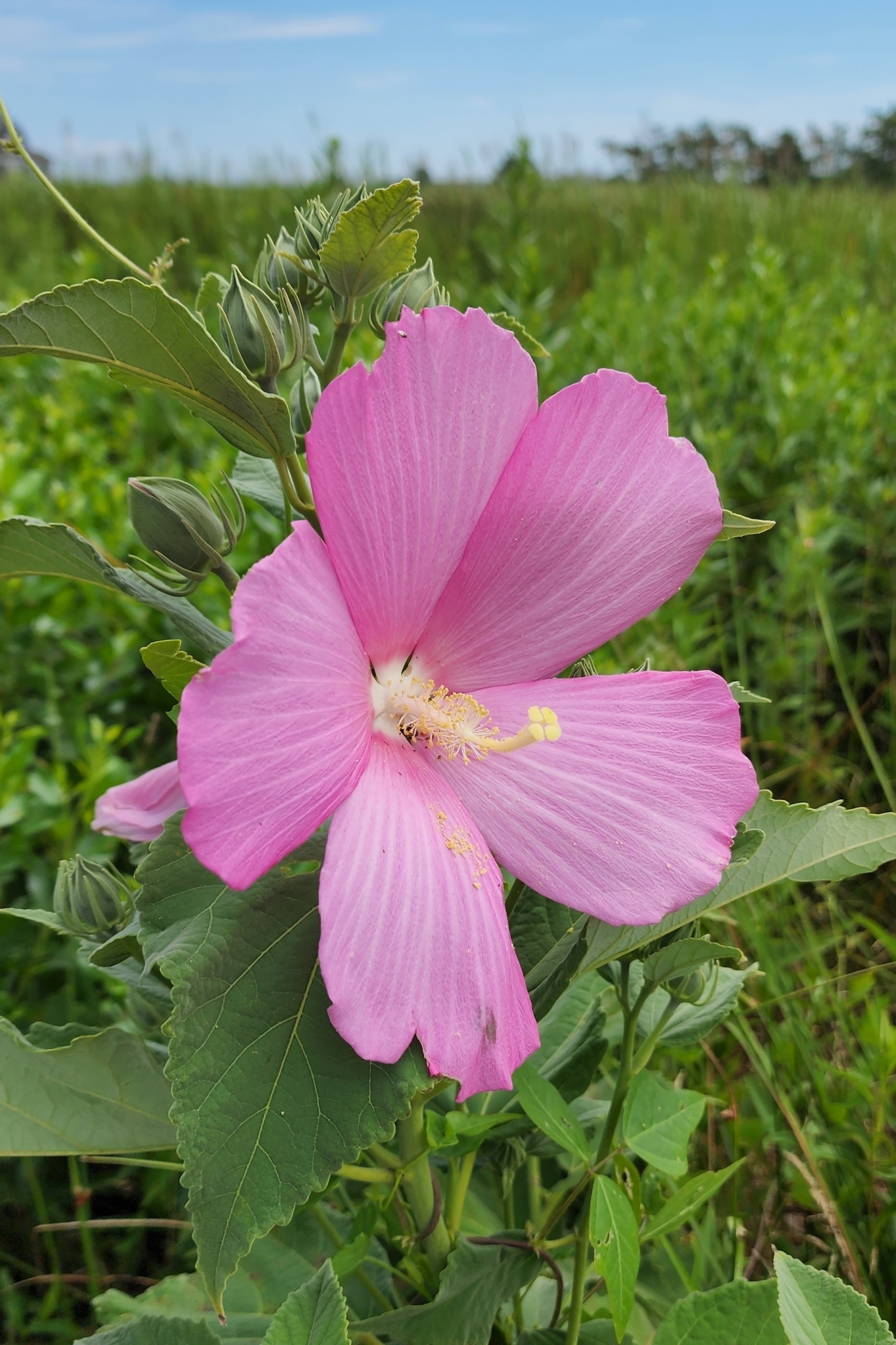
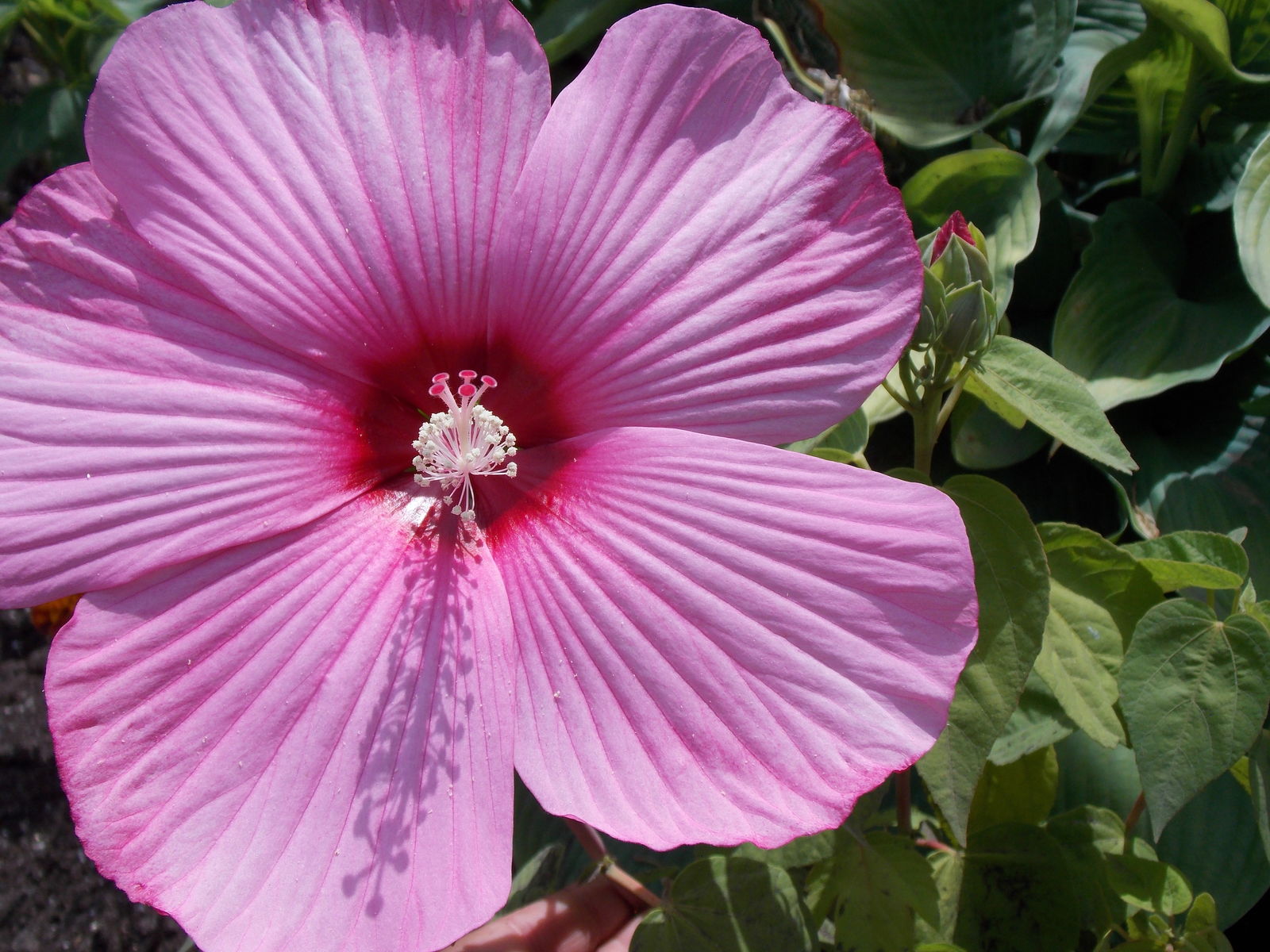
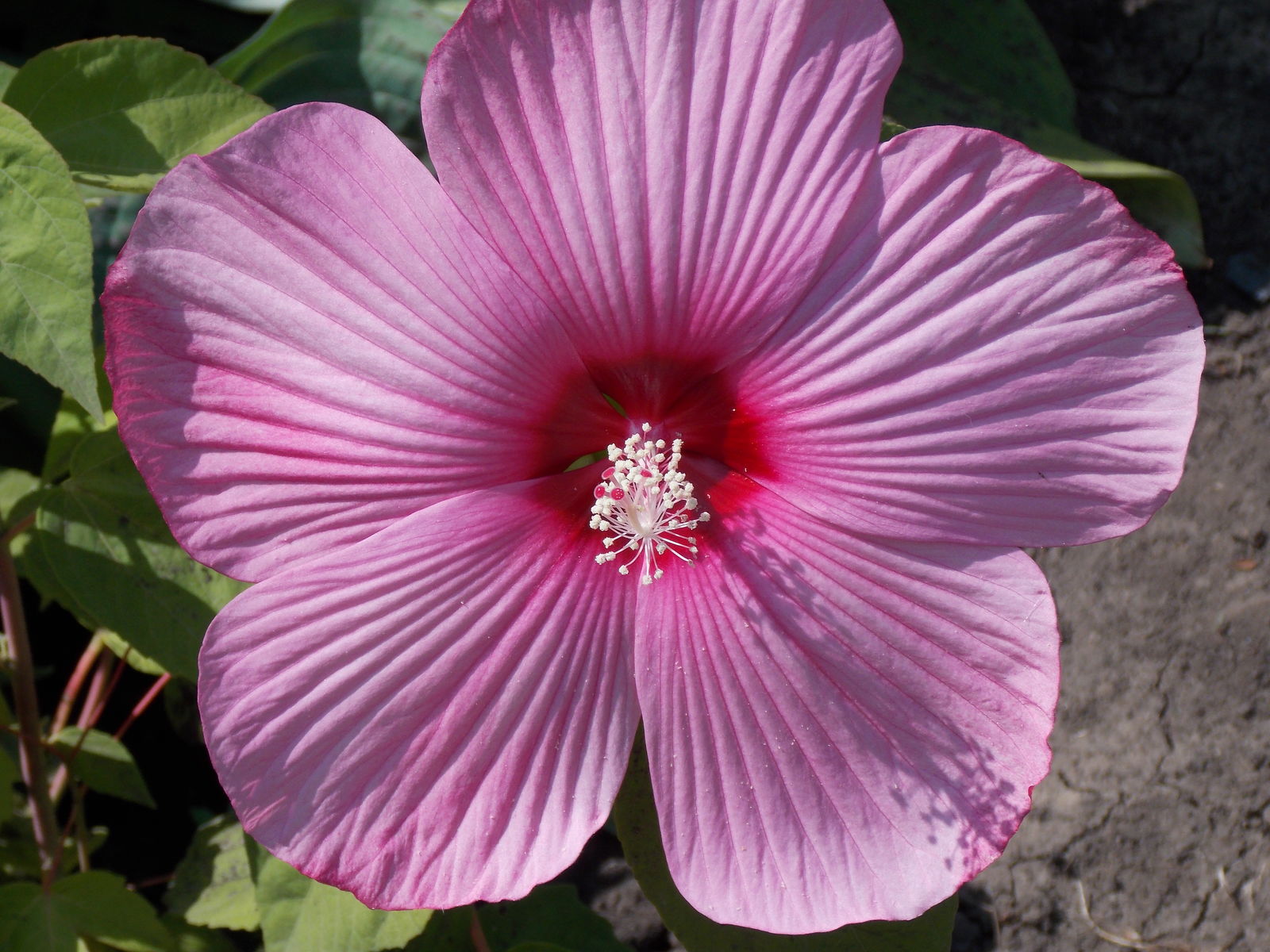
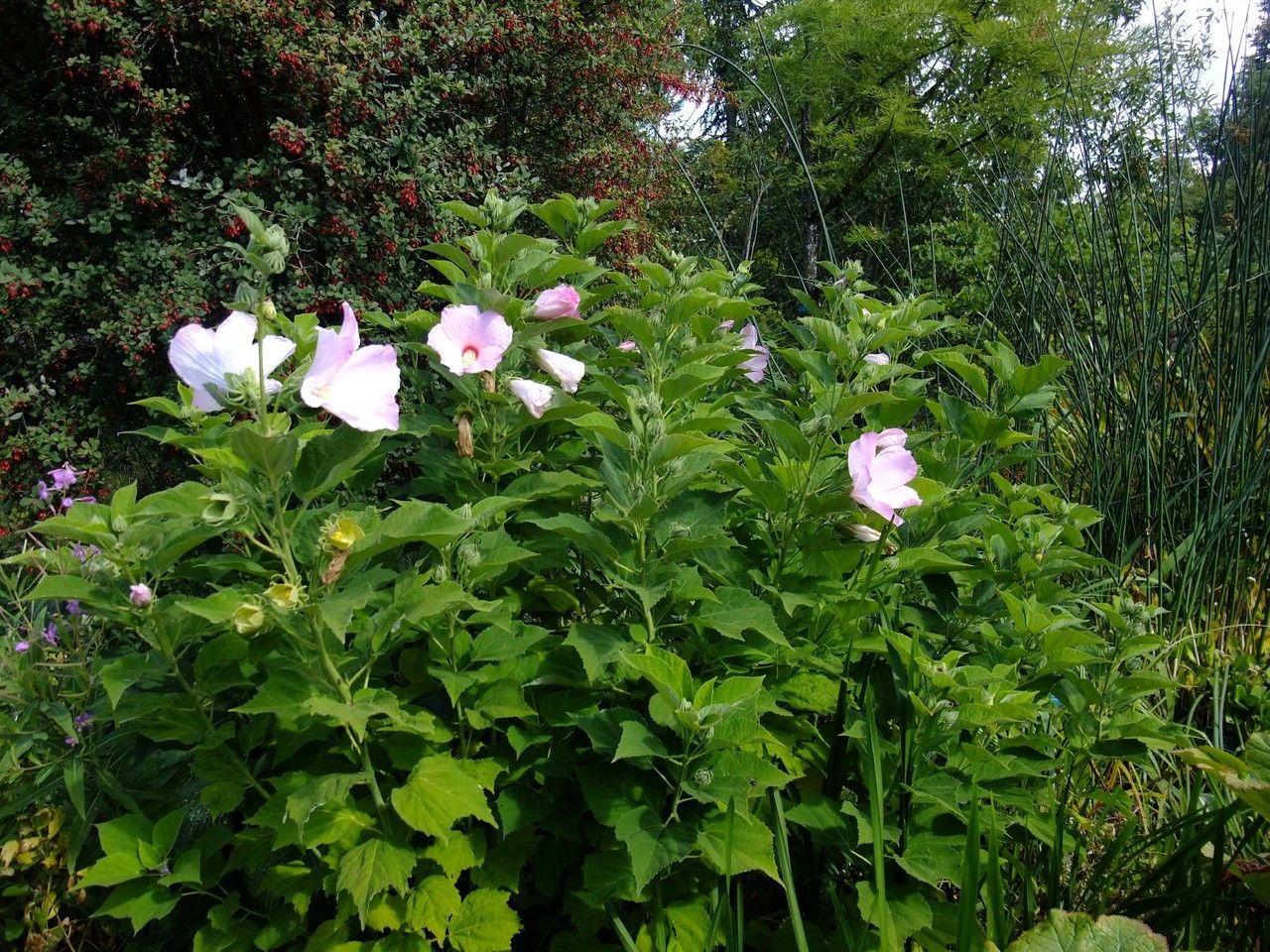
The most distinctive feature is the flower: a disk 15–25 cm (6–10 in) across, considerably broader than the blooms of most hardy perennials grown in temperate climates. Five broad white, pink or red petals often surround a dark red basal eye, although some cultivars lack it. Each flower opens for just one or two days, but a mature clump produces fresh flowers every morning throughout summer. 4 2
A useful clue when deciding whether a dormant crown is alive is its late spring emergence, often after most other border perennials. A lack of visible shoots early in spring does not, by itself, mean the plant has been killed by frost. 6
Useful taxonomy
Two recognized subspecies differ chiefly in geographical range and the hairiness of their leaves:
- Hibiscus moscheutos subsp. moscheutos, in the central and eastern United States, north to Ontario;
- Hibiscus moscheutos subsp. lasiocarpos (Cav.) O.J.Blanch., from the south-central United States into northeastern Mexico, California and Utah.
Several historical names still appear in catalogs and older literature, without a separate taxonomic standing today:
- Hibiscus palustris L.
- Hibiscus incanus J.C.Wendl.
- Hibiscus occidentalis Torr.
- Hibiscus lasiocarpos Cav.
When buying a plant, the accepted scientific name, Hibiscus moscheutos, remains a more reliable guide than sales names that often mix subspecies and cultivars. 1
Habitat and range
Southeastern Canada and the central-eastern United States form the native range of Hibiscus moscheutos, from Massachusetts and Ontario south to Florida and Texas. Subspecies lasiocarpos extends that range into northeastern Mexico, California and Utah. 1 7
In the wild, it colonizes marshes, riverbanks, ditches and flood meadows, often forming dense colonies where the soil remains waterlogged for much of the year. This need for a lasting supply of moisture distinguishes Hibiscus moscheutos from other border hibiscus that tolerate ordinary garden soil more readily. 3 4
Beyond its native range, the species is cultivated in borders and beside ponds in France, the United Kingdom and Central Europe, with no documented reports of invasive escapes in those regions. 2 6
Life cycle and reproduction
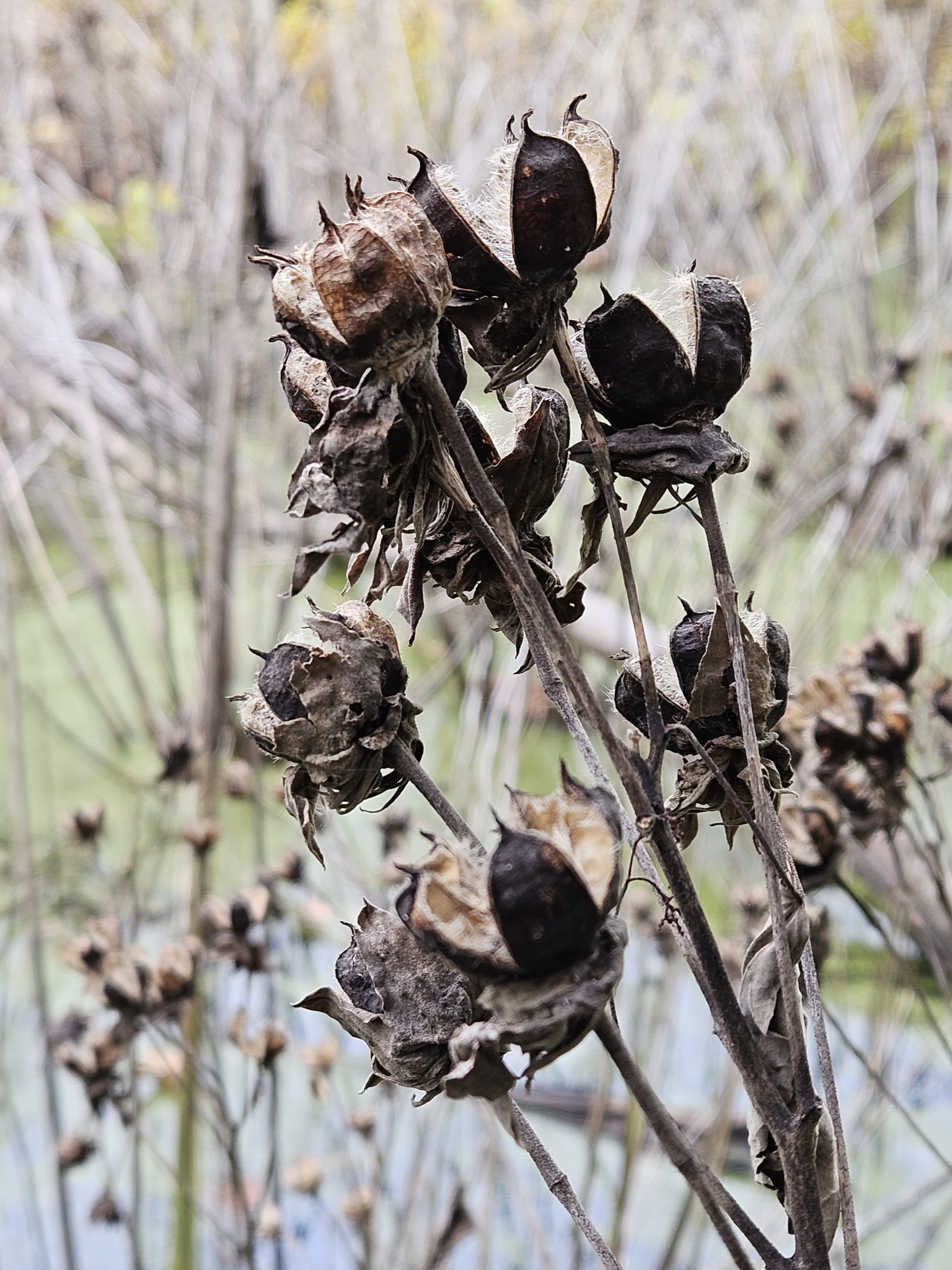
Spring brings several annual stems from the underground woody crown, and these grow rapidly as temperatures rise. Flowering extends through summer into early fall, sometimes continuing until the first frosts, depending on the cultivar and climate. 2 3
Bumblebees and the specialist solitary bee Ptilothrix bombiformis, adapted to the broad corollas of the Malvaceae, carry out most pollination. The plant also hosts the caterpillars of several butterflies and moths, including hawk moths. Holes in the leaves are therefore common and do not always indicate a pest problem that needs treatment. 8
At the end of the season, cold blackens the stems and kills them completely; they should then be cut back to about 10 cm (4 in) above the soil. Propagation is by seed, division of the crown in spring or nonflowering stem cuttings, with division the only method that faithfully reproduces a cultivar. 6 3
Uses and risks
Wet borders, pond margins and specimen plantings are the main ornamental settings for crimson-eyed rose-mallow, where few hardy perennials offer flowers on this scale. With thick mulch, its hardiness extends down to −28 °C (−18 °F), allowing cultivation far beyond its native range. 6 4
The ASPCA lists Hibiscus moscheutos as non-toxic to dogs and cats; its status in horses remains poorly documented in the available databases. Animals should still be monitored after eating a large amount of foliage, but the species is not listed among hibiscus that pose a toxicity risk. 5
The plant also attracts familiar mallow pests, including Japanese beetles, hibiscus bugs and aphids. These feed on foliage without endangering a well-established clump. Soil that dries between waterings causes leaf scorch followed by premature leaf fall, and is a more frequent cause of decline than all these pests combined. 3
Varieties, look-alikes and related plants
Modern horticultural selection has focused chiefly on reducing height and broadening flower colors. Summerific brings together compact cultivars, often below 1 m (3.3 ft), that flower in their first year after planting. Kopper King combines copper-tinted foliage with white flowers bearing a pronounced red eye; the older Southern Belle series retains flowers that can reach 25 cm (10 in) across. 4
Plants commonly confused with it include:
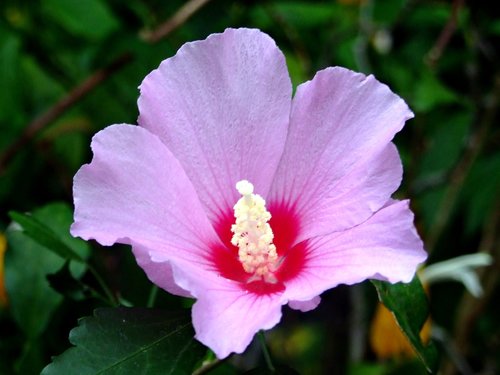
- Hibiscus syriacus, a woody shrub whose stems persist year-round and whose flowers are much smaller;
- Hibiscus coccineus, with deeply divided, finger-like leaf lobes, often confused with it when young;
- Hibiscus rosa-sinensis, grown in pots in temperate climates and unable to withstand frost.
Winter behavior is the quickest check and is more reliable than leaf shape. A stem that persists and becomes increasingly woody over successive years does not belong to Hibiscus moscheutos, whose entire aboveground growth dies each winter.
Main sources
- Plants of the World Online / Kew, Hibiscus moscheutos L.
- Royal Horticultural Society, Hibiscus moscheutos details
- NC State Extension, Hibiscus moscheutos plant toolbox
- Missouri Botanical Garden, Plant Finder — Hibiscus moscheutos
- ASPCA, Toxic and Non-Toxic Plants — Hibiscus
- Au Jardin Info, swamp hibiscus — Hibiscus moscheutos
- USDA PLANTS Database, Hibiscus moscheutos plant profile (HIMO)
- Wikipedia (en), Hibiscus moscheutos
Frequently asked questions
Why has my crimson-eyed rose-mallow not come back in spring?
Crimson-eyed rose-mallow often emerges later than most other perennials. Before deciding the crown has died, wait until mid- to late spring and gently scrape back a little soil to check for buds.
Is crimson-eyed rose-mallow poisonous to cats and dogs?
No. The ASPCA lists crimson-eyed rose-mallow as non-toxic to dogs and cats; its status in horses remains poorly documented. Seek veterinary advice if symptoms or concern arise after exposure.
How does Hibiscus moscheutos differ from Hibiscus syriacus?
Hibiscus syriacus is a woody shrub whose stems persist year-round, whereas Hibiscus moscheutos is an herbaceous perennial whose stems die each winter. The flowers of moscheutos are also much larger.
Does crimson-eyed rose-mallow need wet soil?
Yes. Moisture is the most important requirement. Native to marshes and riverbanks, the species tolerates waterlogged soil but fares poorly in a growing medium that regularly dries out between waterings.
How long does a crimson-eyed rose-mallow flower last?
Just one day, occasionally two. The plant makes up for this short life by opening new flowers every morning throughout summer, giving the impression of continuous bloom.
What pollinates crimson-eyed rose-mallow?
Its most effective pollinators are bumblebees and the specialist solitary bee Ptilothrix bombiformis, which is adapted to the broad flowers of the Malvaceae.
Similar plants
If you are unsure about a plant’s toxicity, ask a botanist or veterinarian for advice.