
Rose of Sharon (Hibiscus syriacus, )
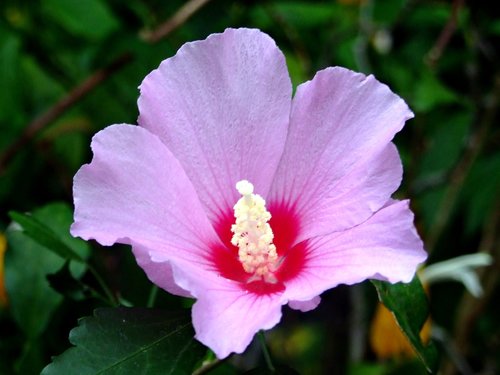
Rose of Sharon (Hibiscus syriacus) is a deciduous shrub in the Malvaceae family, native to southern China and Taiwan. Its large, funnel-shaped flowers appear from midsummer into fall, when few other shrubs are still blooming, and the plant is highly cold hardy.
Read moreRose of Sharon, Shrub althea, Syrian ketmia, Rose mallow, Korean rose and Mugunghwa

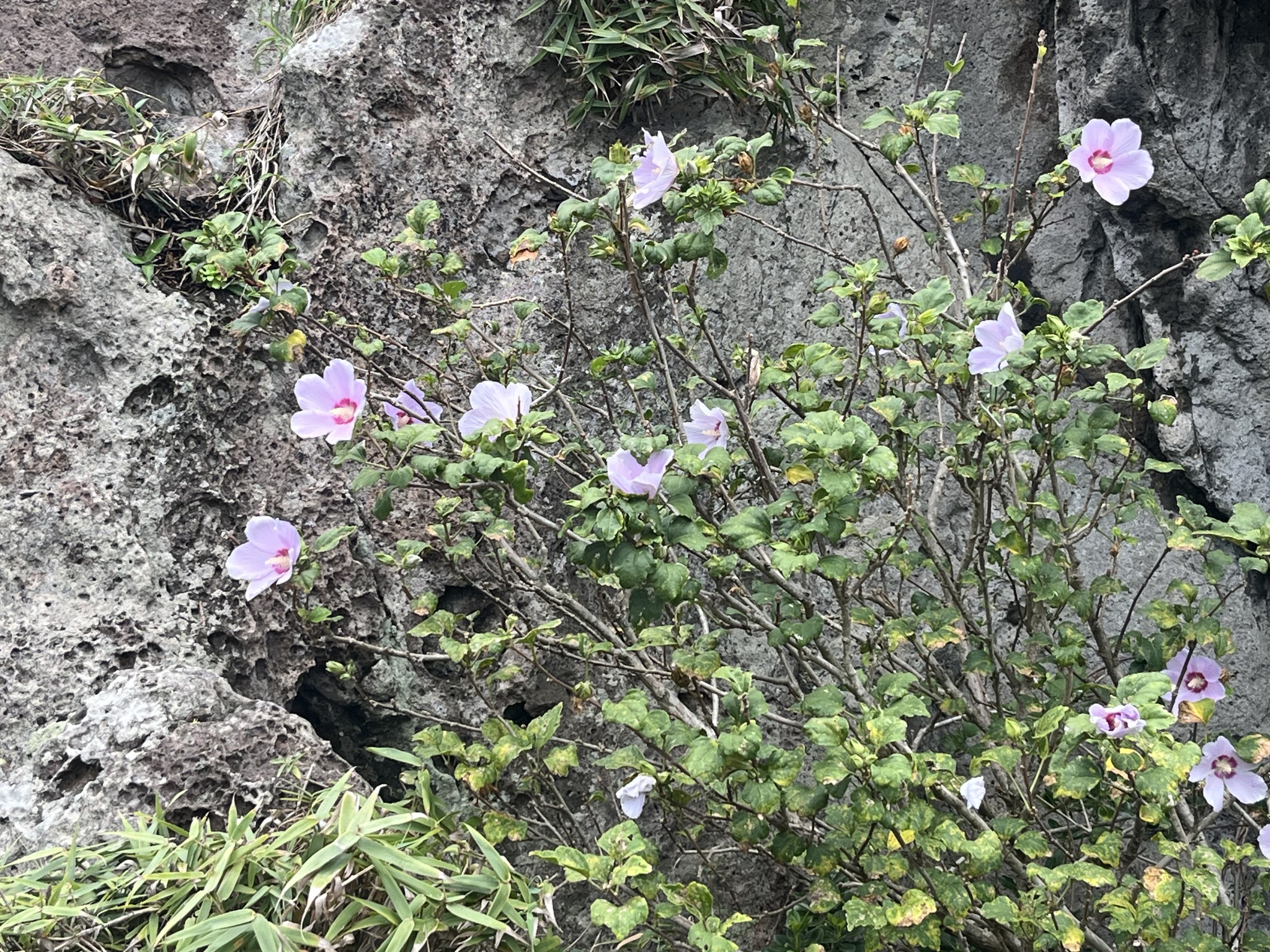


© photo
(c) Kai Yan, Joseph Wong, some rights reserved (CC BY-NC-SA) · cc-by-nc-sa
Meng-Ying Tsai · cc0
Ken Kneidel · cc0
Taken Sep 2, 2021 by Meyer Gerhard (cc-by-sa)
Taken Sep 10, 2022 by John Sycorax (cc-by-sa)
Taken Sep 8, 2022 by John Sycorax (cc-by-sa)
Taken Jul 23, 2020 by nbx (cc-by-sa)
Taken Sep 12, 2022 by Jacques Zuber (cc-by-sa)
© copyright of the Board of Trustees of the Royal Botanic Gardens, Kew.




Global distribution
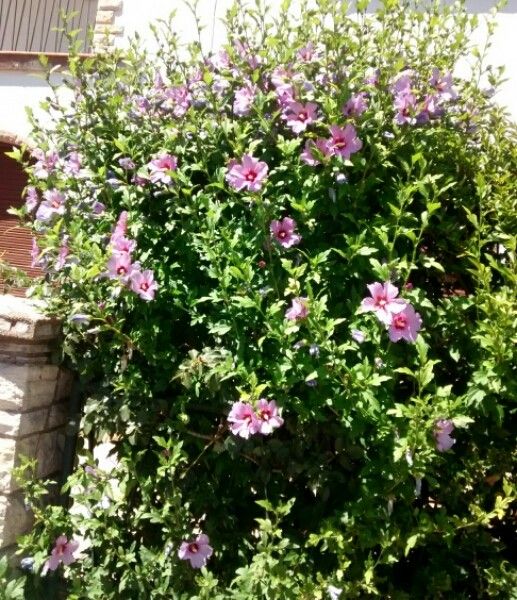
Hibiscus syriacus is native to southern China and Taiwan. It has been cultivated for centuries far beyond that range, particularly in Korea, where its long horticultural history made it a national symbol, and more widely in temperate gardens in Europe and North America.
- Native2
- Introduced2
- China
- Taiwan
- South Korea
- United States
Hexagons: regions where the plant occurs. Green dots: native range.1
Identity
Rose of Sharon (Hibiscus syriacus L., 1753), also known as shrub althea, Syrian ketmia, rose mallow or Korean rose, is a deciduous shrub in the genus Hibiscus, family Malvaceae, under the classification accepted by POWO. Its epithet syriacus does not identify its actual geographic origin. Linnaeus described it from plants cultivated in Syrian gardens, while its native range lies in East Asia, between southern China and Taiwan. The scientific name records that historical association rather than a Syrian wild origin. 1 5
Koreans know the plant as Mugunghwa, South Korea's national flower since 1968. The word means “flower of eternity.” It appears in the national anthem, where the image of mugunghwa extends across the country's “three thousand ri.” Its cultural significance therefore reaches well beyond its role as a garden shrub. 7
Recognition
Upright, often multistemmed growth carries Rose of Sharon to 2.5–4 m (8–13 ft) tall with a similar spread. The alternate leaves have three lobes, coarsely toothed edges and three prominent veins radiating from the base. There is little notable fall color before they drop. Complete winter leaf loss distinguishes this species from evergreen Chinese hibiscus (Hibiscus rosa-sinensis), even when neither plant is flowering. 2 4
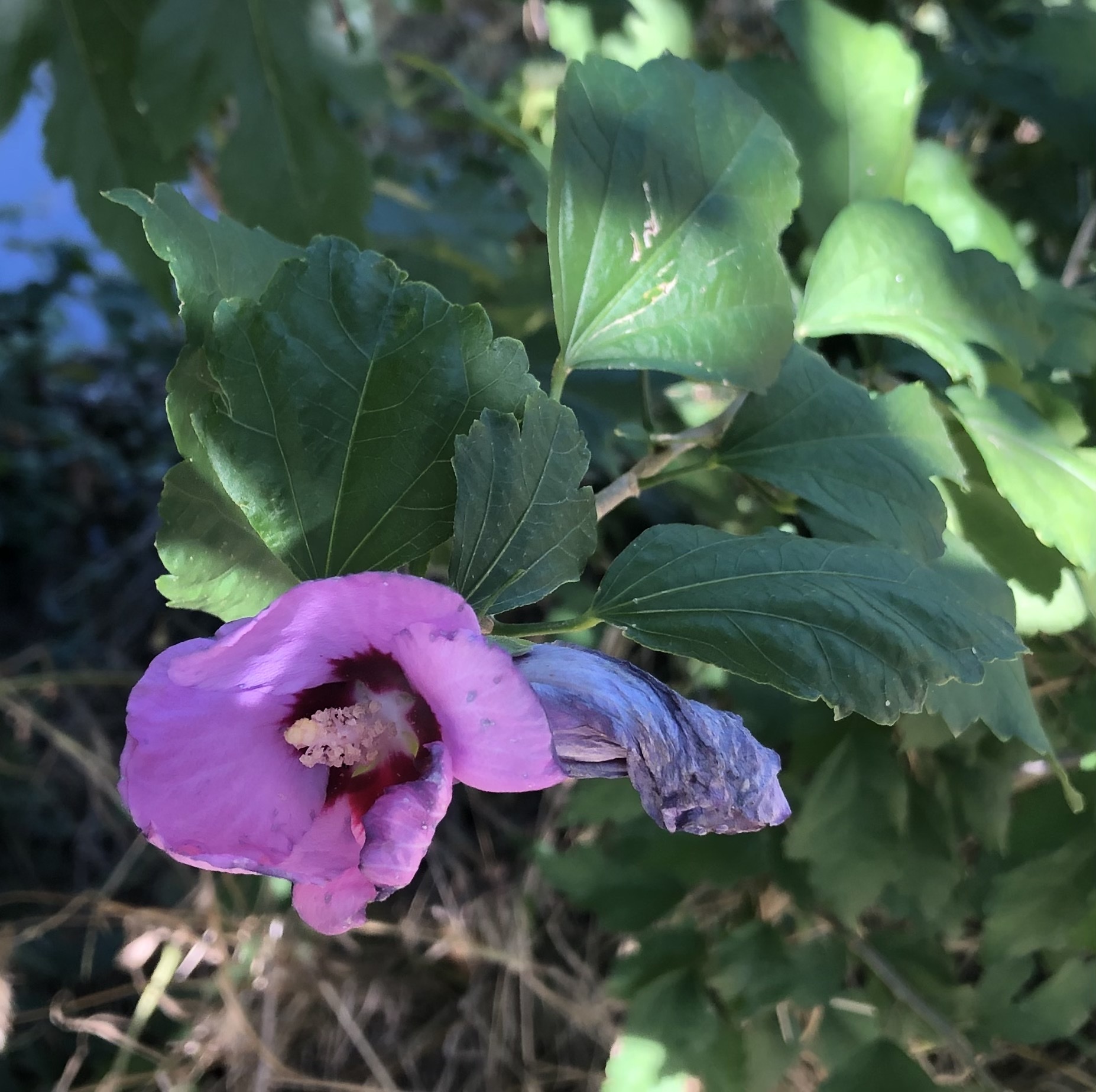
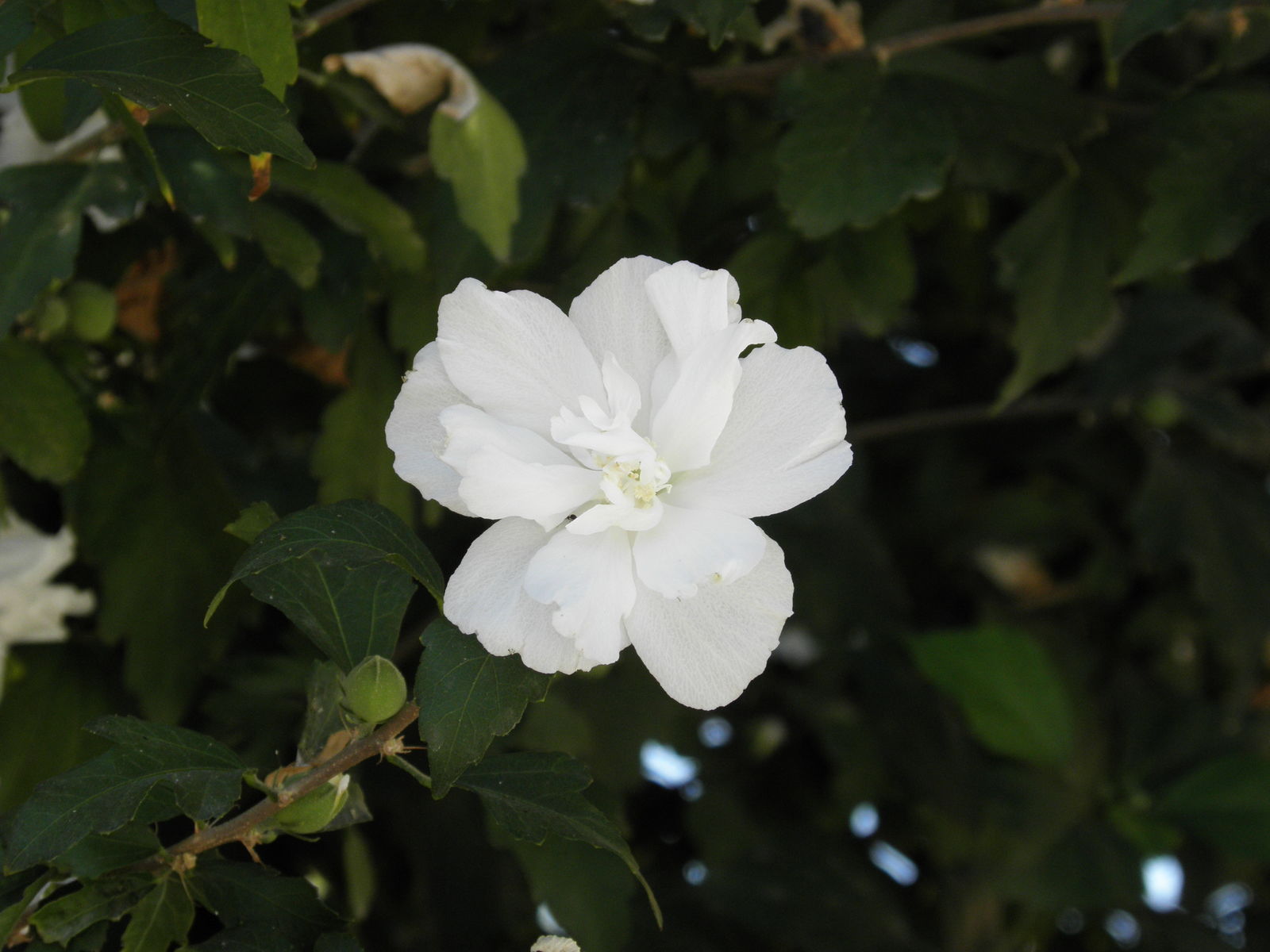
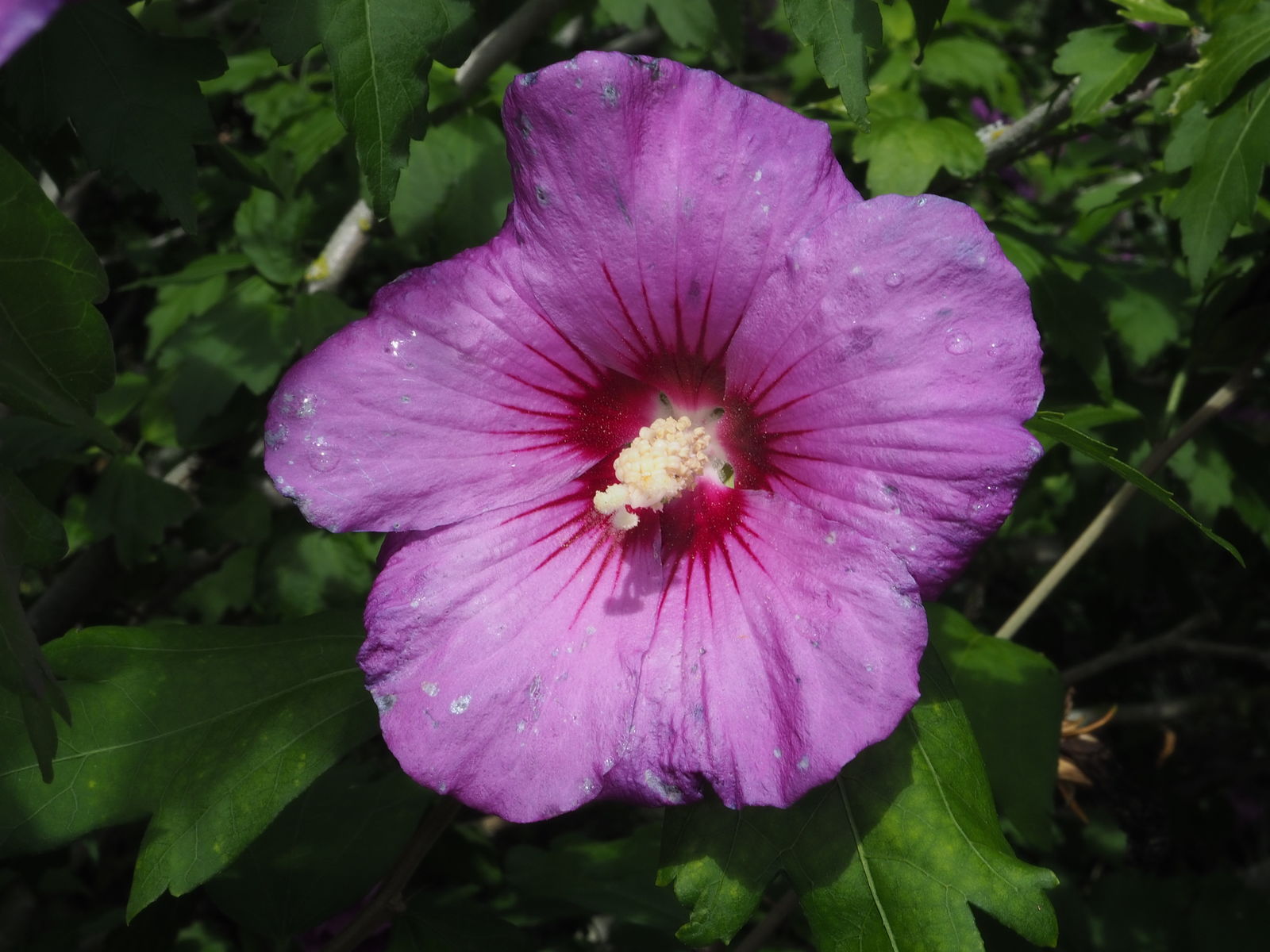
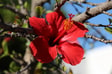
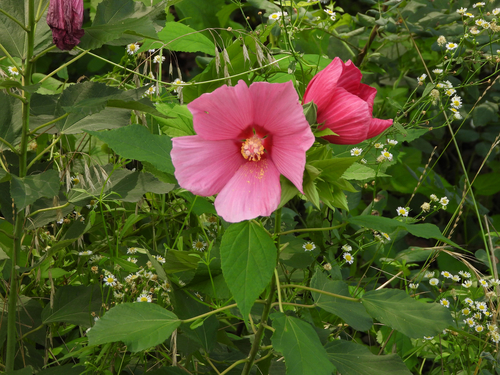
Solitary flowers arise in the leaf axils and open into broad funnels 6–10 cm (2.4–4 in) across. Five petals surround a prominent central staminal column. Cultivars may be white, pink, mauve or blue, often with a dark red eye. Each individual flower lasts only a day, but new buds keep the display going from midsummer into fall on the current season's growth, when relatively few other shrubs are still flowering. 4 5
Brown, dry fruits develop as five-chambered capsules and release numerous seeds in fall. A young plant without flowers is not necessarily incorrectly identified: the first blooms generally appear only after several growing seasons. Flowering age matters when judging a newly planted shrub. 5
Useful taxonomy
POWO recognizes Hibiscus syriacus L., published in 1753, within the Malvaceae. Over two centuries of cultivar selection have left the species with numerous botanical and horticultural synonyms, including these historical names: 1
Historical varieties of Rose of Sharon:
- Hibiscus syriacus var. purpureus Sweet
- Hibiscus syriacus var. albus Sweet
- Hibiscus syriacus var. totoalbus T.Moore
- Hibiscus syriacus var. chinensis Lindl.
Those varieties mainly describe flower colors: purple, white or pure white forms already established during the 19th century. Modern selection later replaced their horticultural role with registered cultivar names. The accepted scientific name, Hibiscus syriacus, remains a more reliable reference than these old varietal epithets when checking the identity of a plant. 1
Habitat and range
Southern China and Taiwan hold the native range of Hibiscus syriacus, where it grows on hillsides and at forest edges. Cultivation has carried it well beyond that area for centuries. In Korea especially, its long horticultural history and symbolism have made it a national emblem as well as an ornamental plant. A long history in cultivation should not be confused with native status. 1 7
Garden introductions brought Rose of Sharon to Europe and later North America as a shrub for hedges and borders. It tolerates heat, summer humidity and many soils, including poor or clay-rich ground. In temperate regions with long, humid summers, such as the southeastern United States, seeds from the capsules germinate readily. Seedlings may then appear spontaneously around the parent shrub, rather than only where a gardener deliberately sows them. 3 5
Life cycle and reproduction
A pronounced winter dormancy shapes this shrub's annual cycle. Leaves fall in autumn, the branches remain bare through winter, and spring growth often starts later than in other woody plants. Flowers form on the current year's wood. This explains the preference for late-winter pruning, which encourages larger flowers the following summer, rather than cutting in fall. Late leaf emergence is part of its normal seasonal rhythm. 5 2
Propagation in nurseries usually uses semi-ripe cuttings taken in summer, or more mature wood cuttings in fall. Seed can reproduce botanical forms, but it does not preserve a named cultivar's flower color as faithfully as a cutting. A rooted young plant generally needs several growing seasons before its first flowers. Choosing cuttings therefore helps retain the desired cultivar while still allowing for a juvenile period before flowering begins. 5
Uses and risks
Hedges, sunny borders and specimen planting are its principal ornamental uses. Rose of Sharon can be left informal, clipped into a hedge, trained as a small tree or grown as an espalier against a well-exposed wall. Its cold hardiness is another major attraction: it withstands temperatures around −20 °C (−4 °F), corresponding to USDA zones 5–9. These winter tolerances help distinguish it from tender hibiscus sold for warmer conditions. 2 3
Flowers and young leaves are edible raw or cooked, with a mild flavor and mucilaginous texture resembling that of other members of the mallow family. Some East Asian cuisines use them in infusions or salads. For animal safety, the ASPCA lists Hibiscus syriacus as non-toxic to cats, dogs and horses. This assessment concerns the identified species rather than every plant sold under a general hibiscus name. 5 6
Varieties, look-alikes and related plants
Named cultivars offer distinct combinations of foliage and flower color, many recognized by the Royal Horticultural Society. Diana has pure white flowers that stay open at night. Woodbridge is mauve-pink with a red eye, while Oiseau bleu is blue-violet with a red eye. Hamabo has veined pale pink flowers with a crimson center. Meehanii combines white-variegated leaves with pale mauve flowers. 2 8
Other large-flowered Malvaceae can cause confusion:
- Hibiscus rosa-sinensis, Chinese hibiscus, is evergreen and frost tender, unlike hardy, deciduous Rose of Sharon;
- Hibiscus mutabilis has flowers that change from white to pink during the day;
- Malva and Lavatera include shrubs and perennials with smaller flowers and less woody growth.
Late flowering from midsummer into fall and complete winter leaf loss usually resolve the identification. Most similar mallows do not share the same late display, while the bare winter branches immediately separate Rose of Sharon from evergreen Chinese hibiscus.
Main sources
- Plants of the World Online / Kew, Hibiscus syriacus L.
- Royal Horticultural Society, Hibiscus syriacus plant profile
- NC State Extension Gardener Plant Toolbox, Hibiscus syriacus
- Missouri Botanical Garden, Hibiscus syriacus Plant Finder entry
- Plants For A Future, Hibiscus syriacus
- ASPCA, Rose of Sharon toxic and non-toxic plants entry
- Ministry of the Interior and Safety of Korea, national flower Mugunghwa
- Royal Horticultural Society, Hibiscus syriacus Hamabo cultivar page
Frequently asked questions
Is Rose of Sharon toxic to cats and dogs?
No. The ASPCA lists Hibiscus syriacus as non-toxic to cats, dogs and horses, unlike some other ornamental garden plants.
Why is it called Hibiscus syriacus if it is not native to Syria?
Linnaeus described the species from plants cultivated in Syrian gardens in the 18th century. Its actual native range is in East Asia, in southern China and Taiwan.
How does Rose of Sharon differ from Chinese hibiscus?
Rose of Sharon (Hibiscus syriacus) is deciduous and hardy to about −20 °C (−4 °F). Chinese hibiscus (Hibiscus × rosa-sinensis) is evergreen, frost tender and mostly grown indoors in temperate climates.
When should I prune Hibiscus syriacus?
Prune in late winter before buds open, because flowers develop on the current year's growth. Fall pruning unnecessarily removes wood that will carry the future flowering shoots.
How cold hardy is Hibiscus syriacus?
The shrub tolerates cold around −20 °C (−4 °F), with a USDA hardiness range of zones 5–9. It can be grown without protection in nearly all of metropolitan France; use local winter conditions when assessing another region.
Are Rose of Sharon flowers edible?
Yes. The flowers and young leaves can be eaten raw or cooked, with a mild flavor and mucilaginous texture. They are used in herbal infusions and salads in East Asia.
Why is Hibiscus syriacus a national symbol of South Korea?
Known as mugunghwa, it was designated the national flower of South Korea in 1968. It symbolizes eternity and appears in the Korean national anthem.
Similar plants

If you are unsure about a plant’s toxicity, ask a botanist or veterinarian for advice.