
Eastern redcedar (Juniperus virginiana, )
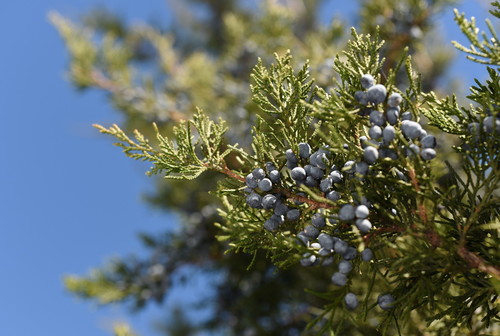
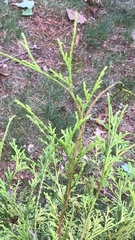
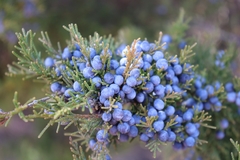
Eastern redcedar (Juniperus virginiana) is a dioecious conifer in the Cupressaceae, native to eastern North America. A pioneer of abandoned land and neglected grassland, it has two leaf forms, small powder-blue berry-like cones and aromatic wood long used for pencils.
Read moreEastern redcedar, Eastern red cedar, Red cedar and Pencil cedar



© photo
(c) Steven Severinghaus, some rights reserved (CC BY-NC-SA) · cc-by-nc-sa
iNaturalist User · cc0
Mark G · cc0
Taken Aug 24, 2014 by Tela Botanica − Yoan MARTIN (cc-by-sa)
Taken May 24, 2010 by EOL − Robert Gundy Reptiluvr@yahoo.com (cc-by-nc-sa)
Taken Oct 9, 2022 by Poveda Octey (cc-by-sa)
© copyright of the Board of Trustees of the Royal Botanic Gardens, Kew.




Global distribution
Juniperus virginiana is native to eastern North America, from southeastern Canada to the Gulf of Mexico east of the Great Plains, with an isolated extension into Coahuila, Mexico. Farther west, Juniperus scopulorum replaces it; to the southwest, Juniperus ashei takes its place.
- Native3
- United States
- Canada
- Mexico
Hexagons: regions where the plant occurs. Green dots: native range.1
Identity
Eastern redcedar (Juniperus virginiana L., 1753) is a conifer in the Cupressaceae, native to eastern North America and hardy in USDA zones 2–9. Despite its name, it belongs to a different botanical group from true cedars, Cedrus. English settlers compared its reddish, fragrant wood with that of Mediterranean cedars, giving rise to the common name. 7 1
The alternative name Pencil cedar recalls a former industrial use: until the middle of the twentieth century, its soft, easily sharpened heartwood supplied most pencils manufactured in the United States. 2
Recognition
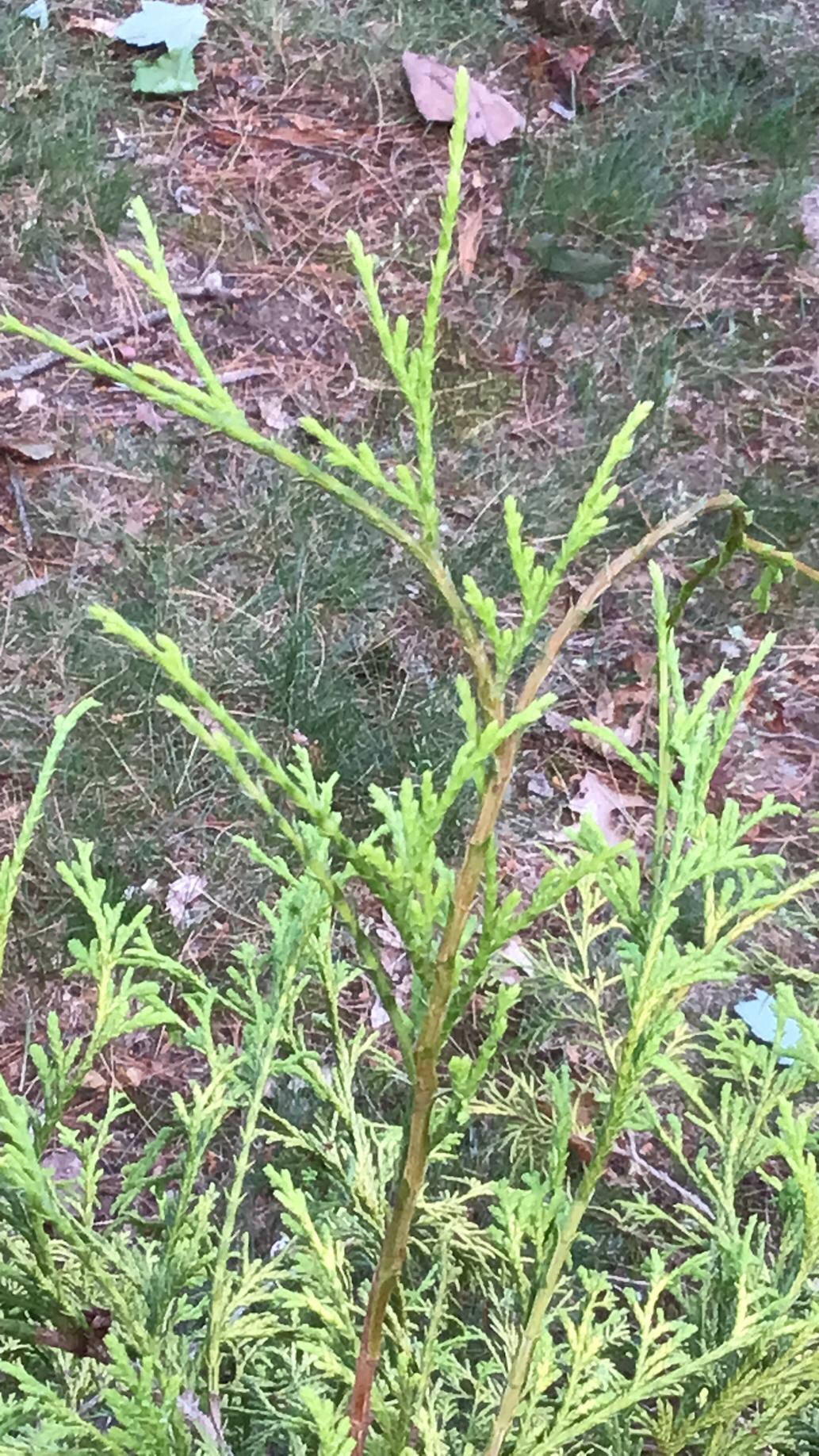
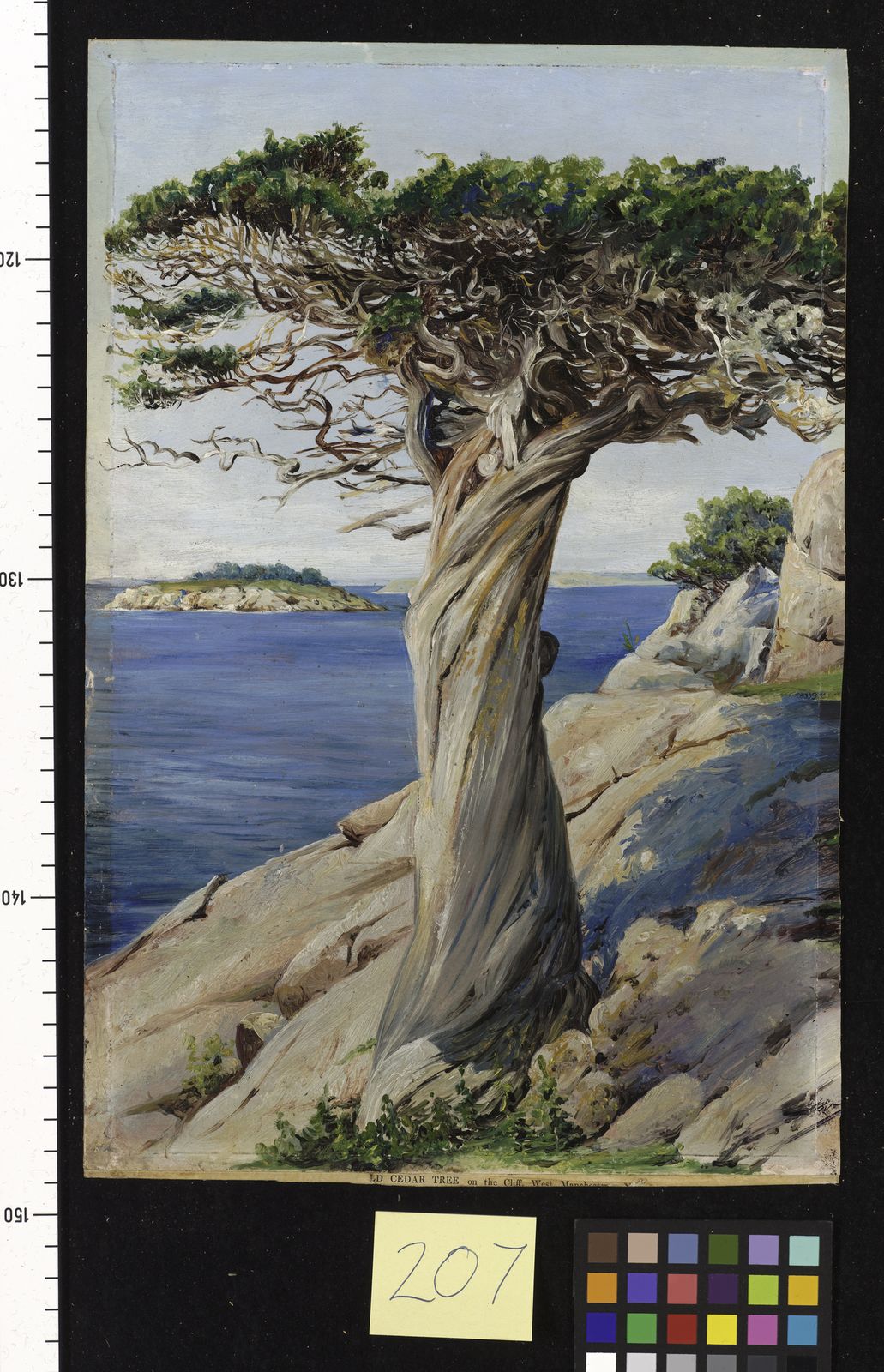
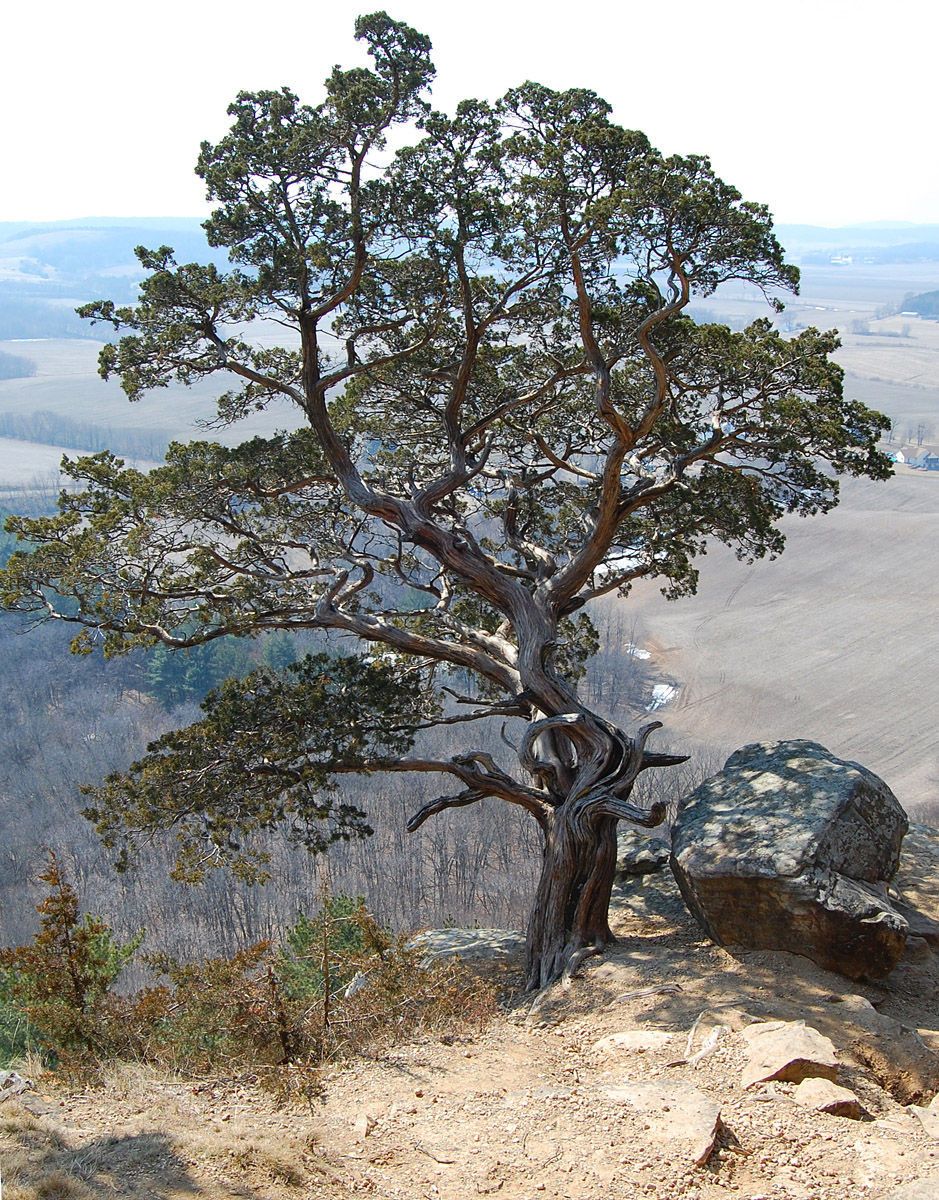
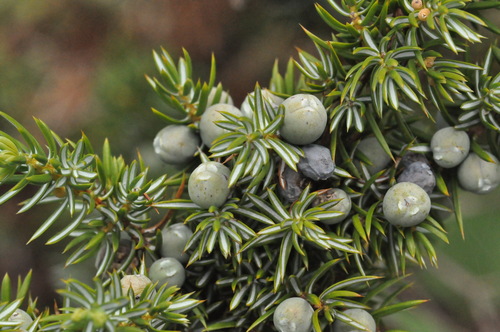
An established Juniperus virginiana typically reaches 5–20 m (16–66 ft) tall, with a trunk 30–100 cm (12–39 in) across in old specimens. Its foliage is dimorphic: seedlings and shaded shoots carry sharp needles 5–10 mm long, while adult trees develop opposite, closely pressed scales 2–4 mm long, giving the crown its dense, bluish appearance. 6 7
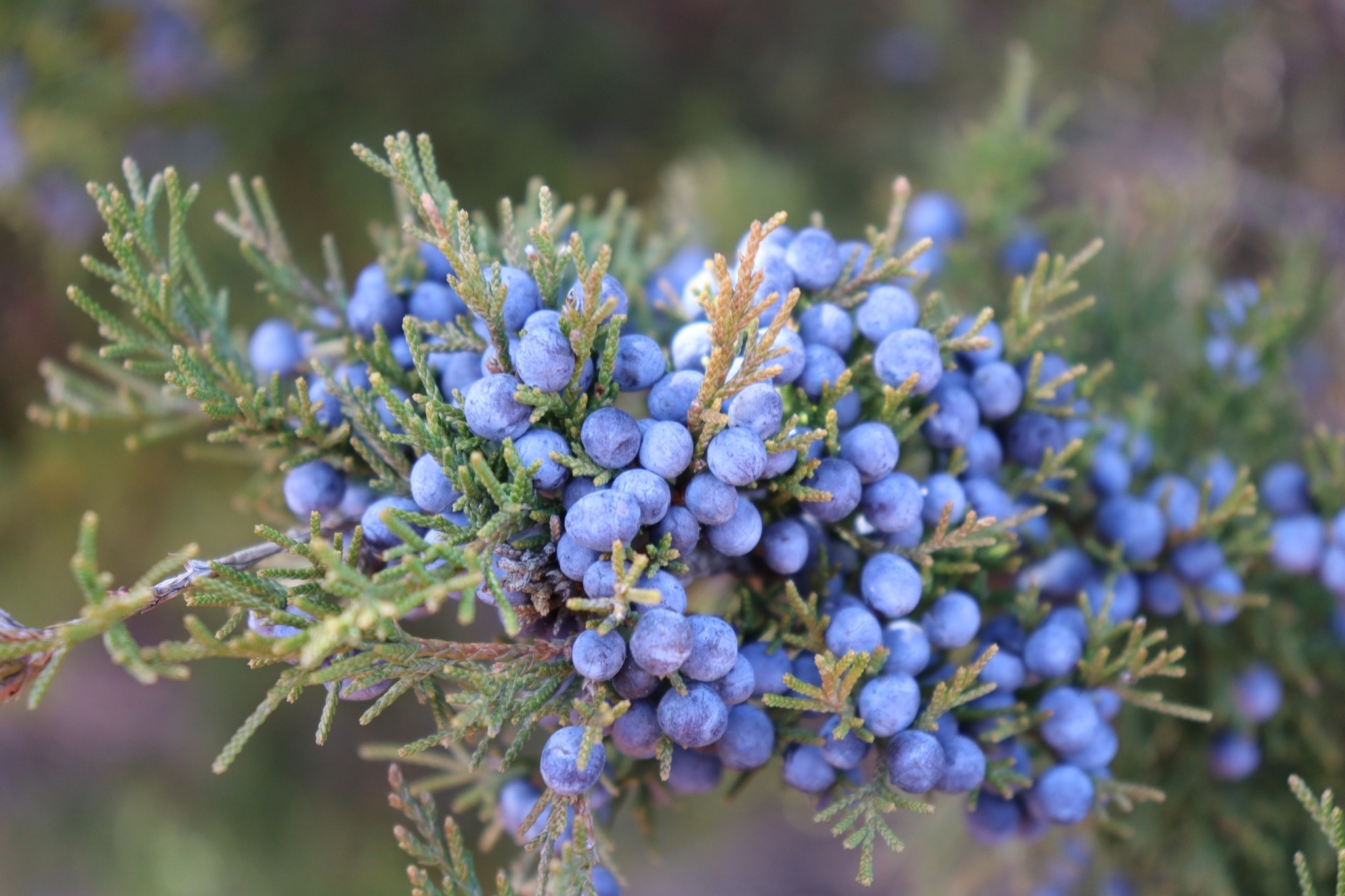
Reddish-brown bark peels into long fibrous strips, providing a useful identification feature outside the growing season. The species is dioecious: tiny male cones shed highly allergenic pollen in late winter, while the berry-like female cones measure 3–7 mm and turn blue-purple beneath a waxy bloom when ripe, after 6–8 months. 6
Useful taxonomy
The accepted name, Juniperus virginiana L., encompasses a broad horticultural and botanical synonymy. Useful names to recognize include:
- Juniperus virginiana var. virginiana, the typical variety, widespread inland
- Juniperus virginiana var. silicicola (Small) J.Silba, a coastal form of the southeastern Atlantic and Gulf coasts, sometimes treated as a separate species
- Juniperus virginiana var. bermudiana (L.) Vasey, another name in the synonymy
- Juniperus foetida var. virginiana (L.) Spach, a historical combination
The varieties virginiana and silicicola hybridize extensively where their ranges overlap. This helps explain why some regional floras treat Juniperus virginiana as a single species with a broad ecological range. 1 7
Habitat and range
Across eastern North America, its native range runs from southeastern Canada to the Gulf of Mexico, east of the Great Plains, with an isolated extension into Coahuila, Mexico. Farther west, Juniperus scopulorum replaces it; to the southwest, Juniperus ashei takes its place. 1 7
As a pioneer, Eastern redcedar is among the first trees to colonize neglected grassland, old pastures and bare limestone ledges. Birds play a major role: cedar waxwings eat large quantities of its berry-like cones, and seeds that pass through their digestive systems germinate about three times as successfully as those remaining on the tree. 7 6
Frequent prairie fires normally hold this fire-sensitive tree in check. Low branches touching the ground act as a ladder, allowing flames to engulf the whole tree. A century of fire suppression has reversed that balance, and Juniperus virginiana now spreads across large parts of the Great Plains, changing grassland bird communities. 6
Life cycle and reproduction
Late-winter flowering takes place on separate male and female trees. Abundant pollen from the male cones is among the most potent respiratory allergens in North American vegetation at that time of year. 7
A pollinated female tree produces berry-like cones that ripen in 6–8 months, each containing one to four seeds. Winter stratification and passage through birds break seed dormancy, so natural germination is spread over several seasons rather than occurring all at once. 6
Horticulturists use semi-ripe shoot cuttings to reproduce cultivars faithfully. Slower propagation from seed produces variable offspring and supports genetic diversity, useful for conservation plantings and windbreaks. 4 5
Uses and risks
Pink to reddish-brown heartwood is light and durable even in contact with soil. It supplied most wooden pencils until available stocks dwindled around the 1940s, after which incense cedar, Calocedrus decurrens, replaced it. The same heartwood remains sought after for lining chests and closets because its scent repels moths. 7 2
Essential oil distilled from wood shavings contains alpha-cedrene, thujopsene and cedrol and is used in perfumery and insect repellents. The berry-like cones are eaten raw or cooked in small amounts, but their resinous taste is less popular than that of Juniperus communis, the standard species for flavoring gin. 4
Major toxicological databases classify Eastern redcedar as non-toxic to cats and dogs, although prolonged contact with sap or essential oil can irritate skin and mucous membranes. For fruit growers, another concern is its role as the obligate alternate host of cedar-apple rust, a fungal disease that needs this tree and an apple or pear tree to complete its life cycle. 5 6
Varieties, look-alikes and related plants
Named cultivars vary in habit and foliage color: Canaertii is columnar and dark green; Grey Owl is spreading and silvery-gray; Hillii is narrowly upright and turns purple-bronze in winter; and Burkii has a blue-green pyramidal crown. All four retain the typical species’ tolerance of limestone and drought. 3
Plants most likely to cause confusion include:
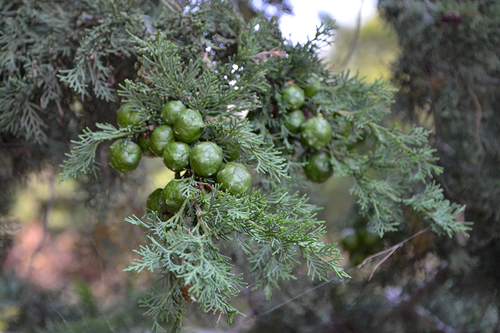
- Juniperus scopulorum, which replaces J. virginiana west of the Great Plains;
- Juniperus ashei, found in Texas and responsible for seasonal “cedar fever” in the southwestern part of the range;
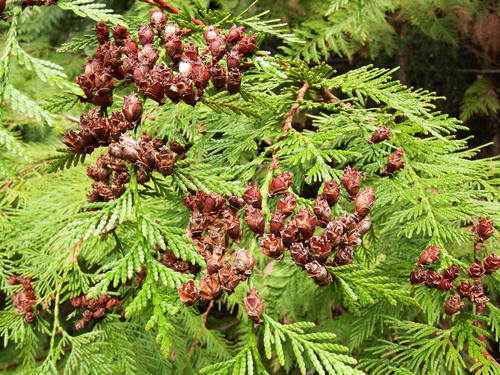
- Thuja occidentalis, whose flat foliage fans and woody, non-fleshy cones distinguish it clearly from a juniper on close inspection.
Cone shape is more reliable than foliage color when separating Eastern redcedar from Thuja occidentalis: the former has fleshy, berry-like cones, while the latter has dry, scaly cones. 7
Main sources
- Plants of the World Online / Kew, Juniperus virginiana L.
- Royal Horticultural Society, Juniperus virginiana (pencil cedar)
- Missouri Botanical Garden Plant Finder, Juniperus virginiana
- Plants For A Future, Juniperus virginiana
- NC State Extension Gardener Plant Toolbox, Juniperus virginiana
- USDA Forest Service, Fire Effects Information System, Juniperus virginiana
- Encyclopaedia Britannica, eastern red cedar
- IUCN Red List, Juniperus virginiana assessment
Frequently asked questions
Is Eastern redcedar really a cedar?
No. Despite its common name, Eastern redcedar belongs to Juniperus in the Cupressaceae. True cedars in the genus Cedrus, such as cedar of Lebanon, belong to a different botanical group.
Why was Eastern redcedar wood used for pencils?
Its soft, light, fragrant heartwood sharpens easily without splintering. It dominated pencil manufacturing until the 1940s, when dwindling supplies led to its replacement by incense cedar, Calocedrus decurrens.
Is Eastern redcedar toxic to cats and dogs?
Major toxicological databases classify the species as non-toxic to cats and dogs. However, its sap and terpene-rich essential oil can irritate skin or mucous membranes after prolonged contact.
Why can Eastern redcedar threaten apple trees?
The species is an obligate alternate host of cedar-apple rust, a fungus that needs both plants to complete its life cycle. Apple orchards therefore avoid planting it immediately nearby.
Why is Eastern redcedar spreading into American grasslands?
Without regular fires, this pioneer rapidly colonizes abandoned grasslands and pastures on the Great Plains. Beyond a certain level of cover, it changes the habitat enough to exclude many characteristic grassland birds.
Which plants resemble Eastern redcedar?
The closest look-alikes are Juniperus scopulorum and Juniperus ashei, junipers found to the west and southwest of its range, and Thuja occidentalis, which has distinctly flat foliage sprays and woody cones.
Are Eastern redcedar cones edible?
The fleshy cones can be eaten raw or cooked and are occasionally used as a seasoning. Their resinous flavor is less popular than that of Juniperus communis, the species traditionally used to flavor gin.
Similar plants
If you are unsure about a plant’s toxicity, ask a botanist or veterinarian for advice.