
giant crape myrtle (Lagerstroemia speciosa, )
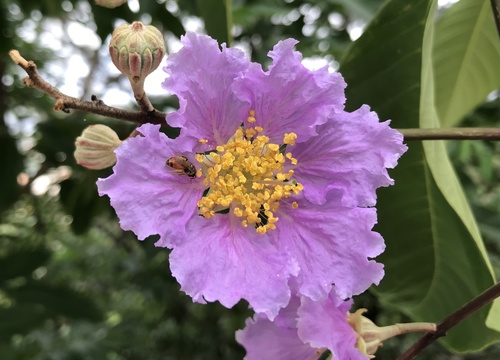
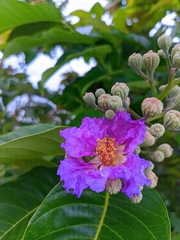
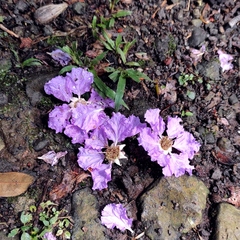
Giant crape myrtle (Lagerstroemia speciosa (L.) Martyn), also called banaba or jarul, is a large deciduous tree in the genus Lagerstroemia, family Lythraceae. Native to tropical Asia, from southern China to India and Melanesia, it is planted as a street tree for its broad pink to mauve flower panicles and harvested for leaves used as tea.
Read moregiant crape myrtle, banaba, jarul, pride of India, queen's crape myrtle and bungor
Place in full sun, with intense direct light all day long.


© photo
(c) Mark Roberts, some rights reserved (CC BY-NC), uploaded by Mark Roberts · cc-by-nc
HM Emon · cc-by
Abu Hamas · cc-by-nc
Taken Aug 29, 2019 by cassia cassiafistula (cc-by-sa)
Taken May 12, 2021 by Karl Ahnee (cc-by-sa)
Taken Nov 4, 2022 by Ibnu yusan (cc-by-sa)
Taken Apr 27, 2019 by Mamadou NIAMBÉLÉ (cc-by-sa)
Taken Jul 29, 2021 by Nalini Mohan Denduluri IFS., (cc-by-sa)
© copyright of the Board of Trustees of the Royal Botanic Gardens, Kew.




Global distribution
The native range of Lagerstroemia speciosa extends from southern Yunnan in China to India (Western Ghats, Assam, West Bengal), Myanmar, Thailand, Vietnam, Cambodia, Malaysia, Indonesia, the Philippines and Melanesia. Ornamental and medicinal cultivation has spread it much farther, to Australia and the Caribbean.
- Native5
- Introduced2
- India (Western Ghats, Assam, Bengal)
- Southern China (Yunnan)
- Myanmar, Thailand, Vietnam, Cambodia
- Malaysia, Indonesia, Philippines
- Melanesia
- Australia
- Caribbean
Hexagons: regions where the plant occurs. Green dots: native range.1
Identity
The giant crape myrtle (Lagerstroemia speciosa (L.) Martyn, 1798), also known as banaba or jarul, is a large deciduous tree in the genus Lagerstroemia, family Lythraceae. Plants of the World Online accepts this binomial. Thomas Martyn published the combination in 1798, based on Munchausia speciosa, published by Linnaeus in 1770. 1 5
Banaba is a Tagalog name for both the tree and the tea made from its leaves, now sold as an herbal preparation far beyond the Philippines. Other English names include pride of India and queen's crape myrtle; bungor is another established name. The old epithet flos-reginae, meaning “queen's flower,” survives in several nineteenth-century herbaria, where it already evoked the profusion of pink panicles. 3
Recognition
NC State describes a tree reaching 12–18 m (39–59 ft) in cultivation, with a broad, symmetrical habit. Some old wild trees grow taller. Wikipedia gives a typical height of about 15 m (49 ft), with a short crown and low trunk supporting a mature spread of 8–12 m (26–39 ft), often wider than the other large trees in the same street planting. 2 3
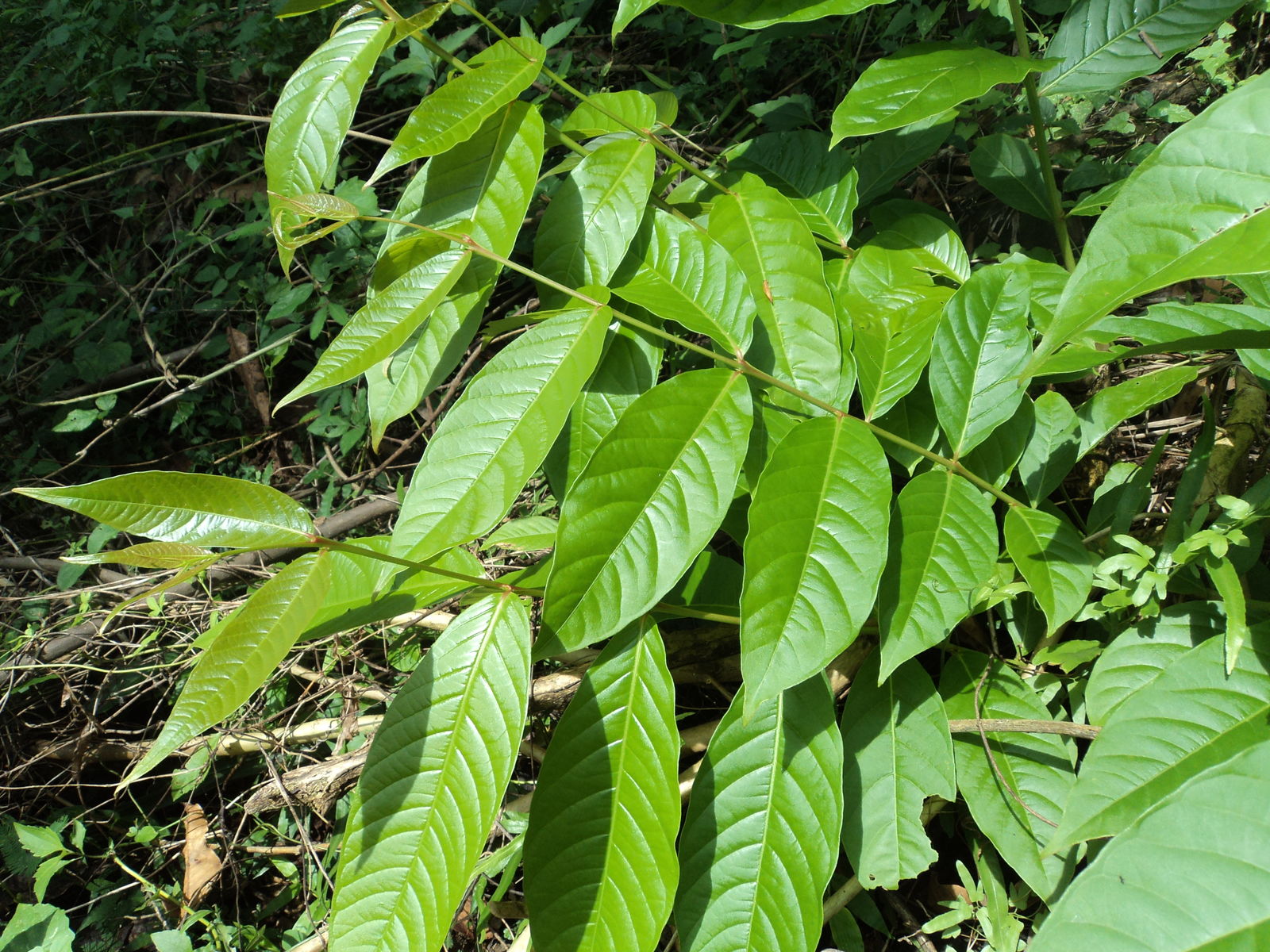
Outside the flowering season, the bark is the most reliable identifying feature, more consistent than flowers that last only a few weeks. Smooth, thin and pale gray to cream, it peels in patches and is easily injured by even minor mechanical impacts. The simple, elliptical leaves are 8–15 cm (3.1–5.9 in) long. They turn red before falling during the dry season, an unusual pattern for a tropical tree. 3
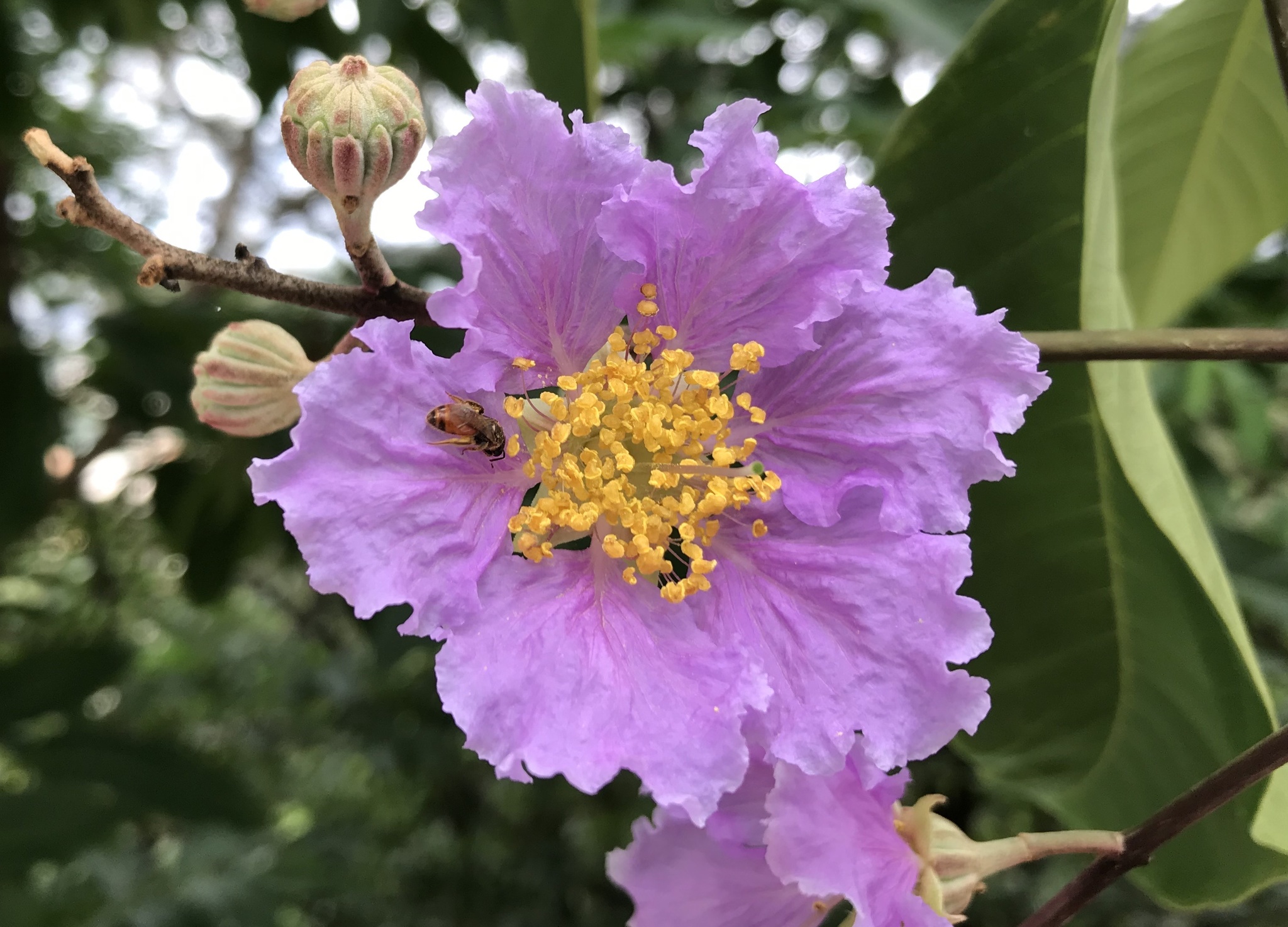
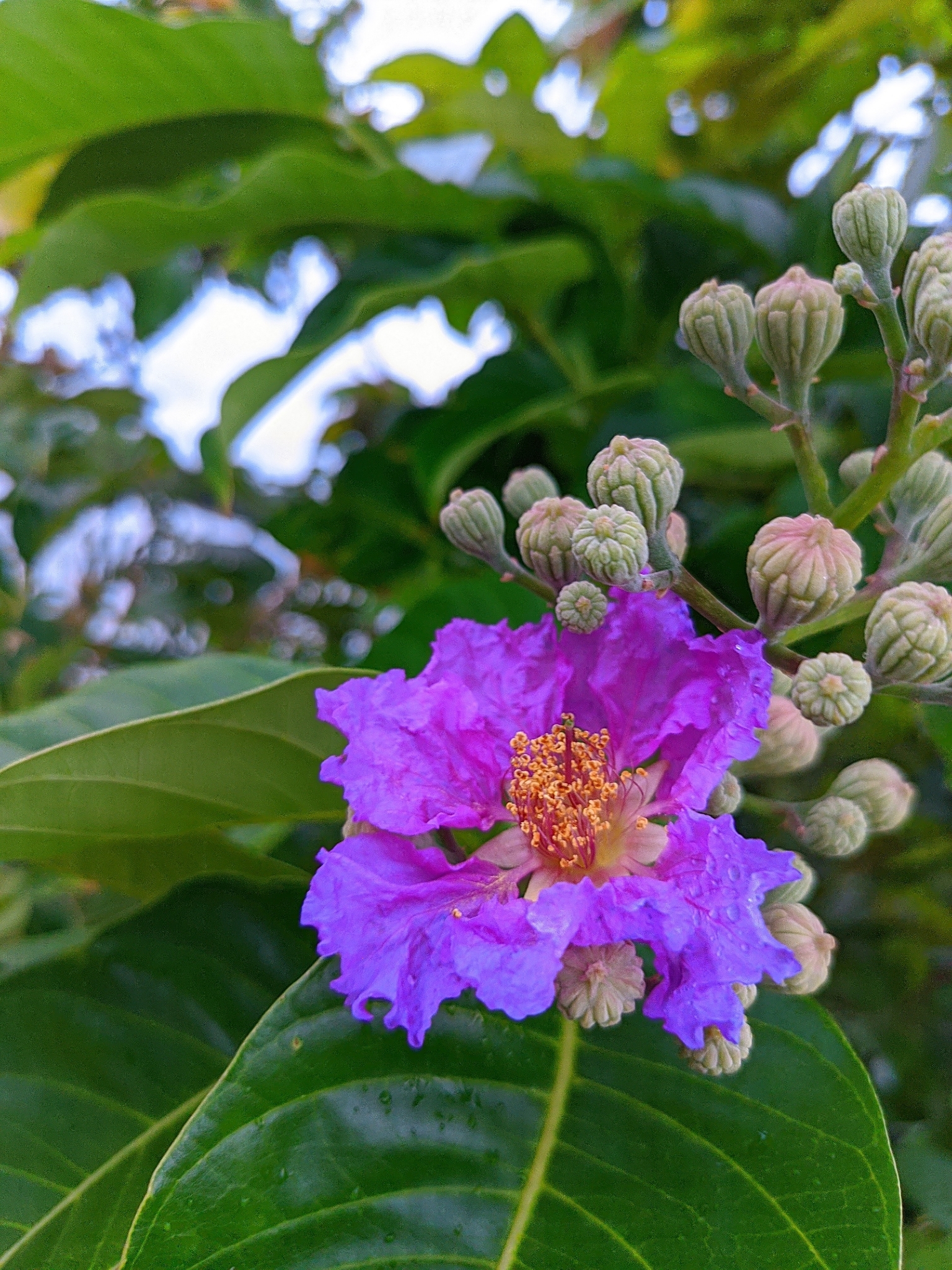
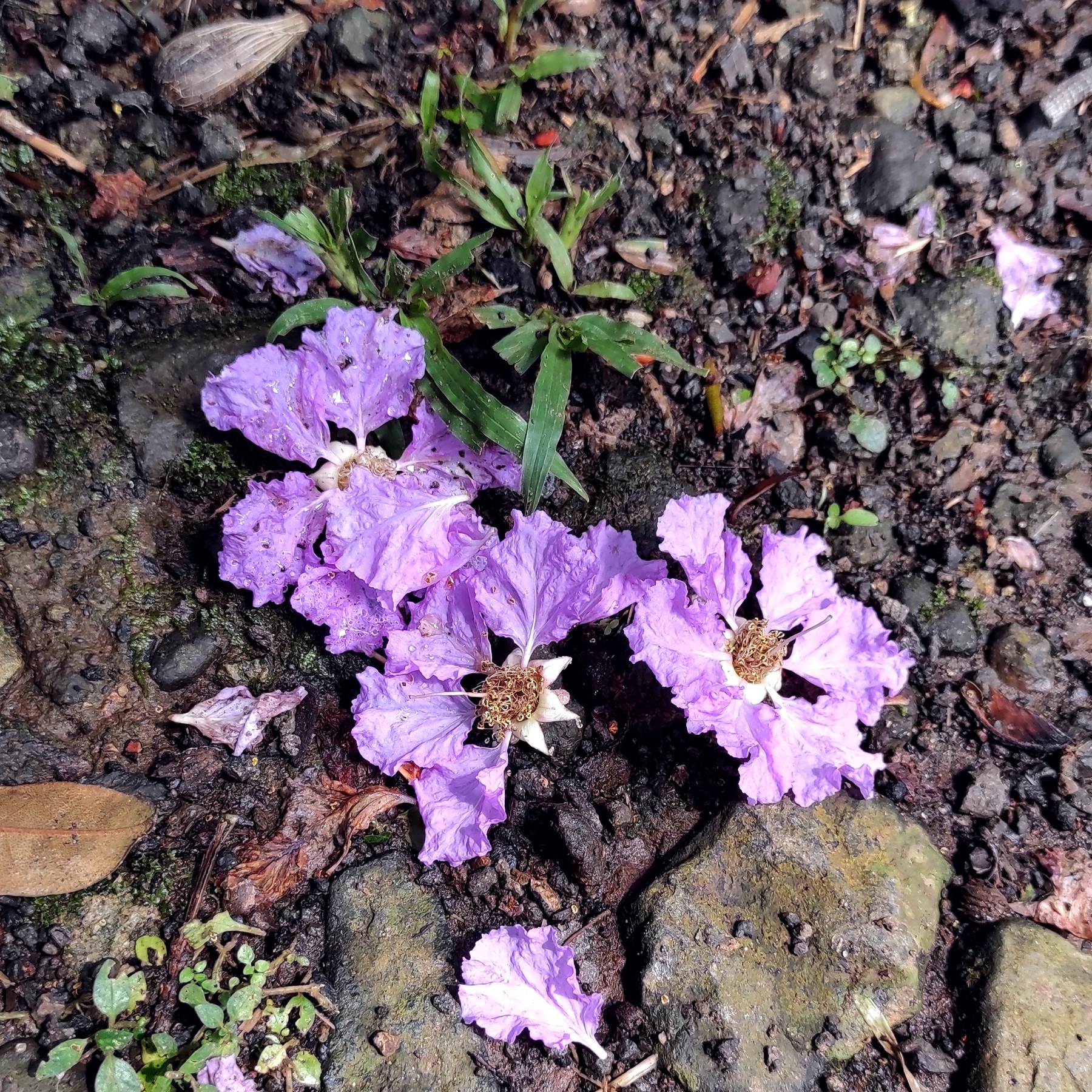
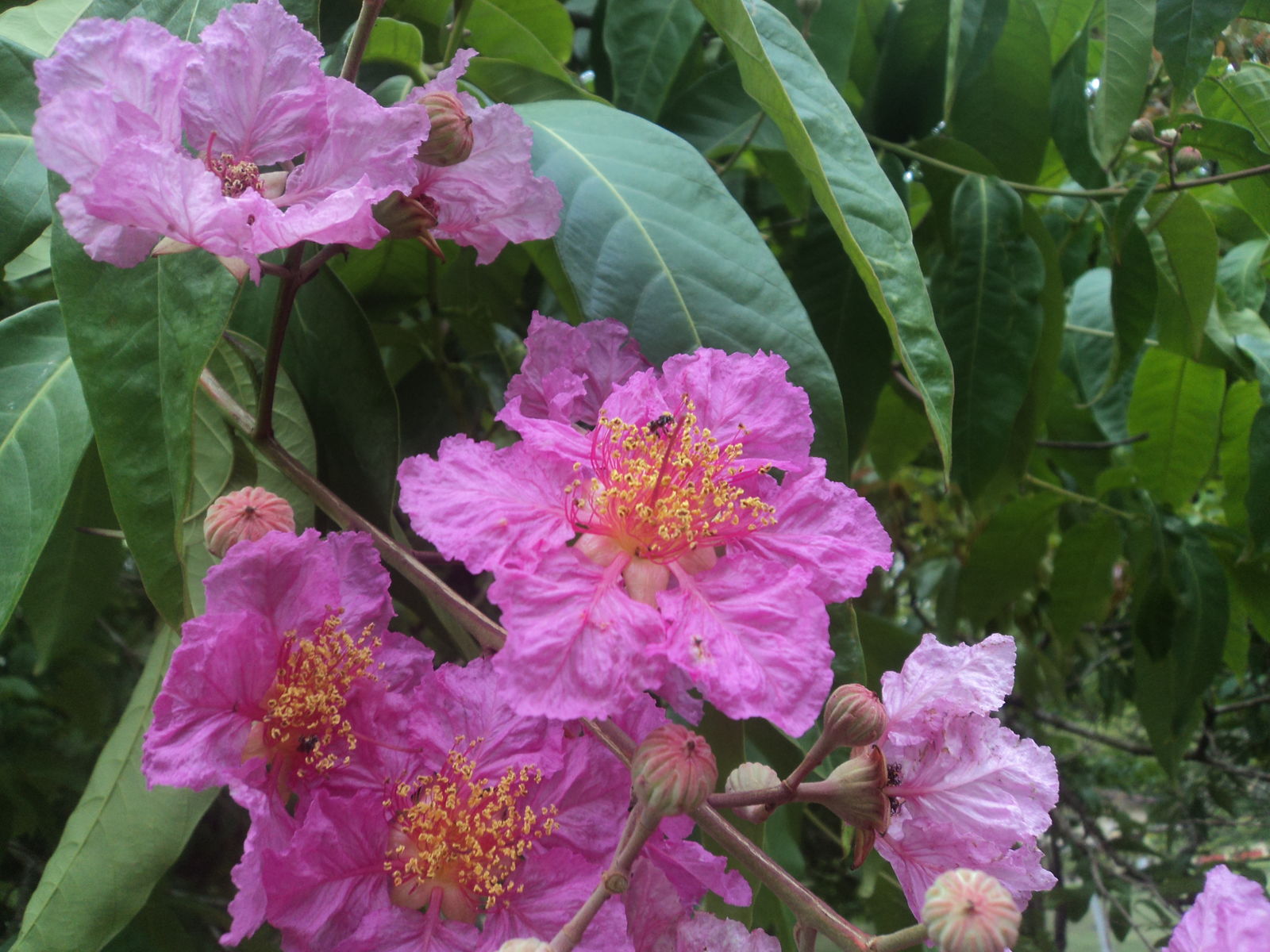
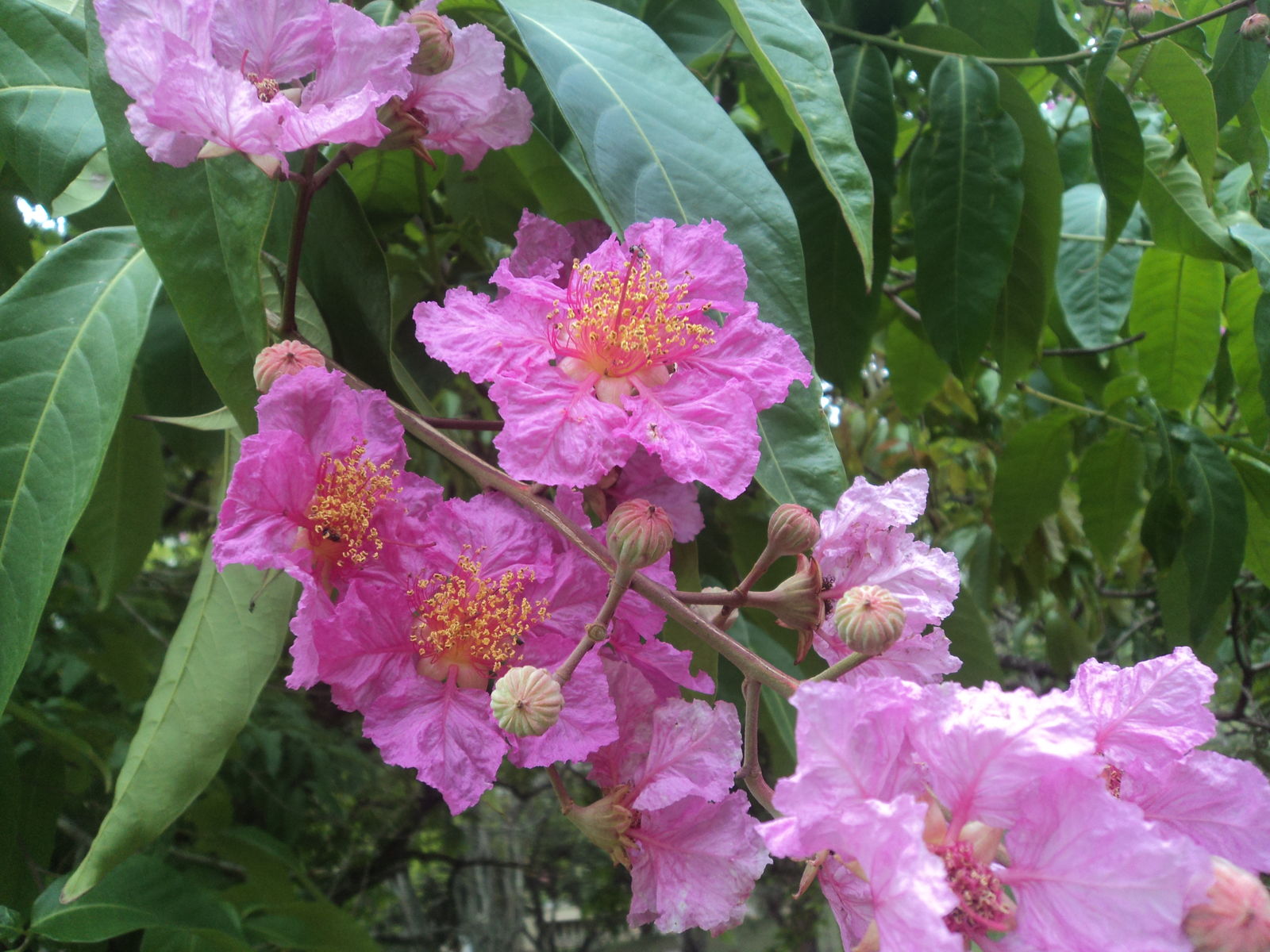
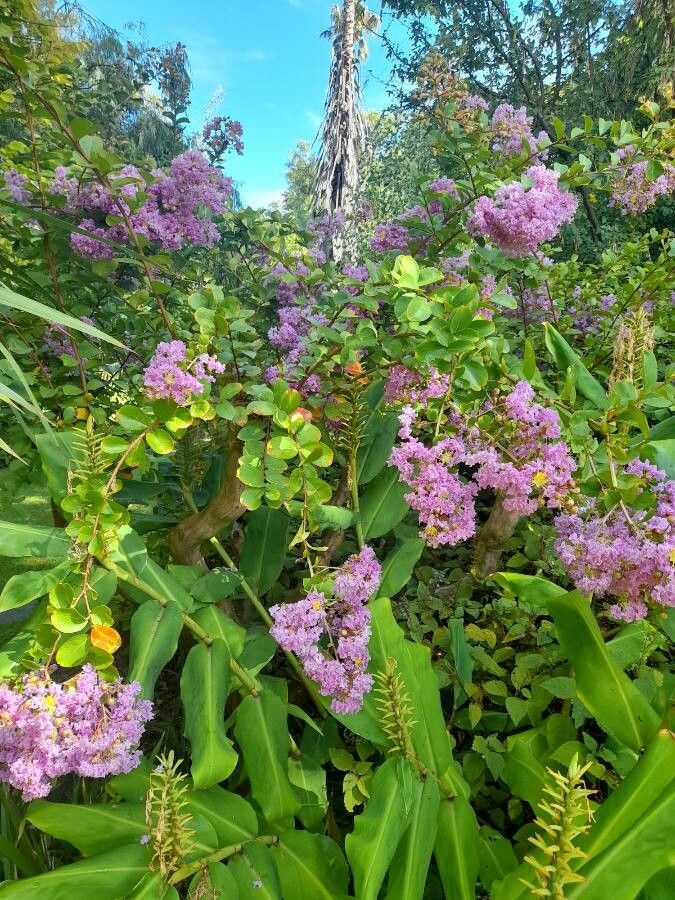
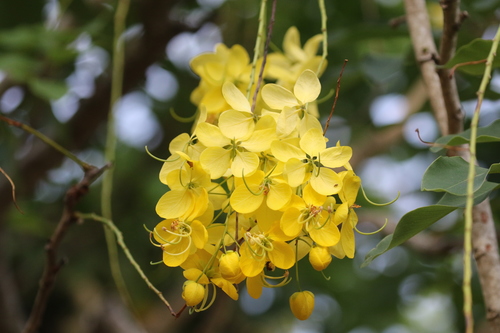
The flowers stand in broad, upright panicles 20–40 cm (7.9–15.7 in) long. Each has six crumpled petals 2–3.5 cm (0.8–1.4 in) long, ranging from vivid pink to pale mauve. The ensuing capsule is woody and oval, changing from green to brown and finally black when fully ripe; it often remains on the tree long after the flowers have fallen. 3
Useful taxonomy
POWO recognizes two subspecies within Lagerstroemia speciosa. The typical subspecies is by far the more common in horticulture. Lagerstroemia speciosa subsp. intermedia (Koehne) Deepu & Pandur. is restricted to southwestern Yunnan and Myanmar. Their differences are mainly floral and little documented outside regional floras. 1
Several historical names occur in botanical synonymy:
- Munchausia speciosa L., the basionym published by Linnaeus in 1770
- Lagerstroemia munchhausia L. ex Forsyth f., an illegitimate name
- Murtughas speciosa (L.) Kuntze
The genus also includes Lagerstroemia indica, a much smaller shrub or small tree hardy into temperate climates. Both species are sometimes called lilas des Indes in French. The full scientific binomial is the reliable reference, rather than this shared common name. 5 7
Habitat and distribution
The native range spans tropical Asia, from southern Yunnan in China to India (the Western Ghats, Assam and West Bengal), Myanmar, Thailand, Vietnam, Cambodia, Malaysia, Indonesia, the Philippines and Melanesia. 1 3
Banaba grows in wet tropical lowland and mid-elevation forests, often beside watercourses or in temporarily flooded ground. It tolerates waterlogged soil for longer than most large ornamental trees. NC State recommends rich, deep alluvial loam that remains warm and moist throughout the year, with a pH of 5.5–7.5. The ideal temperature for flowering is 22–32 °C (72–90 °F), above the range tolerated by most large temperate street trees. 2
Widely grown outside its native range, particularly as a street tree in Southeast Asia, it has also been introduced to Australia and the Caribbean. Its hardiness is limited to USDA zones 10–11. In France, outdoor cultivation is confined to overseas departments and territories: it cannot withstand mainland winters in the ground. 2 6
Life cycle and reproduction
Flowering begins 3–5 years after planting, chiefly from April to June, with a second flush in July and August depending on summer warmth. The fruit then ripens from November to January in capsules that gradually turn black. These month-based observations depend on the climate and hemisphere. 3
Propagation is almost exclusively by seed. NC State and Wikipedia agree that seeds germinate readily in warm, moist growing media at 25–30 °C (77–86 °F). Unlike Lagerstroemia indica, Lagerstroemia speciosa has few named cultivars routinely propagated from cuttings. 2 3
The dense, durable wood is reputed to rank just below teak in strength in several parts of South Asia. This reputation explains its traditional use in structural carpentry and boatbuilding where the tree grows wild. 3
Uses and risks
Outside Asia, the main use is ornamental: street plantings, parks or specimen trees valued for summer flowers and winter bark. In the Philippines, Taiwan and Japan, dried leaves are used to prepare a tea also called banaba, promoted by the Philippine Department of Health among its recognized medicinal plants. 3
Pharmacological research has isolated several compounds from leaf extracts, including corosolic acid. Their effects on blood glucose and fat metabolism have been studied in laboratory animals. Klein and colleagues review this work without establishing a validated therapeutic use in humans at that stage. 9
The ASPCA lists Lagerstroemia indica as non-toxic to cats, dogs and horses. Its entry concerns a different species from banaba (Lagerstroemia speciosa) and does not by itself establish banaba’s safety. In humans, however, banaba seeds are described as narcotic, and the bark as purgative when large amounts are ingested. These traditional uses involve controlled amounts rather than unrestricted consumption. 8 3
Varieties, lookalikes and related plants
Few named horticultural cultivars exist for Lagerstroemia speciosa. The indica × fauriei hybrids dominate the temperate market instead. Subspecies intermedia remains primarily a regional flora reference rather than a garden selection. 1
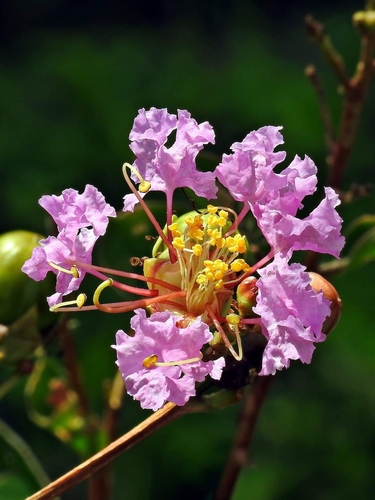
The most likely confusion is between Lagerstroemia speciosa, a large tropical tree with leaves 8–15 cm (3.1–5.9 in) long, and Lagerstroemia indica, a temperate shrub or small tree with much smaller leaves. Their shared French name, lilas des Indes, cannot distinguish them in the field. Mature size and hardiness provide the distinction. 2 4
Other large tropical trees with spectacular flowers share its role in street plantings, including jacaranda (Jacaranda mimosifolia) and royal poinciana (Delonix regia). Neither belongs to the Lythraceae, and neither shows the peeling bark characteristic of Lagerstroemia. 3
Main sources
- Plants of the World Online / Kew, Lagerstroemia speciosa (L.) Martyn
- NC State Extension Gardener Plant Toolbox, Lagerstroemia speciosa (Giant Crape Myrtle, Queen's Crape Myrtle)
- Wikipedia (EN), Lagerstroemia speciosa
- Wikipédia (FR), Lagerstroemia speciosa
- ITIS, Lagerstroemia speciosa (L.) Pers., TSN 27111
- USDA PLANTS Database, Lagerstroemia speciosa (LASP)
- GBIF Backbone Taxonomy, Lagerstroemia speciosa (L.) Pers.
- ASPCA, Crape Myrtle (Lagerstroemia) toxicity entry
- Klein et al., 2007, Antidiabetes and Anti-obesity Activity of Lagerstroemia speciosa, Evidence-Based Complementary and Alternative Medicine
Frequently asked questions
Is banaba toxic to cats or dogs?
The ASPCA entry concerns Lagerstroemia indica, listed as non-toxic to cats, dogs and horses. An assessment of that different species does not by itself establish the safety of banaba (Lagerstroemia speciosa).
Why are banaba leaves used for tea?
Dried leaves form part of a traditional preparation in the Philippines, Taiwan and Japan. Research has isolated corosolic acid from the extract and studied its effects on blood glucose in laboratory animals, without a validated therapeutic use in humans at this stage.
How does Lagerstroemia speciosa differ from Lagerstroemia indica?
Lagerstroemia speciosa is a large tropical tree, 7–20 m (23–66 ft) tall, with leaves 8–15 cm (3.1–5.9 in) long. Lagerstroemia indica remains a hardier temperate shrub or small tree with much smaller leaves.
Can banaba grow outdoors in mainland France?
Not in the ground. Its hardiness is limited to USDA zones 10–11; it freezes below 5 °C (41 °F). In France it is confined to overseas departments and territories or a heated greenhouse.
Why does banaba bark peel?
Pale patches of peeling bark are normal on established trees. The thin, smooth bark is also easily damaged by even minor mechanical impacts, especially around a young trunk.
How long does it take to flower?
Flowering generally begins 3–5 years after planting, chiefly from April to June, with a second flush in July and August depending on summer warmth. These months reflect the Northern Hemisphere seasonal context.
Is banaba fruit edible?
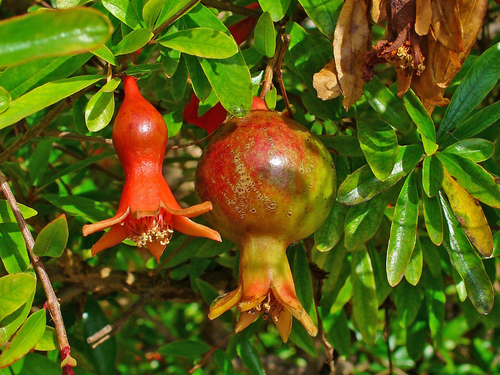
No. It is not a fleshy fruit but a dry, woody capsule, green at first, then brown and finally black when fully ripe. It is not eaten like a pomegranate.
Similar plants
If you are unsure about a plant’s toxicity, ask a botanist or veterinarian for advice.