
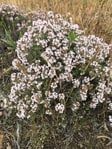
French lavender (Lavandula stoechas, )
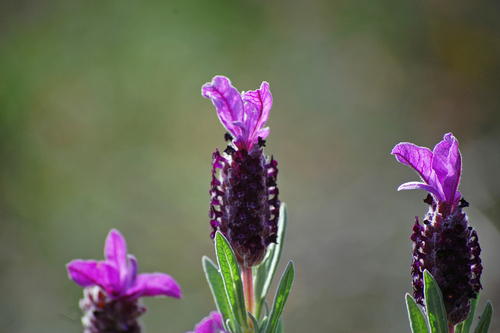
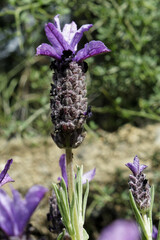
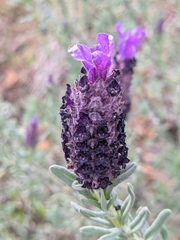
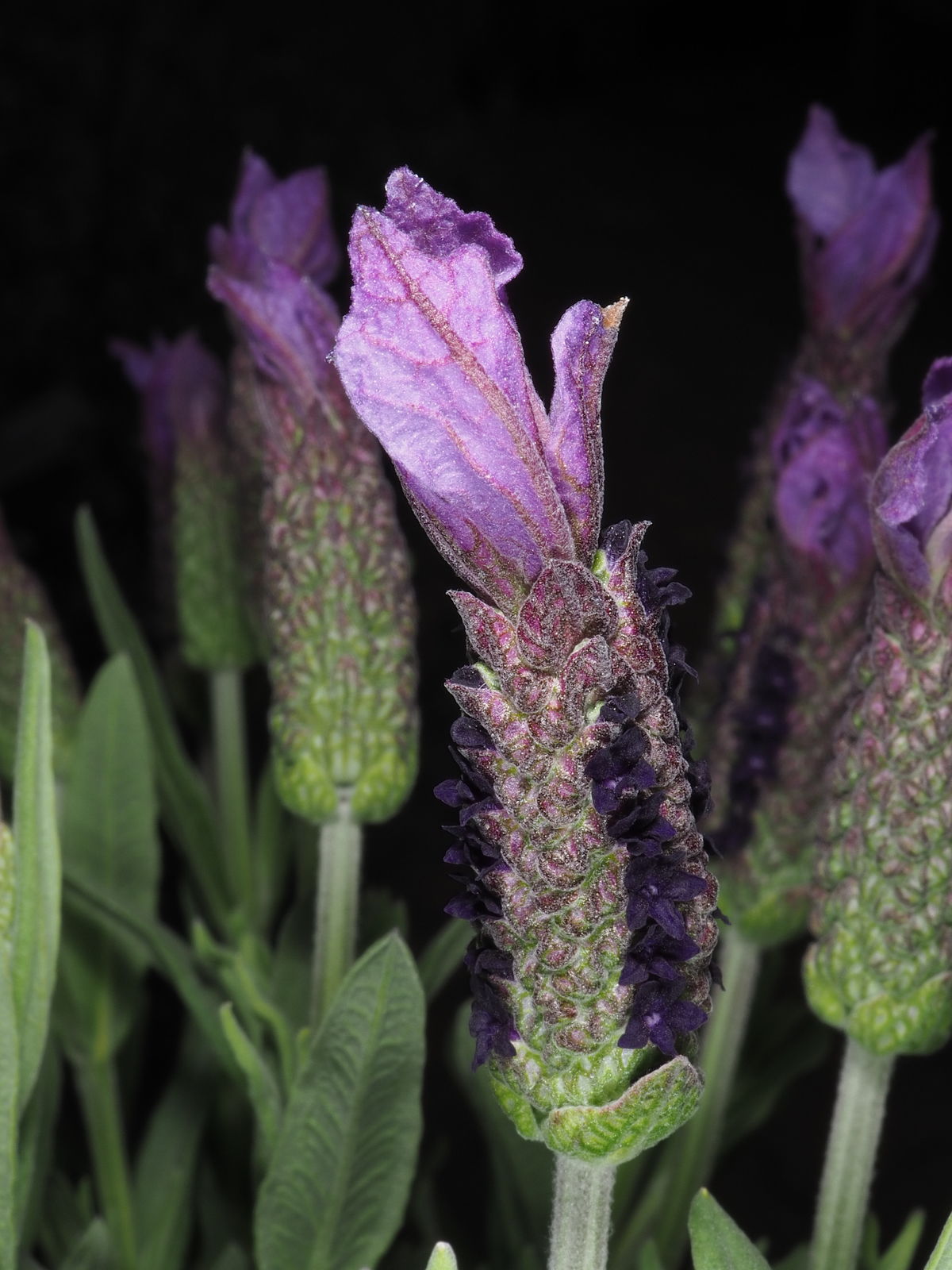
French lavender (Lavandula stoechas L.) is an aromatic subshrub in the Lamiaceae, native around the Mediterranean from North Africa to Portugal and Turkey. Large upright purple bracts resembling ears or butterfly wings crown its flower spikes, a feature absent from common lavender and often confused with Lavandula pedunculata.
Read moreFrench lavender, Spanish lavender and Topped lavender
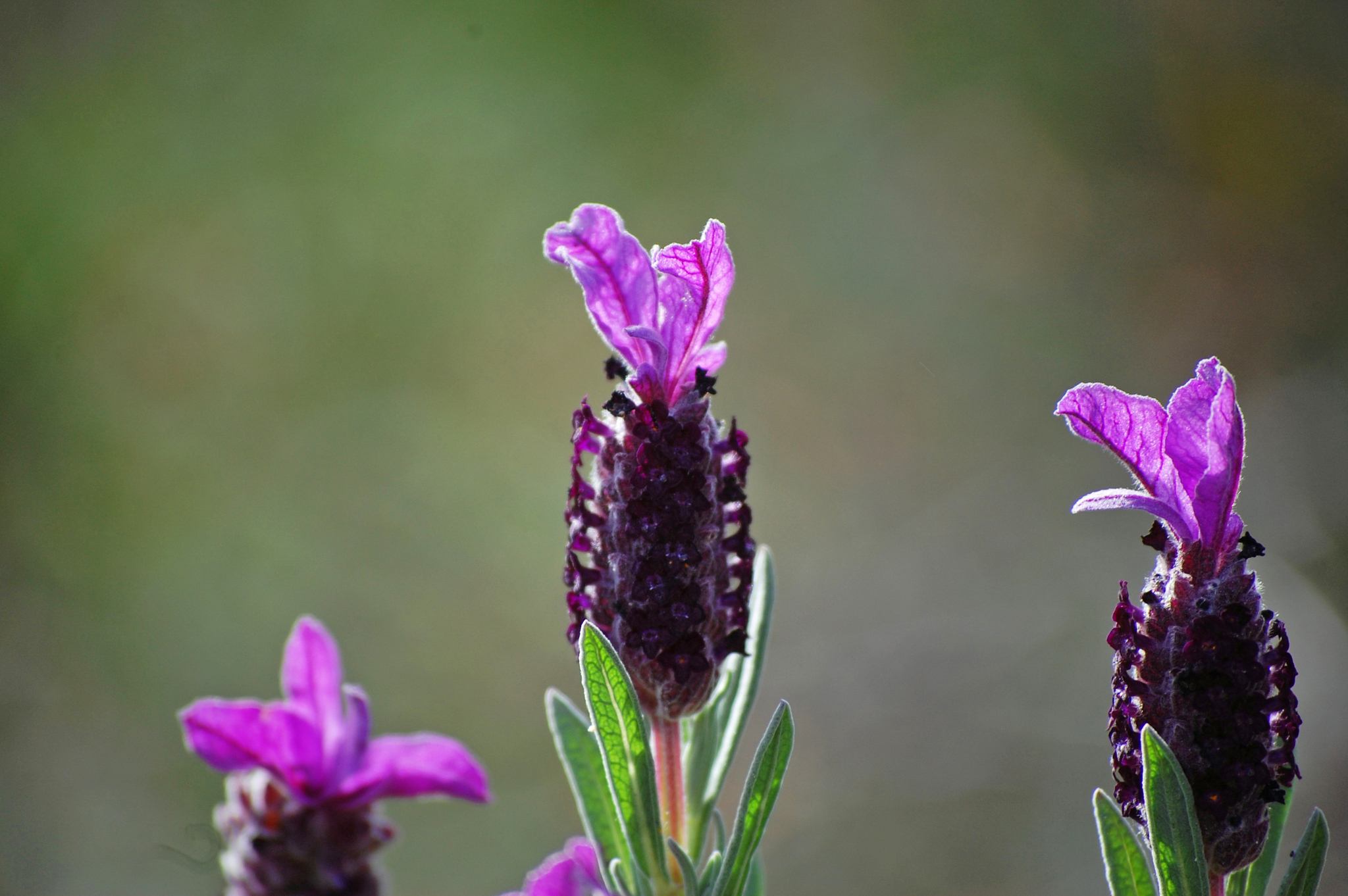


© photo
(c) Davide Puddu, some rights reserved (CC BY), uploaded by Davide Puddu · cc-by
iNaturalist User · cc-by
Marios Thoma · cc-by
Taken Apr 15, 2012 by Tela Botanica − Patrick LEBOULENGER (cc-by-sa)
Taken Mar 23, 2020 by amador Sergi (cc-by-sa)
Taken May 20, 2022 by Dave Flack (cc-by-sa)
Taken Apr 25, 2018 by huy HO (cc-by-sa)
Taken Jun 7, 2021 by Alain Bigou (cc-by-sa)
© copyright of the Board of Trustees of the Royal Botanic Gardens, Kew.




Global distribution
Lavandula stoechas is native around the Mediterranean, from Portugal and Spain to Turkey and North Africa. In France it is native along the Mediterranean coast (INPN), so French lavender does not imply a species confined to France. Elsewhere it is mainly ornamental, except in Australia where several states regulate it as an invasive weed.
- Native9
- Invasive1
- France
- Spain
- Portugal
- Italy
- Greece
- Turkey
- Morocco
- Algeria
- Tunisia
- Australia
Hexagons: regions where the plant occurs. Green dots: native range.1
Identity
French lavender (Lavandula stoechas L., 1753) is immediately recognizable by the large purple bracts standing like ears above its flower spikes, a feature absent from common lavender. Also known as Spanish lavender and topped lavender, it belongs to Lavandula in the Lamiaceae. POWO and IPNI retain the author abbreviation L. for its original publication in 1753. 1 2
The epithet stoechas comes from the ancient Greek stoikhas, linked by Pliny to the Stoechades, now the Hyères Islands. Its French butterfly-related name describes the same upright bracts that make the flower spike distinctive in the field. 8
Despite its familiar English name, this lavender is not endemic to France: its native range surrounds the Mediterranean, from North Africa to Portugal and Turkey. The scientific binomial identifies the same plant even when vernacular names differ between markets. 3 5
Recognition
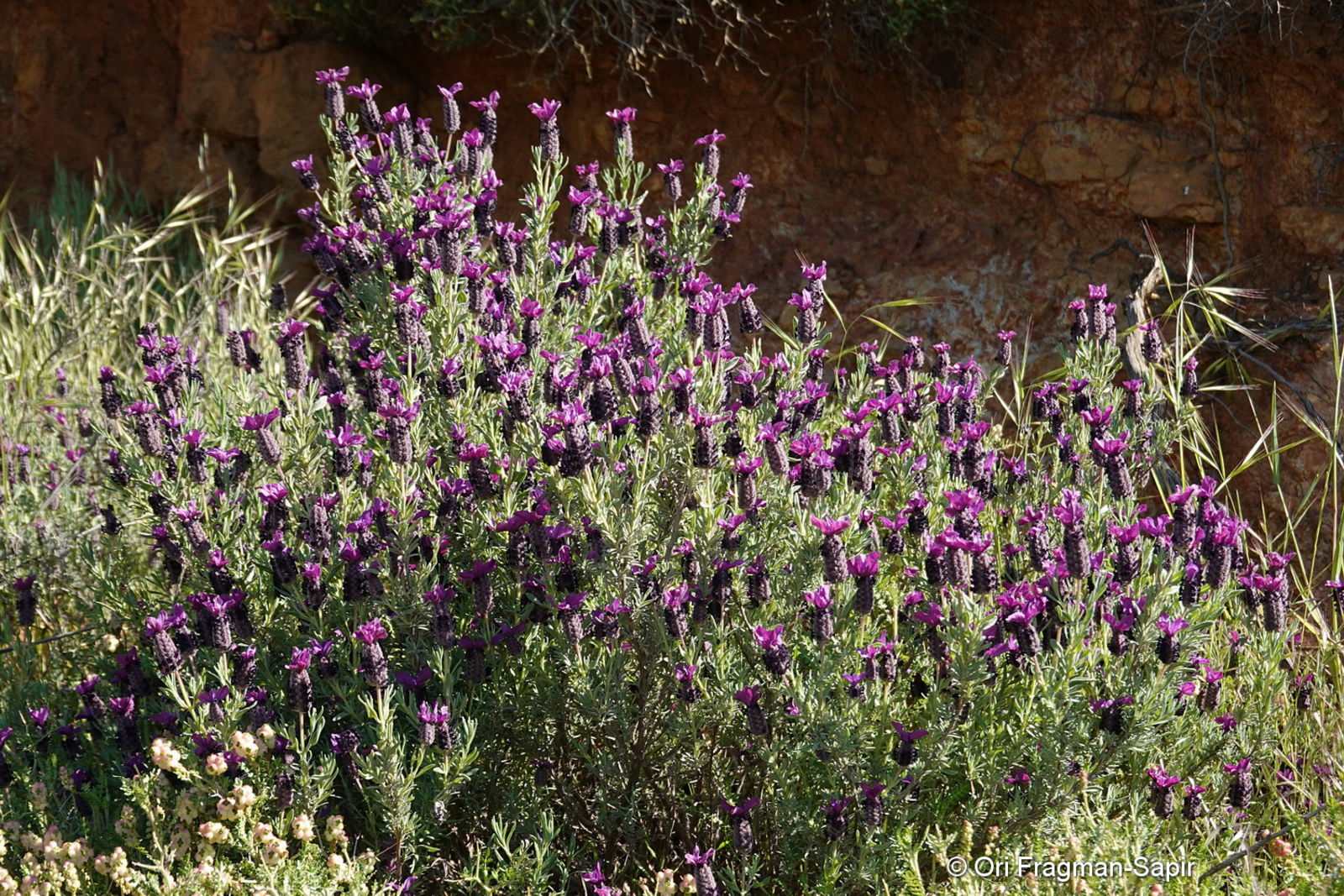
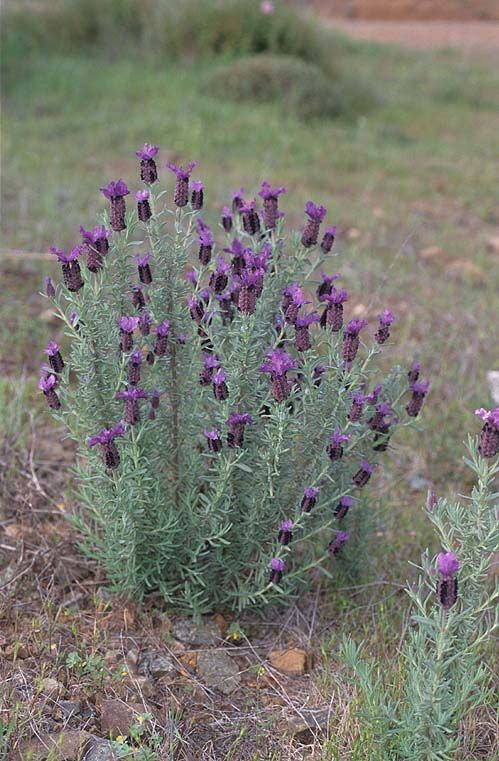
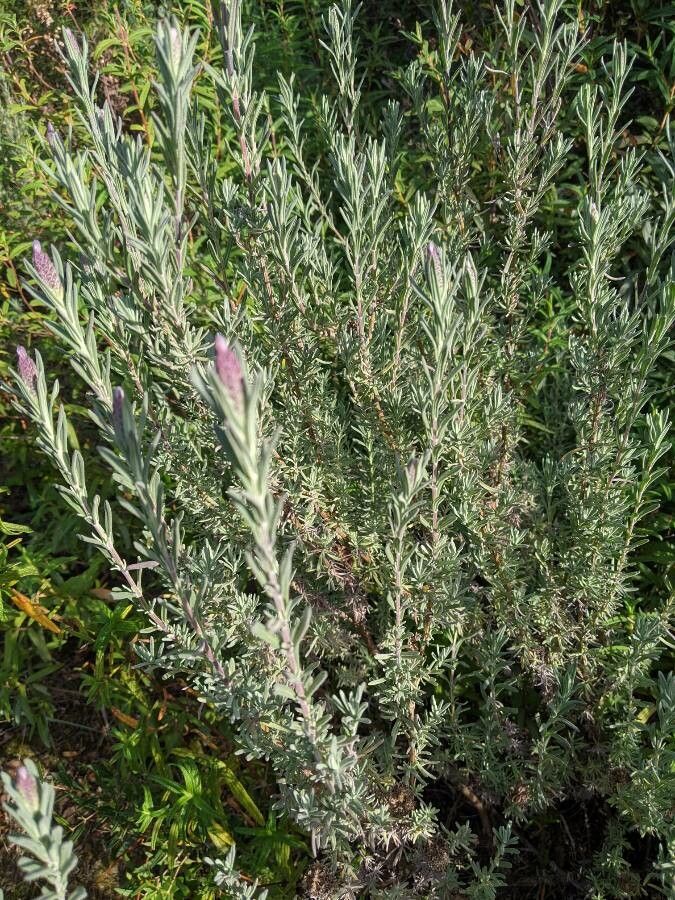
A compact, much-branched aromatic subshrub, Lavandula stoechas has felted gray-green foliage. RHS describes a shrub reaching little more than 60 cm (2 ft), while NC State Extension and Wikipedia report plants up to 1 m (3.3 ft). 3 4
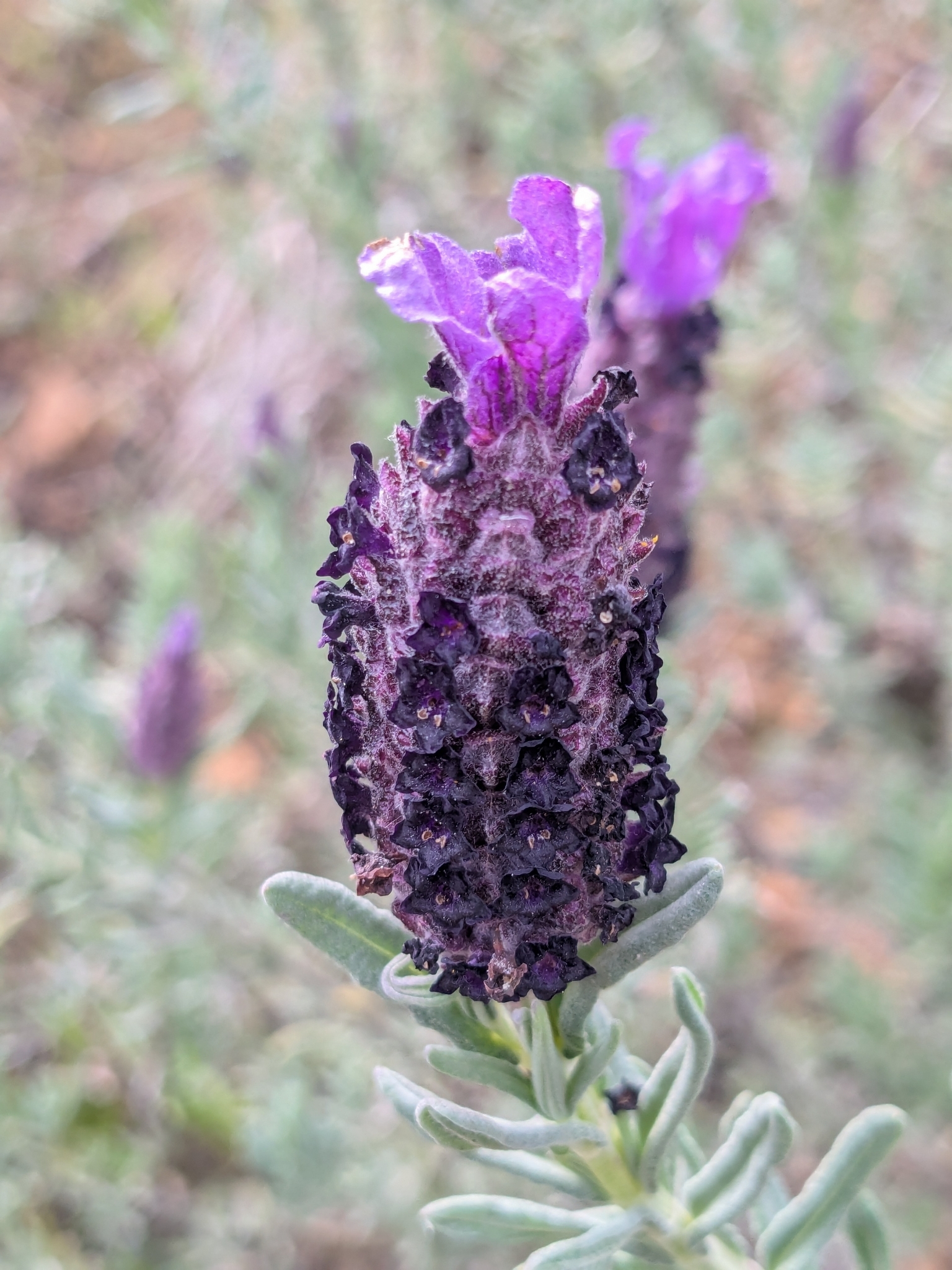
Narrow, unlobed leaves carry fine gray hairs that limit evaporation in full sun. NC State Extension gives a leaf length of 2.5–7.5 cm (1–3 in); their linear outline resembles rosemary foliage. Very dark flowers form dense spikes with a square cross-section. 4
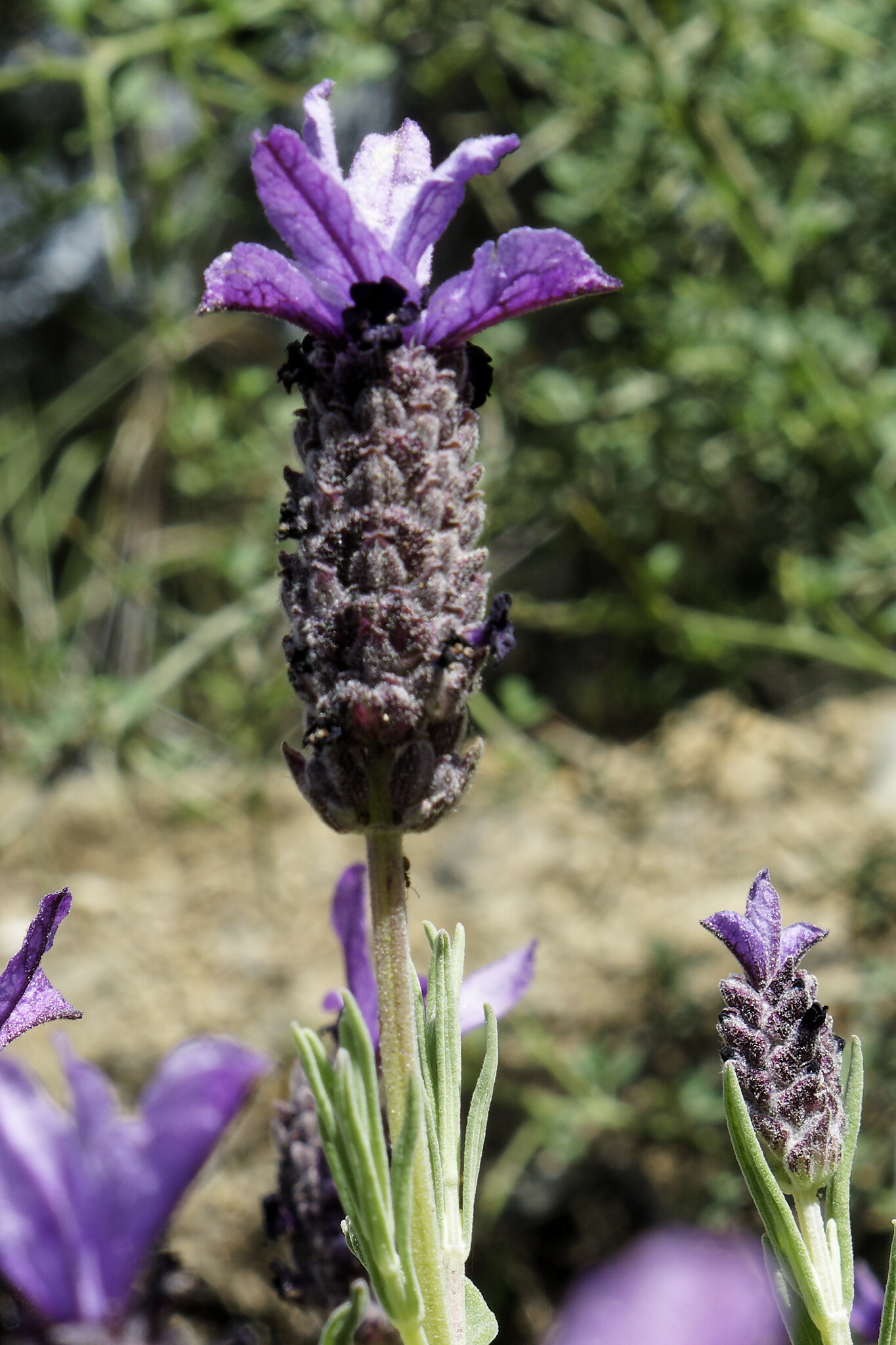
Four sterile bracts crown each spike, usually purple but sometimes pink or white in cultivars. RHS and NC State Extension compare them to flags or ears. Common lavender lacks these bracts entirely, making the two species easy to separate in flower. 3 4
Useful taxonomy
Within Lavandula stoechas, POWO recognizes two subspecies: the typical subsp. stoechas and subsp. luisieri (Rozeira) Rozeira, native to the southwestern Iberian Peninsula. 1
Older botanical combinations can mislead buyers. Several names published under Lavandula stoechas subsp., including pedunculata, lusitanica, sampaioana and atlantica, are now placed by POWO under the separate species Lavandula pedunculata. An old label may therefore describe a different taxon from the one understood today. 1
- Lavandula stoechas f. leucantha (Ging.) Upson & S.Andrews, a white form sometimes sold under a cultivar name
- Lavandula stoechas subsp. pedunculata (Mill.) Rozeira, an old name now placed under Lavandula pedunculata
- Lavandula stoechas subsp. atlantica Braun-Blanq., also reassigned to Lavandula pedunculata
Including the subspecies in the full scientific name provides a stable reference when comparing plants sold as lavender. 1
Habitat and range
Mediterranean shores from Portugal and Spain to Turkey, together with North Africa, make up its native range. In France, INPN confines its native occurrence to the Mediterranean coast, especially Provence and Corsica, in garrigue and rockrose-dominated maquis. 5
Dry, poor soils, often siliceous or acidic, and full sun characterize its habitat. Wikipedia emphasizes stagnant moisture as a greater problem than dry cold itself. 8
Ornamental introductions have taken the species far beyond that range. It naturalized in Australia, where it was recognized as a weed by the 1920s and is regulated in several states, particularly Victoria. There it forms dense stands that suppress local herbaceous vegetation. 6
Cultivation and life cycle
Flowering begins early on the warmest Mediterranean slopes, in late winter or early spring, and can continue into early summer before a summer rest. Wikipedia describes it as the earliest-flowering of the commonly cultivated lavenders. 8
RHS places it in pruning group 10: light trimming after flowering keeps the shrub dense, provided cuts never enter bare old wood. NC State Extension highlights an additional risk: this species often dies when cut to ground level, whereas some other lavenders may recover. 3 4
Summer semi-ripe stem cuttings preserve a cultivar faithfully; spring sowing produces more variable plants. A mineral substrate and avoidance of excess moisture around the crown are central considerations for both methods. 3
Uses and risks
Sunny beds, rock gardens, containers and dried bouquets are its main ornamental uses. NC State Extension also notes its value to pollinators: flowers attract bees and butterflies. 4
Traditional culinary uses reported by Wikipedia include flowers and leaves in salads, infusions and marinades; soups and purées in Portugal; fish and meat dishes in Spain; and Ratafia liqueur in Catalonia. Its essential oil is dominated by camphor and fenchone, whereas linalool is more characteristic of common lavender. 8
Toxicity advice requires care when comparing species. No dedicated source documents toxicity specifically for Lavandula stoechas, whereas ASPCA's lavender entry explicitly concerns Lavandula angustifolia, listed as toxic to cats, dogs and horses. The related terpenes in both species still justify keeping concentrated essential oil away from animals and children, even without documented cases for this species. 7 8
Cultivars, look-alikes and related plants
NC State Extension lists 'Alba', with white flowers; 'Anouk', with blue-violet bracts; bicolored 'Ballerina'; and 'Purple Ribbons', with large bracts. RHS adds 'Provençal' and a white form sold as 'Snowman', assigned to the botanical form f. leucantha. 4 3
Confusion centers on Lavandula pedunculata, sometimes sold as a variety of French lavender. Its long, conspicuous bare flower stalk distinguishes it from L. stoechas, whose stalk remains very short or almost absent. 1
Other look-alikes include Lavandula dentata, with clearly toothed leaf margins, and Lavandula angustifolia, which lacks colored bracts and flowers later. Bracts, foliage and flowering season together offer a useful check on a sales label. 4
Main sources
- Plants of the World Online / Kew, Lavandula stoechas L.
- International Plant Names Index, Lavandula stoechas L.
- Royal Horticultural Society, Lavandula stoechas - French lavender
- NC State Extension Gardener Plant Toolbox, Lavandula stoechas
- INPN / MNHN, Lavandula stoechas L., 1753
- Weeds Australia, Topped lavender - Lavandula stoechas profile
- ASPCA, Lavender toxicity entry (Lavandula angustifolia)
- Reader file from Wikipedia FR, Lavandula stoechas
Frequently asked questions
Why does French lavender have ears above its flowers?
These are large, colored sterile bracts crowning the flower spike. NC State Extension describes them as flags or ears; they are the most reliable feature for distinguishing Lavandula stoechas from other lavenders.
Does French lavender come only from France?
No. It is native around the Mediterranean, from North Africa to Turkey. INPN records its native French range along the Mediterranean coast. French lavender, a name common in the UK, does not mean it has an exclusively French origin.
Can I prune French lavender like common lavender?
The principle is the same: trim after flowering without cutting into old wood. NC State Extension highlights a particular risk for this species, which often dies if cut back too hard.
Is French lavender toxic to pets?
No dedicated source documents toxicity for this particular species, unlike common lavender, which ASPCA lists as toxic to cats, dogs and horses. Concentrated essential oil still calls for caution because the species share similar terpenes.
How does it differ from Lavandula pedunculata?
Both have colored bracts, but Lavandula pedunculata carries its spike on a long, conspicuous bare stalk. In Lavandula stoechas that stalk is absent or very short. Several former stoechas subspecies are now placed under pedunculata.
Is French lavender edible?
Wikipedia reports traditional use of its flowers and leaves in food and liqueurs in Portugal, Spain and Catalonia. This does not replace reliable local food advice, and concentrated essential oil should not be confused with the plant.
Why did my French lavender die after hard pruning?
NC State Extension reports that plants cut to ground level may never regrow. Always retain living foliage and prune into wood that is still green.
Similar plants
If you are unsure about a plant’s toxicity, ask a botanist or veterinarian for advice.