
Edelweiss (Leontopodium nivale, )
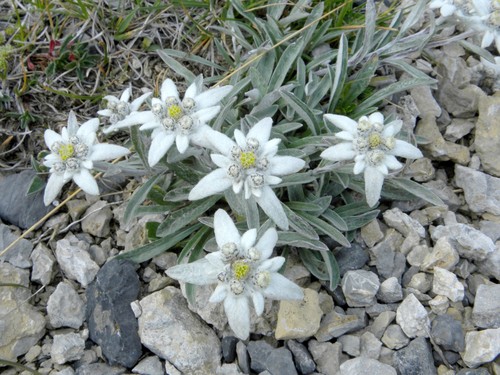
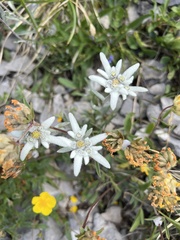
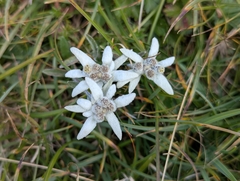
Edelweiss (Leontopodium nivale) is a small alpine perennial in the Asteraceae and an emblem of European high mountains. Its flower heads are surrounded by white, woolly bracts that protect it from cold, dryness and high-altitude ultraviolet radiation. Non-toxic but protected in most of these ranges, it grows in cool, well-drained rock gardens.
Read moreEdelweiss and alpine edelweiss
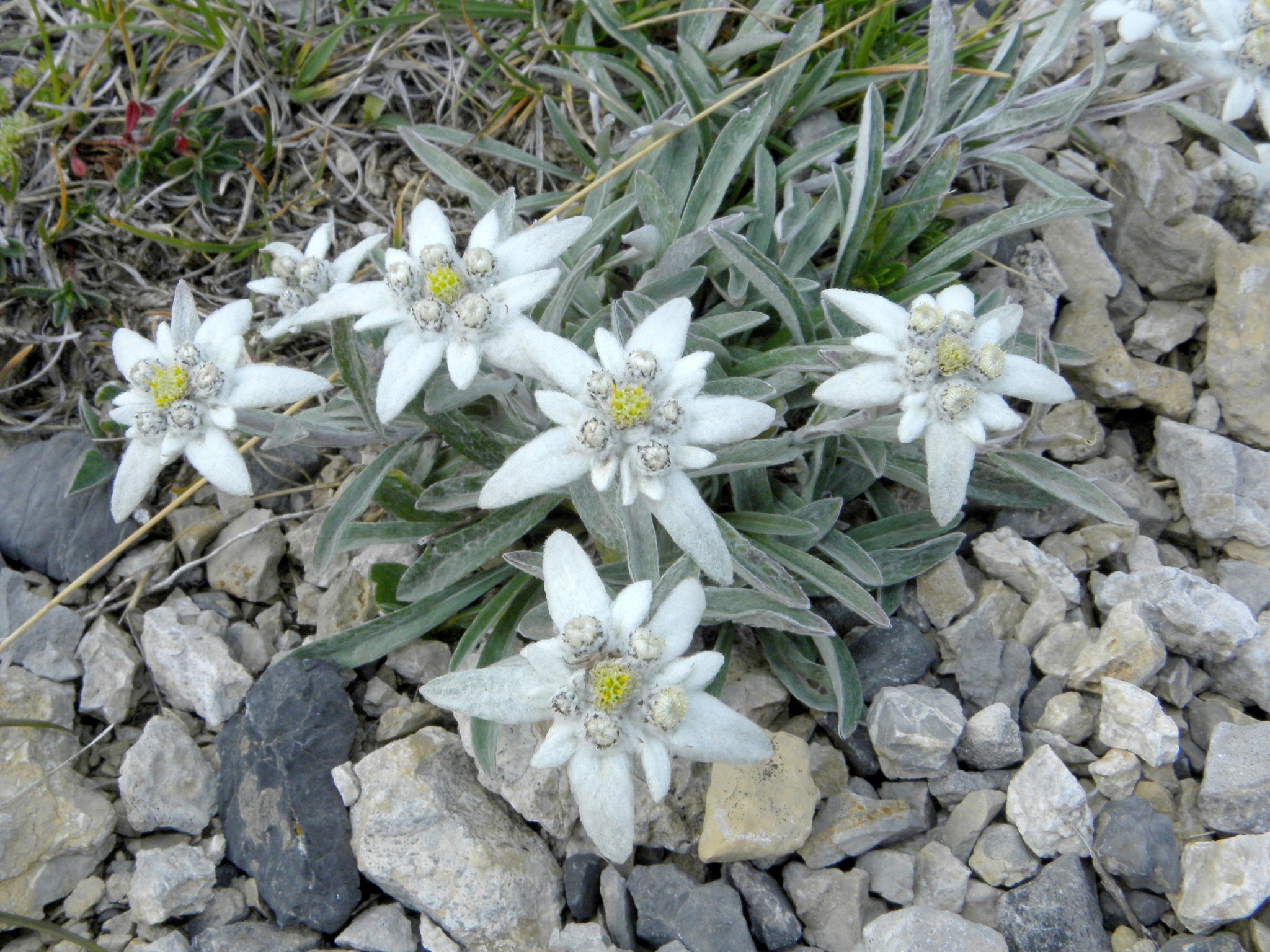
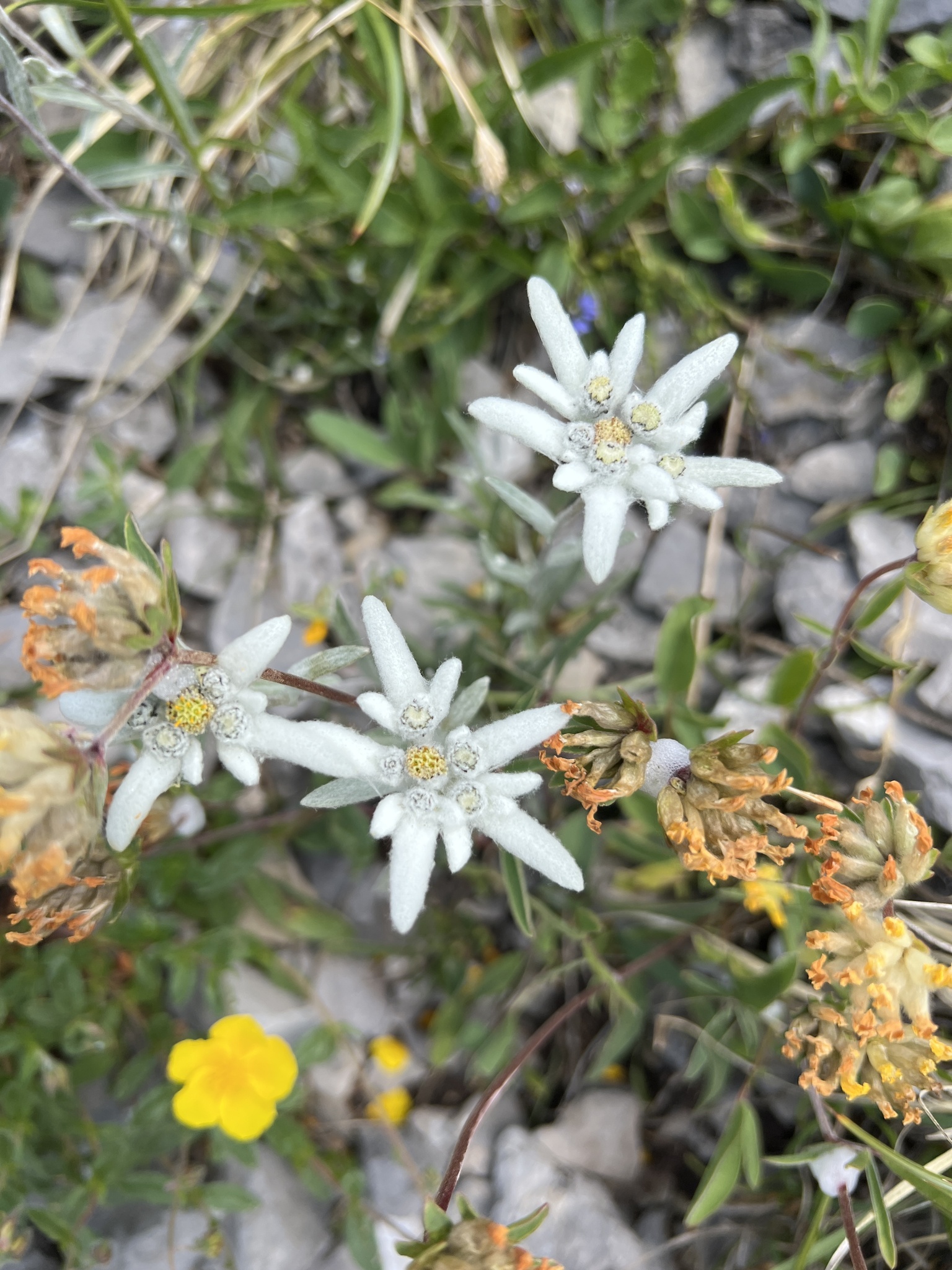
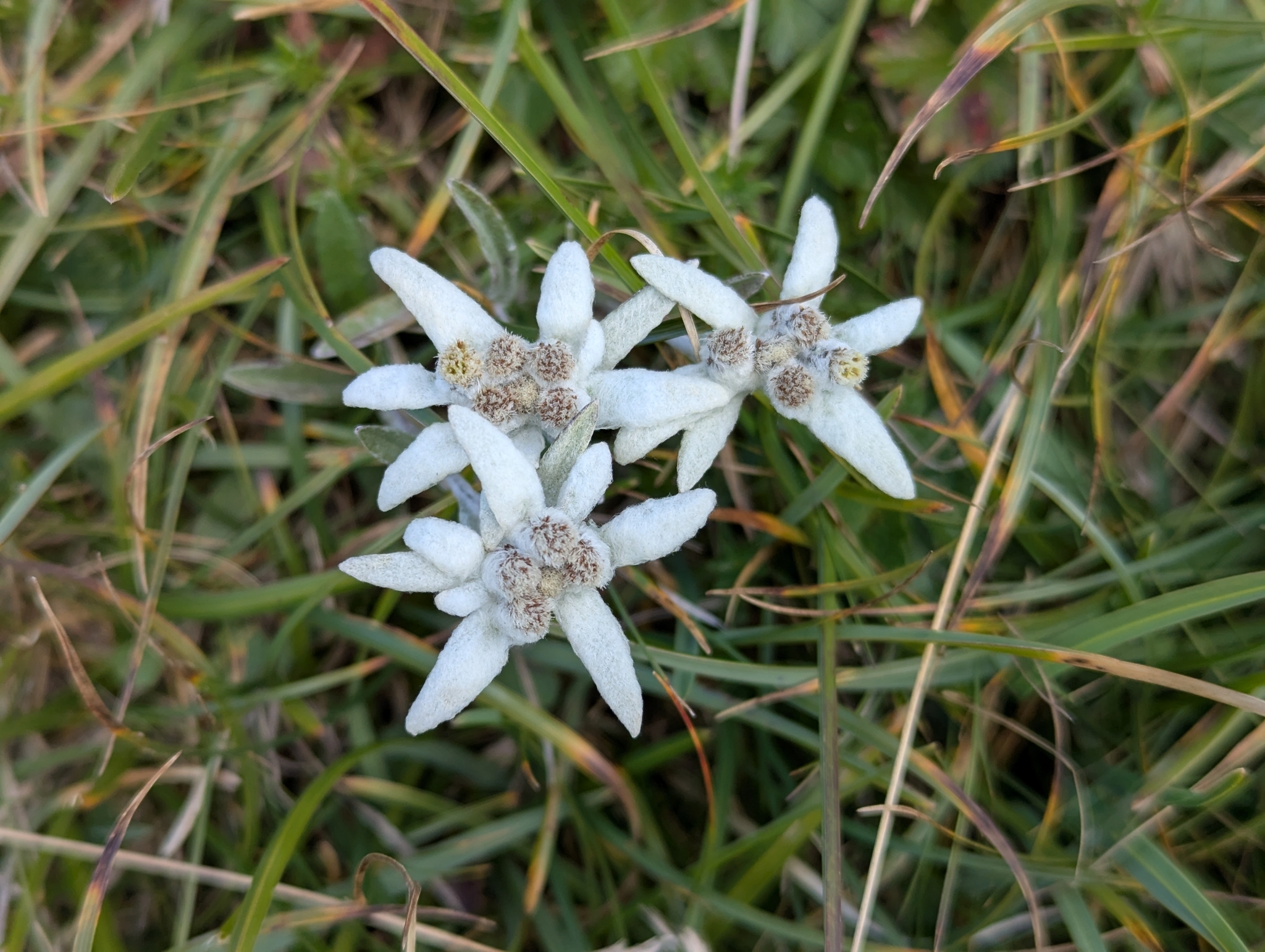


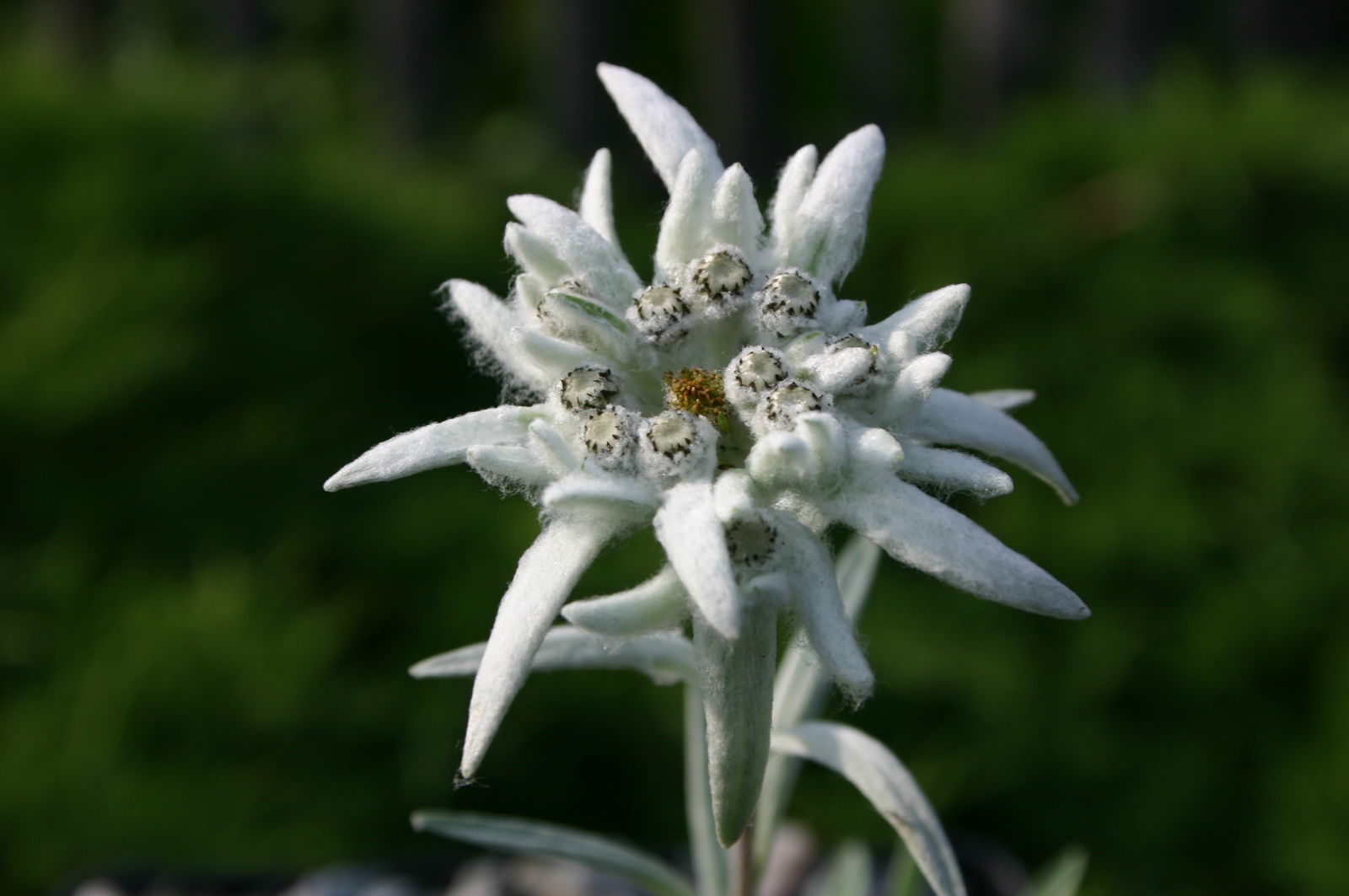


© photo
(c) Sébastien SANT, some rights reserved (CC BY-NC), uploaded by Sébastien SANT · cc-by-nc
Paroulek Ales · cc0
Elias · cc0
Taken Jul 15, 2012 by Photoflora - Benoit BOCK (©)
Taken Jan 1, 1970 by Photoflora - L'Abbé COSTE (©)
Taken Jul 15, 2009 by Photoflora - Benoit BOCK (©)
Taken Jul 14, 2014 by Tela Botanica − Fred Garcia Suarez (cc-by-sa)
© copyright of the Board of Trustees of the Royal Botanic Gardens, Kew.


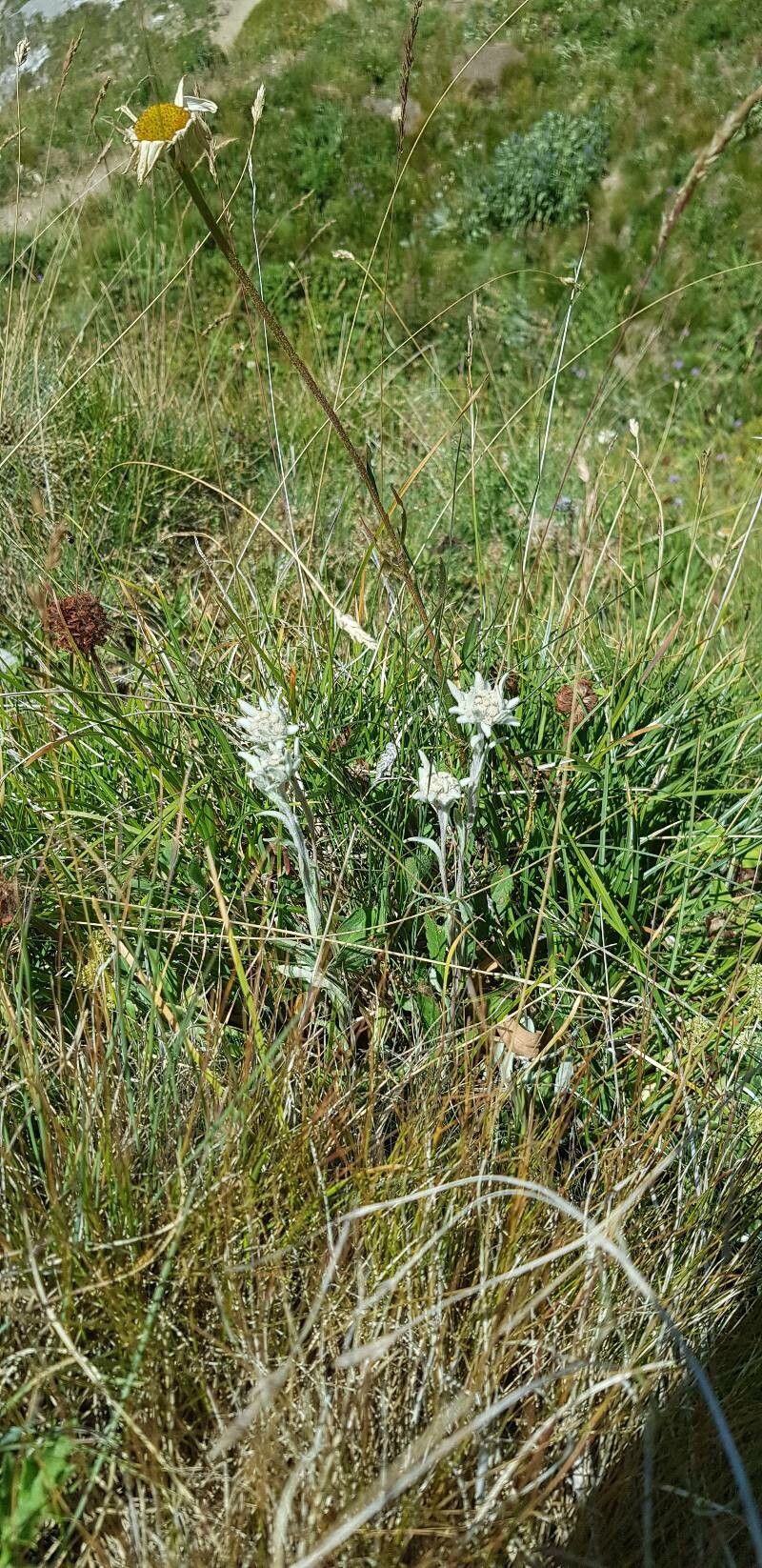


Global distribution
The native range of Leontopodium nivale spans European high mountains, from the Pyrenees and Alps to the Carpathians and Balkans. Subspecies alpinum occupies the Alpine arc, while subspecies nivale belongs to the Apennines and northern Balkans. Rock-garden cultivation beyond this mountain belt remains distinct from its native high-altitude range.
- Native6
- France (Alps, Pyrenees)
- Switzerland
- Austria
- Italy
- Slovenia
- Romania (Carpathians)
Hexagons: regions where the plant occurs. Green dots: native range.1
Identity
White, woolly stars make edelweiss (Leontopodium nivale (Ten.) A.Huet ex Hand.-Mazz.), also called alpine edelweiss, instantly recognizable. This small alpine perennial belongs to Leontopodium, in the Asteraceae. Its German-derived name combines edel, noble, and weiss, white, referring to the felted white bracts that crown the plant. The French name étoile d'argent likewise evokes a silver star. 1 4
High on mountain rocks, those stars have become an emblem of the Alps, associated with mountaineering and purity. The plant is protected in most of these mountain ranges and is now grown in rock gardens from cultivated stock. Protection here concerns the mountain regions described, rather than an assumed rule for every reader's location. 4 2
Recognition
A cushion-like clump reaches 10–20 cm (4–8 in) tall, carrying narrow, lance-shaped grayish leaves beneath a woolly covering. White hairs cover the plant, protecting it from cold, dryness and the intense ultraviolet radiation of high mountains. 3 4
The inflorescence provides the clearest feature: small yellowish flower heads at the center, surrounded by a star of white bracts arranged like rays. These are bracts rather than petals. They produce the silvery star-shaped outline behind the French nickname, distinguishing the conspicuous display from the much smaller true flowers. 4 1
Flowering takes place in summer, mainly July and August in its European setting, on established plants from their second year. The white felt becomes denser in brighter exposure, accounting for the brilliance of plants grown in full sun. 2 5
Useful taxonomy
The accepted species name is Leontopodium nivale (Ten.) A.Huet ex Hand.-Mazz., in the Asteraceae. Alpine edelweiss corresponds to subspecies alpinum (Cass.) Greuter, while subspecies nivale belongs to the Apennines and northern Balkans. The former binomial Leontopodium alpinum Cass. is now treated as a synonym within this species. 1 6
Names worth recognizing include:
- Leontopodium nivale subsp. alpinum (Cass.) Greuter (botanical name)
- Leontopodium nivale subsp. nivale
- Leontopodium alpinum Cass.
- Leontopodium alpinum subsp. nivale (Ten.) Tutin
- Leontopodium alpinum var. nivale (Ten.) DC.
For identification, the accepted scientific name supplies a stable reference. Horticultural labels such as Matterhorn and Mignon identify garden selections, rather than separate species or botanical varieties. Keeping the selection name alongside the scientific name makes the distinction clear when comparing nursery labels. 1 3
Habitat and range
European high mountains form the species' native range, from the Pyrenees and Alps to the Carpathians and Balkans. It occupies limestone rocks and open, broken alpine turf at 1,800–3,400 m (5,900–11,200 ft), in poor, mineral, well-drained substrates. 4 1
Exposed ridges bring intense cold, bright sunshine and drying winds. The woolly covering helps protect the plant under these conditions, while its low cushion reduces exposure to wind. These preferences explain why freely draining soil and dry air matter in garden cultivation, even away from its native mountains. 3 5
The two subspecies occupy different areas: alpinum covers the Alpine arc and western European mountain ranges, whereas nivale is confined to the Apennines and northern Balkans. Rock-garden cultivation beyond this mountain belt should be distinguished from the species' native high-altitude distribution. 1 6
Life cycle and reproduction
Winter dormancy is part of this herbaceous perennial's cycle. The cushion rests beneath snow, resumes growth in spring, and flowers in summer from the second year after sowing. Once established, a clump flowers again in successive years. 3 5
Within the yellowish heads, tiny flowers are pollinated by mountain insects. They subsequently produce small, dry achenes with tufts of hairs that carry them on the wind. Seed reproduction remains modest in mountain populations, helping explain their vulnerability to picking. 4 1
In gardens, clump division in spring, every two to three years, is a reliable way to rejuvenate a thinning plant while retaining a selection's characteristics. Cold sowing in spring also works, but emergence is slow and irregular, and seedlings do not flower before their second year. Division is therefore the more dependable route to new cushions quickly. 2 5
Uses and risks
Rock gardens, alpine troughs and containers showcase its main modern use: ornament. Growers value the white felt and star-shaped outline. Traditional medicinal and cosmetic uses also draw on antioxidant phenolic compounds, which feature in some modern preparations. These historical uses are distinct from the plant's role as a garden perennial. 5 4
Edelweiss is described as non-toxic: it is not listed as dangerous to cats, dogs, horses or humans and has even been used in folk herbal medicine. Its central conservation concern is therefore the preservation of wild populations rather than poisoning. 3 2
Excessive collecting for bouquets and mountain souvenirs during the 19th century led to protection in most Alpine ranges, where wild picking is prohibited. For cultivation, use nursery-grown plants or seed and recreate the relevant mountain conditions: full sun, very freely draining mineral soil and dry winters. 4 6
Varieties, look-alikes and related plants
Nursery selections do not represent separate species. Matterhorn and Mignon are compact selections valued for flowering and dense felt; Blossom of Snow is a horticultural label for broad, very white stars. Before buying, check the cushion's vigor, the whiteness of its hairs and identification as subspecies alpinum, the form most widely cultivated. 2
The main comparisons are:
- Leontopodium nivale subsp. nivale, the closely related edelweiss of the Apennines, restricted to Italy and the Balkans;
- other Asian species of Leontopodium, sometimes offered for rock gardens;
- woolly mountain cudweeds, with a similar white covering but without the star of bracts.
The felted white-bract star, low cushion and high-altitude limestone habitat remain the most reliable combined features for identifying a rock-garden plant as Leontopodium nivale. The bracts' arrangement matters as much as their whiteness when comparing it with other woolly mountain plants. 3 1
Main sources
- Plants of the World Online / Kew, Leontopodium nivale (Ten.) A.Huet ex Hand.-Mazz.
- Royal Horticultural Society, Leontopodium alpinum - edelweiss
- Missouri Botanical Garden, Leontopodium alpinum
- Encyclopaedia Britannica, edelweiss
- Plants For A Future, Leontopodium alpinum
- Tela Botanica, Leontopodium nivale - eFlore
Frequently asked questions
Is edelweiss toxic?
No. Leontopodium nivale is non-toxic to cats, dogs, horses and humans. It also has traditional medicinal and cosmetic uses linked to its antioxidant phenolic compounds.
Can edelweiss be picked in the mountains?
Usually not. Excessive collecting during the 19th century led to protection in many Alpine ranges, where wild picking is prohibited. Garden plants should come from cultivated plants or seed.
Why is my edelweiss losing its white felt?
The woolly covering develops best in full light and poor soil. Too much shade or nitrogen makes the clump green and soft. More sunshine and less fertilizer restore its whiteness.
What soil does edelweiss need?
A very freely draining mineral substrate, neutral to calcareous, made with gravel and sand plus a little potting compost. Drainage matters more than fertility because the plant dislikes standing water in winter.
How do the subspecies of Leontopodium nivale differ?
Subspecies alpinum is the edelweiss of the Alps and western European mountains and is most widely cultivated; subspecies nivale belongs to the Apennines and northern Balkans. Both belong to Leontopodium nivale.
Is edelweiss difficult to grow?
It chiefly requires excellent drainage, full sun and poor soil. It is not a houseplant: winter cold, dry moving air and freedom from excess water help it remain compact.
When does edelweiss flower?
It flowers in summer, mainly July and August in its European setting. The true flowers are small yellowish heads, surrounded by the star-shaped white bracts responsible for its distinctive display.
Similar plants

If you are unsure about a plant’s toxicity, ask a botanist or veterinarian for advice.