
Lovage (Levisticum officinale, )
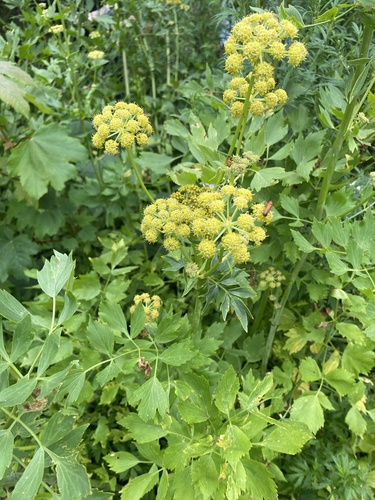


Lovage (Levisticum officinale W.D.J.Koch, 1824) is a perennial Apiaceae and the only species in Levisticum, native to southern Iran and Afghanistan. Cultivated since antiquity for its strong celery and broth aroma, it forms a rosette of glossy leaves and a tall hollow flowering stem bearing yellow-green umbels, then aromatic seeds.
Read moreLovage and Garden lovage
Allow a few hours of direct sun per day, preferably morning or evening.
Full sun to light partial shade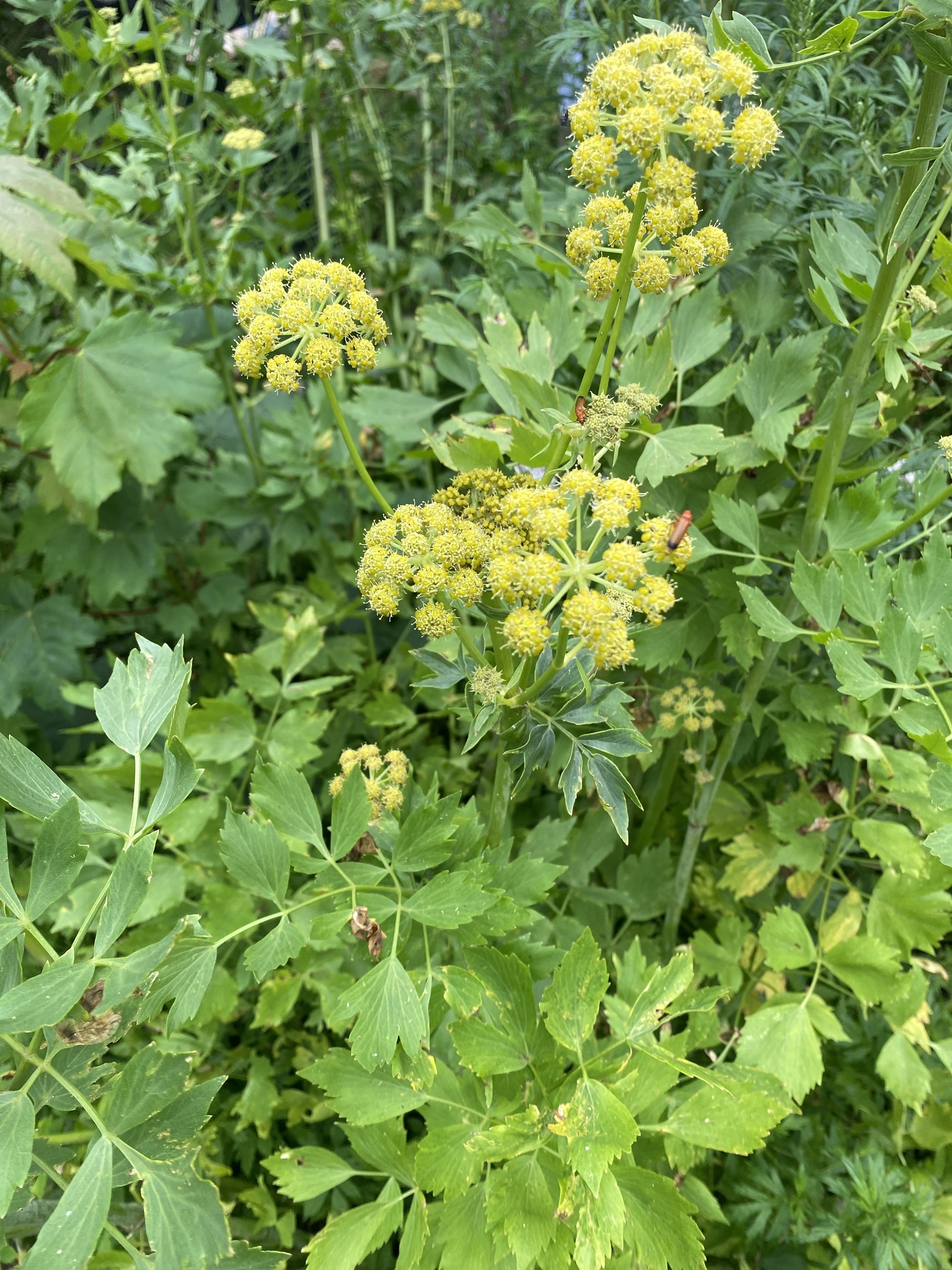


© photo
(c) kingamatanina, some rights reserved (CC BY-NC) · cc-by-nc
Wikimedia Commons · CC BY-SA or Public Domain
Taken Apr 24, 2020 by Eduard (cc-by-sa)
Taken Jan 1, 1970 by Photoflora - L'Abbé COSTE (©)
Taken May 15, 2015 by Photoflora - Benoit BOCK (©)
Taken Aug 15, 2010 by Photoflora - Benoit BOCK (©)
Taken Jul 11, 2021 by Rico Mende (cc-by-sa)
© copyright of the Board of Trustees of the Royal Botanic Gardens, Kew.




Global distribution
POWO limits the native range of Levisticum officinale to southern Iran and Afghanistan. Cultivated in Europe since antiquity, lovage has widely naturalized elsewhere. Most European and North American populations reflect old introductions rather than native distribution.
- Native2
- Introduced4
- Iran
- Afghanistan
- Metropolitan France
- United Kingdom
- United States
- Canada
Hexagons: regions where the plant occurs. Green dots: native range.1
Identity
Lovage (Levisticum officinale W.D.J.Koch, 1824), also known as garden lovage, is an herbaceous perennial in the Apiaceae. It is the only accepted species of Levisticum. Carl Linnaeus described it in 1753 as Ligusticum levisticum; Wilhelm Daniel Joseph Koch placed it in a separate genus in 1824. 1 7
The English word lovage derives from love-ache, a folk reshaping of Old French levesche. Medieval ache meant parsley and related plants; levesche traces through Latin levisticum to ligusticum, “of Liguria,” the Italian region where it was widely grown. The French nickname herbe à Maggi instead reflects its resemblance in flavor to commercial stock cubes. 7
Recognition
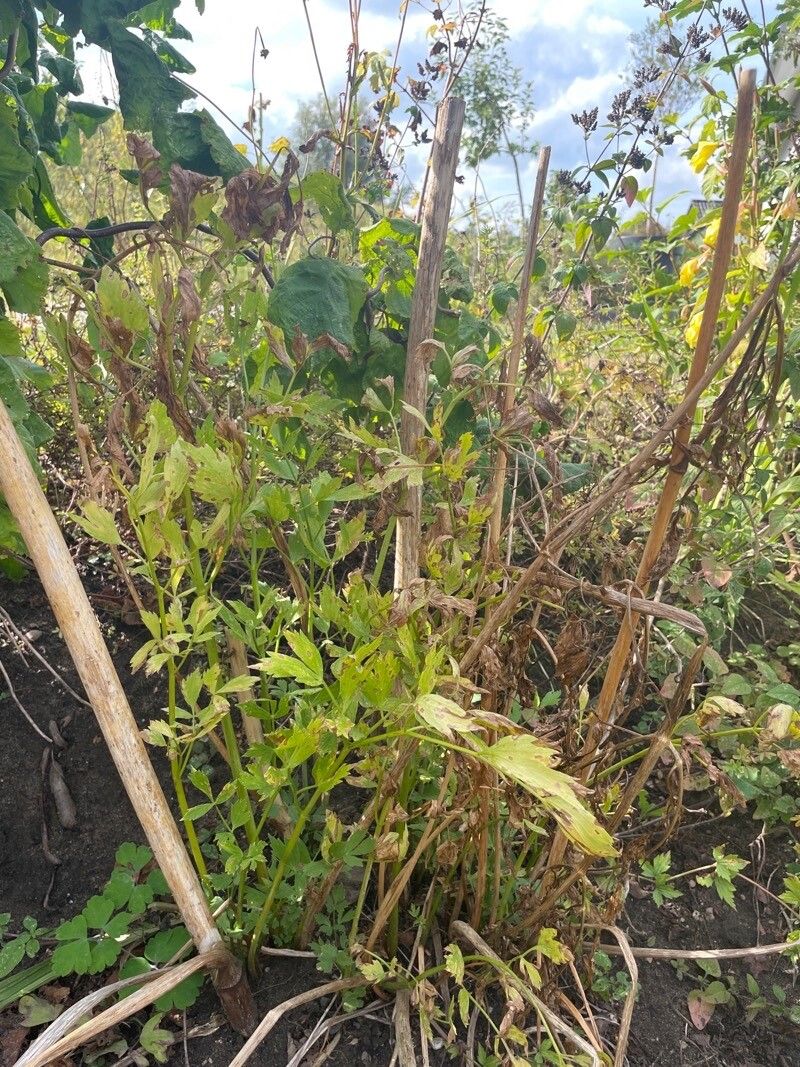
Glossy dark green to yellow-green leaves first form a basal rosette. A hollow, grooved flowering stem later reaches 1.5–2.5 m (5–8 ft) at maturity. Divided, trifoliate basal leaves measure up to 70 cm (28 in); stem leaves are much smaller and less divided. 7 2
Bruising the plant releases a strong celery aroma, much more intense than garden celery and distinctive enough to recognize by smell. Umbels appear only in late spring and summer; at other leafy stages, smell remains the useful distinguishing feature. 5
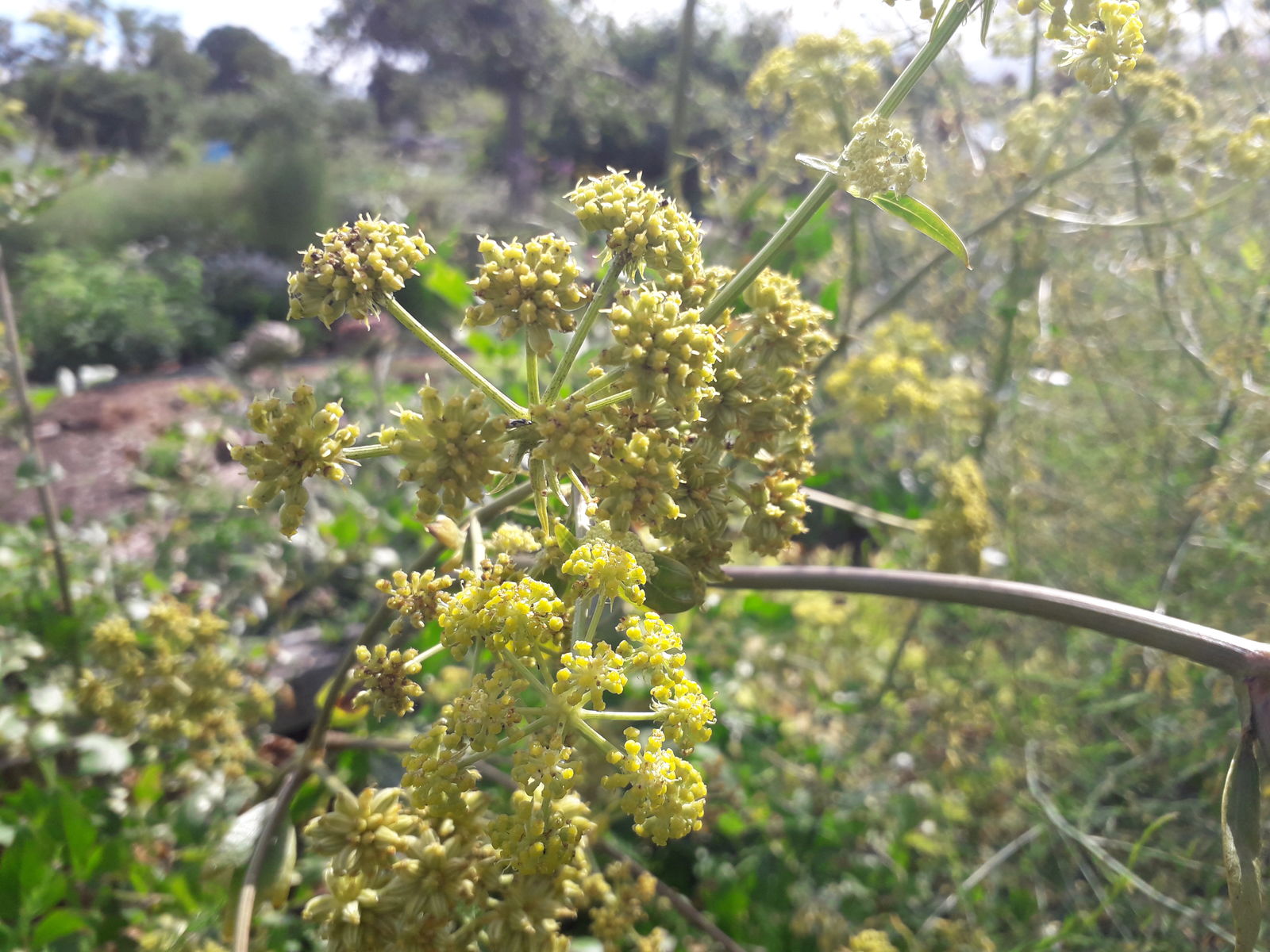
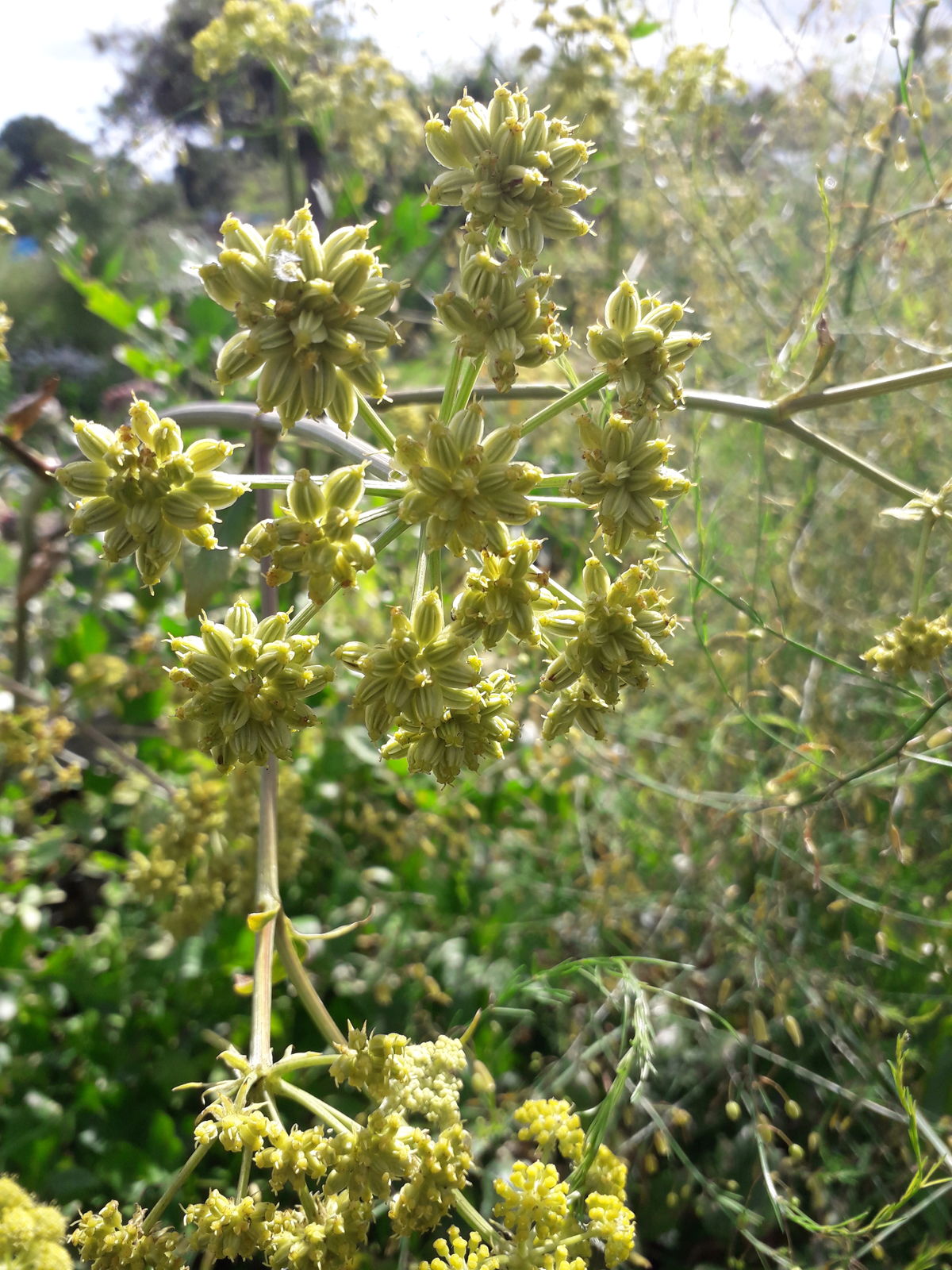
Small yellow to yellow-green flowers gather in rounded compound umbels 10–15 cm (4–6 in) across in late spring and summer. The dry schizocarp is 4–7 mm (0.16–0.28 in) long, brown when ripe and marked with longitudinal ribs. 7
Useful taxonomy
Kew accepts Levisticum officinale W.D.J.Koch, with Ligusticum levisticum L. as its basionym. Older floras and catalogs retain several homotypic synonyms:
- Hipposelinum levisticum (L.) Britton (historical synonym)
- Selinum levisticum (L.) E.H.L.Krause (historical synonym)
- Angelica levisticum (L.) All. (historical synonym)
- Levisticum vulgare Rchb. (historical synonym)
- Levisticum paludapifolium Asch. (historical synonym)
The genera Ligusticum, Hipposelinum, Selinum and Angelica each housed this species at some point in its classification history. Even Levisticum preserves a trace of those changes: its name derives from a historical synonym rather than an independent botanical root. 1 10
Habitat and range
Southern Iran and Afghanistan form the strict native range recognized by POWO. In Europe, lovage also grows as an escape in the Alps, Pyrenees and Caucasus, on mountain pastures and in moist hedges below 1,800 m (5,900 ft). 1 8
European mountain occurrences remain distinct from that native range. Most European and North American populations stem from old culinary introductions. INPN records lovage in France as introduced and cultivated rather than native. 9
Its climatic tolerance spans USDA zones 4–9. Even so, Missouri Botanical Garden rates its maintenance needs as high: soil must remain moist and not dry out during summer. 4 3
Life cycle and cultivation
Roots and crown usually need two or three years to establish before flowering begins. Fresh seed germinates in 3–6 weeks; older seed is slower and less reliable. Gardeners therefore often prefer crown division in spring or fall. 5 2
Established lovage needs rich, deep, moist to damp soil, in full sun or light partial shade. Regular harvesting of leaves and young stems encourages regrowth and delays seed formation. Without division after 3–4 years, the aging crown develops a woody, bitter root. 2 4
Aboveground growth dies back each winter and can be cut down in fall. The crown tolerates prolonged frost to about −20 °C (−4 °F), then sends up new growth the following spring. 2
Uses and risks
Leaves, stems, roots, seeds and even flowers have culinary uses. Fresh leaves season soups and salads; blanched stems substitute for celery. Dried seeds flavor breads and stews, while the broth-flavored root is grated or infused as tea. 5 4
ASPCA lists lovage as toxic to dogs, cats and horses. Its volatile oils, including phthalide lactones, cause a diuretic effect and increased urination when ingested. Root essential oil also contains photosensitizing furocoumarins: sap contact followed by sunlight can trigger a skin reaction, as with several other Apiaceae. 6 7
Traditional medicine uses lovage as a carminative and diuretic for indigestion or urinary problems; Germany's Commission E recognizes its use for urinary infections. However, it remains inadvisable with kidney inflammation and during pregnancy because of reported emmenagogue properties. 5
Look-alikes and related plants
Widely distributed horticultural cultivars are lacking in lovage. Seed suppliers mainly offer the species itself, without the range of selected varieties seen in celery or parsley. 2
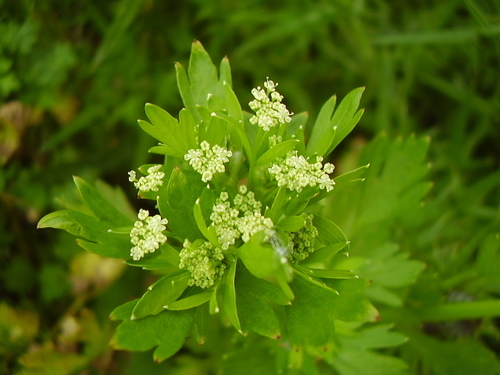
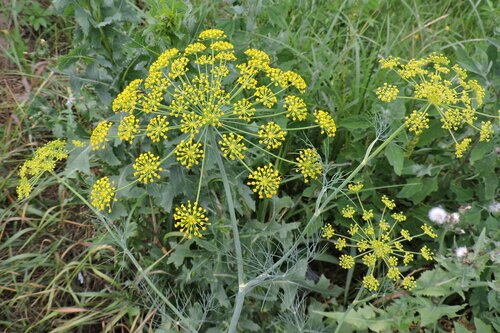
Young lovage most often resembles celery (Apium graveolens) before flowering. Two features help: its much stronger aroma and its flowering stem, reaching 2.5 m (8 ft) while celery remains lower and bushier. Angelica (Angelica archangelica) has a similar tall, umbel-bearing habit but a more anise-like aroma, rather than celery or broth. 5
Approximate identification among Apiaceae risks dangerous confusion with poisonous relatives. For lovage, scientific identity and the distinctive smell of crushed leaves are more useful than leaf shape or flower color alone.
Main sources
- Plants of the World Online / Kew, Levisticum officinale W.D.J.Koch
- Royal Horticultural Society, Levisticum officinale (lovage)
- Missouri Botanical Garden Plant Finder, Levisticum officinale
- NC State Extension Gardener Plant Toolbox, Levisticum officinale
- Plants For A Future, Levisticum officinale
- ASPCA, Lovage (Levisticum officinale) toxicity entry
- Wikipedia (EN), Lovage
- Wikipedia (French), Lovage
- INPN / MNHN, Levisticum officinale W.D.J.Koch, 1824 - Lovage
- Tela Botanica / eFlore bdtfx, Levisticum officinale W.D.J.Koch
Frequently asked questions
Is lovage toxic to cats and dogs?
Yes. The ASPCA lists Levisticum officinale as toxic to dogs, cats and horses because its volatile oils have a diuretic effect and cause increased urination after ingestion.
How does lovage differ from celery?
Both smell of celery, but lovage has a much stronger, almost broth-like aroma. Lovage is also a perennial that grows much taller than celery, which is grown as an annual or biennial.
Why is lovage called Maggi herb?
The nickname reflects the similarity between its powerful aroma and commercial stock cubes. It is a flavor association rather than a botanical relationship.
Are all parts of lovage edible?
Yes. Leaves, stems, roots, seeds and even flowers are edible, with culinary uses depending on the part harvested and the season.
Why is my lovage slow to flower?
Flowering usually begins in the second or third year, once the crown and roots have established. That is normal for this initially slow-growing perennial.
Can harvesting lovage in sunlight cause skin problems?
Root essential oil contains photosensitizing furocoumarins. Sap contact followed by sun exposure can trigger skin reactions, a risk shared with several Apiaceae.
How long has lovage been grown in Europe?
The Capitulare de Villis, a late eighth- or early ninth-century text listing plants for Charlemagne’s agricultural estates, already included lovage among the herbs to grow.
Similar plants
If you are unsure about a plant’s toxicity, ask a botanist or veterinarian for advice.