
common toadflax (Linaria vulgaris, )
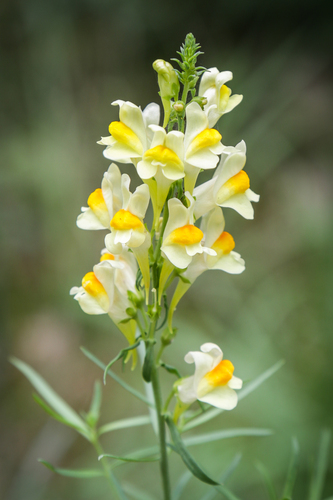
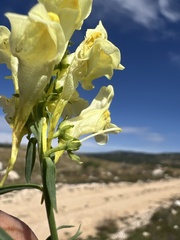
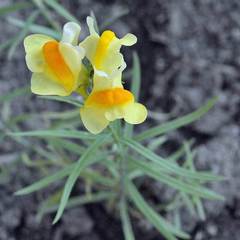
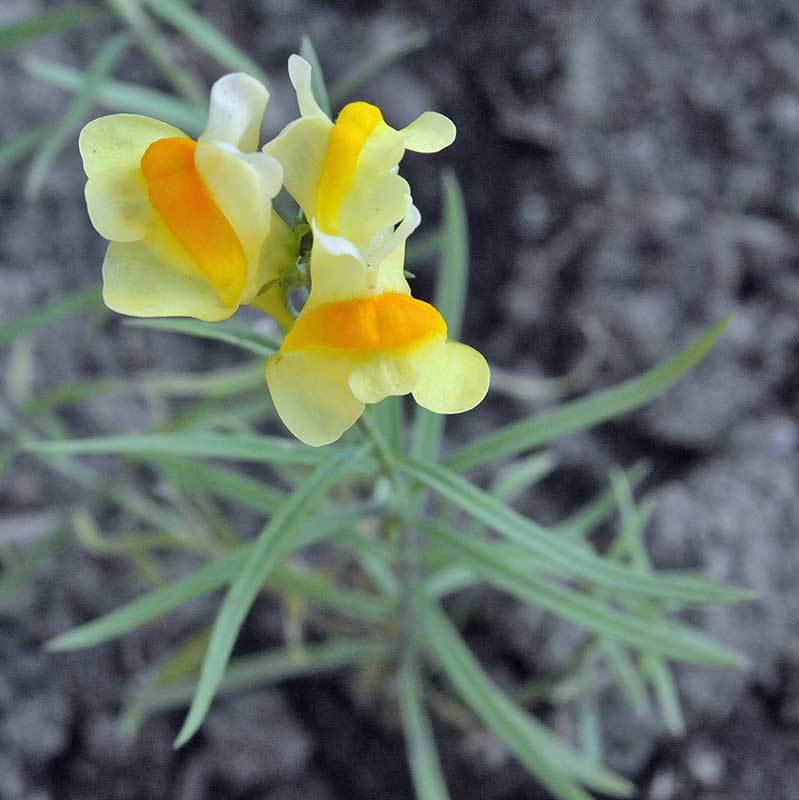
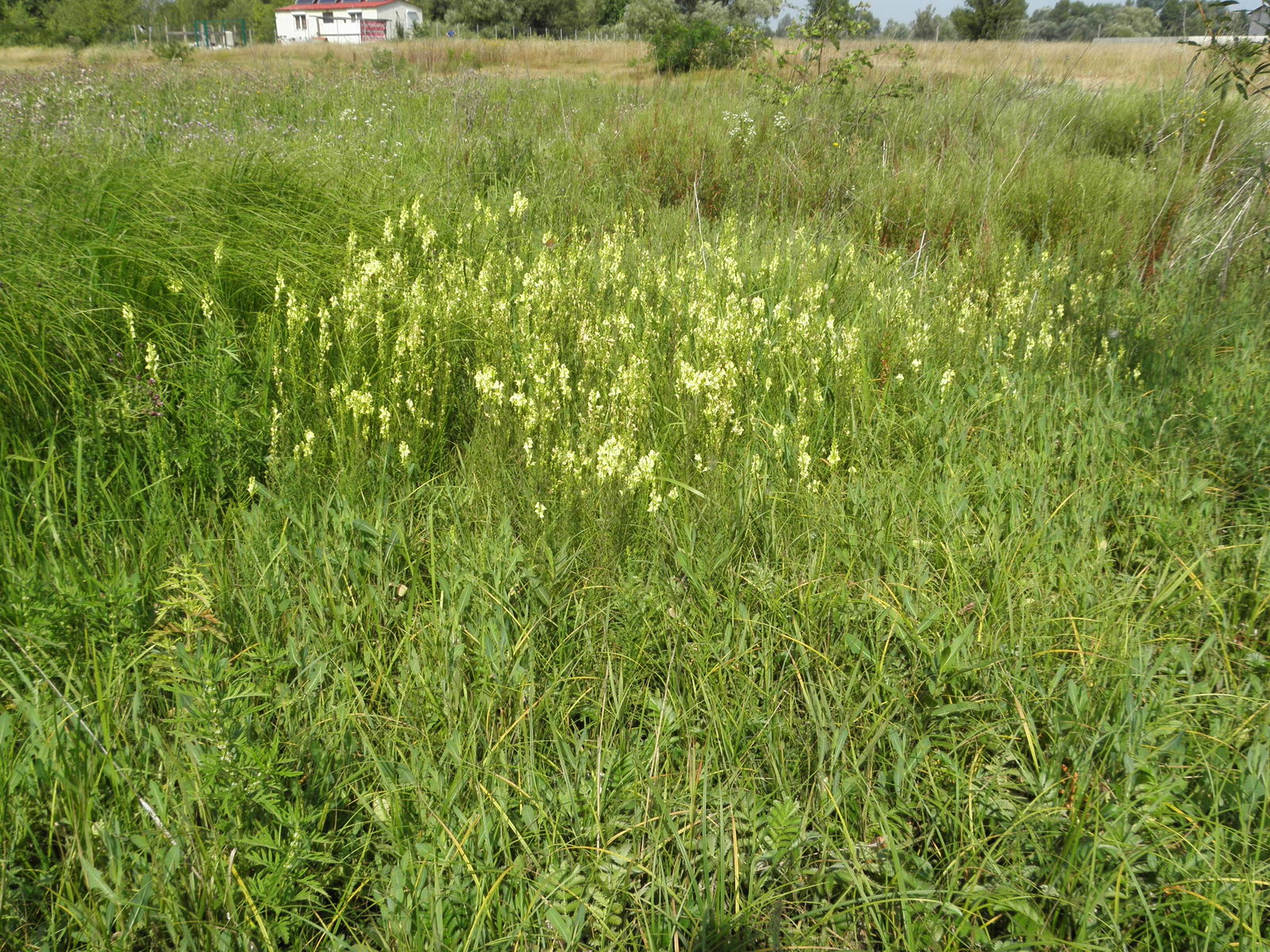
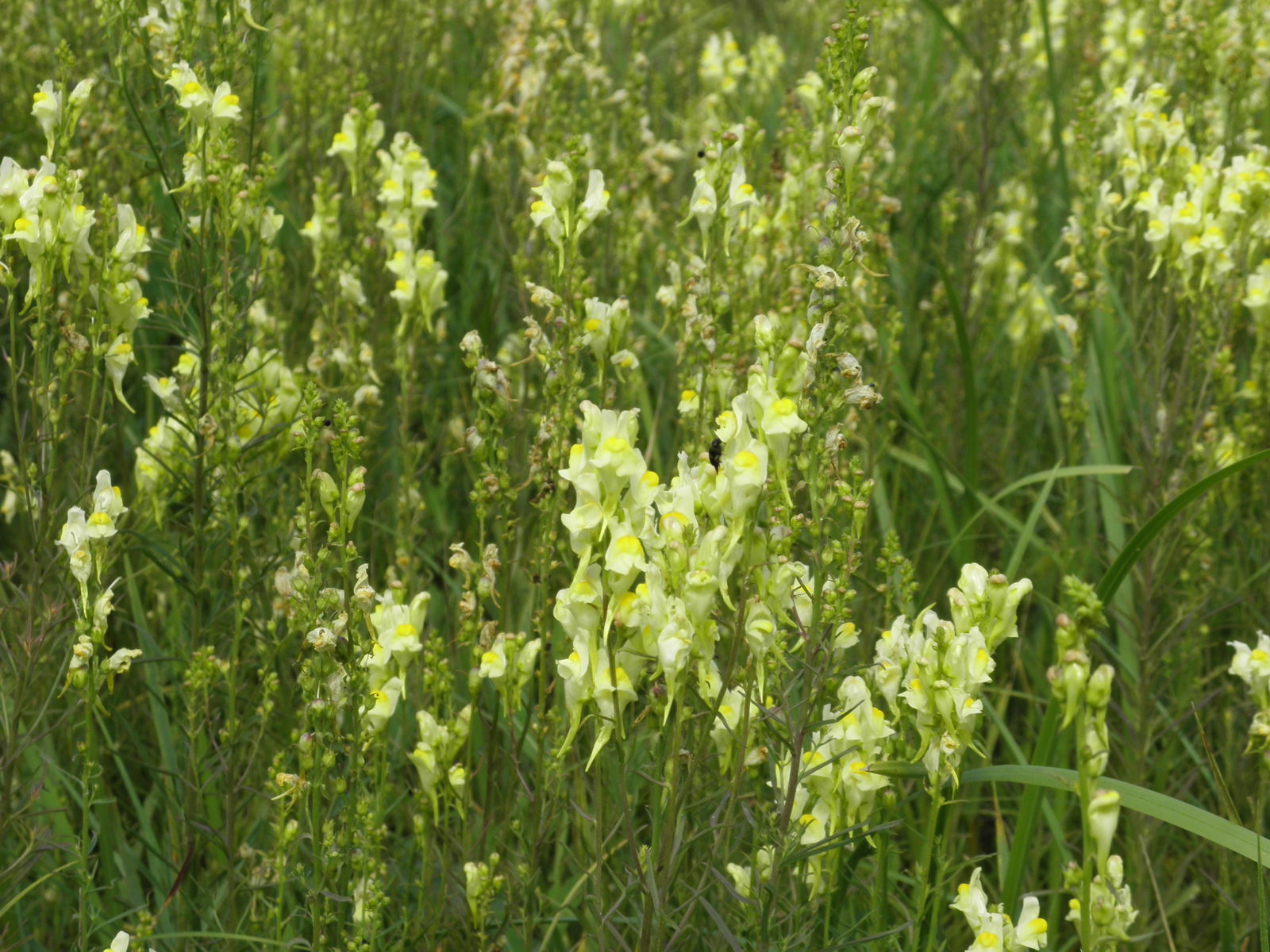
Common toadflax (Linaria vulgaris) is an herbaceous perennial in the Plantaginaceae, native to Europe and temperate Asia, from Siberia to Central Asia. Spreading rhizomes form dense colonies, with spikes of yellow flowers from summer to fall. An orange lower lip and curved spur give each flower the look of a miniature snapdragon. Introduced as an ornamental to North America in the 17th century, it is now a regulated weed there.
Read morecommon toadflax, butter and eggs and yellow toadflax
Place in full sun, with intense direct light all day long.
Prefer full sun; partial shade is possible


© photo
(c) Maja Dumat, some rights reserved (CC BY) · cc-by
Mirko Ubović · cc0
John Sankey · cc0
Taken Sep 23, 2022 by Georgia C (cc-by-sa)
Taken Sep 30, 2021 by mohammad fazel dehkordi (cc-by-sa)
Taken Jul 17, 2022 by Waldemar Zeja (cc-by-sa)
Taken Oct 15, 2021 by el jardinero jardinero (cc-by-sa)
© copyright of the Board of Trustees of the Royal Botanic Gardens, Kew.




Global distribution
The native range of Linaria vulgaris covers Europe and temperate Asia, from Siberia to Central Asia. A distinct subspecies, subsp. chinensis, is native from northern and eastern China to Korea. Introduced to North America by the late 17th century as an ornamental and medicinal plant, it has naturalized widely and is now a monitored weed in many states and provinces.
- Native6
- Invasive2
- France
- Germany
- United Kingdom
- Russia
- Kazakhstan
- China
- Canada
- United States
Hexagons: regions where the plant occurs. Green dots: native range.1
Identity
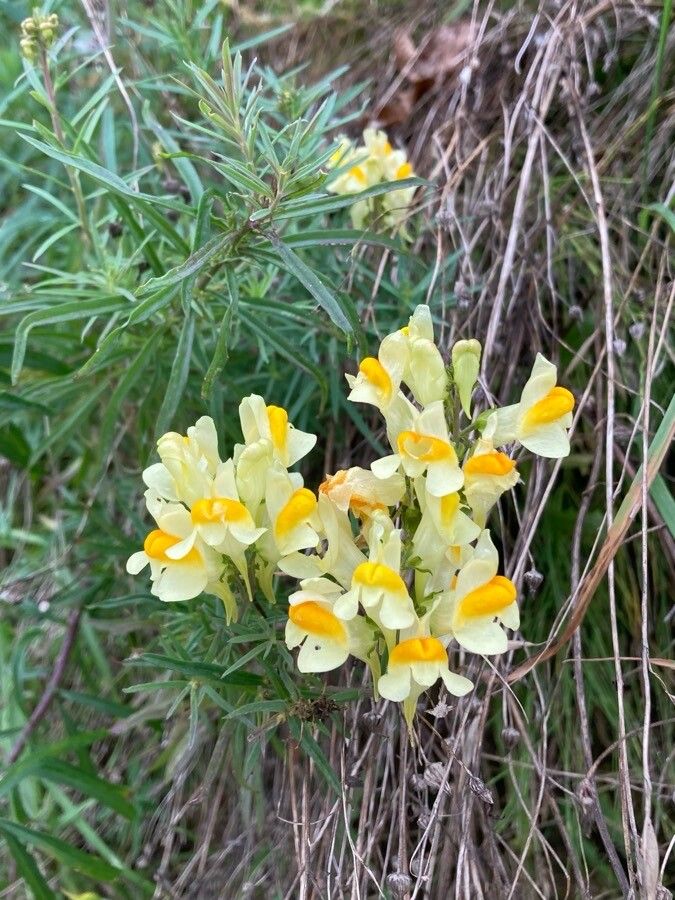
Yellow flowers with an orange lower lip and a curved spur give common toadflax (Linaria vulgaris Mill., 1768) the look of a miniature snapdragon. This herbaceous perennial belongs to Linaria in the Plantaginaceae. The nectar spur, 2–3 cm (0.8–1.2 in) long, is absent in garden snapdragon (Antirrhinum majus), providing the one dependable field distinction between the two genera. Linnaeus first described it as Antirrhinum linaria in 1753; Philip Miller transferred it to the new genus Linaria in 1768 under the name accepted today. 1 6 8
The epithet vulgaris indicates a widespread, familiar plant, prominent on European waste ground and roadsides. Linaria comes from the Latin linum, flax, because its narrow, glaucous leaves resemble flax foliage, although the two plants are not botanically related. The established names butter and eggs and yellow toadflax also refer to this yellow-flowered species. 2
Recognition
Upright stems 10–50 cm (4–20 in) tall carry narrow, glaucous leaves, whorled below and alternate above. Densely arranged leaves can give the impression of whorls. Terminal spikes bear numerous yellow flowers with an orange lower lip and a curved spur 2–3 cm (0.8–1.2 in) long at the base of the corolla. 2 4
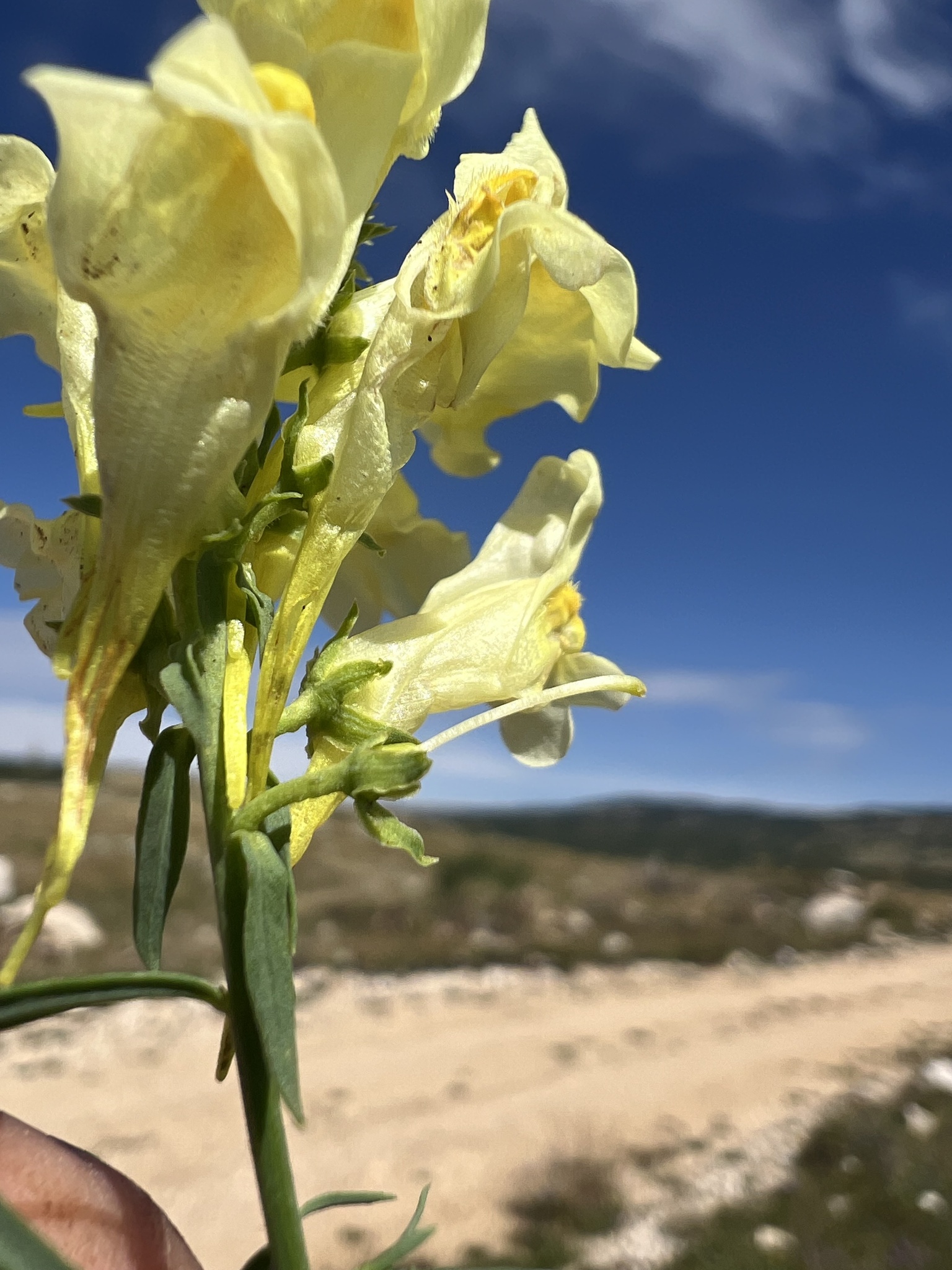
Like a miniature snapdragon, the flower remains closed. Only sufficiently heavy insects, especially bumblebees, can push its two lips apart and reach the nectar deep in the spur; lighter insects leave without it. The spur distinguishes these flowers from Antirrhinum, which lacks one. 3
After fertilization, each flower produces an oval capsule containing numerous tiny seeds. Each has a membranous wing that allows the wind to carry it over long distances. 4
Useful taxonomy
For the accepted name, POWO retains Linaria vulgaris Mill., with Antirrhinum linaria L., Linnaeus's original combination, as its basionym. Three subspecies are recognized in the literature. 1
- Antirrhinum linaria L., 1753 remains the species' basionym.
- Linaria vulgaris subsp. chinensis (Bunge ex Debeaux) D.Y.Hong grows from northern and eastern China to Korea.
- Linaria vulgaris subsp. pinetorum Kosachev was described more recently from the Altai.
Miller described the genus Linaria in 1754. It now belongs to the Plantaginaceae after a long history in the Scrophulariaceae. That family change does not alter the plant's field identity; it explains why older books place toadflax differently from recent guides. 1 6
Habitat and range
Europe and temperate Asia, from Siberia to Central Asia, form the native range of Linaria vulgaris. Subspecies chinensis occupies a separate range from northern and eastern China to Korea. The plant colonizes waste ground, roadsides, banks and cultivated fields on well-drained sandy, gravelly or calcareous soils. 1 4
Introduced to North America by the late 17th century as an ornamental and medicinal plant, it has naturalized widely. The USDA's National Invasive Species Information Center now includes it among weeds that compete with native vegetation, with active management programs in several states and provinces. 5 7
In Europe, common toadflax remains an ordinary part of disturbed-ground vegetation. In North America, the same species is monitored as a weed, illustrating how a plant's behavior can change when it is moved far beyond its native range. These regional assessments do not establish a rule for every reader's location. 5
Life cycle and reproduction
Flowering continues from summer into early fall. Each flower opens only under the weight of a sufficiently heavy pollinator, particularly a bumblebee, which pushes the corolla lips apart to reach nectar at the back of the spur. This mechanical barrier restricts fertilization to a small group of species. 3
Vegetative reproduction drives local expansion. Spreading rhizomes extend several meters around the parent (for unit reference, 1 m is about 3.3 ft) and quickly produce new flowering stems. Genetically identical to the original plant, these colonies explain how an isolated patch can become a dense carpet. 4
A clump raised from seed reaches full development in 2–5 years. Rhizome propagation is faster, producing flowering stems in the first season after division. 2
Uses and risks
Its main use is ornamental, in gravel gardens, flower meadows and dry borders, where its long yellow display also supplies cut flowers. Traditional medicine used the whole plant as a diuretic and laxative for edema, jaundice and skin conditions. Plants For A Future describes it as little used today and advises caution; that tradition is neither a guarantee of safety nor a recommendation for self-treatment. 3
The whole plant contains glycosides considered mildly toxic, particularly to livestock grazing it in pastures. No specific ASPCA entry documents a risk to cats and dogs, leaving no species-specific ASPCA reference for these pets; this absence is not evidence of safety. 3
In North America, vigorous rhizomes and abundant winged seed help explain its status as a regulated weed in several states and provinces. Biological control programs use insects specialized on Linaria to limit its spread. 5
Varieties, look-alikes and related plants
Stable horticultural cultivars are not recognized for Linaria vulgaris: nursery plants almost always represent the typical species, without a selected flower color or habit. Pay closer attention to a plant's geographic origin, because one introduced outside its native range can colonize more aggressively than it does in Europe. 4
The most frequent comparisons involve:
- Garden snapdragon (Antirrhinum majus), which lacks a nectar spur.
- Linaria repens, with paler flowers, often striped with violet.
- Linaria dalmatica, a taller plant with broad leaves that clasp the stem.
The curved spur at the base of the flower confirms a toadflax rather than a garden snapdragon, which lacks it completely. Flower color and leaf shape then distinguish the different Linaria species. 2 1
Main sources
- Plants of the World Online / Kew, Linaria vulgaris Mill.
- Royal Horticultural Society, Linaria vulgaris - common toadflax
- Plants For A Future, Linaria vulgaris
- North Carolina State Extension, Linaria vulgaris
- National Invasive Species Information Center (USDA), Yellow toadflax
- Integrated Taxonomic Information System (ITIS), Linaria vulgaris
- USDA PLANTS Database, Linaria vulgaris
- International Plant Names Index (IPNI), Linaria vulgaris Mill.
Frequently asked questions
Is common toadflax toxic?
Mild toxicity to livestock is reported, associated with glycosides throughout the plant. No specific ASPCA entry documents a risk to cats and dogs.
Why is it called butter and eggs?
The nickname describes the flower color contrast: buttery yellow over most of the corolla and orange-yellow on the lower lip, like eggs resting on butter.
Is common toadflax invasive?
It is native and has no invasive status in Europe, where it is part of the ordinary disturbed-ground flora. In North America, where it was introduced as an ornamental, it is a regulated weed in several states and provinces.
How does common toadflax spread?
By winged seeds carried on the wind and spreading rhizomes that quickly produce new stems around the parent, forming dense colonies.
How does it differ from garden snapdragon (Antirrhinum majus)?
Toadflax has a curved nectar spur at the base of the flower, which garden snapdragon lacks. Both genera belong to the Plantaginaceae and have a similar two-lipped flower.
What exposure does common toadflax need?
Prefer full sun on poor to moderately fertile, well-drained sandy or calcareous soil. The plant can also grow in partial shade.
Where does the name Linaria come from?
The genus name comes from the Latin linum, flax, because its narrow, glaucous leaves resemble cultivated flax. Linnaeus first described it as Antirrhinum linaria in 1753, before Miller transferred it to Linaria in 1768.
Similar plants
If you are unsure about a plant’s toxicity, ask a botanist or veterinarian for advice.