
Sweet alyssum (Lobularia maritima, )

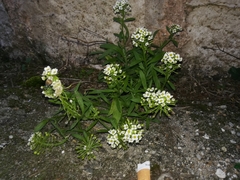
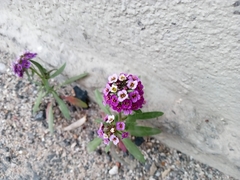
Sweet alyssum (Lobularia maritima), also called sweet alison, is a low, carpeting member of the Brassicaceae native to the Mediterranean region. Its cushions of tiny, honey-scented white flowers attract bees and hoverflies. It is non-toxic to animals and children.
Read moreSweet alyssum and sweet alison
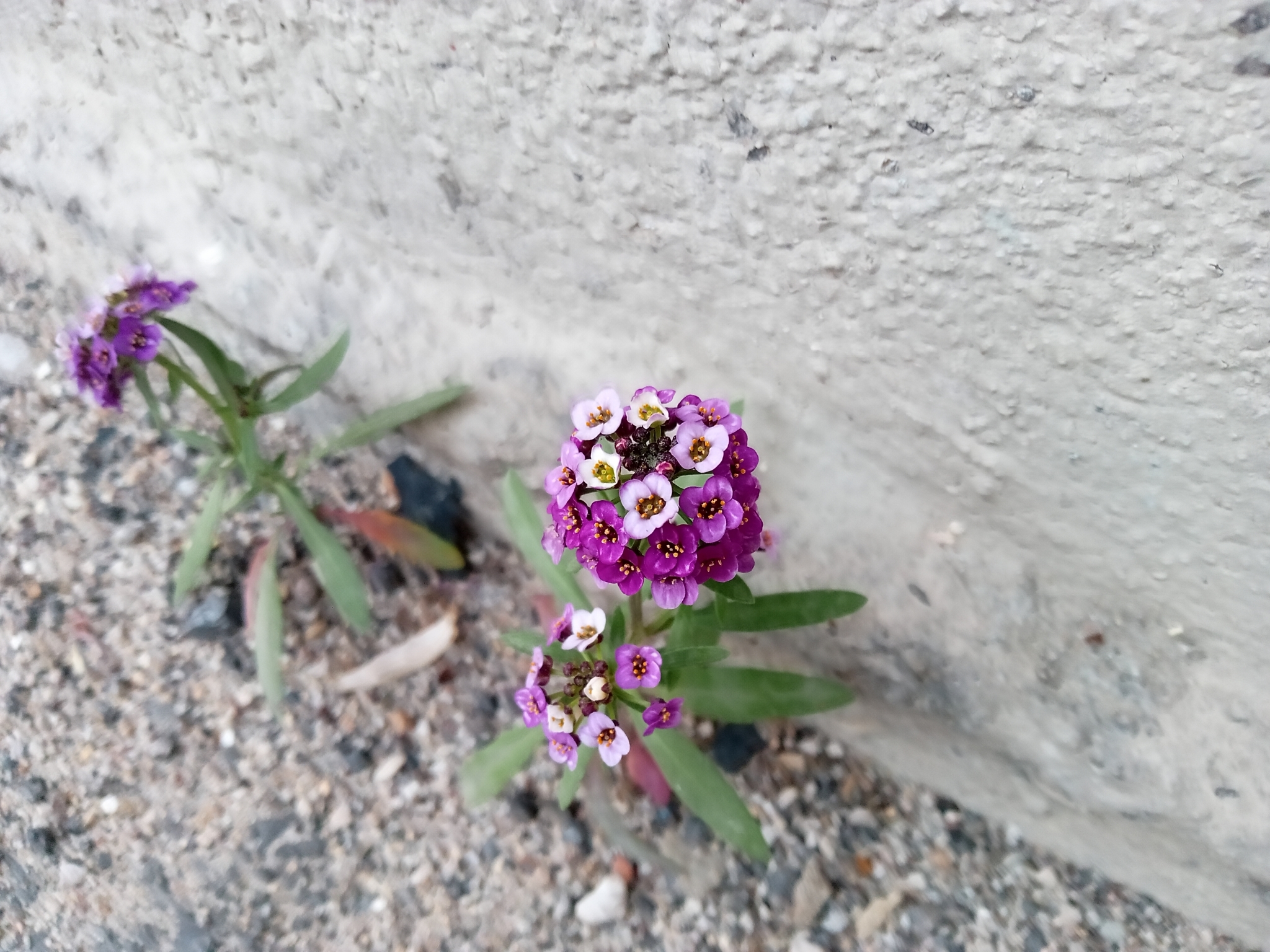


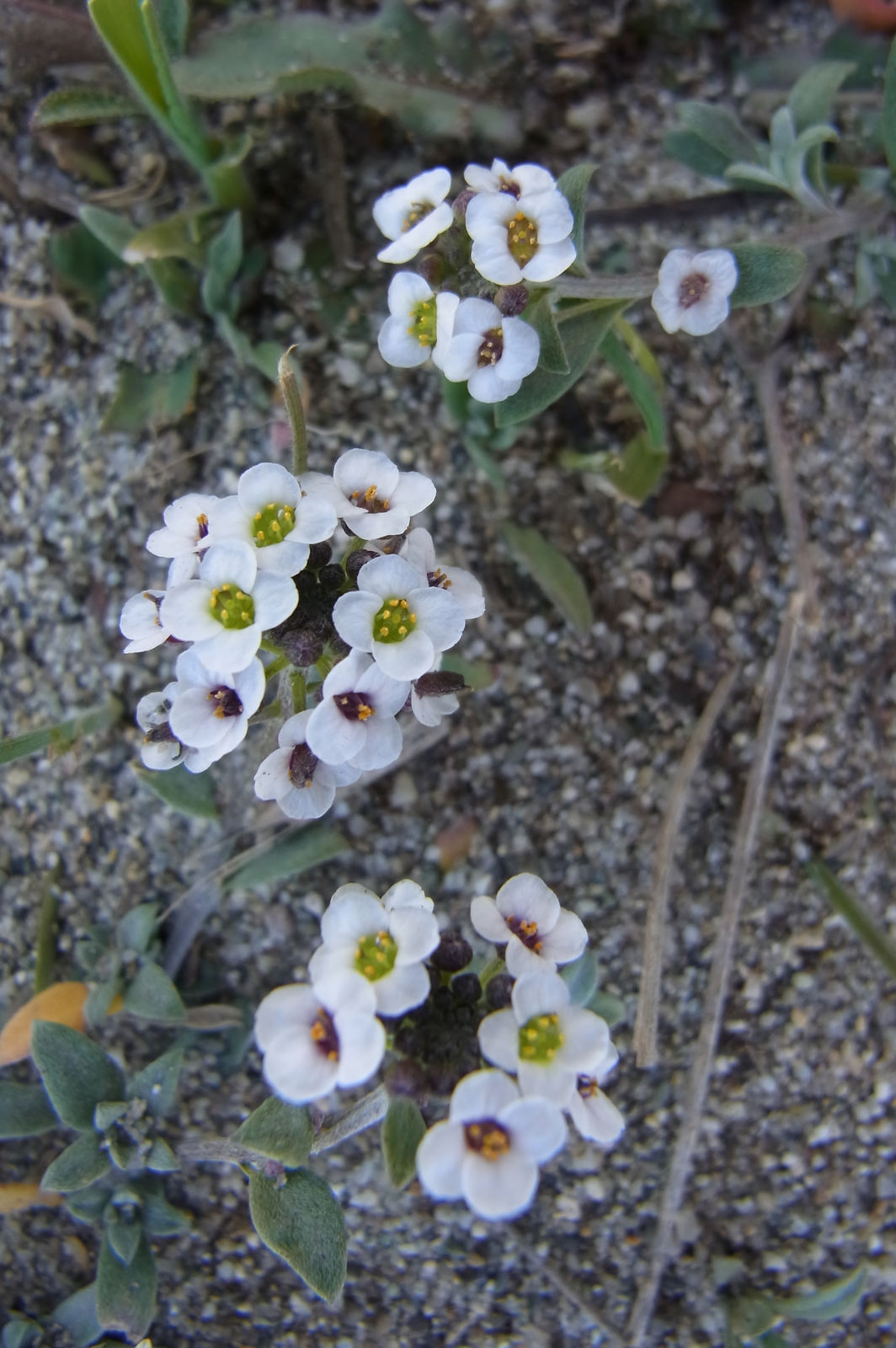


© photo
(c) mari_her03, some rights reserved (CC BY-NC) · cc-by-nc
Julien Renoult · cc0
Eleftherios Katsillis · cc-by
Taken Apr 30, 2022 by ñah (cc-by-sa)
Taken Dec 25, 2019 by El Mojito (cc-by-sa)
Taken Jul 7, 2019 by huy HO (cc-by-sa)
Taken Oct 23, 2021 by cscoq (cc-by-sa)
Taken Jan 4, 2021 by Anvon (cc-by-sa)
© copyright of the Board of Trustees of the Royal Botanic Gardens, Kew.




Global distribution
According to POWO, the native range of Lobularia maritima extends from the western and central Mediterranean to Sinai, on dry sunny ground. The Azores, Canary Islands and Greece are listed as introduced. Widely cultivated as an ornamental annual, it has naturalized in many temperate and subtropical climates; these introduced regions should be distinguished from its area of origin.
- Native6
- Introduced3
- Spain
- Mediterranean France
- Italy
- Greece
- Morocco
- Canary Islands
- United Kingdom
- United States
- Australia
Hexagons: regions where the plant occurs. Green dots: native range.1
Identity
Honey-scented flowers cover the low cushions of sweet alyssum (Lobularia maritima (L.) Desv.), also called sweet alison. This small, carpeting member of the Brassicaceae belongs to Lobularia. Usually grown as an annual, it can be a short-lived perennial in mild climates, forming low mounds covered with tiny white flowers. 1 7
Gardeners chiefly use it as an edging annual or rock-garden plant, valued for its continuous carpet of flowers and honey fragrance, noticeable from a distance. A member of the mustard family, it is also considered a non-toxic plant and is sometimes grown for its edible flowers. Its small scale makes the flowering cushion, rather than an individual bloom, the main garden feature. 2 5
Recognition
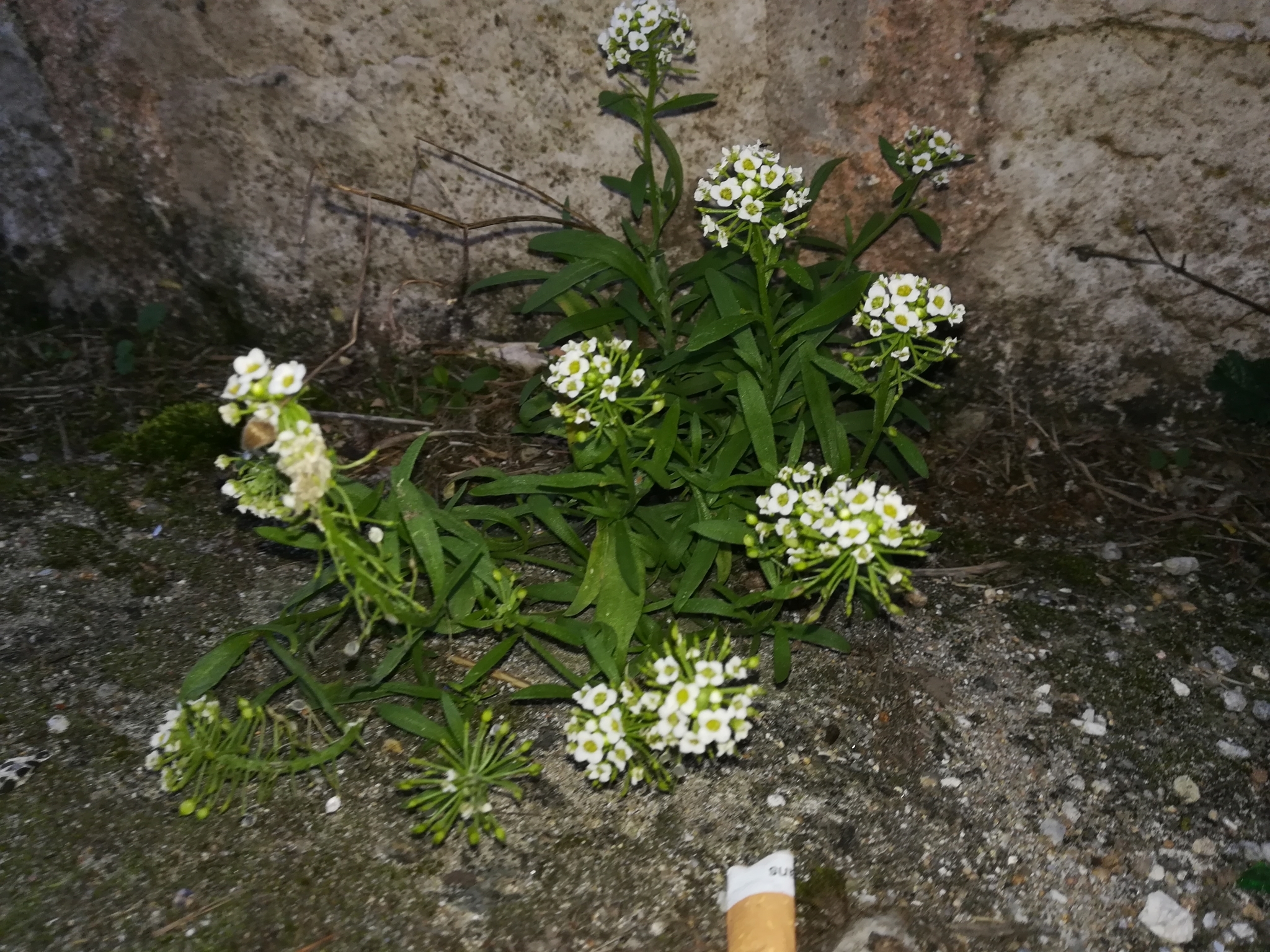
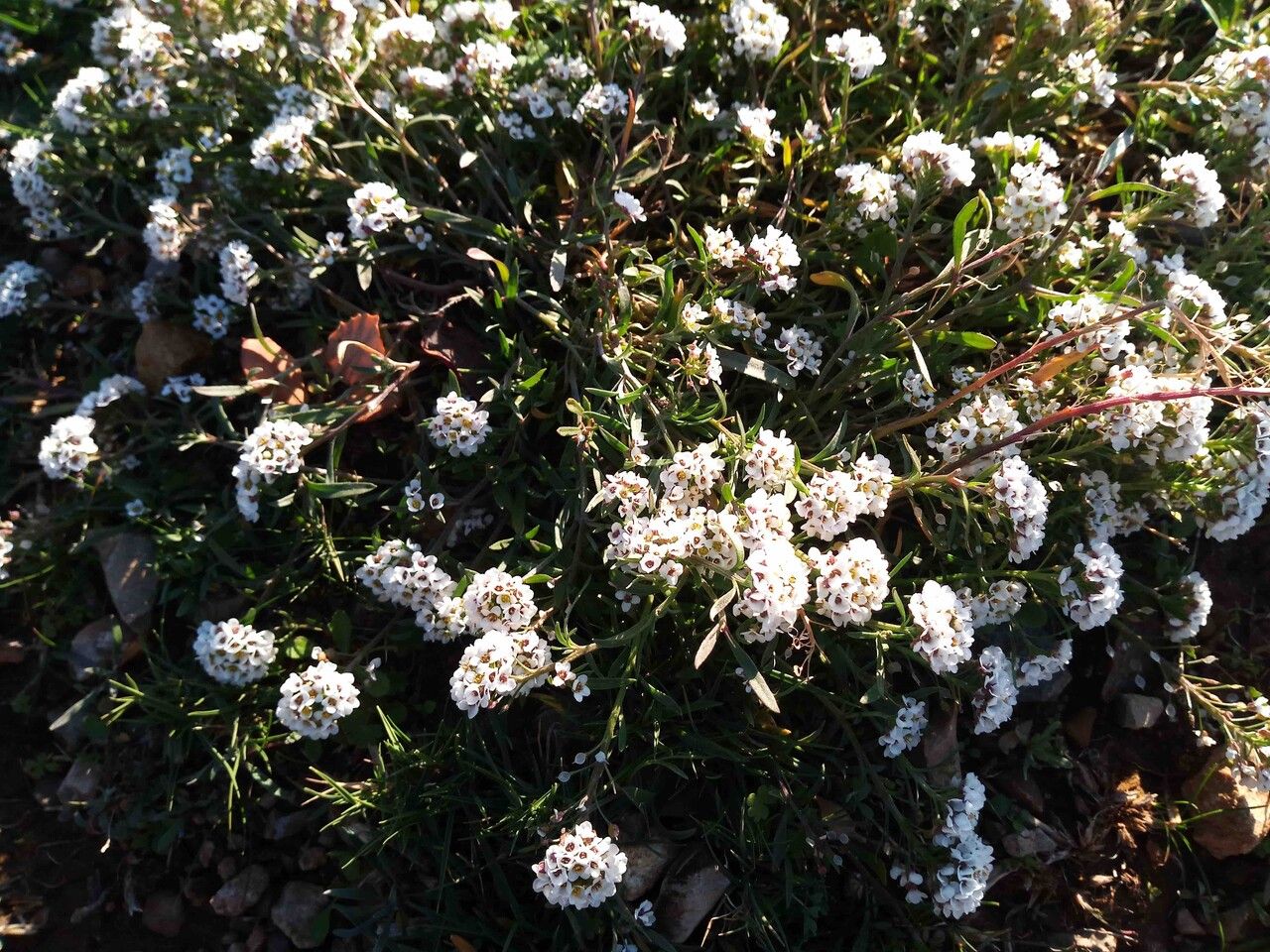
Look first at the habit: a low, spreading plant, 5–30 cm (2–12 in) tall depending on the cultivar, forming a dense cushion wider than it is tall. Narrow, lance-shaped leaves are gray-green and slightly hairy. This mat-forming outline remains useful even before the flowers have covered the foliage. 2 3
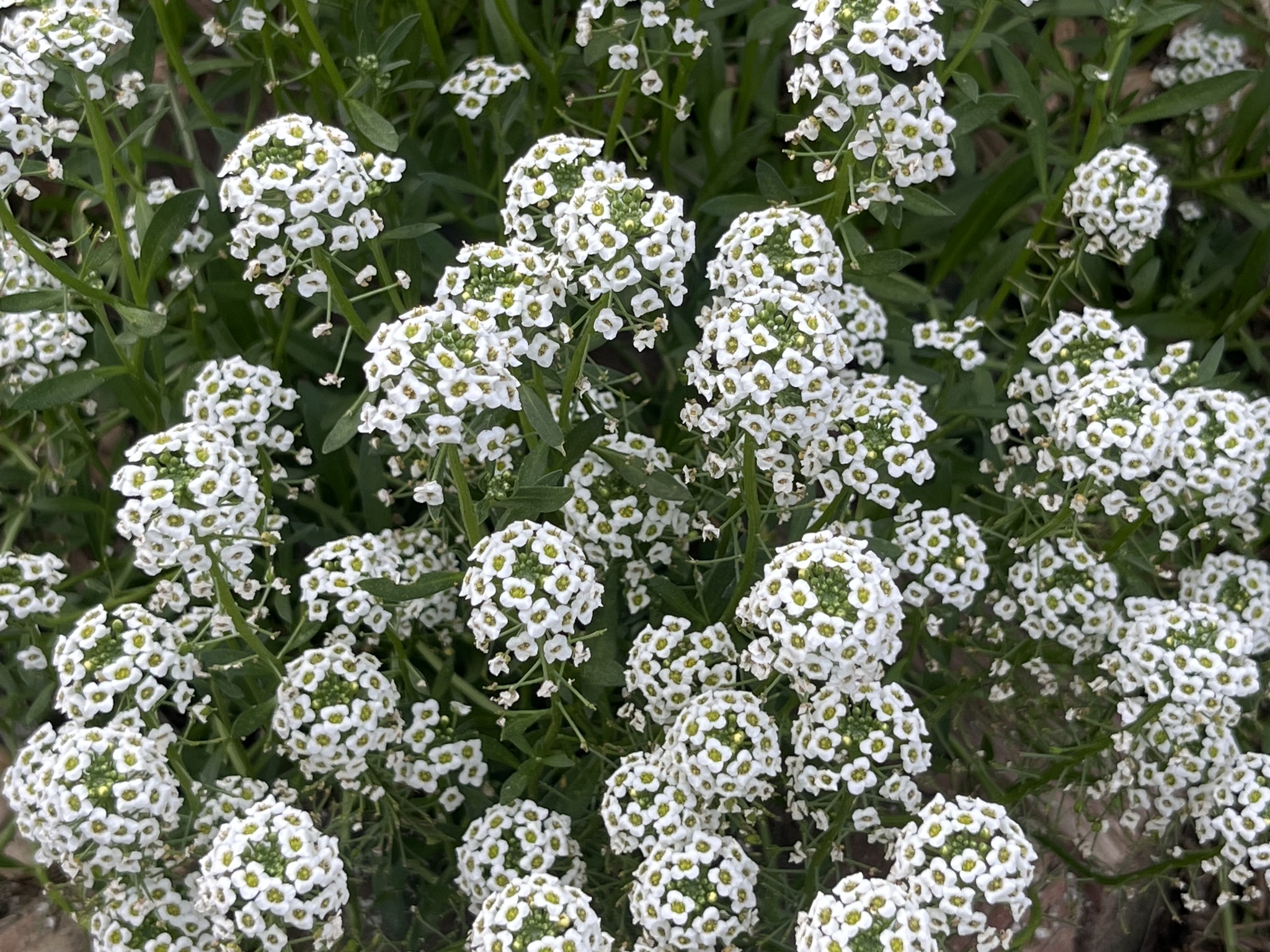
The tiny flowers measure only a few millimeters across; for scale, 1 mm is about 0.04 in. Each has four petals arranged in a cross, the characteristic pattern of the Brassicaceae. Dense clusters cover the plant. The typical flowers are white, while cultivars extend the colors to pink, lavender and deep purple. The sweet, honey-like fragrance is another particularly useful clue. 4 3
Small, rounded silicles, the short dry seedpods characteristic of crucifers, follow the flowers. Distinguish the plant from true Alyssum species, which generally have yellow flowers. Sweet alyssum was long known under that genus name, explaining why the old name persists in gardens and catalogs. 1 7
Useful taxonomy
Linnaeus described the species as Clypeola maritima in 1753. Lamarck subsequently placed it in Alyssum as Alyssum maritimum in 1783, before Desvaux made the combination in Lobularia in 1815. That history explains the continued use of “alyssum” in garden names. The names to distinguish are:
- Alyssum maritimum (L.) Lam.
- Clypeola maritima L.
- Koniga maritima (L.) Sm., 1831
- Lobularia maritima subsp. maritima: an accepted subspecies, not a synonym
- Glyce maritima (L.) Lindl.
The accepted scientific name, Lobularia maritima, remains the stable reference. Names such as Snow Princess and Royal Carpet identify horticultural selections rather than separate species or botanical varieties. Keep the cultivar name alongside the species when comparing the habit or flower color of plants offered for sale. 1 3
Habitat and range
The native range documented by Kew extends from the western and central Mediterranean to Sinai and lists the Azores, Canary Islands and Greece as introduced. The plant grows on coastal rocks and cliffs, dunes and dry sunny ground, tolerating drought, poor soil and salt spray. These habitats explain much of its usefulness in exposed, well-drained garden positions. 1 2
Widely cultivated as an ornamental annual, the species has naturalized in many temperate and subtropical climates, from the United Kingdom to North America and Australia. These introduced areas should be distinguished from its Mediterranean origin rather than combined into one undifferentiated native range. 3 5
Adaptation to dry, freely draining soil allows it to occupy unpromising places such as paving joints, low walls and stony banks. The same characteristics make it an approachable choice for rock gardens and containers in full sun. Drainage remains important even where the plant is grown in a more fertile garden bed. 2 4
Life cycle and reproduction
Sweet alyssum has a short annual cycle. Sow seed on the surface without covering it, since light favors germination. Seedlings appear in one to two weeks, with flowering following six to ten weeks after sowing. In climates where spring sowing is appropriate, use the local spring season rather than a calendar date transferred from another hemisphere. 4 5
Flowering lasts from spring into fall, often in two waves when plants are trimmed after the first flush. The nectar-bearing flowers are pollinated by insects, including bees, hoverflies and small butterflies. Accessible nectar helps explain the plant's reputation as a useful source of food for visiting insects. 3 2
Each fertilized flower develops into a small silicle containing few seeds. Plants self-sow from one year to the next, often returning to the garden without intervention. In mild areas, some individual plants may survive winter and behave as short-lived perennials, alongside the more familiar return from seed. 7 6
Uses and risks
The main use is ornamental: edging beds, filling rock gardens or paving joints, and trailing from planters. In vegetable gardens and orchards, its nectar-rich flowers also make it a useful companion plant, attracting pollinators and beneficial insects associated with crop pollination. Its low growth allows it to contribute flowers without dominating the planting. 5 2
The ASPCA lists its Alyssum group, named Alyssum spp., as non-toxic to cats, dogs and horses. The entry does not explicitly name Lobularia maritima, which has the synonym Alyssum maritimum. Like many Brassicaceae, it is also edible: the mildly peppery flowers are sometimes used as a culinary garnish. Reserve that use for plants grown without chemical treatments. Ornamental plants intended for display should not automatically be treated as ingredients simply because the species is edible. 8 6
Varieties, look-alikes and related plants
The many selections sold are not separate species. Snow Princess is a sterile, heat-tolerant hybrid with abundant flowers; Royal Carpet and Oriental Night have purple blooms; Snowdrift is pure white; Rosie O'Day is a dwarf pink form. Before buying, check the cultivar name, vigor of the cushion and abundance of buds rather than choosing by a general color label alone. 2 4
Common look-alikes include:
- Alyssum species, the true alyssums, most often with yellow flowers; sweet alyssum formerly bore that genus name;
- Iberis sempervirens, evergreen candytuft, another white-flowered, carpeting crucifer;
- Arabis, rock cress, a spring-flowering mat-forming plant of rock gardens.
A low cushion, white four-petaled flowers and, above all, a honey-like fragrance are the most useful features for checking that a plant sold as alyssum is Lobularia maritima. Consider these features together, rather than treating a shared common name as a botanical identification. 3 1
Main sources
- Plants of the World Online / Kew, Lobularia maritima (L.) Desv.
- Royal Horticultural Society, Lobularia maritima - sweet alyssum
- Missouri Botanical Garden, Lobularia maritima
- University of Wisconsin Extension, Sweet Alyssum, Lobularia maritima
- North Carolina Extension Gardener Plant Toolbox, Lobularia maritima
- Plants For A Future, Lobularia maritima
- Encyclopaedia Britannica, sweet alyssum
- ASPCA, Alyssum (Alyssum spp.) non-toxic plant entry
Frequently asked questions
Is sweet alyssum toxic to cats and dogs?
No. The ASPCA lists its Alyssum group, named Alyssum spp., as non-toxic to cats, dogs and horses. The entry does not explicitly name Lobularia maritima, which has the synonym Alyssum maritimum. A member of the mustard family, it is also considered edible for humans.
Why does sweet alyssum attract so many bees?
Its tiny flowers offer easily accessible nectar and a distinct honey fragrance. Together these make it one of the annuals most visited by bees, hoverflies and small butterflies.
Is sweet alyssum an annual or a perennial?
In temperate climates it is grown as a frost-tender annual. In mild areas, some plants survive winter as short-lived perennials, but self-sowing remains the most common means of persistence.
How can I encourage sweet alyssum to flower again?
Trim the clumps back by about one-third after the first flush to stimulate another flowering period, especially as nights cool again in late summer. Well-drained soil and full sun complete the conditions it needs.
Can sweet alyssum be confused with other alyssums?
Yes. True Alyssum species most often have yellow flowers, whereas Lobularia maritima has white, pink or purple flowers. Its honey fragrance and carpeting habit are useful clues.
Can I sow sweet alyssum directly outdoors?
Yes. Sow on the surface in spring without covering the seeds, since light favors germination. Seedlings appear in one to two weeks, followed by flowers in six to ten weeks.
What exposure does sweet alyssum need?
Full sun produces the densest, most fragrant flowering. In shade, growth becomes drawn out and flowers are sparse. Well-drained soil suits it well, even if the soil is poor.
Similar plants
If you are unsure about a plant’s toxicity, ask a botanist or veterinarian for advice.