
Garden nasturtium (Tropaeolum majus, )
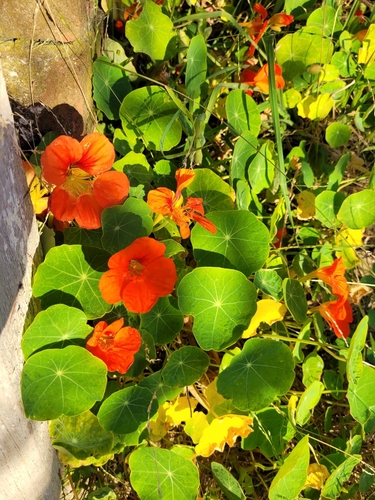
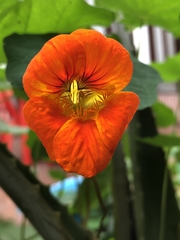
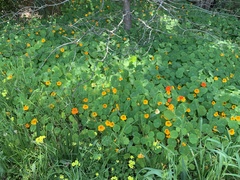
Garden nasturtium (Tropaeolum majus) is a trailing to climbing annual in the Tropaeolaceae family, originating in the South American Andes. Its round, peltate leaves and spurred orange, yellow or red flowers make it popular in flower beds and vegetable gardens. The plant is edible and non-toxic and also serves as an aphid trap crop.
Read moreGarden nasturtium, Nasturtium, Indian cress and Monk’s cress
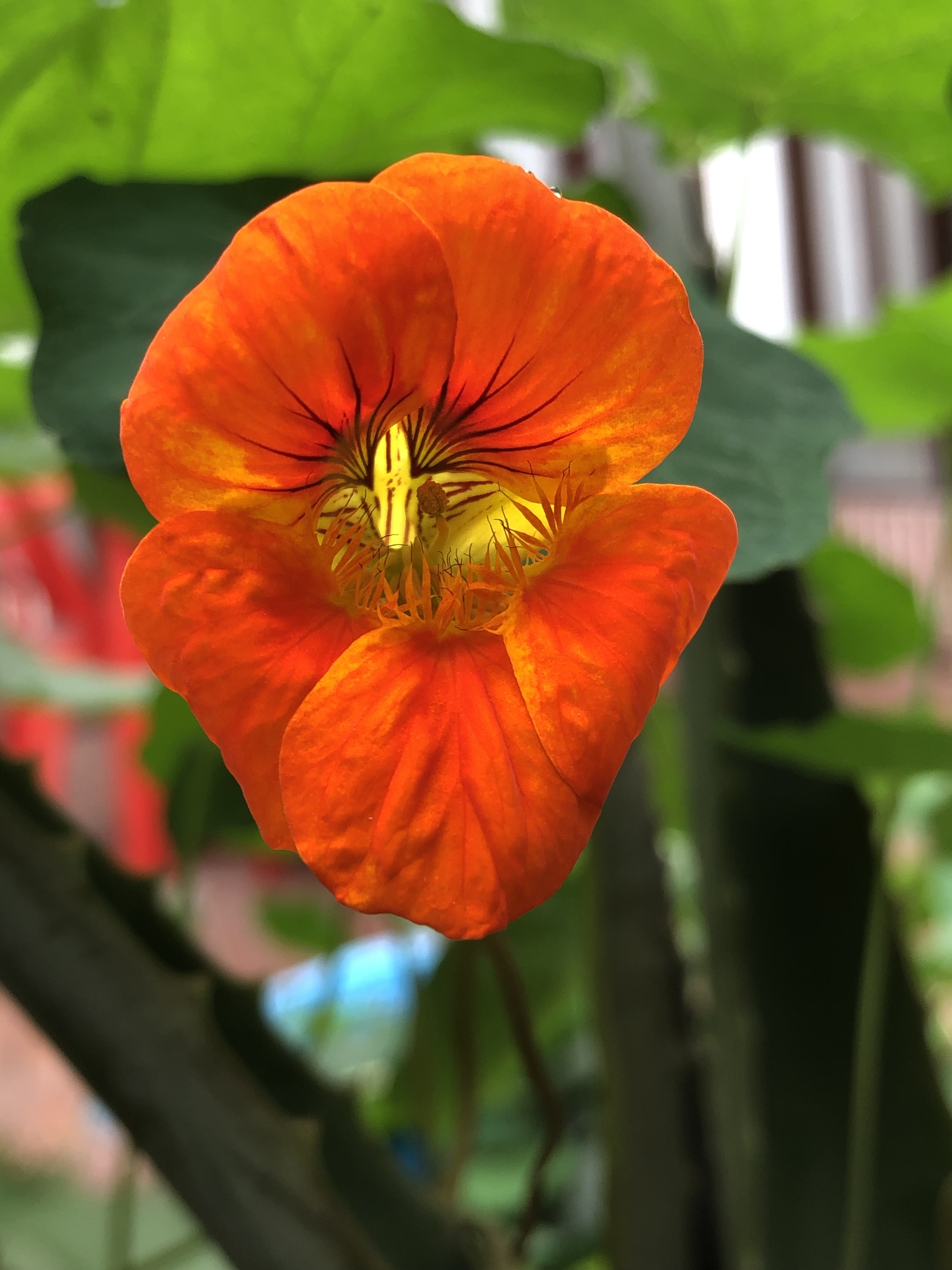
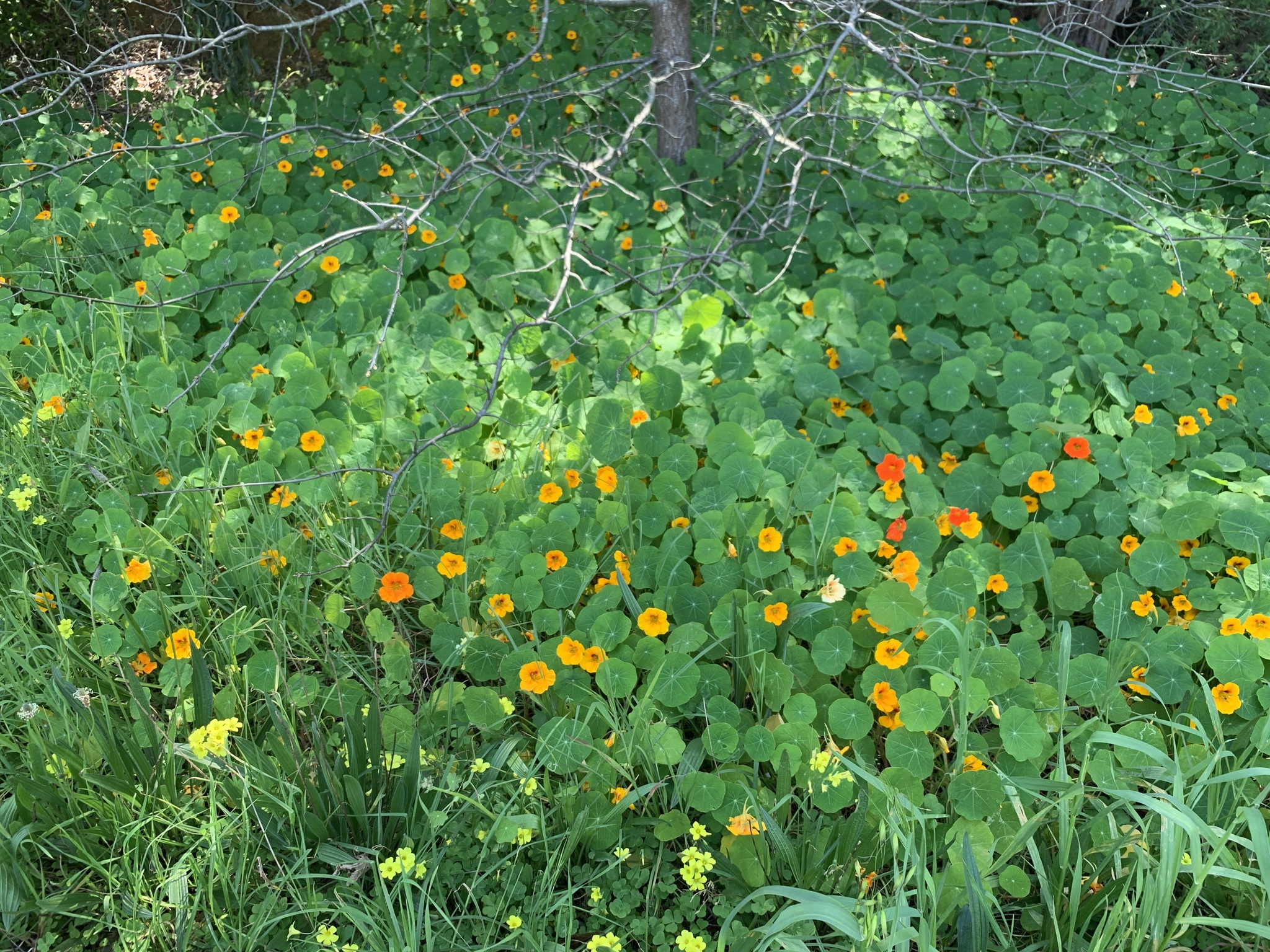


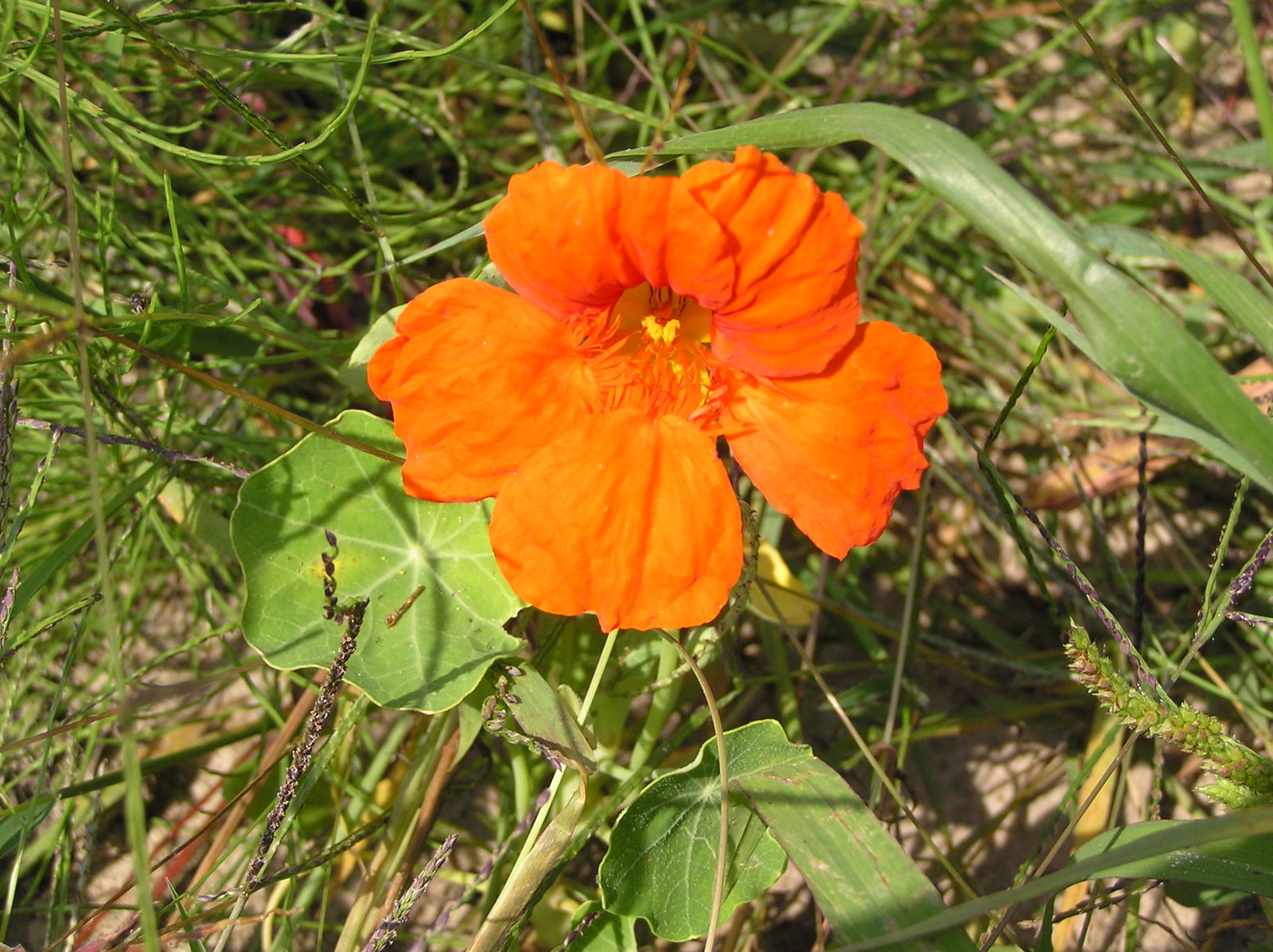

© photo
Kate McAlpine · cc-by
Antonio W. Salas · cc-by
Dave Richardson · cc-by
Taken Jan 1, 2022 by hombre marihuanero (cc-by-sa)
Taken Jan 3, 2022 by Monteiro Henrique (cc-by-sa)
Taken Jan 14, 2022 by Monteiro Henrique (cc-by-sa)
Taken Sep 19, 2021 by Manū (cc-by-sa)
Taken Nov 20, 2020 by momo urba (cc-by-sa)
© copyright of the Board of Trustees of the Royal Botanic Gardens, Kew.




Global distribution
Tropaeolum majus originates in the South American Andes, from Peru to Colombia, where it is known as a cultigen. Widely grown for ornament and food, it has naturalized in many temperate and subtropical regions. These introduced areas should be distinguished from its Andean origin.
- Native4
- Introduced2
- Peru
- Colombia
- Ecuador
- Bolivia
- United States
- Australia
Hexagons: regions where the plant occurs. Green dots: native range.1
Identity
Garden nasturtium (Tropaeolum majus L., 1753) is a trailing to climbing annual in the genus Tropaeolum, family Tropaeolaceae. Carl Linnaeus described it in 1753, and it remains the type species of the best-known genus in this small South American family. 1 4
In beds and vegetable gardens, spurred orange flowers and round foliage give garden nasturtium both ornamental and culinary appeal. Entirely edible and non-toxic, it also serves as an aphid trap crop, making it an accessible, useful plant for beginners. 2 3
Recognition
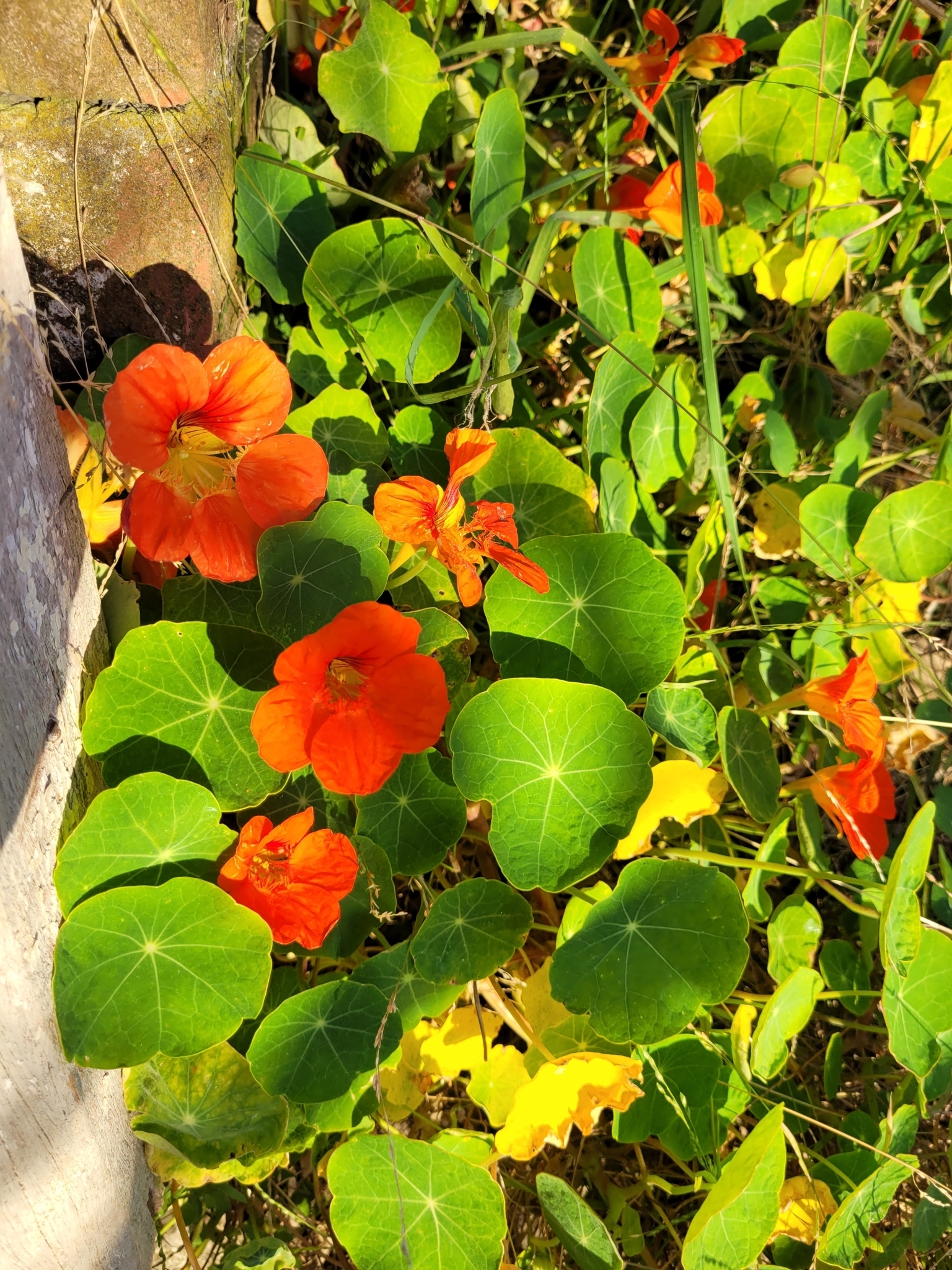
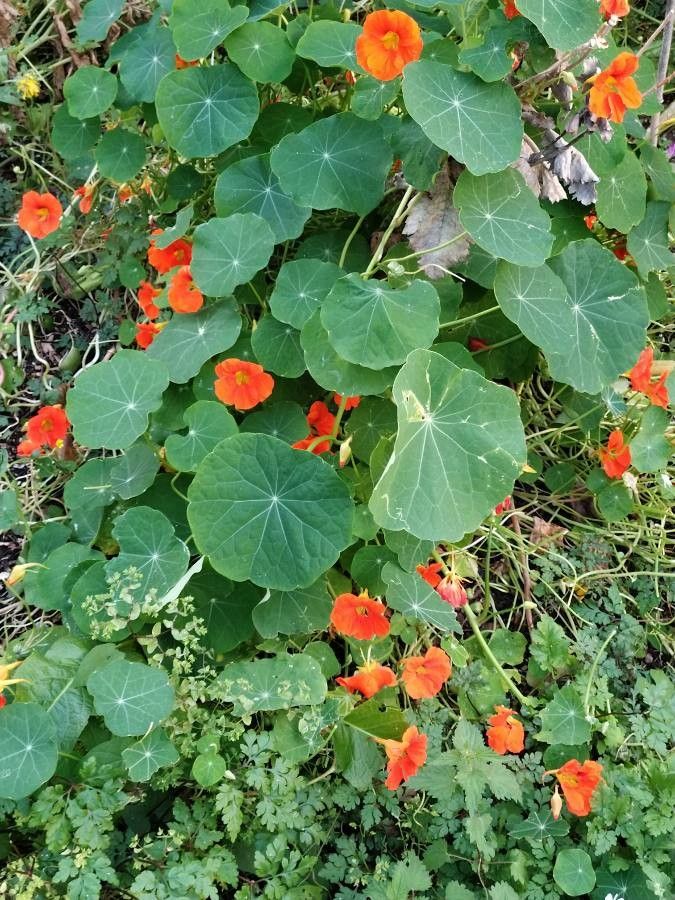
Round, peltate leaves provide the first clue to identifying Tropaeolum majus. The leaf stalk attaches near the center of the underside, and veins radiate across the blade. This unusual feature often identifies the plant on its own. 4 3
A funnel-shaped flower with five petals extends into a long spur at the back, containing sweet nectar. Cultivars offer warm colors from yellow through orange to scarlet red, sometimes with markings at the center. 4 2
Soft, fleshy stems trail or climb, attaching to supports by coiling their leaf stalks around them. Depending on the cultivated form, a plant stays compact or reaches 3 m (10 ft) up a fence in one season, spreading 30–150 cm (1–5 ft) wide. 5 2
Useful taxonomy
Published as Tropaeolum majus L. by Carl Linnaeus in 1753, the species has IPNI identifier 310974-2. The genus includes many Andean species, and garden nasturtium itself has an ancient cultivated origin that helps explain its long list of synonyms. Principal names include:
- Tropaeolum majus var. coccineum Alef., a scientific synonym
- Tropaeolum majus var. luteum Alef., a scientific synonym
- Tropaeolum tricolor var. majus Marnock, a scientific synonym
- Tropaeolum × tenuirostre var. majus Buchenau, a scientific synonym
- Tropaeolum majus var. plenum Alef., a scientific synonym
The accepted scientific name, Tropaeolum majus, provides a consistent reference: cultivar names such as Empress of India and Alaska refer to horticultural selections rather than separate species or botanical varieties. 1 7
Habitat and range
The South American Andes, from Peru to Colombia, are the original home of Tropaeolum majus, known there as an upland cultigen. It grows on cool slopes in a subtropical mountain climate with moderate temperatures. 1 4
Its Andean origin helps explain garden requirements: bright light, well-drained soil and conditions that are neither scorching nor freezing. Frost-tender and intolerant of severe dry heat, it is grown during the summer season in temperate climates. 2 5
Widespread ornamental and vegetable cultivation has allowed garden nasturtium to naturalize in many temperate and subtropical regions. It is locally considered invasive outside its original range. These introduced areas remain distinct from its Andean native range. 4 7
Life cycle and reproduction
In temperate climates, Tropaeolum majus behaves as an annual: sown in spring, it flowers throughout summer, sets seed in fall and dies with the first frost. In its milder Andean range it is actually a short-lived perennial. 4 2
Spurred flowers suit pollination by long-tongued insects, attracted to nectar held at the base of the spur; bees and bumblebees visit readily. After fertilization, each flower produces a dry, three-part fruit that separates at maturity into rounded, wrinkled seeds. 3 5
Direct sowing outdoors in spring, after the last frost, is the usual means of propagation. The large seeds germinate readily at a depth of 1–2 cm (0.4–0.8 in), with seedlings appearing in one to two weeks. Fragile roots tolerate transplanting poorly, so sowing directly rather than raising seedlings in pots gives sturdier plants. Flowering follows about two months after sowing and continues into fall. Fallen seeds often provide self-sown plants the following year. 2 5
Uses and risks
Both ornament and food are supplied by Tropaeolum majus. It suits flower beds and flowering vegetable gardens and is edible: the leaves and flowers have a peppery, watercress-like taste and are used in salads or as a garnish. Young green seeds can be pickled in vinegar as a substitute for capers. The sharp flavor explains cress-related common names such as Indian cress. 5 4
As a companion plant, garden nasturtium attracts black aphids to its stems, diverting them from neighboring crops such as tomatoes or cabbages and acting as a trap crop. Its nectar-bearing flowers also attract pollinators. 5 2
Garden nasturtium is non-toxic, unlike many ornamental plants. The ASPCA lists Tropaeolum majus as non-toxic to cats, dogs and horses. The main qualification concerns eating large amounts, which is discouraged for very young children and people prone to digestive problems. 8 3
NC State nevertheless lists the plant among problems for cats, dogs and horses, without specifying an affected part, symptoms or a toxic principle. Without those details, the more explicit ASPCA assessment, which reports no poisoning cases, remains the basis for the non-toxic description here. 6 8
Varieties, look-alikes and related plants
Horticultural selections differ in appearance without becoming separate species. Empress of India has scarlet flowers above dark foliage; Alaska has cream-variegated leaves; Jewel Mixed and Climbing Mixed are color mixes, the latter with climbing stems. Check the expected dwarf or climbing habit and flower color before choosing a plant. 2
Other plants and forms most easily confused with garden nasturtium include:
- Tropaeolum minus, dwarf nasturtium, more compact with smaller flowers ;
- Tropaeolum peregrinum, canary creeper, with divided yellow flowers ;
- the many garden hybrids produced by horticultural crosses within the genus Tropaeolum.
To confirm Tropaeolum majus, look for round peltate leaves, funnel-shaped flowers with a long spur and a peppery flavor. Together these remain the most reliable identifying features of a plant sold as garden nasturtium. 3 1
Main sources
- Plants of the World Online / Kew, Tropaeolum majus L.
- Royal Horticultural Society, Tropaeolum majus - nasturtium
- Missouri Botanical Garden, Tropaeolum majus
- Encyclopaedia Britannica, common nasturtium
- Plants For A Future, Tropaeolum majus
- NC State Extension, Tropaeolum majus
- USDA PLANTS Database, Tropaeolum majus L.
- ASPCA, Nasturtium (Tropaeolum majus) non-toxic plant entry
Frequently asked questions
Is garden nasturtium poisonous?
No. The ASPCA lists Tropaeolum majus as non-toxic to cats, dogs and horses. Its leaves, flowers and young seeds are edible and have a peppery flavor.
Can you eat nasturtium flowers and leaves?
Yes. Garden nasturtium flowers and leaves are edible, with a peppery taste similar to watercress. Add them to salads, or pickle the young green seeds in vinegar like capers.
Why does my nasturtium have lots of leaves but few flowers?
This indicates soil that is too rich in nitrogen. Garden nasturtium flowers best in poor, well-drained soil. Stop fertilizing and give it a sunny position to encourage flowering.
Do nasturtiums really keep aphids away?
They mainly act as a trap crop. Black aphids readily colonize the stems, diverting them from neighboring crops such as tomatoes or cabbages. This is why nasturtiums are planted in vegetable gardens.
Is garden nasturtium annual or perennial?
It is a short-lived perennial in its Andean range, but is frost-tender. In temperate climates it is grown as an annual: frost kills it, and it either self-seeds or is sown again each spring.
How do you sow garden nasturtium?
Sow directly outdoors in spring after the last frost, burying the large seeds 1–2 cm (about 0.4–0.8 in) deep. Seedlings appear in one to two weeks, and flowering begins about two months after sowing.
What is the difference between climbing and dwarf nasturtiums?
They are horticultural forms of the same species. Climbing forms develop long twining stems for trellises, while dwarf forms stay compact and suit containers and borders.
Similar plants

If you are unsure about a plant’s toxicity, ask a botanist or veterinarian for advice.